
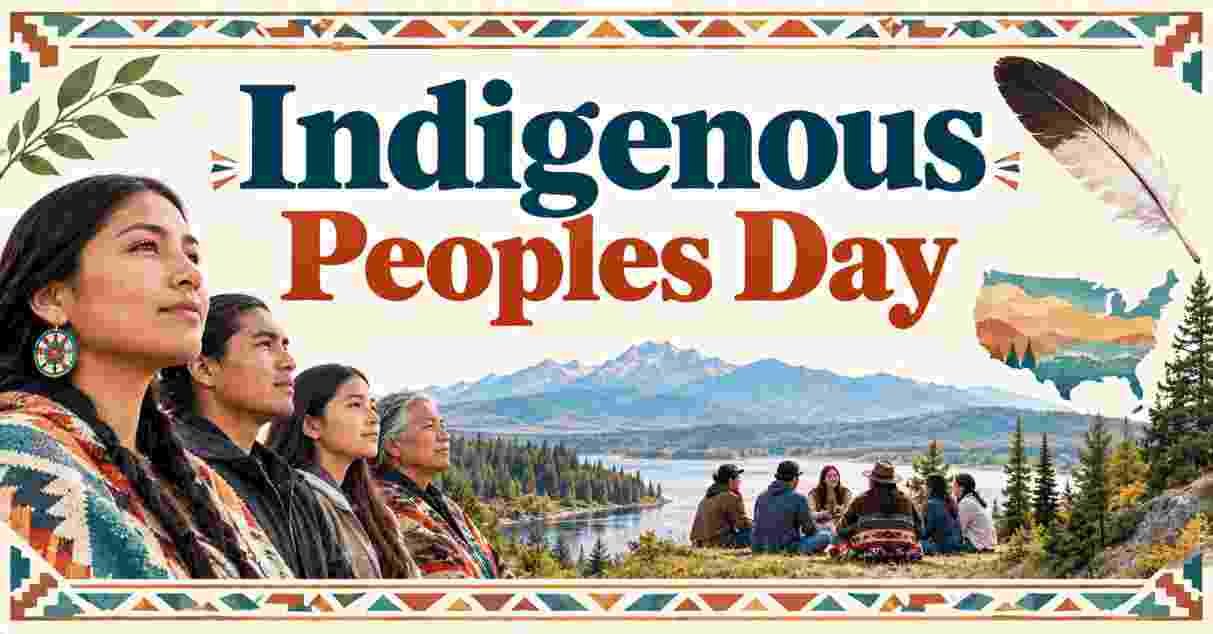
Indigenous Peoples Day 2026 falls on Monday, October 12, marking the fifth anniversary of the first presidential proclamation recognizing the day, issued by President Biden on October 8, 2021. The day is officially observed by 17 states and Washington, D.C., alongside more than 130 cities, honoring the 574 federally recognized tribes and roughly 9.7 million Americans who identify as Native American or Alaska Native.
Indigenous Peoples Day in 2026
Indigenous Peoples Day 2026 falls on Monday, October 12, the second Monday of the month, the same calendar date the federal government designates as Columbus Day. The observance honors the histories, cultures, and continued presence of Native American and Indigenous communities across the Americas, and it exists as a direct counter-narrative to the Columbus Day tradition that has marked the same date since 1937. The day is not a federal holiday created by statute. Instead, it has grown through a patchwork of state legislation, city ordinances, and, since 2021, an annual presidential proclamation.
That patchwork status is exactly what makes Indigenous Peoples Day 2026 worth tracking closely, since recognition varies enormously depending on where someone lives. Some states observe only Indigenous Peoples’ Day, some observe only Columbus Day, and a smaller number formally recognize both on the same date. The federal government’s own position has shifted with the current administration, and understanding what changed, what stayed the same, and which tribes and populations the day honors requires looking at several different layers of data at once.
Because today’s date falls several weeks before the October 12, 2026 observance itself, some details tied to that specific day, including whether a new presidential proclamation will be issued and in what form, remain unconfirmed as this report is published. What is already settled and verifiable is the underlying structure: the calendar date, the states and cities with existing legal recognition, the tribal population figures, and the historical pattern of proclamations issued in prior years, all of which this report covers in detail below.
Interesting Facts About Indigenous Peoples Day in 2026
| Fact | Detail |
|---|---|
| 2026 date | Monday, October 12 |
| First city to observe it | Berkeley, California, 1992 |
| First state to observe it | South Dakota, as “Native Americans’ Day,” 1990 |
| First presidential proclamation | President Biden, October 8, 2021 |
| States officially observing (2026) | 17 states plus Washington, D.C. |
| Cities officially observing | More than 130 |
| Federally recognized tribes | 574 |
| Enrolled tribal citizens (BIA 2025 count) | Over 5 million |
| Americans identifying as Native American/Alaska Native | Approximately 9.7 million (2020 Census, alone or in combination) |
| Largest federally recognized tribe | Navajo Nation, over 399,000 enrolled members |
Data source: U.S. Census Bureau; Bureau of Indian Affairs; state and municipal proclamation records.
Two different population figures appear in coverage of Indigenous Peoples Day 2026, and they measure different things. The 9.7 million figure comes from the 2020 Census and counts anyone who self-identifies as Native American or Alaska Native, alone or combined with another race. The 5 million-plus figure from the Bureau of Indian Affairs counts only enrolled citizens of the 574 federally recognized tribes, a narrower and more formally defined group. Both numbers are accurate, but they answer different questions, and conflating them is one of the most common errors in reporting on Indigenous demographics.
The gap between 17 states with official recognition and the much larger number of individual cities also matters. Municipal governments have moved faster than most state legislatures, which is why cities like Seattle and Minneapolis adopted the observance years before their home states took any formal action at all.
This split between city-level and state-level momentum reflects a broader pattern seen in other social and cultural policy shifts across the country: local governments, closer to the communities directly affected, tend to move first, with state legislatures following only once local adoption reaches a critical mass. That dynamic explains why the raw city count for Indigenous Peoples Day 2026 looks so much larger than the state count, even though both numbers have grown steadily since the 2014 wave of major-city adoptions began.
Timeline of Indigenous Peoples Day milestones
1990 First state (South Dakota)                |███████████  Milestone 1
1992 First city (Berkeley, CA)                 |██████████████  Milestone 2
2014 First major cities (Seattle, Minneapolis) |█████████████████  Milestone 3
2021 First presidential proclamation           |████████████████████  Milestone 4
Indigenous Peoples Day 2026 Date: When It Falls and Why
| Date Detail | Figure |
|---|---|
| 2026 date | October 12 (Monday) |
| Rule that sets the date | Second Monday of October, every year |
| 2025 date | October 13 |
| 2027 date | October 11 |
| Shared date with | Columbus Day (federal holiday since 1937) |
Data source: U.S. federal holiday calendar; state proclamation schedules.
Indigenous Peoples Day 2026 lands on October 12 because the observance follows the same second-Monday-of-October formula used for the federal Columbus Day holiday, rather than a fixed date on the calendar. That shared formula is deliberate. Advocates for Indigenous Peoples’ Day chose the same date as Columbus Day specifically to create a direct alternative narrative on the same day, rather than adding a separate observance elsewhere on the calendar.
Because the date shifts with the calendar each year, Indigenous Peoples Day 2026 falls a day later than the 2025 observance and a day earlier than the 2027 observance will. That annual drift means the date itself carries no fixed significance beyond falling on the same day as Columbus Day, but the choice to align with that date rather than move away from it remains central to how the observance is framed by the communities and governments that recognize it.
Indigenous Peoples Day 2026 History: From 1977 Proposal to Presidential Proclamation
Key history milestones by decade
1970s |████████  UN conference proposal (1977)
1990s |████████████████  First state & city adoption
2010s |████████████████████  Major-city wave (Seattle, Minneapolis)
2020s |████████████████████████  First presidential proclamation
| Historical Milestone | Year |
|---|---|
| UN conference proposal | 1977 |
| South Dakota becomes first state | 1990 |
| Berkeley becomes first city | 1992 |
| Seattle and Minneapolis adopt it | 2014 |
| First presidential proclamation (Biden) | 2021 |
| Trump proclamation refocuses on Columbus Day | 2025 |
Data source: Bureau of Indian Affairs; municipal and state legislative records.
The idea behind Indigenous Peoples Day 2026 traces back to 1977, when the United Nations International Conference on Discrimination Against Indigenous Populations in the Americas proposed an “International Day of Solidarity with the Indigenous Peoples of the Americas” observed on October 12. That proposal sat largely dormant in the United States for over a decade until South Dakota adopted “Native Americans’ Day” in 1990 under Governor George S. Mickelson, becoming the first state to formally replace Columbus Day with an Indigenous-focused observance. Mickelson had made reconciliation between Native and non-Native South Dakotans a central theme of his governorship before his death in a 1993 plane crash, and the state holiday he signed into law remains in effect today under its original name.
Berkeley, California followed in 1992, becoming the first US city to officially observe the day, but momentum stayed relatively slow until Seattle and Minneapolis both adopted the holiday in 2014, triggering a wave of major-city adoptions that continued through the following decade. Seattle’s ordinance, sponsored by council member Bruce Harrell and signed by Mayor Ed Murray, is frequently cited as the moment the movement shifted from a scattered, city-by-city effort into a recognizable national trend that other major metropolitan areas began following in rapid succession. President Biden’s October 8, 2021 proclamation marked the first time a sitting president formally recognized Indigenous Peoples’ Day, and it did so without replacing the existing Columbus Day proclamation, a dual-recognition approach that lasted through his term. In 2025, President Trump signed a proclamation that refocused the day on Columbus Day specifically, a shift that reflects the continued national debate surrounding the observance heading into 2026.
Indigenous Peoples Day 2026 Observance: Which States and Cities Recognize It
| Observance Level | 2026 Figure |
|---|---|
| States with official recognition | 17, plus Washington, D.C. |
| Cities with official recognition | More than 130 |
| States observing it under a different name | South Dakota (“Native Americans’ Day”), Hawaii (“Discoverers’ Day”) |
| Example recognizing states | Alaska, Maine, New Mexico, Oregon, Vermont, Wisconsin |
| Example recognizing cities | New York City, Los Angeles, Denver, Phoenix, Seattle, Minneapolis, San Francisco, Albuquerque, Santa Fe, Boston |
Data source: State legislative and municipal proclamation records compiled by holiday-tracking organizations.
State-level recognition for Indigenous Peoples Day 2026 remains a minority position nationally, with 17 states and the District of Columbia holding official status compared to 33 states without it. That gap has narrowed steadily since 2014, but it has not closed, and several states that recognize the day do so under an alternate name rather than the phrase “Indigenous Peoples’ Day” itself, reflecting local political and historical context rather than a rejection of the underlying observance.
City-level adoption tells a more expansive story, with well over 130 municipalities across nearly every region of the country choosing to recognize the day independently of their state government’s position.
Native American Tribes in 2026: Federally Recognized Nations and Population
| Tribal Metric | Figure |
|---|---|
| Federally recognized tribes | 574 |
| Enrolled tribal citizens (BIA 2025 count) | Over 5 million |
| Largest federally recognized tribe | Navajo Nation |
| Navajo Nation enrolled members | Over 399,000 |
| Navajo Nation land area | 27,000 square miles across Arizona, New Mexico, and Utah |
| Americans self-identifying as Native American/Alaska Native (2020 Census) | 9.7 million, alone or in combination |
Data source: Bureau of Indian Affairs; U.S. Census Bureau 2020 count.
The 574 federally recognized tribes represented in Indigenous Peoples Day 2026 span an enormous range of population sizes, land bases, and governance structures. The Navajo Nation stands as the largest by enrolled membership, with more than 399,000 citizens spread across roughly 27,000 square miles of land touching Arizona, New Mexico, and Utah, an area larger than several individual US states combined. Most federally recognized tribes are dramatically smaller, some numbering in the hundreds of enrolled citizens, which means national aggregate statistics can obscure enormous variation at the individual tribal level.
The distinction between the 5 million-plus enrolled tribal citizens tracked by the Bureau of Indian Affairs and the broader 9.7 million Americans who self-identify as Native American or Alaska Native in Census data reflects a real and important structural difference. Tribal enrollment is determined by each individual tribal nation according to its own citizenship criteria, while Census self-identification simply asks how a respondent describes their own racial or ethnic background, with no tribal government verification involved.
Indigenous Peoples Day 2026 vs Columbus Day: Federal Status and Proclamations
| Comparison Point | Columbus Day | Indigenous Peoples’ Day |
|---|---|---|
| Federal holiday status | Statutory federal holiday since 1937 | Not a federal holiday by statute |
| First presidential proclamation | 1937 | 2021 (Biden) |
| 2025 presidential proclamation focus | Columbus Day emphasized | Not separately proclaimed |
| State-level recognition | Nationwide by default | 17 states plus D.C. |
| Shared calendar date | Second Monday of October | Second Monday of October |
Data source: Federal holiday statute records; White House proclamation archive.
Columbus Day has held statutory federal holiday status since 1937, while Indigenous Peoples Day 2026 carries no equivalent legal standing at the federal level despite five consecutive years of presidential proclamations recognizing it in some form. That legal gap is significant: a proclamation is a presidential statement of recognition, not a binding law, and it can be issued, altered, or dropped entirely from year to year depending on the administration in office, exactly what happened when the 2025 proclamation shifted emphasis back toward Columbus Day exclusively.
Making Indigenous Peoples’ Day an actual federal holiday would require an act of Congress rather than another presidential proclamation, and no such legislation has advanced to that point as of this report’s publication. Population figures tied to broader US demographic trends, including how the national population has shifted by year.
Indigenous Peoples Day 2026 Events: How Communities Mark the Day
Common event types reported across observing communities
Powwows & dance ceremonies  |████████████████████████████████  Widespread
Educational programs        |██████████████████████████████    Widespread
Land acknowledgments        |██████████████████████████        Common
Museum & cultural exhibits  |████████████████████████          Common
| Event Type | Example |
|---|---|
| Tribal ceremonies | Navajo Nation Song and Dance events in Window Rock, Arizona |
| Museum programming | National Museum of the American Indian, Washington, D.C. |
| City-organized events | Parades, cultural festivals, and public ceremonies in cities like Seattle, Denver, and Minneapolis |
| School programming | Curriculum units and classroom observances in school districts that formally recognize the day |
| Land acknowledgments | Statements read at public events recognizing original tribal stewardship of local land |
Data source: Tribal government event listings; municipal and museum public programming records.
Communities that recognize Indigenous Peoples Day 2026 mark it through a mix of ceremony, education, and public commemoration rather than a single standardized format. The Navajo Nation, the largest federally recognized tribe, holds its own Song and Dance events in its capital of Window Rock, Arizona, drawing participants from across its roughly 27,000 square miles of tribal land. Cities with official recognition frequently organize public festivals, parades, or cultural exhibitions timed to the same weekend, often in partnership with local tribal nations and Indigenous cultural organizations rather than as a purely municipal government production.
Educational institutions represent another major channel for observance, particularly in the 17 states and District of Columbia with official state-level recognition, where school districts are more likely to incorporate Indigenous history curriculum specifically tied to the day. Museums such as the National Museum of the American Indian in Washington, D.C. also expand public programming around the date, offering exhibits and talks that extend the observance well beyond a single ceremonial ribbon-cutting or proclamation reading.
Indigenous Peoples Day – FAQ
When Is Indigenous Peoples Day in 2026?
Indigenous Peoples Day 2026 falls on Monday, October 12, the second Monday of October.
Is Indigenous Peoples Day a Federal Holiday in 2026?
No. It is not a federal holiday by statute. Columbus Day remains the official federal holiday on the same date, though presidents have issued proclamations recognizing Indigenous Peoples’ Day since 2021.
How Many States Officially Observe Indigenous Peoples Day?
17 states plus Washington, D.C. officially observe it as of 2026, alongside more than 130 cities nationwide.
How Many Federally Recognized Native American Tribes Are There?
There are 574 federally recognized tribes in the United States, representing more than 5 million enrolled tribal citizens according to the Bureau of Indian Affairs’ 2025 count.
What Is the Largest Federally Recognized Tribe?
The Navajo Nation is the largest, with over 399,000 enrolled members spread across roughly 27,000 square miles in Arizona, New Mexico, and Utah.
Which City First Officially Observed Indigenous Peoples Day?
Berkeley, California became the first city to officially observe the day in 1992.
Which State First Officially Observed Indigenous Peoples Day?
South Dakota was first, adopting “Native Americans’ Day” in 1990 under Governor George S. Mickelson.
When Was the First Presidential Proclamation for Indigenous Peoples Day?
President Biden issued the first presidential proclamation on October 8, 2021, making 2026 the fifth anniversary of that recognition.
Disclaimer: The data research report we present here is based on information found from various sources. We are not liable for any financial loss, errors, or damages of any kind that may result from the use of the information herein. We acknowledge that though we try to report accurately, we cannot verify the absolute facts of everything that has been represented.