
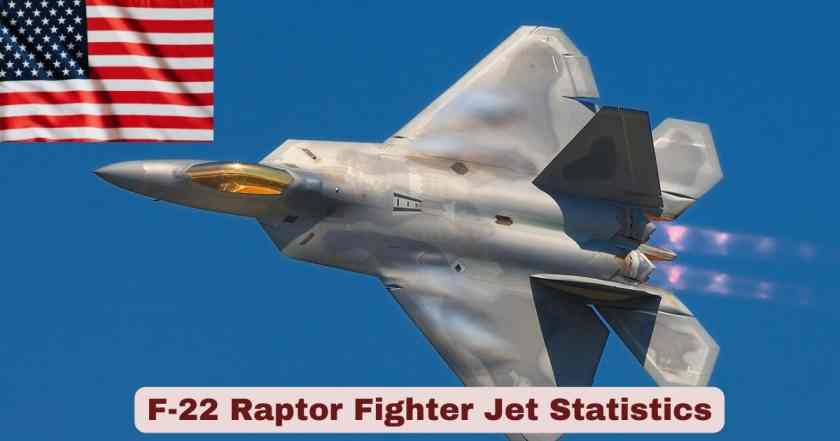
F-22 Raptor Fighter Jet in the US 2026
The F-22 Raptor represents the pinnacle of American air superiority technology and remains the world’s most advanced operational fifth-generation fighter aircraft as of 2026. Developed by Lockheed Martin in partnership with Boeing, this stealth air dominance fighter has been the backbone of the United States Air Force’s tactical airpower since achieving Initial Operational Capability in December 2005. With its unprecedented combination of supercruise capability, advanced sensor fusion, extreme maneuverability, and low-observable stealth technology, the Raptor continues to provide unmatched combat capabilities against both current and emerging threats from peer adversaries.
In 2026, the F-22 fleet faces a critical juncture as the Air Force balances modernization efforts with operational readiness requirements. The current inventory of approximately 183 to 185 operational airframes represents a significant reduction from the originally planned procurement of 750 aircraft. Production ended in 2011 with only 187 operational jets built out of a total 195 units including test aircraft. Despite this limited fleet size, ongoing upgrade programs totaling over $9 billion through the end of the decade ensure the Raptor maintains its technological edge until the next-generation F-47 fighter enters service in the 2030s. These modernization efforts include advanced infrared sensors, enhanced stealth coatings, improved electronic warfare systems, and integration of cutting-edge weapons like the AIM-260 Joint Advanced Tactical Missile.
Interesting Facts About F-22 Raptor Fighter Jet in the US 2026
| Category | Fact Description | Verified Data |
|---|---|---|
| First Air-to-Air Kill | First operational air-to-air engagement occurred shooting down Chinese surveillance balloon | February 3, 2023 off North Carolina coast |
| Combat Debut | First combat mission striking Islamic State targets in Syria | September 2014 during Operation Inherent Resolve |
| Recent Operations | Participated in strikes on Iranian nuclear sites alongside F-35As and B-2 bombers | June 22, 2025 in Middle East |
| Venezuela Operations | Conducted air defense suppression missions during operation to capture President Nicolás Maduro | January 2026 with F-35s, B-1s, and other assets |
| Supersonic Cruising | Only operational fighter with sustained supercruise at Mach 1.8 without afterburners | Extends operational range by 50% |
| Stealth Profile | Radar cross-section estimated as small as a marble | Classified exact measurements |
| Total Flight Hours | Raptor fleet has surpassed over 500,000 cumulative flight hours | As of 2026 across entire fleet |
| Mission Capable Rate | Fleet readiness dropped to approximately 40 percent | 2024 data showing maintenance challenges |
| Cost Per Flight Hour | Operational cost ranges between $70,000 to $85,000 per flight hour | Significantly higher than fourth-gen fighters |
| Modernization Investment | Air Force investing minimum $9 billion in upgrades through 2028 | Preserving capability until 2040s |
| Export Ban | F-22 has never been exported to any foreign nation including close allies | Oberweis Amendment prohibition remains in effect |
| Planned Service Life | Expected to remain operational until 2050s-2060s with continuous upgrades | Service life extensions being implemented |
Data Source: US Air Force Fact Sheet, Air & Space Forces Magazine, Department of Defense records (August 2022 – February 2026)
These remarkable statistics underscore the F-22 Raptor’s unique position as America’s premier air superiority platform. The aircraft’s first air-to-air kill against the Chinese surveillance balloon in February 2023 demonstrated its precision and capability in real-world scenarios, while its combat debut in 2014 proved its effectiveness in ground attack missions despite being primarily designed for air dominance. The January 2026 Venezuela operations showcased how the Raptor continues to play critical roles in complex multi-domain operations, working seamlessly with F-35s, bombers, and intelligence assets to dismantle sophisticated air defense networks.
The supercruise capability at Mach 1.8 remains unmatched globally, allowing the F-22 to maintain supersonic speeds without fuel-consuming afterburners—a feature that provides tactical advantages in both range and stealth. Operating at combat speeds of Mach 1.5 at 50,000 feet, the Raptor achieves 50 percent greater employment range for air-to-air missiles compared to previous platforms. However, the $70,000 to $85,000 cost per flight hour reflects the sophisticated maintenance requirements needed to preserve its stealth coatings and advanced systems. The 40 percent mission capable rate in 2024 highlighted ongoing sustainment challenges, prompting the Air Force to invest heavily in the Reliability, Availability, and Maintainability Program (RAMP) to improve fleet readiness and reduce maintenance burdens.
Fleet Size and Inventory Statistics for F-22 Raptor in the US 2026
| Fleet Category | Number of Aircraft | Status/Notes |
|---|---|---|
| Total Built | 195 | 8 test aircraft + 187 operational production |
| Operational Delivered | 187 | Serial production aircraft delivered to USAF |
| Current Inventory | 183-185 | After accounting for accidents and losses |
| Combat-Coded Aircraft | 142-143 | Fully mission-capable combat variants |
| Block 20 Training Variants | 32-35 | Non-combat training aircraft requiring upgrades |
| Block 30/35 Variants | 143 | Advanced combat-capable modernized aircraft |
| Known Losses | At least 5 | Total write-offs from accidents since 2004 |
| Mission-Ready Aircraft | Approximately 95 | Estimated one-third available at any time |
| Potential Upgraded Fleet | 174-178 | If Block 20s receive combat upgrades |
| Aircraft Under Maintenance | Approximately 47 | Roughly one-third down for servicing |
Data Source: US Air Force inventory reports, Government Accountability Office, Air & Space Forces Magazine (2025-2026)
The F-22 fleet in 2026 consists of 183 to 185 operational airframes, significantly reduced from the 187 aircraft originally delivered due to accidents and attrition over two decades of service. Of these remaining aircraft, only 142 to 143 are designated as combat-coded Block 30/35 variants that have received continuous modernization upgrades throughout their service life. The remaining 32 to 35 Block 20 aircraft serve exclusively in training roles and lack the advanced capabilities needed for combat operations without substantial modifications costing an estimated $50 million per airframe.
This limited fleet size stems directly from the program’s controversial cancellation in 2009 when Congress capped procurement at 187 operational aircraft—far below the Air Force’s original requirement for 750 Raptors. The decision was driven by budget constraints, the lack of peer adversaries following the Soviet Union’s collapse, and the emerging multi-role F-35 program. However, with only approximately 95 mission-ready aircraft available at any given time due to maintenance rotations, the Air Force faces significant challenges meeting global operational demands. Discussions are ongoing about upgrading the Block 20 training aircraft to combat standards, which would boost the combat fleet to 174 to 178 aircraft and provide a 20 percent increase in available air superiority fighters—a critical enhancement given rising tensions with China’s growing fleet of J-20 fifth-generation fighters.
Production and Procurement History for F-22 Raptor in the US 2026
| Year/Period | Procurement Number | Status |
|---|---|---|
| Original 1986 Requirement | 750 aircraft | Initial ATF program target |
| 1990 Revision | 648 aircraft | Post-Cold War reduction |
| 1993 Reduction | 442 aircraft | Further budget-driven cuts |
| 1997 Plan | 339 aircraft | Department of Defense report |
| 2003 Congressional Cap | 277 aircraft | Cost constraints imposed |
| 2004 Proposal | 183 production aircraft | Near-final procurement number |
| 2008 Final Authorization | 187 operational aircraft | Congressional approval granted |
| 2009 Production Termination | 187 units authorized | Production line officially ended |
| 2011 Final Delivery | 195 total (187 operational + 8 test) | Last Raptor delivered May 2, 2012 |
| 2026 Operational Fleet | 183-185 aircraft | Current inventory after losses |
Data Source: Congressional Research Service, US Air Force acquisition records, Government Accountability Office reports (1986-2026)
The F-22 procurement history represents one of the most dramatic reductions in planned military aircraft purchases in American defense history. From an ambitious 1986 requirement for 750 aircraft to replace the entire F-15 Eagle fleet, the program suffered repeated cuts as geopolitical circumstances evolved and budget pressures mounted. The end of the Cold War in 1991 eliminated the primary justification for such a large stealth fighter fleet, leading to the first major reduction to 648 aircraft in 1990. Subsequent reviews in 1993 and 1997 further reduced the target to 442 and 339 units respectively as the defense establishment grappled with peace dividend expectations and the absence of peer competitors.
By 2003, congressional cost caps limited purchases to just 277 aircraft, and within a year this dropped to 183 production units. The final authorization in 2008 settled on 187 operational aircraft, with the last of 195 total Raptors (including 8 test aircraft) delivered on May 2, 2012. This represents merely 25 percent of the original requirement and 49 percent of the 1990 post-Cold War target. The truncated production run dramatically increased per-unit costs since research and development expenses were amortized across fewer airframes. Had production continued to 750 units, economies of scale would have reduced costs substantially, but the focus shifted to the more affordable and exportable F-35 Lightning II program. Today in 2026, this decision is viewed with mixed feelings as China fields increasingly capable fifth-generation fighters and the small F-22 fleet struggles to meet global air superiority demands.
Cost Analysis for F-22 Raptor in the US 2026
| Cost Category | Amount (USD) | Details |
|---|---|---|
| Unit Cost (Flyaway) | $143-150 million | Manufacturing cost per aircraft |
| Program Unit Cost | $334-350 million | Including R&D amortized across 195 units |
| Total Program Cost | $66-67 billion | Complete development and production |
| Cost Per Flight Hour | $70,000-85,000 | Operational and maintenance expenses |
| Annual Operating Cost | $44 million per aircraft | Estimated yearly maintenance expenses |
| Modernization Budget 2026-2028 | $4.3 billion | Block 30/35 upgrade programs |
| Total Modernization Through 2028 | Minimum $9 billion | Preserving capability to 2030 |
| Full Modernization Estimate | $16.2 billion | Total from 2018 through completion |
| Per-Aircraft Modernization | Over $100 million | Average upgrade cost per Raptor |
| Block 20 Upgrade Cost | $50 million each | To bring to combat-coded status |
| Production Restart Estimate | $206-216 million per unit | Hypothetical new production cost |
| Restart Program Cost | $50 billion | For 194 additional aircraft with setup |
Data Source: Government Accountability Office, US Air Force budget documents, Congressional testimony (2023-2026)
The F-22 Raptor holds the distinction of being the most expensive fighter jet per unit ever built when accounting for total program costs. With a flyaway cost of $143 to $150 million per aircraft representing manufacturing expenses alone, the true program unit cost reaches an staggering $334 to $350 million when the $66 to $67 billion total program expenditure is divided across the 195 aircraft produced. This dramatic cost increase resulted directly from spreading extensive research and development investments across a much smaller fleet than originally planned—had the Air Force procured the intended 750 aircraft, the per-unit program cost would have been substantially lower through economies of scale.
Operating the Raptor proves equally expensive, with flight hour costs ranging from $70,000 to $85,000—more than three times the $22,000 hourly cost of an F-16 Fighting Falcon and exceeding even the newer F-35’s operating expenses. Annual maintenance for each F-22 averages approximately $44 million, driven largely by the labor-intensive work required to preserve the aircraft’s low-observable stealth coatings and sophisticated radar-absorbent materials. These materials are particularly sensitive to environmental conditions and routine wear, requiring specialized repairs that can only be performed by highly trained technicians using proprietary processes. In 2026, the Air Force is investing heavily in modernization, with $4.3 billion allocated specifically for Block 30/35 upgrades between 2026 and 2029, and total modernization costs from 2018 through program completion estimated at $16.2 billion. A 2017 Air Force study concluded that restarting production would cost approximately $50 billion for 194 additional aircraft at $206 to $216 million each, including $9.9 billion in non-recurring startup costs—a proposal deemed cost-prohibitive and subsequently rejected.
Technical Specifications for F-22 Raptor in the US 2026
| Specification Category | Measurement | Details |
|---|---|---|
| Length | 62 feet 1 inch (18.9 meters) | Fuselage length |
| Wingspan | 44 feet 6 inches (13.6 meters) | Wing tip to wing tip |
| Height | 16 feet 8 inches (5.1 meters) | Ground to highest point |
| Empty Weight | 43,340 pounds (19,700 kg) | Aircraft without fuel or payload |
| Maximum Takeoff Weight | 83,500 pounds (38,000 kg) | Fully loaded configuration |
| Internal Fuel Capacity | 18,000 pounds (8,200 kg) | Without external tanks |
| Fuel with External Tanks | 26,000 pounds (11,900 kg) | With 2 x 600-gallon wing tanks |
| Wing Area | 840 square feet | Total wing surface |
| Thrust-to-Weight Ratio | Greater than 1.0 | Exceptional power |
Data Source: US Air Force Fact Sheet, Lockheed Martin specifications (Official 2022-2026)
The F-22 Raptor’s physical dimensions reflect careful optimization for air superiority combat. At 62 feet 1 inch in length and with a 44 feet 6 inches wingspan, the aircraft is slightly larger than the F-15 Eagle it was designed to replace, yet incorporates revolutionary stealth shaping throughout its airframe. The 16 feet 8 inches height accommodates the twin vertical stabilizers canted at 27 degrees outward, which serve both aerodynamic and stealth purposes by reducing radar returns from the engine exhausts. With an empty weight of 43,340 pounds and a maximum takeoff weight of 83,500 pounds, the Raptor can carry substantial internal fuel loads and weapons while maintaining its combat edge.
The aircraft’s internal fuel capacity of 18,000 pounds provides impressive unrefueled range, with the option to extend this to 26,000 pounds using two 600-gallon external wing tanks when stealth considerations are secondary to range requirements. The 840 square feet of wing area, combined with the aircraft’s thrust-to-weight ratio exceeding 1.0, enables exceptional maneuverability and sustained high-G turns that are critical in close-range aerial combat. The airframe incorporates 42 percent titanium alloys and 24 percent composite materials including bismaleimide/epoxy composites, providing the structural strength necessary to withstand the stresses of sustained supersonic flight while keeping weight manageable. These advanced materials also contribute to the aircraft’s reduced radar signature and ability to handle the extreme thermal loads generated during supercruise operations at Mach 1.8.
Engine and Performance Specifications for F-22 Raptor in the US 2026
| Performance Metric | Specification | Details |
|---|---|---|
| Engines | 2 x Pratt & Whitney F119-PW-100 | Augmented turbofan with thrust vectoring |
| Thrust Per Engine | 35,000-pound class | Each engine without afterburner |
| Maximum Speed | Mach 2+ (1,500+ mph / 2,410+ km/h) | With afterburners at altitude |
| Supercruise Speed | Mach 1.82 (1,220 mph / 1,963 km/h) | Without afterburners sustained |
| Combat Cruise Speed | Mach 1.5 at 50,000 feet | Typical operational speed |
| Service Ceiling | Above 65,000 feet (19,812 meters) | Maximum operational altitude |
| Rate of Climb | 62,000+ feet per minute | Exceptional vertical performance |
| Ferry Range | 1,850+ miles (2,960+ km) | With 2 external fuel tanks |
| Combat Radius | 410 nautical miles (471 miles / 759 km) | Mission profile dependent |
| Thrust Vectoring | ±20 degrees pitch axis | Two-dimensional nozzles |
Data Source: US Air Force specifications, Pratt & Whitney engine data, Air & Space Forces Magazine (2022-2026)
The F-22 Raptor’s performance capabilities stem from its revolutionary Pratt & Whitney F119-PW-100 engines, which represent the most powerful fighter engines ever installed in an operational aircraft. Each engine produces thrust in the 35,000-pound class, giving the Raptor a combined 70,000 pounds of thrust—more than any current fighter engine system. These augmented turbofans incorporate groundbreaking two-dimensional thrust vectoring nozzles that can deflect ±20 degrees in the pitch axis, providing unprecedented control authority and enabling maneuvers impossible for conventional fighters. The thrust vectoring system allows the F-22 to maintain controlled flight at angles of attack and airspeeds that would cause other aircraft to depart controlled flight.
The defining performance characteristic of the F-22 is its supercruise capability—the ability to cruise at supersonic speeds without using fuel-consuming afterburners. The Raptor can sustain Mach 1.82 (approximately 1,220 mph) in supercruise, with typical combat operations conducted at Mach 1.5 at 50,000 feet altitude. This capability provides multiple tactical advantages: extended operational range, reduced infrared signature from lack of afterburner flame, lower fuel consumption, and the ability to intercept targets that afterburner-dependent fighters lack the fuel to reach. Maximum speed with afterburners engaged exceeds Mach 2.25 (1,500+ mph), though this is rarely used operationally due to the thermal and fuel consumption penalties. The aircraft’s service ceiling above 65,000 feet and exceptional rate of climb exceeding 62,000 feet per minute ensure the Raptor can rapidly respond to threats at any altitude. With external fuel tanks, the ferry range extends beyond 1,850 miles, though combat radius is typically around 410 nautical miles depending on mission profile and weapons loadout.
Weapons and Armament Systems for F-22 Raptor in the US 2026
| Weapon System | Capacity | Configuration |
|---|---|---|
| Internal Gun | 1 x M61A2 Vulcan 20mm cannon | 480 rounds, right wing root mounted |
| AIM-120 AMRAAM | 6 missiles | Main weapons bay, BVR capability |
| AIM-9 Sidewinder | 2 missiles | Side weapons bays, short-range |
| AIM-120D (Upgraded) | 6 missiles | Extended range variant integrated |
| AIM-9X (Upgraded) | 2 missiles | High off-boresight capability |
| AIM-260 JATM | 6 missiles planned | Next-generation missile under testing |
| GBU-32 JDAM | 2 x 1,000-pound bombs | Air-to-ground precision munitions |
| GBU-39 SDB | 8 Small Diameter Bombs | Alternative ground attack loadout |
| Total Internal Weapons | Up to 2,000 pounds | Stealth configuration maximum |
| External Hardpoints | 4 stations | 5,000 pounds each, sacrifices stealth |
| Maximum External Load | 22,000 pounds total | Non-stealth configuration |
Data Source: US Air Force armament specifications, Air Combat Command data (2024-2026)
The F-22 Raptor carries its weapons internally within three weapons bays to maintain its stealth profile during combat operations. The large main weapons bay located on the fuselage bottom can accommodate six LAU-142/A launchers for AIM-120 AMRAAM beyond-visual-range missiles, providing formidable air-to-air firepower. Two smaller side weapons bays, positioned aft of the engine inlets, each contain an LAU-141/A launcher for one AIM-9 Sidewinder short-range infrared-guided missile. The internal M61A2 Vulcan 20mm rotary cannon is embedded in the right wing root with 480 rounds of ammunition, covered by a retractable door to preserve stealth when not firing.
In 2026, the Raptor has been upgraded to carry advanced variants including the AIM-120D with extended range and the AIM-9X with high off-boresight targeting capability, both integrated through the Increment 3.2B software upgrade. Testing is ongoing for the next-generation AIM-260 Joint Advanced Tactical Missile, which will provide even greater range and lethality against advanced threats. For air-to-ground missions, the F-22 can carry two 1,000-pound GBU-32 JDAM precision-guided bombs or eight GBU-39 Small Diameter Bombs in its main bay, along with two AIM-120s for self-defense. The weapons bay doors open for less than one second during missile launch, with pneumatic arms pushing missiles clear of the aircraft to minimize radar exposure. Four external hardpoints capable of carrying 5,000 pounds each are available when range considerations outweigh stealth requirements, though these are rarely used operationally as they significantly increase radar signature and drag.
Avionics and Sensor Systems for F-22 Raptor in the US 2026
| System Component | Specification | Capability |
|---|---|---|
| Primary Radar | AN/APG-77(V)1 AESA | Active electronically scanned array |
| Radar Elements | 2,000 transmit/receive modules | Advanced agility and bandwidth |
| Radar Range | 125-150 miles estimated | Against 1 square meter targets |
| Cockpit Displays | 6 liquid crystal color displays | Advanced sensor fusion presentation |
| Electronic Warfare | Integrated EW system | Radar warning and missile detection |
| Communications | Advanced data links | Including Link 16 MIDS/JTRS upgrade |
| IRST System | TacIRST (under integration) | Infrared search and track capability |
| Infrared Defense | IRDS system (upgrading) | Missile warning and countermeasures |
| Navigation | Jam-resistant GPS/INS | Enhanced anti-jamming capability |
| IFF System | Mode 5/S identification | Modern friend-or-foe system |
| Mission Computer | Integrated avionics processor | Sensor fusion and data integration |
Data Source: US Air Force avionics specifications, Air & Space Forces Magazine weapons system data (2024-2026)
The F-22 Raptor’s avionics suite represents the first implementation of true sensor fusion in an operational fighter aircraft. At the heart of the system is the AN/APG-77(V)1 active electronically scanned array radar featuring 2,000 transmit/receive modules that provide exceptional agility, low probability of intercept, and wide bandwidth for simultaneous air-to-air and air-to-ground operations. The radar can detect targets at ranges estimated between 125 and 150 miles against one square meter radar cross-section targets, with the ability to track multiple targets simultaneously while maintaining low observability. The AESA technology allows rapid beam steering without mechanical movement, enabling the Raptor to search, track, and engage multiple threats while also conducting electronic warfare and terrain mapping.
The pilot interfaces with these complex systems through six large liquid crystal color displays in the cockpit that present fused sensor data in an intuitive format, dramatically reducing workload and improving situational awareness. The integrated electronic warfare system provides comprehensive threat warning with radar warning receivers and missile launch detection, automatically cueing countermeasures and threat responses. In 2026, ongoing modernization programs are integrating critical new capabilities including the TacIRST infrared search and track system for passive detection and targeting of threats, and the enhanced Infrared Defensive System (IRDS) for improved protection against advanced infrared-guided missiles. The Link 16 upgrade, with installations beginning in fiscal year 2022 and fleet-wide completion extended to 2027, enables two-way networking with legacy aircraft through the Multifunctional Information Distribution System/Joint Tactical Radio System (MIDS/JTRS), dramatically improving the F-22’s ability to operate as part of a networked force and share sensor data with fourth-generation fighters, AWACS platforms, and ground stations.
Operational Bases for F-22 Raptor in the US 2026
| Installation | Location | Unit Assignment |
|---|---|---|
| JB Langley-Eustis | Virginia | 1st Fighter Wing, 27th & 94th Fighter Squadrons |
| JB Elmendorf-Richardson | Alaska | 3rd Wing, 90th Fighter Squadron |
| JB Pearl Harbor-Hickam | Hawaii | 199th Fighter Squadron (Hawaii ANG) |
| Nellis AFB | Nevada | 57th Wing (Test & Evaluation) |
| Edwards AFB | California | 412th Test Wing (Development & Testing) |
| Tyndall AFB | Florida | 43rd Fighter Squadron (Training) |
| Eglin AFB | Florida | 58th Fighter Squadron (Training) |
Data Source: US Air Force base assignments, Air Combat Command, Pacific Air Forces, Air National Guard (2025-2026)
The F-22 Raptor operates from seven primary US Air Force installations across the continental United States, Alaska, and Hawaii, strategically positioned to provide air superiority coverage for critical regions and rapid response capabilities. Joint Base Langley-Eustis in Virginia serves as the home of the 1st Fighter Wing, the Air Force’s premier F-22 unit, housing the 27th Fighter Squadron and 94th Fighter Squadron with dozens of combat-coded Raptors. This location provides ideal positioning for both homeland defense missions protecting the nation’s capital region and rapid deployment to European or Middle Eastern theaters.
Joint Base Elmendorf-Richardson in Alaska hosts the 3rd Wing’s 90th Fighter Squadron, positioning Raptors at the forefront of the Arctic theater where they regularly intercept Russian aircraft probing North American air defenses. The harsh Alaskan environment also provides valuable training conditions for extreme weather operations. In the Pacific, Joint Base Pearl Harbor-Hickam in Hawaii houses the 199th Fighter Squadron of the Hawaii Air National Guard, providing critical air defense for the Hawaiian Islands and forward positioning for Indo-Pacific operations. Nellis Air Force Base in Nevada and Edwards Air Force Base in California host test and evaluation units that conduct operational testing, develop new tactics, and integrate emerging capabilities. Training squadrons at Tyndall AFB and Eglin AFB in Florida were established to convert pilots to the F-22, though these units operate the older Block 20 variants that lack combat coding. These geographic dispersal ensures the F-22 fleet can respond rapidly to threats anywhere in North America while maintaining forward presence in the critical Pacific theater where tensions with China continue to rise in 2026.
Upgrade and Modernization Programs for F-22 Raptor in the US 2026
| Program Name | Capability | Status 2026 |
|---|---|---|
| Increment 3.2B | SAR mapping, threat geolocation, EA capability | Completed on combat-coded aircraft |
| RAMP (Reliability Program) | Electrical power, avionics fiber optics, LO durability | Ongoing fleet-wide implementation |
| Link 16 Integration | Two-way networking with legacy aircraft via MIDS/JTRS | Fleet upgrade extended to FY27 |
| TacIRST | Distributed infrared search and track sensors | Development and testing phase |
| IRDS | Enhanced infrared defensive system | Integration ongoing |
| Stealth Enhancements | Improved low-observable coatings and materials | Continuous improvement program |
| Stealthy External Tanks | Range extension without compromising stealth | Under development and testing |
| AIM-260 Integration | Next-generation long-range missile compatibility | Testing phase |
| Radar Hardening | Electronic protection against jamming | Ongoing enhancement |
| Block 20 Upgrade Study | Combat coding for training aircraft | Under congressional review |
Data Source: US Air Force modernization plans, Congressional budget documents, Air & Space Forces Magazine (2024-2026)
The F-22 Raptor is undergoing extensive modernization in 2026 to ensure it remains the world’s premier air superiority fighter through the 2040s and potentially into the 2060s. The Increment 3.2B software upgrade has been successfully completed on all 142 combat-coded aircraft, adding critical new capabilities including high-resolution synthetic aperture radar ground mapping, advanced threat geolocation, electronic attack functionality, and integration of the Small Diameter Bomb I, AIM-120D, and AIM-9X missiles. This upgrade transforms the Raptor from a pure air superiority fighter into a genuine multi-role platform capable of sophisticated air-to-ground operations while maintaining its unmatched air combat capabilities.
The Reliability, Availability, and Maintainability Program (RAMP) addresses long-standing maintenance challenges by upgrading electrical power systems, replacing aging avionics fiber optics with more reliable components, enhancing the durability of low-observable coatings, and fixing structural and wiring issues that have plagued the fleet. The Link 16 integration, initially scheduled for completion in fiscal year 2025, has been extended through 2027 to enable comprehensive two-way data networking with fourth-generation fighters, AWACS platforms, and ground control stations—a critical capability gap that previously limited the F-22’s effectiveness in joint operations. Development continues on the TacIRST distributed infrared search and track system that will allow passive detection and targeting of threats without radar emissions, and stealthy external fuel tanks that can extend range without significantly degrading the aircraft’s low-observable characteristics. Perhaps most significantly, Congress is actively debating whether to fund upgrades bringing the 32 to 35 Block 20 training aircraft up to combat-coded standards at an estimated cost of $50 million per airframe—a decision that could increase the combat fleet by 20 percent and provide desperately needed additional air superiority capacity as tensions with peer adversaries continue escalating.
Maintenance and Readiness Challenges for F-22 Raptor in the US 2026
| Challenge Category | Issue Description | Impact |
|---|---|---|
| Mission Capable Rate | Fleet readiness dropped to approximately 40% | Below Air Force goals of 70-80% |
| Stealth Coating Maintenance | Labor-intensive low-observable repairs required | Drives up maintenance hours significantly |
| Specialized Processes | Unique coating repairs need trained technicians | Limited maintenance capacity |
| Parts Availability | Production line closure complicates spares | Longer repair times |
| Maintenance Man-Hours | Extensive servicing requirements per flight hour | Higher than fourth-generation fighters |
| Climate Sensitivity | LO coatings vulnerable to weather damage | Requires careful environmental management |
| Training Limitations | Block 20 aircraft not combat-capable | Reduces effective training resources |
| Aging Fleet | First aircraft approaching 20+ years service | Increasing structural issues |
| Upgrade Downtime | Modernization requires extended depot time | Reduces available aircraft |
| Cost Per Aircraft | $44 million annual maintenance average | Budget strain across small fleet |
Data Source: Government Accountability Office, Air Force maintenance records, Congressional testimony (2024-2026)
The F-22 Raptor faces significant maintenance and readiness challenges in 2026 that directly impact the Air Force’s air superiority capabilities. The mission capable rate—the percentage of aircraft ready for combat operations at any given time—dropped to approximately 40 percent in 2024, well below the Air Force’s target of 70 to 80 percent for fighter aircraft. This low readiness rate stems primarily from the extensive maintenance required to preserve the aircraft’s stealth characteristics, which account for a substantial portion of all Raptor maintenance activities. The low-observable coatings and radar-absorbent materials are particularly sensitive to routine wear, environmental exposure, and the physical stresses of high-speed flight, requiring specialized repair processes that can only be performed by highly trained technicians.
Unlike earlier stealth aircraft like the F-117 Nighthawk that required climate-controlled hangars, the F-22 was designed for more robust field operations, but its coatings still demand careful management. The Signature Assessment System (SAS) warns pilots when routine degradation has reduced the aircraft’s radar signature below acceptable thresholds, triggering mandatory maintenance actions. The closure of the production line in 2011 has also complicated parts availability, as specialized components must now be manufactured in small batches without the economies of scale from ongoing production. Each F-22 requires an average of $44 million annually in maintenance costs—nearly double that of many fourth-generation fighters. The Reliability, Availability, and Maintainability Program (RAMP) implemented in 2026 aims to address these challenges by upgrading electrical systems, replacing aging fiber optics, improving coating durability, and streamlining maintenance processes. However, with ongoing modernization programs requiring aircraft to spend extended periods in depot-level maintenance, and an aging fleet where the oldest aircraft are approaching 20 years of service, the Air Force continues to struggle balancing readiness demands with the complex maintenance requirements of the world’s most advanced fighter.
Future Plans and Next-Generation Replacement for F-22 Raptor in the US 2026
| Program Element | Description | Timeline |
|---|---|---|
| F-47 NGAD Fighter | Sixth-generation air dominance fighter | Operational deployment 2030s |
| Confirmed Flight Testing | F-47 prototype already flying since 2021 | Ongoing development |
| Service Life Extension | F-22 to remain operational through 2050s-2060s | Continuous upgrades required |
| NGAD Development Cost | Hundreds of millions per aircraft estimated | Budget pressures mounting |
| CCA Integration | Collaborative Combat Aircraft (loyal wingman drones) | F-22 to receive by late 2020s |
| NGAD System-of-Systems | Manned fighter plus autonomous assets | Revolutionary operational concept |
| Technology Backflow | NGAD developments integrated into F-22 | Ongoing modernization strategy |
| Block 20 Decision | Upgrade vs retirement under review | Congressional decision pending 2026-2027 |
| F-15EX Procurement | Advanced fourth-gen supplement | Approximately 100 aircraft planned |
| Force Mix Strategy | F-47, F-22, F-35, F-15EX combination | Balanced high-low capability mix |
Data Source: Air Force acquisition plans, Department of Defense statements, Congressional testimony (2024-2026)
The F-22 Raptor’s replacement is already in development as of 2026, with the Next Generation Air Dominance (NGAD) program proceeding toward fielding the F-47 sixth-generation fighter in the 2030s. In a significant revelation, President Trump confirmed in 2025 that the F-47 has been flying for approximately five years, indicating prototype testing began around 2020 or 2021. The F-47 represents a revolutionary approach to air combat, designed not as a simple fighter replacement but as a system-of-systems incorporating a manned stealth fighter with unprecedented capabilities working alongside Collaborative Combat Aircraft (CCA)—autonomous loyal wingman drones that extend the manned aircraft’s sensor range, weapons capacity, and survivability.
However, the NGAD program faces substantial challenges. Estimated costs of hundreds of millions of dollars per F-47 aircraft have prompted Air Force leadership to reconsider the program’s scope and procurement numbers. Former Air Force Secretary Frank Kendall stated in 2024 that the F-47 would not directly replace the F-22 Raptor one-for-one, but rather work alongside a continued Raptor fleet and the multi-role F-35 Lightning II as part of a high-low capability mix. This decision means the F-22 must remain viable well into the 2050s or even 2060s, requiring the extensive modernization programs currently underway in 2026. The Air Force is also pursuing the “agile” strategy of rolling NGAD technologies back into the Raptor fleet as they mature, effectively creating a continuous improvement cycle. Meanwhile, the Air Force has ordered approximately 100 F-15EX Eagle II advanced fourth-generation fighters as a cost-effective supplement to the high-end stealth force—an ironic development given the F-22 was originally designed to replace the F-15 entirely. The final force structure in the 2030s and beyond will likely include a carefully balanced mix of F-47 sixth-generation fighters, upgraded F-22s, large numbers of F-35s, and modern F-15EXs—a far more complex and expensive fleet structure than originally envisioned.
Combat Operations and Deployment History for F-22 Raptor in the US 2026
| Operation/Deployment | Year | Mission Type |
|---|---|---|
| Noble Eagle | 2006 | First operational sortie, homeland defense |
| Operation Inherent Resolve | September 2014 | Combat debut, ISIS strikes in Syria |
| Syria Air Operations | 2014-2018 | ISR, close air support, air superiority |
| Khasham Engagement | February 2018 | Strikes on pro-Assad and Wagner forces |
| Afghanistan Operations | November 2017 | Taliban opium facility strikes with B-52s |
| Chinese Balloon Shootdown | February 3, 2023 | First air-to-air kill, North Carolina coast |
| Iranian Nuclear Sites | June 22, 2025 | SEAD missions with F-35A and B-2 bombers |
| Venezuela Operations | January 2026 | Air defense suppression, Maduro capture |
| Alaska Intercepts | Ongoing 2026 | Russian aircraft deterrence, Arctic patrol |
| Pacific Deployments | Ongoing 2026 | Forward presence, China deterrence |
| Middle East Presence | Ongoing 2026 | Regional air superiority, partner support |
Data Source: US Air Force operational records, Department of Defense statements, news reports (2006-2026)
The F-22 Raptor first entered combat in September 2014 during Operation Inherent Resolve when Raptors based in the Middle East conducted precision strikes against Islamic State targets in Syria. This combat debut came nearly a decade after the aircraft achieved Initial Operational Capability, highlighting the limited demand for high-end air superiority fighters during the counter-insurgency operations that dominated the post-9/11 era. Throughout the Syria campaign, F-22s performed not only strike missions but also critical intelligence, surveillance, and reconnaissance roles, deterred Syrian, Iranian, and Russian aircraft from interfering with U.S. operations, and provided close air support to Kurdish forces. A significant engagement occurred in February 2018 near Khasham in eastern Syria when Raptors participated in strikes that defeated pro-Assad regime forces and Russian Wagner Group paramilitaries attacking U.S.-backed positions.
The F-22 achieved its first air-to-air kill on February 3, 2023, when a Raptor from the 1st Fighter Wing successfully shot down a Chinese surveillance balloon off the coast of North Carolina, demonstrating precision engagement against unconventional threats. More recently, in June 2025, F-22s and F-35As conducted suppression of enemy air defense missions during U.S. strikes on Iranian nuclear facilities, deliberately drawing surface-to-air missile fire to expose Iranian air defense systems for follow-on B-2 bomber attacks. The most recent significant operation occurred in January 2026 when Raptors played a crucial role alongside F-35s, B-1 bombers, and electronic warfare aircraft in dismantling Venezuelan air defense networks to enable helicopter-borne forces to capture President Nicolás Maduro. Beyond these headline operations, F-22s conduct continuous defensive missions including homeland air defense through Operation Noble Eagle, regular intercepts of Russian aircraft probing Alaskan airspace, forward deployments to Japan and Guam for Pacific deterrence operations, and routine training exercises with allied air forces to demonstrate capability and maintain readiness against peer competitors like China and Russia.
Comparison with Peer Competitors for F-22 Raptor in the US 2026
| Aircraft | Country | Key Comparison Points |
|---|---|---|
| Chengdu J-20 | China | Fifth-generation stealth, larger size, entering mass production |
| Sukhoi Su-57 | Russia | Fifth-generation features, limited production numbers |
| Sukhoi Su-30 | Russia/India | Fourth-generation advanced, superior numbers |
| Eurofighter Typhoon | Europe | Fourth-generation plus, comparable dogfighting |
| Dassault Rafale | France | Fourth-generation plus, multi-role capable |
| F-35 Lightning II | USA | Fifth-generation, superior sensors, lacks air superiority focus |
| Shenyang FC-31 | China | Fifth-generation development, export focus |
| F-15EX Eagle II | USA | Fourth-generation advanced, longer range, cheaper |
Data Source: Military aviation analysis, international defense assessments (2024-2026)
The F-22 Raptor maintains its position as the world’s premier air superiority fighter in 2026, though capable competitors have emerged that challenge American air dominance. China’s Chengdu J-20 represents the most significant peer threat, with production numbers already exceeding 200 aircraft and continuing to grow—potentially surpassing the total F-22 inventory within several years. While the J-20 is larger with potentially greater range, most Western analysts assess it as inferior to the Raptor in stealth characteristics, sensor capabilities, and dogfighting performance. However, quantity has a quality all its own, and China’s ability to produce J-20s in substantial numbers presents a significant challenge for the small 183-aircraft F-22 fleet.
Russia’s Sukhoi Su-57 remains in very limited production with fewer than 20 operational aircraft, limiting its strategic impact despite impressive advertised capabilities. More concerning are the large numbers of highly capable fourth-generation-plus fighters like the Su-30 series, which proved in training exercises that they could challenge Raptors in close-range dogfights through superior numbers, helmet-mounted sights, and thrust-vectoring capabilities. The European Eurofighter Typhoon and French Rafale are similarly capable fourth-generation designs that demonstrated competitive performance in certain engagement scenarios. Interestingly, the American F-35 Lightning II offers superior sensor fusion and networking capabilities but deliberately sacrificed the extreme maneuverability and air-to-air focus that define the Raptor. The F-35’s strength lies in strike missions and multi-role flexibility rather than pure air superiority. Recent Air Force decisions to procure advanced F-15EX Eagle II fighters as a supplement reflects recognition that the combination of limited F-22 numbers and F-35 mission set creates capability gaps that require filling with modernized fourth-generation aircraft—a pragmatic if imperfect solution to the air superiority challenge facing American airpower in 2026.
Congressional and Political Debates for F-22 Raptor in the US 2026
| Issue | Congressional Position | Air Force Position |
|---|---|---|
| Block 20 Retirement | Repeatedly blocked divestiture | Requested retirement to fund NGAD |
| Block 20 Upgrade Funding | Considering $1.6-3.3 billion investment | Uncertain commitment to upgrade |
| Modernization Appropriations | Approved $90.34 million for FY26 | Requested full funding through 2028 |
| NGAD Budget Protection | Scrutinizing high per-unit costs | Defending system-of-systems requirement |
| Fleet Size Concerns | Worried about small inventory | Acknowledging but budget-constrained |
| Production Restart | Some members advocate restart | Rejected as cost-prohibitive in 2017 |
| Export Prohibition | Oberweis Amendment remains in effect | Supports maintaining US-only status |
| Readiness Requirements | Demanding higher mission capable rates | Investing in RAMP improvements |
| Budget Allocation | Balancing F-22, F-35, F-47, and other programs | Prioritizing most cost-effective options |
Data Source: Congressional testimony, Armed Services Committee records, Air Force budget requests (2023-2026)
The F-22 Raptor remains at the center of contentious congressional debates in 2026 as lawmakers grapple with balancing readiness, modernization, and future capability development within constrained budgets. The most significant ongoing dispute concerns the 32 to 35 Block 20 training aircraft that the Air Force has repeatedly requested permission to retire. These older variants lack combat coding and would require substantial upgrades estimated at $50 million each to bring them to operational standards. The Air Force argues that divesting these aircraft would save $485 million annually in operating costs through the end of the decade—funds that could support Next Generation Air Dominance development. However, Congress has consistently blocked these retirement requests, with many members concerned about further reducing an already small fighter fleet while peer competitors like China rapidly expand their forces.
In 2025 and 2026, discussions shifted toward potentially upgrading the Block 20s to combat-capable status rather than retiring them, which would expand the operational fleet from 142 to 174-178 aircraft—a 20 percent increase in combat capacity. Upgrade costs are estimated between $1.6 billion and $3.3 billion depending on scope, with Congress mandating detailed cost-benefit analysis before authorizing funding. Meanwhile, lawmakers approved $90.34 million for F-22 modernization in the fiscal year 2026 budget, part of the multi-year investment to keep the Raptor viable through the 2040s. However, some members question whether these upgrade funds might be better spent accelerating F-35 purchases or NGAD development. The 2017 Air Force study concluding that restarting F-22 production would cost approximately $50 billion for 194 additional aircraft effectively ended serious discussion of new production, though a few congressional advocates periodically raise the possibility. The Oberweis Amendment prohibition on F-22 exports remains firmly in place despite occasional requests from close allies like Japan and Australia. These debates will intensify as the Air Force prepares fiscal year 2027 and 2028 budget requests that must balance sustaining the current Raptor fleet, continuing upgrades, developing the F-47, procuring F-35s and F-15EXs, and funding numerous other modernization priorities—all within a constrained topline that cannot accommodate every requirement.
Strategic Importance and Deterrence Value for F-22 Raptor in the US 2026
| Strategic Role | Description | Current Implementation 2026 |
|---|---|---|
| Air Superiority Guarantee | Ensures US control of contested airspace | Primary mission against peer threats |
| China Deterrence | Counters J-20 and Chinese air power expansion | Forward deployments to Pacific theater |
| Russia Deterrence | Maintains advantage over Su-57 and Su-30 | Alaska intercepts and European deployments |
| First-Day Strike Enabler | SEAD missions open access for other aircraft | Demonstrated in Iran and Venezuela 2025-2026 |
| Force Multiplier | Single F-22 can control entire combat zones | Proven in exercises and operations |
| Technology Demonstrator | Advancing air combat concepts for F-47 | NGAD technology integration |
| Alliance Reassurance | Demonstrates US commitment to allies | Joint exercises in Asia and Europe |
| Power Projection | Rapid global deployment capability | Rapid Raptor concept with C-17 support |
| Homeland Defense | Protects US airspace from intrusions | Operation Noble Eagle continuing |
| Training Platform | Prepares pilots for sixth-generation warfare | Most realistic adversary training |
Data Source: Department of Defense strategy documents, Air Force operational assessments (2024-2026)
The F-22 Raptor provides strategic value to United States national security far beyond its modest numbers in 2026. As the only operational stealth air superiority fighter in the world, the Raptor guarantees American forces can establish and maintain air dominance in contested environments where fourth-generation fighters would struggle to survive. This capability is fundamental to the entire U.S. joint operational concept, which assumes friendly air superiority as the foundation enabling ground, naval, and other air operations. In the Pacific theater, F-22 deployments to Japan, Guam, and Hawaii send unmistakable signals to China that the United States possesses overwhelming capability to defeat any attempt to deny access to critical airspace. The growing Chinese J-20 fleet represents the first peer stealth fighter competition since the Cold War, making the Raptor’s continued viability essential to maintaining American advantage.
The F-22’s role extends beyond pure air combat to enabling first-day strike operations by suppressing sophisticated integrated air defense systems, as demonstrated in the June 2025 Iranian strikes and January 2026 Venezuela operations. By deliberately exposing enemy radar systems and engaging surface-to-air missiles, Raptors create windows for B-2 bombers and other less-survivable platforms to strike critical targets. The aircraft’s stealth and sensor capabilities allow individual F-22s to control large volumes of airspace, effectively multiplying American combat power. This was repeatedly demonstrated in exercises where small numbers of Raptors achieved overwhelming kill ratios against larger forces of advanced fourth-generation fighters. Perhaps most importantly, the F-22 serves as both a technology demonstrator and deterrent symbol—the development of revolutionary capabilities like sensor fusion, supercruise integration, and stealth aerodynamics paved the way for the F-35 program and current F-47 development. The mere existence and forward presence of Raptors forces potential adversaries to invest heavily in counters and defenses, imposing costs and complicating their planning. For allied nations, F-22 deployments and joint exercises provide tangible reassurance of American commitment and capability, strengthening security partnerships across Europe and Asia in an era of renewed great power competition.
Industrial Base and Sustainment Infrastructure for F-22 Raptor in the US 2026
| Component | Contractor/Location | Role |
|---|---|---|
| Prime Contractor | Lockheed Martin, Marietta, GA | Final assembly and program integration |
| Major Partner | Boeing, Seattle, WA | Wings, aft fuselage, avionics integration |
| Engine Manufacturer | Pratt & Whitney, Various locations | F119-PW-100 production and sustainment |
| Skunk Works | Lockheed Martin, Fort Worth, TX / Palmdale, CA | Engineering and modernization work |
| Depot Maintenance | Ogden Air Logistics Complex, Hill AFB, UT | Major overhauls and modifications |
| Tooling Storage | Sierra Army Depot | Mothballed production equipment |
| Sustainment Contract | FASTeR III, 2028-2037 | 10-year integrated support program |
| Modification Centers | Multiple contractor facilities | Upgrade kit installation |
| Parts Manufacturing | Distributed supply chain | Limited production sustainment |
| Software Development | Lockheed Martin, Various sites | Continuous capability improvements |
Data Source: Lockheed Martin corporate information, Air Force sustainment contracts (2024-2026)
The F-22 Raptor industrial base underwent significant transformation following production termination in 2011, shifting from manufacturing to sustainment and modification. Final assembly occurred at the former Air Force Plant 6 in Marietta, Georgia, where Lockheed Martin integrated major assemblies including Boeing-manufactured wings and aft fuselages from Seattle. When production ended, the Marietta facility was repurposed for C-130J and F-35 work, but engineering expertise for F-22 sustainment and upgrades continued at Lockheed’s Skunk Works facilities in Fort Worth, Texas, and Palmdale, California. Critically, all production tooling and manufacturing documentation were carefully mothballed at the Sierra Army Depot rather than destroyed, preserving the theoretical possibility of production restart—though the 2017 Air Force study concluded this would cost approximately $50 billion and take many years to accomplish.
Pratt & Whitney continues producing and overhauling F119-PW-100 engines, maintaining depot-level support infrastructure even without new aircraft deliveries. Depot maintenance for F-22 airframes occurs primarily at the Ogden Air Logistics Complex at Hill Air Force Base, Utah, where specialists perform structural repairs, major modifications, and overhauls requiring extensive airframe disassembly. The FASTeR III contract awarded to Lockheed Martin spans 2028 through 2037, maintaining the company as the F-22 Fleet Product Support Integrator responsible for coordinating spares, repairs, depot partnering, and overall sustainment integration to maximize worldwide Raptor readiness. This integrated approach is essential given the aircraft’s complexity and unique low-observable maintenance requirements. However, the distributed supply chain faces challenges producing specialized components in small quantities without economies of scale from ongoing production. Parts that were manufactured in batches of hundreds during production runs must now be made in quantities of dozens or even single units, dramatically increasing costs and lead times. These sustainment challenges contribute significantly to the F-22’s high operating costs and readiness difficulties, making the ongoing modernization programs essential not just for capability enhancement but for maintainability improvements that reduce the logistics burden of keeping the 183-aircraft fleet combat-ready through the 2050s and potentially into the 2060s.
Disclaimer: This research report is compiled from publicly available sources. While reasonable efforts have been made to ensure accuracy, no representation or warranty, express or implied, is given as to the completeness or reliability of the information. We accept no liability for any errors, omissions, losses, or damages of any kind arising from the use of this report.