
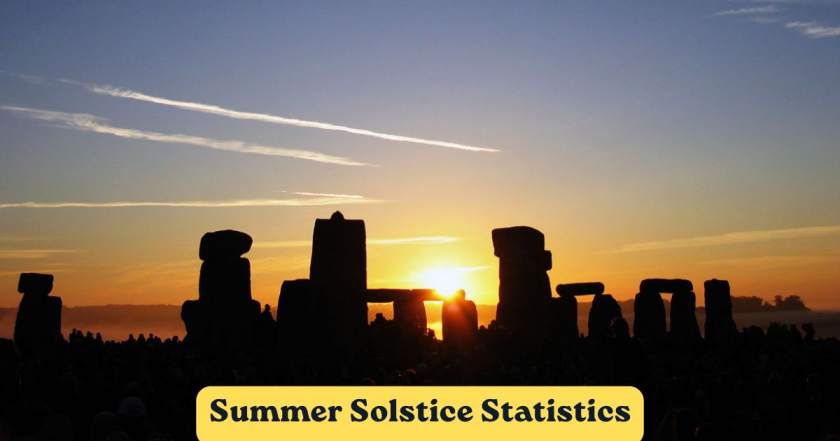
What Is the Summer Solstice?
The summer solstice is not a day — it is a single, precise, mathematically calculable moment in time when the Earth’s axial tilt reaches its maximum inclination toward the Sun, producing the longest period of daylight and the shortest night of the entire year in the Northern Hemisphere. The word itself comes from the Latin sol (sun) and sistere (to stand still) — a reference to the ancient observation that the Sun appears to pause at its northernmost point in the sky before slowly reversing direction and beginning its gradual retreat southward. In 2026, that moment arrives at 08:24–08:25 UTC on Sunday, June 21 — which means the astronomical start of summer touches the continental United States as early as 12:24 a.m. AKDT in Anchorage, reaches 1:24 a.m. PDT in Seattle and Los Angeles, 3:24 a.m. CDT in Chicago, and 4:24 a.m. EDT in New York and Miami. The event is simultaneous worldwide — one instant, one axial truth — though the local clock reads differently in each time zone. At that precise moment, the Sun stands directly overhead above the Tropic of Cancer at 23.5° North latitude, the axis of the Earth tilted toward it at the maximum possible angle of 23.5 degrees, flooding the Northern Hemisphere with more solar energy than it will receive on any other calendar day of 2026. The U.S. Naval Observatory (USNO), the authoritative U.S. government source for astronomical data, calculates and publishes solstice and equinox times using planetary perturbation theory (VSOP87) — the same mathematical framework that powers planetary almanacs, navigation systems, and space mission planning.
What makes the summer solstice so enduringly fascinating — across cultures, centuries, and scientific disciplines — is the enormous spread of lived experiences it produces simultaneously. At the very moment a New Yorker wakes at 4:24 a.m. to a sky already brightening with early morning astronomical twilight, the residents of Fairbanks, Alaska are experiencing what the rest of the world calls “night” bathed in continuous daylight — the Midnight Sun, the 24-hour polar day that occurs above the Arctic Circle when the Sun never fully dips below the horizon. At the other extreme, a resident of Miami at roughly 25°N latitude will see just under 14 hours of daylight on the solstice — long and luxurious by any measure, but dramatically shorter than the 19+ hours experienced in Anchorage or the 24 unbroken hours of Arctic light. The solstice is also a corrective to a common misconception: the hottest day of the year is not the longest. The oceans and land masses of the Northern Hemisphere continue absorbing and storing solar energy for 4–6 weeks after the solstice, producing peak temperatures in most U.S. locations in mid-to-late July — a phenomenon called the “lag of the seasons” or “thermal lag” — the same reason a room kept warm all day does not reach its hottest temperature the moment the sun hits it, but hours later.
Summer Solstice 2026 | Key Facts at a Glance
| Fact | Data / Figure |
|---|---|
| Summer solstice 2026 exact date | Sunday, June 21, 2026 |
| Exact time (UTC) | 08:24–08:25 UTC |
| Time in New York (EDT) | 4:24 a.m. EDT |
| Time in Chicago (CDT) | 3:24 a.m. CDT |
| Time in Denver (MDT) | 2:24 a.m. MDT |
| Time in Los Angeles (PDT) | 1:24 a.m. PDT |
| Time in Anchorage (AKDT) | 12:24 a.m. AKDT |
| Time in Honolulu (HST) | ~10:24 p.m. HST (June 20) |
| Sun’s position at solstice | Directly overhead at the Tropic of Cancer (23.5°N) |
| Earth’s axial tilt | 23.5 degrees (23.44° precise) |
| Meteorological summer start date | June 1, 2026 |
| Astronomical summer start date | June 21, 2026 |
| Astronomical summer end date (autumnal equinox) | September 22, 2026 |
| Length of astronomical summer 2026 | ~93.6 days |
| Daylight hours on solstice — Anchorage, AK | ~19 hours 21 minutes |
| Daylight hours on solstice — Seattle, WA | ~15 hours 59 minutes |
| Daylight hours on solstice — Chicago, IL | ~15 hours 14 minutes |
| Daylight hours on solstice — New York, NY | ~15 hours 6 minutes |
| Daylight hours on solstice — Washington, D.C. | ~14 hours 54 minutes |
| Daylight hours on solstice — Miami, FL | ~13 hours 45 minutes |
| Daylight hours on solstice — Honolulu, HI | ~13 hours 26 minutes |
| Daylight hours — Equator (0°N) | ~12 hours 7 minutes (slightly more than 12 due to refraction) |
| Daylight hours — Arctic Circle (66.5°N) | 24 hours (Midnight Sun — Sun never sets) |
| Earliest sunrise of the year (approx., 40°N) | Around June 14 (before the solstice) |
| Latest sunset of the year (approx., 40°N) | Around June 28 (after the solstice) |
| Shortest night of the year (40°N) | June 20–21 |
| Solstice can fall on which dates? | June 20, 21, or rarely June 22 |
| Last June 22 solstice | 1975 |
| Next June 22 solstice | 2203 |
| Average summer length (N. Hemisphere) | 93.6 days |
| Average summer length (S. Hemisphere) | 89.0 days |
| Why summer is the longest season | Earth moves slowest near aphelion (early July) |
| Earth’s distance from Sun at solstice | Moving toward aphelion (farthest) — ~July 3, 2026 |
| Solstice word origin | Latin: sol (sun) + sistere (to stand still) |
| UN International Day of Yoga | June 21 — coincides with solstice |
| Winter solstice 2026 date | Monday, December 21, 2026 at 20:50 UTC |
| Primary US government source for solstice times | U.S. Naval Observatory (USNO) — aa.usno.navy.mil |
| NOAA sunrise/sunset tool | gml.noaa.gov/grad/solcalc/sunrise.html |
Data Source: U.S. Naval Observatory (USNO), Earth’s Seasons — Equinoxes, Solstices, Perihelion, and Aphelion (aa.usno.navy.mil); NOAA Solar Calculator (gml.noaa.gov); TimeAndDate.com — Summer Solstice 2026 and city-specific sunrise/sunset data; EarthSky.org — June Solstice 2026; time.unitarium.com — Summer Solstice global daylight data
The summer solstice occurs on June 21, 2026 at 08:25 UTC. That single moment represents the astronomical hinge point of the Northern Hemisphere’s year — the instant of maximum tilt, maximum daylight, and minimum darkness from which the long, slow slide toward the winter solstice begins. The 36-fact summary table above captures the extraordinary range of solar experience that a single planet-wide moment produces across different latitudes. The gap between Anchorage’s ~19 hours 21 minutes of daylight and Miami’s ~13 hours 45 minutes — a difference of over 5.5 hours of sunlight between two American cities on the same calendar day — is entirely a product of latitude: the further north you sit from the equator, the more dramatically the Earth’s tilt affects the angle and duration of solar illumination at your location. Locations farther north experience more daylight, with the Arctic receiving 24 hours of continuous sunlight.
The timing quirk around earliest sunrise and latest sunset is one of the most consistently misunderstood aspects of summer solstice science. Most people assume the longest day should also feature the year’s earliest sunrise and latest sunset — and logically, it should. But solstice occurs around June 21, but at latitude 40° north the earliest sunrise occurs around June 14 and the latest sunset occurs around June 28. The reason traces to the mismatch between solar time and clock time — our mechanical clocks keep perfectly uniform 24-hour days, but actual solar days vary slightly in length throughout the year due to Earth’s elliptical orbit and axial tilt. In June, solar days are very slightly longer than 24 clock hours, which pushes both sunrise and sunset slightly later each day — meaning the latest sunset occurs a week or more after the solstice, while the earliest sunrise happens a week or more before it. The solstice is still the longest day, but its sunrise and sunset individually are not the extreme records of the year.
Summer Solstice 2026 | Exact Date & Time by US City
| City | State | Latitude | Local Solstice Time | Time Zone | Approx. Daylight Hours |
|---|---|---|---|---|---|
| Anchorage | Alaska | 61.2°N | 12:24 AM AKDT, June 21 | Alaska Daylight | ~19h 21m |
| Seattle | Washington | 47.6°N | 1:24 AM PDT, June 21 | Pacific Daylight | ~15h 59m |
| Portland | Oregon | 45.5°N | 1:24 AM PDT, June 21 | Pacific Daylight | ~15h 38m |
| San Francisco | California | 37.8°N | 1:24 AM PDT, June 21 | Pacific Daylight | ~14h 46m |
| Los Angeles | California | 34.1°N | 1:24 AM PDT, June 21 | Pacific Daylight | ~14h 26m |
| Denver | Colorado | 39.7°N | 2:24 AM MDT, June 21 | Mountain Daylight | ~14h 55m |
| Phoenix | Arizona | 33.4°N | 1:24 AM MST, June 21 | Mountain Standard | ~14h 22m |
| Chicago | Illinois | 41.9°N | 3:24 AM CDT, June 21 | Central Daylight | ~15h 14m |
| Dallas | Texas | 32.8°N | 3:24 AM CDT, June 21 | Central Daylight | ~14h 19m |
| New York | New York | 40.7°N | 4:24 AM EDT, June 21 | Eastern Daylight | ~15h 6m |
| Washington, D.C. | D.C. | 38.9°N | 4:24 AM EDT, June 21 | Eastern Daylight | ~14h 54m |
| Atlanta | Georgia | 33.7°N | 4:24 AM EDT, June 21 | Eastern Daylight | ~14h 23m |
| Miami | Florida | 25.8°N | 4:24 AM EDT, June 21 | Eastern Daylight | ~13h 45m |
| Honolulu | Hawaii | 21.3°N | 10:24 PM HST, June 20 | Hawaii Standard | ~13h 26m |
| Arctic Circle | 66.5°N+ | 66.5°N | — | — | 24 hours (Midnight Sun) |
Data Source: TimeAndDate.com — Summer Solstice 2026 city pages (accessed May 2026); U.S. Naval Observatory (USNO) aa.usno.navy.mil — Earth’s Seasons 2026; NOAA Solar Calculator (gml.noaa.gov); time.unitarium.com — Summer Solstice June 21, 2026 daylight table; EarthSky.org — June Solstice 2026
Because of time zone differences, some cities experience the start of summer late on June 20, while others see it early on June 21. The striking case is Honolulu — located so far west and at such a low latitude that the solstice moment lands at 10:24 p.m. HST on June 20, making Hawaii’s “first day of astronomical summer” technically a night in June. For the other continental U.S. cities, the progression is orderly: the same instant translates from 12:24 a.m. in Anchorage through 1:24 a.m. on the West Coast, 2:24 a.m. in the Mountain Zone, 3:24 a.m. in Central Time, and 4:24 a.m. on the East Coast — all in the deep, brief night of a Sunday that is already brightening toward the year’s earliest dawns. The latitude effect on daylight duration in the table above is stark and consistent: Seattle receives about 2 hours and 15 minutes more daylight than Miami on the summer solstice. For those planning solstice observations, sunrise watching, or outdoor activities, the NOAA Solar Calculator at gml.noaa.gov/grad/solcalc/sunrise.html and the USNO data tools at aa.usno.navy.mil provide city-specific sunrise and sunset times calculated to the minute.
The Phoenix, Arizona case is worth a particular note: as one of only a handful of major U.S. cities that does not observe Daylight Saving Time, Arizona operates on Mountain Standard Time (MST) year-round. This means the solstice moment arrives at 1:24 a.m. MST — the same clock reading as Pacific Daylight cities, even though Phoenix is geographically in the Mountain Time zone. Phoenix’s lower latitude (33.4°N versus Denver’s 39.7°N) also translates to meaningfully shorter solstice daylight — approximately 14 hours 22 minutes versus Denver’s 14 hours 55 minutes — demonstrating that even within a single time zone, the latitude gradient produces measurable differences in what the summer solstice actually delivers in terms of solar experience.
Daylight Hours on the 2026 Summer Solstice | By Latitude
| Location | Latitude | Approx. Daylight (June 21, 2026) | Sunrise | Sunset | Notes |
|---|---|---|---|---|---|
| Arctic Circle (66.5°N) | 66.5°N | 24 hours (Midnight Sun) | Never sets | Never sets | Sun visible all 24 hours |
| Fairbanks, AK | 64.8°N | ~21h 49m | ~2:57 AM | ~12:47 AM | Near polar day |
| Anchorage, AK | 61.2°N | ~19h 21m | ~4:20 AM | ~11:42 PM | Earliest sunrise: June 19 |
| Seattle, WA | 47.6°N | ~15h 59m | ~5:11 AM | ~9:11 PM | Earliest sunrise: ~Jun 15–16; latest sunset: ~Jun 25 |
| Portland, OR | 45.5°N | ~15h 38m | ~5:22 AM | ~9:00 PM | — |
| Chicago, IL | 41.9°N | ~15h 14m | ~5:16 AM | ~8:30 PM | — |
| New York, NY | 40.7°N | ~15h 6m | ~5:24 AM | ~8:30 PM | Earliest sunrise: ~Jun 14; latest sunset: ~Jun 28 |
| Denver, CO | 39.7°N | ~14h 55m | ~5:31 AM | ~8:31 PM | — |
| Washington, D.C. | 38.9°N | ~14h 54m | ~5:42 AM | ~8:37 PM | — |
| San Francisco, CA | 37.8°N | ~14h 46m | ~5:48 AM | ~8:35 PM | — |
| Los Angeles, CA | 34.1°N | ~14h 26m | ~5:42 AM | ~8:08 PM | — |
| Dallas, TX | 32.8°N | ~14h 19m | ~6:20 AM | ~8:39 PM | — |
| Atlanta, GA | 33.7°N | ~14h 23m | ~6:25 AM | ~8:48 PM | — |
| Miami, FL | 25.8°N | ~13h 45m | ~6:31 AM | ~8:16 PM | — |
| Honolulu, HI | 21.3°N | ~13h 26m | ~5:50 AM | ~7:16 PM | No DST (HST year-round) |
| Equator (0°) | 0° | ~12h 7m | ~6:00 AM | ~6:07 PM | Slightly >12h due to atmospheric refraction |
Data Source: TimeAndDate.com — city-specific June 2026 sunrise/sunset pages; U.S. Naval Observatory (USNO), aa.usno.navy.mil; NOAA Solar Calculator, gml.noaa.gov/grad/solcalc; time.unitarium.com — Summer Solstice daylight latitude table; USNO FAQ — “Sunrise/Sunset near the Solstices,” aa.usno.navy.mil/faq/rs_solstices
The daylight hours table makes the latitude effect on solar exposure viscerally tangible. The contrast between Fairbanks at ~21 hours 49 minutes and Miami at ~13 hours 45 minutes — both American cities, both on the same summer solstice — represents a difference of more than 8 full hours of sunlight on the same day of the year. This is not a matter of weather or cloud cover; it is pure geometry, the consequence of Earth’s 23.5-degree axial tilt interacting with the latitude of each location. The further north a city sits, the more extreme its seasonal swing: Seattle’s ~16 hours of solstice daylight drop to approximately 8.5 hours at the winter solstice in December — a swing of roughly 7.5 hours. Miami’s ~13.75 hours at summer solstice drops to approximately 10.5 hours in December — a swing of only about 3 hours. The latitude of a city is, in the most literal sense, its cosmic destiny with respect to sunlight.
The Equator’s ~12 hours 7 minutes of daylight — slightly more than 12 hours even on the solstice — is not an error. The reason is atmospheric refraction: the Earth’s atmosphere bends sunlight slightly around the curvature of the horizon, meaning the Sun is actually still geometrically below the horizon when we see it rise, and still below the horizon when we see it set. This bending effect adds approximately 6–7 minutes of apparent daylight at the equator and somewhat more at higher latitudes — a consistent astronomical quirk that affects every single sunrise and sunset on Earth, every day of the year, and was already documented by scholars in ancient times. The practical effect is that no location on Earth ever sees exactly 12 hours of daylight, even on an equinox — the true equal-day-and-night point is the astronomical equinox, but the measured daylight period is always slightly longer than 12 hours on that day too.
Summer Solstice 2026 – Science, Astronomy & Earth’s Orbit
| Astronomical / Orbital Fact | 2026 Data |
|---|---|
| Summer solstice 2026 — exact moment | June 21, 2026 at 08:24–08:25 UTC |
| Sun’s declination at solstice | +23.44° (Tropic of Cancer) |
| Earth’s axial tilt | 23.44 degrees (commonly rounded to 23.5°) |
| Earth at aphelion (farthest from Sun) 2026 | ~July 3, 2026 (~152.1 million km) |
| Earth at perihelion (closest to Sun) 2027 | ~January 3, 2027 (~147.1 million km) |
| Is Earth closest to Sun at summer solstice? | No — Earth is actually approaching its FARTHEST point |
| What causes summer? | Earth’s axial tilt — not distance from the Sun |
| Why isn’t the solstice the hottest day? | Thermal lag — oceans/land store heat; peak temps 4–6 weeks later |
| Hottest days of year (typical US) | Mid-to-late July |
| Astronomical summer 2026 duration (N. Hemisphere) | ~93.6 days (Jun 21 – Sep 22) |
| Meteorological summer 2026 | June 1 – August 31 |
| Autumnal equinox 2026 | September 22, 2026 |
| Winter solstice 2026 | December 21, 2026 at 20:50 UTC |
| Vernal (spring) equinox 2026 | March 20, 2026 |
| Why summer is the longest season | Earth orbits slowest near aphelion (early July) — Kepler’s Second Law |
| Solstice calculation method | VSOP87 planetary perturbation theory |
| Sun’s direction at solstice | Rises and sets farthest NORTH on the horizon |
| Noontime shadow on solstice | Shortest of the year for Northern Hemisphere observers |
| Tropic of Cancer latitude | 23.5° North — only point where Sun is directly overhead at solstice |
| Arctic Circle latitude | 66.5° North — minimum latitude for Midnight Sun |
| % of Earth’s surface with Midnight Sun (Jun 21) | ~13% (above Arctic Circle) |
| Key insight: Sol + Sistere | Latin for “Sun stands still” — Sun appears to pause before reversing |
Data Source: U.S. Naval Observatory (USNO), “Earth’s Seasons — Equinoxes, Solstices, Perihelion, and Aphelion” (aa.usno.navy.mil); USNO FAQ — “Sunrise/Sunset near the Solstices” (aa.usno.navy.mil/faq/rs_solstices); EarthSky.org, “June Solstice 2026”; time.unitarium.com Summer Solstice page; Wikipedia — Summer Solstice (citing USNO and VSOP87)
The single most counterintuitive fact in all of summer solstice science is this: at the moment the Northern Hemisphere experiences its maximum solar heating — its longest days, its highest Sun angles, its peak solar energy input — the Earth is approaching its farthest point from the Sun, not its closest. Earth’s aphelion (farthest orbital point) falls around July 3, 2026, when our planet will be approximately 152.1 million kilometers from the Sun — meaningfully farther than the 147.1 million kilometers of perihelion in early January. It’s Earth’s tilt — not our distance from the Sun — that causes winter and summer. In fact, our planet is closest to the Sun in January, and farthest from the Sun in July, during the Northern Hemisphere summer. The axial tilt determines how concentrated solar energy is when it strikes the surface: in summer, the Northern Hemisphere tilts toward the Sun, so sunlight hits at a steeper angle, delivering more energy per square meter; in winter, the tilt is away, and sunlight hits at a shallower angle, spreading energy across a larger area and delivering less heat per unit of surface. It is geometry, not proximity, that governs the seasons.
The “lag of the seasons” — the reason July and August are hotter than June despite the June solstice being the peak solar-energy day — operates through the same physics as daily temperature cycles: Earth just takes a while to warm up after a long winter. The oceans, which cover 71% of Earth’s surface, have enormous heat capacity — they absorb solar energy slowly through the spring and accumulate it through June and July, reaching their peak temperatures in August and September. Landmasses heat faster but still show a lag of several weeks between peak solar input and peak air temperature. This means that the hottest days of summer in most U.S. cities typically arrive in mid-to-late July — a full month after the longest day — in a pattern that has held consistent across centuries of recorded meteorological data. Peak temperatures typically lag 4 to 6 weeks behind the solstice, arriving in late July or early August.
Summer Solstice 2026 – Cultural Celebrations & Historical Traditions
| Tradition / Event | Location | Cultural Significance |
|---|---|---|
| Stonehenge Solstice | Wiltshire, England | ~5,000-year-old monument; tens of thousands gather at dawn; sunrise aligns precisely with the Heel Stone — one of the most attended solstice events on Earth |
| Midsommar | Sweden (and Scandinavia) | Arguably Sweden’s most important annual holiday; Maypole dancing, flower crowns, bonfires; folklore says picking 7 flowers and placing them under your pillow lets you dream of your future spouse |
| Juhannus | Finland | Midsummer celebration of the Midnight Sun; urban Finns leave for lakeside cottages; bonfires and saunas mark the occasion |
| Inti Raymi (Festival of the Sun) | Cusco, Peru | Incan celebration of the winter solstice (which falls in June for the Southern Hemisphere); honors the Sun God Inti; massive public celebration with thousands of participants |
| Egypt’s Pyramids alignment | Giza, Egypt | From the Sphinx, the summer solstice sun sets precisely between the Khafre and Khufu pyramids — an alignment that was intentional, achieved contemporaneously with Stonehenge’s construction |
| UN International Day of Yoga | Global | Declared by United Nations in 2015; June 21 chosen specifically because the solstice is a day of “high energy” and means “standing still” — thousands gather in Times Square, India, and worldwide |
| Native American traditions | Throughout US | Many tribes observe solstice ceremonies; the Cahokia Woodhenge in Illinois is aligned to solstice sunrise; various sun dances and vision quest ceremonies |
| Times Square Yoga | New York City | Annual mass yoga event in Times Square on June 21 — one of the largest outdoor yoga gatherings in the United States |
| Chichén Itzá | Yucatan, Mexico | Mayan El Castillo pyramid designed to mark solar events; the biannual equinox shadow serpent effect draws crowds; solstice was central to Mayan astronomical precision |
| Roman Fors Fortuna | Ancient Rome | June 24 was the Roman summer solstice celebration (Julian calendar) — festival of Fors Fortuna, goddess of luck, with river processions and feasting |
| Alaska Midnight Sun celebrations | Fairbanks, Anchorage | Outdoor festivals, midnight baseball games, hiking and festivals celebrating the 24-hour day; the Midnight Sun Baseball Game in Fairbanks has been played since 1906 |
| Washington D.C. SummerSolsticeFest | Washington, D.C. | Annual celebration on the National Mall area around June 21 |
| Litha / Pagan Midsummer | US and UK | Modern neo-pagan and Wiccan celebration of the wheel of the year; one of eight seasonal festivals; fire ceremonies and nature rituals |
Data Source: EarthSky.org — “June Solstice 2026: All You Need to Know”; Wikipedia — Summer Solstice (cultural traditions); TimeAndDate.com — Summer Solstice celebrations; daysuntilsummer.com; Stonehenge visitor information; UN International Day of Yoga official page
The depth of human response to the summer solstice is arguably unmatched by any other astronomical event. In fact, around the same time Stonehenge was being constructed in England, two great pyramids and then the Sphinx were built on Egyptian sands. If you stood at the Sphinx on the summer solstice and gazed toward the two pyramids, you’d see the sun set exactly between them. That two civilizations on opposite ends of the Mediterranean, with no known direct contact, independently designed their greatest architectural monuments to encode the summer solstice is not coincidence — it reflects the fact that the solstice was the single most observable and reproducible astronomical event available to pre-scientific cultures, a moment when the Sun’s apparent motion reaches a visible extreme, “stands still,” and reverses. Every culture that observed the sky over many seasons would eventually discover and mark this turning point. The Neolithic stone circles of Britain, the Mayan pyramids of Mexico, the Incan temples of Peru, the cairns and medicine wheels of North America — all encode the same moment, arrived at independently, across thousands of years and thousands of miles.
Modern American culture intersects with the solstice through a mix of the serious and the playful. The UN International Day of Yoga on June 21 — chosen specifically because the solstice was understood as a moment of energy and stillness — now draws mass participation events in Times Square, on the National Mall, and in cities across India, Europe, and Asia simultaneously. In Alaska, communities that live for months with dramatically reduced daylight celebrate the Midnight Sun with genuine enthusiasm: the Fairbanks Midnight Sun Baseball Game, played without artificial lights since 1906, is one of the oldest and most charming solstice traditions in American culture — a nine-inning game played entirely in natural light at 10:30 p.m. The cultural breadth of solstice observance — from Druidic ceremony at Stonehenge to mass yoga in Times Square to a small-town baseball game in Alaska — reflects the universal human instinct to mark the boundaries of the solar year, to acknowledge that the light, having reached its peak, will now begin its retreat, and to find community and meaning in standing together at that turning point.
Summer Solstice 2026 vs. Other Years | Solstice Date Patterns
| Year | Solstice Date | Time (UTC) | Day of Week | Notes |
|---|---|---|---|---|
| 2022 | June 21 | 09:13 UTC | Tuesday | — |
| 2023 | June 21 | 14:57 UTC | Wednesday | — |
| 2024 | June 20 | 20:50 UTC | Thursday | Leap year effect; earlier date |
| 2025 | June 21 | 02:42 UTC | Saturday | — |
| 2026 ⭐ | June 21 | 08:24–08:25 UTC | Sunday | Current year |
| 2027 | June 21 | 14:10 UTC | Monday | — |
| 2028 | June 20 | 20:02 UTC | Tuesday | Leap year effect; earlier date |
| 2029 | June 21 | 01:48 UTC | Thursday | — |
| 2030 | June 21 | 07:31 UTC | Friday | — |
| Last June 22 solstice | 1975 | — | — | Rare; not happening again until 2203 |
| Next June 22 solstice | 2203 | — | — | 177 years away |
| Possible June 19 solstice? | Theoretically | — | — | Has not occurred in modern recorded history |
Data Source: U.S. Naval Observatory (USNO), “Earth’s Seasons — Equinoxes, Solstices, Perihelion, and Aphelion” (aa.usno.navy.mil); TimeAndDate.com — June Solstice dates table; daysuntilsummer.com — solstice dates 2026–2030; EarthSky.org; time.unitarium.com
The pattern of solstice dates across years reveals the mismatch between our calendar and Earth’s actual orbital rhythm. The tropical year — the time it takes Earth to complete one orbit relative to the Sun — is approximately 365 days, 5 hours, 48 minutes, and 45 seconds. Our Gregorian calendar rounds this to 365 days in most years and 366 days in leap years, adding February 29 every four years to compensate for the accumulated 5+ extra hours per year. The solstice drifts earlier by roughly 6 hours per year in most years, then jumps forward by 18 hours in a leap year, producing the alternating June 20–21 pattern visible in the table above. In 2024 (a leap year), the extra calendar day pushed the solstice to June 20. In 2026 (not a leap year), it falls on June 21 at 08:24 UTC. In 2028 (another leap year), it returns to June 20. June 22 solstices are rare—the last June 22 solstice took place in 1975, and there won’t be another one until 2203.
The Sunday June 21 date of the 2026 summer solstice makes it particularly well-timed for public celebration in the United States and Europe. A weekend solstice allows outdoor gatherings, festival attendance, and solstice watching — sunrise, sunset, Midnight Sun events, yoga gatherings — without the constraint of a Monday morning workday following. For those planning to attend Stonehenge’s sunrise event, watch the solstice from a mountaintop, or simply rise early to mark the year’s longest dawn, the Sunday timing of the 2026 solstice is a genuine convenience that the astronomical calendar does not always provide. The next time the Northern Hemisphere summer solstice falls on a weekend (Saturday or Sunday) will be June 21, 2026 (Sunday) itself — making this year’s a rare, unhurried opportunity to experience the longest day at full leisure.
Disclaimer: This research report is compiled from publicly available sources. While reasonable efforts have been made to ensure accuracy, no representation or warranty, express or implied, is given as to the completeness or reliability of the information. We accept no liability for any errors, omissions, losses, or damages of any kind arising from the use of this report.