
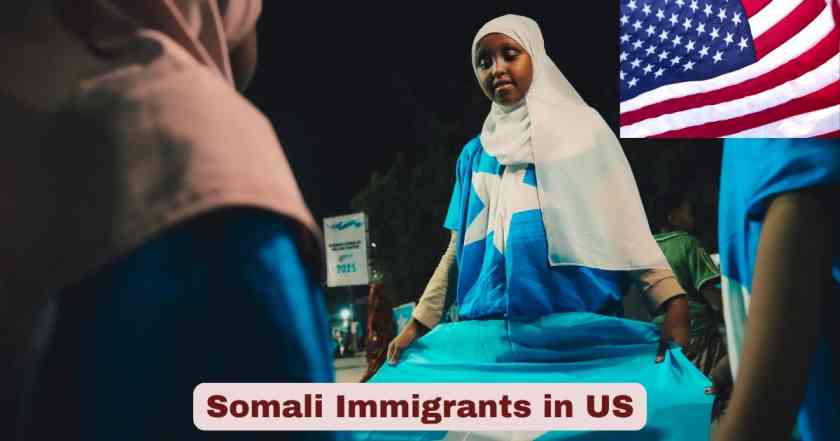
Somali Immigrants in America 2025
The Somali immigrant population in the United States in 2025 represents one of the most significant refugee resettlement success stories in American history, with a community that has grown from virtually nonexistent before 1990 to an estimated 260,000 individuals of Somali descent now calling America home. This remarkable demographic transformation began in earnest during the early 1990s when Somalia descended into civil war following the collapse of its central government, prompting thousands of Somalis to seek refuge in the United States through formal refugee resettlement programs. The Somali immigrants in the US 2025 data reveals a community characterized by high naturalization rates, strong entrepreneurial spirit, and remarkable resilience in overcoming the challenges of displacement, language barriers, and cultural adaptation.
Minnesota has emerged as the undisputed center of Somali immigration to America in 2025, hosting approximately 107,000 people of Somali descent according to the most recent American Community Survey data, representing roughly 41% of the entire Somali American population nationwide. The Minneapolis-St. Paul metropolitan area alone is home to an estimated 84,000 Somali residents, making it the largest urban concentration of Somalis anywhere outside the Horn of Africa region. This geographic clustering has facilitated the development of vibrant Somali communities complete with businesses, mosques, community organizations, and cultural institutions that help maintain connections to Somali heritage while simultaneously supporting integration into American society. Beyond Minnesota, significant Somali immigrant populations in 2025 have established themselves in Columbus, Ohio (with 50,000 to 60,000 residents), Seattle-Tacoma, Washington, various cities in Maine, San Diego, California, and scattered communities across more than 40 states throughout the nation.
Interesting Facts About Somali Immigrants in the US 2025
| Somali Immigration Fact Category | Statistic/Data Point | Year |
|---|---|---|
| Total Somali Population in US | 260,000 people (ACS estimate) | 2024-2025 |
| US Census Somali Population Count | 163,769-221,043 people | 2020-2025 |
| Somali Population in Minnesota | 107,000-108,000 people | 2024-2025 |
| Minneapolis-St. Paul Somali Residents | 84,000 people | 2024-2025 |
| Columbus, Ohio Somali Population | 50,000-60,000 people | 2025 |
| Seattle-Tacoma Somali Residents | 30,000+ people | 2025 |
| Naturalization Rate (US Citizens) | 83% of foreign-born Somalis | 2024-2025 |
| Minnesota-Born Somalis | 58% born in US | 2024-2025 |
| Foreign-Born Somalis Who Are Citizens | 87% naturalized in Minnesota | 2024-2025 |
| Non-Citizens Among Somali Americans | 8.4% nationwide (22,000 people) | 2024-2025 |
| Somali Refugee Arrivals (2001-2023) | 111,000+ refugees | 2001-2023 |
| Temporary Protected Status Holders | 705 Somalis nationwide | 2025 |
| Labor Force Participation Rate | 70% (Somali immigrants) | 2024-2025 |
| Employment Rate (Minnesota Adults 18-64) | 70.4% (Men 75.9%, Women 65.7%) | 2024-2025 |
| Poverty Rate | 25-37% (varies by source) | 2019-2024 |
| Bachelor’s Degree or Higher | 14% educational attainment | 2019-2022 |
Data Source: U.S. Census Bureau American Community Survey, Migration Policy Institute, CDC Refugee Health Program, Minnesota State Demographic Center 2024-2025
The Somali immigrant statistics in the US 2025 paint a portrait of a community experiencing rapid growth and significant socioeconomic transformation over the past three decades. The total Somali population in America varies considerably depending on the data source and methodology used, with the 2024 American Community Survey estimating 260,000 people of Somali descent living in the United States, while the 2020 Census recorded 221,043 individuals and more recent Census-derived estimates place the figure at approximately 163,769 to 169,799 people. This variation reflects the inherent challenges of accurately counting refugee and immigrant populations, differences between ancestry reporting and country of birth, and the distinction between first-generation immigrants and American-born children of Somali parents. Community leaders and researchers generally believe the actual number falls somewhere between 250,000 and 300,000 individuals when accounting for undercounting and recent arrivals.
The geographic concentration in Minnesota is particularly striking, with 107,000 to 108,000 people of Somali descent calling the state home as of 2024-2025, representing more than 40% of all Somali Americans nationwide. Within Minnesota, the Minneapolis-St. Paul metropolitan area hosts approximately 84,000 Somali residents, with Hennepin County alone (which includes Minneapolis) being home to roughly 50,000 individuals of Somali ancestry. The remarkable statistic that 58% of Minnesota’s Somalis were born in the United States demonstrates how quickly this refugee community has established deep American roots, with second-generation Somali Americans now comprising the majority of the community in many neighborhoods. Perhaps most impressive is the naturalization rate of 83% among foreign-born Somalis nationwide and an extraordinary 87% among foreign-born Somalis in Minnesota, far exceeding the 51% naturalization rate for immigrants overall and ranking among the highest naturalization rates of any immigrant group in the country.
Somali Immigration Population Distribution in the US 2025 by State
| State | Somali Population | Percentage of State Population | Year |
|---|---|---|---|
| Minnesota | 61,353-108,000 | 1.1-1.9% | 2024-2025 |
| Ohio | 26,402 | 0.18-0.23% | 2024-2025 |
| Washington | 14,202-14,997 | 0.19% | 2024-2025 |
| Virginia | 3,953 | 0.04% | 2024-2025 |
| Georgia | 3,538 | 0.03% | 2024-2025 |
| California | 3,000-3,500 | <0.01% | 2024-2025 |
| Maine | 6,000-12,000 | 0.4-0.9% | 2024-2025 |
| North Dakota | 2,320 | 0.3% | 2024-2025 |
| Texas | 2,000-2,500 | <0.01% | 2024-2025 |
| Arizona | 1,800-2,200 | <0.01% | 2024-2025 |
Data Source: U.S. Census Bureau American Community Survey, Neilsberg Census Analysis, World Population Review 2024-2025
The geographic distribution of Somali immigrants in the US 2025 reveals significant clustering in specific states, with Minnesota absolutely dominating as home to between 61,353 and 108,000 Somalis (depending on the data source), representing an extraordinary 1.1% to 1.9% of the state’s entire population. This concentration makes Somalis one of Minnesota’s most visible and significant immigrant communities, with the state hosting approximately 37.5% to 41% of all Somali Americans nationwide according to various Census Bureau analyses. The population density of 0.77 Somali Americans per square mile in Minnesota represents more than sixteen times the national average of 0.046 per square mile, making it by far the most concentrated Somali population in any state.
Ohio ranks second nationally with a Somali population estimated between 21,051 and 26,402 individuals, comprising approximately 0.18% to 0.23% of the state’s total population, with the vast majority concentrated in the Columbus metropolitan area where 50,000 to 60,000 Somalis reside when including surrounding counties. Washington State holds the third position with 14,202 to 14,997 Somali residents representing 0.19% of the state population, concentrated primarily in the Seattle-Tacoma corridor and surrounding King County communities. Virginia follows with 3,953 Somali Americans (0.04% of state population), many residing in the Northern Virginia suburbs of Washington D.C., while Georgia hosts approximately 3,538 individuals (0.03%), concentrated in the Atlanta metropolitan area and particularly in the diverse refugee hub of Clarkston.
Somali Immigration to America by City in 2025
| City | Somali Population | Percentage of City Population | Metropolitan Area | Year |
|---|---|---|---|---|
| Minneapolis, Minnesota | 19,870-50,000 | 4.7-12% | Minneapolis-St. Paul | 2024-2025 |
| Columbus, Ohio | 22,899-60,000 | 2.5-6.6% | Columbus Metro | 2024-2025 |
| St. Paul, Minnesota | 6,669-15,000 | 2.2-5% | Minneapolis-St. Paul | 2024-2025 |
| Seattle, Washington | 8,000-12,000 | 1.1-1.7% | Seattle-Tacoma-Bellevue | 2024-2025 |
| Rochester, Minnesota | 4,000-4,500 | 3.5-4% | Rochester Metro | 2020-2025 |
| Kent, Washington | 3,500-5,000 | 2.6-3.8% | Seattle-Tacoma-Bellevue | 2024-2025 |
| Lewiston, Maine | 3,000-6,000 | 8-16% | Lewiston-Auburn | 2024-2025 |
| Portland, Maine | 2,500-4,000 | 3.7-6% | Portland Metro | 2024-2025 |
| San Diego, California | 6,500-15,000 | 0.5-1.1% | San Diego Metro | 2024-2025 |
| Tukwila, Washington | 2,000-3,000 | 9.5-14% | Seattle-Tacoma-Bellevue | 2024-2025 |
Data Source: U.S. Census Bureau American Community Survey, Neilsberg City Analysis, Community Organizations 2024-2025
The city-level distribution of Somali immigrants in the US 2025 demonstrates even more dramatic geographic concentration than state-level data, with specific urban areas serving as major population centers. Minneapolis leads all American cities with an estimated 19,870 to 50,000 Somali residents (Census estimates vary considerably), representing approximately 4.7% to 12% of the city’s total population depending on methodology. The iconic Cedar-Riverside neighborhood, often referred to as “Little Mogadishu,” serves as the historic heart of Minneapolis’s Somali community, featuring hundreds of Somali-owned businesses, restaurants, mosques, and community centers that have transformed entire city blocks into vibrant cultural and commercial districts.
Columbus, Ohio surprisingly rivals or potentially exceeds Minneapolis in total Somali population, with estimates ranging from 22,899 (Census data) to 50,000-60,000 when including the broader metropolitan area, representing 2.5% to 6.6% of the city’s population. Columbus’s Somali community has experienced explosive growth since the 1990s, transforming neighborhoods on the city’s northeast and west sides with Somali-owned businesses, halal markets, and community institutions. St. Paul, Minnesota ranks third with 6,669 to 15,000 Somali residents comprising 2.2% to 5% of the city population, with significant concentrations in neighborhoods adjacent to Minneapolis’s Somali areas, creating a continuous Somali population corridor across the Twin Cities metropolitan region. Seattle’s Somali population of 8,000 to 12,000 (1.1% to 1.7%) concentrates in South Seattle, Rainier Valley, and the Beacon Hill neighborhoods, while nearby Kent, Washington hosts 3,500 to 5,000 Somalis representing a remarkable 2.6% to 3.8% of that smaller city’s total population.
Somali Refugee Admissions to the US 2025 Historical Trends
| Time Period | Refugee Arrivals | Average Annual Arrivals | Policy Context | Year Range |
|---|---|---|---|---|
| 2001-2010 | ~45,000 refugees | ~4,500 per year | Post-9/11 security restrictions | 2001-2010 |
| 2011-2014 | ~28,000 refugees | ~7,000 per year | Increased admissions | 2011-2014 |
| 2015-2016 | ~16,000 refugees | ~8,000 per year | Obama administration peak | 2015-2016 |
| 2017-2020 | ~8,000 refugees | ~2,000 per year | Trump travel ban restrictions | 2017-2020 |
| 2021-2023 | ~14,000 refugees | ~4,600 per year | Biden administration resumption | 2021-2023 |
| Total 2001-2023 | ~111,000 refugees | ~4,800 per year average | Full period | 2001-2023 |
| 2024 Admissions | Data not yet finalized | Estimated 3,000-5,000 | Ongoing operations | 2024 |
| Peak Single Year | ~9,000 refugees | 2016 | Highest annual total | 2016 |
Data Source: U.S. Department of State Bureau of Population, Refugees, and Migration, Worldwide Refugee Admissions Processing System (WRAPS), Minnesota Department of Health Refugee Health Program 2001-2025
The historical trends in Somali refugee admissions to the US through 2025 reveal dramatic fluctuations driven by changing presidential administrations, national security policies, and geopolitical factors affecting the broader U.S. refugee resettlement program. Between 2001 and 2023, the United States admitted more than 111,000 Somali refugees through formal refugee resettlement channels, averaging approximately 4,800 arrivals per year over this 22-year period, though annual totals varied enormously from fewer than 2,000 in some years to peaks exceeding 8,000 to 9,000 refugees during periods of expanded admissions. The early 2000s (2001-2010) saw approximately 45,000 Somali refugee arrivals, averaging around 4,500 per year, with admissions temporarily suspended or significantly reduced following the September 11, 2001 terrorist attacks as the U.S. government implemented enhanced security screening procedures for all refugee applicants, particularly those from predominantly Muslim countries.
The period from 2011 to 2014 witnessed a dramatic surge in Somali refugee resettlement, with approximately 28,000 arrivals over these four years, averaging roughly 7,000 refugees annually as the Obama administration expanded refugee admissions in response to worsening humanitarian conditions in Somalia and surrounding refugee camps in Kenya and Ethiopia. Admissions peaked during 2015-2016 with approximately 16,000 Somali refugees arriving over these two years (averaging 8,000 annually), representing the highest concentration of Somali resettlement in any comparable period in U.S. history. This trajectory reversed sharply during the Trump administration (2017-2020), when Somali refugee admissions plummeted to approximately 8,000 total arrivals over four years (averaging just 2,000 per year), driven by executive orders that initially banned travelers from Somalia and several other Muslim-majority countries, drastically reduced overall refugee admission ceilings to historic lows, and implemented additional security screening requirements specifically for African refugees.
Citizenship and Naturalization of Somali Immigrants in the US 2025
| Citizenship Category | Number/Percentage | Demographic Details | Year |
|---|---|---|---|
| Naturalized US Citizens (Foreign-Born) | 83% nationwide | Among all foreign-born Somalis | 2024-2025 |
| Naturalized Citizens in Minnesota | 87% of foreign-born | Highest state naturalization rate | 2024-2025 |
| US-Born Somali Americans | 58% in Minnesota | Second generation | 2024-2025 |
| US-Born Nationwide | 40-45% estimated | National second generation | 2024-2025 |
| Non-Citizens (All Somalis) | 8.4% (22,000 people) | Including legal residents | 2024-2025 |
| Non-Citizens in Minnesota | ~5,000 people | State-level non-citizens | 2024-2025 |
| Naturalization Rate vs National Average | 83% vs 51% | Somalis vs all immigrants | 2024-2025 |
| Median Years to Naturalization | 5.4-7.2 years | African immigrants average | 2024 |
Data Source: U.S. Census Bureau American Community Survey, Migration Policy Institute Analysis, Minnesota Reformer Census Analysis 2024-2025
The citizenship and naturalization statistics for Somali immigrants in the US 2025 reveal one of the highest naturalization rates among any immigrant group in American history, with an extraordinary 83% of foreign-born Somalis having obtained U.S. citizenship through the naturalization process nationwide. This figure becomes even more remarkable in Minnesota, where 87% of foreign-born Somalis have naturalized, far exceeding both the 51% naturalization rate for all immigrants nationally and the 60% rate for sub-Saharan African immigrants overall. These exceptionally high naturalization rates reflect multiple factors including the refugee pathway to permanent residency that most Somalis followed (which typically leads to higher naturalization rates than other immigration categories), strong community encouragement to become citizens, and the practical benefits of citizenship for international travel, family reunification petitions, and protection from deportation.
The emergence of a substantial American-born Somali population represents perhaps the most significant demographic shift within the community, with 58% of Minnesota’s Somalis having been born in the United States as of 2024-2025, meaning the majority of the state’s Somali population now consists of U.S. citizens by birth rather than naturalized immigrants. Nationwide estimates suggest approximately 40% to 45% of all Somali Americans are U.S.-born, though this percentage is lower outside Minnesota due to more recent community formation in other states. The relatively small proportion of non-citizens among Somali Americans—just 8.4% nationwide representing approximately 22,000 individuals—stands in stark contrast to public perceptions and political rhetoric that often conflates the Somali community with unauthorized immigration, when in reality the overwhelming majority are either naturalized citizens or U.S.-born citizens with full legal status.
Employment and Labor Force Participation of Somali Immigrants in the US 2025
| Employment Metric | Rate/Percentage | Gender Breakdown | Year |
|---|---|---|---|
| Labor Force Participation Rate | 70% (Somali immigrants) | Overall participation | 2024-2025 |
| Employment Rate (Minnesota, Ages 18-64) | 70.4% | Men 75.9%, Women 65.7% | 2024-2025 |
| Employment Rate (National, Working Age) | 58% | 2011-2015 survey data | 2011-2015 |
| Self-Employment Rate (National) | 5.1% | Somali entrepreneurs | 2011-2015 |
| Self-Employment Rate (Minnesota) | 5.9% | State entrepreneurship | 2011-2015 |
| Labor Force Participation (Men 25-64) | 84% | Male participation rate | 2014 |
| Labor Force Participation (Women 25-64) | ~60-66% | Female participation rate | 2014-2024 |
| Unemployment Rate (Minnesota, 2010) | 13% | During economic recovery | 2010 |
| Self-Sufficiency Rate (Ramsey County) | 76-84% | Heavily Somali areas | 2024 |
Data Source: U.S. Census Bureau American Community Survey, Fiscal Studies Institute Analysis, Minnesota Chamber of Commerce, Ramsey County Data 2024-2025
The employment and labor force participation statistics for Somali immigrants in the US 2025 demonstrate significant progress over the past two decades, though challenges remain compared to the general population. The labor force participation rate of 70% among Somali immigrants compares relatively favorably to the 68% rate for all foreign-born individuals nationally and the 63% rate for U.S.-born populations, though it lags behind other sub-Saharan African immigrant groups such as Kenyans (81%), Ghanaians, Liberians, and Nigerians (all at 79%). In Minnesota specifically, working-age Somali adults (18-64 years old) achieved a 70.4% employment rate as of 2024-2025, with notable gender differences: men had a 75.9% employment rate while women reached 65.7%, both figures approaching or exceeding Minnesota state averages for comparable populations.
Earlier data from the 2011-2015 period showed that 58% of working-age Somali Americans nationwide were employed, with 5.1% engaged in self-employment or entrepreneurship, while Minnesota’s Somali community showed slightly higher rates at 62% employed and 5.9% self-employed, differences attributed to the state’s stronger economy and more established Somali community infrastructure. The labor force participation rate for Somali men aged 25-64 stood at 84% in 2014 analysis of American Community Survey data, demonstrating exceptionally high workforce engagement among prime working-age males, while women’s participation rates ranged from 60% to 66% depending on the data source and time period, reflecting both cultural factors and practical challenges including childcare responsibilities, language barriers, and lower educational attainment levels among first-generation refugee women.
Economic Contributions of Somali Immigrants in the US 2025
| Economic Indicator | Value/Amount | Context Details | Year |
|---|---|---|---|
| Somali Business Ownership (Minnesota) | 600+ businesses | State-wide enterprises | 2006-2025 |
| Purchasing Power (Minnesota) | $164-394 million | Annual consumer spending | 2006-2025 |
| Refugee Business Income (National) | $5.1 billion | All refugees including Somalis | 2019 |
| Home Health Care Industry Employment | 15%+ of Minnesota Somalis | Leading employment sector | 2020-2025 |
| Food Manufacturing Workers | 2,000+ Somalis | 11% of subsector workforce | 2020-2025 |
| Median Household Income | $32,000 | Somali households nationwide | 2019-2022 |
| Poverty Rate | 25-37% | Varies by data source | 2019-2024 |
| Homeownership Rate Increase | Significant gains | Growing property ownership | 2010-2025 |
| Remittances to Somalia | 35% of Somalia’s GDP | From worldwide diaspora | 2019-2024 |
Data Source: Minnesota Chamber of Commerce, U.S. Census Bureau, Migration Policy Institute, American Veterinary Medical Association 2006-2025
The economic contributions of Somali immigrants to the US economy in 2025 reflect both remarkable entrepreneurial achievement and ongoing socioeconomic challenges characteristic of refugee populations in their first few decades of resettlement. As early as 2006, the Somali community in Minnesota had established more than 600 businesses ranging from restaurants and grocery stores to transportation companies and professional services, with collective purchasing power estimated between $164 million and $394 million annually, injecting substantial consumer spending into the state’s economy. Nationwide, refugees including Somalis generated approximately $5.1 billion in business income during 2019 according to economic analyses, demonstrating the entrepreneurial drive that has characterized Somali communities despite facing significant barriers including limited access to traditional business financing, language challenges, and unfamiliarity with American business regulations.
Employment patterns show strong concentration in specific industries, particularly healthcare and food manufacturing sectors where Somali workers have become indispensable components of the workforce. More than 15% of all Minnesota’s Somali immigrants work in home health care services, providing critical support for elderly and disabled Minnesotans while addressing labor shortages in this rapidly growing sector. The state’s food manufacturing industry employs over 2,000 Somali workers in the animal food processing subsector alone, representing approximately 11% of the total workforce in this industry segment, with Somali employees playing vital roles in meatpacking plants, poultry processing facilities, and related agricultural processing operations across rural Minnesota and in cities like Willmar, Marshall, and St. Cloud.
Educational Attainment of Somali Immigrants in the US 2025
| Education Level | Percentage | Comparison to Other Groups | Year |
|---|---|---|---|
| Bachelor’s Degree or Higher | 14% | Lowest among major African groups | 2019-2022 |
| High School Diploma or Equivalent | ~35-40% | Below national average | 2019-2024 |
| Limited Formal Education | Significant portion | Interrupted schooling in Somalia | 2015-2025 |
| Second Generation College Attendance | Increasing rapidly | Approaching state averages | 2020-2025 |
| English Proficiency (Very Well/Well) | ~60-65% | First generation | 2019-2024 |
| No English Spoken | ~10-15% | Primarily elderly refugees | 2019-2024 |
| Sub-Saharan African Average (Bachelor’s+) | 42% | Regional comparison | 2019-2024 |
| Nigerian Immigrants (Bachelor’s+) | 64% | Highest African group | 2019-2022 |
Data Source: U.S. Census Bureau American Community Survey, Migration Policy Institute, Minnesota State Demographic Center 2019-2025
The educational attainment statistics for Somali immigrants in the US 2025 reveal one of the most significant challenges facing the community, with just 14% of Somali immigrants holding a bachelor’s degree or higher according to the most recent comprehensive data from 2019-2022, representing the lowest educational attainment level among major African immigrant groups in the United States. This figure stands in stark contrast to other sub-Saharan African immigrant communities including Nigerians (64% with bachelor’s degrees or higher), South Africans (58%), Cameroonians (52%), Kenyans (49%), and the overall sub-Saharan African average of 42%, highlighting the unique circumstances of Somali immigration pathways and pre-migration experiences.
These low educational attainment figures reflect the realities of Somalia’s civil war and state collapse, which disrupted formal education systems for an entire generation, forcing many current Somali Americans to flee as children or young adults with interrupted or minimal formal schooling. An estimated 35% to 40% of Somali immigrants possess a high school diploma or equivalent credential, well below the 89% rate for all U.S. adults and the 87% rate for immigrants overall, with many adult refugees arriving in the United States having never attended formal schools beyond elementary levels or having received education in informal Islamic schools (dugsi) that provided religious instruction but limited secular academic content. English proficiency data shows approximately 60% to 65% of first-generation Somali immigrants speak English “very well” or “well,” while 10% to 15% (primarily elderly refugees) report speaking no English at all, language barriers that significantly impact employment opportunities, educational advancement, and broader social integration.
Somali Immigrant Integration Challenges in the US 2025
| Integration Challenge | Impact/Statistics | Affected Population | Year |
|---|---|---|---|
| Poverty Rate | 25-37% | All Somali households | 2019-2024 |
| Median Household Income | $32,000 | Below national median $70,000 | 2019-2022 |
| Health Insurance Uninsured Rate | 18-20% | Among highest for African groups | 2019-2024 |
| Language Barriers | 35-40% | Limited English proficiency | 2019-2024 |
| Cultural Adjustment Challenges | Significant | Especially first generation | 2015-2025 |
| Islamophobia and Discrimination | Widespread reports | Community-wide impact | 2016-2025 |
| Radicalization Concerns (Historical) | 20+ individuals (2007-2015) | Small fraction recruited | 2007-2015 |
| Current Radicalization | Minimal (post-2015) | Greatly reduced | 2015-2025 |
Data Source: U.S. Census Bureau, Migration Policy Institute, FBI Reports, Community Organizations 2007-2025
The integration challenges facing Somali immigrants in the US 2025 remain substantial despite the community’s remarkable progress over three decades of resettlement. The poverty rate for Somali Americans ranges from 25% to 37% depending on the data source and methodology, significantly exceeding the 15% rate for sub-Saharan African immigrants overall, the 14% rate for all immigrants, and the 12% rate for U.S.-born populations. This elevated poverty persists even as second-generation Somali Americans begin reaching adulthood and entering the workforce with better English skills and American educational credentials. The median household income of $32,000 for Somali families falls far below the national median of approximately $70,000 and even below the median for other refugee groups, reflecting the combination of low educational attainment, limited English proficiency among first-generation immigrants, concentration in low-wage service sector jobs, and large family sizes that stretch limited incomes.
Healthcare access presents another significant challenge, with 18% to 20% of Somali immigrants lacking health insurance, among the highest uninsured rates for any African immigrant group alongside Nigerians, compared to just 8% uninsured among South African immigrants. These gaps in health coverage contribute to documented health disparities including higher rates of tuberculosis, vitamin D deficiency, mental health challenges related to trauma and displacement, and barriers to preventive care and chronic disease management. Cultural and religious adjustment challenges affect many first-generation Somali immigrants navigating tensions between traditional Somali cultural practices, Islamic religious observance, and mainstream American cultural norms, with particular difficulties around gender roles, youth behavior and dress, dietary restrictions (halal food requirements), prayer obligations, and educational content in public schools.
Political Representation of Somali Immigrants in the US 2025
| Political Achievement | Individual/Office | Location | Year |
|---|---|---|---|
| First Somali American in US Congress | Ilhan Omar | Minnesota 5th District | 2018-2025 |
| Minnesota State Senators | Multiple members | State Legislature | 2020-2025 |
| Minnesota State Representatives | Multiple members | State House | 2018-2025 |
Somali Americans have made notable political strides in recent years, with landmark representation at both state and federal levels. The most prominent achievement is the election of Ilhan Omar, who became the first Somali American to serve in the U.S. Congress, representing Minnesota’s 5th District from 2018 to 2025. In addition, Minnesota has seen growing Somali American influence in state politics, with multiple community members serving as State Senators and State Representatives between 2018 and 2025, reflecting increasing civic participation and expanding political leadership across the state.
Disclaimer: This research report is compiled from publicly available sources. While reasonable efforts have been made to ensure accuracy, no representation or warranty, express or implied, is given as to the completeness or reliability of the information. We accept no liability for any errors, omissions, losses, or damages of any kind arising from the use of this report.