
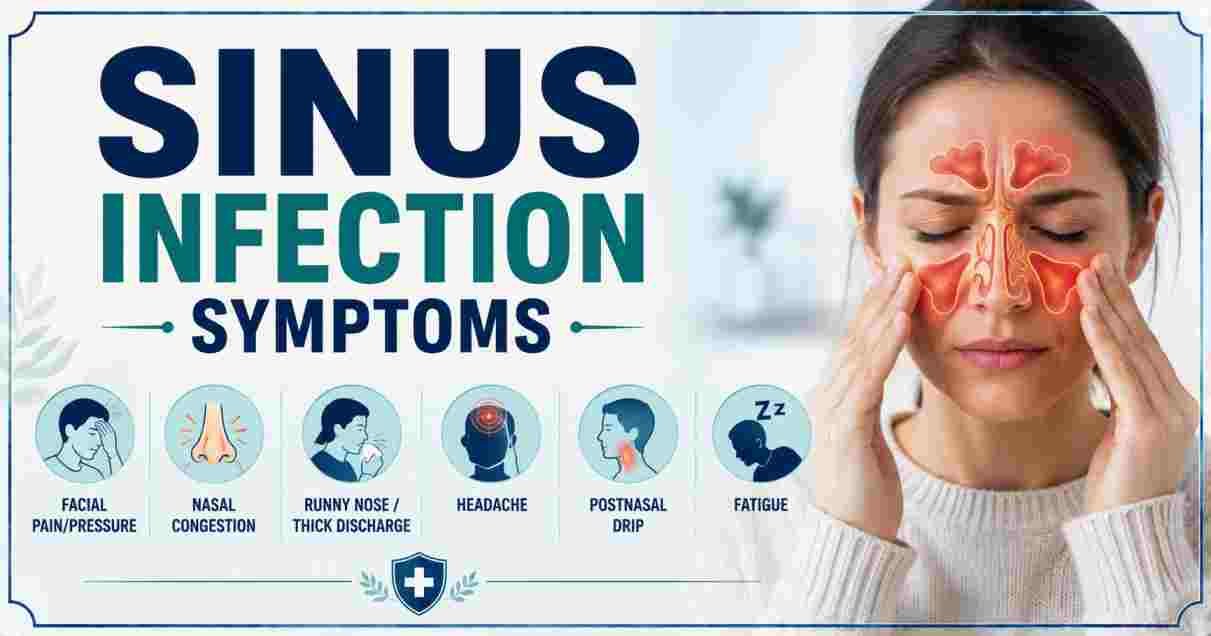
Where do sinus infections come from and why are they so common?
A sinus infection, medically called sinusitis or rhinosinusitis, develops when the air-filled pockets around the nose and eyes — the paranasal sinuses — become inflamed and fill with fluid. That trapped fluid creates a warm, moist environment where germs can multiply, leading to the congestion, pressure, and drainage most people recognize as a sinus infection. Most cases start the same way: a common cold or seasonal allergy flare-up inflames the nasal lining, which blocks the tiny channels that normally drain the sinuses, and mucus backs up rather than draining normally. In the vast majority of cases the underlying trigger is a virus, not bacteria, which is why the CDC states plainly that a sinus infection “usually gets better on its own — without antibiotics.”
Heading into 2026, sinus infections remain one of the most frequently diagnosed conditions in American primary care, and their frequency is closely tied to the broader respiratory illness landscape. Nearly 1 in 7 US adults is diagnosed with a sinus infection every year, and sinusitis is diagnosed even more often than hay fever, bronchitis, or COPD. Because sinus infections so often follow a cold, flu, or allergy flare, understanding their symptoms, causes, and expected duration — and knowing when a case has crossed from a routine viral nuisance into something that needs medical attention — is essential for anyone navigating the crowded cold-and-flu months of 2026.
Interesting Facts About Sinus Infection Symptoms in the US 2026
| Fact Category | Key Data Point |
|---|---|
| Adults diagnosed with rhinosinusitis annually | 12% of the US population — nearly 1 in 8 adults |
| Total annual sinusitis diagnoses | Over 30 million cases per year |
| Presumed bacterial acute sinusitis cases annually | About 20 million cases |
| Office visits caused by bacterial sinusitis | 5.1 million annually |
| Share of sinus infections caused by viruses (CDC) | 90% to 98% |
| Direct medical cost of sinusitis management | Over $11 billion per year |
| Added cost from lost productivity/reduced work | $12 billion to $20 billion annually |
| Antibiotic prescriptions attributable to sinusitis | More than 1 in 5 adult antibiotic prescriptions — 5th most common reason for antibiotics |
| Viral sinus infection typical duration | 5 to 7 days |
| Threshold for suspecting bacterial infection | Symptoms lasting 10 days or more without improvement, or “double worsening” |
| Chronic sinusitis definition | Symptoms lasting more than 12 weeks |
Source: American Academy of Otolaryngology–Head and Neck Surgery Foundation (AAO-HNSF) 2025 Adult Sinusitis Guideline, CDC
These numbers make clear that a sinus infection is less an occasional inconvenience and more a routine feature of American healthcare in 2026. With more than 30 million diagnoses every year and a direct cost exceeding $11 billion, sinusitis ranks among the most economically significant common illnesses in the country — and when lost productivity is added on top, the total burden climbs as high as $20 billion annually. Perhaps the most important number in this table for the average person is the 90% to 98% figure: the overwhelming majority of sinus infections are viral, meaning antibiotics will not help them heal faster and may only add unnecessary side effects.
That mismatch between cause and treatment shows up directly in the prescribing data. Sinusitis is responsible for more than one in five antibiotic prescriptions given to adults, making it the fifth most common reason doctors prescribe antibiotics nationwide — even though the guidelines are clear that a bacterial cause should be suspected only when symptoms persist for 10 days or longer without improvement, or when an initial improvement is followed by a sudden “double worsening.” Understanding this timeline is the single most useful piece of information for anyone trying to figure out whether their 2026 sinus symptoms need a doctor’s visit or simply more time and rest.
Sinus Infection Symptoms in the US 2026
Reported Sinus Infection Symptom Prevalence Among US Adults (NHANES data)
Nasal Blockage        ██████████████████████████████████ 6.0% (6.9 million)
Loss/Change of Smell  ████████████████████████████████████████████ 8.1% (9.17 million)
Sinus Pain/Pressure   ████████████ 2.1% (2.37 million)
Discolored Mucus      ██████ 1.1% (1.28 million)
| Symptom | Description |
|---|---|
| Nasal congestion/blockage | Affects 6.0% of US adults (6.9 million people) — a core diagnostic symptom |
| Loss or change of sense of smell (dysosmia) | The most common individual symptom — 8.1% of adults (9.17 million people) |
| Facial pain or pressure | Present in 2.1% of adults (2.37 million people); often centered around the cheeks, eyes, or forehead |
| Discolored (purulent) nasal discharge | Reported by 1.1% of adults (1.28 million people); a hallmark sign pointing toward bacterial cause |
| Postnasal drip | Mucus draining down the back of the throat, often triggering cough |
| Headache and tooth or ear pressure | Common secondary symptoms from sinus pressure buildup |
| Fever | May be present, especially in bacterial cases; fever above 102°F (39°C) for 3-4 days is a red flag |
| Cough | Often worse at night due to postnasal drip |
Source: National Health and Nutrition Examination Survey (NHANES), National Institutes of Health
Two or more of these symptoms occurring together — particularly nasal blockage paired with facial pain, pressure, or discolored mucus — is what clinicians look for when compatible with a chronic rhinosinusitis diagnosis. The NHANES data shows that loss or change in the sense of smell is actually the single most commonly reported individual symptom, affecting more Americans (9.17 million) than nasal blockage itself, which may surprise people who associate sinus infections primarily with congestion. This matters clinically because a sudden change in smell, when combined with facial pressure, is one of the clearest signals that the sinuses — not just the nose — are involved.
Discolored, purulent nasal discharge is the least commonly reported symptom in the general population data, but it carries outsized diagnostic weight, since it is one of the two “major symptoms” clinicians rely on when distinguishing a probable bacterial infection from a viral one. Facial pain and pressure, meanwhile, tend to localize depending on which sinus cavity is affected — pain over the cheeks and upper teeth typically points to the maxillary sinuses, while pressure between or above the eyes points to the frontal or ethmoid sinuses. Recognizing which combination of symptoms you’re experiencing — and for how long — is the foundation for the duration-based diagnostic criteria covered next.
Sinus Infection Duration and Diagnosis Criteria in the US 2026
Sinusitis Classification by Duration (AAO-HNSF 2025 Guideline)
Viral (typical resolution)   ████████ 5-7 days
Acute Rhinosinusitis (ARS)   ████████████████████████████ up to 4 weeks
Subacute                     ████████████████████████████████████ 4-12 weeks
Chronic Rhinosinusitis (CRS) ████████████████████████████████████████ 12+ weeks
| Classification | Duration | Diagnostic Signal |
|---|---|---|
| Viral rhinosinusitis (VRS) | 5 to 7 days typical resolution | Improves steadily; no antibiotics needed |
| Acute rhinosinusitis (ARS) | Less than 4 weeks | Includes both viral and bacterial causes |
| Acute bacterial rhinosinusitis (ABRS) | Symptoms persist 10+ days without improvement | OR symptoms worsen within 10 days after initial improvement (“double worsening”) |
| Severe onset criterion | High fever (>102°F/39°C) + purulent discharge | Present for 3 to 4 consecutive days at illness onset |
| Recurrent acute rhinosinusitis (RARS) | 4 or more episodes per year | Without persistent symptoms between episodes |
| Chronic rhinosinusitis (CRS) | More than 12 weeks | With or without acute exacerbations |
| First-line antibiotic duration (2025 update) | 5 to 7 days | Reduced from the prior 5-10 day recommendation |
Source: AAO-HNSF 2025 Adult Sinusitis Clinical Practice Guideline Update
The 2025 update to the national adult sinusitis guideline sharpened the duration-based criteria that doctors use to decide whether a case has become bacterial and needs treatment. The core rule remains the “10-day mark”: if nasal blockage, facial pain-pressure-fullness, or purulent drainage persist without any improvement for 10 days or more beyond the start of upper respiratory symptoms, a bacterial cause becomes likely. The second, and arguably more distinctive, warning sign is “double worsening” — a pattern where a person starts feeling better after the first few days of a cold, only to suddenly develop new or worsening fever, headache, or nasal discharge. This biphasic pattern is often the clearest single indicator that a secondary bacterial infection has taken hold on top of an initial viral illness.
One of the most consequential changes in the updated guideline is the recommendation to extend “watchful waiting” — managing symptoms without antibiotics — to all patients with uncomplicated bacterial sinusitis, not just those with mild illness as prior guidance suggested. When antibiotics are appropriate, the first-line recommendation shifted to amoxicillin with or without clavulanate, and the standard treatment course was shortened from 5-10 days down to just 5-7 days, reflecting growing evidence that shorter courses are equally effective while reducing the risk of antibiotic resistance. Anyone whose sinus symptoms cross the 12-week mark falls into a different category entirely — chronic rhinosinusitis — which nearly all specialists agree requires a fundamentally different diagnostic and treatment approach than a routine acute infection.
Viral vs Bacterial Sinus Infection Causes in the US 2026
Sinus Infection Causes — Share of All Cases
Viral           ██████████████████████████████████████████████ 90-98%
Bacterial       ███ 2-10%
Fungal (rare)   █
| Cause Type | Share of Cases | Key Characteristics |
|---|---|---|
| Viral | 90% to 98% | Follows a cold; resolves in 5-7 days; antibiotics ineffective |
| Bacterial | Roughly 2% to 10% | Most common bacteria: Streptococcus pneumoniae, Haemophilus influenzae, Moraxella catarrhalis |
| Fungal | Rare overall | Seen mostly in immunocompromised patients; can present with fever, nasal bleeding |
| Allergic/non-infectious | Common trigger factor | Seasonal allergies inflame nasal passages, raising infection risk |
| Structural risk factors | Predisposing, not causal | Nasal polyps, deviated septum, growths that block sinus drainage |
| Other risk factors | Predisposing | Smoking/secondhand smoke exposure, weakened immune system, recent cold |
Source: CDC Sinus Infection Basics; StatPearls/NIH Bookshelf, Acute Sinusitis (2025)
The 90% to 98% viral share cited by the CDC is arguably the single most important fact in this entire topic, because it directly explains why most people recover from a sinus infection with rest, fluids, and symptom relief rather than a prescription. Bacterial sinus infections make up a much smaller slice of total cases but are responsible for a disproportionate share of doctor visits and antibiotic prescriptions, largely because bacterial and viral sinusitis look nearly identical in their early days — both start with congestion, facial pressure, and drainage — and only the duration and pattern of the illness reliably separates the two. When bacteria are the cause, three organisms account for the overwhelming majority of cases: Streptococcus pneumoniae, Haemophilus influenzae, and Moraxella catarrhalis.
Fungal sinus infections are rare in the general population but become a much more serious concern for immunocompromised individuals, where they can present with fever, nasal bleeding, or facial pain and require urgent evaluation rather than watchful waiting. Meanwhile, several factors don’t directly cause a sinus infection but dramatically raise the odds of developing one: seasonal allergies inflame the same nasal tissue that a cold would, nasal polyps and a deviated septum physically block normal sinus drainage, and smoking or exposure to secondhand smoke damages the cilia that normally sweep mucus and germs out of the sinuses. Anyone managing recurring sinus problems alongside seasonal allergy symptoms may find it useful to review the Spring Allergy Statistics in US report, since lengthening pollen seasons are one of the most significant upstream drivers of sinus inflammation nationwide.
Chronic Sinusitis Symptoms and Prevalence in the US 2026
Chronic Sinusitis Prevalence by Type — US Adults
Overall CRS (all types)         █████████████████████████ 13%
CRS with Nasal Polyps (CRSwNP)  ████ 1-4% (~13 million)
| Chronic Sinusitis Metric | Data |
|---|---|
| Overall CRS prevalence in the US | Approximately 13% of the population |
| CRS with Nasal Polyps (CRSwNP) prevalence | 1% to 4% of US adults — roughly 13 million people |
| Share of CRS patients who have CRSwNP | 25% to 30% |
| Typical age of CRSwNP onset | Between ages 40 and 60 |
| CRSwNP patients who also have asthma | More than half |
| CRSwNP diagnosed prevalent cases (US, 2025) | Approximately 2 million cases |
| Male share of diagnosed CRSwNP cases | 55% |
| Prevalence by race/ethnicity (sinusitis, general) | White: 11.7%; mixed race: 12.5%; Black: 10.8%; Native American/Alaskan Native: 10.5%; Hispanic/Latino: 8%; Asian: 6.6% |
Source: American College of Allergy, Asthma & Immunology (ACAAI); DelveInsight CRSwNP Epidemiology Report 2026; StatPearls/NIH Chronic Sinusitis (2026)
Chronic rhinosinusitis affects a strikingly large share of the US population — roughly 13% — but the subtype involving nasal polyps, known as CRSwNP, is both less common and far more disruptive to daily life. Affecting an estimated 13 million American adults, CRSwNP typically emerges in middle age, between 40 and 60, and carries a strong connection to asthma: more than half of people with nasal polyps also have asthma, reflecting a shared underlying inflammatory pathway between the upper and lower airways. Unlike a typical sinus infection that clears up within a couple of weeks, nasal polyps are noncancerous growths that can physically block airflow and drainage, meaning symptoms like nasal obstruction and loss of smell often persist unless the polyps themselves are treated.
The racial and ethnic breakdown of general sinusitis prevalence reveals a wide spread, ranging from 6.6% among Asian adults to 12.5% among adults of mixed race or ethnicity, with White adults at 11.7% and Black adults at 10.8% falling in between. These differences likely reflect a combination of factors including environmental exposures, access to diagnosis, and underlying rates of related conditions like allergic rhinitis and asthma across different populations. For anyone whose chronic sinus symptoms overlap with breathing difficulty or a diagnosed respiratory condition, the Pneumonia Statistics in US report offers useful context on how upper respiratory conditions like sinusitis can interact with more serious lower respiratory illness, since blocked sinus drainage is one of several pathways that can precede a secondary lung infection.
Sinus Infection and Antibiotic Treatment Statistics in the US 2026
Antibiotic Treatment Duration Recommendation Change (2025 Guideline)
Previous recommendation     ████████████████████████████████████ 5-10 days
2025 updated recommendation ████████████████████ 5-7 days
| Treatment Metric | Data |
|---|---|
| First-line antibiotic (2025 update) | Amoxicillin, with or without clavulanate |
| Previous first-line recommendation | Amoxicillin alone |
| Treatment duration (2025 update) | 5 to 7 days, reduced from 5-10 days |
| Watchful waiting eligibility | Extended to all uncomplicated bacterial sinusitis patients |
| Imaging recommendation | Not recommended unless a complication is suspected |
| Antibiotics inappropriate for | Viral rhinosinusitis (90-98% of all cases) |
| Possible antibiotic side effects | Rash, allergic reaction, C. diff infection, antimicrobial resistance |
| Physician office visits for presumed bacterial sinusitis | 5.1 million annually |
Source: AAO-HNSF 2025 Adult Sinusitis Guideline; CDC Sinus Infection Treatment Guidance
The 2025 guideline update reflects a broader national push toward antibiotic stewardship, driven by the recognition that unnecessary antibiotic use for a mostly-viral illness carries real risk without corresponding benefit. Switching the first-line recommendation from amoxicillin alone to amoxicillin with clavulanate improves coverage against resistant bacterial strains, while shortening the standard course from up to 10 days down to 5-7 days reduces the cumulative antibiotic exposure per patient without sacrificing effectiveness. The guideline’s expansion of watchful waiting to include all uncomplicated bacterial cases — not just mild ones — signals that clinicians are increasingly comfortable letting the body’s immune system resolve even confirmed bacterial infections when the illness isn’t severe.
The CDC is equally direct about the risks of antibiotics when they aren’t needed: side effects range from a mild rash to severe allergic reactions, antimicrobial-resistant infections, and C. diff infection, which can cause severe colon damage and, in the most serious cases, death. Given that 90% to 98% of sinus infections are viral, the overwhelming majority of people who ask a doctor for antibiotics for sinus symptoms will not benefit from them — a mismatch that helps explain why sinusitis remains the fifth-leading reason for antibiotic prescriptions despite clear guidance that most cases should be managed without them. Anyone currently dealing with a lingering respiratory illness that involves both a sore throat and sinus pressure may also want to review the Flu Hospitalization Statistics in US report, since bacterial sinus complications are one of several secondary infections tracked alongside a severe flu season.
When to See a Doctor for Sinus Infection Symptoms in the US 2026
| Warning Sign | What It May Indicate |
|---|---|
| Symptoms lasting 10+ days without improvement | Likely bacterial infection; evaluation recommended |
| “Double worsening” after initial improvement | Strong indicator of bacterial superinfection |
| Fever above 102°F (39°C) for 3-4+ consecutive days | Severe onset criterion for bacterial sinusitis |
| Severe facial pain, swelling, or redness around eyes/nose | Possible spreading infection; seek prompt care |
| Symptoms recurring 4+ times per year | Recurrent acute rhinosinusitis (RARS) |
| Symptoms persisting beyond 12 weeks | Chronic rhinosinusitis; different management approach needed |
| Weakened immune system with sinus symptoms | Higher risk of bacterial or fungal complication |
Source: CDC Sinus Infection Basics; AAO-HNSF 2025 Adult Sinusitis Guideline
Most people can manage a run-of-the-mill viral sinus infection at home with rest, fluids, and over-the-counter symptom relief, watching for the 5-to-7-day window in which viral cases typically resolve on their own. The clearest signals that it’s time to involve a healthcare provider are the same duration and pattern markers used in the clinical guidelines: symptoms that simply won’t budge after 10 days, or a case that seems to be improving before suddenly taking a turn for the worse. Severe facial swelling or redness around the eyes deserves prompt attention regardless of how long symptoms have lasted, since it can signal that an infection is spreading beyond the sinus cavity itself.
For the smaller group of people whose sinus problems keep coming back — four or more times a year — or who cross the 12-week threshold into chronic territory, the path forward looks different from a standard course of antibiotics: it typically involves imaging, allergy evaluation, or referral to an ear, nose, and throat specialist to identify an underlying structural or inflammatory cause. Whatever the pattern, the consistent thread across all of the 2026 clinical guidance is that time and symptom pattern, not the presence of symptoms alone, are what should guide the decision between home care and a doctor’s visit.
Disclaimer: This research report is compiled from publicly available sources. While reasonable efforts have been made to ensure accuracy, no representation or warranty, express or implied, is given as to the completeness or reliability of the information. We accept no liability for any errors, omissions, losses, or damages of any kind arising from the use of this report.