
Where Is Norfolk Island located?
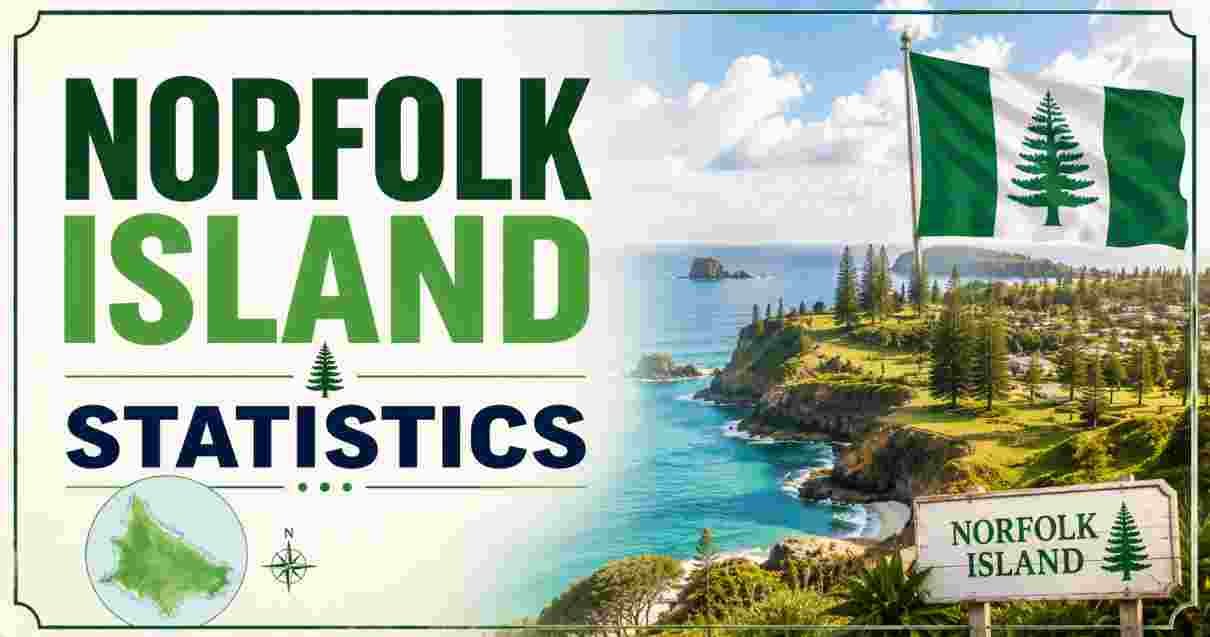
Norfolk Island is a small, subtropical island territory in the South Pacific Ocean, positioned roughly 1,600 kilometers northeast of Sydney, 890 kilometers northeast of Lord Howe Island, and 1,100 kilometers northwest of Auckland, New Zealand. Governed as an external territory of the Commonwealth of Australia, the island has an unusual and distinctive cultural identity shaped by its founding population: many of today’s residents trace their ancestry back to the Bounty mutineers and their Tahitian companions, who relocated from the tiny Pitcairn Island in 1856. That heritage still shows up in daily life today through Norf’k, a Pitcairn-Norfolk creole language spoken alongside English, and through the island’s distinctive coat of arms, granted by Queen Elizabeth II in 1980, featuring the native Norfolk Island Pine flanked by Britain’s lion and Australia’s kangaroo.
In 2026, Norfolk Island sits at an important governance crossroads. Having formally become part of Australia under Section 122 of the Australian Constitution on 1 July 1914, the island operated under varying degrees of self-government for over a century before the Australian Government fully absorbed its administrative functions in 2015. With a population of under 2,200 people spread across just 36 square kilometers, an economy still heavily dependent on tourism, and a governance model currently being redesigned following a 2023 parliamentary inquiry, Norfolk Island offers a genuinely unique case study in how a tiny, remote community navigates modern statehood inside a much larger federal system.
Key Norfolk Island Facts in 2026
| Fact | Figure |
|---|---|
| Total population (2021 census) | 2,188 residents |
| Estimated population (May 2026) | ~2,193 residents |
| Total land area | 35-36 km² |
| Total coastline | 32 km (19.9 mi) |
| Capital/main settlement | Kingston |
| Council seat | Burnt Pine |
| Currency | Australian dollar |
| Governance status | External territory of Australia, subject to NSW/Queensland-linked legislation |
| Time zone | Norfolk Time (NFT), currently 15 hours ahead of New York |
| Global area rank | 235th worldwide, roughly the size of Manhattan |
Source: 2021 Australian Census; AreaSearch.com.au suburb data, May 2026; World Data Info Oceania profile; Wikipedia Norfolk Island Regional Council entry.
Taken together, these figures paint a picture of one of the smallest and most remote inhabited territories connected to a major developed nation. With a population that has barely moved — from 2,188 residents recorded in the 2021 census to an estimated 2,193 as of May 2026 — Norfolk Island stands in stark contrast to the rapid growth seen across much of mainland Australia, reflecting both the island’s fixed physical constraints and the demographic pressures common to small, isolated communities.
What stands out most is the disconnect between the island’s tiny scale and the complexity of its governance arrangements. At just 35 to 36 square kilometers — comparable in size to Manhattan — Norfolk Island nonetheless required its own dedicated Commonwealth legislation, its own regional council structure, and, as of 2024, an entirely new governance model still being rolled out in stages. Few places in the developed world pack this much administrative complexity into so small a footprint.
Norfolk Island Population and Demographics Statistics 2026
| Population Metric | Figure |
|---|---|
| Total population (2021 census) | 2,188 |
| Estimated population (2026) | ~2,193 |
| Norfolk Island-born residents (2021 census) | 347 (15.9%) |
| Residents claiming Pitcairn heritage (2021) | 25.1% |
| Residents claiming “Norfolk Islander” heritage (2021) | 14.6% |
| Population living in Australia or overseas within a 5-year census window | 37.18% |
| Christian population share | 68.5% (Anglican, Catholic, Uniting Church) |
| Dominant older-worker demographic | Ages 50-64, the largest single segment |
| Workforce aged 65-74 | 11%, vs. 5.9% (mid-north coast NSW) and 4.4% (NSW average) |
Source: 2021 Australian Census via Wikipedia “Norfolk Islanders”; Norfolk Island Regional Council Regional Plan, citing ABS Census 2021/Remplan data.
Norfolk Island Population Heritage Breakdown (2021 Census)
Pitcairn heritage claimed           █████████████ 25.1%
Norfolk Island-born                 ████████ 15.9%
"Norfolk Islander" heritage claimed ███████ 14.6%
The demographic makeup of Norfolk Island reveals a population still deeply connected to its founding Bounty mutineer and Pitcairn ancestry, with roughly a quarter of residents in the 2021 census claiming Pitcairn heritage specifically. At the same time, the relatively modest 15.9% share actually born on the island signals a community that has always relied heavily on external migration and return migration to sustain itself — a pattern reinforced by the striking finding that over 37% of the population spent time living in Australia or overseas within a single five-year census period.
The island’s age structure presents one of its most pressing long-term challenges: with the 50-to-64 age bracket forming the largest population segment and young workers aged 25-34 forming the smallest, Norfolk Island faces a genuine workforce sustainability problem. The fact that 11% of the workforce is aged 65 to 74 — more than double the equivalent share in nearby mainland New South Wales — reflects both an aging population and the practical reality that many islanders continue working well past typical retirement age simply because the local economy needs them to. For readers researching how population size compares across the world’s smallest nations and territories, our overview of countries with the lowest population situates Norfolk Island’s roughly 2,200 residents within a broader global context.
Norfolk Island Geography and Area Statistics 2026
| Geographic Metric | Figure |
|---|---|
| Total land area | 35-36 km² |
| Total coastline length | 32 km (19.9 mi) |
| Number of islands in the group | 17 |
| Comparable land area | ~1.0x the size of Manhattan |
| Global area ranking | 235th worldwide |
| Regional area ranking | Among the smallest countries/territories in Oceania |
| Distance to Sydney, Australia | ~1,600 km northeast |
| Distance to Auckland, New Zealand | ~1,100 km northwest |
| Distance to Lord Howe Island | ~890 km northeast |
Source: WorldData.info Oceania Norfolk Island profile; Norfolk Island Regional Council geographic overview.
Norfolk Island Distances to Nearest Major Population Centers (Kilometers)
Lord Howe Island   ███████████████████████████████ 890 km
Auckland, NZ       ██████████████████████████████████████ 1,100 km
Sydney, Australia  ██████████████████████████████████████████████████████ 1,600 km
Norfolk Island’s extreme geographic isolation is perhaps its single most defining physical characteristic, sitting roughly 890 to 1,600 kilometers from the nearest significant population centers across three different countries. This isolation, combined with the island’s compact 35-to-36-square-kilometer footprint, has shaped nearly every aspect of life on the island, from the high cost of imported goods to the logistical complexity of delivering government services, healthcare, and emergency support to such a remote location.
The island group’s composition of 17 total islands, though only the main island is inhabited at any meaningful scale, adds ecological and administrative complexity beyond what the population figures alone suggest. Ranking 235th globally by area, Norfolk Island sits comfortably among the smallest inhabited territories connected to any major nation, a scale factor that consistently reappears throughout discussions of the island’s governance challenges, since delivering standard national services to a population this small, this remote, inevitably costs far more per resident than equivalent services on the Australian mainland.
Norfolk Island Economy and Tourism Statistics 2026
| Economic Metric | Figure |
|---|---|
| Economic classification | Affluent Australian territory economy |
| Primary economic sectors | Tourism and re-exportation |
| Historical economic status | Previously operated as a tax haven |
| Emerging export sector | Medical cannabis, an expanding industry |
| Top export partner (by % share) | USA, 31% |
| Second-largest export partner | Belgium, 9% |
| Third-largest export partner | Philippines, 7% |
| Socioeconomic status (SEIFA index) | Medium socioeconomic status (SES) region |
| Workforce participation trend | Diminishing, with rising part-time employment |
Source: Bamwor.com Norfolk Island Economy Profile, 2026; Norfolk Island Regional Council Regional Plan, citing SEIFA and Remplan data.
Norfolk Island Export Partners by Share of Total Exports
USA            ██████████████████████████████ 31%
Belgium        █████████ 9%
Philippines    ███████ 7%
Norfolk Island’s economy remains structurally dependent on tourism, the industry the Norfolk Island Regional Council itself describes as the island’s “clear driving industry.” Yet this tourism dependence carries a well-documented downside: it also reflects historically low wage roles, contributing to the broader economic pressures the island community experiences due to its isolation and remoteness, even while the region maintains a medium socioeconomic status ranking under Australia’s standard SEIFA measurement framework.
The island’s emerging medical cannabis export industry represents one of the more notable recent economic diversification efforts, adding a genuinely new revenue stream to an economy that has traditionally leaned almost entirely on tourism and modest re-export activity. With the United States absorbing nearly a third of all exports and a workforce participation rate that continues trending downward alongside a corresponding rise in part-time employment, Norfolk Island’s economic planners face the classic small-island challenge: diversifying a narrow economic base without the population scale or capital access that larger economies rely on to manage that transition.
Norfolk Island Governance History Statistics 2026
| Governance Milestone | Year/Detail |
|---|---|
| Norfolk Island accepted as an Australian territory | 1 July 1914 (Section 122, Australian Constitution) |
| Norfolk Island Act establishes self-government | 1979 |
| Legislative Assembly members | 9, elected for 3-year terms |
| Self-government abolished | 17 June 2015 |
| Norfolk Island Legislation Amendment Act 2015 takes effect | 2015 |
| Norfolk Island Regional Council established | 1 July 2016 |
| NIRC subject to legislation of | New South Wales (state-level) |
| Federal funding for 2015-16 reform period (initial) | $136.5 million |
| Revised total reform funding, 2015-16 to 2018-19 | $173.1 million |
| New governance model announced | 13 November 2024 |
Source: Australian Department of Infrastructure, Transport, Regional Development, Communications, Sport and the Arts, governance page; Australian National Audit Office (ANAO) performance audit report; Wikipedia “Norfolk Island Legislative Assembly.”
Norfolk Island Governance Timeline, 1914-2026
1914   ● Accepted as Australian territory
1979   ● Self-government begins (Legislative Assembly established)
2015   ● Self-government abolished (17 June)
2016   ● Norfolk Island Regional Council established (1 July)
2024   ● New governance model announced (13 November)
2026   ● Staged implementation of new model continues
The abolition of Norfolk Island’s self-government in 2015 ended more than 35 years of local legislative autonomy that had existed under the original Norfolk Island Act 1979. That earlier system gave the island’s own nine-member Legislative Assembly authority over local matters, but a series of parliamentary inquiries ultimately concluded the arrangement had become financially and administratively unsustainable for a jurisdiction of Norfolk Island’s tiny population size, prompting the Australian Government under then-Prime Minister Tony Abbott to assume full control.
The $173.1 million in total federal funding committed to managing the 2015-2019 transition period underscores just how costly it proved to restructure governance for a population of roughly 2,200 people — a per-capita reform cost that would be almost unimaginable applied to a mainland Australian community of similar size. With the Australian Government announcing an entirely new governance model in November 2024, to be implemented through a staged approach, Norfolk Island’s governance story remains genuinely unresolved heading into 2026, with the department explicitly noting that local groups claiming independent governing authority for the island “have no basis in law” — a reminder that questions about the island’s political status continue generating real community tension even a decade after the 2015 reforms took effect.
Norfolk Island Language, Culture, and Society Statistics 2026
| Cultural Metric | Figure |
|---|---|
| Official/primary languages | English, Norfolk (Norf’k), Fijian |
| Norf’k language classification | Pitcairn-Norfolk creole |
| Dominant religion | Christianity, 68.5% |
| Largest Christian denomination presence | Anglican, Catholic, Uniting Church |
| Irreligious population share | Included within remaining ~31.5% |
| National coat of arms granted | 1980, by Queen Elizabeth II |
| Island motto | “Inasmuch” (from the Gospel of Matthew) |
| Emblem featured on coat of arms | Norfolk Island Pine, flanked by lion and kangaroo |
| Founding heritage event | 1856 Pitcairn Islander resettlement |
Source: Bamwor.com Norfolk Island cultural profile, 2026; Wikipedia “Norfolk Islanders”; official Norfolk Island coat of arms records.
Norfolk Island Religious Composition (2021 Census-Based)
Christianity (Anglican/Catholic/Uniting/Other)   ████████████████████ 68.5%
Irreligion and other                             ██████████ ~31.5%
The island’s linguistic and cultural identity remains one of its most distinctive features among Australian territories, centered on Norf’k, a creole language descended directly from the original Pitcairn Islander settlers who arrived in 1856 after outgrowing tiny Pitcairn Island itself. This linguistic heritage, still actively spoken alongside English and recognized within the community’s formal identity, ties Norfolk Island to one of history’s most famous maritime stories — the mutiny on HMS Bounty — in a way few other places on Earth can claim.
The 1980 coat of arms, granted by Queen Elizabeth II, deliberately encodes this dual heritage: the Norfolk Island Pine at the center represents the island’s unique natural environment, while Britain’s lion and Australia’s kangaroo flank the shield to acknowledge both the island’s colonial origins and its present status within the Australian Commonwealth. With 68.5% of residents identifying as Christian, spanning Anglican, Catholic, and Uniting Church traditions, the island’s religious composition broadly mirrors patterns seen across mainland Australia, even as its language and settlement history remain genuinely one of a kind. Readers interested in how religious demographics compare across the broader Australian context can find further detail in our religion in Australia statistics report, which breaks down the mainland’s denominational makeup in more depth.
Norfolk Island Public Safety and Regional Comparison Statistics 2026
| Comparison Metric | Norfolk Island | Broader Australian Context |
|---|---|---|
| Population growth performance ranking | Top 10% nationally (short/medium-term trends, per AreaSearch) | Varies significantly by region |
| Infrastructure investment activity percentile | 0th percentile, below national averages | Higher in most mainland regions |
| Employment performance | Below expectations compared to broader benchmarks | Stronger in most mainland labor markets |
| Governing legal framework | Subject to NSW state-level legislation via NIRC | Direct state/territory governance elsewhere |
| UNCTAD statistical monitoring categories | Trade, economic trends, FDI, population/labor force, information economy, maritime transport | Standard for most UN member/associated territories |
| World Factbook total country ranking (population) | 233rd globally | N/A |
Source: AreaSearch.com.au suburb-level analysis, July 2026; CIA World Factbook Norfolk Island entry, updated January 2026; UNCTAD Data Hub General Profile: Norfolk Island.
Norfolk Island Regional Performance Indicators (Percentile Rankings)
Population Growth Performance      ██████████████████ Top 10% nationally
Infrastructure Investment Activity █ 0th percentile
The contrast between Norfolk Island’s strong population growth ranking and its weak infrastructure investment ranking captures a genuine tension at the heart of the island’s current situation: even as the community holds steady or grows modestly relative to comparable small regions, the capital investment needed to support that population — roads, utilities, healthcare facilities, digital connectivity — has not kept pace. AreaSearch’s analysis placing infrastructure development activity at the 0th percentile nationally is a stark indicator that, whatever governance model ultimately emerges from the ongoing 2024-2026 reform process, physical infrastructure funding will likely remain one of the island’s most pressing unresolved needs.
Norfolk Island’s inclusion in international statistical frameworks like the UNCTAD Data Hub and the CIA World Factbook, where it’s tracked as its own distinct entity with a 233rd-place global population ranking, reflects its formal status as a recognized territory even while it remains constitutionally and administratively part of Australia. This dual identity — locally governed through New South Wales-linked legislation, yet internationally catalogued as a semi-autonomous statistical unit — is a genuinely unusual arrangement that continues to shape how researchers, policymakers, and the islanders themselves understand Norfolk Island’s place in the world as it moves through this pivotal governance transition. For readers researching how Australian community and safety statistics compare more broadly, our crime statistics in Australia report offers useful mainland context against which Norfolk Island’s small, tight-knit community can be measured.
Disclaimer: This research report is compiled from publicly available sources. While reasonable efforts have been made to ensure accuracy, no representation or warranty, express or implied, is given as to the completeness or reliability of the information. We accept no liability for any errors, omissions, losses, or damages of any kind arising from the use of this report.