
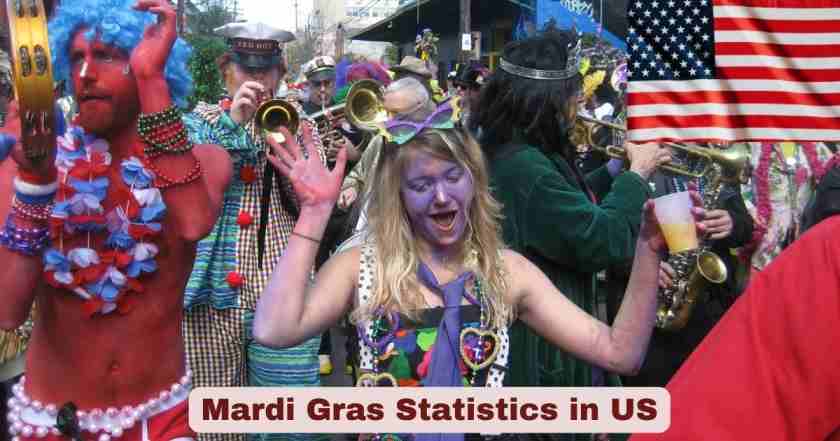
Mardi Gras in the US 2026
Mardi Gras — French for “Fat Tuesday” — stands as one of the most electrifying, culturally rich, and economically significant celebrations in the entire United States. In 2026, the Carnival season officially kicked off on January 6 (Twelfth Night) and culminated on Fat Tuesday, February 17, 2026, drawing hundreds of thousands of visitors from across the country and around the world to the streets of New Orleans, Louisiana, Mobile, Alabama, and dozens of other Gulf Coast cities. What began in 1699 when French explorer Pierre Le Moyne d’Iberville named a stretch of the Mississippi River “Pointe du Mardi Gras” has grown into one of America’s most celebrated and economically powerful annual events. The 2026 Mardi Gras season is particularly notable as it coincided with both Valentine’s Day and Presidents’ Day weekend, a rare calendar alignment that pushed hotel bookings, visitor spending, and overall tourism volumes to peak levels not seen since pre-pandemic years.
What makes Mardi Gras 2026 a watershed moment in modern American festival tourism is the convergence of record-breaking crowd projections, a heavily fortified public safety infrastructure, and steadily recovering hospitality metrics. According to data from New Orleans & Company — the city’s official tourism promotion agency — downtown hotel occupancy was tracking at approximately 90% across 26,000 hotel rooms in the French Quarter and downtown core during the final Mardi Gras weekend, matching the 87% average recorded across the five-night stretch in 2025 and significantly outpacing the 81% average seen in 2024. The most recent Mardi Gras Economic Impact Study, commissioned by the Mayor’s Mardi Gras Advisory Council and conducted by Tulane University Economics Professor Toni L. Weiss, placed the total direct and indirect economic footprint of the celebration at $891,202,780 — representing 3.07% of New Orleans’ Gross Domestic Product. From the Super Krewe parades rolling down St. Charles Avenue to the hundreds of law enforcement officers deployed city-wide, Mardi Gras 2026 is an economic, cultural, and logistical spectacle on an extraordinary scale.
Interesting Facts: Mardi Gras in the US 2026
| Fact | Detail |
|---|---|
| Official Mardi Gras Day 2026 | Tuesday, February 17, 2026 |
| Carnival Season Start | January 6, 2026 (Twelfth Night) |
| First US Mardi Gras | March 3, 1699 — at Pointe du Mardi Gras, Louisiana |
| First American Mardi Gras Celebration | 1703 — Fort Louis de la Mobile, Alabama |
| First Organized New Orleans Krewe | Mistick Krewe of Comus, formed 1856–1857 |
| Official Mardi Gras Colors | Purple (Justice), Gold (Power), Green (Faith) — assigned in 1892 by Rex parade |
| Mardi Gras is a Legal State Holiday In | Louisiana only — the only US state to recognize it officially |
| Word “Krewe” Coined By | Mistick Krewe of Comus, 1857 |
| First Mardi Gras King Cake Tradition | Twelfth Night Revelers, 1871 ball |
| First Mardi Gras Beads | Introduced by Krewe of Rex in 1921 |
| Largest New Orleans Krewe (2026) | Krewe of Endymion — 3,000+ riders, 37 floats, 60th anniversary parade on Feb 14, 2026 |
| Krewe of Cleopatra 2026 | 3,250+ riders, 25 floats (57 units) on the Uptown route |
| Mardi Gras Day Parades (2026) | Zulu (morning) + Rex (afternoon), both Feb 17, 2026 |
| Total Parades in Metro New Orleans | 80+ parades across the full Carnival season |
| Krewe of King Arthur Size | 2,400+ members, 70+ floats — largest first-weekend parade |
| Total Krewes in New Orleans Area | Over 60 active krewes parading in the metro area |
| Mobile, Alabama Mardi Gras | Nearly 1 million revelers per year; over 40 parades in 2026 |
| Mobile as Birthplace of US Mardi Gras | According to Alabama Tourism Department, Mobile’s Mardi Gras is the most-attended annual event in the state |
| Endymion Extravaganza 2026 Headliners | Blake Shelton and co-Grand Marshal Arthur Hardy — Endymion’s 60th anniversary |
Sources: MardiGrasNewOrleans.com; History.com; Louisiana Department of Culture, Recreation and Tourism (crt.louisiana.gov); City of Mobile (cityofmobile.org); Krewe of Endymion (endymion.org); Krewe of Cleopatra official site; Wikipedia – Mardi Gras in the United States
Mardi Gras 2026 is steeped in a tradition stretching back over 327 years to the first named celebration on American soil. The fact that Louisiana remains the only US state where Mardi Gras is a legal public holiday underscores how deeply the celebration is woven into the civic and cultural identity of the region. The colors chosen in 1892 — purple for justice, gold for power, and green for faith — have remained unchanged for 134 years and are recognized globally as shorthand for one of the most iconic festivals in the world.
What is remarkable about the 2026 Carnival season is the scale at which these traditions now operate. The Krewe of Endymion, celebrating its 60th anniversary in 2026, deploys over 3,000 riders on 37 floats and welcomes more than 20,000 party-goers to its post-parade Extravaganza inside the Caesars Superdome. The Krewe of Cleopatra alone fielded 3,250+ riders aboard 57 float units in 2026, showcasing how modern Mardi Gras krewes have transformed from small private clubs into large-scale public spectacles. That over 80 parades roll through the greater New Orleans area each Carnival season — and that Mobile, Alabama, which predates New Orleans as the birthplace of American Mardi Gras, still draws nearly 1 million spectators across its own 40+ parades — confirms just how nationally significant this celebration truly is.
Mardi Gras Economic Impact Statistics in the US 2026
| Metric | Data |
|---|---|
| Total Economic Impact (New Orleans) | $891,202,780 (direct + indirect) |
| % of New Orleans GDP | 3.07% |
| Net Fiscal Benefit to City of New Orleans | $28,028,543 (including franchise value) |
| City ROI on Mardi Gras Investment | $2.64 returned for every $1.00 spent |
| Projected Direct Tourism Spending (2026) | Over $90 million in direct visitor spending |
| Louisiana State Tax Revenue Increase | $14,300,000 increase attributable to Mardi Gras |
| Estimated Mardi Gras Season Visitors (New Orleans) | Approximately 1 million visitors during peak Carnival season |
| Downtown New Orleans Hotel Rooms Available | Approximately 26,000 rooms in French Quarter + downtown |
| Downtown Hotel Occupancy (Final Weekend, 2026) | Averaging approximately 90% |
| Prior Year (2025) Hotel Occupancy Average | 87% over the five-night final weekend |
| 2024 Hotel Occupancy Average Comparison | 81% — 2026 projected to outperform |
| Peak Saturday Hotel Occupancy (2025 benchmark) | 95% on Saturday night |
| Short-Term Rental Units in New Orleans | Approximately 6,000 units — near capacity for 2026 |
| Available Airbnb Units (Feb 13–14, 2026 check) | Fewer than 150 available units as of the final weekend |
| Hotel Room Rates During Mardi Gras Weekend | $500+ per night for remaining available rooms |
| Growth in Economic Impact Since 2004 | 300% increase — from ~$220M in 2004 to $891M in 2023 |
| Growth in Economic Impact Since 2014 | Nearly doubled from ~$465M to $891M |
Sources: Tulane University Economic Impact Study (commissioned by the Mayor’s Mardi Gras Advisory Council & New Orleans & Company, 2024); New Orleans & Company (neworleans.com); NOLA.com / The Times-Picayune (February 2026 reporting); PredictHQ Event Data 2026
The $891 million economic footprint of Mardi Gras is not a number to gloss over. It represents 3.07% of the entire gross domestic product of New Orleans — generated by a single annual festival that, at its core, offers most of its events for free. The city’s return on investment of $2.64 per $1.00 spent demonstrates that Mardi Gras is one of the most efficient publicly-supported cultural institutions in American local government history. The $14.3 million increase in Louisiana state tax revenues attributable to Mardi Gras further reinforces the statewide economic dividend that flows from the celebration each year.
In 2026, with hotel occupancy in the French Quarter and downtown tracking at approximately 90% across roughly 26,000 hotel rooms — and with short-term rentals nearly sold out, leaving fewer than 150 Airbnb units available as late as the final Thursday — the accommodation sector is operating at near-maximum capacity. Room rates of $500+ per night during Mardi Gras weekend represent a significant premium over typical New Orleans winter rates, and the fact that the 2026 season is projected to match or exceed the strong 2025 performance signals continued, robust post-pandemic recovery for one of America’s most vital cultural economies.
Mardi Gras Parade & Krewe Statistics in the US 2026
| Parade / Krewe | 2026 Details |
|---|---|
| Total Parades (New Orleans Metro) | Over 80 parades across the full Carnival season |
| Krewe of Endymion | 3,000+ riders, 37 floats, 80+ float chassis, parades Feb 14, 2026 (Valentine’s Day) |
| Endymion 60th Anniversary | Celebrity Grand Marshal: Blake Shelton; Co-Grand Marshal: Mardi Gras historian Arthur Hardy |
| Endymion Extravaganza | Over 20,000 attendees inside Caesars Superdome; tickets $260–$300 |
| Krewe of Bacchus | Super Krewe, parades Feb 15, 2026 (Sunday); Uptown route |
| Krewe of Orpheus | Super Krewe, parades Feb 16, 2026 (Lundi Gras); closes Uptown schedule |
| Krewe of Zulu | Parades morning of Feb 17, 2026 (Fat Tuesday); most culturally significant African American Carnival krewe |
| Krewe of Rex | Parades afternoon of Feb 17, 2026; established 1872; introduced Mardi Gras colors |
| Krewe of Cleopatra (2026) | 3,250+ riders, 25 floats / 57 units; theme: “Friday Night Is For the Girls“ |
| Krewe of Morpheus | 800 members, 24 floats; theme: “Morpheus Dreams of Literary Classics” |
| Krewe of Okeanos | 350 members, 22 floats including the double-decker Hippocampus float |
| Krewe of King Arthur | 2,400+ members, 70+ floats — largest first-weekend parade; 7th largest overall |
| Krewe of Isis | 200 members, 20 floats; 2026 theme: “Galentine’s Gras” |
| Krewe of Proteus | Founded 1882; second oldest krewe still actively parading |
| 3 Super Krewes (New Orleans) | Endymion, Bacchus, Orpheus — largest parades by float count and crowd size |
| Mobile, Alabama Parades | Over 40 parades from January 30 – February 17, 2026 |
| Zulu’s Signature Throw | Hand-decorated coconuts — among the most sought-after throws at Mardi Gras |
Sources: NOLA.com / Times-Picayune parade schedule (February 2026); Krewe of Endymion (endymion.org); Krewe of Cleopatra official site; MardiGrasNewOrleans.com; City of Mobile (cityofmobile.org); Mardi Gras Insider Tours; allevents.in Mardi Gras 2026 guide
The 2026 Carnival parade season in New Orleans is a logistical and artistic undertaking of staggering scale. With over 80 parades rolling across the full season, the concentration of activity in the final weekend — February 13–17, 2026 — is especially intense. Three Super Krewes take to the streets on consecutive nights: Endymion on Saturday (Feb 14), Bacchus on Sunday (Feb 15), and Orpheus on Monday, Lundi Gras (Feb 16). The Krewe of Endymion alone, in its 60th anniversary year with celebrity Grand Marshal Blake Shelton and historian co-Grand Marshal Arthur Hardy, deploys over 3,000 riders on more than 80 float chassis and draws over 20,000 revelers to its post-parade Extravaganza — effectively staging a concert, a parade, and a private party all in one night.
What distinguishes Mardi Gras parades from other American festivals is their democratic spirit: almost every parade is free and open to the public. The Krewe of King Arthur, which fields over 2,400 members on 70+ floats on the first Family Sunday of the season, exemplifies this ethos — members fund their own throws and costumes, and the spectacle is given freely to the streets. On Fat Tuesday itself, both the Krewe of Zulu (celebrated globally for its hand-decorated coconut throws, a tradition rooted in the African American community since the early 1900s) and the Krewe of Rex (founded 1872 and responsible for establishing the iconic purple, gold, and green color palette) take their place as the twin culminating acts of a season that is, in every sense, the greatest free show on Earth.
Mardi Gras Public Safety & Security Statistics in the US 2026
| Safety Metric | 2026 Data |
|---|---|
| Federal Threat Designation (Mardi Gras Weekend) | SEAR 1 — highest possible Special Event Assessment Rating (equivalent to Super Bowl) |
| Designation for Earlier Parades | SEAR 2 — second-highest threat classification |
| Total Law Enforcement Personnel (Peak Weekend) | Over 1,800 federal, state, and local officers |
| NOPD Staffing Level | 100% staffing during all parade days |
| NOPD Officers On Duty (Both Final Weekends) | Approximately 900 NOPD officers per weekend |
| Federal Personnel Deployed (Peak) | Over 500 federal personnel |
| State Personnel Deployed | Approximately 230 state personnel |
| Orleans Parish Sheriff Deputies | Minimum 175 deputies per parade day |
| Partner Law Enforcement Agencies | Over 20 partner agencies coordinating with NOPD |
| Louisiana National Guard | 500+ members deployed; expanded patrols beyond downtown |
| Security Infrastructure | Concrete barriers (Uptown route), water-filled serpentine barriers (St. Charles Ave), enhanced lighting, K-9 sweeps, drone surveillance, Coast Guard boats, nuclear/biological detection teams |
| Street Closures | Hard closures with barricades; heavy equipment blocking all side streets in/around French Quarter |
| City Emergency Operations Center | Activated for all major parades Feb 6 through Feb 17, 2026 |
| Special Event Period (SEAR 1) | Friday, Feb 13 – early morning Wednesday, Feb 18, 2026 |
Sources: City of New Orleans Official Press Release, February 2, 2026 (nola.gov); nolanewswire.com; WWNO Public Radio; Axios New Orleans; WGNO New Orleans
The 2026 Mardi Gras security apparatus is unprecedented in scope, reflecting both the post-January 1, 2025 New Orleans attack heightened awareness and the federal government’s recognition of the celebration as a SEAR 1 (Special Event Assessment Rating Level 1) event — the same designation used for the Super Bowl. The deployment of over 1,800 combined law enforcement personnel, including 900 NOPD officers at 100% staffing, 500+ National Guard members, and 175+ Orleans Parish Sheriff deputies per parade day, represents the most comprehensive public safety operation in the event’s modern history. Seventeen different security tools were activated, from K-9 sweeps and drone air support to Coast Guard boats and nuclear/biological detection teams stationed across the city.
Beyond personnel, the physical security infrastructure installed for 2026 Mardi Gras transformed the parade experience. Concrete barriers secured the entire Uptown route, while water-filled barriers arranged in a serpentine pattern along the lake side of St. Charles Avenue created layered vehicle access controls. The City Emergency Operations Center at City Hall was fully activated from February 6 through February 17, covering every major parade night, while the Orleans Parish Sheriff’s Office committed to a guaranteed floor of 175 deputies per parade day. The involvement of over 20 partner agencies — from Louisiana Probation and Parole (LPP) to specialized federal security units — illustrates how seriously the city treats the responsibility of hosting what is, for millions of visitors, the most important public gathering they will attend all year.
Mardi Gras Tourism & Accommodation Statistics in the US 2026
| Tourism Metric | 2026 Data |
|---|---|
| Estimated Peak Season Visitors (New Orleans) | Close to 1 million visitors during peak Carnival season |
| Peak Final Weekend Attendance | Crowds estimated flat with 2025, above 2024 levels |
| Downtown Hotel Occupancy (Final Weekend) | Approximately 90% across ~26,000 hotel rooms |
| Short-Term Rental Capacity (New Orleans) | Approximately 6,000 units — near capacity |
| Available Short-Term Rentals (Final Weekend Check) | Fewer than 150 Airbnb units available |
| Hotel Occupancy 2025 Comparison | 87% average, 95% peak Saturday — 2026 on par or above |
| Hotel Occupancy 2024 Comparison | 81% average — 2026 clearly outperforms |
| Average Nightly Rate for Available Rooms | $500+ per night for remaining properties |
| Top Domestic Origin Markets | California, New York, and Texas |
| Increase in Flight Bookings | Significant increase in domestic flight bookings reported by tour operators |
| Hotel Demand vs. Normal Winter Levels | Dramatically above typical New Orleans winter occupancy |
| Mobile, Alabama 2025 Attendance | Over 236,000 people at Mardi Gras celebrations — surpassed prior year |
| Mobile Parades 2026 | Over 40 parades, January 30 – February 17, 2026 |
| Mobile Annual Revelers | Nearly 1 million revelers per year across parade routes |
| Pensacola, Florida (Annual Mardi Gras) | Crowds regularly reaching close to 100,000 |
| Hotel Booking Lead Time | Hotels advise booking months in advance for final weekend |
| New Orleans Population vs. Mardi Gras Visitors | City population ~378,000; Mardi Gras draws more than 3x the city’s population in peak week visitors |
Sources: New Orleans & Company (Walt Leger III, President & CEO, statements February 2026); NOLA.com / The Times-Picayune (February 13, 2026); Travel and Tour World (February 2026); PredictHQ 2026 Event Intelligence; travelandtourworld.com; fooddrinklife.com
The tourism data surrounding Mardi Gras 2026 tells a story of extraordinary demand. With close to 1 million visitors descending on New Orleans during peak Carnival season — a figure representing more than three times the city’s permanent population of approximately 378,000 — the logistical challenge of housing, feeding, and entertaining these visitors is immense. The near-total absorption of both 26,000 downtown hotel rooms (at ~90% occupancy) and roughly 6,000 short-term rental units (with fewer than 150 Airbnb units remaining available in the days before the final weekend) underscores just how completely the city fills up. Rooms commanding $500+ per night reflect not just scarcity but genuine, pent-up demand from visitors who consider Mardi Gras a bucket-list experience.
The tourism surge extends well beyond New Orleans. Mobile, Alabama — the true birthplace of American Mardi Gras, where the celebration has been held continuously since 1703 — drew over 236,000 attendees in 2025 alone and rolls over 40 parades in 2026 between January 30 and Fat Tuesday, attracting nearly 1 million revelers per year to its downtown streets. Pensacola, Florida regularly attracts close to 100,000 visitors to its own Mardi Gras events, and Gulf Coast cities from Biloxi, Mississippi to Gulf Shores, Alabama each host their own growing parade traditions. The top domestic feeder markets to New Orleans Mardi Gras — California, New York, and Texas — reflect a nationally dispersed interest in the festival that tourism agencies across the Gulf Coast continue to capitalize on each year.
Mardi Gras Waste, Sustainability & City Operations Statistics in the US 2026
| Operations Metric | 2026 Data |
|---|---|
| Carnival Season Duration | 43 days (January 6 – February 17, 2026) |
| Trash Collection Suspension on Mardi Gras Day | No collection outside French Quarter and Downtown Development District on Feb 17, 2026 |
| Collection Resumption Schedule | One-day delayed schedule through Saturday, Feb 21 |
| Post-Parade Cleanup Timing | NOMTOC cleanup: Feb 15; Thoth + Bacchus: Feb 15–16; North Claiborne cleanup: Feb 18 |
| North Claiborne Special Cleanup | Delayed to Wednesday, Feb 18 due to safety and security considerations |
| Sustainability Initiative | Recycle Dat program — recycling drop points along parade routes, reusable throws collection |
| Waste Contractor (French Quarter) | IV Waste — contracted for 58-day Carnival season |
| Sewerage & Water Board (SWBNO) | Pre-staged crews ready for infrastructure emergency response throughout season |
| Mardi Gras Season Length for Waste Management | 58-day operational period for French Quarter cleanup crews |
| Waste Volume Description | “Tens of thousands of pounds” of detritus in the French Quarter alone on Ash Wednesday |
Sources: City of New Orleans Official Press Release, February 2, 2026 (nola.gov / NOLA Ready); nolanewswire.com; WGNO New Orleans; U.S. News & World Report / AP (Mardi Gras cleanup report, March 2025)
Managing the colossal volume of waste generated by Mardi Gras 2026 is itself a major municipal operation. The city’s sanitation department, operating under adjusted schedules from January 6 through February 21, deploys IV Waste — the contracted French Quarter cleanup company — across a 58-day operational period that begins at Twelfth Night and extends through the week following Fat Tuesday. On Ash Wednesday (February 18, 2026), cleanup crews begin work as early as 5:00 a.m., clearing tens of thousands of pounds of beads, cups, food waste, and discarded parade items from Bourbon Street, Canal Street, and surrounding neighborhoods. The logistical complexity of cleanup along sensitive areas like North Claiborne Avenue between Orleans and St. Bernard necessitated a delayed cleanup date of Wednesday, February 18, with extra safety and security coordination required.
The city’s Recycle Dat initiative — which deploys recycling drop points along parade routes and coordinates with krewes and community groups to collect reusable throws — represents a genuine push toward making Mardi Gras 2026 more environmentally sustainable. The Sewerage & Water Board of New Orleans (SWBNO) also plays a behind-the-scenes role, with pre-staged infrastructure crews on standby throughout the Carnival season to address any water, sewage, or drainage emergencies triggered by the extraordinary volume of foot traffic, vendor activity, and crowd density that accompanies the world’s most famous street festival.
Mardi Gras Historical Timeline Statistics in the US 2026
| Year | Historical Milestone |
|---|---|
| March 3, 1699 | French explorer Pierre Le Moyne d’Iberville names a Louisiana river bend “Pointe du Mardi Gras” — first US reference to the holiday |
| 1703 | First American Mardi Gras celebration held in Fort Louis de la Mobile (Mobile, Alabama) |
| 1704 | Mobile’s first Carnival secret society — Masque de la Mobile — established by Nicholas Langlois |
| 1718 | Jean-Baptiste Le Moyne de Bienville founds New Orleans |
| 1743 | Account records that Carnival balls were already an established custom in New Orleans |
| 1833 | Wealthy plantation owner Bernard de Marigny funds first official New Orleans Mardi Gras parade + ball |
| 1856–1857 | Mistick Krewe of Comus formed; held New Orleans’ first organized themed parade with floats; coined the word “krewe“ |
| 1870–1871 | Twelfth Night Revelers form; introduce first Mardi Gras queen and start the King Cake tradition |
| 1872 | Krewe of Rex debuts; introduces purple, gold, and green as official Mardi Gras colors; establishes “King of Carnival” tradition |
| 1882 | Krewe of Proteus debuts — second oldest krewe still actively parading in 2026 |
| 1892 | Rex parade theme “Symbolism of Colors” formally assigns meaning to purple, gold, and green |
| 1921 | Krewe of Rex first throws plastic Mardi Gras beads — a tradition now inseparable from the celebration |
| 1966–1967 | Krewe of Endymion founded — now the largest parade in Mardi Gras with 3,000+ riders |
| 1975 | Mardi Gras declared an official Louisiana state holiday — the only such state in the US |
| 2026 | Mardi Gras 2026 (Feb 17) coincides with Valentine’s Day weekend + Presidents’ Day — driving record hotel occupancy |
Sources: Louisiana Department of Culture, Recreation and Tourism — State Museum online exhibit on Mardi Gras (crt.louisiana.gov); MardiGrasNewOrleans.com History section; History.com; 64Parishes.org; Where Y’at New Orleans; Mardi Gras Insider Tours History
The timeline of Mardi Gras in the United States is a remarkable story spanning more than 327 years and reflecting the full sweep of American cultural history. The celebration arrived with French colonialism in 1699, was shaped by African American creativity from the founding of the Zulu Social Aid and Pleasure Club in the early 1900s onward, survived both the Civil War and two World Wars (being cancelled during wartime), and emerged in the modern era as one of the world’s great public festivals. The pivotal year 1857 — when the Mistick Krewe of Comus organized the first structured New Orleans parade with floats, costumed maskers, and a ball — set the template for every subsequent Carnival krewe in the city’s history.
Two milestones deserve particular attention in the context of Mardi Gras 2026. First, the Krewe of Endymion, celebrating its 60th anniversary in 2026, has grown from its modest 1966 debut into a Super Krewe commanding 3,000+ riders and an internationally known post-parade Extravaganza — a trajectory that mirrors the explosion of Mardi Gras itself from a local cultural tradition into a global tourism phenomenon. Second, the formal designation of Mardi Gras as a Louisiana state legal holiday — unique in all 50 states — remains a powerful symbol of the celebration’s place in the region’s identity. In 2026, with school closures, government offices shuttered, and the entire city focused on its greatest annual celebration, that legal holiday status is more meaningful than ever.
Disclaimer: This research report is compiled from publicly available sources. While reasonable efforts have been made to ensure accuracy, no representation or warranty, express or implied, is given as to the completeness or reliability of the information. We accept no liability for any errors, omissions, losses, or damages of any kind arising from the use of this report.