
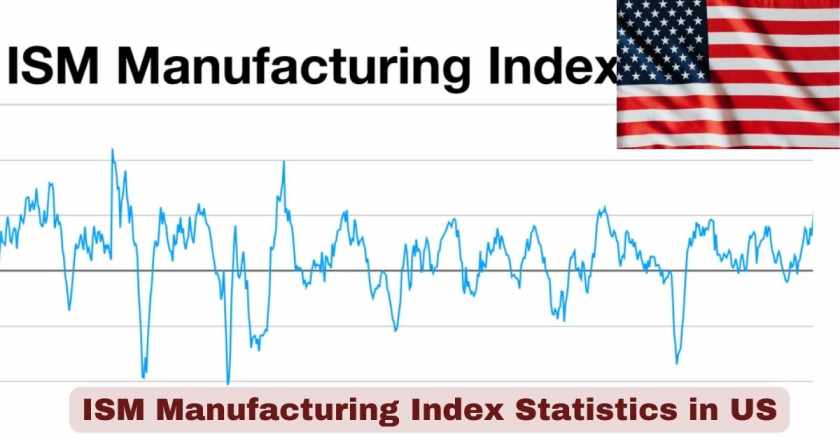
ISM Manufacturing Index in the US 2026
The ISM Manufacturing Index — officially known as the ISM Manufacturing PMI® (Purchasing Managers’ Index) — is one of the most closely watched economic barometers in the United States. Published monthly by the Institute for Supply Management (ISM), this diffusion index has been tracking the health of the U.S. manufacturing sector since 1948, making it one of the oldest and most trusted leading indicators in all of American economic history. Every reading above 50% signals expansion in manufacturing activity, while any reading below 50% points to contraction. What makes this index so uniquely powerful is that it surveys purchasing and supply executives at over 400 industrial companies nationwide, capturing real-time sentiment straight from the factory floor — not lagged government data.
As 2026 opens, the ISM Manufacturing Index in the US 2026 is grabbing attention from Wall Street to Washington. After enduring a punishing stretch of 26 straight months of contraction from early 2023 through late 2025, the manufacturing sector roared back into expansion territory in January 2026 with a headline reading of 52.6% — its highest level since August 2022. This dramatic turnaround, reported by ISM Chair Susan Spence, MBA, on February 2, 2026, represents a 4.7-percentage-point surge from December 2025’s reading of 47.9% and blew past the market consensus forecast of 48.5% by a wide margin. Analysts, policymakers, and investors are now asking whether this marks a genuine turning point for American manufacturing or merely a seasonal rebound driven by holiday reorders and tariff-related front-loading.
Interesting Facts About the ISM Manufacturing Index in the US 2026
Before diving into the detailed statistics, here are some eye-opening facts about the ISM Manufacturing PMI in the US 2026 that every reader should know:
| # | Interesting Fact | Detail |
|---|---|---|
| 1 | First expansion in 12 months | January 2026 marked manufacturing’s first expansion reading in a full calendar year |
| 2 | 26 straight months of prior contraction | Before January 2026, the sector had contracted for 26 consecutive months |
| 3 | Highest reading since August 2022 | The 52.6% January 2026 reading is the strongest PMI® figure in roughly 3.5 years |
| 4 | Surpassed forecasts by 4.1 points | Analysts forecast 48.5%; actual came in at 52.6% — a massive upside surprise |
| 5 | Only 20% of manufacturing GDP contracted in January 2026 | Compare that to 85% in December 2025 — a massive turnaround in breadth |
| 6 | 9 out of 18 industries reported growth | Up from just 2 industries reporting growth in December 2025 |
| 7 | Employment index contracted for 28 consecutive months | Manufacturing has been shedding jobs even as output recovers |
| 8 | Employment has contracted in 36 of the last 37 months | Since January 2023, the jobs picture in manufacturing has been almost relentlessly negative |
| 9 | Prices Paid index stood at 59% in January 2026 | Input cost inflation remains elevated, driven partly by tariff uncertainty |
| 10 | Survey covers 400+ industrial companies | The ISM panel is weighted by each industry’s contribution to U.S. GDP |
Source: ISM® Manufacturing PMI® Report on Business®, February 2, 2026 — Institute for Supply Management (ismworld.org)
The facts above paint a vivid picture of a manufacturing sector caught between cautious optimism and structural headwinds. The 26-month contraction streak that preceded January 2026’s bounce is historically one of the longest sustained downturns the U.S. manufacturing economy has seen outside of a formal recession. The fact that only 2 industries were reporting growth in December 2025, versus 9 industries in January 2026, tells you just how rapidly the sentiment shifted in a single month. However, the stubbornly contracting Employment Index — sitting at 48.1% in January 2026 and having contracted for 28 straight months — is a sobering reminder that hiring managers remain deeply cautious even when order books are filling up again. The disconnect between production-side optimism and workforce pessimism is one of the defining tensions of the ISM Manufacturing Index in the US 2026 narrative, and it is something economists and Federal Reserve officials are watching very carefully given its implications for labor market health and interest rate policy.
ISM Manufacturing PMI® Headline Data in the US 2026
| Month / Period | ISM Manufacturing PMI® (%) | Direction | Change from Prior Month (pts) | Market Forecast (%) |
|---|---|---|---|---|
| January 2026 | 52.6 | Expanding | +4.7 | 48.5 |
| December 2025 | 47.9 | Contracting | −0.3 | 48.3 |
| November 2025 | 48.2 | Contracting | −0.5 | 48.6 |
| October 2025 | 48.7 | Contracting | — | — |
| 12-Month Avg (2025) | 48.9 | Contracting | — | — |
| 2025 High | 50.9 | — | — | — |
| 2025 Low | 47.9 | — | — | — |
Source: ISM® Manufacturing PMI® Report on Business® — Institute for Supply Management (ismworld.org); PR Newswire release dated February 2, 2026
The headline data table above tells a compelling story of a U.S. manufacturing sector that spent virtually all of 2025 in contractionary territory, with the 12-month 2025 average sitting at just 48.9% — below the critical 50% expansion threshold for the entire year. The full-year 2025 range of 47.9% to 50.9% shows that the sector never achieved any sustained momentum above breakeven, with the high of 50.9% representing only a brief, fleeting touch of expansion territory. Then came January 2026’s stunning 52.6% reading, a 4.7-point jump that dwarfed every single monthly movement recorded throughout 2025. What makes this reading even more remarkable is how decisively it blew past the market consensus forecast of 48.5% — analysts were expecting yet another contraction reading, and instead got the strongest expansion signal in over three years. The magnitude of the miss relative to forecasts underscores how quickly manufacturing sentiment can shift, and why markets reacted sharply to the February 2, 2026 ISM release.
ISM Manufacturing Subindex Data in the US 2026
| Subindex | January 2026 (%) | December 2025 (%) | Change (pts) | Status |
|---|---|---|---|---|
| New Orders | 57.1 | 47.4 | +9.7 | Expanding |
| Production | 55.9 | 50.7 | +5.2 | Expanding |
| Employment | 48.1 | 44.8 | +3.3 | Contracting |
| Supplier Deliveries | 54.4 | 50.8 | +3.6 | Slowing (Expansionary) |
| Inventories | 47.6 | 45.7 | +1.9 | Contracting |
| Prices Paid | 59.0 | 58.5 | +0.5 | Increasing |
| New Export Orders | 50.2 | 46.8 | +3.4 | Expanding |
| Backlog of Orders | 51.6 | 45.8 | +5.8 | Expanding |
| Imports | 50.0 | 44.6 | +5.4 | Unchanged/Neutral |
| Customers’ Inventories | 38.7 | 43.3 | −4.6 | Too Low |
Source: ISM® Manufacturing PMI® Report on Business®, January 2026 data released February 2, 2026 — Institute for Supply Management (ismworld.org)
The subindex table for the ISM Manufacturing Index in the US 2026 is where the real story lives. The New Orders subindex surged an extraordinary 9.7 points to reach 57.1% — the single largest monthly gain across all subindexes and the clearest signal that genuine demand is returning to the U.S. manufacturing sector. When new orders are growing at this pace, production typically follows with a lag, and sure enough, the Production subindex climbed to 55.9%, both comfortably in expansion territory. The Supplier Deliveries reading of 54.4% — which is inversely interpreted, meaning above 50% signals slower deliveries — reflects supply chains tightening as factories ramp up, consistent with genuine economic activity rather than statistical noise. On the troubling side, the Employment subindex of 48.1%, despite improving by 3.3 points, remains in contraction, and the Prices Paid reading of 59.0% signals that manufacturers are still absorbing elevated input cost pressures. The Customers’ Inventories reading of 38.7% — the lowest since June 2022 — is actually a positive forward-looking signal, as lean customer stockpiles typically drive more reorder activity in the months ahead, supporting the possibility that January 2026’s expansion is not purely a seasonal blip.
ISM Manufacturing Industry Performance in the US 2026
| Category | January 2026 | December 2025 |
|---|---|---|
| Industries Reporting Growth | 9 out of 18 | 2 out of 18 |
| Industries Reporting Contraction | 8 out of 18 | Multiple |
| Industries Reporting No Change | 1 out of 18 | — |
| % of Manufacturing GDP Contracting | 20% | 85% |
| % of Mfg GDP in Strong Contraction (PMI ≤45%) | 12% | 43% |
| Large Industries in Expansion (of 6) | 5 | Fewer |
Source: ISM® Manufacturing PMI® Report on Business®, February 2, 2026 — Institute for Supply Management (ismworld.org)
The breadth of the January 2026 expansion is arguably as impressive as the headline number itself. In December 2025, an alarming 85% of U.S. manufacturing GDP was in contraction — meaning the vast majority of the sector’s economic output was coming from industries that were shrinking. By January 2026, that figure collapsed to just 20%, a shift so dramatic it’s difficult to overstate its significance for understanding the ISM Manufacturing Index in the US 2026. The number of industries reporting growth jumped from a paltry 2 in December to 9 in January — exactly half of the 18 surveyed manufacturing industries. The five largest manufacturing industries in expansion in January 2026 were Transportation Equipment, Machinery, Chemical Products, Food, Beverage & Tobacco Products, and Computer & Electronic Products — together representing a substantial portion of U.S. manufacturing GDP. The share of manufacturing GDP in “strong contraction” (defined as a composite PMI at or below 45%) also plunged from 43% in December 2025 to just 12% in January 2026, reinforcing the view that this was a broad-based improvement rather than a handful of large industries masking widespread weakness elsewhere.
ISM Manufacturing Employment Index in the US 2026
| Metric | Value / Detail |
|---|---|
| Employment Index — January 2026 | 48.1% |
| Employment Index — December 2025 | 44.8% |
| Month-over-Month Change | +3.3 percentage points |
| Direction | Contracting (28th consecutive month) |
| Consecutive Months of Contraction | 28 months |
| Months Contracted Since Jan 2023 | 36 of 37 months |
| Last Month in Expansion | September 2023 |
| Large Industries Reporting Higher Employment (Jan 2026) | Transportation Equipment; Computer & Electronic Products |
| Expansion Threshold for Employment Consistent with BLS Job Gains | Above 50.3% |
| Hiring-to-Layoff Comment Ratio | 1 hiring comment for every 2 head-count reduction comments |
Source: ISM® Manufacturing PMI® Report on Business®, February 2, 2026 — Institute for Supply Management (ismworld.org)
The ISM Manufacturing Employment Index in the US 2026 is the most sobering part of an otherwise encouraging January report. Despite the headline PMI surging to 52.6% and new orders jumping nearly 10 points, manufacturers are still actively reducing headcount rather than hiring. The 28th consecutive month of contraction in the Employment Index is a structural issue: companies appear to be running leaner operations, using efficiency gains and automation to meet higher output demands without adding workers. Susan Spence, the ISM Manufacturing Business Survey Committee Chair, highlighted that for every single comment from panelists about hiring, there were two comments about reducing head counts — through layoffs, attrition, or simply not filling open positions. This pattern has now persisted for 36 of the past 37 months, meaning the labor market within U.S. manufacturing is behaving very differently from the broader economy. The Employment Index would need to push above 50.3% consistently before it would be associated with actual Bureau of Labor Statistics (BLS) job gains in manufacturing — and January 2026’s reading of 48.1% is still meaningfully short of that threshold.
ISM Manufacturing Prices Paid Index in the US 2026
| Metric | Value |
|---|---|
| Prices Paid Index — January 2026 | 59.0% |
| Prices Paid Index — December 2025 | 58.5% |
| Prices Paid Index — November 2025 | 58.5% |
| Month-over-Month Change (Jan 2026) | +0.5 percentage points |
| Direction | Increasing |
| Threshold for Inflation Signal | Above 50% = prices generally rising |
| Key Cited Driver | Tariff uncertainty and expected price increases |
| ISM Semi-Annual Forecast: Mfg Cost Increases (2026) | 27% of respondents expect raw material cost increases |
| Avg Expected Price Increase (Mfg, 2026) | ~2.5% or greater for 11 identified industry categories |
Source: ISM® Manufacturing PMI® Report on Business®, February 2, 2026; ISM® Fall 2025 Semi-Annual Economic Forecast — Institute for Supply Management (ismworld.org)
The ISM Manufacturing Prices Paid Index in the US 2026 tells a story of persistent, stubborn input cost inflation that is proving resistant to resolution. At 59.0% in January 2026 — up slightly from 58.5% in both November and December 2025 — the Prices Paid Index has now held well above the 50% threshold (signaling rising prices) for an extended period. The Federal Reserve tracks this subindex closely because rising manufacturing input costs can eventually translate into broader consumer price inflation. What’s particularly notable in the January 2026 data is that ISM Chair Susan Spence explicitly identified tariff-related front-loading as a partial driver of both the headline PMI jump and the elevated prices — manufacturers and their customers appear to be accelerating purchases now to beat anticipated price hikes stemming from ongoing trade policy uncertainty. This dual dynamic of genuine seasonal demand recovery and tariff-driven inventory building makes it harder for analysts to cleanly interpret January’s strong reading. If the tariff-driven element fades in February 2026 without underlying demand sustaining itself, the Prices Paid Index could remain elevated even as headline activity moderates — creating a difficult stagflationary scenario that would complicate Federal Reserve decision-making.
ISM Manufacturing Demand Indicators in the US 2026
| Demand Indicator | January 2026 (%) | December 2025 (%) | November 2025 (%) | Direction (Jan 2026) |
|---|---|---|---|---|
| New Orders Index | 57.1 | 47.4 | 47.4 | Expanding |
| New Export Orders Index | 50.2 | 46.8 | 46.2 | Expanding |
| Backlog of Orders Index | 51.6 | 45.8 | 44.0 | Expanding |
| Customers’ Inventories Index | 38.7 | 43.3 | 44.7 | Too Low (Positive Signal) |
| Imports Index | 50.0 | 44.6 | 48.9 | Neutral/Unchanged |
Source: ISM® Manufacturing PMI® Report on Business®, February 2, 2026; December 2025 and November 2025 ISM® releases — Institute for Supply Management (ismworld.org)
The demand picture within the ISM Manufacturing Index in the US 2026 underwent a near-complete reversal between December 2025 and January 2026. All three of the primary demand indicators — New Orders, New Export Orders, and Backlog of Orders — flipped from contractionary to expansionary territory in a single month, a feat that is genuinely rare in the history of this index. The New Orders Index at 57.1% is particularly significant: it moved from the low-to-mid 47% range where it had lingered for months into firmly expansionary territory at a pace not seen in years. New Export Orders crossing back above 50% to 50.2% is a signal that international demand for U.S. manufactured goods is also stabilizing, which is relevant given concerns about the impact of tariff disputes on export competitiveness. The Customers’ Inventories Index reading of 38.7% — the lowest reading since June 2022 — is a forward-looking positive: when downstream customers are running lean on stockpiles, they tend to place more reorders in the coming months to replenish shelves and warehouses. This “too low” inventory dynamic has historically been one of the more reliable leading indicators of sustained manufacturing expansion in the months that follow a PMI recovery.
ISM Manufacturing PMI vs. U.S. GDP Relationship in 2026
| PMI® Level | Implied GDP Signal |
|---|---|
| Above 50% | Manufacturing sector generally expanding |
| Above 47.5% | Overall U.S. economy (GDP) generally expanding |
| Above 42.3% | Overall economy expanding over a period of time |
| Below 42.3% | Overall economy generally declining |
| January 2026 PMI: 52.6% | Manufacturing expanding; overall economy growing |
| December 2025 PMI: 47.9% | Manufacturing contracting; but overall economy still growing (47.9% > 42.3%) |
| Dec 2025 Implied GDP Growth | Approx. +1.6% annualized real GDP growth |
| Consecutive Months of Overall Economy Expansion | 68 months as of December 2025 |
Source: ISM® Manufacturing PMI® Report on Business®, December 2025 and January 2026 releases; ISM historical methodology — Institute for Supply Management (ismworld.org)
One of the most useful but underappreciated features of the ISM Manufacturing Index is its statistical relationship with U.S. GDP growth, which ISM has calibrated over decades of data. Even when the headline PMI was sitting at 47.9% in December 2025 — technically signaling manufacturing contraction — the ISM’s own analysis indicated this corresponded to approximately +1.6% annualized real GDP growth for the broader U.S. economy, because manufacturing represents only a portion of total economic output. The overall economy had been in expansion for 68 consecutive months as of December 2025, even while manufacturing struggled. With January 2026’s PMI of 52.6% crossing above the 50% manufacturing expansion threshold and well above both the 47.5% and 42.3% GDP expansion thresholds, the signal from the manufacturing sector is now unambiguously aligned with continued positive GDP growth. This matters enormously for Federal Reserve policymakers, who use the ISM data alongside Bureau of Labor Statistics employment figures and CPI data to calibrate interest rate decisions. A manufacturing sector returning to expansion, combined with an elevated Prices Paid Index of 59.0%, gives the Fed reason to remain cautious about cutting rates — even if the labor market within manufacturing itself remains weak.
ISM Manufacturing 2026 Outlook and Annual Forecast
| Forecast Metric | Manufacturing Sector 2026 |
|---|---|
| % of Respondents Expecting Employment Increase | 27% (avg +6.7% increase) |
| % of Respondents Expecting Employment Decrease | 20% (avg −6.8% decrease) |
| % of Respondents Expecting Employment Unchanged | 53% |
| Industries Predicting Employment Growth (2026) | Primary Metals; Paper Products; Food, Beverage & Tobacco; Misc. Mfg; Machinery; Fabricated Metal; Transportation Equipment; Furniture & Related |
| ISM Mfg Employment Growth (Full Year 2025) | Approx. flat/negative |
| Expected Mfg Labor/Benefit Cost Increases (2026) | Industries expecting ≥2.5% cost increases: 11 identified categories |
| Next PMI Report Release Date (Feb 2026 Data) | Monday, March 2, 2026 at 10:00 a.m. ET |
Source: ISM® Fall 2025 Semi-Annual Economic Forecast; ISM® Manufacturing PMI® Report release calendar — Institute for Supply Management (ismworld.org)
The ISM Manufacturing 2026 annual outlook heading into the year reflected cautious optimism tempered by real structural concerns. According to ISM’s own Fall 2025 Semi-Annual Economic Forecast — one of the most credible forward-looking surveys in the industry — a majority (53%) of manufacturing executives expected their employment levels to remain unchanged in 2026, reflecting the widespread uncertainty that has defined the post-pandemic manufacturing labor market. Only 27% of respondents anticipated growing their workforce, while 20% expected further cuts. This split employment outlook is consistent with the January 2026 Employment Index reading of 48.1%, which despite improving, still points to net job losses in the sector. On costs, 11 manufacturing industry categories expected to pay labor and benefit cost increases of 2.5% or greater in 2026, reinforcing the price pressure narrative seen in the elevated Prices Paid Index. The next major data point for the ISM Manufacturing Index in the US 2026 will be the February 2026 PMI report, scheduled for release on Monday, March 2, 2026, at 10:00 a.m. ET — and markets will be watching closely to see whether January’s expansion was the start of a genuine recovery or a one-month statistical anomaly driven by seasonal reorders and tariff front-loading.
Disclaimer: This research report is compiled from publicly available sources. While reasonable efforts have been made to ensure accuracy, no representation or warranty, express or implied, is given as to the completeness or reliability of the information. We accept no liability for any errors, omissions, losses, or damages of any kind arising from the use of this report.