
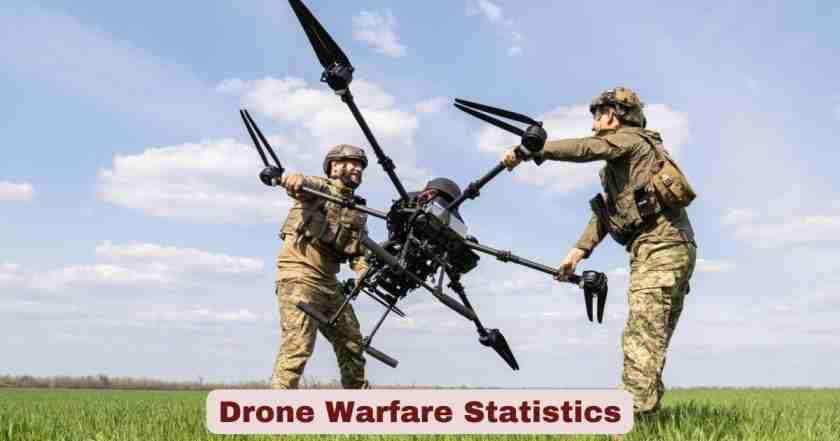
What is Drone Warfare?
Drone warfare has fundamentally transformed the nature of armed conflict in ways that no military strategist predicted a decade ago. In 2026, unmanned aerial vehicles are no longer supplementary tools — they are the primary engines of destruction, intelligence gathering, and psychological terror across every active conflict zone on Earth. From the frost-bitten trenches of eastern Ukraine, where FPV drones hunt individual soldiers with terrifying precision, to the scorched displacement camps of Sudan, where both the Sudanese Armed Forces and the Rapid Support Forces deploy kamikaze drones against civilian populations, the technology has proliferated far beyond the domain of superpowers. Drone warfare in 2026 is cheaper, faster, smarter, and more lethal than at any previous point in history — and the pace of evolution shows absolutely no signs of slowing.
What makes 2026 drone warfare uniquely different from anything that came before is the intersection of mass production, artificial intelligence, and asymmetric application. A commercially adapted drone costing $500 can now threaten multi-billion-dollar infrastructure, as demonstrated when Iranian drone swarms struck AWS data centers in the UAE in March 2026. Nations that once relied exclusively on manned aircraft or expensive cruise missiles are now fielding millions of drones per year — Ukraine alone targeted a production figure of 7 million drones in 2026, up from 4 million in 2025. The economic and strategic logic is brutal and unavoidable: drones reduce human casualties for the attacker, overwhelm traditional air defenses, and can be produced at a fraction of the cost of the systems designed to destroy them. The global military drone market, counter-drone market, and the human toll all reflect a world that has crossed a technological threshold it cannot step back from.
Interesting Facts: Drone Warfare 2026
| Fact | Detail |
|---|---|
| Russia’s single-day drone record against Ukraine | 948 drones launched in a 24-hour period on March 24, 2026 |
| Ukraine’s drone production target for 2026 | 7 million drones, up from 4 million produced in 2025 |
| FPV drone share of front-line casualties in Ukraine | Up to 80% of all front-line casualties caused by FPV drones |
| Iran’s drone attacks on UAE (Feb–Mar 2026) | 1,815 drone attacks launched as of March 25, 2026 |
| Sudan drone deaths attributed to ACLED | At least 2,200 deaths from drone strikes since conflict began; 80% in 2025 |
| Cost of an Iron Beam laser shot (Israel) | As low as $3 per shot vs. a $500 commercial drone |
| Ukraine’s Ukrainian drone strikes in Dec 2025 | 106,859 confirmed targets hit in a single month |
| Russia’s FPV drone daily deployment | Estimated 1,200–1,400 FPV drones per day |
| Ukraine’s drone strikes on Russian troops (2025 total) | 819,737 confirmed strikes — all verified by drone video footage |
| Operation Spiderweb (June 2025) | 117 FPV drones hit 5 Russian air bases across 5 time zones; 40+ aircraft struck |
| Sudan Q1 2026 drone strikes | Early 2026 ACLED data recorded more drone strikes than any previous quarter in the war |
| Russia’s operational Pantsir stockpile neutralized | Ukraine’s SBU claimed approximately 50% neutralized by early 2026 |
| Ukraine’s drone nets planned by end of 2026 | 2,500 miles of drone netting on front-line roads |
| AWS data centers hit by Iranian drones (2026) | 3 AWS facilities struck in UAE and Bahrain during Operation Epic Fury retaliation |
Source: ACLED, Sudan Tribune, Wikipedia (2026 Iranian strikes on UAE), Kyiv Post, Al Jazeera, DefenseScoop, NPR, United24 Media
The facts above paint a picture that would have seemed like science fiction five years ago. The sheer scale of drone activity in 2026 — from 948 drones in a single day over Ukraine to 1,815 Iranian drone attacks on the UAE — signals that we are living through the most intense period of drone warfare in human history. What is particularly striking is the economic inversion at play: Israel’s Iron Beam laser system can neutralize a drone for as little as $3 per shot, yet the average military budget was historically structured around interceptors costing $50,000 to $150,000 to destroy systems worth a few hundred dollars. The Operation Spiderweb strike — where 117 drones delivered from hidden truck containers crossed five Russian time zones to hit strategic bombers — demonstrated a level of operational sophistication that rewrote the rulebook on what non-state-adjacent actors can accomplish with unmanned systems.
The civilian dimension of these facts is equally disturbing. When up to 80% of front-line casualties in one of the world’s largest ground wars are caused by FPV drones, that is not a marginal statistic — it represents a complete restructuring of how soldiers die. Ukraine’s response of planning 2,500 miles of drone netting on front-line roads by year’s end is a vivid illustration of how thoroughly drone warfare in 2026 has penetrated every layer of daily conflict life. The confirmation that Russian FPV drones have deliberately targeted ambulances, evacuation buses, and mine workers returning from shifts — killing twelve in one incident alone — strips away any remaining pretense that the drone revolution is a clean or surgical development.
Global Military Drone Market Size 2026 | Costs & Spending Statistics
| Metric | Value (2026) |
|---|---|
| Global Military Drone Market Size (Fortune BI / GMI) | USD 20.7 billion |
| Global Military Drone Market Size (Grand View Research) | USD 47.38 billion (2025 est.) |
| Military Drone Market Size (Fortune BI 2026) | USD 20.80 billion |
| Projected Market Size by 2034 (Fortune BI) | USD 30.90 billion |
| Projected Market Size by 2035 (Grand View) | USD 98.24 billion |
| CAGR (Fortune BI, 2026–2034) | 6.8% |
| North America Market Share (2025) | Over 40% of global revenue |
| U.S. Military Drone Market Dominance | Over 85% of North American market |
| Fixed-Wing Drone Market Share (2025) | Over 66% of total military drone market |
| Europe Military Drone Market (2025) | USD 4.2 billion |
| Asia-Pacific Contribution to Growth (2024–2029) | Estimated 36% of global market growth |
Source: Grand View Research, Fortune Business Insights, Global Market Insights
The global military drone market in 2026 sits at a crossroads between explosive battlefield demand and accelerating industrial production capacity. Estimates vary by methodology — Fortune Business Insights places the market at USD 20.80 billion in 2026, while Grand View Research uses a broader definition that valued the sector at USD 47.38 billion in 2025 — but every projection agrees on one thing: the trajectory is steep and relentless. The divergence in figures reflects differences in what each analyst includes — some count only purpose-built military platforms, while others include dual-use systems, loitering munitions, and drone-adjacent software ecosystems. What is not in dispute is that North America commands over 40% of the global military drone revenue and that the U.S. alone accounts for more than 85% of that regional share, underpinning Washington’s continued dominance in setting both procurement standards and export norms.
The product-level data reveals an industry in the middle of a rapid maturation cycle. Fixed-wing platforms still command over 66% of military drone revenue because of their endurance advantages in ISR (Intelligence, Surveillance, and Reconnaissance) missions — the bread-and-butter of every major military’s drone program. But the hybrid segment is growing at the fastest rate (12% CAGR projected), driven by demand for platforms that can take off vertically and then transition to efficient fixed-wing cruise — essential for the kind of contested urban and front-line environments seen in Ukraine and Sudan in 2026. Europe, stung by the realization that it had chronically underinvested in unmanned capabilities while watching the Russia-Ukraine war unfold for four years, is pouring money into indigenous UAV development, explaining its USD 4.2 billion market size in 2025 and its rapid trajectory upward.
Ukraine Drone Warfare Statistics 2026 | Russia vs Ukraine UAV Data
| Metric | Data Point |
|---|---|
| Russian drones launched vs. Ukraine in 2025 | More than 54,000 long-range drones |
| Russian FPV drones deployed daily | Estimated 1,200–1,400 per day |
| Russian missiles launched (Feb 2026 alone) | 288 missiles — highest monthly total since early 2023 |
| Russian long-range drones (Feb 2026 alone) | 5,059 long-range drones — 13% increase over January 2026 |
| Russia’s single-day record (Mar 24, 2026) | 948 drones in one 24-hour period |
| Ukraine confirmed drone strikes in 2025 | 819,737 verified strikes (FPV + bomber drones) |
| Russian troops killed or wounded by Ukrainian drones (2025) | Over 240,000 |
| Russian heavy weapons destroyed by Ukraine drones (2025) | More than 29,000 (tanks, artillery, etc.) |
| Ukrainian drone production (2025) | Approximately 4 million drones |
| Ukrainian drone production target (2026) | 7 million drones |
| Ukrainian long-range drone pace (Jan–Mar 2026) | Approximately 4 strike targets per night — double the late 2025 pace |
| UAVs per Ukrainian night raid (Jan–Mar 2026) | 100–200 drones per raid (vs. 50–70 in late 2025) |
| Ukraine ground drones deployed (2025) | 15,000 UGVs (up from 2,000 in 2024) |
| Ukraine planned ground drone deployment (2026) | Target of 10,000+ UGV missions per month |
| Drone operators in Ukraine (500 companies) | ~95% of combat drones domestically manufactured |
Source: United24 Media, Kyiv Post, Al Jazeera, Ukraine’s Arms Monitor Substack, NPR, militaeraktuell.at
The Ukraine-Russia drone war statistics for 2026 represent the most data-dense and battlefield-verified drone conflict in history. Ukraine’s achievement of 819,737 confirmed drone strikes in 2025 — every single one backed by video evidence from drone cameras — is a figure that no previous military campaign could have produced, simply because the documentation infrastructure did not exist. The 240,000 Russian troops killed or seriously wounded by Ukrainian drone operators in 2025 represents a strategic bleeding that is straining Russia’s mobilization capacity. Russian compensation for killed soldiers runs to approximately 15 million rubles per soldier, meaning the December 2025 drone campaign alone triggered an estimated 500 billion rubles in compensation obligations. The February 2026 figures — 5,059 long-range drones and 288 missiles in a single month — confirm that Russia is not scaling back its aerial campaign but escalating it, responding to Ukrainian drone parity by surging volume.
The strategic trajectory for 2026 is one of accelerating parity followed by Ukrainian advantage. By March 2026, Ukraine had reached a point where on some nights, it was launching as many or more long-range drones into Russian territory than Russia was launching into Ukraine — a first in the war. Ukraine’s Unmanned Systems Forces plan to increase monthly Russian troop casualties to 50,000–60,000 per month through drone strikes in 2026, up from 35,000 in December 2025. The systematic destruction of roughly 50% of Russia’s operational Pantsir air defense stockpile by early 2026 has torn holes in Russian rear-area defenses that the Russian military-industrial complex simply cannot repair fast enough — a strategic masterstroke that is geometrically expanding the depth and frequency of Ukrainian drone penetration.
Sudan Drone Warfare Statistics 2026 | Civilian Deaths & Attack Data
| Metric | Data Point |
|---|---|
| Total drone-attributed deaths in Sudan (ACLED, conflict start to 2026) | At least 2,200 deaths |
| Percentage of Sudan drone deaths occurring in 2025 | 80% |
| Drone strikes recorded in Sudan (2024) | Approximately 277 attacks |
| Drone strikes recorded in Sudan (2025) | 472 attacks |
| Early 2026 drone strike pace (ACLED) | More strikes recorded than any previous quarter in the war |
| Civilian drone deaths (Jan 1 – Mar 15, 2026, OHCHR) | Over 500 civilians killed |
| Civilians killed in first two weeks of March 2026 | Over 277 — three-quarters by drone strikes |
| Deadliest single 2026 attack (Mar 20, Eid al-Fitr) | At least 64 killed at El Daein Teaching Hospital, East Darfur |
| Abu Shouk camp attack (Sep 19, 2025) | ~75 people killed |
| Dar al-Arqam, El Fasher (Oct 10, 2025) | 60 people killed |
| Civilian drone attack toll (2024–2025 reported by Emergency Lawyers) | 129 attacks → 218 deaths and 112 injuries |
| North Darfur drone deaths (to 2026) | 577 deaths |
| West Kordofan drone deaths | 567 deaths |
| Khartoum drone deaths | 403 deaths |
Source: ACLED, Sudan Tribune, UN OHCHR (March 2026 press briefing note)
Sudan has emerged as the deadliest drone warfare theater for civilians in the world in 2026, and the data from ACLED and the UN Office of the High Commissioner for Human Rights makes for harrowing reading. The jump from 277 drone strikes in 2024 to 472 in 2025 — a 70% escalation in a single year — was already alarming. What happened in early 2026 surpassed even that grim benchmark: more strikes were recorded in the first quarter of 2026 than in any previous quarter of the entire conflict. The OHCHR confirmed over 500 civilian deaths from drone strikes between January 1 and March 15, 2026 alone — a rate of roughly 6 civilians killed per day by drone attacks. The March 20 strike on El Daein Teaching Hospital, killing at least 64 people including 13 children on the first day of Eid al-Fitr, drew immediate international condemnation, though condemnation has conspicuously failed to slow the pace of attacks.
What makes Sudan’s drone warfare crisis in 2026 so particularly devastating is the nature of the technology being deployed. Both the Sudanese Armed Forces and the Rapid Support Forces are using Chinese-manufactured CH-95/FH-95 drones, FPV kamikaze systems, and Shahed-adjacent platforms in an urban warfare environment where civilian and military targets are deeply intermixed. Retired Brigadier General Walid Ezzedine Abdel Majid has described Sudan as the “first African model of large-scale drone usage within a civil war context” — and that distinction comes with a catastrophic civilian body count. The geographic distribution of deaths, with North Darfur (577), West Kordofan (567), and North Kordofan (548) leading the toll, reveals a systematic targeting of the conflict’s most contested regions rather than any meaningful distinction between military objectives and civilian spaces.
Iran–UAE Drone Warfare Statistics 2026 | Middle East Strikes Data
| Metric | Data Point |
|---|---|
| Total Iranian drone attacks on UAE (Feb 28 – Mar 25, 2026) | 1,815 drone attacks |
| Total Iranian ballistic missiles fired at UAE | 357 ballistic missiles |
| Total cruise missiles fired | 15 cruise missiles |
| Total killed (as of Mar 25, 2026) | 9 people (including 2 military personnel) |
| Total injured | 166 people |
| AWS data centers struck by drones (Mar 2026) | 3 facilities (2 in UAE, 1 in Bahrain) |
| Dubai International Airport hit | Drone hit fuel tank, caused fire, temporary flight suspension |
| Port of Fujairah hit | Drone strike triggered fires and suspended oil-loading operations |
| Context: trigger event | Joint U.S.-Israeli Operation Epic Fury airstrikes on Iran (Feb 2026) |
| UAE air defense interceptions | Majority of missiles and drones intercepted, but debris fell on populated areas |
Source: Wikipedia (2026 Iranian strikes on UAE), DefenseScoop, The Week
The Iranian drone campaign against the UAE in 2026 represents a qualitatively new threshold in drone warfare — the deliberate use of mass drone swarms to target not just military infrastructure but the commercial and digital backbone of an adversary’s economy. The 1,815 drone attacks launched between late February and late March 2026 in response to Operation Epic Fury is an extraordinary figure: averaging roughly 60 drone attacks per day sustained over nearly four weeks. The fact that casualties were relatively limited (9 killed, 166 injured) given this scale of attack reflects both the effectiveness of UAE air defenses and the reality that Iran’s intent was as much economic disruption and psychological pressure as mass killing. The strikes on Dubai International Airport, the Port of Fujairah, and the AWS data centers in UAE and Bahrain signal that Iran specifically targeted nodes of global commerce, energy infrastructure, and digital services.
The AWS data center strikes were a watershed moment in drone warfare history in 2026. As DefenseScoop reported in March 2026, military drones directly struck two facilities in the UAE while a third in Bahrain was damaged by a nearby explosion — triggering widespread cloud service disruptions affecting banks, financial technology firms, and consumer services across the Middle East. Defense analyst James Gorman noted that what is occurring represents the convergence of two trends proven on the Ukrainian front: the democratization of precision strike capability through low-cost drones, and the increasing vulnerability of commercial digital infrastructure in contested regions. Sultan Al Jaber, CEO of ADNOC, called the targeting of energy infrastructure “global economic warfare” — a phrase that captures exactly why the 2026 drone warfare era is so structurally different from anything that preceded it.
Counter-Drone Market & Defense Statistics 2026 | Anti-Drone Spending
| Metric | Value |
|---|---|
| Global Counter-Drone Market Size (2026) | USD 3.88–4.93 billion |
| Counter-Drone Market CAGR (2025–2030, MarketsandMarkets) | 26.5% |
| Projected Counter-Drone Market Size by 2030 | USD 14.51 billion |
| Projected Counter-Drone Market Size by 2034 (Fortune BI) | USD 16.45 billion |
| U.S. Army FY2026 Counter-Drone Budget Request | USD 693 million |
| U.S. DoD Investment in New Drone Defense Research (by 2026) | USD 668 million |
| U.S. DoD Acquisition of Drone Defense Tech (2026) | ~USD 78 million |
| India Counter-Drone Orders from Domestic Firms | USD 1.5 billion |
| Cost per Iron Beam laser shot (Israel) | ~USD 3 |
| Cost per Wild Hornet interceptor drone | ~USD 3,000 |
| Cost per Coyote interceptor missile | USD 100,000–USD 150,000 |
| Cost per Tamir interceptor missile | ~USD 50,000 |
| Cost of typical commercial attack drone being intercepted | ~USD 500 |
| Top 10 C-UAS players’ combined market share (2024) | 28% of total market revenue |
Source: Fortune Business Insights, MarketsandMarkets, The World Data (March 2026), DefenseScoop
The counter-drone market in 2026 is growing faster than almost any other segment of the global defense industry, and the reason is not hard to find: the battlefield math is existentially problematic for defenders using legacy interception systems. The $50,000 Tamir interceptor missile destroying a $500 commercial drone — a 100:1 cost disadvantage — is the equation that has driven an entire industry into emergency innovation mode. The shift toward directed energy weapons such as Israel’s Iron Beam (costing $3 per shot) and kinetic interceptor drones like Ukraine’s Wild Hornet ($3,000) reflects a desperate search for economic parity with cheap mass-production attack platforms. The U.S. Army’s $693 million FY2026 counter-drone budget request and the broader $668 million DoD investment in new drone defense research signal that Washington has treated counter-UAS capability as a top-tier national security priority — not a niche procurement.
The global counter-drone market’s $3.88–4.93 billion valuation in 2026 and its projected expansion to $14.51 billion by 2030 reflects how rapidly the threat is being institutionalized into permanent defense architecture. The NDAA FY2026’s mandate creating JIATF-401 — the first unified joint counter-UAS task force under the U.S. Deputy Secretary of Defense — is a structural acknowledgment that no single military branch can manage the drone threat alone. India’s $1.5 billion in domestic counter-drone orders and the UK’s 18 funded counter-drone research projects since 2019 illustrate that the arms race between drone attack and drone defense has become a genuinely global industrial competition. The market remains fragmented — the top 10 players hold only 28% of revenue — creating an environment rich with M&A activity, strategic partnerships, and startup funding as incumbents and challengers race to establish the dominant counter-drone platform of the coming decade.
Drone Warfare Costs & Economics 2026 | Attack vs. Defense Price Data
| System / Drone Type | Approximate Cost | Role |
|---|---|---|
| Commercial FPV attack drone (Russia/Ukraine) | $300–$500 | Front-line kamikaze strike |
| Iranian Shahed-136 drone | ~$20,000–$50,000 | Long-range cruise strike |
| Ukrainian Osa (Wasp) quadcopter (Operation Spiderweb) | Classified / ~$5,000–$10,000 est. | Precision deep-strike |
| Ukrainian Wild Hornet interceptor drone | ~$3,000 | Anti-drone interception |
| Bayraktar TB2 (Turkey) | ~$5 million per unit | Medium-altitude strike/ISR |
| MQ-9 Reaper (U.S.) | ~$32 million per unit | High-endurance MALE ISR/strike |
| Israel Iron Beam laser (per shot) | ~$3 | Directed energy anti-drone |
| Coyote interceptor missile (U.S.) | $100,000–$150,000 | Counter-UAS kinetic defeat |
| Tamir interceptor (Iron Dome system) | ~$50,000 | Rocket/drone interception |
| Russian Pantsir S-1 system | $15–$20 million per system | Air defense (drones/missiles) |
| Ukraine drone production cost target (2026) | Scaling to 19,000+ drones/day consumption rate | All drone categories |
Source: The World Data (March 2026), Kyiv Post, DefenseScoop, United24 Media, Ukraine’s Arms Monitor
The economics of drone warfare in 2026 have created a strategic environment where the attacker holds a structural cost advantage that defensive budgets are struggling to neutralize. The fundamental asymmetry — a $300–$500 FPV drone killing a $3–$5 million main battle tank, or a $500 commercial drone requiring a $50,000–$150,000 interceptor missile — has forced every defense budget in the world to reconsider its assumptions about cost-effective deterrence. The Iranian Shahed-136 at ~$20,000–$50,000 per unit sits in a middle tier that is affordable enough to deploy in mass swarms yet capable of reaching targets hundreds of kilometers away — the exact profile that has made it so attractive to Russia, Iran, and their proxies in multiple theaters simultaneously. The MQ-9 Reaper at $32 million per unit represents the pre-2022 paradigm of drone warfare: expensive, exquisite, and operated by major powers with deep budgets. That era is effectively over.
The shift that 2026 drone warfare statistics confirm is the democratization of precision strike. Ukraine’s production of almost 820,000 confirmed FPV strike missions in 2025 at an average unit cost far below $1,000 per drone achieved strategic effects that would have required thousands of artillery shells or cruise missiles costing orders of magnitude more. Russia’s plan to scale from its current 350–500 long-range attack drones per day capacity to a target of 600–800 per day in 2026 and eventually 1,000 per day — meaning one drone launched every 86 seconds around the clock — illustrates how thoroughly the military logic has shifted toward volume and cost efficiency over precision and expense. The Pantsir S-1’s $15–20 million price tag per system becomes acutely painful when Ukraine has demonstrated the ability to destroy approximately 50% of Russia’s operational Pantsir fleet by early 2026 using drones that cost a tiny fraction of each system destroyed.
Countries Using Drone Warfare in 2026 | Active Conflict Zones
| Country / Conflict | Key Drone Activity in 2026 | Scale |
|---|---|---|
| Russia (Ukraine conflict) | Shahed swarms, FPV kamikaze, fiber-optic drones; 288 missiles + 5,059 long-range drones in Feb 2026 | Extreme |
| Ukraine (defense/offense) | 7 million drone production target; 100–200 UAVs per night raid into Russia | Extreme |
| Iran (UAE/Middle East) | 1,815 drone attacks on UAE; struck AWS data centers and oil infrastructure | Very High |
| Sudan (SAF vs. RSF civil war) | 472 strikes in 2025, pace accelerating in Q1 2026; targeting hospitals, camps, markets | Very High |
| Mexico (cartels) | Cartel drones crossing U.S. border daily; airspace closures over El Paso / New Mexico in Feb 2026 | High |
| Israel / Gaza | Drone strikes integrated with IDF operations; counter-drone tech (Iron Beam) actively deployed | High |
| U.S. (counter-cartel, Middle East) | Anti-drone lasers deployed at border; military involvement in Operation Epic Fury | Moderate–High |
| China (regional posturing) | Largest drone exporter; CH-95/FH-95 models appearing in Sudan conflict | Expanding |
Source: NPR (March 2026), Wikipedia (2026 Iranian strikes on UAE), Sudan Tribune, Al Jazeera, ACLED
The geographic spread of drone warfare in 2026 is perhaps its most alarming characteristic. The technology has jumped from state-vs.-state conflict (Russia-Ukraine, Iran-UAE) to intrastate civil wars (Sudan) to criminal enterprises (Mexico’s cartels) in the span of just a few years — and in each context, the drone’s core advantage holds: it reduces risk to the attacker while increasing lethality against the target. The cartel drone activity on the U.S.-Mexico border reached such intensity in early 2026 that U.S. authorities deployed anti-drone lasers across the border into New Mexico — a remarkable escalation that brought near-peer military technology into a domestic law enforcement context. Sudan represents the most alarming non-state proliferation case: two warring factions in a country with no advanced industrial base are deploying Chinese-manufactured lethal drones against hospitals, displacement camps, and civilian markets with near-total impunity.
The China factor in 2026 drone warfare is one of the most consequential but least-discussed dynamics. China’s CH-95/FH-95 drones appearing in Sudan’s civil war for the first time indicates that Chinese defense manufacturers — and arguably the Chinese state — are supplying lethal drone technology to actors engaged in documented attacks on civilian populations. Simultaneously, China is the world’s dominant commercial drone manufacturer (DJI alone commands an enormous share of the FPV component supply chain that both Russia and Ukraine depend upon). The U.S. Replicator initiative, which has sought to invest billions in attritable autonomous systems, is explicitly framed as a response to China’s drone mass-production capacity — particularly in a potential Taiwan Strait scenario. The 2026 drone warfare map is therefore not just a snapshot of today’s conflicts but a preview of tomorrow’s strategic competition.
Drone Warfare Civilian Casualties 2026 | Global Impact Statistics
| Metric | Data Point |
|---|---|
| Sudan civilian drone deaths (Jan–Mar 15, 2026, OHCHR) | 500+ civilians killed |
| Sudan civilian deaths (first 2 weeks of March 2026) | 277+ — over three-quarters from drone strikes |
| El Daein Hospital attack (Mar 20, 2026) | 64 killed including 7 women, 13 children; hospital fully out of operation |
| Tiné, Chad cross-border drone strike (Mar 18, 2026) | At least 24 civilians killed, ~70 injured |
| Sudan – Kaluqi kindergarten massacre (Dec 2025) | Drone strike on kindergarten followed by strikes on first responders and hospital |
| Ukraine FPV drone casualty share | Up to 80% of front-line casualties from FPV drones |
| Ukraine – mine workers bus attack (early 2026) | 12 workers killed by drone strike on bus |
| Iranian drone attacks on UAE (civilian deaths) | 7 civilians killed (Pakistani, Nepali, Bangladeshi, Palestinian nationals) |
| CIVIC/ACLED drone attack civilian harm analysis | FPV drones were leading cause of civilian casualties in Ukraine for several months of 2025 |
| UN Human Rights report finding (May 2025) | Drones surpassed missiles, artillery, and aerial bombs as top cause of civilian death in some months |
Source: UN OHCHR (March 2026), Sudan Tribune, NPR (March 2026), Center for Civilians in Conflict (CIVIC), UN Human Rights Monitoring Mission Ukraine
The civilian casualty data from drone warfare in 2026 is where statistics collide most painfully with human reality. The UN OHCHR’s confirmation of over 500 civilian drone deaths in Sudan in just 10 weeks of 2026 — at a rate that was still accelerating — represents a humanitarian crisis that the international community has failed to adequately address. The cross-border drone strike on Tiné, Chad on March 18, 2026, killing at least 24 civilians, illustrates that drone warfare is no longer contained within the borders of recognized conflict zones: the technology is spilling across frontiers and drawing neighboring states into conflict they never chose. The pattern of targeting hospitals — El Daein Teaching Hospital on Eid al-Fitr, the Kaluqi kindergarten and hospital complex in December 2025 — suggests a deliberate strategy of destroying medical infrastructure to compound battlefield casualties with preventable deaths from untreated wounds.
In Ukraine, the UN Human Rights Monitoring Mission’s May 2025 report — confirming that drones had become the leading cause of civilian death and injury in certain months, surpassing even missiles, artillery, and aerial bombs — was a landmark finding that forced a reckoning with how drone warfare is discussed in mainstream policy circles. The documentation of Russian FPV drone operators targeting civilians on bicycles, in private cars, on public buses, in ambulances, and during humanitarian aid delivery is not incidental to the drone warfare strategy — it is a documented, systematic pattern. The planned deployment of 2,500 miles of anti-drone netting on Ukrainian front-line roads by the end of 2026 is simultaneously a tactical measure and a monument to how thoroughly drone warfare has redefined what daily life means for anyone living near an active front line in 2026.
Disclaimer: This research report is compiled from publicly available sources. While reasonable efforts have been made to ensure accuracy, no representation or warranty, express or implied, is given as to the completeness or reliability of the information. We accept no liability for any errors, omissions, losses, or damages of any kind arising from the use of this report.