
White House Transformation in the US 2026
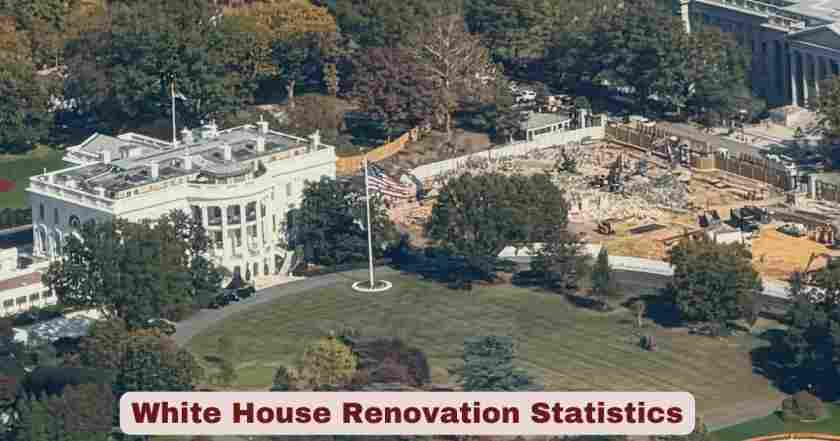
The iconic White House stands at the center of an unprecedented renovation controversy that has captured national attention and sparked fierce debate about presidential authority, historic preservation, and taxpayer spending. As 2026 unfolds, the White House renovation in the US represents the most ambitious and contentious transformation of America’s most recognized residence since President Harry Truman gutted and rebuilt the entire interior structure between 1948 and 1952. The current project, spearheaded by President Donald Trump, involves not merely repairs or modernization but the complete demolition of the historic East Wing and construction of a massive 90,000-square-foot ballroom designed to accommodate nearly 1,000 guests at state functions.
The scope and cost of these renovations have escalated dramatically since initial announcements, with budget documents revealing $377 million allocated for fiscal year 2026 alone, followed by an additional $174 million projected for 2027. This represents an extraordinary 866% increase over the $39 million estimated spent in fiscal 2025 on executive residence improvements. The transformation has ignited legal battles, congressional oversight questions, and public outcry from historic preservation groups who argue that fundamental changes to the White House in 2026 bypass required federal review processes and congressional authorization. From courtroom injunctions to donor transparency concerns, the renovation encompasses far more than architectural upgrades—it has become a flashpoint for debates about executive power, national heritage protection, and the appropriate use of both public and private funds in reshaping America’s most symbolic government building.
Key White House Renovation Facts in the US 2026
| Renovation Metric | Statistical Data | Source Year |
|---|---|---|
| Fiscal 2026 Budget Request | $377 million | 2026 |
| Fiscal 2027 Projected Cost | $174 million | 2027 |
| Total Two-Year Allocation | $551 million | 2026-2027 |
| Year-Over-Year Increase | 866% increase | 2025-2026 |
| Fiscal 2025 Spending | $39 million | 2025 |
| Ballroom Project Cost | $400 million | 2026 |
| Original Ballroom Estimate | $200 million | July 2025 |
| Ballroom Square Footage | 90,000 square feet | 2026 |
| Ballroom Seating Capacity | 999-1,000 guests | 2026 |
| Ballroom Space Size | 22,000 square feet | 2026 |
| East Wing Demolition | Complete demolition | October 2025 |
| Mandatory Spending Classification | $350 million requested | 2026 |
Data Source: Office of Management and Budget FY2026 Budget Documents, Politico, Fortune Magazine, USAFacts
The statistical landscape of White House renovation costs in the US 2026 reveals spending levels that dwarf nearly all previous presidential residence improvements in modern American history. The fiscal year 2026 budget request of $377 million for repairs and renovations to the executive residence, combined with $174 million projected for 2027, creates a two-year total allocation of $551 million that far exceeds the inflation-adjusted costs of even the most extensive historical White House projects. The 866% increase over the $39 million spent in fiscal 2025 represents an unprecedented escalation in executive mansion expenditures during a single administration transition.
The centerpiece ballroom project has seen its own cost inflation, with the original $200 million estimate announced in July 2025 rising to $400 million by December, effectively doubling in just five months. This 90,000-square-foot addition encompasses roughly 60% more space than the entire existing Executive Residence, with the main ballroom occupying 22,000 square feet and designed to seat 999 to 1,000 guests for state dinners and large-scale events. The project necessitated the complete demolition of the historic East Wing in October 2025, which had served since 1942 as offices for the First Lady, her staff, and the main visitors’ entrance. The Trump administration’s request to classify $350 million of the spending as mandatory—a designation typically reserved for programs like Social Security and Medicaid that Congress must fund—represents an extraordinary attempt to ensure financing regardless of congressional appropriations debates. The Office of Management and Budget stated that these totals include not only residence work but also security-related costs, though specific project details remain undisclosed, creating transparency concerns among oversight bodies and the public regarding how White House renovation funds in the US 2026 will be allocated and spent.
Historic White House Renovation Costs and Comparisons in the US 2026
| Renovation Period | Inflation-Adjusted Cost (2025 $) | President | Scope |
|---|---|---|---|
| 1948–1952 Truman Reconstruction | $70 million | Harry S. Truman | Complete interior gutting and rebuilding |
| 1902 Roosevelt Renovation | $18–22 million | Theodore Roosevelt | West Wing creation, modernization |
| 2008–2012 East/West Wings | $561 million | George W. Bush / Barack Obama | Infrastructure, HVAC, electrical, security |
| 1942 East Wing Addition | $5–10 million | Franklin D. Roosevelt | War-time office expansion, bomb shelter |
| 2017 West Wing HVAC | $3.4 million | Barack Obama / Donald Trump | Heating, cooling, cosmetic updates |
| 2026–2027 Current Project | $551+ million | Donald Trump | Ballroom, residence repairs, security |
| Most Typical Projects (1920–2020) | Under $10 million | Various | Routine maintenance and upgrades |
Data Source: USAFacts, Visual Capitalist, Truman Library Institute, White House Historical Association
The historic comparison of White House renovation costs in the US 2026 places the current project among the most expensive transformations ever undertaken at the presidential residence, exceeded only by the 2008-2012 East and West Wings renovation totaling $561 million in today’s dollars. The legendary Truman Reconstruction of 1948-1952, which gutted the entire White House interior down to the external stone walls and rebuilt everything with modern steel-and-concrete infrastructure, cost approximately $5.7 million at the time, equivalent to $70 million in 2025 dollars. This massive undertaking created two new subbasements by excavating 25 feet down and installing 126 concrete support beams, essentially saving the structure from imminent collapse after engineers determined it was unsafe for occupancy.
Theodore Roosevelt’s 1902 renovation, which created the West Wing and modernized the executive mansion from its Victorian-era design to neoclassical style, cost over half a million dollars at the time, roughly $18-22 million today. Franklin D. Roosevelt’s 1942 East Wing addition, built during World War II to provide office space and an underground bomb shelter, carried modest costs of $5-10 million adjusted due to its pragmatic wartime purpose and limited scale. The 2008-2012 renovation totaling $561 million stands as the most expensive historical project, though it differs fundamentally from Trump’s current undertaking: Congress approved funding in 2008 during President George W. Bush’s administration after government reports revealed failing systems, and the work focused entirely on replacing decades-old heating, cooling, electrical, and fire alarm equipment dating back to 1902 or 1934, alongside unspecified security upgrades. Critically, these infrastructure improvements occurred underground and within existing structures without demolishing historic wings. The 2017 West Wing renovation costing $3.4 million during Trump’s first term represented routine maintenance approved by President Obama. Most typical White House renovation projects between 1920 and 2020 cost under $10 million, making the current $551+ million allocation for 2026-2027 an extraordinary outlier that surpasses even the Truman total reconstruction when accounting for project scope and the addition of entirely new structures rather than preservation of existing ones in the US White House renovation history through 2026.
Trump Ballroom Project Specifications and Design in the US 2026
| Ballroom Feature | Specification | Comparison |
|---|---|---|
| Total Ballroom Size | 90,000 square feet | 60% larger than entire Executive Residence |
| Main Ballroom Space | 22,000 square feet | Industry-leading event capacity |
| Seating Capacity | 999-1,000 guests | 5x larger than East Room (200 guests) |
| State Dining Room Comparison | 140 guests | 7x smaller than new ballroom |
| East Room Comparison | 200 guests | 5x smaller than new ballroom |
| Support Spaces Included | Service areas, kitchens | Full-service event infrastructure |
| Demolished Structure | Entire East Wing | Built 1902, expanded 1942 |
| East Wing Original Construction | 1902 | Theodore Roosevelt presidency |
| East Wing Expansion | 1942 | FDR wartime addition |
| Private Funding Claimed | Donor-backed | Corporate and individual contributions |
| Security Features | Bunker, threat protection | Drone, missile, biohazard defense |
Data Source: National Capital Planning Commission Presentation (January 2026), USAFacts, White House Statements
The Trump ballroom project specifications in the US 2026 reveal an addition of unprecedented scale that fundamentally alters the White House complex’s footprint and function. The 90,000-square-foot structure dwarfs the existing Executive Residence by approximately 60%, creating what amounts to a second major building on the White House grounds. Within this massive addition, the primary ballroom occupies 22,000 square feet of purpose-built event space—an area larger than many commercial convention facilities—designed to accommodate 999 to 1,000 seated guests for state dinners, diplomatic receptions, and ceremonial functions.
This represents a five-fold increase over the East Room’s current capacity of 200 guests and a seven-fold increase over the State Dining Room’s 140-guest limit, both of which currently serve as the White House’s primary indoor entertaining spaces and remain untouched by publicly released renovation plans. The dramatic capacity expansion addresses what the administration identifies as inadequate hosting facilities, noting that large events currently require temporary outdoor tents erected each time on the South Lawn. The ballroom addition includes extensive support and service spaces for catering, staging, security screening, and event management infrastructure necessary to handle gatherings approaching 1,000 attendees. Construction necessitated the complete demolition of the entire historic East Wing, originally built in 1902 during Theodore Roosevelt’s presidency and expanded in 1942 under Franklin D. Roosevelt to provide wartime office space and a bomb shelter. This wing had housed offices for the First Lady and her staff, served as the main public visitors’ entrance to the White House, and contained the East Colonnade connecting to the residence. While the administration claims the ballroom will be funded through private donations from individuals and corporations including Amazon, Google, Meta, and Microsoft as reported by The Washington Post, court documents and budget filings reveal that federal funds are covering underground security features, including a sophisticated bunker system designed to protect against drones, ballistic missiles, and biohazards, blurring the line between private and public financing in the White House ballroom construction in the US 2026.
Legal Challenges and Preservation Controversy in the US 2026
| Legal Action | Date | Key Arguments |
|---|---|---|
| National Trust Lawsuit Filed | December 12, 2025 | Lack of congressional authorization |
| East Wing Demolition Completed | Late October-December 2025 | Historic structure destroyed |
| Judge Leon Injunction Issued | March 31, 2026 | Above-ground construction halted |
| Appeals Court Administrative Stay | April 11, 2026 | Construction allowed temporarily |
| Below-Ground Work Permitted | April 16, 2026 | National security bunker construction |
| Oral Arguments Scheduled | June 5, 2026 | Full appeals court review |
| Required Federal Review Bypassed | Multiple processes | NEPA, Section 106, public comment |
| Congressional Authorization Issue | No explicit approval | Exceeds presidential authority claim |
| National Park Service Guidelines | Not followed | Historic assessment required |
| Attorney General Conflict | Pam Bondi ex-officio trustee | DOJ defending against Trust |
Data Source: CNBC Court Filings, Fox News, Washington Times, National Trust for Historic Preservation Statements
The legal challenges surrounding White House renovation in the US 2026 represent an extraordinary confrontation between historic preservation advocates and executive authority claims. The National Trust for Historic Preservation filed a landmark lawsuit on December 12, 2025, just one week after the White House finished demolishing the East Wing, arguing that President Trump exceeded his legal authority by razing portions of the historic building without congressional authorization, comprehensive design reviews, environmental assessments, or public comment periods. As the Trust stated in their complaint: “No president is legally allowed to tear down portions of the White House without any review whatsoever—not President Trump, not President Joe Biden, and not anyone else.”
U.S. District Judge Richard Leon, nominated by Republican President George W. Bush, issued a preliminary injunction on March 31, 2026, ruling that construction “must stop” because no law “comes close” to giving Trump authority to build such a structure without congressional approval. Leon stated he was “likely to prevail” in finding the project unlawful, enjoining Trump administration officials and the Executive Office from continuing above-ground ballroom construction. However, a three-judge appeals court panel granted an administrative stay on April 11, 2026, temporarily lifting the injunction and allowing construction to resume while ordering Judge Leon to reconsider national security implications. The government argued that the project includes “critical security features to guard against drones, ballistic missiles, and biohazards” and that delaying construction would “imperil the president and others.” Judge Leon responded on April 16, 2026, by clarifying that while above-ground ballroom work remains blocked, below-ground construction of bunkers and national security facilities can proceed, rejecting arguments that security features are “inseparable” from the ballroom itself. The appeals court set oral arguments for June 5, 2026, leaving the project’s ultimate fate uncertain. The lawsuit identifies numerous federal review processes bypassed, including National Environmental Policy Act assessments, Section 106 historic preservation reviews required by law, and National Park Service guidelines mandating that structures built in 1902 and 1942 should have been assessed for historic significance before demolition. Adding complexity, Attorney General Pam Bondi serves as an ex-officio trustee of the National Trust for Historic Preservation according to its website, yet her Department of Justice is defending the Trump administration against the Trust’s lawsuit, creating an apparent conflict in the White House renovation legal battle in the US 2026.
Funding Sources and Donor Transparency Issues in the US 2026
| Funding Category | Amount | Source |
|---|---|---|
| Private Ballroom Donations Claimed | $200-400 million | Individuals and corporations |
| Federal Security Spending | Undisclosed portion | Public tax dollars |
| Executive Mansion Annual Allowance (FY2026) | $2 million | Congressional appropriation |
| Executive Mansion Annual Allowance (FY2027) | $6 million | Congressional appropriation |
| Total FY2026 Renovation Request | $377 million | Federal budget |
| Total FY2027 Renovation Projection | $174 million | Federal budget |
| Mandatory Spending Classification Sought | $350 million | Bypasses annual appropriations |
| Confirmed Corporate Donors | Amazon, Google, Meta, Microsoft | Washington Post reporting |
| Gift Authority Transfer Mechanism | National Park Service to WH account | Economy Act provision |
| Public Disclosure | Limited transparency | Donor details largely undisclosed |
Data Source: Fortune Magazine, Washington Post, White House Management Court Filings, OMB Statements
The funding sources and transparency issues in the US 2026 White House renovation reveal a complex and controversial financial structure that blends private donations with substantial federal expenditures. The Trump administration has consistently claimed the ballroom itself will be funded through private donations, initially estimated at $200 million before doubling to $400 million, contributed by both individuals and corporations. The Washington Post identified major corporate donors including Amazon, Google, Meta, and Microsoft, though comprehensive donor lists and contribution amounts remain largely undisclosed, raising concerns about potential conflicts of interest and influence-buying through funding the president’s signature building project.
However, court documents and budget filings contradict claims of purely private financing. In a January 2026 filing as part of the National Trust lawsuit, White House Management and Administration Director Joshua Fischer wrote that plans include fixing water infiltration, updating electrical infrastructure, Americans with Disabilities Act compliance, and removing asbestos and lead-based paint. Fischer stated: “Donated funds received by NPS pursuant to NPS’s gift authority are being transferred to the White House Repair and Restoration Account pursuant to the Economy Act to fund this project and supplement the Executive Mansion’s annual allowance appropriated,” which totals just $2 million for fiscal year 2026 and $6 million in 2027. The massive $377 million federal allocation for FY2026 and $174 million for FY2027 in administration budget documents reveal that regardless of private ballroom donations, taxpayers are funding hundreds of millions in concurrent White House work. The Office of Management and Budget confirmed these totals include “not only work on the residence itself, but also security-related costs,” though specific breakdowns remain classified. Judge Leon’s rulings have established that federal money is unquestionably paying for underground bunker construction and security upgrades, even as the administration maintains the ballroom structure itself relies on donations. The attempt to classify $350 million as mandatory spending—a designation requiring Congress to fund regardless of annual budget debates—represents an unprecedented maneuver to secure financing outside normal appropriations processes. The lack of comprehensive public disclosure about who is donating, how much, and what access or influence they receive has prompted calls for transparency from government watchdog groups and members of Congress concerned about the propriety of billionaires and corporations funding additions to the White House in the US 2026.
Congressional Oversight and Authorization Debate in the US 2026
| Congressional Issue | Status | Precedent |
|---|---|---|
| Explicit Congressional Authorization | Not obtained | Required for major construction |
| Appropriations Committee Review | Limited oversight | Typical for major projects |
| Mandatory Spending Classification | $350 million requested | Unusual for building projects |
| Truman Reconstruction Authorization | Congress approved | Bipartisan commission established |
| 2008 Infrastructure Renovation | Congress approved 2008 | Bush administration request |
| FDR East Wing Addition (1942) | Wartime appropriations | Congressional funding |
| Budget Document Specificity | Projects not detailed | Lacks transparency |
| Congressional Pushback | Emerging concerns | Appropriations power disputed |
| Supplemental Appropriation Precedent | Truman required | Mid-project funding approval |
| Public Buildings Authority | General Services Administration | Typically manages federal construction |
Data Source: Judge Leon Court Opinion, Congressional Budget Records, Truman Library Historical Documentation
The congressional oversight and authorization debate in the US 2026 centers on fundamental questions about the separation of powers and whether a president can unilaterally demolish and rebuild portions of the White House without explicit legislative approval. Judge Richard Leon’s March 31, 2026 ruling stated unequivocally that “no law comes close” to giving Trump legal authority to construct the ballroom without congressional authorization, finding that the National Trust for Historic Preservation would likely prevail in demonstrating the project exceeds presidential powers. This contrasts sharply with historical precedent where major White House construction consistently received congressional approval.
The Truman Reconstruction of 1948-1952 provides the clearest parallel: when structural engineers determined the White House faced imminent collapse, President Truman asked Congress in March 1949 to create the Commission on Renovation of the Executive Mansion, comprising six members—two appointed by the president and four by the House and Senate. Congress appropriated the initial $5.7 million and required a supplemental appropriation mid-project when costs exceeded estimates, maintaining legislative control over the extraordinary expenditure. The 2008 infrastructure renovation totaling $376 million similarly followed proper channels: Congress approved funding in 2008 following a Bush administration report documenting failing White House systems, with the work spanning the Obama years under legislative authorization. Even FDR’s 1942 East Wing addition received wartime appropriations from Congress despite the urgency of creating office space and bomb shelters during World War II. The current administration’s approach diverges from these precedents by proceeding without explicit authorization while simultaneously requesting that $350 million be classified as mandatory spending—a designation typically reserved for entitlement programs like Social Security that Congress must fund by law. This classification, if granted, would effectively force congressional financing without the appropriations process allowing legislators to debate, modify, or reject the spending. Budget documents for FY2026 and FY2027 provide minimal detail about how the $551 million will be allocated, stating only that funds cover “repairs, renovations, construction, and security costs” without project-specific breakdowns, hampering congressional oversight. Members of both parties have expressed concern about this lack of transparency and the precedent of a president reshaping the White House without legislative input, though formal congressional action to block the project has not materialized beyond the judicial process in the White House congressional authorization controversy in the US 2026.
Future Timeline and Project Completion Expectations in the US 2026
| Timeline Milestone | Projected Date | Status |
|---|---|---|
| East Wing Demolition Started | October 2025 | Completed |
| East Wing Demolition Finished | December 2025 | Completed |
| Above-Ground Construction Planned | April 2026 | Blocked by court injunction |
| Appeals Court Oral Arguments | June 5, 2026 | Scheduled |
| Below-Ground Bunker Work | Ongoing April 2026 | Permitted by court |
| Judge Leon Injunction Reconsideration | April 17, 2026 deadline | Under review |
| Project Completion Estimate | 2027-2028 | Administration projection |
| Federal Reserve Renovation Completion | Ongoing through 2026 | Comparative timeline |
| Funding Continuation (FY2027) | $174 million allocated | Budget projection |
| Potential Congressional Intervention | Unknown | Possible appropriations fight |
Data Source: ABC News, CNBC Court Records, Washington Times, OMB Budget Documents
The future timeline and completion expectations for White House renovation in the US 2026 remain highly uncertain due to ongoing litigation that could halt, delay, or fundamentally alter the project’s scope. Demolition of the East Wing progressed rapidly from initial work spotted in late October 2025 through completion in December 2025, creating an irreversible fait accompli before legal challenges could stop the destruction of the 1902/1942 structure. The administration had planned to begin above-ground ballroom construction in April 2026, but Judge Richard Leon’s March 31 preliminary injunction blocked this work, finding it likely exceeds presidential authority without congressional approval.
The appeals court’s administrative stay granted April 11, 2026 temporarily lifted this block while ordering Judge Leon to reconsider national security implications, setting oral arguments for June 5, 2026 when a three-judge panel will hear full arguments about the project’s legality. Judge Leon’s April 16 clarification allows below-ground bunker and security construction to proceed immediately while maintaining the prohibition on above-ground ballroom work, creating a split where taxpayer-funded security enhancements continue even as the donor-funded ballroom remains halted. The June 5 oral arguments will likely determine whether construction can resume or remains blocked pending full trial on the merits, potentially delaying the project months or years. If legal obstacles are overcome, the administration projects completion sometime in 2027-2028 based on the $174 million fiscal 2027 allocation suggesting continued work beyond the current fiscal year. For comparison, the Federal Reserve’s renovation that Trump has criticized began with a $1.4 billion estimate in 2019, escalated to over $2.4 billion, and continues through 2026, illustrating how major government building projects routinely face delays and cost overruns. Congressional intervention remains possible if appropriations committees refuse to fund continuation, particularly the controversial $350 million mandatory spending classification that would bypass normal budget debates. Political dynamics could shift dramatically if the 2026 midterm elections alter congressional control, potentially empowering opposition legislators to defund the project or demand modifications. The intersection of legal proceedings, funding appropriations, construction logistics, and political pressures makes any definitive completion timeline for White House renovation in the US 2026 highly speculative at this stage.
Historical Preservation Standards and Federal Law in the US 2026
| Federal Law/Standard | Requirement | White House Compliance Status |
|---|---|---|
| National Environmental Policy Act (NEPA) | Environmental assessment | Not conducted |
| Section 106 Historic Preservation | Historic impact review | Bypassed |
| National Park Service Guidelines | Historic significance assessment before demolition | Not followed |
| Public Comment Period | Community input on major changes | Not provided |
| Congressional Authorization | Legislative approval for major construction | Not obtained |
| National Historic Landmark Status | White House designated 1960 | Applies |
| Advisory Council on Historic Preservation | Review of alterations | Not consulted |
| Design Review Processes | Architectural compatibility review | Expedited/Incomplete |
| National Capital Planning Commission | Presentation required | Presentation made January 2026 |
| Commission of Fine Arts | Aesthetic oversight | Review occurred |
Data Source: National Trust Lawsuit Filings, National Park Service Regulations, Al Jazeera Legal Analysis
The historical preservation standards and federal law violations alleged in the US 2026 White House renovation form the core of the National Trust for Historic Preservation’s legal challenge, arguing the administration bypassed multiple mandatory review processes. Section 106 of the National Historic Preservation Act requires federal agencies to assess how their actions affect historic properties before proceeding, a process the lawsuit claims was ignored. The National Environmental Policy Act (NEPA) mandates environmental impact assessments for major federal projects, which the Trust argues applies to government-funded portions of the renovation including security infrastructure, yet no comprehensive NEPA review occurred.
National Park Service guidelines specify that structures built in 1902 and 1942—precisely when the demolished East Wing was constructed and expanded—should have been evaluated for historic significance before demolition, especially given the White House’s designation as a National Historic Landmark in 1960. The lawsuit contends this assessment never took place, and that once demolition occurred, irreplaceable historical fabric was destroyed forever. Public comment periods that typically accompany major alterations to nationally significant buildings were not provided, preventing historians, architects, and citizens from voicing concerns or suggesting alternatives before demolition began. The Advisory Council on Historic Preservation, which reviews federal actions affecting historic properties, was not consulted according to preservation advocates. However, the administration did present plans to the National Capital Planning Commission in January 2026, receiving approval for the project’s general concept after the East Wing demolition was already complete, and obtained Commission of Fine Arts review of aesthetic elements. Legal scholars note that while the White House operates under unique executive branch authorities that may exempt some routine decisions from typical federal building regulations, no precedent exists for demolishing substantial historic portions without any congressional authorization, as Judge Leon’s ruling emphasized. The National Trust’s lawsuit argues that even if certain day-to-day preservation laws don’t strictly apply to the presidential residence, the president still cannot unilaterally demolish and reconstruct parts of the nation’s most symbolically important building without legislative approval, making the White House renovation’s federal law compliance in the US 2026 a test case for presidential power limits.
Disclaimer: This research report is compiled from publicly available sources. While reasonable efforts have been made to ensure accuracy, no representation or warranty, express or implied, is given as to the completeness or reliability of the information. We accept no liability for any errors, omissions, losses, or damages of any kind arising from the use of this report.