
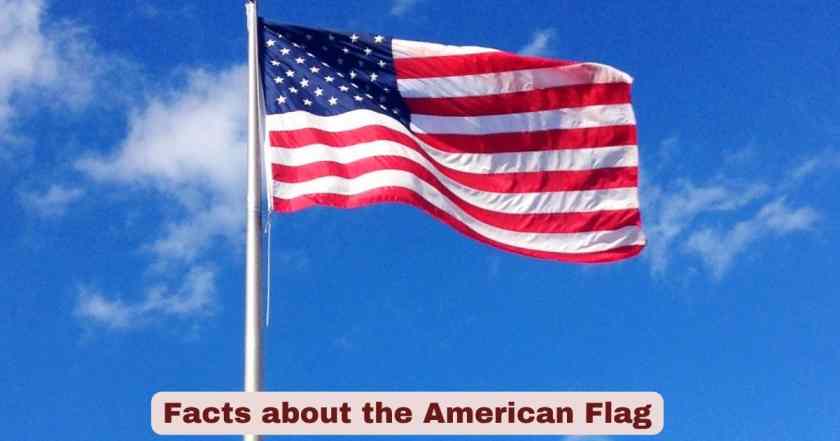
The American Flag in 2026
The American flag stands as one of the most recognized symbols in the world, representing freedom, unity, and American values across 250 years of history as the nation approaches its Semiquincentennial celebration on July 4, 2026. The current 50-star, 13-stripe design has remained unchanged since July 4, 1960, when Hawaii became the 50th state—making 2026 the 66th year of the longest-lasting flag design in American history. This remarkable continuity means that most Americans alive today have known only this single version of “Old Glory,” a stark contrast to the flag’s early years when designs changed frequently as the young nation expanded westward. From its official adoption by the Continental Congress on June 14, 1777—a date now commemorated annually as Flag Day—the Stars and Stripes has undergone 27 official versions, more changes than any other national flag in world history, with each iteration reflecting America’s territorial growth from 13 original colonies to 50 states spanning an entire continent plus Alaska and Hawaii.
The 2026 celebration of America 250 brings renewed focus to the flag’s symbolism and proper display, with communities nationwide planning coordinated displays, ceremonies, and educational programs that will be photographed, shared, and remembered for generations. The flag’s design carries deep meaning: the 13 alternating red and white stripes (7 red, 6 white) represent the original 13 colonies that declared independence from Britain, while the 50 white stars on a blue canton symbolize the current 50 states of the union. The colors themselves hold significance established in 1782 when Charles Thomson, Secretary of the Continental Congress, explained that red signifies hardiness and valor, white represents purity and innocence, and blue denotes vigilance, perseverance, and justice. Beyond Earth, 6 American flags planted on the Moon during Apollo missions from 1969-1972 remain as testament to human achievement, with 5 of the 6 still standing after more than 50 years of exposure to harsh lunar conditions. As Flag Day 2026 falls on Sunday, June 14—exactly 249 years after the flag’s adoption and just 20 days before Independence Day—this summer represents the most significant patriotic season in a quarter-millennium, making proper understanding and respectful display of the flag more important than ever.
Interesting American Flag Facts 2026
| Fact Category | Key Data Point | Details |
|---|---|---|
| Total Flag Versions | 27 official versions | From 1777 to 1960, the U.S. flag has been modified 27 times |
| Current Design Duration | 66 years (1960-2026) | The 50-star flag is the longest-lasting design in U.S. history |
| Last Official Change | July 4, 1960 | Hawaii’s admission created the current 50-star flag |
| Original Adoption Date | June 14, 1777 | Continental Congress officially adopted the Stars and Stripes |
| Flag Day Anniversary 2026 | 249 years | June 14, 2026 marks 249 years since flag adoption |
| America 250 Celebration | July 4, 2026 | 250th anniversary of Declaration of Independence |
| Flags on the Moon | 6 total flags | Apollo missions 11, 12, 14, 15, 16, and 17 planted flags |
| Moon Flags Still Standing | 5 of 6 flags | All except Apollo 11 flag remain upright (Apollo 11 blown over at liftoff) |
| Stars Configuration | 50 white stars | Arranged in 9 offset horizontal rows on blue canton |
| Stripes Configuration | 13 stripes (7 red, 6 white) | Representing the 13 original colonies |
| Official Proportions | 10:19 ratio | Flag width to length ratio established in 1912 |
| Color Symbolism | Red, White, Blue | Red=valor, White=purity, Blue=vigilance/justice |
| Design Standardization | 1912 | President Taft’s Executive Order standardized all flag specifications |
| Likely Designer | Francis Hopkinson | New Jersey signer of Declaration of Independence, not Betsy Ross |
| Most Changes Record | World record holder | U.S. holds record for most national flag changes |
| Stars Added Rule | July 4th following admission | New state stars added on Independence Day after statehood |
Data sources: Smithsonian Institution, National Flag Foundation, Britannica, Wikipedia, NASA, USAGov, Colonial Flag 2024-2026
The data reveals that the American flag possesses a unique status among world national symbols, having undergone 27 official versions over 249 years—more modifications than any other national flag in history. This record reflects America’s extraordinary territorial expansion from 13 coastal colonies in 1777 to 50 states spanning 3.8 million square miles by 1960. The current 50-star design, adopted on July 4, 1960, has now persisted for 66 years—longer than any previous version—creating remarkable continuity across three generations of Americans. This longevity means that everyone born after 1960 (currently age 66 and younger, representing approximately 82 percent of the U.S. population) has known only this single flag design, fostering a deep emotional connection to these specific stars and stripes.
The 6 American flags on the Moon represent one of humanity’s greatest achievements, with 5 of the 6 still standing upright after 50+ years despite the harsh lunar environment featuring temperature extremes from -130°C to 120°C, constant solar radiation, and micrometeorite impacts. The Apollo 11 flag, planted 27 feet from the Lunar Module on July 20, 1969, was the only casualty—blown over by rocket exhaust during liftoff as astronaut Buzz Aldrin witnessed and reported. Subsequent missions positioned flags farther from landing craft to prevent repetition. Lunar Reconnaissance Orbiter images confirm that the Apollo 12, 14, 15, 16, and 17 flags cast shadows, proving they remain upright, though solar radiation has likely bleached them white after decades of unfiltered ultraviolet exposure. The Francis Hopkinson design attribution carries significant historical weight despite the popular Betsy Ross legend—Hopkinson, a New Jersey delegate to the Continental Congress and signer of the Declaration of Independence, submitted a 1780 invoice to the Board of Admiralty claiming payment for designing “the flag of the United States of America” among other patriotic symbols. While Congress rejected his payment request (arguing he was already a government employee), historians overwhelmingly credit him as the flag’s designer. The Betsy Ross story, by contrast, surfaced only in 1870—94 years after the supposed event—when her grandson William Canby presented it to the Historical Society of Pennsylvania without contemporaneous documentation. The 2026 America 250 celebration creates unprecedented awareness of flag history and proper display protocols, with Flag Day on Sunday, June 14, 2026, serving as the ceremonial opening of the most significant patriotic summer in 250 years.
American Flag Design Evolution 2026
| Version Number | Year Adopted | Stars | Stripes | States Represented | Duration |
|---|---|---|---|---|---|
| 1st Version | June 14, 1777 | 13 | 13 | Original 13 colonies | 18 years |
| 2nd Version | May 1, 1795 | 15 | 15 | Vermont, Kentucky added | 23 years |
| 3rd Version | July 4, 1818 | 20 | 13 | Return to 13 stripes; 20 states | 1 year |
| 4th-7th Versions | 1819-1836 | 21-26 | 13 | Illinois through Arkansas | 17 years total |
| 8th-15th Versions | 1837-1861 | 27-34 | 13 | Michigan through Kansas | 24 years total |
| 16th-24th Versions | 1863-1896 | 35-45 | 13 | West Virginia through Utah | 33 years total |
| 25th Version | July 4, 1908 | 46 | 13 | Oklahoma statehood | 4 years |
| 26th Version | July 4, 1912 | 48 | 13 | New Mexico and Arizona | 47 years |
| 27th Version (Current) | July 4, 1960 | 50 | 13 | Alaska and Hawaii | 66 years (ongoing) |
Data sources: Smithsonian Institution, History Facts, Britannica, Wikipedia, National Flag Foundation 1777-2026
| Key Design Changes | Year | Authority | Details |
|---|---|---|---|
| Original Flag Resolution | June 14, 1777 | Continental Congress | Established 13 stars and 13 stripes; star arrangement not specified |
| Second Flag Act | January 13, 1794 | Congress | Added stars and stripes for new states (15 total each) |
| Flag Act of 1818 | April 4, 1818 | Congress | Fixed 13 stripes permanently; stars match state count |
| Taft Executive Order | June 24, 1912 | President Taft | Standardized proportions, star arrangement, colors |
| Eisenhower Executive Order | August 21, 1959 | President Eisenhower | Established current 50-star pattern |
Data sources: U.S. Code Title 4, Smithsonian Institution, National Archives, USFlags.Design 1777-1959
The American flag’s evolutionary journey from 1777 to 2026 chronicles America’s transformation from a fragile coalition of 13 Atlantic seaboard colonies to a continental superpower spanning 50 states. The first flag, adopted June 14, 1777, by the Continental Congress during the Revolutionary War, specified “thirteen stripes, alternate red and white; that the union be thirteen stars, white in a blue field, representing a new Constellation”—notably omitting any requirement for star arrangement, leading to numerous variations including circular, rows, and random patterns. This original design lasted 18 years until Vermont (1791) and Kentucky (1792) joined the union, prompting the Second Flag Act of 1794 which added both stars and stripes, creating a 15-star, 15-stripe flag on May 1, 1795.
This 15-stripe flag holds special significance as the “Star-Spangled Banner” that flew over Fort McHenry during the War of 1812, inspiring Francis Scott Key to write America’s national anthem. The massive 30 by 42-foot garrison flag, made by Mary Pickersgill, survived the British bombardment of September 13-14, 1814, and now rests in the Smithsonian’s National Museum of American History. However, the 15-stripe design created a practical problem: as more states joined, the flag would become cluttered with ever-more stripes. The Flag Act of April 4, 1818, solved this by permanently fixing the stripe count at 13 to honor the original colonies while allowing stars to increase with each new state, to be added on the July 4th following statehood. This remains the governing principle 208 years later in 2026.
Between 1818 and 1912, the flag underwent 22 modifications as America expanded westward through Louisiana Purchase territories (1803), Florida acquisition from Spain (1819), Oregon Territory from Britain (1846), Mexican-American War gains (1848) including California, and other additions. Star arrangements during this era varied wildly—flag makers used creative patterns including “Great Star” configurations where smaller stars formed one large star, rows, circles, and scattered designs. The chaos ended on June 24, 1912, when President William Howard Taft issued an Executive Order that standardized every detail for the first time: flag proportions (10:19 ratio), star size and arrangement, stripe width, canton dimensions, and even exact color shades. The 48-star flag established in 1912 (after New Mexico and Arizona statehood) became the second-longest-lasting design, flying for 47 years through both World Wars, the Great Depression, and into the Space Age.
The current 50-star flag emerged when Alaska became the 49th state on January 3, 1959, and Hawaii followed as the 50th on August 21, 1959. President Dwight D. Eisenhower issued an Executive Order on August 21, 1959, establishing the 50-star pattern: 9 offset horizontal rows containing 6-5-6-5-6-5-6-5-6 stars from top to bottom. This configuration debuted officially on July 4, 1960, at Fort McHenry, Maryland—the same location where the Star-Spangled Banner had flown 146 years earlier. The design has now persisted 66 years, far exceeding the previous record, and with no territories currently on track for statehood (Puerto Rico, U.S. Virgin Islands, Guam, and other territories lack sufficient momentum for admission), the 50-star flag may continue unchanged for decades, potentially reaching 100+ years and becoming synonymous with “the American flag” for multiple generations.
American Flag on the Moon 2026
| Apollo Mission | Landing Date | Astronauts Who Placed Flag | Flag Size | Current Status | Years on Moon |
|---|---|---|---|---|---|
| Apollo 11 | July 20, 1969 | Neil Armstrong, Buzz Aldrin | 3 x 5 feet | Knocked down during liftoff | 57 years |
| Apollo 12 | November 19, 1969 | Pete Conrad, Alan Bean | 3 x 5 feet | Still standing | 57 years |
| Apollo 14 | February 5, 1971 | Alan Shepard, Edgar Mitchell | 3 x 5 feet | Still standing | 55 years |
| Apollo 15 | July 30, 1971 | David Scott, James Irwin | 3 x 5 feet | Still standing | 55 years |
| Apollo 16 | April 21, 1972 | John Young, Charlie Duke | 3 x 5 feet | Still standing | 54 years |
| Apollo 17 | December 11, 1972 | Gene Cernan, Harrison Schmitt | 6 feet wide | Still standing | 54 years |
Data sources: NASA, Smithsonian Air and Space Museum, Lunar Reconnaissance Orbiter, Celestron, Space.com 1969-2026
| Moon Flag Details | Specification | Notes |
|---|---|---|
| Total Flags Planted | 6 American flags | One per manned lunar landing mission |
| Flags Currently Standing | 5 of 6 | All except Apollo 11, which fell during liftoff |
| Flag Material | Nylon | Standard government supply catalog flags |
| Temperature Range | -130°C to 120°C | Extreme lunar day/night temperatures |
| Flag Condition | Likely bleached white | Decades of unfiltered UV radiation |
| Storage on Spacecraft | Thermally insulated tube | Protected from 2,000°F exhaust temperatures |
| Designer | Jack Kinzler | Head of Technical Services, Manned Spacecraft Center |
| Apollo 11 Distance from LM | 27 feet | Too close; blown over by rocket exhaust |
| Territorial Claim | None | Outer Space Treaty prohibits lunar territorial claims |
Data sources: NASA Apollo Lunar Surface Journal, Wikipedia Lunar Flag Assembly, Smithsonian Magazine, Starlust 1969-2026
The 6 American flags on the Moon represent both triumphant human achievement and practical engineering challenges that NASA faced planting banners on an airless, gravity-reduced world. The flag assembly, designed by Jack Kinzler at Houston’s Manned Spacecraft Center (now Johnson Space Center), consisted of a lightweight aluminum pole with a horizontal crossbar to hold the flag extended—necessary because no breeze exists on the Moon to make it “wave.” The flags came from a government supply catalog, measuring 3 by 5 feet for five missions, with Apollo 17’s flag slightly larger at 6 feet wide—this particular flag had previously hung in Mission Control during Apollo 12-16 before being returned to the Moon on the program’s final mission. The flags were carried in thermally insulated tubular cases on the Lunar Module’s descent ladder, protecting them from exhaust gas temperatures calculated to reach 2,000°F (1,090°C) during landing.
The Apollo 11 flag planting on July 20, 1969, nearly didn’t happen—the decision to carry a flag was made relatively late in mission planning after the Committee on Symbolic Activities for the First Lunar Landing (established February 25, 1969) recommended it following consultation with the Smithsonian Institution, Library of Congress, and congressional committees. Astronaut Buzz Aldrin later recounted the difficulty of planting the flag: “Just beneath the powdery surface, the subsoil was very dense. We succeeded in pushing the flagpole in only a couple of inches. It didn’t look very sturdy.” His concern proved prophetic—when the Lunar Module Eagle lifted off on July 21, 1969, Aldrin witnessed the flag topple over, blown down by rocket exhaust just 40 seconds after liftoff. The flag had been planted only 27 feet from the spacecraft’s centerline—too close to withstand the blast.
Subsequent missions learned from this mishap, positioning flags farther from landing craft. Apollo 12 astronauts Pete Conrad and Alan Bean planted their flag on November 19, 1969, in the Ocean of Storms, ensuring adequate distance. Apollo 14’s Alan Shepard and Edgar Mitchell emplaced their flag on February 5, 1971, at the Fra Mauro highlands, while Apollo 15’s David Scott and James Irwin left theirs at Hadley Rille on July 30, 1971. Apollo 16’s John Young and Charlie Duke erected a flag on April 21, 1972, in the Descartes Highlands, and Apollo 17’s Gene Cernan and Harrison Schmitt planted the final flag on December 11, 1972, in the Taurus-Littrow Valley—the last humans to walk on the Moon as of 2026, 54 years ago.
Lunar Reconnaissance Orbiter (LRO) images taken since 2012 confirm that 5 of the 6 flags cast shadows, proving they remain upright. However, the harsh lunar environment has undoubtedly taken its toll. Without atmospheric protection, the flags endure constant bombardment from unfiltered solar radiation, particularly ultraviolet light that bleaches colors. After 50+ years of exposure, scientists believe the flags are now completely white, their red and blue dyes obliterated by radiation. Temperature extremes compound the damage: during the lunar day (approximately 14 Earth days), surface temperatures soar to 120°C (248°F), while during the lunar night they plummet to -130°C (-202°F)—a 250-degree swing that causes materials to expand and contract repeatedly. Additionally, micrometeorite impacts, though rare for any single flag, accumulate over decades. The flags are likely brittle, potentially fragmenting if disturbed. These six flags remain the only flags planted on another world by humans as of 2026, a record unlikely to change until NASA’s Artemis program returns astronauts to the Moon, currently planned for late 2020s.
American Flag Designer History 2026
| Designer Claim | Person | Evidence | Credibility |
|---|---|---|---|
| Most Likely Designer | Francis Hopkinson | 1780 invoice to Board of Admiralty | High — documented payment request |
| Popular Legend | Betsy Ross | Grandson’s 1870 oral history | Low — no contemporary documentation |
| Alternative Claimants | Margaret Manny, Rebecca Young, others | Flag makers active in Philadelphia (1776–1777) | Possible but undocumented |
Data sources: Smithsonian Institution, U.S. History, History.com, Biography.com, Wikipedia 1776-2026
| Francis Hopkinson Details | Information | Historical Significance |
|---|---|---|
| Birth | September 21, 1737 (Philadelphia) | Son of Thomas Hopkinson, academy founder |
| Education | College of Philadelphia | First graduate (1757) of institution now University of Pennsylvania |
| Signer of Declaration | July 4, 1776 | New Jersey delegate to Continental Congress |
| Other Designs | Great Seal components, New Jersey seal, currency | Multi-talented designer of patriotic symbols |
| Flag Design Claim | 1780 letter to Board of Admiralty | Requested payment for “design of flag of the United States of America” |
| Payment Request | “Two casks of ale” or monetary equivalent | Congress rejected as he was a government employee |
| Death | May 9, 1791 (age 53) | Died before flag became iconic national symbol |
Data sources: Wikipedia, Biography.com, Patriot Wood, Mr. Local History Project, Proud & Free 1737-1791
| Betsy Ross Details | Information | Historical Significance |
|---|---|---|
| Birth Name | Elizabeth Griscom (January 1, 1752) | Eighth of 17 children in a Philadelphia Quaker family |
| Marriage | John Ross (1773) | Eloped with an Anglican, leading to Quaker expulsion |
| Upholstery Business | Operated shop in Philadelphia | Documented flag maker for the Pennsylvania Navy Board |
| Payment Record | May 29, 1777 — £14, 12s, 2p | Receipt for “making ships colours” — only documented flag work |
| First Husband’s Death | January 1776 (gunpowder explosion) | Widowed at age 24, later remarried twice |
| Story Origin | Grandson William Canby in 1870 | Presented to Historical Society 34 years after her death |
| Death | January 30, 1836 (age 84) | Never publicly claimed to design the first flag during her lifetime |
Data sources: U.S. History, History.com, United States Flag Store, Wikipedia, Proud & Free 1752-1836
The question of who designed the first American flag remains one of history’s most enduring mysteries, complicated by limited documentation from the Revolutionary era and the emergence of competing claims decades after the events. The strongest historical evidence points to Francis Hopkinson of New Jersey, a Renaissance man who combined talents as lawyer, judge, poet, satirist, musician, artist, and signer of the Declaration of Independence. Born September 21, 1737, in Philadelphia, Hopkinson graduated from the College of Philadelphia (now University of Pennsylvania) in 1757 as the institution’s first graduate. During the Revolutionary period, he served as New Jersey delegate to the Continental Congress, designing numerous patriotic symbols including the Great Seal of the United States (portions), the New Jersey state seal, and early American currency predating the dollar bill.
In 1780, Hopkinson submitted a letter to the Continental Board of Admiralty dealing with the Admiralty seal, in which he mentioned patriotic designs he’d created “in the past few years,” specifically including “the Flag of the United States of America.” He requested compensation—some sources say “two casks of ale,” others mention monetary payment—for his design work. Congress rejected his claim on grounds that (1) he was already a government employee at the time and thus already compensated, and (2) “many people” had contributed to the flag design. This rejection doesn’t diminish his claim’s credibility; rather, it confirms that his involvement was known to Congress. No contemporary documentation contradicts Hopkinson’s assertion, and the government’s acknowledgment that “many people” contributed suggests committee-based refinement of Hopkinson’s original concept. Most historians and vexillologists (flag experts) now credit Hopkinson as the flag’s primary designer, though the Continental Congress as a body approved the final specifications on June 14, 1777.
The Betsy Ross legend stands in stark contrast, lacking any contemporary documentation. Elizabeth Griscom was born January 1, 1752, into a Philadelphia Quaker family as the eighth of seventeen children. She learned sewing from her great-aunt and apprenticed with upholsterer William Webster, where she met John Ross, an Anglican. Their 1773 elopement resulted in her expulsion from the Quaker faith. The young couple established an upholstery business, but tragedy struck when John Ross died in a January 1776 gunpowder explosion (some sources say militia guard duty). The 24-year-old widow continued the business, eventually remarrying twice and having seven daughters across her marriages.
Crucially, we know definitively that Betsy Ross made flags. Pennsylvania Archives contain a May 29, 1777, payment record from the Board of War: “An Order on William Webb to Elizabeth Ross, for fourteen pounds, twelve shillings, two pence for making ships colours & put into William Richards’ stores.” This document proves Ross was a professional flag maker during the Revolutionary period. She continued this work for decades, and family stories mention flags returning to her for mending years after the war. The question isn’t whether Betsy Ross made flags—she absolutely did. The question is whether she made the first flag and whether she designed it.
The Ross legend surfaced 94 years after the supposed 1776 flag presentation, when her grandson William J. Canby presented a paper to the Historical Society of Pennsylvania in 1870—34 years after Betsy’s death. Canby, who was 11 years old when his grandmother died in 1836, claimed she told him that Colonel George Ross (her late husband’s uncle and a Declaration of Independence signer) and Robert Morris brought her a rough flag design from a committee including George Washington, asking if she could make a flag. According to Canby’s account, Ross suggested changing six-pointed stars to five-pointed stars (easier to cut) and the committee agreed. Canby provided no contemporaneous documentation—no letters, receipts, newspaper accounts, diary entries, or other evidence from 1776-1777. The story relied entirely on oral family tradition passed down through decades.
George Washington’s meticulously kept records contain no mention of a flag committee or meeting with Ross. Robert Morris left no reference. George Ross died in 1779 without documenting any flag committee. No newspapers from 1776-1777 mention the first flag’s creation—remarkable given that flags were important for military identification. The Continental Congress Journal for June 14, 1777, simply records: “Resolved: that the flag of the United States be made of thirteen stripes, alternate red and white; that the union be thirteen stars, white in a blue field, representing a new Constellation.” No designer is named. Most historians now conclude that while Ross was definitely a flag maker, the evidence supporting her as the first flag’s designer is insufficient, representing likely family lore that became national myth through repetition rather than documented history. At least 17 flag makers and upholsterers worked in Philadelphia during 1776-1777, any of whom could have sewn the first Stars and Stripes based on Hopkinson’s design approved by Congress.
American Flag Symbolism and Colors 2026
| Element | Symbolism | Official Meaning | Historical Context |
|---|---|---|---|
| 13 Stripes | Original 13 colonies | 7 red, 6 white representing founding states | Fixed at 13 by Flag Act of 1818 |
| 50 Stars | Current 50 states | Each white star represents one state | Last added for Hawaii in 1960 |
| Red Color | Hardiness & Valor | Courage and bravery of American people | Defined by Charles Thomson, 1782 |
| White Color | Purity & Innocence | Integrity and moral character | Defined by Charles Thomson, 1782 |
| Blue Color | Vigilance, Perseverance & Justice | Watchfulness and determination | Defined by Charles Thomson, 1782 |
| Stars Pattern | New Constellation | United states forming new nation | 1777 Resolution: “representing a new Constellation” |
| Union (Blue Canton) | Unity of States | Federal union of separate states | Width of 7 stripes, 2/5 length of fly |
| Horizontal Stripes | Unity in Diversity | Separate colonies unified as one | Alternating red and white for distinction |
Data sources: U.S. Code Title 4, Charles Thomson’s 1782 explanation, Smithsonian Institution, USAGov 1782-2026
| Color Specifications | Pantone Match | RGB Values | HEX Code |
|---|---|---|---|
| Old Glory Red | PMS 193 C | R: 179, G: 25, B: 66 | #B31942 |
| White | N/A | R: 255, G: 255, B: 255 | #FFFFFF |
| Old Glory Blue | PMS 282 C | R: 10, G: 49, B: 97 | #0A3161 |
Data sources: U.S. State Department, U.S. Embassy (UK), USFlags.Design, Official specifications 1934-2026
The American flag’s symbolism operates on multiple levels, combining literal representation with abstract ideals that have evolved over 249 years. The 13 stripes—7 red and 6 white in alternating pattern—constitute the flag’s most historically grounded element, directly representing the 13 original colonies: Delaware, Pennsylvania, New Jersey, Georgia, Connecticut, Massachusetts, Maryland, South Carolina, New Hampshire, Virginia, New York, North Carolina, and Rhode Island. The Flag Act of 1818 permanently fixed this number after the 1795-1818 experiment with adding stripes for new states created an unwieldy 15-stripe flag. By reverting to 13 stripes while allowing stars to grow with each new state, Congress created a design that honors founding history while accommodating unlimited future expansion—a stroke of legislative genius that enabled the flag to scale from 20 states (1818) to 50 states (1960) without fundamental redesign.
The 50 white stars on the blue canton represent current states, arranged in 9 offset horizontal rows (6-5-6-5-6-5-6-5-6 from top to bottom) since the 1959 Eisenhower Executive Order. This specific pattern was proposed by Robert G. Heft, a 17-year-old high school student in Lancaster, Ohio, who created a 50-star flag design as a class project in 1958 when Alaska and Hawaii’s admission seemed imminent. His teacher initially gave him a B-minus, saying he’d earn an A if Congress accepted the design. When President Eisenhower chose Heft’s configuration from more than 1,500 submissions, the teacher changed the grade. Heft’s design remains in use 67 years later, making him the only person in history to design the current American flag as a high school project. The stars’ symbolism extends beyond simple state counting—the 1777 Flag Resolution described them as “representing a new Constellation,” suggesting the 13 original states (later 50) formed an entirely new political entity unlike anything in the Old World, shining together like stars in the heavens.
Color symbolism was not officially defined in the 1777 Flag Resolution, leading to decades of uncertainty about intended meanings. The definitive explanation came in 1782 when Charles Thomson, Secretary of the Continental Congress, was asked to explain the colors of the Great Seal of the United States (which uses the same red, white, and blue). Thomson’s explanation has since been applied to the flag: Red signifies hardiness and valor, representing the courage and bravery of the American people and their willingness to fight for independence. White represents purity and innocence, embodying the integrity and moral character the founders hoped would characterize the new nation. Blue denotes vigilance, perseverance, and justice—watchfulness against tyranny, determination to maintain liberty, and commitment to fair governance. These meanings, though applied retrospectively, have become canonical in American civic education.
The exact color specifications weren’t standardized until 1934 when the U.S. War Department established specific shades, later refined by the State Department for diplomatic consistency. The official colors are “Old Glory Red” (Pantone PMS 193 C, RGB 179/25/66, HEX #B31942), pure White (RGB 255/255/255, HEX #FFFFFF), and “Old Glory Blue” (Pantone PMS 282 C, RGB 10/49/97, HEX #0A3161). However, color interpretation for digital screens and fabric dyes remains challenging because the original Cable colors from 1934 were designed for textile manufacturing, not RGB displays, creating slight variations across media. The U.S. Embassy in the United Kingdom and State Department publish current standards, though flag manufacturers maintain some discretion within accepted ranges to account for different materials and lighting conditions.
American Flag Display Rules 2026
| Display Rule | Requirement | U.S. Flag Code Reference |
|---|---|---|
| Position of Honor | Right-most position or highest point | 4 USC §7(c–d) |
| Display Hours | Sunrise to sunset; may display 24/7 if properly illuminated | 4 USC §6(a) |
| Weather Conditions | Do not display during rain/snow unless it’s an all-weather flag | 4 USC §6(c) |
| Hanging Orientation | Union (stars) at top left when hanging vertically | 4 USC §7(k) |
| With Other Flags | U.S. flag at center and highest point | 4 USC §7(e–f) |
| On Vehicles | Right front fender (viewer’s perspective) | 4 USC §7(b) |
| Over a Street | Union faces north on east–west street, east on north–south street | 4 USC §7(h) |
| Half-Staff Protocol | By presidential or gubernatorial proclamation | 4 USC §7(m) |
| Illumination Requirement | Must be illuminated if displayed at night | 4 USC §6(a) |
| Touching Ground | Should never touch the ground or floor | 4 USC §8(b) |
| Carrying Horizontally | Should be carried aloft and free, never flat | 4 USC §8(c) |
| Use in Advertising | Should not be used for advertising purposes | 4 USC §8(i) |
| Disposed When Worn | Dignified burning ceremony when no longer serviceable | 4 USC §8(k) |
Data sources: U.S. Code Title 4 Chapter 1, USAGov, American Legion, National Flag Foundation 1942-2026
| Half-Staff Display Days | Occasion | Duration | Authority |
|---|---|---|---|
| Peace Officers Memorial Day | May 15 | Sunrise to sunset | 36 USC §136 |
| Memorial Day | Last Monday in May | Sunrise to noon, then raised | 36 USC §116 |
| Patriot Day (9/11) | September 11 | Sunrise to sunset | 36 USC §144 |
| Pearl Harbor Day | December 7 | Sunrise to sunset | 36 USC §129 |
| Death of President/Former President | Varies | 30 days from death | 4 USC §7(m) |
| Death of Vice President/Chief Justice | Varies | 10 days from death | 4 USC §7(m) |
| Death of Other Officials | Varies | Day of death plus following day | 4 USC §7(m) |
| Presidential Proclamation | Varies by tragedy | As proclaimed | Presidential authority |
Data sources: U.S. Code Titles 4 and 36, Presidential Proclamations, American Legion, Veterans Affairs 1942-2026
The U.S. Flag Code (Title 4, Chapter 1 of U.S. Code, adopted June 22, 1942, and last amended 2013) provides comprehensive guidance on respectful flag display, though notably the code carries no penalties for violations—it’s advisory rather than legally enforceable due to First Amendment protections. The Supreme Court ruled in Texas v. Johnson (1989) that flag desecration is protected political speech, making Flag Code provisions matters of etiquette and respect rather than law. Nevertheless, the code represents consensus among veterans’ organizations, patriotic groups, and government agencies on proper flag treatment, widely followed by citizens who wish to show respect.
The “position of honor” rule dictates that when displaying the U.S. flag with other flags (state, corporate, organizational), the American flag must occupy the right-most position from the observer’s perspective (the flag’s own right) or the highest point in a group. When crossing flags on staffs, the U.S. flag’s staff should be in front of the other flag’s staff. During parades, the U.S. flag should be at the marching right (observer’s left) or centered if carried with other flags in a line. On vehicles, the flag should be affixed to the right front fender from the vehicle’s perspective—which appears on the left to oncoming traffic, ensuring the flag is “advancing” into the wind when the vehicle moves forward, just as flag bearers in parades carry flags on their right shoulder so the flag flows backward as they march.
Time of display traditionally runs from sunrise to sunset, but Section 6(a) explicitly permits 24-hour display “if properly illuminated during darkness hours.” This accommodation allows homes, businesses, and government buildings to fly flags continuously. “Proper illumination” isn’t strictly defined but generally means a dedicated spotlight ensuring the flag remains visible throughout night—a small solar spotlight or low-wattage LED typically suffices. The weather rule states flags should not display during “inclement weather” unless it’s an “all-weather flag” made of nylon or other synthetic materials designed to withstand rain and snow. Traditional cotton and wool flags should be brought indoors during precipitation to prevent deterioration. Modern all-weather flags have largely eliminated this concern, with most contemporary flags capable of outdoor display in any weather.
Half-staff protocol requires specific rules: the flag should first be hoisted to the peak for an instant, then lowered to the half-staff position (midpoint between top and bottom of staff). At day’s end, it’s raised briefly to peak before lowering for retirement. Memorial Day observes unique protocol: the flag flies at half-staff from sunrise until noon, then is raised to full-staff from noon to sunset, symbolizing mourning for the fallen in the morning and celebration of their sacrifices enabling American freedom in the afternoon. Presidential proclamations frequently order half-staff display following national tragedies, mass shootings, or deaths of prominent figures, supplementing the statutory occasions.
The prohibition on touching ground is among the most widely known rules, though it’s often misunderstood—accidentally touching the ground doesn’t “ruin” a flag or require immediate destruction. The rule is about respect: flags shouldn’t be allowed to drag on ground, trail in dirt, or be used as floor coverings or cleaning rags. An accidental brush with pavement during folding doesn’t necessitate disposal; rather, the flag should be treated with the same care one would afford any respected object. When a flag becomes worn, faded, or torn beyond serviceable condition, Section 8(k) requires “dignified disposal, preferably by burning.” Many American Legion posts, VFW halls, and Boy Scout troops conduct annual Flag Day ceremonies where citizens can bring worn flags for respectful retirement via ceremonial burning, ensuring tattered flags don’t end up in landfills. For 2026, with heightened flag awareness due to America 250, proper display becomes especially important as communities coordinate large-scale patriotic displays that will be photographed and preserved for history.
American Flag in American Culture 2026
| Cultural Element | Details | Significance |
|---|---|---|
| National Anthem | The Star-Spangled Banner | Written by Francis Scott Key after seeing a 15-star flag survive the Battle of Fort McHenry (1814) |
| Flag Day | June 14 annually | Commemorates Continental Congress adoption of the flag (June 14, 1777) |
| Flag Day 2026 | Sunday, June 14, 2026 | 249th anniversary; 20 days before America’s 250th Independence Day |
| Pledge of Allegiance | Written 1892, modified 1954 | “Under God” added in 1954; recited daily in many schools |
| Nickname: Old Glory | Coined by William Driver (1831) | His 10×17 ft flag survived the American Civil War |
| Nickname: Stars and Stripes | Common usage since 1777 | Literal description of the flag design |
| Nickname: Star-Spangled Banner | From the national anthem | Refers to the Fort McHenry flag; now used for all U.S. flags |
| Nickname: Red, White and Blue | Color-based reference | Emphasizes the flag’s tricolor design |
| Flag Folding Ceremony | 13 folds, each with meaning | Military funeral honor; symbolic meanings (unofficial) |
| Largest Flag Ever | 505 ft × 225 ft “Superflag” | Created for America’s bicentennial; required a stadium to unfurl |
Data sources: Smithsonian Institution, National Flag Foundation, Wikipedia, Colonial Flag, Proud & Free 1777-2026
| Flag in Popular Culture | Medium | Notable Examples |
|---|---|---|
| Film | Movies | Battle of Iwo Jima flag raising (WWII), Apollo 11 Moon Landing, 9/11 Ground Zero |
| Photography | Iconic images | Joe Rosenthal at Iwo Jima, Buzz Aldrin saluting moon flag, 9/11 firefighters |
| Music | Patriotic songs | You’re a Grand Old Flag, The Stars and Stripes Forever, many country songs |
| Sports | Events | Olympic medal ceremonies, pre-game flag presentations, victory celebrations |
| Memorials | Ceremonies | Military funerals, half-staff tributes, memorial displays |
| Fashion | Apparel | Flag Code discourages apparel use; widely ignored in modern times |
| Art | Visual art | Jasper Johns flag paintings (1954–), Childe Hassam (1916–1919) |
| Protests | Expression | Texas v. Johnson protected flag burning as free speech; remains controversial |
Data sources: Smithsonian, Popular culture databases, Historical records, Wikipedia 1777-2026
The American flag permeates national culture more deeply than perhaps any symbol in American life, serving simultaneously as government emblem, military insignia, patriotic icon, political statement, and commercial decoration. The flag’s journey to this status wasn’t instant—during the Revolutionary period and early republic, Americans showed limited attachment to the Stars and Stripes compared to their fervor for state flags, regimental colors, or political banners. The flag exploded in popularity during the Civil War (1861-1865), when it became the Union’s primary symbol in opposition to the Confederate “Stars and Bars,” transforming from military identifier to embodiment of national unity. Union victory solidified this status, and by the late 19th century, the flag had become synonymous with America itself.
“The Star-Spangled Banner” as national anthem (officially adopted 1931, though widely used earlier) ensures every American hears flag-focused lyrics from childhood: “Oh, say does that star-spangled banner yet wave, O’er the land of the free and the home of the brave?” These words, written by Francis Scott Key on September 14, 1814, after watching the bombardment of Fort McHenry and seeing the garrison’s massive 30×42 foot flag (the 15-star, 15-stripe version) still flying at dawn, created lasting association between the flag and American resilience. That specific flag, sewn by Mary Pickersgill and her daughter, now rests in the Smithsonian’s National Museum of American History in a climate-controlled, low-light chamber designed to preserve it for future generations—one of America’s most treasured artifacts.
The Pledge of Allegiance, written by Francis Bellamy in 1892 and modified in 1954 to add “under God,” is recited daily in many American schools, creating ritualized flag acknowledgment from childhood. The original version read: “I pledge allegiance to my Flag and to the Republic for which it stands, one nation, indivisible, with liberty and justice for all.” The 1923 National Flag Conference changed “my Flag” to “the Flag of the United States of America” to ensure immigrant children understood which flag they pledged to, and President Eisenhower signed legislation adding “under God” on Flag Day 1954 during the Cold War as counterpoint to “atheistic communism.” This phrase remains controversial, with periodic court challenges arguing it violates separation of church and state, though courts have consistently upheld it.
Flag Day (June 14) lacks federal holiday status—Americans work normally—but has been commemorated since 1877 when the 100th anniversary of the flag’s adoption sparked remembrance efforts. President Harry Truman signed Flag Day into law as a national observance in 1949, though not a federal holiday. For 2026, Flag Day on Sunday, June 14, takes on special significance as the 249th anniversary and the ceremonial kickoff to America 250 Independence Day celebrations just 20 days later on July 4, 2026. Communities nationwide are planning coordinated Flag Day events, parades, flag raisings, and educational programs as the opening ceremony for the summer-long Semiquincentennial celebration.
The flag’s cultural omnipresence extends into every domain: military funeral honors with the flag folded into 13 triangular folds (each fold carrying symbolic meaning, though these are unofficial traditions, not Flag Code) and presented to the deceased’s family; Olympic medal ceremonies where gold medalists stand beneath their national flag as it rises on the center pole; sports events where the flag is displayed, the anthem sung, and military color guards present arms; Memorial Day, Veterans Day, and Independence Day celebrations where homes, businesses, and government buildings fly flags; and countless photographs from Iwo Jima (1945, where six Marines raised the flag on Mount Suribachi in one of history’s most reproduced images) to the Moon landing (1969) to 9/11 (when three firefighters raised a flag at Ground Zero in an echo of Iwo Jima) that use the flag to capture American perseverance in crisis. The flag has become so embedded in national consciousness that seeing it triggers immediate emotional responses—pride, nostalgia, defiance, or controversy depending on context and viewer—making it arguably the world’s most emotionally potent national symbol as America enters its third century.
American Flag World Records 2026
| Record Category | Record Holder | Specifications | Date |
|---|---|---|---|
| Most National Flag Changes | United States | 27 official versions | 1777-1960 |
| Longest-Lasting Current Design | United States (50-star) | 66 years and counting | July 4, 1960-present |
| Largest Flag Ever Made | Superflag (USA) | 505 feet x 225 feet, 1.5 tons | 1980 (for 1976 Bicentennial) |
| Highest Flag Pole | Jeddah Flagpole (Saudi Arabia) | 561 feet (171 meters) | 2014 |
| Farthest Flag from Earth | Voyager 1 spacecraft | 11.7 billion miles from Earth | Launched 1977, still traveling |
| Most Expensive Flag Sold | Star-Spangled Banner replica | Auction price: $12 million | Various historic flags |
| Oldest Surviving U.S. Flag | Bedford Flag | Possibly 1660s-1700s | Predates Revolution; militia flag |
| First Flag on Another World | Apollo 11 Moon Flag | Planted July 20, 1969 | July 20, 1969 |
| Most Flags in Space | 5 flags leaving solar system | Pioneer 10/11, Voyager 1/2, New Horizons | 1972-2006 launches |
Data sources: Guinness World Records, NASA, Smithsonian Institution, Wikipedia, Space.com 1660-2026
| Flag Manufacturing Statistics | Annual Figure | Details |
|---|---|---|
| Flags Manufactured Annually (USA) | 150+ million | Includes sizes from 4×6 inch hand flags to large garrison flags |
| Flag Market Value | $350–500 million | Estimated annual U.S. flag market revenue |
| Largest Manufacturer | Annin Flagmakers | Operating since 1847; oldest U.S. flag company |
| Made in USA Percentage | ~70% | Down from ~95% in 1990s; imports from China increasing |
| Average Home Flag Size | 3 ft × 5 ft | Most common residential flag size |
| Average Flag Lifespan (Outdoor) | 90–180 days | Varies by weather exposure; all-weather flags last longer |
| Government Flag Purchases | 10+ million annually | Federal, state, and local government combined |
| Flags Retired Annually | Est. 50+ million | Worn flags disposed through dignified burning ceremonies |
Data sources: Flag Manufacturers Association, Annin Flagmakers, Industry reports, USAGov 2020-2026
The United States holds the world record for most changes to a national flag with 27 official versions from 1777 to 1960—a record unlikely to be challenged as it required both frequent territorial expansion (absorbing 50 states over 183 years) and a commitment to updating the flag with each addition rather than designing a static symbol. Most nations adopt a flag design and keep it indefinitely with only minor tweaks; the U.S. treated its flag as a “living document” that grew with the nation, creating a unique vexillological (flag study) history. The current 50-star flag, now 66 years old, has become the longest-lasting U.S. flag design, surpassing the previous record-holder, the 48-star flag (1912-1959, 47 years). With no U.S. territories currently on track for statehood, this record will likely extend much further—possibly reaching 100+ years by 2060 if Puerto Rico, Guam, U.S. Virgin Islands, and other territories don’t achieve statehood.
The “Superflag,” created for America’s Bicentennial in 1976 and publicly displayed in 1980, measured an astounding 505 feet long by 225 feet wide, weighed 1.5 tons, and required a football stadium to unfurl completely. At 113,625 square feet, it could cover 2.6 acres and remains one of the largest flags ever constructed. The flag was made by Humphrey’s Flag Company in Pottstown, Pennsylvania, using synthetic materials to withstand outdoor display. Due to its massive size, the Superflag required 600+ volunteers to unfurl and could only be displayed in enormous open spaces. It toured America during Bicentennial celebrations but eventually suffered damage from weather and handling, with portions now in museum collections. The Jeddah Flagpole in Saudi Arabia, completed September 23, 2014, holds the record for world’s tallest flagpole at 561 feet (171 meters)—taller than the Washington Monument (555 feet)—flying a Saudi flag measuring 151 feet by 101 feet.
The farthest American flag from Earth flies aboard Voyager 1, launched September 5, 1977, which has traveled 11.7 billion miles from Earth as of 2026 and continues moving at 38,000 mph as it ventures into interstellar space. The spacecraft carries a small American flag decal and will eventually leave our solar system entirely, carrying the Stars and Stripes into the galaxy. Four other spacecraft—Pioneer 10, Pioneer 11, Voyager 2, and New Horizons—also carry American flags out of the solar system, ensuring the flag’s design survives even if human civilization doesn’t. On Mars, the Viking 1 lander placed the first American flag on the red planet on July 20, 1976—exactly seven years after the Apollo 11 moon landing and during America’s Bicentennial year, a symbolic trifecta.
Flag manufacturing represents a significant industry, with 150+ million American flags produced annually across all sizes from tiny 4×6 inch hand-held flags to massive 30×40 foot garrison flags. Annual market value reaches $350-500 million, though Chinese imports have captured increasing market share since 2000, now accounting for approximately 30 percent of flags sold in America—a source of controversy given that the flag represents American values yet isn’t always American-made. Annin Flagmakers, established 1847 in New Jersey, remains America’s oldest and largest flag manufacturer, producing flags that have flown over U.S. embassies, military bases, government buildings, and were planted on the Moon (though Apollo flags came from government supply catalogs, not directly from Annin). The average outdoor residential flag lasts only 90-180 days before sun, wind, rain, and pollution render it faded or tattered, requiring replacement—meaning American homeowners who fly flags year-round purchase 2-4 flags annually, driving continuous demand that sustains the industry.
Disclaimer: This research report is compiled from publicly available sources. While reasonable efforts have been made to ensure accuracy, no representation or warranty, express or implied, is given as to the completeness or reliability of the information. We accept no liability for any errors, omissions, losses, or damages of any kind arising from the use of this report.