
White House Correspondents’ Dinner (WHCD) in America 2026
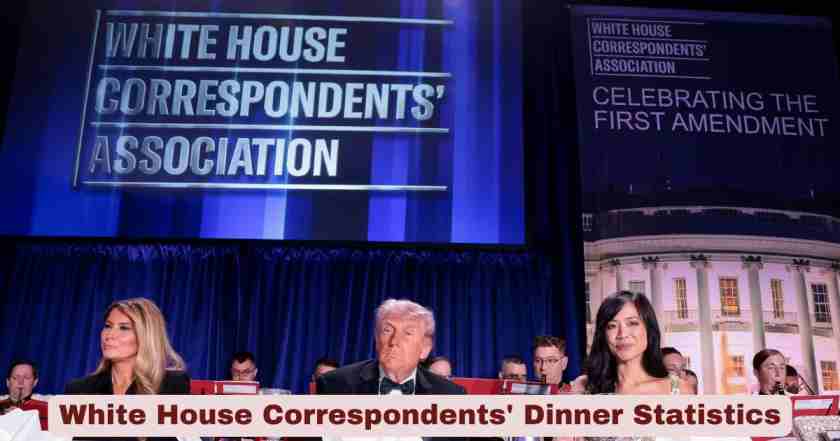
The 2026 White House Correspondents’ Dinner (WHCD) will go down as one of the most extraordinary nights in the event’s 105-year history — and not for reasons anyone in that ballroom anticipated when they sat down to dinner at the Washington Hilton on Saturday, April 25, 2026. For the first time in either of his presidential terms, President Donald Trump attended the annual black-tie gala, ending a years-long boycott that had defined the atmosphere of the dinner throughout his political career. Trump had previously declined five separate invitations — across both his first and second terms — making his March 2026 acceptance one of the most anticipated moments in the dinner’s recent history. The buzz around the event was unprecedented: the dinner was completely sold out, with media outlets still requesting additional tickets in the days leading up to it. Mentalist Oz Pearlman was booked as the evening’s entertainer — a deliberate departure from the 43-year tradition of comedian headliners — partly to sidestep the political friction that a Trump-roasting comic would generate. WHCA President Weijia Jiang, senior White House correspondent for CBS News, presided over the event, and the journalism awards were structured in a historically unusual format: for the first time, award winners would be announced after the president spoke rather than before, because several winners were recognized for reporting Trump had actively opposed and even sued over.
Then, at approximately 8:35 p.m. ET, while attendees were eating their first course just minutes after Jiang delivered her opening remarks, the evening was shattered by gunfire. Cole Tomas Allen, 31, of Torrance, California — a Caltech engineering graduate believed to have been a hotel guest — stormed a security checkpoint in the lobby of the Washington Hilton armed with a shotgun, a handgun, and multiple knives. Allen exchanged fire with law enforcement and was shot and taken into custody. One Secret Service officer was struck by a round but was protected by his bulletproof vest and was expected to survive. Trump, First Lady Melania Trump, Vice President JD Vance, and Cabinet members present — including FBI Director Kash Patel and HHS Secretary Robert F. Kennedy Jr. — were immediately evacuated from the ballroom. Trump held a press conference at the White House, calling the suspect a “lone wolf” and a “thug,” praising Secret Service, and announcing his intention to reschedule the dinner within 30 days. The event — meant to celebrate the First Amendment and the free press — became instead the scene of the third assassination-adjacent incident targeting the president in under two years, leaving Washington shaken and the world watching.
Key Interesting Facts: White House Correspondents’ Dinner in the US 2026
| Fact | Detail |
|---|---|
| 2026 Dinner Date | Saturday, April 25, 2026 |
| Venue | Washington Hilton, 1919 Connecticut Ave. NW, Washington, DC |
| WHCA President (2026) | Weijia Jiang — senior White House correspondent, CBS News |
| Evening Entertainer (2026) | Oz Pearlman — mentalist; first non-comedian headliner in 43 years |
| Comedian Tradition Began | 1983 — Mark Russell was the first comedian headliner |
| Trump’s Attendance Status (2026) | First time attending as president — ended a years-long boycott |
| Prior Invitations Trump Declined | 5 invitations declined across both presidential terms before 2026 |
| Trump’s Previous WHCA Dinner Appearance | 2011 — attended as a guest; roasted by Obama and Seth Meyers over birtherism |
| 2026 Dinner Ticket Status | Completely sold out — WHCA overwhelmed by ticket requests |
| Broadcast Networks (2026) | Live on CNN, C-SPAN (red carpet 6 p.m. ET; dinner 8 p.m. ET), Fox Nation |
| Security Incident Time | Approximately 8:35 p.m. ET, April 25, 2026 — shots fired during first course |
| Shooting Suspect | Cole Tomas Allen, 31, Torrance, California — Caltech engineering graduate |
| Weapons Found on Suspect | Shotgun, handgun, and multiple knives |
| Total Shots Fired | 5 to 8 shots fired in total, per law enforcement sources |
| Casualties | 1 Secret Service officer shot — protected by bulletproof vest; expected to survive; no other injuries |
| Charges Expected | Using a firearm during a crime of violence; assault on federal officers — arraignment set for Monday |
| Trump’s Post-Incident Statement | Press conference at White House; pledged to reschedule within 30 days |
| WHCA Founded | February 25, 1914 — by journalists protecting press access from President Woodrow Wilson |
| First WHCA Dinner | Saturday, May 7, 1921 — Arlington Hotel, Washington, DC; 50 men attended |
| First Presidential Attendee | President Calvin Coolidge, 1924 |
| Every President Since | Every president since Coolidge has attended at least once |
| Current WHCA Membership | 900 individual members and more than 250 news outlets of all kinds and sizes |
| Typical Annual Attendance | Approximately 2,600 people — can reach up to 3,000 in high-demand years |
| Women First Admitted to Dinner | 1962 — Kennedy refused to attend until women were allowed; urged by Helen Thomas |
| Women Barred From Dinner for | 41 years — from 1921 until 1962 |
| Katharine Graham Award Prize | $10,000 — top WHCA journalism prize |
| WHCA Main Revenue Source | The annual dinner is the main source of revenue for all WHCA operations and scholarships |
| Dinner Cancelled Only 3 Times | 1930 (Taft death), 1942 (WWII), 1951 (Korean War) |
Source: WHCA Official Dinner Page; WHCA History; Wikipedia — White House Correspondents’ Association; CNN Live Updates, April 25, 2026; Al Jazeera — Trump Evacuated, April 26, 2026; NBC News, April 25, 2026; NPR — Oz Pearlman, April 23, 2026; Axios — Shooting, April 26, 2026
The 2026 White House Correspondents’ Dinner landed at the intersection of political history and breaking news in a way that no one could have scripted. Trump’s presence — the first time a sitting president attended in either of his two terms — had already made the event one of the most highly anticipated in the dinner’s 105-year run, with the complete sell-out of tickets and a longer-than-usual list of surrounding weekend parties serving as testament to the extraordinary level of interest his attendance generated. The WHCA’s decision to book Oz Pearlman rather than a comedian was a carefully calculated move. The dinner’s history of sharp political comedy had generated genuine controversy in recent years — particularly the 2018 Michelle Wolf performance that prompted the association itself to issue a statement saying her monologue was “not in the spirit” of the dinner’s mission — and booking a mentalist who described his role as being to “bring us together” rather than “roast people” was a strategic acknowledgment of the political tightrope the event was walking in 2026.
The security incident that ended the evening will define the 2026 WHCA dinner in the history books regardless of anything else that happened. Secret Service Deputy Director Matthew Quinn stated in an official release that the suspect had “attempted to create a national tragedy,” and that “the strength of our layered security was evident.” The suspect, Cole Tomas Allen of Torrance, California, appears to have used his hotel guest status to position himself inside the Washington Hilton before encountering the final security layer. The 5 to 8 shots that rang out at 8:35 p.m. sent guests diving under tables, triggered the fastest presidential evacuation at a public event in recent years, and produced one of the most dramatic nights in the dinner’s century-long history. WHCA President Weijia Jiang’s return to the podium to address the shaken room with the words, “I saw all of you reporting, and that’s what we do,” was widely called the defining journalistic moment of the entire evening.
WHCA Organization Statistics in the US 2026
| WHCA Organizational Metric | Data / Detail |
|---|---|
| WHCA Founded | February 25, 1914 |
| Founded By | 11 journalists initially organized the association |
| Reason for Founding | Protect press access after rumors that Congress would control journalist access to Wilson |
| Nonprofit Status | 501(c) nonprofit organization |
| Total Individual Members (2026) | 900 individual members |
| Total News Outlets Represented (2026) | More than 250 news outlets — all sizes, viewpoints, mediums, US and international |
| WHCA Core Mission | Ensure free press; advocate for White House access; support journalists |
| Secondary Mission | Fund journalism scholarships; recognize excellence via annual awards |
| Main Revenue Source | The annual dinner — primary revenue for all WHCA operations |
| Ticket Eligibility | Only news organizations with WHCA member journalists may purchase dinner tickets |
| Membership Application Deadline | Submit by February 1; approved by March 1 to qualify for that year’s dinner |
| Executive Director (2026) | Steve Thomma |
| WHCA President (2026) | Weijia Jiang — senior White House correspondent, CBS News |
| First Female WHCA President | Helen Thomas — elected 1975 |
| Reference Year Total Expenses (2015) | $311,090 in total organizational expenses |
| Reference Year Scholarship Total (2018) | $148,000 total — $134,500 WHCA + $13,500 partner schools — to 27 students |
| Prior Scholarship Grant Range | $2,500 to $7,000 per individual student |
| 2026 Award Prizes Doubled | WHCA doubled most journalism award cash prizes for 2026 cycle — three awards raised from $2,500 → $5,000 |
Source: WHCA Official Website; WHCA History Page; WHCA Awards Page; Newsweek — Who Pays For the WHCA Dinner?; Columbia Journalism Review — We Did the Math on the WHCD
The White House Correspondents’ Association is, at its core, a lean nonprofit organization whose public profile far exceeds its administrative footprint. With 900 individual members and more than 250 affiliated news outlets — ranging from major television networks to regional papers, digital outlets, and international media — the WHCA serves as the collective credentialing and advocacy body for the journalists who cover the most powerful office in the world. What makes the organization’s financial structure notable is how thoroughly it relies on a single annual event for its revenue: the dinner is explicitly described on the WHCA’s own website as its “main source of revenue” for all operations, including press advocacy, journalist support, and the scholarship fund. The announcement that the WHCA doubled most journalism award cash prizes ahead of the 2026 cycle signals that the organization’s financial position had strengthened sufficiently — likely reflecting the unusually high demand for tickets driven by Trump’s anticipated attendance.
The scholarship figures from the 2018 reference year — the most detailed publicly available accounting — offer a revealing window into the dinner’s philanthropic impact. The $148,000 in total scholarship funding for 27 students that year, with individual grants ranging from $2,500 to $7,000, represents a genuine but relatively modest contribution to journalism education relative to the event’s enormous public profile. The fact that operating expenses consumed the majority of the 2018 fundraising revenue generated criticism from media industry observers, though the WHCA has consistently argued that its core advocacy mission — fighting for press access, credentialing, and White House transparency — directly justifies those operational costs. Helen Thomas remains a towering figure in the WHCA’s institutional history: the journalist who forced the dinner’s integration by persuading President Kennedy not to attend unless the 41-year ban on women was lifted, and who later became the first female WHCA president in 1975.
White House Correspondents’ Dinner Historical Timeline in the US 2026
| Year / Milestone | Key Event | Detail |
|---|---|---|
| 1914 | WHCA Founded | February 25, 1914 — 11 journalists form association to protect press access from Wilson |
| 1921 | First WHCA Dinner | May 7, 1921 — Arlington Hotel; 50 men attended; no president present |
| 1924 | First Presidential Attendee | President Calvin Coolidge becomes first president to attend |
| 1930 | First Cancellation | Cancelled due to death of former President William Howard Taft |
| 1942 | WWII Cancellation | Cancelled following US entry into World War II |
| 1951 | Korean War Cancellation | Cancelled amid Korean War tensions under President Truman |
| 1962 | Women Admitted | JFK refuses to attend unless women are allowed; Helen Thomas urged the change |
| 1975 | Helen Thomas — First Female WHCA President | Thomas becomes the first woman to lead the WHCA |
| 1983 | Comedian Tradition Begins | Mark Russell first comedian headliner; dinner takes on modern roast format |
| 1987 | Celebrity Guest Era Begins | Reporter Michael Kelly arrives with Fawn Hall; starts the celebrity invitation tradition |
| 2011 | Trump Roasted as Guest | Obama and Seth Meyers roast Trump over birtherism; Trump sits stone-faced; widely cited as catalyst for his political ambitions |
| 2017 | Trump First-Term Boycott Begins | Trump holds Pennsylvania rally instead; first president to skip in 36 years |
| 2018 | Michelle Wolf Controversy | Wolf’s monologue roasts Sarah Sanders; WHCA issues statement saying speech “not in the spirit” of the dinner |
| 2019 | No Comedian for First Time in Modern Era | WHCA books historian Ron Chernow instead of comedian |
| 2025 | Amber Ruffin Headlined 2025 Dinner | Ruffin initially dropped a month before due to Trump ally pushback; ultimately performed |
| 2026 | Trump Attends as President — Dinner Ends in Shooting | Trump ends boycott; Oz Pearlman (mentalist) booked; shooting forces evacuation; dinner cancelled; Trump pledges reschedule |
| Every President Since 1924 | All Have Attended At Least Once | Since Coolidge, every president has attended the dinner at least once during their tenure |
Source: WHCA — History; HISTORY.com — History of the White House Correspondents’ Dinner; Wikipedia — White House Correspondents’ Association; PBS NewsHour — Memorable WHCD Moments, April 25, 2026; Al Jazeera — After Years of Avoidance, April 25, 2026
The historical arc of the White House Correspondents’ Dinner reveals how consistently the event has served as a mirror for the political tensions of its era — and how decisively the 2026 dinner broke from every precedent simultaneously. The dinner has been cancelled only three times in its history: in 1930 for the death of a former president, in 1942 for World War II, and in 1951 during the Korean War — demonstrating the event’s remarkable institutional durability across more than a century of American political life. The comedian tradition that began with Mark Russell in 1983 lasted for 36 years before the WHCA first departed from it in 2019, not coincidentally coinciding with Trump’s first-term boycott of the dinner. The 2011 dinner, where Trump sat stone-faced as both President Obama and Seth Meyers roasted him over the birther controversy, has since become one of the most analyzed evenings in recent political history — multiple biographers have traced Trump’s intensified presidential ambitions directly to the public humiliation he experienced that night, making a WHCA dinner a genuine inflection point in the 2016 race.
The celebrity guest tradition that began so innocuously in 1987 — when a reporter simply arrived with Fawn Hall — gradually transformed the dinner into what critics labeled “nerd prom”: a star-studded Washington spectacle that seemed to blur the line between the press corps and the figures they covered. The Obama era represented the cultural peak of this atmosphere, with A-list Hollywood stars routinely filling tables alongside Cabinet members. Trump’s boycott in his first term dramatically deflated the event’s Hollywood appeal — and his decision to attend in 2026 produced the inverse effect, generating the highest ticket demand in recent memory and attracting corporate sponsors including Boeing, Amazon, and Meta to surrounding weekend events. It was, in a tragic irony, that very high-profile presidential attendance that made the Washington Hilton a target on April 25, 2026, when Cole Tomas Allen attempted what Secret Service Deputy Director Matthew Quinn called an effort to “create a national tragedy.”
2026 WHCA Journalism Awards in the US 2026
| Award | 2026 Winner(s) | Work Recognized | Prize Value |
|---|---|---|---|
| Katharine Graham Award for Courage and Accountability | The Wall Street Journal — Khadeeja Safdar, Joe Palazzolo, Sadie Gurman, Annie Linskey, Josh Dawsey, Alex Leary, Rebecca Ballhaus, C. Ryan Barber | Exclusive reporting on a lewd birthday letter to Jeffrey Epstein bearing Trump’s name; Trump sued the Journal (lawsuit dismissed) | $10,000 |
| Award for Presidential News Coverage (Body of Work) | Kaitlan Collins, CNN | Year-long body of work covering the Trump White House | Prize doubled from 2025 level |
| Award for Presidential News Coverage (Deadline) | Josh Dawsey, The Wall Street Journal | Deadline reporting excellence on the Trump administration | Prize doubled |
| Award for Presidential News Coverage (Written) | Tyler Pager, The New York Times | Written coverage of significant White House events | Elevated prize |
| Award for Presidential News Coverage (Wire Service) | Aamer Madhani and Zeke Miller, Associated Press | Wire service coverage of the Trump presidency | Elevated prize |
| Visual Journalists Award — Excellence in Presidential Coverage | Andrew Harnik, Getty Images | Visual/photojournalism coverage of the presidency | $2,500 (elevated for 2026) |
| Independently Administered Award — Medicaid Fraud | KARE-11 (Minneapolis, Minnesota) | Reporting that revealed Medicaid fraud in Minnesota | Independent prize |
| Independently Administered Award — Investigative Series | The New York Times | Series of investigative stories judged independently | Independent prize |
| Collier Award (Investigative / State Government) | Administered by University of Florida; presented at WHCA dinner | State government investigative and political reporting; named for Peter Fenelon Collier, founder of Collier’s magazine | University-administered |
| Overall Awards Theme (2026) | Work done in 2025 — first year of Trump’s second term | Exercise of White House power; civil servant loyalty; Zelenskyy Oval Office meeting; Jeffrey Epstein reporting | All 2025 work |
| Most Cash Prizes | Doubled for 2026 cycle | Three awards raised from $2,500 → $5,000 each | WHCA Awards Page |
Source: WHCA — 2026 Journalism Awards Announcement; CNN — Expect the Unexpected, April 25, 2026; Editor & Publisher — WHCA 2026 Awards; WHCA Awards Page
The 2026 WHCA journalism awards tell a story within a story — and the subtext is as politically charged as anything Oz Pearlman could have conjured onstage. The decision to award the Katharine Graham Award for Courage and Accountability to the Wall Street Journal for its Jeffrey Epstein birthday letter investigation was, by any measure, a direct editorial statement by the journalism community. Trump had sued the Wall Street Journal over that very story, and while a federal judge dismissed the lawsuit in the days before the dinner, Trump’s legal team indicated plans to refile. Presenting that award in a room where Trump was seated as the guest of honor — and specifically arranging for awards to be announced after the president spoke rather than before — reflects the careful political choreography the WHCA attempted in navigating between celebrating press freedom and managing the unprecedented dynamic of a president who had sued one of the night’s award recipients. The sequencing change was explicitly significant because, as CNN reported, “some of the winners are being recognized for work the president has lambasted.”
The across-the-board doubling of most journalism award cash prizes for the 2026 cycle is a meaningful institutional signal worth examining on its own terms. Three awards previously carrying a $2,500 prize were elevated to $5,000 each, and the flagship Katharine Graham Award remained at $10,000. The broader pattern of recognized work — covering the exercise of presidential power, civil servant loyalty during the administration transition, the dramatic Zelenskyy Oval Office meeting, and the Epstein reporting — means that the 2026 WHCA journalism awards collectively constituted one of the most politically pointed set of recognitions in the dinner’s modern history. All of this was presented in a room that included the subject of much of that reporting sitting just feet from the podium — before a shooting cut the ceremony short and left the awards destined to be presented at a rescheduled dinner, in circumstances that no one involved in planning the 2026 WHCA dinner ever imagined.
Security Incident Statistics: 2026 WHCA Dinner in the US 2026
| Security / Incident Metric | Detail |
|---|---|
| Incident Time | Approximately 8:35 p.m. ET, April 25, 2026 |
| Timing Relative to Dinner Program | During the first course — minutes after WHCA President Jiang’s opening remarks |
| Suspect Name | Cole Tomas Allen |
| Suspect Age | 31 years old |
| Suspect Hometown | Torrance, California |
| Suspect Educational Background | Graduate of California Institute of Technology (Caltech) — studied engineering |
| Suspect Presence at Hotel | Believed to have been a guest at the Washington Hilton |
| Weapons Carried | Shotgun, handgun, and multiple knives |
| Total Shots Fired | 5 to 8 shots fired, per law enforcement sources |
| Location of Incident | Security checkpoint area of the Washington Hilton lobby — outside the ballroom |
| Magnetometer Placement | Magnetometers positioned directly outside ballroom rather than at hotel entrance — raised post-incident concerns |
| Casualties | 1 Secret Service officer shot — struck by round, protected by bulletproof vest; expected to survive |
| Other Injuries | No other injuries reported |
| Suspect Status Post-Incident | Shot, alive, hospitalized, in custody |
| Trump’s Response When Asked if He Was the Target | “I guess” |
| Secret Service Official Statement | Deputy Director Matthew Quinn: suspect “attempted to create a national tragedy”; “strength of our layered security was evident” |
| Charges Expected | Using a firearm during a crime of violence + assault on federal officers |
| Arraignment Scheduled | Monday following the incident |
| Trump Reschedule Announcement | Pledged to reschedule the dinner within 30 days |
| Previous Assassination Attempts on Trump | Two in 2024: Butler, Pennsylvania (ear wound); West Palm Beach golf course (thwarted) |
| Context | This was the third assassination-adjacent incident targeting Trump in under two years |
Source: CBS News Live Updates, April 25, 2026; CNN Live Updates, April 25, 2026; CNBC, April 25, 2026; Axios, April 26, 2026; Fox News Live Updates
The security incident at the 2026 White House Correspondents’ Dinner is a major breaking news event whose full details are still developing as of the publication of this article on April 26, 2026. What the confirmed facts establish is a picture of an attack that came closer to the president than any security incident at a pre-scheduled public event in recent memory. Cole Tomas Allen — a 31-year-old Caltech engineering graduate who appears to have used his hotel guest status to position himself inside the Washington Hilton — armed himself with multiple weapons and charged the security checkpoint serving the dinner ballroom. The detail that he was a hotel guest is the most operationally significant finding to date: standard WHCA dinner security relied on magnetometers positioned at the ballroom entrance rather than the hotel’s main doors, meaning Allen was already inside the building before encountering the final security layer. The 5 to 8 shots fired at approximately 8:35 p.m. sent guests diving under tables, triggered immediate Secret Service action, and produced the most dramatic presidential evacuation at a scheduled public event in years.
Trump’s decision to return to the White House briefing room within hours and hold a full press conference — thanking Secret Service, describing the suspect as a “lone wolf” and a “thug,” and announcing plans to reschedule the dinner — was itself a politically notable moment at the end of an already historically extraordinary night. His statement that the room, in the aftermath of the evacuation, had been “just totally unified” and that “in one way, it was very beautiful” drew wide coverage for its framing of the chaos. WHCA President Weijia Jiang’s return to the podium to address the shaken crowd — “I saw all of you reporting, and that’s what we do. Thank God everybody’s safe” — was widely cited as the defining journalistic moment of the entire evening. The event that was meant to celebrate the free press ended with a statement from Jiang that will likely be quoted for years: “On a night when we are thinking about the freedoms and the First Amendment, we must also think about how fragile they are.”
Presidential Attendance Record at the WHCA Dinner in the US 2026
| President | Term(s) | WHCA Dinner Attendance | Notable Moment |
|---|---|---|---|
| Calvin Coolidge | 1923–1929 | First president to attend — 1924 | Established the presidential attendance tradition |
| Franklin D. Roosevelt | 1933–1945 | Attended regularly; 1942 dinner cancelled (WWII) | Pre-WWII era featured musical entertainment, not comedians |
| John F. Kennedy | 1961–1963 | Refused to attend until women were admitted (1962) | Forced integration of the dinner at Helen Thomas’s urging |
| Gerald Ford | 1974–1977 | Attended; appeared with Chevy Chase (1976) | Chase famously portrayed Ford as clumsy on SNL |
| Ronald Reagan | 1981–1989 | Attended; comedian tradition established under his presidency (1983) | At 1983 dinner, skipped jokes due to Beirut Embassy bombing that day; took rain check |
| George H.W. Bush | 1989–1993 | Attended; laughed with Jim Morris impersonator (1989) | Known for good humor about impressions of himself |
| Bill Clinton | 1993–2001 | Regular attendee; memorable appearance with Darrell Hammond “clone” (1997) | Comic self-deprecation became a Clinton hallmark at the dinner |
| George W. Bush | 2001–2009 | Attended; conducted Marine Corps Band (2008) | Known for self-deprecating video bits |
| Barack Obama | 2009–2017 | Attended all 8 years — known for sharp delivered comedy | 2011: Roasted Trump over birtherism; 2015: Keegan-Michael Key as “anger translator” Luther |
| Donald Trump (1st Term) | 2017–2021 | Skipped all 4 years — first president to do so in 36 years | 2017: Held Pennsylvania rally instead; maintained boycott through 2020 |
| Joe Biden | 2021–2025 | Attended; resumed presidential tradition | Headliners included Jimmy Kimmel and other late-night comedians |
| Donald Trump (2nd Term) | 2025–present | Declined 2025; attended 2026 — first time as president | 2026: Evacuated due to shooting; pledged to reschedule within 30 days |
Source: WHCA History; History.com — History of the White House Correspondents’ Dinner; CNN — Trump WHCA Background, April 24, 2026; PBS NewsHour — Memorable WHCD Moments, April 25, 2026; Al Jazeera — After Years of Avoidance, April 25, 2026
The presidential attendance record at the WHCA dinner is one of the most enduring traditions in American political life — a thread of continuity running unbroken from Calvin Coolidge in 1924 through every subsequent president, across periods of war, political scandal, and deep hostility between the White House and the press corps. The fact that every president since Coolidge — a span of 102 years and 17 presidents — has attended at least once is a remarkable institutional record that Trump’s 2026 attendance preserved even after his five prior refusals. His acceptance, announced via Truth Social in March 2026 — in which he called it an honor “in honor of our Nation’s 250th Birthday” and promised it would be “the GREATEST, HOTTEST, and MOST SPECTACULAR DINNER, OF ANY KIND, EVER” — generated enormous buzz and brought corporate sponsors flooding back to surrounding weekend events, with companies including Boeing, Amazon, and Meta supporting various WHCD weekend parties and receptions.
Disclaimer: This research report is compiled from publicly available sources. While reasonable efforts have been made to ensure accuracy, no representation or warranty, express or implied, is given as to the completeness or reliability of the information. We accept no liability for any errors, omissions, losses, or damages of any kind arising from the use of this report.