
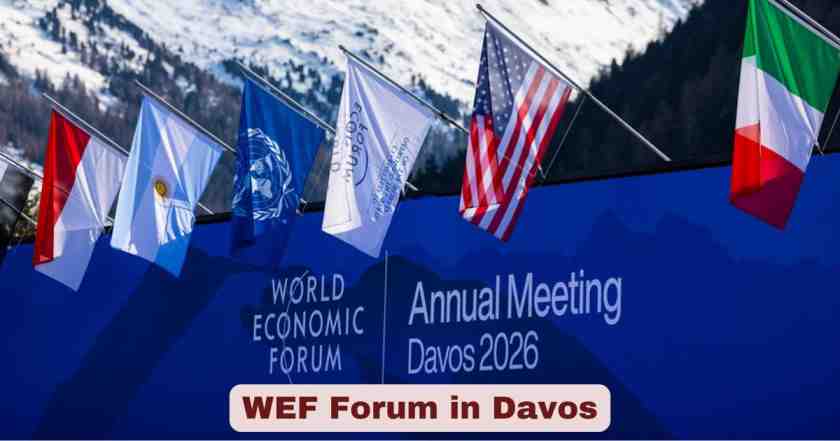
World Economic Forum in Davos 2026
The World Economic Forum in Davos represents the world’s premier gathering of global leaders, business executives, and influential thinkers in the heart of the Swiss Alps. Held annually in the mountain resort town of Davos-Klosters, located in the Graubünden canton of eastern Switzerland, this five-day summit brings together decision-makers from across continents to address humanity’s most pressing challenges. Situated at an elevation of approximately 1,500 meters (nearly 5,000 feet) above sea level, the alpine setting of Davos provides what founder Klaus Schwab envisioned as a neutral, reflective environment conducive to frank dialogue and collaborative problem-solving. The modern Davos Congress Centre serves as the nerve center for hundreds of sessions, while the town’s hotels, restaurants, and specially designated “houses” host countless bilateral meetings, networking events, and informal conversations that often yield breakthrough agreements. The 56th Annual Meeting unfolds from January 19-23, 2026, attracting nearly 3,000 participants from over 130 countries.
The World Economic Forum itself is headquartered in Geneva, Switzerland, operating as a not-for-profit foundation under Swiss government supervision since its establishment in 1971. Founded by German economist Klaus Schwab, the organization maintains offices in New York, Beijing, Tokyo, and San Francisco, reflecting its truly global reach. The annual Davos meeting remains the WEF’s flagship event, though the organization convenes additional regional meetings throughout the year in locations across Africa, East Asia, Latin America, China, and the United Arab Emirates. With 1,000+ member companies funding its operations and a mission of “improving the state of the world by engaging business, political, academic, and other leaders of society,” the WEF has evolved from a modest 1971 gathering of 450 European business executives into the preeminent platform for shaping global, regional, and industry agendas in an increasingly interconnected world.
Interesting Facts About WEF Forum in Davos 2026
| Fact Category | Key Details |
|---|---|
| Meeting Edition | 56th Annual Meeting since inception in 1971 |
| Event Dates | January 19-23, 2026 (5 days) |
| Total Participants Expected | ~3,000 leaders from over 130 countries |
| Political Leaders Attending | 400 top political leaders (record participation) |
| Heads of State/Government | 65 heads of state and government (near-record) |
| G7 Leaders Attending | 6 out of 7 G7 leaders (unprecedented since 2025) |
| CEOs and Chairpersons | 850 top business leaders from global corporations |
| Tech Pioneers and Unicorns | 100 leaders from leading unicorn companies |
| Finance Ministers | 55 ministers for economy and finance |
| Foreign Ministers | 33 ministers for foreign affairs |
| Trade Ministers | 34 ministers for trade, commerce, and industry |
| Central Bank Governors | 11 governors attending |
| Journalists Covering Event | 400-500 journalists from domestic and international outlets |
| Annual Meeting Theme 2026 | “A Spirit of Dialogue” |
| Livestreamed Sessions | 200+ sessions broadcast globally |
| Security Personnel Deployed | 5,000+ armed personnel including snipers, AI drones |
| Security Costs | CHF 9 million ($10 million) additional costs for 2026 |
| Armed Forces Budget | CHF 32 million ($35.6 million) annual deployment budget |
| Founder Status | Klaus Schwab resigned 2025, not attending 2026 |
| Interim Co-Chairs | Larry Fink (BlackRock CEO) & Andre Hoffman (Roche) |
Data sources: World Economic Forum official press releases, CNBC, ABC News, Swiss Government (admin.ch), Business Standard, Open Magazine, The Tribune (January 2026)
The 2026 Davos meeting marks a pivotal transition year, featuring record governmental participation with 400 political leaders including nearly 65 heads of state and government, surpassing previous years’ attendance. This represents the 56th consecutive annual meeting since Klaus Schwab founded the forum in 1971, though notably, Schwab himself will not attend after resigning in 2025 following internal investigations. The theme “A Spirit of Dialogue” emphasizes rebuilding trust amid unprecedented global fragmentation, with President Donald Trump leading the largest US delegation ever to Davos, while 6 out of 7 G7 leaders attend in person—a dramatic increase from 2025 when only one G7 leader appeared. The meeting brings together 850 top CEOs, 100 tech unicorn leaders, and participants from international organizations including the UN, IMF, World Bank, WHO, WTO, and NATO, all converging on a town of just 10,000 permanent residents.
Security for Davos 2026 represents an unprecedented undertaking, with Swiss authorities deploying over 5,000 armed personnel including snipers positioned at vantage points, AI-powered drones for surveillance, and specialized counter-espionage tools to protect the 200-300 internationally protected persons in attendance. The additional security costs total approximately CHF 9 million for the 2026 event, split among stakeholders: WEF pays 50%, the Swiss federal government 25%, Canton of Graubünden 21.67%, and Davos commune 3.33%. The armed forces deployment alone operates on an annual budget of CHF 32 million, though recent years have come under budget at CHF 26.84 million (2024) and CHF 24.64 million (2025). More than 200 sessions will be livestreamed globally, extending conversations far beyond the 3,000 on-site participants to millions of viewers worldwide, reflecting the WEF’s commitment to transparency and public engagement through digital platforms.
WEF Forum in Davos 2026 Attendance and Participation Statistics
| Participant Category | Number |
|---|---|
| Total Cross-Sector Leaders | ~3,000 participants |
| Countries Represented | 130+ countries |
| Top Political Leaders | 400 leaders (record high) |
| Heads of State and Government | 65 heads (near-record) |
| G7 Leaders Attending | 6 leaders (Trump, Macron, Carney, Merz, von der Leyen, Starmer expected) |
| BRICS Leaders Attending | Multiple representatives including China’s Vice-Premier He Lifeng |
| US Delegation Size | Largest ever led by President Donald Trump |
| Business Leaders | 1,700 total business executives |
| Top CEOs and Chairpersons | 850 leaders from WEF partner companies |
| Unicorn and Tech Pioneer Leaders | 100 leaders |
| Finance Ministers | 55 ministers |
| Foreign Affairs Ministers | 33 ministers |
| Trade and Commerce Ministers | 34 ministers |
| Central Bank Governors | 11 governors |
| International Organization Heads | Multiple heads (UN, IMF, World Bank, WHO, WTO, NATO) |
| Civil Society Leaders | 200 leaders from NGOs, faith-based organizations |
| Academic and Research Leaders | Representatives from major universities and institutions |
| Media Representatives | 400-500 journalists |
| Internationally Protected Persons | 200-300 individuals requiring heightened security |
Data source: World Economic Forum press releases, CNBC, The Tribune, Business Today, ABC News (January 2026)
The attendance statistics for Davos 2026 demonstrate an exceptional level of global engagement, with approximately 3,000 cross-sector leaders from over 130 countries converging on the Swiss Alps. The 400 top political leaders represent the highest level of governmental participation in the annual meeting’s 56-year history, including nearly 65 heads of state and government—a dramatic increase from typical years when only a handful of heads of state attend. Among these are 6 G7 leaders: Donald Trump (US President), Emmanuel Macron (French President), Mark Carney (Canadian Prime Minister), Friedrich Merz (German Chancellor), Ursula von der Leyen (European Commission President), and reportedly Keir Starmer (UK Prime Minister), marking a stark contrast to 2025 when only then-German Chancellor Olaf Scholz represented the G7. This unprecedented participation reflects the critical geopolitical moment, with leaders seeking direct dialogue amid escalating trade tensions, geopolitical fragmentation, and rapid technological transformation.
The business and technology sectors bring 1,700 total executives including 850 top CEOs and chairpersons from the WEF’s 1,000+ partner companies—organizations that fund the Forum’s year-round initiatives. An additional 100 leaders from unicorn companies and technology pioneers represent the cutting edge of innovation, with confirmed attendees including Jensen Huang (Nvidia CEO), Satya Nadella (Microsoft CEO), Dario Amodei (Anthropic CEO), Demis Hassabis (Google DeepMind CEO), Jamie Dimon (JP Morgan CEO), and Sarah Friar (OpenAI CFO), though notably Sam Altman (OpenAI CEO) is not attending. The governmental representation extends beyond heads of state to include 55 finance ministers, 33 foreign ministers, 34 trade ministers, and 11 central bank governors, providing comprehensive coverage of economic policymaking. International organizations send their most senior leaders, including Antonio Guterres (UN Secretary-General), Kristalina Georgieva (IMF Managing Director), Ajay Banga (World Bank President), Ngozi Okonjo-Iweala (WTO Director-General), Mark Rutte (NATO Secretary-General), and Tedros Adhanom Ghebreyesus (WHO Director-General), alongside approximately 200 civil society leaders representing NGOs, faith-based organizations, and major universities.
WEF Forum in Davos 2026 Event Logistics and Infrastructure
| Logistics Element | Details |
|---|---|
| Event Duration | 5 days (January 19-23, 2026) |
| Daily Session Start Time | 9:00 AM (08:00 GMT) daily |
| Total Sessions | 200+ sessions |
| Livestreamed Sessions | 200+ sessions broadcast globally |
| Primary Venue | Davos Congress Centre |
| Town Population | ~10,000 permanent residents |
| Town Elevation | 1,500 meters (~5,000 feet) above sea level |
| Canton Location | Graubünden (Grisons), eastern Switzerland |
| Distance from Geneva | Approximately 200 kilometers |
| Open Forum Year | 23rd year of public panel discussions |
| WEF Partner Companies | 1,000+ member companies |
| “Houses” Along Promenade | Multiple corporate embassies and outposts |
| Helicopter Traffic | Controlled during meeting (restrictions on drones, paragliders) |
| Private Jet Traffic | Historically ~1,300 private jets (environmental criticism) |
| Accommodation | Hotels throughout Davos and Klosters (nearby town) |
| Security Zones | Extended zones throughout town |
| Protest Authorizations | Permitted under strict conditions for public safety |
| Digital Hashtag | #WEF26 |
| Broadcast Platforms | Multiple social media and streaming platforms |
Data source: World Economic Forum, ABC News, Swiss Government, Euronews, Wikipedia (January 2026)
The logistical infrastructure of Davos 2026 transforms the small Alpine resort into a global hub for five days, with the Davos Congress Centre serving as the primary venue for over 200 sessions covering geopolitics, artificial intelligence, climate change, economic growth, and innovation. Sessions begin at 9:00 AM (08:00 GMT) each day, with more than 200 sessions livestreamed to global audiences, ensuring transparency and allowing millions beyond the 3,000 on-site participants to engage with discussions. The Open Forum, now in its 23rd year, hosts public panel discussions free of charge for the local community and registered participants worldwide, democratizing access to conversations that shape global agendas. Along Davos’s main Promenade, companies rent retail spaces to establish temporary “houses”—corporate embassies where firms host meetings, welcome visitors, and conduct business in a more informal setting than the Congress Centre’s formal sessions.
The small town of 10,000 permanent residents at 1,500 meters elevation faces significant logistical challenges accommodating the influx of 3,000 high-level participants plus 400-500 journalists, activists, and observers. Accommodation extends to neighboring Klosters, which contributes CHF 100,000 toward security costs in exchange for hosting overflow guests. Helicopter traffic requires strict control during the meeting, with restrictions also applying to paragliders, drones, and model aircraft to ensure airspace security. The event has faced environmental criticism for attracting approximately 1,300 private jets in previous years, contributing significant carbon emissions even as participants discuss climate solutions. Swiss authorities authorize protests under strict conditions, balancing freedom of expression with security needs and freedom of movement for residents and guests. The #WEF26 hashtag consolidates digital engagement across platforms including LinkedIn, Instagram, X (formerly Twitter), YouTube, Facebook, and specialized channels for different languages, extending Davos conversations to a truly global virtual audience.
WEF Forum in Davos 2026 Security and Safety Measures
| Security Component | Specification |
|---|---|
| Total Armed Personnel | 5,000+ personnel |
| Security Types | Armed forces, police, snipers, counter-espionage teams |
| AI Technology Deployment | AI-powered drones for surveillance |
| Special Security Tools | Counter-espionage and anti-spyware technology |
| Internationally Protected Persons | 200-300 individuals requiring heightened protection |
| Additional Security Costs 2026 | CHF 9 million (~$10 million) |
| Armed Forces Annual Budget | CHF 32 million (~$35.6 million) |
| 2024 Actual Deployment Costs | CHF 26.84 million (under budget) |
| 2025 Actual Deployment Costs | CHF 24.64 million (under budget) |
| Cost-Sharing Model | WEF 50%, Federal Govt 25%, Canton 21.67%, Davos 3.33% |
| Klosters Contribution | CHF 100,000 toward Davos’s share |
| Tier 1 Funding | Standard security costs shared per ratios |
| Tier 2 Emergency Funding | CHF 900,000 for 2025-2027 (if needed) |
| Tier 3 Exceptional Incidents | Federal govt covers 80% of costs above tiers 1&2 |
| Coordinating Authority | WEF committee of Graubünden government |
| Committee Chair | Marcus Caduff (Cantonal Council member) |
| Primary Security Agency | Graubünden Cantonal Police and partners |
| Security Zone | Extended throughout Davos due to number requiring protection |
| Protest Management | Authorized under strict public safety conditions |
Data source: Swiss Government (admin.ch), Business Standard, Upstox News, Indian media reports (January 2026)
The security apparatus for Davos 2026 represents one of the most comprehensive protection operations in Switzerland, deploying over 5,000 armed personnel including army units, police forces, snipers positioned at strategic vantage points, and specialized counter-espionage teams equipped with cutting-edge anti-spyware technology. The AI-powered drones patrol the extended security zones throughout Davos, providing real-time surveillance to protect the 200-300 internationally protected persons—heads of state, government ministers, and high-level representatives of international organizations—whose safety obligations Switzerland must fulfill under international law. The Graubünden Cantonal Police coordinates this massive operation through a WEF committee chaired by Cantonal Council member Marcus Caduff, working with federal agencies and the commune of Davos to address security threats that could have impacts beyond cantonal borders.
The financial architecture supporting this security operation operates through a sophisticated three-tier funding model established for the 2025-2027 period. The CHF 9 million in additional security costs for 2026 are split among stakeholders according to a fixed ratio: the World Economic Forum bears 50% of costs, the Swiss federal government 25%, the Canton of Graubünden 21.67%, and the Davos commune 3.33%, with neighboring Klosters contributing CHF 100,000 toward Davos’s share. Beyond these baseline costs (Tier 1), a Tier 2 emergency fund of CHF 900,000 covers unforeseen circumstances such as last-minute attendance changes, large-scale program modifications, significant increases in accommodation costs for external security staff, or extensions of the security zone. In the event of exceptional incidents such as terrorist attacks, assassination attempts, or credible threats (Tier 3), the Swiss federal government commits to covering 80% of costs exceeding the first two tiers. The armed forces deployment budget of CHF 32 million annually has consistently come under budget in recent years, with actual costs of CHF 26.84 million (2024) and CHF 24.64 million (2025), demonstrating efficient resource management despite the operation’s massive scale.
WEF Forum in Davos 2026 Program Themes and Focus Areas
| Program Theme | Key Focus |
|---|---|
| Overall Theme 2026 | “A Spirit of Dialogue” |
| Theme 1 | Cooperation in a Contested World – Geopolitics and renewal |
| Theme 2 | Unlocking New Sources of Growth – Economic transformation |
| Theme 3 | Investing in People – Skills, resilience, well-being |
| Theme 4 | Deploying Innovation Responsibly – AI and technology governance |
| Theme 5 | Building Prosperity Within Planetary Boundaries – Sustainability |
| Key Geopolitical Topics | Trump tariffs, Greenland, Ukraine, Gaza, Middle East, Venezuela, Iran |
| Technology Focus | Artificial Intelligence, agentic AI, Fourth Industrial Revolution |
| AI Economic Impact Projection | $15 trillion added to global GDP by 2030 |
| Climate Topics | Climate crisis, energy security, water systems, 2026 Year of Water |
| Economic Topics | Trade tensions, fragmentation, inequality, growth models |
| Innovation Topics | Generative AI, robotics, quantum computing, biotech |
| Social Topics | Polarization, trust erosion, workforce transitions |
| Specific Initiatives | Blue Davos (water focus), Arts and Culture Program |
| Reports Released | Global Risks Report 2026, Global Cybersecurity Outlook 2026 |
| Additional Reports | Global Cooperation Barometer 2026, Chief Economists Outlook |
| Top Global Risk 2026 | Geoeconomic confrontation |
| Second Highest Risk | Interstate conflict |
| Third Highest Risk | Extreme weather events |
Data source: World Economic Forum, McKinsey, Geneva Environment Network, Open Magazine, The Tribune (January 2026)
The program architecture of Davos 2026 centers on the overarching theme “A Spirit of Dialogue”, emphasizing the urgent necessity of constructive conversation in an era of profound global uncertainty. This theme manifests through five interconnected priority areas designed to address the decade’s defining challenges. Theme 1 focuses on Cooperation in a Contested World, exploring how leaders can renew international cooperation amid contested norms, strained alliances, and eroding trust caused by geopolitical fragmentation. Sessions examine U.S. President Trump’s controversial policies including 10% tariffs on eight European countries linked to his Greenland acquisition demands, ongoing conflicts in Ukraine and Gaza, political turmoil in Venezuela, and tensions with Iran. Theme 2, Unlocking New Sources of Growth, addresses pathways to economic transformation that translate into progress for communities everywhere, rather than sluggish, uneven growth that leaves populations behind.
Theme 3, Investing in People, examines how governments and businesses can build resilient workforces, support skills transitions, and improve well-being as industries evolve and technologies reshape work at unprecedented speed. Theme 4, Deploying Innovation Responsibly and at Scale, dominates much of the 2026 agenda, focusing on artificial intelligence projected to add over $15 trillion to global GDP by 2030. Tech leaders including Nvidia’s Jensen Huang, Microsoft’s Satya Nadella, Anthropic’s Dario Amodei, and Google DeepMind’s Demis Hassabis discuss agentic AI transformation, governance frameworks, and managing risks related to jobs, ethics, and inequality. Theme 5, Building Prosperity Within Planetary Boundaries, tackles climate change, energy security, and water systems, with 2026 designated the “Year of Water” through the Blue Davos initiative. The Global Risks Report 2026, surveying over 1,300 global leaders and risk experts, identifies geoeconomic confrontation as the most significant near-term risk, followed by interstate conflict and extreme weather events, underscoring the interconnected challenges that make dialogue—not a luxury, but an urgent necessity.
WEF Forum in Davos 2026 Historical Context and Evolution
| Historical Milestone | Details |
|---|---|
| Founding Year | 1971 |
| Founder | Klaus Schwab (German economist and engineer) |
| Original Name | European Management Forum (renamed 1987) |
| First Meeting Date | February 1971 in Davos |
| First Meeting Participants | 450 executives from 31 countries |
| First Meeting Focus | European management techniques and practices |
| Foundation Establishment | February 8, 1971 under Swiss Confederation supervision |
| Initial Endowment | 25,000 Swiss francs |
| Nominal Headquarters | Chur, capital of Canton Graubünden (1971) |
| Current Headquarters | Geneva, Switzerland |
| Name Change Year | 1987 (European Management Forum → World Economic Forum) |
| Founding Philosophy | Stakeholder capitalism (serve all stakeholders, not just shareholders) |
| Klaus Schwab’s Wife | Hilde Schwab (married 1971, former assistant) |
| Hilde’s Organization | Schwab Foundation for Social Entrepreneurship (1998) |
| Young Global Leaders Program | Founded 2004 (ages 30-40) |
| Global Shapers Community | Founded 2011 (younger leaders) |
| Fourth Industrial Revolution Concept | Introduced by Schwab (2015-2016) |
| Swiss Recognition | Formally recognized as “international body” (2015) |
| Schwab Resignation | 2025 (investigation, cleared of wrongdoing) |
| Current Leadership | Børge Brende (President and CEO) |
| Interim Co-Chairs 2026 | Larry Fink (BlackRock) & Andre Hoffman (Roche) |
Data source: World Economic Forum, Wikipedia, Britannica, Euronews, Davos.ch (January 2026)
The historical evolution of the World Economic Forum began on a modest scale in February 1971 when German economist and engineer Klaus Schwab convened 450 executives from 31 European countries for the first European Management Symposium in Davos. Operating under the patronage of the European Commission and European industrial associations, this inaugural gathering focused on improving management practices across public and private sectors. Schwab, who held double doctorates in engineering and economics plus a master’s degree in public administration from Harvard, had developed the revolutionary concept of stakeholder capitalism—the idea that companies should serve all stakeholders (employees, suppliers, communities), not merely shareholders seeking maximum profit. This philosophy, outlined in his book Moderne Unternehmensführung im Maschinenbau (Modern Enterprise Management in Mechanical Engineering), became the guiding principle of what would evolve into the World Economic Forum.
The organization was formally established as a foundation on February 8, 1971, with headquarters in Chur, the capital of Canton Graubünden, and an initial endowment of 25,000 Swiss francs. Schwab married his assistant Hilde Schwab shortly after the first symposium, and she became his lifelong partner in building the institution, later founding the Schwab Foundation for Social Entrepreneurship in 1998 to support over 350 social entrepreneurs globally. The European Management Forum was renamed the World Economic Forum in 1987, reflecting its expanded mission beyond European management to include resolving international conflicts and shaping global agendas. Over subsequent decades, Schwab introduced influential concepts including the Fourth Industrial Revolution (2015-2016), launched the Young Global Leaders program (2004) for exceptional leaders aged 30-40, and created the Global Shapers Community (2011) for younger change-makers. In 2015, the Swiss government formally recognized the WEF as an “international body”, cementing its unique status. Schwab resigned in 2025 following internal investigations but was cleared of material wrongdoing. The 2026 meeting marks the first without him, with Børge Brende as President/CEO and Larry Fink (BlackRock) and Andre Hoffman (Roche) serving as interim co-chairs.
WEF Forum in Davos 2026 Notable Attendees and Absentees
| Category | Notable Names |
|---|---|
| US Delegation | Donald Trump (President), Marco Rubio (Secretary of State), Scott Bessent (Treasury Secretary), Steve Witkoff (Middle East Envoy), Jared Kushner (Adviser) |
| European Leaders | Emmanuel Macron (France), Friedrich Merz (Germany), Ursula von der Leyen (EU Commission), Keir Starmer (UK, expected), Guy Parmelin (Switzerland President) |
| Other G7/Major Economies | Mark Carney (Canada PM), He Lifeng (China Vice-Premier) |
| Other World Leaders | Volodymyr Zelenskyy (Ukraine), Ahmad al-Sharaa (Syria), Javier Milei (Argentina), Prabowo Subianto (Indonesia), Felix Tshisekedi (DRC) |
| Tech CEOs | Jensen Huang (Nvidia), Satya Nadella (Microsoft), Dario Amodei (Anthropic), Demis Hassabis (Google DeepMind), Alex Karp (Palantir) |
| Financial Leaders | Jamie Dimon (JP Morgan), Larry Fink (BlackRock), Rachel Reeves (UK Finance Minister) |
| AI/Tech Leaders | Sarah Friar (OpenAI CFO), Arthur Mensch (Mistral AI), Peggy Johnson (Agility Robotics), Bret Taylor (Sierra), Peng Xiao (G42) |
| International Org Leaders | Antonio Guterres (UN), Kristalina Georgieva (IMF), Ajay Banga (World Bank), Ngozi Okonjo-Iweala (WTO), Mark Rutte (NATO), Tedros Adhanom Ghebreyesus (WHO) |
| Civil Society | David Miliband (IRC), Sania Nishtar (Gavi), Kirsten Schuijt (WWF), Oleksandra Matviichuk (Nobel Laureate) |
| Arts and Culture | Jon Batiste (Grammy/Academy Award winner), David Beckham, Marina Abramović, Sabrina Elba, Renaud Capuçon |
| Notable Absentees | Klaus Schwab (founder, resigned 2025), Xi Jinping (China President), Narendra Modi (India PM), Sam Altman (OpenAI CEO), Danish government (boycott over Greenland), Daniel Chapo (Mozambique, flooding crisis), Abbas Araghchi (Iran FM, invitation revoked) |
Data source: World Economic Forum, CNBC, ABC News, The Hill, The Tribune, Open Magazine (January 2026)
The attendance roster for Davos 2026 reads like a who’s who of global power, featuring an unprecedented concentration of decision-makers from government, business, technology, and civil society. President Donald Trump headlines the meeting, bringing the largest-ever US delegation including Secretary of State Marco Rubio, Treasury Secretary Scott Bessent, Middle East special envoy Steve Witkoff, and adviser Jared Kushner. Trump’s participation marks his first in-person Davos appearance since 2020, adding significant tension given his recent announcement of 10% tariffs on eight European countries tied to his controversial Greenland acquisition push. European leadership is well-represented with French President Emmanuel Macron, German Chancellor Friedrich Merz, EU Commission President Ursula von der Leyen, and reportedly UK Prime Minister Keir Starmer, alongside Ukrainian President Volodymyr Zelenskyy seeking continued Western support and Syrian President Ahmad al-Sharaa in his first major international appearance.
The technology sector brings extraordinary star power with Jensen Huang (Nvidia), Satya Nadella (Microsoft), Dario Amodei (Anthropic), Demis Hassabis (Google DeepMind), and Alex Karp (Palantir) leading discussions on AI’s transformative potential. Financial titans Jamie Dimon (JP Morgan) and Larry Fink (BlackRock, also WEF interim co-chair) represent Wall Street’s perspective, while the OpenAI delegation includes CFO Sarah Friar though notably CEO Sam Altman is absent. The absence list is equally telling: Klaus Schwab, who founded and ran Davos for 54 years, will not attend following his 2025 resignation. Chinese President Xi Jinping and Indian Prime Minister Narendra Modi—leaders of the world’s two most populous nations—are not attending, with China sending Vice-Premier He Lifeng instead. Denmark’s government is boycotting over the Greenland dispute, Mozambique’s President Daniel Chapo canceled due to catastrophic flooding at home, and Iranian Foreign Minister Abbas Araghchi’s invitation was revoked following Iran’s deadly crackdown on protesters, despite the controversial decision to initially invite him. The cultural program features Grammy and Academy Award winner Jon Batiste, who performed at the opening concert, alongside David Beckham, renowned artist Marina Abramović, and other influential figures from arts and entertainment.
WEF Forum in Davos 2026 Economic Impact and Costs
| Economic Factor | Amount/Details |
|---|---|
| WEF Annual Budget | CHF 300+ million ($310+ million) |
| Strategic Partner Annual Fee | CHF 600,000 ($628,000) after 2014 increase |
| Industry Partner Annual Fee | CHF 263,000 ($275,000) |
| Industry Associate Annual Fee | CHF 137,000 ($143,000) |
| Basic Member Annual Fee | CHF 60,000 ($63,000) minimum |
| Individual Davos Admission Fee | CHF 25,000 ($26,000) per person |
| Total Cost Strategic Partner (5 people) | CHF 622,000 ($650,000+) annually |
| Member Companies | 1,000+ companies paying over CHF 27 million |
| Strategic Partners (Top 100) | Contribute over CHF 240 million to annual budget |
| Hotel Costs in Davos | $3,000+ per night during meeting |
| Private Jet Arrivals | Approximately 1,300 jets (historical average) |
| Local Economic Impact | Significant boost to Davos/Graubünden region |
| Restaurant and Service Revenue | Substantial increase during 5-day event |
| Corporate House Rentals | Premium costs for Promenade locations |
| Security Costs to Taxpayers | CHF 9 million split among stakeholders |
| Swiss Armed Forces Budget | CHF 32 million annually for deployment |
| WEF Share of Security | 50% (CHF 4.5 million) |
| Federal Government Share | 25% (CHF 2.25 million) |
| Canton Graubünden Share | 21.67% (CHF 1.95 million) |
| Davos Commune Share | 3.33% (CHF 300,000) |
Data source: World Economic Forum, Wikipedia, CNBC, Fortune, Swiss Government, SWI swissinfo.ch (2025-2026)
The economic structure of Davos 2026 reveals a complex financial ecosystem where corporate membership fees fund the World Economic Forum’s annual budget exceeding CHF 300 million. The 1,000+ member companies operate within a tiered system, with approximately 100 Strategic Partners—multinational giants like ABB, Nestlé, Barclays, Credit Suisse, Deloitte, Deutsche Bank, and Google—contributing over CHF 240 million annually to WEF’s budget. These top-tier partners pay CHF 600,000 per year for membership (increased 20% in 2014 from CHF 500,000), plus CHF 25,000 per person for up to five Davos admissions, bringing total annual costs to CHF 622,000 or approximately $650,000 for full participation. Industry Partners pay CHF 263,000 annually plus admission fees, while basic membership starts at CHF 60,000, creating a financial barrier that ensures only the world’s largest and most successful corporations participate.
Beyond membership fees, the economic impact on Davos itself is substantial, with hotels charging $3,000+ per night during the five-day event, restaurants operating at capacity, and corporate “houses” renting premium Promenade locations at extraordinary rates. Approximately 1,300 private jets have historically arrived for the annual meeting, drawing criticism for carbon emissions even as participants discuss climate solutions. The local Graubünden economy receives a significant boost, with estimates suggesting tens of millions in additional revenue for hotels, restaurants, transportation services, and other businesses. However, taxpayers also bear security costs totaling CHF 9 million, split among the WEF (50%), Swiss federal government (25%), Canton of Graubünden (21.67%), and Davos commune (3.33%, with Klosters contributing CHF 100,000). The Swiss armed forces deployment operates on a separate CHF 32 million annual budget, making the total public investment approximately CHF 41 million to host an event that critics argue primarily benefits wealthy corporations and political elites.
WEF Forum in Davos 2026 Controversies and Criticisms
| Criticism Category | Key Issues |
|---|---|
| Environmental Hypocrisy | 1,300 private jets create massive carbon footprint while discussing climate |
| Elitism and Exclusivity | $650,000+ costs exclude all but wealthiest corporations |
| Democratic Capture | Allegations of corporate capture of global governance |
| Tax-Exempt Status | WEF operates as non-profit despite massive revenue |
| Lack of Transparency | Unclear decision-making processes and membership criteria |
| UN Partnership Criticism | 400+ civil society orgs opposed 2019 UN-WEF agreement |
| Privatized Global Governance | “Public-private UN” proposal criticized as dangerous |
| Security Costs to Taxpayers | CHF 9 million public funds for private event |
| Effective Outcomes Questioned | Critics say produces talk, not action on global problems |
| Gender Imbalance | Historically male-dominated (requirement for women added 2026) |
| Geographic Bias | Western-centric despite global claims |
| Klaus Schwab Resignation | 2025 departure following internal investigation |
| Trump Greenland Tariffs | 10% tariffs on 8 European countries linked to WEF attendance |
| Danish Boycott 2026 | Denmark refuses attendance over Greenland dispute |
| Iran FM Invitation Revoked | Abbas Araghchi uninvited after deadly crackdown on protesters |
| Chasing Success, Not Solutions | Nassim Taleb: “successful people who want to be seen with other successful people” |
| Inequality Symbolism | World’s richest gather while discussing poverty |
Data source: Wikipedia, UN civil society organizations, ABC News, The Hill, CNBC, environmental organizations (2025-2026)
The controversies surrounding Davos 2026 intensified with the backdrop of unprecedented geopolitical tensions and the forum’s first meeting without founder Klaus Schwab, who resigned in 2025 following internal investigations. Environmental advocates continue criticizing the meeting’s carbon footprint, noting that approximately 1,300 private jets historically transport participants to discuss climate change—a stark hypocrisy that undermines the forum’s sustainability messaging. Author Nassim Taleb famously characterized Davos as “successful people who want to be seen with other successful people,” questioning whether the networking spectacle produces meaningful solutions to humanity’s challenges. The $650,000+ annual cost for Strategic Partner participation creates an exclusivity that critics argue gives disproportionate influence to wealthy corporations while excluding voices from civil society, developing nations, and marginalized communities most affected by the policies discussed.
The 2019 partnership agreement between the WEF and United Nations drew fierce opposition from over 400 civil society organizations and 40 international networks, who called on the UN Secretary-General to terminate what they described as “disturbing corporate capture of the UN” that moves the world “dangerously towards a privatised global governance.” The WEF’s proposal for a “public-private UN” where selected agencies operate under shared governance systems raised alarm about democratic accountability. The 2026 meeting itself became embroiled in controversy when Denmark boycotted over President Trump’s Greenland acquisition push, which included imposing 10% tariffs on eight European countries as leverage. The forum initially invited Iranian Foreign Minister Abbas Araghchi but revoked the invitation after Iran’s deadly crackdown on protesters, though the decision came only after public outcry—raising questions about the WEF’s vetting processes. Meanwhile, Swiss taxpayers contribute CHF 9 million in security costs to protect an event from which they receive no direct benefit, fueling resentment about public funds subsidizing gatherings of billionaires and political elites discussing how to solve inequality while staying in $3,000/night hotel rooms.
WEF Forum in Davos 2026 Key Reports and Publications
| Report Title | Key Findings |
|---|---|
| Global Risks Report 2026 | Top risk: Geoeconomic confrontation |
| Second Highest Risk | Interstate armed conflict |
| Third Highest Risk | Extreme weather events |
| Fourth Highest Risk | Societal polarization |
| Fifth Highest Risk | Cyber insecurity |
| Survey Respondents | 1,300+ global leaders and risk experts |
| Global Cybersecurity Outlook 2026 | Rising threats from AI-powered cyberattacks |
| Global Cooperation Barometer 2026 | Declining trust in multilateral institutions |
| Chief Economists Outlook | Fragmented growth, persistent inequality |
| AI Governance Reports | Framework for responsible deployment of generative AI |
| Climate Action Reports | Progress insufficient to meet Paris Agreement targets |
| Fourth Industrial Revolution Papers | Technology impact on jobs, society, governance |
| Future of Jobs Report | 85 million jobs displaced, 97 million created by 2025 (historical) |
| Global Gender Gap Report | Gender parity timeline extended to 131 years (historical) |
| Stakeholder Capitalism Metrics | Framework for corporate ESG reporting |
| Water Security Initiative | 2026 Year of Water, Blue Davos focus |
| AI Economic Impact Projection | $15 trillion to global GDP by 2030 (McKinsey) |
Data source: World Economic Forum, McKinsey, The Tribune, Geneva Environment Network (2025-2026)
The key publications released for Davos 2026 provide data-driven insights into humanity’s most pressing challenges, with the Global Risks Report 2026 surveying over 1,300 global leaders and risk experts to identify geoeconomic confrontation as the most severe near-term threat. This finding reflects the fragmentation visible in President Trump’s 10% tariffs on European nations, escalating US-China tensions, and breakdown of multilateral consensus on trade and security. The report ranks interstate armed conflict second, acknowledging ongoing wars in Ukraine and Gaza, while extreme weather events occupy third position, underscoring climate change’s accelerating impact. Societal polarization and cyber insecurity round out the top five risks, painting a picture of a world fragmenting along multiple fault lines simultaneously—economic, political, technological, and environmental.
The Global Cybersecurity Outlook 2026 highlights how AI-powered cyberattacks are becoming more sophisticated and difficult to defend against, while the Global Cooperation Barometer 2026 documents declining trust in multilateral institutions precisely when cooperation is most needed. The Chief Economists Outlook projects fragmented economic growth with persistent inequality, challenging the assumption that rising GDP translates to broad-based prosperity. Special focus on artificial intelligence governance reflects urgency around technology projected by McKinsey to add $15 trillion to global GDP by 2030, with multiple reports proposing frameworks for responsible deployment. The designation of 2026 as the “Year of Water” through the Blue Davos initiative produces analysis on water security, scarcity, and management systems under climate stress. Historical WEF reports like the Future of Jobs Report accurately predicted that automation would displace 85 million jobs while creating 97 million new roles by 2025, demonstrating the forum’s analytical capacity even as critics question whether its recommendations drive meaningful policy change or merely document challenges that persist year after year.
WEF Forum in Davos 2026 Technology and Innovation Focus
| Technology Theme | Details |
|---|---|
| Primary Tech Focus | Artificial Intelligence and governance |
| AI Economic Projection | $15 trillion added to global GDP by 2030 |
| Agentic AI Discussion | Self-directed AI systems transforming industries |
| Tech Leaders Attending | Jensen Huang (Nvidia), Satya Nadella (Microsoft), Dario Amodei (Anthropic), Demis Hassabis (Google DeepMind) |
| OpenAI Representation | Sarah Friar (CFO), Sam Altman (CEO) not attending |
| Other AI Companies | Arthur Mensch (Mistral AI), Bret Taylor (Sierra), Peng Xiao (G42) |
| Robotics Focus | Peggy Johnson (Agility Robotics), humanoid robots |
| Quantum Computing | Discussions on quantum breakthrough implications |
| Biotechnology | Gene editing, personalized medicine advances |
| Fourth Industrial Revolution | Klaus Schwab’s concept, ongoing implementation |
| Jobs Displacement Projection | 85 million jobs displaced by automation (historical report) |
| Jobs Creation Projection | 97 million new jobs created by technology (historical report) |
| Digital Divide Concerns | Unequal access to AI benefits |
| AI Safety and Ethics | Governance frameworks, alignment challenges |
| Cybersecurity with AI | AI-powered attacks vs AI-powered defenses |
| Generative AI Applications | Transforming content creation, software development, research |
| Tech Regulation Debate | Balance innovation vs consumer protection |
Data source: World Economic Forum, McKinsey, CNBC, ABC News, tech industry reporting (2025-2026)
The technology discussions at Davos 2026 center overwhelmingly on artificial intelligence and its transformative potential, with projections that AI will add $15 trillion to global GDP by 2030. The concentration of AI leadership at the event is unprecedented: Jensen Huang of Nvidia (whose chips power AI systems), Satya Nadella of Microsoft (major investor in OpenAI), Dario Amodei of Anthropic (Claude AI creator), and Demis Hassabis of Google DeepMind (AlphaGo, AlphaFold developer) bring expertise spanning hardware, platforms, and frontier AI research. The rise of agentic AI—systems capable of autonomous decision-making and goal pursuit—dominates discussions, with leaders exploring both opportunities for productivity and concerns about control, accountability, and unintended consequences. OpenAI sends CFO Sarah Friar though notably CEO Sam Altman is absent, while other AI pioneers like Arthur Mensch of Mistral AI and Bret Taylor of Sierra represent the next generation of AI companies.
Beyond AI, discussions span the full spectrum of emerging technologies including robotics (with Peggy Johnson of Agility Robotics discussing humanoid robots entering warehouses and factories), quantum computing breakthroughs, and biotechnology advances in gene editing and personalized medicine. These conversations build on Klaus Schwab’s Fourth Industrial Revolution concept introduced in 2015-2016, which posited that fusion of technologies across physical, digital, and biological spheres would fundamentally reshape civilization. The Future of Jobs Report historical projections that 85 million jobs would be displaced while 97 million new roles emerged by 2025 proved largely accurate, though the transition created significant disruption and inequality. The 2026 discussions grapple with whether AI-driven transformation will follow a similar pattern or whether this time truly is different, potentially requiring universal basic income, radical education reform, or other societal adaptations.
Disclaimer: This research report is compiled from publicly available sources. While reasonable efforts have been made to ensure accuracy, no representation or warranty, express or implied, is given as to the completeness or reliability of the information. We accept no liability for any errors, omissions, losses, or damages of any kind arising from the use of this report.