
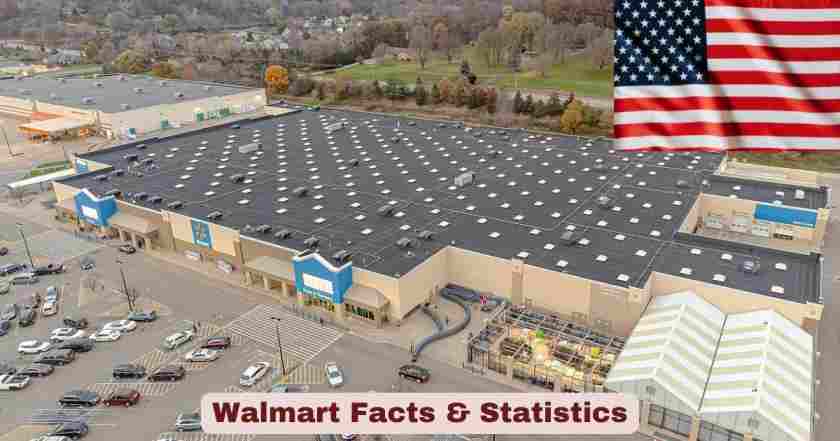
Walmart History 2026
Walmart Inc. is, by virtually every meaningful commercial metric, the most dominant retail organisation in human history. Founded on July 2, 1962 in Rogers, Arkansas, by Sam Walton — a retail entrepreneur whose conviction that lower prices, honest dealing, and deep community roots could build something genuinely transformative turned out to be one of the most consequential business bets ever made — Walmart has grown from a single discount store in a small Ozark town into an organisation that is simultaneously the world’s largest company by revenue, the world’s largest private employer, the world’s largest grocer, and the operator of one of the world’s largest and fastest-growing e-commerce platforms. Sam Walton’s founding philosophy — “Save money. Live better.” — remains the company’s official mission statement today, and despite the extraordinary complexity and scale of the modern Walmart enterprise, it accurately describes the single most consistent through-line in the company’s history: a relentless, obsessive focus on lowering the cost of everyday goods for ordinary working Americans. In 2026, Walmart operates under the leadership of CEO John Furner, who assumed the role on February 1, 2026, and is guided strategically by Executive Chairman Doug McMillon, who held the CEO role for eleven years before Furner’s appointment. The company operates through three primary business segments: Walmart U.S., its flagship domestic retail operation; Walmart International, its global retail network; and Sam’s Club, its membership warehouse business. Each of these segments is itself a giant by any independent standard, and together they comprise the most complex integrated retail system ever assembled.
As of March 29, 2026, Walmart has just reported the most successful fiscal year in its 64-year history. The Q4 FY2026 earnings release, filed with the SEC as Form 8-K on February 19, 2026, confirmed that Walmart generated $681 billion in total revenue for full fiscal year 2025 (Walmart’s fiscal year ends January 31 — FY2026 ended January 31, 2026) and $190.7 billion in Q4 FY2026 revenue alone — a 5.6% year-over-year increase that beat Wall Street’s consensus estimate of $190.4 billion. Global e-commerce sales surged 24% during Q4 FY2026, with US e-commerce growing an even faster 27% — and e-commerce now represents a record 23% of total Walmart net sales, a figure that underscores how dramatically the company has transformed from a purely brick-and-mortar retailer into a genuine omnichannel powerhouse. The company’s global advertising business grew 37% (including VIZIO), Walmart Connect US advertising grew 41%, and the company generated $41.6 billion in operating cash flow for the full fiscal year — a $5.1 billion increase from the prior year. These are not the numbers of a legacy retailer struggling to adapt to the digital age. They are the numbers of a company that has successfully reinvented itself for the third time — first from regional discounter to national chain, then from national chain to global retailer, and now from physical retail giant to tech-powered omnichannel ecosystem — while simultaneously managing the most complex logistics network in civilian commerce.
Interesting Key Facts About Walmart in 2026
| Key Fact | Verified Statistic / Detail |
|---|---|
| Founded | July 2, 1962 — Rogers, Arkansas, by Sam Walton |
| Headquarters | 702 SW 8th Street, Bentonville, Arkansas 72716 |
| CEO (as of Feb 1, 2026) | John Furner — first earnings report as CEO: Q4 FY2026 |
| Executive Chairman | Doug McMillon — formerly CEO for 11 years |
| Stock exchange | Nasdaq (WMT) — transferred from NYSE on December 9, 2025 |
| Nasdaq-100 inclusion | January 20, 2026 — added to Nasdaq-100 index |
| Stock split | 3-for-1 stock split (prior fiscal year) — to improve employee ownership access |
| FY2026 Q4 total revenues | $190.7 billion (+5.6% YoY) — beat Wall Street est. of $190.4B |
| FY2026 Q4 total revenues (constant currency) | $189.3 billion (+4.9% YoY constant currency) |
| FY2025 full year total revenues | $681 billion — Walmart official SEC/IR statement |
| FY2026 Q4 adjusted EPS | $0.74 — beat consensus of $0.73; +12.1% YoY |
| FY2026 Q4 operating income | $8.7 billion — +10.8% YoY (outpaced revenue growth) |
| FY2026 full year operating cash flow | $41.6 billion — +$5.1 billion vs. prior year |
| FY2026 full year net cash from operations | $41.6 billion (trailing 12 months to Jan 31, 2026) — SEC Form 8-K |
| Share repurchase program announced | $30 billion buyback programme announced with Q4 FY2026 results |
| Global e-commerce sales growth — Q4 FY2026 | +24% globally — record as % of total sales |
| US e-commerce sales growth — Q4 FY2026 | +27% — US outpaced global |
| E-commerce as % of total Walmart net sales | 23% — record high |
| Global advertising business growth (incl. VIZIO) | +37% |
| Walmart Connect (US advertising) growth | +41% |
| Walmart U.S. comp sales growth (Q4 FY2026) | +4.6% (excl. fuel) |
| Walmart U.S. transaction count growth (Q4 FY2026) | +2.3% — increased customer traffic |
| Grocery share gain | Continued — particularly among higher-income households |
| Global stores and clubs | 10,800+ stores in 19 countries — Walmart corporate.walmart.com |
| US retail units (end of FY2026) | 5,212 total US retail units |
| US Walmart stores (Jan 2025) | 4,605 US stores — Wikipedia |
| Sam’s Club locations (US) | 600 locations |
| Global employees | ~2.1 million associates worldwide — Walmart Location Facts (FY2026 end) |
| US employees | ~1.6 million associates in the US — Walmart Location Facts |
| Weekly customer/member visits globally | ~270 million — Walmart official IR statement |
| US population within 10 miles of a Walmart | 90% of US population — Wikipedia / Walmart |
| Fast delivery coverage (store-fulfilled) | 95% of US can receive store-fulfilled fast delivery |
| Delivery speeds | Same-day and next-day delivery — expanding across US |
| Walmart+ membership | Growing subscription programme (exact subscriber count not publicly disclosed) |
| New stores opened FY2026 | 12 new stores in FY2026 (incl. 4 Supercenters in Q4) |
| Store remodels completed FY2026 | ~675 store remodels in FY2026 |
| FY2027 net sales growth guidance | 3.5% to 4.5% (constant currency) — CEO/CFO guidance Feb 19, 2026 |
| FY2027 adj. operating income growth guidance | 6.0% to 8.0% (constant currency) |
| FY2027 adjusted EPS guidance | $2.75 to $2.85 |
| PhonePe — subsidiary | IPO preparation underway; triggered incremental non-cash compensation expense |
| Digital price labels rollout | Every US Walmart store by end of 2026 — CNBC (March 2026) |
| Nasdaq transfer — significance | Largest stock exchange transfer on record — underscores tech company identity |
Source: Walmart Inc. SEC Form 8-K — Q4 FY2026 Earnings Release (corporate.walmart.com/content/dam/corporate/documents/newsroom/2026/02/19/walmart-releases-q4-fy26-earnings/q4-fy26-earnings-release.pdf — filed EDGAR February 19, 2026); Walmart Q4 FY2026 Earnings Presentation (SEC/EDGAR, February 19, 2026)
The headline financial statistics from Walmart’s official Q4 FY2026 SEC filing make the scale of this company almost difficult to process. $681 billion in annual revenue — a figure confirmed by Walmart’s own investor relations page and its SEC Form 8-K — is larger than the GDP of the Netherlands, Switzerland, Saudi Arabia, or Turkey. To provide the most grounded single comparison: Walmart generates more revenue in a single year than the entire GDP of roughly 170 of the world’s 195 countries. Its $8.7 billion in Q4 operating income growing at 10.8% — nearly double the rate of its 5.6% revenue growth — reflects the successful execution of a margin expansion strategy centred on higher-margin business lines: digital advertising, membership fees (Walmart+, Sam’s Club), e-commerce fulfilment services, and the mix shift toward higher-margin product categories. The $41.6 billion in annual operating cash flow is the single most powerful indicator of Walmart’s financial health: it means the company generates enough cash from operations to fund its entire annual capital expenditure programme, pay dividends, and execute a $30 billion share buyback programme announced with these results, entirely from internally generated cash. No borrowing required.
The Nasdaq transfer and Nasdaq-100 inclusion — announced November 20, 2025, effective December 9, 2025 for the exchange transfer, and January 20, 2026 for the Nasdaq-100 addition — are symbolic events with real commercial implications. Walmart’s decision to list on the Nasdaq — historically associated with technology companies — over the NYSE where it had traded for decades was explicitly described by the company as an expression of how deeply technology is embedded in its operations and growth strategy. The Nasdaq-100 inclusion forces every index fund tracking the Nasdaq-100 to buy Walmart shares, creating mechanical buying pressure and broadening the investor base to include the vast pool of tech-oriented institutional investors who track Nasdaq indices. The 3-for-1 stock split of the prior fiscal year was specifically designed to make Walmart shares more accessible for the approximately 1.6 million US associates who are now eligible for equity compensation under the company’s reward programmes — a labour relations and retention strategy as much as a financial one.
Walmart Revenue & Financial Statistics in the US 2026
Walmart Revenue by Segment — FY2026 Full Year & Q4 FY2026 Quarterly Data
| Financial Metric | Q4 FY2026 | FY2025 (Full Year) | YoY Growth |
|---|---|---|---|
| Total revenues — reported | $190.7 billion | $681 billion | +5.6% (Q4) |
| Total revenues — constant currency | $189.3 billion | — | +4.9% cc |
| Net sales — reported | $188.9 billion | — | +5.6% |
| Walmart U.S. — net sales | — | $462 billion (FY2025) | +4.6% comp (Q4) |
| Walmart U.S. — comparable sales (Q4) | +4.6% (excl. fuel) | — | +4.6% |
| Walmart U.S. — transaction count (Q4) | +2.3% | — | Traffic growth |
| Walmart U.S. — avg. ticket (Q4) | +2.3% | — | Basket size grew |
| Walmart International — net sales (Q4) | $35.9 billion | — | +7.5% cc |
| Sam’s Club — net sales (Q4) | — | Growing YoY | +comp growth |
| Sam’s Club — membership fee revenue | Growing | Growing | Benefited operating income |
| Global e-commerce sales growth | +24% | — | Represents 23% of net sales |
| US e-commerce sales growth | +27% | — | Faster than global |
| Global advertising revenue growth | +37% (incl. VIZIO) | — | New revenue stream |
| Walmart Connect (US) advertising | +41% | — | High-margin |
| Gross profit rate | 24.0% | — | +13 bps YoY |
| Operating income — reported | $8.7 billion | — | +10.8% |
| Operating income — adjusted (cc) | $8.6 billion | — | +10.5% cc |
| Operating income growth vs. revenue growth | 10.8% vs. 5.6% | — | Operating leverage |
| Adjusted EPS | $0.74 | — | +12.1% vs. consensus $0.73 |
| Operating cash flow (FY full year) | — | $41.6 billion | +$5.1B YoY |
| Share repurchase programme | — | $30 billion announced | New buyback |
| FY2027 net sales growth guidance | — | 3.5%–4.5% cc | Forward guidance |
| FY2027 adj. operating income guidance | — | 6.0%–8.0% cc | Forward guidance |
| FY2027 adjusted EPS guidance | — | $2.75–$2.85 | Forward guidance |
Source: Walmart Inc. SEC Form 8-K — Q4 FY2026 Earnings Release (EDGAR, February 19, 2026); Walmart Q4 FY2026 Earnings Presentation (SEC/EDGAR, February 19, 2026); CNBC (February 19, 2026); Investing.com (February 19, 2026); FinancialContent (February 19, 2026); Wikipedia — Walmart (updated March 2026)
The financial performance statistics for FY2026 reveal the most important structural shift in Walmart’s business model since the company first began building its private-label food brand in the 1990s. The fact that operating income grew at 10.8% while revenue grew at only 5.6% — nearly double the rate of revenue expansion — is the key message from Q4 FY2026 and one that equity analysts have been watching closely. It means Walmart is successfully diversifying into higher-margin revenue streams without sacrificing its core retail volume: advertising (Walmart Connect +41%), membership fees (Walmart+ and Sam’s Club), e-commerce marketplace commissions from third-party sellers, Walmart Health services, and fulfilment services. The e-commerce business achieving profitability — specifically highlighted as a Q4 FY2026 milestone — is particularly significant because Walmart’s e-commerce operations had historically been loss-making investments in the company’s digital future. The achievement of e-commerce profitability, combined with 23% of all net sales now generated through digital channels, demonstrates that the $11+ billion annual technology investment programme Walmart has been running for several years is generating measurable financial returns.
The FY2027 guidance of $2.75 to $2.85 adjusted EPS — which fell slightly short of Wall Street’s more optimistic expectations and caused Walmart’s stock to dip 1.38% on February 19 despite the strong Q4 results — reflects management’s honest assessment of the macroeconomic headwinds ahead. CFO John David Rainey explicitly cited concerns about a “stretched” consumer base and noted that tariff and trade policy uncertainty was a material factor in the cautious FY2027 outlook. The company is navigating the same tariff landscape that every major US retailer faces following the Trump administration’s broad tariff programme — Walmart imports an enormous volume of goods from China, Mexico, and Southeast Asia, and any sustained tariff regime materially raises the cost of goods it sells. The mention of tariff and trade policies as a specific risk factor in Walmart’s February 19, 2026 forward-looking statement is not a regulatory boilerplate; it is a concrete acknowledgment that the company’s FY2027 guidance already reflects tariff-related cost uncertainty.
Walmart Stores & Employees Statistics in the US 2026
Walmart Global Footprint — Stores, Locations, Employees & Formats
| Stores / Workforce Metric | Figure |
|---|---|
| Total global stores and clubs | More than 10,800 in 19 countries |
| Total US retail units (end FY2026) | 5,212 |
| US Walmart stores (Jan 2025) | 4,605 |
| Sam’s Club US locations | ~600 |
| Walmart International stores | ~5,054–5,591 |
| Countries of operation | 19 countries |
| Walmart Supercenters (US) | Largest US store format — most common |
| Walmart Neighborhood Market | Smaller format — grocery-focused |
| New US stores opened FY2026 | 12 (incl. 4 Supercenters in Q4 alone) |
| Store remodels completed FY2026 | ~675 — significant ongoing refresh |
| Approximate store remodels in Q4 FY2026 | ~125 |
| Global employees (end FY2026) | ~2.1 million associates worldwide |
| US employees (end FY2026) | ~1.6 million associates |
| Largest private employer in the world | Yes — with 2.1 million employees |
| US population within 10 miles of a Walmart | 90% |
| Store-fulfilled fast delivery coverage (US) | 95% of US population |
| Weekly customer/member visits globally | ~270 million |
| Weekly customer visits — increase vs. 2024 | +15 million (from 255 million) |
| Weekly customer visits — increase vs. 2023 | +30 million (from 240 million) |
| Digital price labels — US rollout | Every US Walmart store by end of 2026 |
| Walmart’s founder | Sam Walton — opened first store Rogers, AR, July 2, 1962 |
| Walmart U.S. President & CEO | David Guggina |
| Sam’s Club President and CEO | Corporate IR docs |
| Walmart International | Includes Flipkart (India), Bodega Aurrerá (Mexico), ASDA (sold) |
Source: Walmart Location Facts (corporate.walmart.com/about/location-facts — FY2026 end data); Walmart Q4 FY2026 EDGAR Earnings Presentation (February 19, 2026); Wikipedia — Walmart (updated ~1 week ago, March 2026); DemandSage — Walmart Statistics 2026 (January 21, 2026); CNBC / stockanalysis.com — digital price labels (March 2026); corporate.walmart.com
The physical store and workforce statistics for Walmart in 2026 document a company that has reached a scale of human and geographic reach that is genuinely unprecedented in commercial history. The 2.1 million global employees — of whom 1.6 million work in the United States alone — make Walmart the largest private employer not just in America but on Earth. To put this in demographic context: Walmart employs more people than the entire active-duty military of the United States, and more Americans than any other single private entity. Every decision Walmart makes about wages, benefits, scheduling practices, automation, and workforce structure has macro-level economic consequences — when Walmart raises its minimum starting wage, that decision ripples through labour markets in hundreds of US communities because Walmart is the largest or one of the largest employers in most of the counties where it operates. The 90% of the US population living within 10 miles of a Walmart store is not simply a convenience metric — it is a measure of Walmart’s physical integration into the fabric of American community life, particularly in rural and exurban areas where alternatives are limited.
The 675 store remodels completed in FY2026 — combined with 12 new store openings — tells the story of a company that is modernising its existing footprint rather than radically expanding it. The era of Walmart building hundreds of new Supercenters per year as it expanded from its Sunbelt base into every corner of the country is over. Today’s store investment is about upgrading existing locations with digital price displays, automated pickup towers, healthcare clinics, expanded fresh food sections, and the pickup/delivery infrastructure that allows stores to serve as fulfilment hubs for the growing e-commerce operation. The 95% of US population served by store-fulfilled fast delivery — meaning Walmart can fulfill online orders from nearby stores and deliver them in hours — is the physical expression of Walmart’s omnichannel strategy: stores are not just stores anymore, they are localised distribution centres whose proximity to the consumer is an enormous competitive advantage over pure-play e-commerce competitors like Amazon, which must build expensive warehouse networks to achieve similar delivery speed.
Walmart E-Commerce & Technology Statistics in the US 2026
Walmart Digital & E-Commerce Performance — Key Data 2025–2026
| E-Commerce / Tech Metric | Figure |
|---|---|
| Global e-commerce sales growth (Q4 FY2026) | +24% |
| US e-commerce sales growth (Q4 FY2026) | +27% |
| E-commerce as % of total net sales | 23% — record high |
| E-commerce — first quarter of profitability | Q4 FY2026 — milestone achieved |
| E-commerce growth — key drivers | Online pickup and delivery, higher-income consumers, Walmart Marketplace |
| Higher-income consumer gains | Particularly strong in e-commerce, grocery, and general merchandise |
| US e-commerce net sales in FY2024 | $60.41 billion |
| Walmart Marketplace | Third-party seller platform — growing as % of e-commerce |
| Global advertising business growth | +37% including VIZIO acquisition |
| Walmart Connect (US advertising) growth | +41% — high-margin revenue stream |
| VIZIO — why acquired | Advertising data and connected-TV advertising inventory |
| Walmart+ membership | Subscription service — growing; exact subscriber count not disclosed |
| Store-fulfilled delivery — US coverage | 95% of US can receive store-fulfilled fast delivery |
| Delivery speed | Same-day and next-day available |
| Digital price labels — rollout | All US stores by end of 2026 — reduces labour cost for price changes |
| Automated fulfilment centres | Expanding — reducing cost and improving throughput |
| Tech listing — Nasdaq | Moved from NYSE to Nasdaq December 9, 2025 — largest exchange transfer on record |
| Nasdaq-100 inclusion | January 20, 2026 |
| Walmart as tech company identity | CEO Furner: “The future is fast, convenient, and personalized” |
| AI and automation investment | “Productivity-enabling technologies” cited throughout Q4 FY2026 strategy docs |
| Flipkart (India) — owned subsidiary | Major Indian e-commerce investment — PhonePe IPO preparation underway |
| PhonePe — IPO preparation | Non-cash compensation expense triggered by share-based plan modification |
Source: Walmart SEC Form 8-K (EDGAR, February 19, 2026); Walmart Q4 FY2026 Earnings Presentation (EDGAR, February 19, 2026); CNBC (February 19, 2026); Investing.com (February 19, 2026); FinancialContent (February 19, 2026); Wikipedia — Walmart (updated March 2026); DemandSage (January 21, 2026); stockanalysis.com (March 2026)
The e-commerce statistics from Q4 FY2026 represent the fulfilment of a multi-year, multi-billion-dollar strategic bet that Walmart made when it began aggressively investing in digital capabilities starting around 2018 — acquisitions of Jet.com, Bonobos, Moosejaw, and a minority stake in Flipkart (subsequently converted to majority ownership), combined with a massive internal technology build-out that has cost billions annually. The achievement of e-commerce profitability in Q4 FY2026 is the metric that validates that investment: Walmart’s digital operations are now generating margin, not just revenue, and can fund their own continued growth rather than requiring cross-subsidy from the physical store business. The 27% growth in US e-commerce outpacing global growth at 24% confirms that the domestic market — where Walmart’s physical store proximity gives it a structural last-mile delivery advantage over Amazon — is generating the strongest digital momentum. CFO John David Rainey’s specific identification of higher-income consumers as driving particular strength in e-commerce, grocery, and discretionary categories is a strategically significant data point: Walmart is not just growing its already-enormous core middle and lower-income customer base digitally, it is penetrating income segments that historically shopped at Target, Whole Foods, or Instacart.
The Walmart Connect advertising business growing 41% to be one of the fastest-growing advertising platforms in the US retail ecosystem reflects a structural transformation in retail economics that is now fully visible in Walmart’s financials. Retail media — the business of selling advertising to brands that want to reach consumers at or near the point of purchase, using first-party transaction data to target those consumers — is widely predicted to be the highest-growth segment in US advertising for the remainder of the decade. Walmart’s 270 million weekly customer visits generate an enormous first-party data advantage: the company knows, with extraordinary precision, what 270 million people buy, how often, at what prices, and how their purchasing behaviour changes with promotions. Selling that precision to the Procter & Gambles, Unilevers, and General Millses of the world at advertising rates that far exceed traditional TV or digital placements is a business model that Amazon pioneered and that Walmart is now executing at scale. The VIZIO acquisition — explicitly cited as expanding the global advertising business by 37% — adds connected television advertising inventory to this ecosystem, allowing Walmart to target its customers with personalised advertising on their living room screens as well as in-store and online.
Walmart Worldwide Presence Statistics in the World 2026
Global Operations — Countries, International Segments & Key Markets
| International Metric | Figure | Source |
|---|---|---|
| Countries of operation | 19 countries | Walmart corporate.walmart.com |
| Total global stores and clubs | More than 10,800 | Walmart corporate website (FY2026 end) |
| International segment net sales (Q4 FY2026) | $35.9 billion (+7.5% constant currency) | Walmart SEC Q4 FY2026 Presentation (EDGAR) |
| International operating income (Q4 FY2026, cc) | $1.8 billion (+26.5% constant currency) | Walmart SEC Q4 FY2026 Presentation |
| International stores | ~5,054–5,591 | Walmart Location Facts / DemandSage |
| India — Flipkart | Majority-owned subsidiary — largest e-commerce platform in India | Wikipedia / SEC Form 8-K |
| India — PhonePe | Flipkart subsidiary — digital payments; IPO preparation underway | Walmart SEC Form 8-K (Feb 19, 2026) |
| Mexico — Walmart de México (Walmex) | Largest international market; includes Bodega Aurrerá, Walmart Supercenter, Sam’s Club | Wikipedia |
| Central America | Walmart operates in Guatemala, Honduras, El Salvador, Nicaragua, Costa Rica | Walmart / Wikipedia |
| China | Walmart Supercenter and Sam’s Club — growing Sam’s Club presence | Wikipedia |
| Canada | Walmart Canada — major national retailer | Wikipedia |
| South Africa | Previously operated via Massmart — current status | Wikipedia / prior reports |
| UK — ASDA | Sold 2021 — no longer part of Walmart International | Wikipedia |
| Japan — Seiyu | Sold to KKR 2020 — no longer part of Walmart International | Wikipedia |
| International segment — FY2025 revenue | $119 billion (estimated) — extrapolated from quarterly data | Walmart SEC filings |
| Walmart International comp sales growth trend | Consistent YoY comp growth across key markets | Walmart Q4 FY2026 Presentation |
| Strong performance highlight — Mexico and China | Walmex and China driving strong international results | Walmart earnings discussions |
Source: Walmart Location Facts (corporate.walmart.com/about/location-facts); Walmart SEC Q4 FY2026 Earnings Presentation (EDGAR, February 19, 2026); Walmart SEC Form 8-K (EDGAR, February 19, 2026); Wikipedia — Walmart (updated March 2026); DemandSage (January 21, 2026)
The global presence statistics reveal how dramatically Walmart has consolidated and focused its international strategy over the past decade. The deliberate decision to exit Japan (2020) and the UK (2021) — two markets where Walmart had invested tens of billions and struggled to achieve the competitive dominance it had hoped for — freed up capital and management attention to focus on the markets where Walmart genuinely has structural advantages: Mexico, India, China, Central America, and Canada. The Flipkart investment in India has proven to be one of the most strategically prescient international bets in retail history — at the time of Walmart’s 2018 acquisition of a majority stake at a $16 billion valuation, the Indian e-commerce market was nascent and the deal was widely questioned. By 2026, Flipkart is one of the two dominant e-commerce platforms in a market of 1.4 billion people with a rapidly growing middle class, and the subsidiary’s PhonePe digital payments platform — preparing for an IPO — adds a fintech dimension that could prove even more valuable than the core e-commerce business.
The 26.5% growth in International operating income in constant currency during Q4 FY2026 — the fastest-growing of Walmart’s three major segments by operating income — signals that the international business has reached an inflection point of genuine profitability after years of being regarded as a drag on group returns. Mexico’s Walmex — the largest Walmart International market — continues to generate industry-leading comp growth, and the Sam’s Club China operation has outperformed expectations by creating a premium membership model in China that resonates strongly with the country’s aspirational urban middle class. The international operating income margin improving 70 basis points year-over-year (from 4.4% to 5.1% on a constant currency basis) confirms that the portfolio streamlining of the past five years is generating the financial discipline that critics demanded when the UK and Japan exits were announced.
Disclaimer: This research report is compiled from publicly available sources. While reasonable efforts have been made to ensure accuracy, no representation or warranty, express or implied, is given as to the completeness or reliability of the information. We accept no liability for any errors, omissions, losses, or damages of any kind arising from the use of this report.