
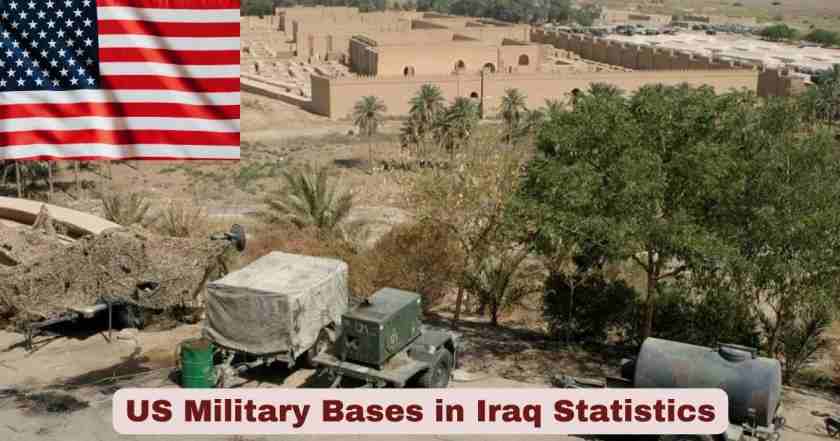
American Military Bases in Iraq 2026
The story of US military bases in Iraq is one of the most consequential — and expensive — chapters in the entire history of American foreign policy. What started as a full-scale invasion on March 20, 2003, under the banner of Operation Iraqi Freedom, rapidly expanded into a two-decade military presence that at its absolute peak saw 170,000 American troops spread across 505 bases in every single province across the country. These installations ranged from massive fortress-like super bases like the Victory Base Complex near Baghdad International Airport and the vast Ain al-Asad Air Base in Anbar province to hundreds of smaller forward operating bases, combat outposts, and patrol bases embedded in Iraq’s most contested urban and rural terrain. At their peak, these bases collectively housed not just US troops but also an estimated 135,000 private military contractors, making the US military footprint in Iraq one of the largest in modern warfare history.
As of March 2026, that sweeping presence has been almost entirely dismantled. Under a landmark 2024 bilateral agreement between Washington and Baghdad, the US-led Global Coalition to Defeat ISIS formally concluded its mission across federal Iraq, with the Ain al-Asad Air Base — the last major US installation in western Iraq — handed over to the Iraqi Army on January 17, 2026. Today, the only remaining US military presence on Iraqi soil is concentrated at Harir Air Base in Erbil, located in Iraq’s semi-autonomous Kurdistan Region, where fewer than 2,000 US troops and coalition personnel continue advisory and counter-ISIS support operations. Even that presence is scheduled for a full drawdown by September 2026. What took over twenty years, more than $1.79 trillion in direct US spending, and the lives of over 4,700 US and allied personnel to build is now, in 2026, drawing rapidly to a close — leaving behind a transformed security landscape and deeply complex questions about what American military investment in Iraq ultimately achieved.
Interesting Facts About US Military Bases in Iraq 2026
| Fact | Detail |
|---|---|
| Invasion Start Date | March 20, 2003 (Operation Iraqi Freedom) |
| Peak Number of US Bases in Iraq | 505 bases across all Iraqi provinces |
| Peak US Troop Level in Iraq | ~170,000 troops (August 2007) |
| Peak Private Military Contractors | ~135,000 contractors alongside troops |
| First Withdrawal (Obama Era) | End of 2011 — formal end of combat mission |
| Return After ISIS Rise | 2014 — troops re-deployed at Iraq’s request |
| Ain al-Asad Handover Date | January 17, 2026 (handed to Iraqi Army) |
| Green Zone / Baghdad Handover | January 2026 (handed to Iraqi Forces) |
| Victoria Base (Baghdad) Handover | January 2026 (transferred to Iraq) |
| Last US Base Remaining in Iraq | Harir Air Base, Erbil, Kurdistan Region |
| Remaining US Troops (March 2026) | Fewer than 2,000 (Erbil/Kurdistan region) |
| Final Withdrawal Deadline (Erbil) | September 2026 |
| Total Direct US Spending on Iraq War | ~$1.79 trillion (costs to date) |
| Total Projected Cost Including Veterans Care | ~$2.89 trillion through 2050 |
| US + Allied Troops Killed | Over 4,700 (Operation Iraqi Freedom + OIR) |
| US Troops Wounded | Over 32,000 documented wounded |
| Iraqi Civilian Deaths (Direct Violence) | 184,986 – 207,906 (Iraqi Body Count) |
| People Killed in Iraq & Syria 2003–2023 | 550,000 – 580,000 (Brown University) |
| Refugees from Iraq & Syria | Over 7 million refugees |
| Internally Displaced in Iraq & Syria | ~8 million people |
| Iran’s Missile Strike on Ain al-Asad | January 2020 — 110 US personnel injured |
| 2024 Baghdad-Washington Withdrawal Deal | Signed September 2024 |
| Coalition Force Countries (Global Coalition) | 79 countries and international institutions |
Source: US Department of Defense (DoD); US Central Command (CENTCOM) official statements; Wikipedia – List of US Military Installations in Iraq; Brown University Costs of War Project (Watson Institute), 2023; Government Accountability Office (GAO); Military Times, January 2026; CNN, January 2026; Kurdistan24, January 2026; PBS NewsHour Iraq Timeline; United States Institute of Peace (USIP)
The raw scale behind these facts is difficult to fully absorb. The idea that the United States maintained 505 military bases simultaneously across every province of an entire sovereign country — from Kurdistan in the north to Basra in the south — is an operational achievement with virtually no modern parallel. At its height in August 2007, the US military was operating with 170,000 uniformed troops supported by 135,000 private contractors, a combined total of over 300,000 personnel whose daily logistics demands alone consumed billions of dollars per month. The $1.79 trillion in direct spending that has accrued since 2003, growing to a projected $2.89 trillion once veterans’ healthcare costs through 2050 are included, makes the Iraq War one of the most expensive military undertakings in all of American history — far exceeding initial pre-war estimates by orders of magnitude.
The human cost figures are equally staggering and equally difficult to contextualize. The 4,700+ US and allied troop deaths and 32,000+ wounded represent the toll on those who served. But the Brown University Costs of War project’s estimate of 550,000 to 580,000 people killed in Iraq and Syria between 2003 and 2023 — spanning civilians, combatants, and all parties to the conflict — and the 7 million+ refugees it generated reveals a humanitarian cost on an entirely different scale. The January 2020 Iranian missile strike on Ain al-Asad that injured 110 US personnel was a sharp reminder that even as US troop numbers declined, the bases themselves remained targets of geopolitical rivalry. Now, in early 2026, with the Ain al-Asad handover complete and only Harir Air Base in Erbil remaining, the final chapter of the US military’s Iraq basing era is almost written.
US Military Base Numbers & Troop Levels in Iraq Over Time 2026
| Year / Period | US Troop Level (Approx.) | Key Context |
|---|---|---|
| March 2003 | ~130,000 | Initial invasion force, Operation Iraqi Freedom |
| FY2004 | ~130,600 (avg monthly) | Post-invasion occupation, insurgency begins |
| FY2005 | ~143,800 (avg monthly) | Sectarian violence escalates |
| FY2006 | ~143,800 (avg monthly) | Civil war conditions, insurgency peak |
| August 2007 | ~170,000 (peak) | Bush surge — highest level ever recorded |
| FY2008 | ~157,800 (avg monthly) | Surge begins to wind down |
| FY2009 | ~135,600 (avg monthly) | Post-surge drawdown |
| FY2010 | ~88,300 (avg monthly) | Obama drawdown begins |
| FY2011 | ~42,800 (avg monthly) | End of combat mission declared |
| December 2011 | ~0 (formal withdrawal) | Obama ends US combat presence |
| 2014 | ~5,000 | Re-deployed at Iraq’s request after ISIS rise |
| 2021 | ~3,000 | Combat role formally ended |
| 2023 | ~2,500 | Coalition advise-and-assist mission |
| 2024 | ~2,500 | Withdrawal agreement signed September 2024 |
| January 2026 | Federal Iraq: 0 / Kurdistan: <2,000 | Ain al-Asad and Baghdad handed over |
| September 2026 (target) | ~0 (full withdrawal planned) | Harir Air Base, Erbil to be handed over |
Source: Congressional Research Service (CRS) Report R40682; Government Accountability Office (GAO) Iraq troop level data; US Central Command (CENTCOM); CNN, January 19, 2026; Kurdistan24, January 2026; Military Times, January 20, 2026
Tracking the trajectory of US troop levels in Iraq over more than two decades reveals an arc that is at once militarily ambitious, politically turbulent, and ultimately circular. The surge from roughly 130,000 troops in FY2004 to the historic peak of 170,000 in August 2007 under President Bush’s escalation strategy added an extra 40,000 boots on the ground in an attempt to break the back of sectarian violence that had brought Iraq to the edge of full civil war. The subsequent drawdown — steady through FY2009 and FY2010 — brought troop levels to 42,800 in FY2011 before the formal end of the combat mission. What is critically important to understand is that “withdrawal” in 2011 did not mean the end of American military involvement: ISIS’s 2014 territorial seizure of Mosul and large swaths of both Iraq and Syria forced a return, with 5,000 troops re-deployed and a new multi-decade counter-terrorism mission begun under Operation Inherent Resolve.
The final drawdown from 2,500 troops in 2024 to fewer than 2,000 in the Kurdistan Region by early 2026 reflects a genuine change in the security calculus rather than just a political decision. US officials, including CENTCOM sources cited by Fox News in January 2026, explicitly stated that “ISIS in Iraq doesn’t pose a threat beyond Iraq’s capacity to handle on their own” — the clearest statement yet that the original justification for the 2014 return has, in the assessment of US military commanders, been substantially addressed. The phased base handovers — Baghdad’s Victoria Base and Joint Operations Command headquarters, then Ain al-Asad, and finally Harir Air Base in Erbil by September 2026 — represent a structured, negotiated exit rather than the chaotic departures that characterized other US military drawdowns in the post-9/11 era.
Key US Military Bases in Iraq — Status as of March 2026
| Base Name | Location | Peak Role | Current Status (March 2026) |
|---|---|---|---|
| Victory Base Complex (VBC) | Baghdad (near airport) | Largest US base in Iraq; HQ for MNC-I | Handed over — Iraqi forces in control |
| Camp Victory / Victoria Base | Baghdad | Major logistics and command hub | Handed over — January 2026 |
| Green Zone (International Zone) | Baghdad | US Embassy, Coalition HQ | Handed over to Iraqi forces — January 2026 |
| Joint Operations Command HQ | Baghdad | NATO / coalition command center | NATO handed over; Transferred November 2025 |
| Ain al-Asad Air Base | Anbar Province (western Iraq) | Primary air base; counter-ISIS operations | Fully handed over — January 17, 2026 |
| Camp Speicher | Tikrit, Salah ad-Din Province | Major COB; supported north-central Iraq | Transferred to Iraqi forces — 2020–2021 |
| Camp Taji | North of Baghdad | Major logistics and training base | Transferred to Iraqi forces — 2020 |
| Camp Marez | Mosul, Nineveh Province | Northern Iraq operations hub | Transferred — post-2021 drawdown |
| Harir Air Base | Erbil, Kurdistan Region | Air operations; advise Kurdish/Iraqi forces | ACTIVE — only remaining US base in Iraq |
| Erbil International Airport (coalition section) | Erbil, Kurdistan Region | Coalition logistics and air support hub | ACTIVE — scheduled handover by September 2026 |
Source: Wikipedia – List of United States Military Installations in Iraq; US Central Command (CENTCOM) official statements; Military Times, January 2026; Jerusalem Post, January 17, 2026; Small Wars Journal, January 20, 2026; CNN, January 18–19, 2026; Reuters, January 17, 2026
The base-by-base status table captures in stark relief how completely the US military footprint has contracted from the sprawling, province-by-province presence of the occupation era. The Victory Base Complex outside Baghdad International Airport — once a city unto itself with its own PXs, fast food restaurants, swimming pools, and a population of tens of thousands — is now fully under Iraqi control. The Green Zone, that fortified enclave in central Baghdad which became a global symbol of the US occupation, has likewise been handed back. Most dramatically, Ain al-Asad Air Base in Anbar province — a facility that became internationally known after Iran launched ballistic missiles at it in January 2020, injuring 110 US service members — was formally transferred to the Iraqi Army on January 17, 2026, with Iraqi Army Chief of Staff Lt. Gen. Abdul Amir Rashid Yarallah personally overseeing the handover ceremony.
The single remaining active US presence — Harir Air Base in Erbil within the Kurdistan Region — exists in a constitutionally distinct zone, as Iraq’s Kurdistan Region is a semi-autonomous federal entity with its own government, parliament, and security forces that does not fall under full Baghdad government authority. This jurisdictional nuance has been critical to sustaining even a residual US presence past the January 2026 federal Iraq withdrawal deadline. However, per the 2024 Baghdad-Washington agreement, even Harir Air Base is to be vacated by September 2026, at which point the US military’s presence on Iraqi soil — barring any new bilateral security agreement — will formally be zero. Kurdistan Region Prime Minister Masrour Barzani has signaled continued cooperation with the US under a future strategic agreement framework, but the base-level military presence chapter is closing.
Financial Cost of US Military Bases and Operations in Iraq 2026
| Cost Category | Amount |
|---|---|
| Total Direct US Defense Spending on Iraq War (to date) | ~$1.79 trillion |
| Projected Total Cost Including Veterans’ Care Through 2050 | ~$2.89 trillion |
| Average Annual Direct Spending at Peak Operations | ~$100–$141 billion/year |
| Cost Per US Taxpayer (estimated) | ~$8,000 per American taxpayer |
| FY2003 Supplemental (Iraq War portion) | $54.4 billion |
| FY2004 Supplemental (Iraq War portion) | $70.5 billion |
| FY2006 Emergency Supplemental (Iraq War portion) | ~$60 billion |
| DoD FY2009 Iraq War Budget Request | $141 billion |
| UK Total Military Cost in Iraq (2003–2009) | £8.4 billion (~$10.6 billion) |
| US DoD Contracts to Private Firms (2020–2024, total Pentagon) | $2.4 trillion |
| Veterans’ Care Costs for Post-9/11 Wars (projected through 2050) | $2.2 – $2.5 trillion |
| Total Post-9/11 Wars Cost (Iraq, Afghanistan, Pakistan, Syria) | ~$8 trillion |
| Carbon Emissions from US Military Operations in Iraq/Syria 2003–2021 | 98–122 million metric tons CO₂e |
Source: Brown University Watson Institute Costs of War Project — “Blood and Treasure: US Budgetary and Human Costs of 20 Years of War in Iraq and Syria, 2003–2023” (March 2023); Congressional Research Service (CRS) Report R40682; US Office of Management and Budget; Wikipedia — Financial Cost of the Iraq War; Business Insider, February 2020
The financial figures attached to US military operations in Iraq are so large that they resist easy comprehension. The $1.79 trillion in direct spending accumulated from 2003 to the present does not include the full lifecycle costs of the war — once veterans’ healthcare and disability payments projected through 2050 are added, the Brown University Costs of War project estimates the total reaches $2.89 trillion for Iraq and Syria combined. When Iraq is situated within the broader post-9/11 war context — including Afghanistan, Pakistan, and Syria — the combined total rises to approximately $8 trillion, a figure that represents roughly one-third of the current US national debt. The $8,000 per American taxpayer figure, calculated by Business Insider from direct war spending data, provides an individual-scale lens through which to understand what the Iraq basing system ultimately cost the American public.
The year-by-year supplemental appropriations data — $54.4 billion in FY2003, escalating to $70.5 billion in FY2004, and eventually requiring a DoD budget request of $141 billion for FY2009 — illustrates how dramatically the costs exceeded every pre-war projection. Administration officials had publicly suggested the war might cost as little as $50 billion total before the invasion. The reality was that a single fiscal year in the middle of the conflict cost nearly three times that. The carbon cost — 98 to 122 million metric tons of CO₂ equivalent emitted by US military operations in Iraq and Syria between 2003 and 2021 — adds an environmental dimension to the war’s true cost that is rarely acknowledged in mainstream defense budget discussions, representing approximately 12 to 15 percent of the Pentagon’s total operational greenhouse gas emissions over the same period.
US Military Casualties and Human Cost of Iraq Bases 2026
| Casualty / Human Cost Metric | Data |
|---|---|
| US Military Deaths in Iraq (OIF + OIR) | Over 4,700 |
| US Military Wounded in Iraq | Over 32,000 documented |
| US Service Member Suicides (Post-9/11 Wars, all theaters) | 4x more than combat deaths |
| Iraqi Civilian Deaths — Direct Violence (Iraqi Body Count) | 184,986 – 207,906 |
| Civilian Deaths Peak Year | 2006 — 29,517 casualties |
| Total Killed in Iraq & Syria 2003–2023 | 550,000 – 580,000 (Brown University) |
| Estimated Indirect Deaths (disease, infrastructure collapse) | 3.6 – 3.8 million (post-9/11 war zones) |
| Total Death Toll (direct + indirect, all post-9/11 wars) | At least 4.5 – 4.7 million |
| Refugees from Iraq and Syria | Over 7 million |
| Internally Displaced in Iraq and Syria | ~8 million |
| Total People Displaced by Post-9/11 Wars | 38 million (all theaters) |
| US Troops Injured at Ain al-Asad (Iran missile strike, Jan 2020) | 110 personnel |
| US Soldiers Killed by ISIS (Palmyra, Syria, Dec 2024) | 2 soldiers + 1 civilian interpreter |
Source: Brown University Watson Institute Costs of War Project; Iraqi Body Count Project; US Department of Defense (DoD) casualty reports; Statista Research Department; PBS NewsHour Iraq Timeline; ABC News; Al Jazeera; US Central Command official statements
The human cost data for the Iraq War and the US military’s presence in the country cuts across multiple dimensions of suffering, and each number in the table deserves to be taken seriously on its own terms. The 4,700+ US and allied military deaths and 32,000+ wounded are the costs that American society most directly felt — the names read at memorials, the funerals in small towns, the veterans navigating physical and psychological injuries for decades after deployment. The statistic that four times as many post-9/11 veterans have died by suicide than in combat is perhaps the most haunting figure in the entire dataset, representing a silent casualty toll that dwarfs battlefield losses but receives a fraction of the public attention. These are men and women who survived Iraq but could not survive what Iraq did to them.
For Iraqis themselves, the figures are of a categorically different magnitude. The 184,986 to 207,906 civilian deaths from direct violence documented by the Iraqi Body Count project — with 2006 being the single deadliest year at 29,517 civilian deaths — reflects the human price of sectarian civil war ignited in part by the destabilization that followed the invasion. Brown University’s broader estimate of 550,000 to 580,000 killed across Iraq and Syria between 2003 and 2023, combined with an estimated 3.6 to 3.8 million indirect deaths from disease, collapsed healthcare systems, and destroyed infrastructure, points to a conflict whose human consequences extended across generations and borders. The 38 million people displaced across all post-9/11 war theaters — the largest forced displacement crisis since World War II — places the Iraq War within a humanitarian catastrophe of historic proportions.
2024–2026 US Withdrawal Agreement & Timeline for Iraq Bases
| Withdrawal Milestone | Date | Detail |
|---|---|---|
| Iraq-US withdrawal negotiations begin | January 2024 | Baghdad and Washington agree to begin talks |
| Formal withdrawal agreement signed | September 2024 | Iraqi Defense Minister Thabit al-Abbasi announces deal |
| Original Phase 1 deadline (hundreds of troops) | September 2025 | Initial target — partially met; Syria events caused delay |
| NATO headquarters in Baghdad transferred | November 2025 | Coalition HQ formally handed to NATO/Iraqi forces |
| Victoria Base and Baghdad sites evacuated | January 2026 | US forces depart Baghdad’s major installations |
| Joint Operations Command HQ handed over | January 2026 | Iraqi forces assume full command |
| Ain al-Asad Air Base — US withdrawal complete | January 17, 2026 | Iraqi Army Chief of Staff oversees handover ceremony |
| Iraq announces full federal withdrawal | January 18, 2026 | Iraq military committee confirms all federal bases vacated |
| US coalition HQ relocates to Erbil and Kuwait | January 2026 | Pentagon Inspector General confirms relocation |
| Forces consolidated at Harir Air Base, Erbil | January–February 2026 | Fewer than 2,000 US/coalition troops in Kurdistan |
| Erbil repositioning (pre-Iran tensions) | February 2026 | Roughly half of coalition forces in Erbil repositioned |
| Harir Air Base, Erbil — final withdrawal deadline | September 2026 | Per 2024 agreement; decision on post-2026 to follow |
| Future framework | Post-September 2026 | Bilateral strategic security agreement under negotiation |
Source: Reuters, January 17, 2026; CNN, January 18–19, 2026; Military Times, January 20, 2026; Kurdistan24, January 2026; Times of Israel, January 18, 2026; Middle East Eye, February 2026; Pentagon Inspector General report, February 19, 2026; Fox News, January 17, 2026
The structured, phased nature of the 2024–2026 withdrawal process stands in notable contrast to earlier US military departures from the region. The September 2024 agreement between Baghdad and Washington established a clear timetable — initial troop reductions by September 2025, full federal Iraq withdrawal by end of 2025, and Kurdistan Region withdrawal by September 2026 — with built-in flexibility to accommodate unforeseen security developments. The December 2024 collapse of Syria’s Assad government and the subsequent ISIS activity in Syria that killed two US soldiers and a civilian interpreter in Palmyra on December 13, 2024, did in fact delay the Ain al-Asad withdrawal by several months, demonstrating that even a negotiated exit cannot be fully insulated from regional dynamics. The small unit of 250 to 350 advisers that briefly remained at Ain al-Asad past the original deadline before the final January 2026 handover illustrates how that flexibility was actually applied.
The Iraqi government’s official framing of the withdrawal is diplomatically notable. The military committee overseeing the coalition exit explicitly stated that Iraqi forces were “fully capable of preventing the reappearance of Islamic State in Iraq” — a declaration of sovereign security confidence that would have been unimaginable a decade earlier. Simultaneously, Baghdad made clear that counter-ISIS coordination will continue through Harir Air Base in Erbil and that joint operations launched from Ain al-Asad remain possible if circumstances demand. This reflects a deliberate pivot from a basing relationship — where US forces are physically present on Iraqi soil in combat-relevant numbers — to a partnership relationship, where American support is accessed through agreements rather than through permanent installations. Iraqi Prime Minister al-Sudani’s statement that once the coalition withdrawal is complete “there will be no need or justification for any group to carry weapons outside the scope of the state” signals that the end of US basing is also expected to undercut the political legitimacy of Iran-backed militias.
ISIS Threat Status & Security Context for Iraq Bases in the US 2026
| Security Metric | Data |
|---|---|
| Global Coalition to Defeat ISIS Formation | September 2014 — 79 countries and institutions |
| ISIS Territorial Peak | 2014–2015 — seized large swaths of Iraq and Syria |
| Mosul Liberation | July 2017 |
| ISIS “Caliphate” Declared Defeated | March 2019 |
| US Combat Role in Iraq Formally Ended | December 2021 |
| UN Security Council Assessment (August 2024) | ISIS “rebuilding networks along Syrian border and restoring capacity in Badia region” |
| ISIS Attack in Palmyra, Syria | December 13, 2024 — 2 US soldiers + 1 interpreter killed |
| Operation Hawkeye Strike | Launched January 10, 2026 — large-scale US strikes on ISIS in Syria |
| Operation Hawkeye State | Ongoing — “large-scale” ISIS strikes in Syria by US and coalition |
| CENTCOM Assessment (January 2026) | “ISIS in Iraq doesn’t pose a threat beyond Iraq’s capacity to handle on their own” |
| Iraqi Military Committee Statement (January 2026) | Forces “fully capable of preventing reappearance of Islamic State in Iraq” |
| ISIS Status in Iraq (2026) | Militarily weak; continuing as global terrorist organization via social media |
| ISIS Remaining Threat Areas | Mountainous border areas; Syrian border region |
| Iran Threat to Erbil Base (February 2026) | Iran warned all US bases in region are “legitimate targets”; attacks threatened |
Source: US Central Command (CENTCOM) official statements; United States Institute of Peace (USIP) Iraq Timeline; Times of Israel, January 18, 2026; Fox News, January 17, 2026; UN Security Council report cited in Times of Israel; Al Jazeera, February 28, 2026; Middle East Eye, February 2026
The ISIS security picture in Iraq as of early 2026 has genuinely improved from the catastrophic conditions of 2014–2016 — but it has not been resolved. The UN Security Council’s August 2024 assessment that ISIS was “rebuilding networks along the Syrian border and restoring capacity in the Badia region” provided a clear warning that the group, while militarily decimated, remained organizationally persistent. The December 13, 2024 attack in Palmyra, Syria — in which two US soldiers and a civilian interpreter were killed — served as a fatal reminder of that persistence, triggering US Secretary of War Pete Hegseth to launch Operation Hawkeye Strike on January 10, 2026 as a declared “act of vengeance.” The subsequent Operation Hawkeye State, with its “large-scale” ISIS strikes across Syria, reflects CENTCOM’s determination to maintain military pressure on the group even as the Iraq basing footprint collapses.
The tension between the genuine security progress in Iraq — where CENTCOM assessed in January 2026 that local forces could handle the ISIS threat independently — and the continuing ISIS activity in Syria and along the Iraq-Syria border explains why the US is consolidating in Erbil rather than leaving entirely. Harir Air Base is geographically the closest US military installation to the Syrian border, making it strategically valuable for cross-border operations support even as a formal Iraq mission winds down. The Iran dimension adds a layer of acute risk to this residual presence: Tehran warned in February 2026 that all US bases in the region, including Erbil, are “legitimate targets” in the context of rising US-Iran tensions following Operation Epic Fury. The fact that roughly half of coalition forces in Erbil repositioned to other countries as a precautionary measure in late February 2026 shows that the US military’s final days in Iraq are unfolding against one of the most volatile regional security backdrops in years.
US Military Bases in Iraq — Full Historical Timeline in the US 2026
| Date | Milestone |
|---|---|
| March 20, 2003 | US-led invasion begins — Operation Iraqi Freedom |
| April 9, 2003 | Baghdad falls; US establishes Green Zone HQ |
| May 1, 2003 | Bush declares “Mission Accomplished” |
| December 13, 2003 | Saddam Hussein captured |
| 2004–2006 | Insurgency intensifies; troop levels plateau at ~143,800 |
| January 2007 | Bush announces troop surge — adds 30,000 troops |
| August 2007 | US reaches peak of 170,000 troops in 505 bases |
| December 2006 | Saddam Hussein executed |
| 2008 | Bush-Iraq Status of Forces Agreement (SOFA) signed; sets 2011 withdrawal date |
| June 2009 | US withdraws from Iraqi cities under SOFA terms |
| August 31, 2010 | Obama declares end of US combat mission (Operation New Dawn begins) |
| December 18, 2011 | US formally withdraws — last troops leave Iraq |
| June 2014 | ISIS seizes Mosul; Iraq requests US help |
| September 2014 | Obama forms 79-nation Global Coalition to Defeat ISIS |
| 2014–2015 | ~5,000 US troops re-deployed to Iraq under Operation Inherent Resolve (OIR) |
| July 2017 | Mosul liberated from ISIS |
| March 2019 | ISIS “caliphate” territory declared fully defeated |
| January 3, 2020 | US kills Iranian Gen. Qassem Soleimani in drone strike near Baghdad airport |
| January 8, 2020 | Iran launches missiles at Ain al-Asad — 110 US personnel injured |
| December 2021 | US combat role in Iraq formally ended; ~2,500 troops remain in advisory role |
| September 2024 | Baghdad and Washington sign formal withdrawal agreement |
| November 2025 | NATO HQ in Baghdad transferred to Iraqi forces |
| December 13, 2024 | ISIS kills 2 US soldiers and 1 interpreter in Palmyra, Syria |
| January 10, 2026 | US launches Operation Hawkeye Strike — major ISIS strikes in Syria |
| January 17, 2026 | Ain al-Asad Air Base handed over — Iraqi Army assumes full control |
| January 18, 2026 | Iraq officially announces full US withdrawal from federal territory |
| February 2026 | Coalition forces begin repositioning from Erbil amid US-Iran tensions |
| February 28, 2026 | Iran retaliates against US bases across region (Bahrain, Kuwait, Qatar, UAE) following Operation Epic Fury |
| September 2026 (target) | Harir Air Base, Erbil — final US military presence in Iraq to be withdrawn |
Source: PBS NewsHour Iraq War Timeline; US Central Command (CENTCOM); United States Institute of Peace (USIP) Iraq Timeline; Military Times; CNN; Reuters; Wikipedia — Iraq War; Al Jazeera, February 28, 2026; Kurdistan24, January 2026
The timeline of US military bases in Iraq traces an arc that spans nearly a quarter of a century — from the opening “Shock and Awe” airstrikes over Baghdad on March 20, 2003, through the chaotic years of occupation and insurgency, the 2011 withdrawal, the ISIS-driven return, and now the structured 2025–2026 exit. Each milestone on this timeline carries enormous weight: the “Mission Accomplished” declaration of May 2003 that proved catastrophically premature; the August 2007 peak of 170,000 troops that represented the maximum American commitment; the 2011 formal withdrawal that lasted just three years before events forced a return; and the January 2020 Iranian missile strike on Ain al-Asad that brought the US and Iran closer to direct war than at any point since the 1979 revolution.
The closing entries on this timeline — the January 17, 2026 Ain al-Asad handover, the planned September 2026 Erbil withdrawal, and the shadow of Iranian retaliatory strikes on US assets across the region on February 28, 2026 — make clear that the US military’s exit from Iraq is happening not in a moment of quiet peace but amid some of the region’s highest tensions in years. The September 2026 final deadline at Harir Air Base may yet be complicated by developments no one can fully predict. But barring a fundamental change in the security equation, the United States’ extraordinary 23-year military basing presence in Iraq — encompassing 505 bases, 170,000 peak troops, over $1.79 trillion spent, and a human toll measured in hundreds of thousands of lives — will formally reach its end before the year is out.
Disclaimer: This research report is compiled from publicly available sources. While reasonable efforts have been made to ensure accuracy, no representation or warranty, express or implied, is given as to the completeness or reliability of the information. We accept no liability for any errors, omissions, losses, or damages of any kind arising from the use of this report.