
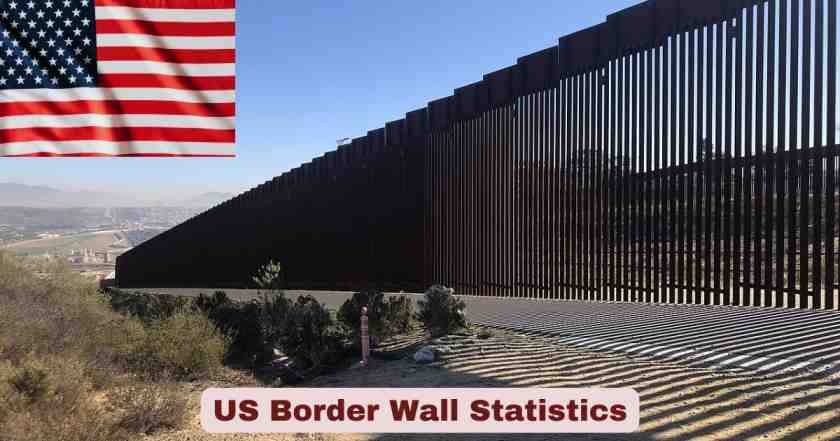
Border Wall in the US 2026
The US Border Wall stands as one of the most debated infrastructure projects in American history, spanning the 1,954-mile border between the United States and Mexico. Throughout 2026, the border wall system has undergone significant expansion under renewed federal commitments, with the One Big Beautiful Bill Act allocating $46.5 billion specifically for border wall construction and associated infrastructure. This monumental investment represents the largest single border security expenditure in the nation’s history, with construction efforts accelerating across multiple southwestern border sectors including California, Arizona, New Mexico, and Texas.
The current administration has prioritized what officials call the “Smart Wall” system—an integrated approach combining physical steel bollard barriers, waterborne barriers, patrol roads, advanced detection technology, cameras, lighting, and sensor systems. As of January 2026, the U.S. Customs and Border Protection (CBP) has reported that approximately 644 miles of primary wall and 75 miles of secondary wall existed prior to January 20, 2025, meeting Border Patrol operational requirements. The renewed construction push aims to complete comprehensive border security infrastructure by 2029, with multiple federal contracts totaling over $5 billion already awarded for 230 miles of new smart wall construction across key border sectors.
Interesting Facts About the US Border Wall in 2026
| Border Wall Fact | 2026 Statistics |
|---|---|
| Total US-Mexico Border Length | 1,954 miles (3,145 kilometers) |
| Existing Primary Wall (Pre-January 2025) | Approximately 644 miles |
| Existing Secondary Wall | Approximately 75 miles |
| One Big Beautiful Bill Funding Allocation | $46.5 billion for border wall construction |
| New Border Wall Contracts Awarded (September 2025) | 10 contracts totaling $4.5 billion |
| Total Miles Planned for Smart Wall Construction | Over 230 miles of new barriers |
| Texas State Border Wall Completed | Approximately 61.8 miles (as of April 2025) |
| Average Construction Cost Per Mile | $20-30 million (varying by terrain and design) |
| Border Apprehensions Daily Average (FY 2026) | 258 per day (95% lower than previous administration) |
| Southwest Border Crossings (October 2025) | 9,845 apprehensions (record low) |
| Fiscal Year 2026 Total Encounters (Oct-Nov) | 60,940 nationwide (lowest start to fiscal year ever) |
| CBP Officer Hiring Increase | 42.5% increase in monthly new hires |
| Border Patrol Agent Hiring Increase | 84% increase in monthly new hires |
| Technology Deployment | Approximately 549 miles of detection technology |
| Unfenced Border Due to Terrain | Approximately 535 miles (covered by technology) |
| Construction Timeline Goal | Substantial completion by 2029 |
Data Source: U.S. Customs and Border Protection (CBP), Department of Homeland Security (DHS), Texas Facilities Commission, Congressional Records – January 2026
The US Border Wall has undergone transformative development throughout 2026, marked by unprecedented federal investment and accelerated construction timelines. The $46.5 billion allocation from the One Big Beautiful Bill Act represents more than three times the funding allocated during the previous wall construction efforts, demonstrating the administration’s commitment to comprehensive border security. The 10 major contracts awarded in September 2025, totaling $4.5 billion, mark the first border wall projects funded under this historic legislation and signify the beginning of an intensive multi-year construction phase targeting 230 miles of new smart wall infrastructure across Arizona, California, New Mexico, and Texas sectors.
The dramatic reduction in border apprehensions tells a compelling story about border security effectiveness in 2026. With only 258 apprehensions per day on the Southwest border—representing a staggering 95% decrease compared to the 5,110 daily average from February 2021 through December 2024—the current border wall system combined with enhanced enforcement measures has achieved what officials call “historic control.” The 60,940 total nationwide encounters during October and November 2025 (the first two months of Fiscal Year 2026) represent the lowest start to any fiscal year in recorded CBP history. The San Diego Sector exemplifies this trend, recording only 1,793 apprehensions through the first two months of FY 2026, marking a 93% decrease from the same period one year prior and reaching activity levels not seen since the 1960s.
Border Wall Funding in the US 2026
| Funding Category | Amount Allocated | Purpose |
|---|---|---|
| One Big Beautiful Bill Act – Border Wall Construction | $46.5 billion | Physical barriers, waterborne barriers, patrol roads, technology |
| CBP Facilities and Checkpoints | $5 billion | Updating and constructing CBP facilities |
| CBP Agent Hiring and Training | $7.8 billion | 3,000 new Border Patrol agents, vehicles, training infrastructure |
| Border Technology and Surveillance | $6.2 billion | Cameras, sensors, detection systems, air and marine operations |
| State Border Security Reinforcement Fund | $13.5 billion | Reimbursement for state border enforcement expenses |
| Unrestricted Border Enforcement Fund | $10 billion | Secretary of DHS discretionary allocation |
| Operation Stonegarden | $450 million | State and local law enforcement cooperation |
| Contracts Obligated to Date (as of January 2026) | Over $11 billion | From One Big Beautiful Bill Act for wall construction |
| Total DHS Appropriations (BBB Act) | $165 billion | Overall homeland security funding including border operations |
| Texas State Border Wall Funding (2021-2025) | Over $3 billion | State-funded wall construction program |
Data Source: U.S. Senate Committee on the Judiciary, Department of Homeland Security, Congressional Budget Office, Texas State Legislature – January 2026
Border wall funding in the US 2026 has reached unprecedented levels through the passage of the One Big Beautiful Bill Act, signed into law on July 4, 2025. The centerpiece $46.5 billion allocation specifically designated for border wall construction represents the largest single infrastructure investment in US border security history. This comprehensive funding package supports not merely physical barrier construction but an integrated “Smart Wall” system incorporating steel bollard walls ranging from 18 to 30 feet in height, waterborne barriers for riverine sections, all-weather patrol roads enabling rapid agent response, advanced lighting systems for 24/7 visibility, high-resolution camera networks, motion detection sensors, and thermal imaging technology. CBP has moved with remarkable speed in obligating these funds, with over $11 billion already committed to border wall construction contracts as of January 2026.
The $13.5 billion State Border Security Reinforcement Fund represents a significant shift in federal-state border security cooperation. This fund provides reimbursement to states for border-related expenses incurred since January 21, 2021, including costs associated with state-constructed border walls, deployment of state National Guard troops, state law enforcement operations, and migrant processing and transportation. Texas, which invested over $3 billion in its own border wall program constructing approximately 61.8 miles by April 2025, stands to receive substantial reimbursement from this federal fund. The state’s Operation Lone Star, which included $4.75 billion for border walls and barriers, $3.62 billion for National Guard personnel, and $2.25 billion for state trooper deployments, exemplifies the type of state-level border security efforts now eligible for federal reimbursement under the 2026 funding framework.
Border Wall Construction Progress in the US 2026
| Construction Metric | Statistics | Location/Details |
|---|---|---|
| Total Border Wall Miles (Pre-Jan 2025) | 719 miles | Approximately 644 miles primary + 75 miles secondary |
| New Contracts Awarded (Sept 2025) | 10 contracts | $4.5 billion total value |
| New Miles Under Contract | 230 miles | Across multiple border sectors |
| Miles Planned/Funded | Hundreds of additional miles | Funded by One Big Beautiful Bill Act |
| Miles Under Construction | 85+ miles | Using prior year funding plus BBB Act funds |
| Texas State Wall Completed | 61.8 miles | As of April 2025 |
| Texas Wall Target by End 2026 | 100 miles | Minimum substantial completion goal |
| Texas Wall Active Construction Sites | 12 locations | Cameron, Starr, Zapata, Webb, Maverick, Val Verde Counties |
| Texas Wall Easements Secured | 114 easements | Representing approximately 78.8 miles |
| Construction Rate (Texas) | 0.5-1 mile per week | State border wall program |
| Temporary Barriers Deployed | 130,000 feet | Including concertina wire with DOD and Texas |
| Border Sectors Receiving New Wall | 8 sectors | San Diego, El Centro, Yuma, Tucson, El Paso, Del Rio, Laredo, Rio Grande Valley |
Data Source: U.S. Customs and Border Protection, Texas Facilities Commission, Department of Homeland Security – January 2026
Border wall construction in the US 2026 has entered an intensive phase following the September 2025 contract awards that distributed $4.5 billion across 10 major construction projects spanning 230 miles of new smart wall infrastructure. These contracts, representing the first projects funded under the One Big Beautiful Bill Act, utilize design-build delivery methods with HDR Design leading engineering efforts and multiple construction joint ventures executing field work. Engineering phase activities commenced immediately following award, with field construction anticipated to begin in January 2026 and continue for approximately 30 to 36 months. The scale of simultaneous construction across multiple sectors—including major projects in San Diego and Tucson—marks the most coordinated border infrastructure deployment in decades.
The Texas state border wall program provides a detailed case study of the complexities inherent in border wall construction during 2026. With 61.8 miles completed as of April 2025 at an average cost of $28 million per mile, Texas has secured 114 easements covering approximately 78.8 miles with an additional 17 signed agreements in the closing process representing 3.5 miles. Active construction continues at 12 separate locations across six border counties, though the state faces significant challenges including difficult terrain requiring complex engineering solutions, negotiating with private landowners (at least one-third of approached landowners have refused construction access), steering clear of agricultural irrigation systems, and sensitivity to ongoing cattle, oil and gas, and hunting operations on border properties. Despite these obstacles, the Texas Facilities Commission maintains its objective to deliver a minimum of 100 miles of wall substantially complete by the end of calendar year 2026, though funding constraints announced in mid-2025 have raised questions about achieving this target.
Border Apprehensions and Encounters in the US 2026
| Apprehension Metric | FY 2026 Statistics | Comparison Data |
|---|---|---|
| Daily Average Southwest Border Apprehensions | 258 per day | 95% lower than Feb 2021-Dec 2024 average (5,110/day) |
| October 2025 Nationwide Apprehensions | 9,845 | 62% below previous October low of 26,039 (FY2018) |
| FY 2026 Total Encounters (Oct-Nov) | 60,940 nationwide | Lowest start to fiscal year in history |
| San Diego Sector (Oct-Nov FY 2026) | 1,793 apprehensions | 93% decrease from 24,735 same period prior year |
| Rio Grande Valley Sector (Oct-Nov FY 2026) | 3,199 encounters | Leading sector but at historic lows |
| Tucson Sector (Oct-Nov FY 2026) | 3,108 encounters | Second-highest sector |
| El Paso Sector (Oct-Nov FY 2026) | 2,648 encounters | Third-highest sector |
| March 2025 Southwest Border Crossings | Approximately 7,180 | Dramatic drop from 155,000 monthly average |
| Total Southwest Border Apprehensions (Since Jan 21, 2025) | 117,105 | 37% less than Biden admin monthly average of 185,625 |
| Border Patrol Releases | Zero releases | For 7 consecutive months (through January 2026) |
| December 2023 Hourly Apprehensions | 336 per hour | Now more than a full day’s worth of apprehensions |
Data Source: U.S. Customs and Border Protection, Department of Homeland Security, Border Sector Reports – January 2026
Border apprehensions across the US in 2026 have reached historically unprecedented lows, fundamentally transforming the operational landscape along the Southwest border. The 258 daily average apprehensions represent not merely a marginal improvement but a systemic shift in border crossing patterns, with current daily totals equivalent to what officials recorded every four hours during peak periods in October 2024. The 9,845 apprehensions in October 2025—the first month of Fiscal Year 2026—established a new record as the lowest October in CBP history, shattering the previous low of 26,039 set during FY 2018 by 62%. This dramatic reduction reflects the combined impact of enhanced physical barriers, increased agent presence, advanced technology deployment, expedited removal proceedings, and criminal prosecution of illegal entry attempts.
The sector-specific data reveals the comprehensive nature of border security improvements in 2026. San Diego Sector’s 1,793 apprehensions through the first two months of FY 2026 mark activity levels not observed since the 1960s, with officials attributing success to increased border wall infrastructure, strategic agency collaborations, international partnerships, and support from the U.S. Attorney’s Office for criminal prosecutions. The Rio Grande Valley Sector, traditionally the highest-traffic area, recorded 3,199 encounters through November—a figure that, despite leading all sectors, represents historic lows compared to prior years when monthly encounters frequently exceeded 100,000. Critically, CBP has maintained zero releases of apprehended individuals for seven consecutive months through January 2026, meaning all individuals apprehended are either detained pending removal proceedings or immediately removed, eliminating the “catch and release” pattern that previously characterized border operations.
Border Wall Technology and Infrastructure in the US 2026
| Technology Component | Deployment Scale | Specifications |
|---|---|---|
| Detection Technology Coverage | 549 miles | At locations with previously constructed barriers |
| Technology-Only Coverage (Unfenced Areas) | 535 miles | Due to unfavorable terrain or remoteness |
| Remote Video Surveillance Systems | 273+ systems | Day and night camera capabilities |
| Unmanned Aerial Drones | 8+ Predator B drones | Covering Arizona, New Mexico, Texas |
| Aircraft Fleet | Over 100 aircraft | For aerial border surveillance |
| Marine Vessels | 84 vessels | Southwest border waterway patrol |
| Smart Wall System Components | Integrated package | Steel barriers, cameras, lights, sensors, patrol roads |
| Wall Height Range | 18-30 feet | Internally hardened steel-bollard design |
| Barrier Types | Multiple designs | Primary barriers, secondary barriers, waterborne barriers |
| Sensor Technologies | Advanced detection | Motion detectors, thermal imaging, ground sensors |
| Lighting Systems | Stadium-grade illumination | 24/7 visibility along barrier sections |
| Patrol Roads | All-weather access | Enabling rapid agent response |
Data Source: U.S. Customs and Border Protection, Government Accountability Office Reports, DHS Technology Assessments – January 2026
The border wall technology infrastructure in the US 2026 represents a sophisticated fusion of physical barriers and advanced surveillance systems, creating what CBP officials describe as a comprehensive “Smart Wall” approach to border security. The deployment of 549 miles of detection technology at locations with previously constructed barriers enhances the effectiveness of existing infrastructure, while an additional 535 miles of unfenced border—characterized by unfavorable terrain such as steep mountains, deep canyons, or remote wilderness areas—receives technology-only coverage through networks of cameras, sensors, and surveillance systems. This dual approach recognizes that certain geographic features either preclude physical barrier construction or naturally impede crossing attempts, making technology deployment the most cost-effective security solution.
The technological arsenal deployed along the Southwest border in 2026 includes 273+ Remote Video Surveillance Systems equipped with both day and night vision capabilities, 8+ Predator B unmanned aerial drones providing continuous overhead surveillance across Arizona, New Mexico, and Texas, and a fleet of over 100 aircraft conducting aerial patrols and rapid response operations. Ground-based sensor networks employ motion detectors capable of distinguishing between human movement, vehicles, and wildlife, thermal imaging systems detecting heat signatures during nighttime hours, and ground sensors monitoring vibrations and underground activity to detect potential tunnel operations. The integration of these systems through centralized command centers enables real-time data fusion, allowing Border Patrol agents to receive immediate alerts about detected activity, view live video feeds, and coordinate response efforts across multiple sectors simultaneously.
Border Wall Environmental Waivers in the US 2026
| Environmental Waiver | Implementation Details | Geographic Coverage |
|---|---|---|
| Critical Waivers Published | 24 waivers | Expediting border wall construction |
| Environmental Regulations Waived | Multiple federal laws | NEPA, Endangered Species Act, Clean Water Act, others |
| Arizona and New Mexico Construction | 36 miles permitted | Early June 2025 authorization |
| Purpose of Waivers | Cutting bureaucratic red tape | Accelerating construction timelines |
| Authority | DHS Secretary | Under established border security statutes |
| Wildlife Refuge Impact | Cabeza Prieta National Wildlife Refuge | Construction through protected areas |
| Native American Land Concerns | Tohono O’odham Nation | 75-mile border section affected |
| Rio Grande Construction Challenges | International Boundary and Water Commission | Restrictions on river flow disruption |
| Construction Timeline Acceleration | Significant reduction | From years to months in some areas |
| Legal Challenges | Multiple lawsuits filed | Environmental and indigenous rights groups |
Data Source: Department of Homeland Security, U.S. Customs and Border Protection, Federal Register Publications – January 2026
Environmental waivers have played a crucial role in accelerating border wall construction throughout the US in 2026, with CBP publishing 24 critical waivers that exempt border wall projects from compliance with numerous federal environmental protection statutes. These waivers, authorized under provisions of the REAL ID Act of 2005, grant the Secretary of Homeland Security authority to waive legal requirements that impede expeditious construction of border barriers, including the National Environmental Policy Act (NEPA), Endangered Species Act, Clean Water Act, and dozens of other federal environmental protection laws. In early June 2025, DHS authorized 36 miles of wall construction across Arizona and New Mexico using these waiver authorities, with additional barrier construction following subsequent waiver publications throughout the year.
The environmental waiver strategy has generated substantial controversy, particularly regarding construction through sensitive ecological areas and lands held sacred by Native American tribes. The 75-mile border section traversing the Tohono O’odham Nation has become a focal point of tension, with tribal leaders condemning construction activities they characterize as desecrating sacred burial sites and disrupting traditional migration routes used for centuries. Environmental advocacy groups have filed multiple legal challenges arguing that waiver use circumvents essential environmental review processes designed to protect endangered species habitats, prevent disruption of wildlife migration corridors, and preserve fragile desert ecosystems. Construction along the Rio Grande presents unique challenges under the International Boundary and Water Commission agreement with Mexico, which prohibits barriers that disrupt river flow, forcing wall placement on private land located miles from the actual border—a factor complicating both land acquisition and operational effectiveness.
Border Wall Employment and Workforce in the US 2026
| Workforce Metric | 2026 Statistics | Details |
|---|---|---|
| CBP Officer New Hires Increase | 42.5% increase | Monthly average compared to prior year |
| Border Patrol Agent New Hires Increase | 84% increase | Monthly average compared to prior year |
| ICE Officers and Agents Hired | 12,000 new hires | 120% more than previous year |
| New Border Patrol Agent Target | 3,000 agents | From One Big Beautiful Bill Act funding |
| Coast Guard Recruitment | 121% of target | FY 2025 achievement, 5,204 new members |
| Coast Guard Total New Members | 5,204 | Highest recruitment since 1991 |
| USCIS Homeland Defenders | 50,000+ applications | Highest in agency history |
| Secret Service Applications | Over 91,000 | 46% increase over 2024 same period |
| ICE Officer/Agent Bonuses | $10,000 per year | For next four years under BBB Act |
| Total CBP Workforce | Over 67,000 personnel | Officers, agents, support staff |
| 287(g) Program Agreements | 1,255 signed agreements | State and local law enforcement partnerships |
Data Source: Department of Homeland Security, U.S. Customs and Border Protection, Immigration and Customs Enforcement, U.S. Coast Guard – January 2026
The border wall employment landscape in the US 2026 reflects unprecedented growth in federal law enforcement hiring across multiple agencies responsible for border security and immigration enforcement. CBP has achieved a 42.5% increase in CBP Officer monthly new hires and an extraordinary 84% increase in Border Patrol Agent monthly new hires compared to the same period in the previous year, representing the most successful recruitment campaign in recent agency history. These hiring surges respond directly to funding provisions in the One Big Beautiful Bill Act, which allocated $7.8 billion specifically for hiring 3,000 new Border Patrol agents, purchasing vehicles and equipment, and expanding training capacity at the Federal Law Enforcement Training Center (FLETC). The dramatic increase in hiring velocity addresses longstanding staffing shortages that hampered border security operations in previous years.
Immigration and Customs Enforcement (ICE) has experienced even more dramatic workforce expansion, hiring 12,000 new officers and agents in 2026—a 120% increase over the previous year. This hiring surge, funded by approximately $30 billion allocated over four years for ICE enforcement and removal operations, enables the agency to significantly expand interior enforcement capabilities targeting criminal aliens already residing in the United States. The One Big Beautiful Bill Act sweetens recruitment by providing $10,000 annual bonuses to ICE officers, Border Patrol agents, and other frontline personnel for the next four years, making federal border security positions more financially competitive with private sector alternatives. The U.S. Coast Guard has similarly exceeded recruitment targets, achieving 121% of its fiscal year 2025 goal with 5,204 new members—the highest recruitment total since 1991—with these personnel contributing to expanded maritime border security operations including Operation Border Trident and Operation River Wall, which increased interdictions of illegal maritime border crossers by 44% in key regions.
Border Wall Costs and Maintenance in the US 2026
| Cost Category | Amount | Details |
|---|---|---|
| Texas Border Wall Cost Per Mile | $25-28 million | State construction program |
| Federal Border Wall Cost Per Mile | $20-30 million | Varying by terrain and specifications |
| Historic High Cost Per Mile | Over $30 million | Arizona mountainous terrain projects |
| Maintenance Cost Per Mile (Annual) | $500,000-800,000 | Texas state estimates and Laredo projections |
| Total Texas Border Wall Investment | Over $3 billion | For approximately 65 miles completed |
| One Big Beautiful Bill Total Allocation | $46.5 billion | Federal border wall construction |
| Contracts Obligated (as of Jan 2026) | Over $11 billion | From BBB Act funding |
| Total DHS Border and Immigration Funding | $170.7 billion | Over 4 years from BBB Act |
| Annual Maintenance Projection (Full Border) | Over $750 million | If fencing covers two-thirds of border |
| Construction Timeline to 2029 | 51 months total | All funds must be spent by September 30, 2029 |
Data Source: Texas Facilities Commission, U.S. Customs and Border Protection, Congressional Budget Office, OMB Reports – January 2026
Border wall costs in the US 2026 vary substantially based on terrain complexity, barrier specifications, and local site conditions, with federal construction averaging $20-30 million per mile while some projects in particularly challenging locations exceed $30 million per mile. The Texas state border wall program reports costs ranging from $25 million to $28 million per mile for 30-foot-high steel bollard barriers, with the state’s $3 billion+ investment producing approximately 65 miles of completed wall by mid-2025. These per-mile costs encompass not merely the physical barrier installation but integrated system components including concrete foundations designed to prevent undermining, all-weather patrol roads enabling rapid agent access, lighting systems providing nighttime visibility, sensor networks detecting attempted breaches, and camera systems enabling remote monitoring—all essential elements of the comprehensive “Smart Wall” approach.
Maintenance costs represent a significant long-term fiscal consideration often overlooked in initial construction discussions. The Texas Facilities Commission estimates annual maintenance costs of approximately $500,000 per mile, while the City of Laredo’s analysis projects maintenance costs potentially reaching $800,000 per mile annually for barrier-style walls in their jurisdiction. These maintenance expenses include regular inspections to identify structural issues or attempted breaches, repair of damage from weather events including flash floods and extreme temperatures, repainting to prevent corrosion in harsh desert and riverine environments, replacement of damaged sensors and camera systems, vegetation control to prevent root systems undermining barrier foundations, and emergency repairs following vehicle impacts or other incidents. Extrapolating Texas state estimates, if border fencing ultimately covers two-thirds of the 1,954-mile border (approximately 1,300 miles), annual maintenance costs could exceed $750 million, creating a perpetual fiscal obligation for decades to come.
Border Wall Legal and Land Acquisition Challenges in the US 2026
| Legal Challenge | Status/Details | Impact |
|---|---|---|
| Private Landowner Refusals | At least one-third refused | Texas border wall program significantly affected |
| Eminent Domain Cases | Multiple active proceedings | Protracted legal battles lasting years |
| Environmental Lawsuits | Numerous filed challenges | Contesting waiver authority and ecological impact |
| Native American Land Disputes | Tohono O’odham Nation opposition | 75-mile border section affected |
| Texas Easements Secured | 114 closed easements | Representing approximately 78.8 miles |
| Texas Easements in Closing | 17 signed agreements | Additional 3.5 miles |
| Texas Easements in Negotiation | 122 miles | Various phases of interest and negotiation |
| Land Acquisition Timeline | Identified as “choke point” | Major factor limiting construction pace |
| Rio Grande International Restrictions | IBWC treaty limitations | Forces wall placement on private inland property |
| Federal Land vs Private Land | Significantly different timelines | Private land acquisition far more complex |
Data Source: Texas Facilities Commission, Federal Court Records, Department of Homeland Security, Indigenous Rights Advocacy Groups – January 2026
Legal challenges and land acquisition difficulties represent the most significant obstacles to border wall expansion in the US 2026, particularly along the Texas border where the vast majority of land remains in private ownership. The Texas Facilities Commission reports that at least one-third of landowners approached about granting construction easements have refused to allow wall construction on their properties, forcing the state to either pursue lengthy eminent domain proceedings or construct wall sections in less strategically optimal locations where landowners have granted access. Texas officials characterize land acquisition as the project’s primary “choke point,” with TFC Executive Director Mike Novak noting the complexity of negotiations involving agricultural operations with irrigation systems, active oil and gas operations, hunting leases generating significant revenue for ranchers, and cattle ranching operations requiring maintained access across what would become walled sections.
Environmental litigation in 2026 continues to challenge border wall construction on multiple fronts, with advocacy groups filing lawsuits contesting the Secretary of Homeland Security’s authority to waive environmental protection statutes, arguing that wholesale exemptions from the National Environmental Policy Act, Endangered Species Act, and Clean Water Act undermine decades of environmental protection law. Several cases specifically challenge construction through federally protected wildlife refuges, including the Cabeza Prieta National Wildlife Refuge in Arizona where border wall construction fragments critical habitat for endangered species including the Sonoran pronghorn antelope and disrupts wildlife migration corridors essential to species survival. The Tohono O’odham Nation has pursued legal action opposing construction across the 75-mile section of their ancestral lands along the border, with tribal leaders testifying that wall construction desecrates sacred burial sites, prevents traditional ceremonial practices requiring cross-border travel, and violates treaty obligations guaranteeing indigenous rights to ancestral territories that predate the international boundary itself.
Border Wall Impact on Border Security in the US 2026
| Security Metric | FY 2026 Data | Effectiveness Indicator |
|---|---|---|
| Southwest Border Daily Apprehensions | 258 per day | 95% reduction from previous administration |
| Deterrence Rate | Sustained below 10,000/month | First sustained deterrence at this level in modern times |
| Drug Seizures (Oct-Nov FY 2026) | 539,984 pounds | Nearly 10% increase vs same timeframe FY 2025 |
| Methamphetamine Seized (San Diego) | 970 pounds | First two months FY 2026 |
| Cocaine Seized (San Diego) | 555 pounds | First two months FY 2026 |
| Fentanyl Seized (San Diego) | 113 pounds | First two months FY 2026 |
| CBP Zero Releases | 7 consecutive months | Through January 2026 |
| Criminal Alien Apprehensions | Subset of total apprehensions | Enhanced screening and vetting |
| Coast Guard Interdictions Increase | 44% increase | Maritime border operations |
| Recidivism Rate | Available by fiscal year | Percentage apprehended multiple times |
Data Source: U.S. Customs and Border Protection, Department of Homeland Security, Border Sector Statistical Reports – January 2026
The border wall’s impact on border security in the US 2026 demonstrates measurable effectiveness when combined with enhanced personnel deployment, advanced technology systems, and stringent enforcement policies. The 95% reduction in daily Southwest border apprehensions—from 5,110 per day during the February 2021-December 2024 period to just 258 per day in FY 2026—represents the most dramatic improvement in border security metrics in recorded history. Border Patrol sector chiefs attribute this success to the “force multiplication” effect of physical barriers, which channel crossing attempts into more predictable corridors where agent presence and surveillance technology can be concentrated, dramatically increasing the probability of detection and apprehension. The sustained deterrence effect, maintaining apprehensions below 10,000 monthly nationwide, represents an operational control level not achieved in modern times.
Drug interdiction statistics in 2026 reveal an unexpected paradox: despite dramatically reduced apprehensions of persons, CBP has seized 539,984 pounds of drugs during the first two months of FY 2026—representing a nearly 10% increase compared to the same timeframe in FY 2025. This apparent contradiction reflects the effectiveness of concentrated enforcement at specific crossing corridors, where enhanced barriers and technology force smuggling organizations into more detectable routes where agents can interdict both human smuggling and drug trafficking operations. The San Diego Sector’s seizures during October-November 2026 included 970 pounds of methamphetamine, 555 pounds of cocaine, and 113 pounds of fentanyl—collectively representing millions of doses prevented from entering American communities. The zero release policy maintained for seven consecutive months through January 2026 eliminates the previous “catch and release” pattern where apprehended individuals received notices to appear for future court dates and were released into the United States interior, with Border Patrol officials noting that this policy shift creates a powerful deterrent effect as word spreads through migrant networks that illegal border crossing no longer results in de facto entry to the United States.
Border Wall Contracts and Construction Companies in the US 2026
| Contract Detail | Information | Specifications |
|---|---|---|
| Major Contracts Awarded (Sept 2025) | 10 contracts | Total value $4.5 billion |
| New Miles Under Contract | 230 miles | Smart Wall construction |
| Lead Design Firm | HDR Design | Engineering leadership |
| Construction Execution | BCSS Joint Venture | With Caddell Construction and Gibraltar |
| Contract Delivery Method | Full design-build | Streamlined project delivery |
| AIS Infrastructure Role | Prime contractor | Subsidiary of ASRC Industrial (#125 ENR Top 400) |
| Additional IDIQ Contracts | $3.7 billion | Indefinite-delivery, indefinite-quantity under review |
| Total Program Allocation | Approximately $39 billion | Overall border infrastructure program |
| Acquisition Vehicle | $37 billion | Supporting border wall work |
| Construction Timeline | 30-36 months | From January 2026 field start |
| Border Sectors Receiving Work | Multiple sectors | San Diego, Tucson, El Paso, Laredo, Rio Grande Valley, others |
Data Source: Engineering News-Record, U.S. Customs and Border Protection, Federal Procurement Records – December 2025
Border wall contracts awarded throughout 2025 and early 2026 represent the most substantial border infrastructure procurement in US history, with the 10 major contracts totaling $4.5 billion awarded in September 2025 marking the first projects funded under the One Big Beautiful Bill Act. These contracts utilize design-build delivery methods, which integrate design and construction phases under single contracts to accelerate project timelines—a procurement strategy essential to meeting the administration’s goal of substantial completion by 2029. AIS Infrastructure, a subsidiary of ASRC Industrial (ranked #125 on Engineering News-Record’s Top 400 Contractors list), serves as prime contractor for multiple projects, with HDR Design providing engineering leadership and BCSS executing field construction through joint venture arrangements with Caddell Construction and Gibraltar.
The scale of concurrent construction operations in 2026 presents unprecedented logistical challenges, with engineering underway simultaneously for 230 miles of new smart wall across eight border sectors spanning California, Arizona, New Mexico, and Texas. Field construction anticipated to commence in January 2026 requires massive labor and equipment mobilization, including specialized crews experienced in desert construction, heavy equipment capable of operating in remote areas with limited infrastructure, concrete batch plants positioned to supply thousands of cubic yards of foundation material, steel fabrication and delivery logistics for 18-30 foot bollard sections, and environmental crews managing construction impacts in sensitive ecological areas. The $3.7 billion in additional indefinite-delivery, indefinite-quantity (IDIQ) contracts under review suggests sustained construction activity extending through the decade, with the $37 billion acquisition vehicle awarded to support border wall work providing flexible contracting mechanisms to address evolving construction requirements and unforeseen site conditions as projects progress through diverse terrain types and operational environments.
Border Wall and Immigration Policy in the US 2026
| Policy Element | Implementation Status | Impact |
|---|---|---|
| Remain in Mexico Policy | Reinstated | Asylum seekers await hearings in Mexico |
| Title 42 Expulsions | Ended May 2023 | Public health measure expired |
| Title 8 Enforcement | Primary authority | Standard immigration enforcement proceedings |
| Expedited Removal | Fully implemented | Rapid deportation without court hearings |
| Criminal Prosecution for Illegal Entry | Actively pursued | Creating strong deterrent effect |
| 287(g) Program Agreements | 1,255 signed | State and local law enforcement partnerships |
| ICE Detention Capacity | $11.25 billion allocation | 400% increase from prior year |
| ICE Enforcement Operations | $30 billion over 4 years | Funding for 10,000 new officers |
| Parole Programs | Restricted | Limited humanitarian parole grants |
| Asylum Processing | Extra-territorial options | Processing outside US borders |
| State Border Enforcement Authorization | Multiple states | States authorized to enforce immigration laws |
Data Source: Department of Homeland Security, Immigration and Customs Enforcement, Federal Register, Congressional Records – January 2026
Immigration policy in the US 2026 has undergone comprehensive transformation complementing physical border wall expansion, with enforcement strategies focusing on both border security and interior enforcement. The reinstatement of the “Remain in Mexico” policy requires non-Mexican asylum seekers to wait in Mexico while their US court cases proceed, dramatically reducing the incentive for filing asylum claims as a means to gain entry to the United States. Combined with expedited removal proceedings that enable rapid deportation without lengthy court hearings for individuals apprehended within 14 days of entry and 100 miles of the border, current enforcement policies create what officials characterize as a “zero release” environment fundamentally different from previous “catch and release” practices.
The 287(g) program has experienced explosive growth in 2026, with 1,255 signed agreements between Department of Homeland Security and state and local law enforcement agencies—a dramatic increase enabling thousands of state and local officers to perform immigration enforcement functions under federal supervision. High-profile state partnerships include Florida’s “Alligator Alcatraz,” Indiana’s “Speedway Slammer,” Nebraska’s “Cornhusker Clink,” and Louisiana’s “Louisiana Lockup”—state-operated detention facilities housing immigration detainees and expanding overall system capacity by thousands of beds. ICE has received $11.25 billion for detention operations—a staggering 400% increase from the prior year and exceeding the entire federal prison system budget—along with $30 billion over four years for enforcement and removal operations enabling the hiring of 10,000 new officers. This comprehensive enforcement infrastructure, coupled with the deterrent effect of enhanced border barriers and the elimination of release policies, has fundamentally altered migration patterns and substantially reduced illegal border crossing attempts throughout 2026.
Disclaimer: This research report is compiled from publicly available sources. While reasonable efforts have been made to ensure accuracy, no representation or warranty, express or implied, is given as to the completeness or reliability of the information. We accept no liability for any errors, omissions, losses, or damages of any kind arising from the use of this report.