
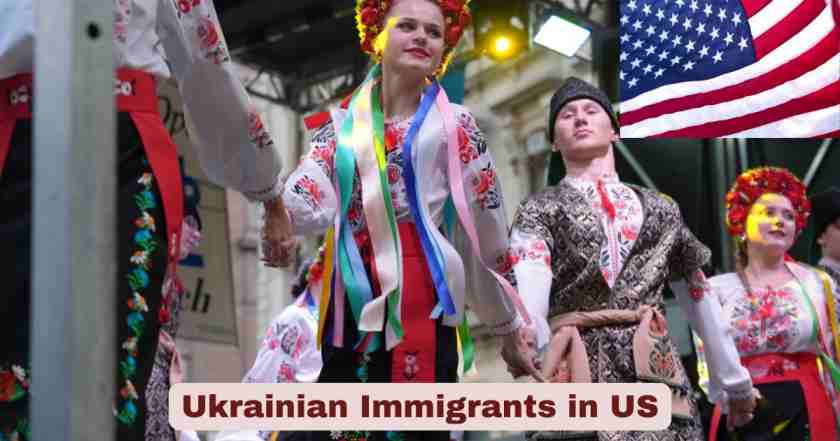
Ukrainian Immigrants in America 2025
The United States has emerged as home to the second-largest Ukrainian population in the world, with over 1.1 million Americans claiming Ukrainian ancestry as of 2025, outnumbered only by Russia. This demographic milestone represents a profound transformation in the American immigrant landscape, particularly following Russia’s invasion of Ukraine in February 2022, which triggered the largest refugee crisis in Europe since World War II. The Ukrainian American community has grown exponentially over the past three decades, evolving from 730,056 people in 1980 to surpassing the one million mark by 2020, with continued growth through 2025 as displaced families seek safety and opportunity in the United States.
The modern Ukrainian presence in America reflects multiple waves of immigration spanning over a century, but the most recent surge has been driven by humanitarian crisis and innovative federal programs. In response to Russia’s unprovoked aggression, the Biden Administration launched the Uniting for Ukraine (U4U) program in April 2022, which has facilitated the arrival of over 178,000 Ukrainian refugees to the United States through 2025, far exceeding the initial goal of 100,000 admissions. This influx has dramatically altered the composition and distribution of the Ukrainian immigrant population across America, with Ukrainian families settling in traditional hubs like New York, California, and Pennsylvania, while also establishing new communities in unexpected regions. The Ukrainian diaspora in the US in 2025 encompasses both longstanding immigrant families whose ancestors arrived generations ago and recent refugees fleeing active warfare, creating a uniquely diverse community united by shared cultural heritage and commitment to supporting their homeland.
Key Facts About Ukrainian Immigrants in the US 2025
| Fact Category | Details |
|---|---|
| Total Ukrainian Ancestry Population in the US 2025 | 1.1+ million Americans claim Ukrainian heritage |
| Foreign-Born Ukrainian Population in the US 2025 | Over 350,000 born in Ukraine |
| Percentage of Total US Immigrant Population 2025 | Ukrainian immigrants represent 0.8% of 44.9 million total immigrants |
| Post-Invasion Arrivals Through U4U Program 2025 | 178,000+ refugees since April 2022 |
| Median Household Income in 2025 | $68,000 (higher than US-born at $66,000) |
| Naturalization Rate in 2025 | 73% are US citizens (vs 52% for all immigrants) |
| Bachelor’s Degree or Higher in 2025 | Over 50% of Ukrainian immigrants age 25+ |
| Limited English Proficiency Rate in 2025 | 47% report limited English skills |
Data compiled from US Census Bureau American Community Survey, Department of Homeland Security, and Migration Policy Institute as of 2025
The statistical profile of Ukrainian immigrants in the United States in 2025 reveals a community that has achieved remarkable socioeconomic success while maintaining distinct challenges. The median household income of $68,000 for Ukrainian immigrant families exceeds both the US-born population income of $66,000 and the overall immigrant household median of $64,000, demonstrating strong economic integration and upward mobility. This financial achievement is directly correlated with exceptionally high educational attainment, as over 50% of Ukrainian immigrants aged 25 and older hold a bachelor’s degree or higher, significantly outpacing the general US population. The naturalization rate of 73% is particularly striking, as it substantially exceeds the 52% rate for all immigrants, indicating strong commitment to permanent settlement and civic engagement in the United States.
However, these impressive statistics mask persistent integration challenges, particularly around language acquisition. Despite their educational credentials and economic success, 47% of Ukrainian immigrants aged 5 and older report limited English proficiency in 2025, creating barriers to full participation in American society and potentially limiting career advancement opportunities. This linguistic challenge affects daily interactions, access to services, and ability to navigate bureaucratic systems in the US. The Uniting for Ukraine program’s admission of 178,000 refugees since April 2022 represents one of the most successful humanitarian responses in recent American history, with over 200,000 American citizens stepping forward as sponsors to provide financial support and housing for displaced Ukrainian families. These recent arrivals in 2025 face a unique set of challenges compared to established Ukrainian Americans, including trauma from war exposure, temporary immigration status uncertainty, and the need to rebuild lives from scratch while separated from extended family and familiar support systems in Ukraine.
State Distribution of Ukrainian Immigrants in the US 2025
| State | Ukrainian Population in 2025 | Percentage of US Ukrainian Total |
|---|---|---|
| New York | 149,592 residents | 13.6% of US Ukrainian population |
| California | 125,459 residents | 11.4% of US Ukrainian population |
| Pennsylvania | 103,941 residents | 9.4% of US Ukrainian population |
| New Jersey | 73,809 residents | 6.7% of US Ukrainian population |
| Florida | 63,000+ residents | 5.7% of US Ukrainian population |
| Washington | 50,000+ residents | 4.5% of US Ukrainian population |
| Illinois | 47,623 residents | 4.3% of US Ukrainian population |
Source: US Census Bureau American Community Survey 2025 estimates and Neilsberg demographic analysis
The geographic distribution of Ukrainian immigrants across the United States in 2025 reveals strong concentrations in Northeastern and Mid-Atlantic states, with New York maintaining its historical position as the primary destination for Ukrainian settlement. The Empire State’s 149,592 Ukrainian residents represent nearly 14% of the entire Ukrainian American population, with the New York City metropolitan area alone hosting approximately 160,000 people of Ukrainian descent. This concentration reflects over a century of chain migration, where established communities provide economic opportunities, cultural familiarity, and social support networks that attract subsequent waves of immigrants. The Brooklyn neighborhood of Brighton Beach and areas of Manhattan have become cultural epicenters for Ukrainian Americans, featuring Ukrainian Orthodox churches, cultural centers, restaurants serving traditional cuisine, and businesses catering to the Ukrainian-speaking community.
California’s 125,459 Ukrainian residents are primarily concentrated in Los Angeles County (with 36,000 in the metropolitan area), Sacramento County (with 20,000), and the San Francisco Bay Area, reflecting the state’s role as a major immigrant gateway and its diverse economy that offers opportunities across technology, healthcare, entertainment, and service sectors. Pennsylvania’s substantial Ukrainian population of 103,941 is largely centered in Philadelphia (with 60,000) and surrounding suburbs, as well as in smaller industrial towns in Schuylkill County and Clearfield County where Ukrainian immigrants historically worked in coal mining and steel production. The township of Cass, Pennsylvania, remarkably reports that 14.30% of its entire population claims Ukrainian ancestry, representing one of the highest concentrations anywhere in the United States in 2025. New Jersey’s 73,809 Ukrainian residents benefit from proximity to New York City employment opportunities while enjoying lower housing costs, with significant communities in Northern New Jersey that have become politically vocal about Ukrainian affairs and frequently organize to advocate for US support of Ukraine at the federal level.
Metropolitan Areas with Largest Ukrainian Populations in the US 2025
| Metropolitan Area | Ukrainian Population in 2025 | Key Communities |
|---|---|---|
| New York-Newark-Jersey City | 160,000+ residents | Brooklyn, Manhattan, Northern NJ |
| Philadelphia-Camden-Wilmington | 60,000+ residents | Center City, Northeast Philadelphia |
| Los Angeles-Long Beach-Anaheim | 36,000+ residents | West Hollywood, Glendale, Burbank |
| Chicago-Naperville-Elgin | 46,000+ residents | Ukrainian Village, Bloomingdale |
| Detroit-Warren-Dearborn | 45,000+ residents | Warren, Detroit suburbs |
| Seattle-Tacoma-Bellevue | 30,000+ residents | Seattle, Bellevue, Redmond |
| Sacramento-Roseville-Folsom | 20,000+ residents | Sacramento proper, Elk Grove |
Source: US Census Bureau pooled 2015-2025 American Community Survey data and Migration Policy Institute analysis
The metropolitan concentration of Ukrainian immigrants in 2025 demonstrates that 37% of all Ukrainians in the United States reside in just three metro areas: New York, Chicago, and Seattle. The New York City metropolitan region’s dominance as home to 160,000 Ukrainian Americans reflects its historical role as the primary port of entry for Eastern European immigrants throughout the 19th and 20th centuries. Manhattan’s Lower East Side initially served as the landing point for Ukrainian laborers arriving from Austro-Hungarian Galicia between 1899-1914, and while those neighborhoods have transformed dramatically, the Ukrainian presence persists in institutions like St. George Ukrainian Catholic Church and the Ukrainian Institute of America. Brooklyn’s contemporary Ukrainian community has become particularly vibrant since 2022, with Brighton Beach and Sheepshead Bay neighborhoods welcoming thousands of recent refugees through the Uniting for Ukraine program.
Chicago’s 46,000 Ukrainian residents have created one of America’s most cohesive ethnic enclaves in the Ukrainian Village neighborhood on the city’s Near West Side, where Ukrainian remains widely spoken on streets lined with traditional businesses, the Ukrainian National Museum, and numerous Ukrainian Catholic and Orthodox churches. In September 2015, Bloomingdale (near Chicago) witnessed the consecration of the first North American monument to Ukraine’s “Heavenly Hundred” martyrs of the 2013-2014 Revolution of Dignity, demonstrating the community’s active engagement with homeland politics and history. Rochester, New York, according to St. Josaphat’s Ukrainian Catholic Church leadership in February 2022, hosts over 40,000 Ukrainians, making it one of the largest Ukrainian American communities relative to city size anywhere in the United States. Sacramento’s 20,000 Ukrainian residents, many of whom are Protestant rather than Orthodox or Catholic, have organized extensive humanitarian support networks for refugees affected by Russia’s invasion, leveraging their congregations to provide housing, employment assistance, and cultural orientation for newcomers arriving in California’s capital region throughout 2024 and 2025.
Historical Immigration Waves of Ukrainians to the US Through 2025
| Immigration Period | Approximate Number | Primary Characteristics |
|---|---|---|
| 1899-1914 (First Wave) | 254,000 arrivals | Agricultural laborers from Austro-Hungarian territories |
| 1917-1921 (Second Wave) | 12,000 arrivals | Educated urban professionals fleeing Soviet defeat |
| 1947-1955 (Third Wave) | 80,000 arrivals | World War II displaced persons |
| 1991-1997 (Fourth Wave) | 108,000 arrivals | Post-Soviet independence emigration |
| 2022-2025 (Fifth Wave) | 178,000+ arrivals | War refugees through U4U program |
Source: US Census Bureau historical data, Migration Policy Institute, and Department of Homeland Security arrival statistics through 2025
The history of Ukrainian immigration to the United States spans 145 years and can be understood through five distinct waves, each shaped by political upheaval in the homeland. The first wave from 1899 to 1914 brought an estimated 254,000 Ukrainian agricultural laborers, primarily from Galicia, Bukovina, and Transcarpathia regions under Austro-Hungarian control, who were seeking economic opportunities and escape from oppressive feudal conditions. These immigrants initially settled along the Eastern Seaboard in Pennsylvania, New York, and New Jersey, finding work in coal mines, steel mills, and factories, though many gradually moved westward to agricultural regions of Ohio, North Dakota, and Illinois. This first generation established the foundational institutions of Ukrainian American life, including Ukrainian Catholic and Orthodox churches, fraternal organizations, and Ukrainian-language newspapers that would serve subsequent generations.
The second wave between 1917 and 1921 was substantially smaller at approximately 12,000 individuals but dramatically different in composition, consisting largely of educated urban professionals, military officers, intellectuals, and political activists who had fought for Ukrainian independence during the failed war against Soviet forces. This cohort brought political consciousness and organizational skills that transformed Ukrainian American institutions from primarily social and religious bodies into politically engaged advocacy organizations focused on Ukrainian national liberation. The third wave of 80,000 refugees arriving between 1947 and 1955 consisted of displaced persons from World War II camps in Germany and Austria, many of whom had been forcibly transported to Germany as laborers or had fled westward to escape Soviet occupation of Ukraine. The Soviet Union severely restricted emigration after 1955, creating a 36-year hiatus in Ukrainian immigration to the US that would not end until the collapse of the USSR in 1991.
The fourth wave from 1991 to 1997 saw 108,000 Ukrainians emigrate following Ukrainian independence, with this cohort including significant numbers of Jewish Ukrainians and Protestant converts taking advantage of newly granted freedom of movement. Many in this wave were highly educated professionals seeking economic opportunities unavailable in the chaotic early independence period marked by hyperinflation and economic collapse in Ukraine. The fifth and most recent wave beginning in February 2022 has brought over 178,000 refugees fleeing Russia’s invasion through the Uniting for Ukraine program as of 2025, with projections suggesting this number could reach 200,000 or more by the end of 2026. This contemporary wave differs from previous ones in arriving primarily through government-facilitated pathways with private sponsorship rather than through traditional immigrant networks, and these arrivals face unique challenges of temporary immigration status, language barriers, and trauma from direct exposure to warfare in the US in 2025.
Employment and Economic Profile of Ukrainian Immigrants in the US 2025
| Economic Indicator | Ukrainian Immigrants in 2025 | Comparison |
|---|---|---|
| Median Household Income | $68,000 annually | $2,000 above US-born ($66,000) |
| Poverty Rate | 13% of Ukrainian households | Between immigrants (14%) and US-born (12%) |
| Labor Force Participation | 62% actively employed or seeking work | Similar to overall immigrant rates |
| Management/Professional Occupations | 42% in white-collar roles | Higher than general immigrant population |
| Service Industry Employment | 16% in service occupations | Lower than overall immigrants (22%) |
| Median Weekly Earnings (Full-Time) | $1,100+ per week | Competitive with US-born workers |
Source: US Census Bureau American Community Survey 2019-2025 data and Bureau of Labor Statistics Foreign-Born Workers Report 2025
The economic profile of Ukrainian immigrants in the United States in 2025 reveals a community that has achieved substantial upward mobility and middle-class stability. The median household income of $68,000 places Ukrainian families solidly in the American middle class and actually exceeds the $66,000 median for US-born households, a remarkable achievement for an immigrant community that includes both recent refugees and established multi-generational families. This income advantage reflects Ukrainian immigrants’ high rates of educational attainment and their concentration in professional and technical occupations rather than lower-wage service sectors. The poverty rate of 13% among Ukrainian households falls between the 14% rate for all immigrant households and the 12% rate for US-born households, suggesting generally successful economic integration while acknowledging that a significant minority still struggles with financial insecurity in America.
Occupational data from 2025 shows that 42% of employed Ukrainian immigrants work in management, business, science, and arts occupations—the highest-paying and most prestigious sector of the US economy. This concentration reflects the community’s educational credentials, with many holding degrees in engineering, computer science, healthcare, and business fields that translate directly into well-compensated employment in the United States. Ukrainian immigrants are underrepresented in service occupations at just 16% compared to 22% for the overall foreign-born population, indicating less reliance on restaurant, hospitality, and personal service jobs that often serve as entry points for new immigrants. Manufacturing, construction, and transportation sectors employ another substantial portion of the Ukrainian workforce, particularly among men and those without college degrees. For recent Ukrainian arrivals in 2025 through the Uniting for Ukraine program, employment outcomes have been generally positive, with surveys indicating that many refugees have found work within six months of arrival, though often initially in positions below their previous qualifications in Ukraine. The median weekly earnings of $1,100+ for full-time Ukrainian workers demonstrates earning power competitive with US-born employees, though women continue to earn less than men within the Ukrainian American community just as in the broader US labor market in 2025.
Educational Attainment of Ukrainian Immigrants in the US 2025
| Education Level | Ukrainian Immigrants (Age 25+) in 2025 | US-Born Population |
|---|---|---|
| Bachelor’s Degree or Higher | Over 50% | 33.7% |
| Graduate or Professional Degree | 22% | 13.7% |
| Some College or Associate’s Degree | 21% | 29.1% |
| High School Diploma Only | 19% | 27.4% |
| Less Than High School | 10% | 9.8% |
Source: US Census Bureau American Community Survey 2025 and Migration Policy Institute educational attainment analysis
The educational profile of Ukrainian immigrants in the United States in 2025 stands as one of the most impressive among all immigrant groups, with over 50% of adults aged 25 and older holding a bachelor’s degree or higher—substantially exceeding the 33.7% rate for US-born adults. This exceptional educational attainment reflects both the strong emphasis on education within Ukrainian culture and the selective nature of immigration, as those with higher education and professional skills have historically had greater means and motivation to emigrate. The 22% of Ukrainian immigrants holding graduate or professional degrees is particularly striking, nearly double the 13.7% rate among US-born adults, and this advanced credentialing translates directly into access to high-paying professional occupations in fields like medicine, engineering, information technology, and academia in America.
The educational credentials of Ukrainian immigrants create both opportunities and challenges for integration in the United States in 2025. On one hand, degrees from Ukrainian universities are generally recognized and valued by American employers, particularly in STEM fields where technical skills are readily demonstrable regardless of where they were acquired. Many Ukrainian engineers, programmers, healthcare professionals, and scientists have successfully transitioned into equivalent or superior positions in the US job market, often finding their Ukrainian training to be excellent preparation for American professional environments. However, certain professions face significant barriers to credential recognition, particularly medicine, dentistry, law, and teaching, where state licensing requirements may mandate additional examinations, coursework, or even complete retraining before Ukrainian professionals can practice in the United States. For recent refugees arriving through the Uniting for Ukraine program in 2025, the challenge of credential verification is compounded by the difficulty of obtaining official transcripts and certifications from war-affected Ukraine, with some Ukrainian universities damaged or destroyed and government records systems disrupted by Russian military attacks.
Uniting for Ukraine Program Statistics Through 2025
| U4U Program Metric | Data Through 2025 |
|---|---|
| Total Arrivals Since April 2022 | 178,000+ Ukrainian refugees |
| US Sponsor Volunteers | 200,000+ Americans came forward |
| Peak Monthly Arrivals | February 2022 (invasion month) |
| Gender Distribution | 55% female, 45% male |
| Age 0-17 (Children) | 26% of total arrivals |
| Age 18-30 (Young Adults) | 24% of total arrivals |
| Age 31-44 (Prime Working Age) | 27% of total arrivals |
| Parole Duration | 2 years initially (renewable for 2 more) |
Source: Department of Homeland Security Uniting for Ukraine Process Overview and Assessment November 2024 and USCIS program data through 2025
The Uniting for Ukraine (U4U) program represents one of the most significant humanitarian immigration initiatives in recent American history, having facilitated the arrival of over 178,000 Ukrainian refugees to the United States since its launch in April 2022 through 2025. This figure substantially exceeds President Biden’s initial commitment to welcome 100,000 Ukrainians fleeing Russia’s invasion, with the program’s success attributed to its innovative private sponsorship model that mobilized the generosity of ordinary Americans. Over 200,000 US citizens and lawful permanent residents stepped forward to serve as sponsors, agreeing to provide financial support, housing, and integration assistance to Ukrainian families they often had never met, demonstrating remarkable civic engagement and humanitarian spirit across the United States. Each beneficiary, including minor children, requires a separate Form I-134A filed on their behalf, creating substantial administrative processing workloads that USCIS managed with relative efficiency given the unprecedented scale.
The demographic composition of U4U arrivals in 2025 reveals a population heavily weighted toward women and children, reflecting both the Ukrainian government’s mobilization policies that restricted military-age men from leaving the country and the reality that many families chose to send mothers and children to safety while fathers remained to defend Ukraine. The 55% female and 45% male split contrasts with typical refugee flows that tend to be male-dominated, and the 26% children under age 18 represents families prioritizing safety for their most vulnerable members. The 27% falling in the prime working-age bracket of 31-44 years provides a pool of experienced professionals and skilled workers who can quickly contribute to the US economy, while the 24% young adults aged 18-30 represent both university students whose educations were disrupted by war and young professionals early in their careers. The two-year parole period initially granted to U4U participants created significant uncertainty, as this temporary status provided work authorization and protection from deportation but no path to permanent residency or citizenship, leaving many Ukrainian families in limbo about their long-term futures in America in 2025.
Immigration Pathways and Legal Status of Ukrainians in the US 2025
| Immigration Category | Ukrainians in the US 2025 |
|---|---|
| Naturalized US Citizens | 73% of foreign-born Ukrainians |
| Lawful Permanent Residents (Green Cards) | 15-20% of Ukrainian immigrants |
| Temporary Protected Status (TPS) | Available through October 19, 2026 |
| Uniting for Ukraine (U4U) Parole | 178,000 holding 2-year humanitarian parole |
| Refugee Status | 1,610 in FY 2022, declining in subsequent years |
| Asylum Applicants | Several thousand pending adjudication in 2025 |
| Undocumented Population | Estimated 17,000 in 2019 (pre-invasion) |
Source: Department of Homeland Security, US Citizenship and Immigration Services, and Migration Policy Institute legal status analysis through 2025
The legal status composition of Ukrainians residing in the United States in 2025 is more complex and diverse than for most immigrant communities, reflecting the multiple pathways through which they have arrived over different time periods. The most striking statistic is the 73% naturalization rate among foreign-born Ukrainians, which far exceeds the 52% rate for all immigrants and indicates both long-term settlement intentions and successful navigation of the citizenship process. This high naturalization rate is partly explained by the fact that slightly more than half of Ukrainian immigrants arrived before 2000, giving them decades to complete the minimum five-year permanent residency requirement and naturalization process. Those holding US citizenship enjoy full political rights, unrestricted employment opportunities, and immunity from deportation, representing the most secure and integrated segment of the Ukrainian American community.
The 178,000 Ukrainians who arrived through the Uniting for Ukraine program since April 2022 occupy a uniquely precarious position in 2025, holding humanitarian parole status that provides temporary legal presence and work authorization for two years but does not constitute formal immigration status or provide a path to permanent residency. Many of these individuals faced expiring parole in 2024 and 2025, necessitating applications for “re-parole” that extend their status for an additional two years, but this still leaves them in indefinite limbo without permanent solutions. The Biden Administration designated Ukraine for Temporary Protected Status (TPS) in April 2022, which has been extended through October 19, 2026, providing an alternative status for Ukrainians who were present in the United States on or before August 16, 2023. TPS grants work authorization and protection from deportation but, like parole, is inherently temporary and subject to potential termination if the Department of Homeland Security determines that conditions in Ukraine no longer warrant protection—a determination that seems unlikely in the near term given the ongoing war in 2025. The estimated 17,000 undocumented Ukrainians residing in the US as of 2019 represent a relatively small fraction compared to other national origin groups, and many of these individuals likely obtained TPS or adjusted status following Russia’s invasion, though data on this transition is limited.
Language and Cultural Integration of Ukrainians in the US 2025
| Integration Metric | Ukrainian Immigrants in 2025 |
|---|---|
| Limited English Proficiency (LEP) | 47% of Ukrainians age 5+ |
| Speak Only English at Home | 13% (vs 16% all immigrants) |
| Ukrainian Language Maintenance | High retention across generations |
| Bilingual Households | Majority speak Ukrainian/Russian + English |
| Church Attendance | Ukrainian Catholic/Orthodox churches central |
| Cultural Organizations | 100+ active Ukrainian groups nationwide |
| Ukrainian Schools (Saturday Programs) | 50+ programs teaching language/culture |
Source: US Census Bureau American Community Survey 2025, Ukrainian Congress Committee of America, and community organization surveys
The linguistic and cultural profile of Ukrainian immigrants in the United States in 2025 reflects a community actively balancing preservation of heritage with integration into American society. The 47% limited English proficiency (LEP) rate among Ukrainians aged 5 and older is nearly identical to the 46% rate for the overall foreign-born population, indicating that language acquisition follows typical immigrant patterns with first-generation adults often struggling with English while their children become fully bilingual or English-dominant. Only 13% of Ukrainian households report speaking exclusively English at home, slightly below the 16% rate for all immigrants, suggesting strong intergenerational transmission of Ukrainian language even among families that have been in the United States for decades. This language maintenance is supported by extensive community infrastructure including Ukrainian-language churches, cultural centers, Saturday schools, and media outlets that provide opportunities to use Ukrainian regularly.
Ukrainian cultural identity in America in 2025 is deeply intertwined with religious institutions, particularly the Ukrainian Catholic Church (which follows Byzantine rites while maintaining communion with Rome) and various Ukrainian Orthodox jurisdictions that serve as community anchors providing not just spiritual services but also language classes, cultural programming, and social connections. Cities with significant Ukrainian populations feature distinctive Ukrainian cultural landscapes including restaurants serving traditional foods like borsch, varenyky (pierogi), and holubtsi (cabbage rolls), specialty grocery stores importing products from Ukraine, and businesses operated by and catering to the Ukrainian-speaking community. The Ukrainian American press includes several Ukrainian-language and bilingual newspapers that have served the community for over a century, including Svoboda (the oldest continuously published Ukrainian newspaper in the US, founded 1893) and The Ukrainian Weekly, which cover both US community news and developments in Ukraine. For recent U4U arrivals in 2025, cultural adjustment challenges are compounded by trauma from war exposure, grief over separation from family and homeland, and the stress of rebuilding lives from nothing, with many refugees expressing ambivalence about long-term settlement in America versus eventual return to Ukraine when security conditions permit.
Recent Ukrainian Refugee Challenges in the US 2025
| Challenge Category | Impact on U4U Arrivals in 2025 |
|---|---|
| Temporary Status Uncertainty | 2-year parole creates long-term planning difficulties |
| Employment Below Qualifications | Many working in lower-skill jobs than Ukraine |
| Housing Affordability Crisis | Median rent consumes 40%+ of refugee income |
| Healthcare Access | Limited insurance coverage for parole recipients |
| Mental Health Needs | PTSD, anxiety, depression from war trauma |
| Family Separation | Men often unable to leave Ukraine |
| Credential Recognition | Professional licenses not transferable to US |
| Limited Government Benefits | U4U participants ineligible for most federal aid |
Source: Socio-Economic Insights Survey of Ukrainian refugees 2024-2025, refugee service providers, and academic research on Ukrainian adaptation in the US
The 178,000 Ukrainians who arrived through the Uniting for Ukraine program face a unique and challenging set of obstacles to successful integration in the United States in 2025 that differ substantially from the experiences of previous Ukrainian immigration waves. The Socio-Economic Insights Survey (SEIS) published in March 2025, based on responses from 8,723 households representing 19,803 Ukrainian individuals, revealed that despite improved economic circumstances compared to initial arrival, one in five Ukrainian refugees still has income below the US poverty line. When housing costs are factored in—and they are dramatically higher in America than in pre-war Ukraine—the effective poverty rate jumps to 40%, more than triple the rate of host communities, as refugees spend disproportionate shares of limited income on rent in tight urban housing markets.
The temporary nature of U4U parole status creates pervasive uncertainty that affects every aspect of refugees’ lives in 2025, from decisions about enrolling children in schools, pursuing higher education, accepting job offers requiring relocation, or making any long-term commitments in America. While the re-parole process allows extension for an additional two years, this still provides only short-term solutions rather than pathways to permanent residency or citizenship, leaving families in indefinite limbo about whether America can truly become their permanent home. Many Ukrainian professionals—including doctors, dentists, lawyers, engineers, and teachers—discover that their credentials from Ukraine are not recognized in the United States without additional examinations, certifications, or even complete retraining, forcing them into lower-wage work unrelated to their qualifications while they navigate complex licensing processes that can take years and thousands of dollars. Mental health challenges are widespread among U4U arrivals in 2025, with researchers documenting high rates of post-traumatic stress disorder (PTSD), anxiety, and depression stemming from exposure to bombing, displacement, family separation, and grief over destroyed homes and disrupted lives. The U4U program’s exclusion from most federal benefit programs—refugees with formal refugee status receive government assistance, but U4U parolees do not—places the entire financial burden on private sponsors and the refugees themselves, creating hardship when sponsor relationships break down or refugees’ limited savings are exhausted in expensive American cities.
Ukrainian American Political Advocacy and Community Organization in 2025
| Advocacy Organization | Activities in 2025 |
|---|---|
| Ukrainian Congress Committee of America (UCCA) | Lobbying US Congress for Ukraine aid and TPS extensions |
| Ukrainian National Association (UNA) | Insurance, financial services, cultural preservation |
| Razom for Ukraine | Humanitarian aid coordination, advocacy |
| Sunflower of Peace | Mental health, social services for refugees |
| Nova Ukraine | Material aid shipments, integration support |
| Ukrainian Federal Credit Union | Financial services, housing assistance |
Source: Ukrainian American organizational websites, advocacy tracking, and community engagement reports through 2025
The Ukrainian American community in 2025 maintains one of the most sophisticated and effective advocacy infrastructures of any ethnic group in the United States, leveraging its century-long presence and strong educational attainment to influence US foreign policy toward Ukraine. The Ukrainian Congress Committee of America (UCCA), established in 1940, serves as the coordinating body for numerous Ukrainian American organizations and has emerged as a powerful voice in Washington, DC, meeting regularly with members of Congress, State Department officials, and White House staff to advocate for military aid, financial assistance, and diplomatic support for Ukraine against Russian aggression. The organization’s lobbying efforts in 2025 have focused particularly on securing long-term military commitments, maintaining economic sanctions on Russia, and extending Temporary Protected Status for Ukrainians already in the United States beyond the current October 2026 expiration date.
Ukrainian American organizations provide extensive direct services to recent refugees, filling gaps left by limited government assistance. Razom for Ukraine, founded in the aftermath of the 2014 Euromaidan Revolution, coordinates hundreds of volunteers across the US to provide integration assistance, legal guidance, and material support to U4U arrivals in 2025. Sunflower of Peace specializes in mental health services, matching Ukrainian-speaking therapists with traumatized refugees and organizing support groups where families can process their experiences with others who understand. Nova Ukraine operates out of California, shipping millions of dollars in medical supplies, protective equipment, and humanitarian aid to Ukraine while simultaneously helping refugees in America access healthcare, education, and employment. The Ukrainian Federal Credit Union, one of the largest ethnic credit unions in the United States, provides financial services specifically tailored to the needs of Ukrainian immigrants, including affordable lending, housing assistance programs, and financial literacy training in Ukrainian language. These organizations work in concert with dozens of local Ukrainian community centers, churches, and mutual aid societies to create a comprehensive support network that has been instrumental in the relatively successful integration of U4U refugees despite the challenges they face in 2025.
Future Outlook for Ukrainian Immigration to the US Through 2026
| Future Trend | Projection for 2026 |
|---|---|
| U4U Arrivals | Slowing but continuing through 2026 |
| TPS Extensions | Likely continued through at least 2027 |
| Path to Permanent Residency | Legislation possible but uncertain |
| Family Reunification | Growing demand as men seek to join families |
| Return Migration to Ukraine | Minimal while war continues |
| Secondary Migration Within US | Movement to lower-cost states expected |
Source: Migration Policy Institute forecasts, advocacy organization projections, and policy analysis for 2026
The future trajectory of Ukrainian immigration to the United States through 2026 and beyond remains uncertain, heavily dependent on the course of the war in Ukraine and evolving US immigration policies. New arrivals through the Uniting for Ukraine program have slowed considerably from the peak months of 2022, with most Ukrainians who had means, connections, and desire to reach America having already done so by 2025. However, the program is expected to continue accepting applications through at least 2026, potentially bringing an additional 20,000-30,000 refugees as family reunification cases and individuals with newly discovered sponsorship opportunities make their way to the United States. The most significant near-term policy question concerns what happens when TPS designation for Ukraine approaches its current October 19, 2026 expiration date—most observers expect the Department of Homeland Security will extend the designation given that war conditions continue, but the formal announcement and any potential changes to eligibility criteria remain uncertain.
Perhaps the most consequential long-term question for the 178,000 U4U parolees in America is whether Congress will create a pathway to permanent residency and citizenship for this population. Several legislative proposals have been introduced to allow Ukrainian parolees to adjust status to lawful permanent residence, including the Ukraine Adjustment Act, but as of 2025 none have been enacted. Without such legislation, these families face indefinite temporary status with two-year extensions, creating sustained uncertainty that affects education, employment, and integration in the United States. Family reunification pressures are building as women and children who arrived in 2022-2023 increasingly seek to bring husbands and fathers to America, but Ukrainian mobilization laws continue to restrict departure of military-age men, creating painful separations that could extend for years if the war continues. While some Ukrainian refugees in America express desire to eventually return home, surveys indicate that the vast majority plan to remain in the United States indefinitely, with return to Ukraine dependent on conclusive end to the war and substantial reconstruction of destroyed infrastructure and housing. Secondary migration within the US is expected to accelerate through 2026, as Ukrainian families initially placed by sponsors in expensive Northeastern cities like New York and Boston relocate to more affordable regions in the South and Midwest where housing costs, living expenses, and employment opportunities may be more favorable for long-term settlement and economic stability in America.
Disclaimer: This research report is compiled from publicly available sources. While reasonable efforts have been made to ensure accuracy, no representation or warranty, express or implied, is given as to the completeness or reliability of the information. We accept no liability for any errors, omissions, losses, or damages of any kind arising from the use of this report.