
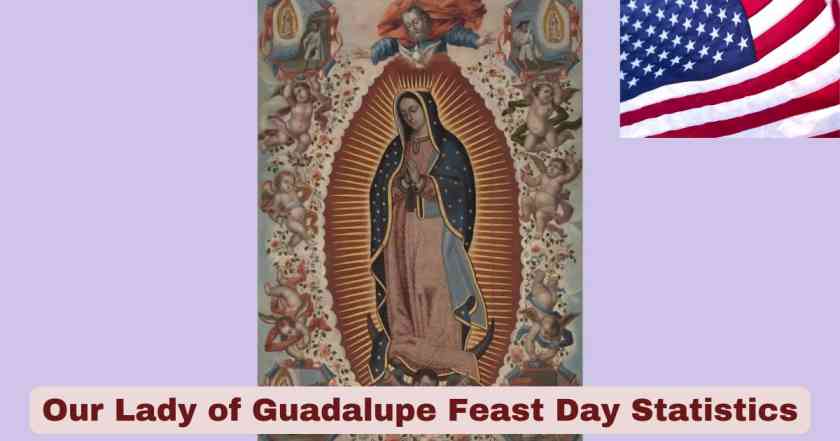
What is Our Lady of Guadalupe Feast Day
Our Lady of Guadalupe Feast Day, celebrated annually on December 12th, commemorates the miraculous apparitions of the Virgin Mary to an indigenous Mexican man named Juan Diego in 1531. According to Catholic tradition, the Virgin Mary appeared to Juan Diego four times between December 9 and December 12, 1531, on Tepeyac Hill near present-day Mexico City, speaking to him in his native Nahuatl language. During these encounters, she identified herself as the mother of the true God and requested that a church be built in her honor on that location. When the local bishop demanded proof of these visions, Mary instructed Juan Diego to gather roses from the barren hilltop despite it being winter, and when he opened his tilma (cloak) to present the flowers to the bishop, an image of the Virgin had been miraculously imprinted on the fabric. This sacred image, which shows no signs of deterioration nearly 500 years later, remains enshrined in the Basilica of Our Lady of Guadalupe in Mexico City and has become one of the most venerated religious artifacts in the Catholic world.
The feast day was formally established by Pope Benedict XIV in 1754, and in 1999, Pope John Paul II declared Our Lady of Guadalupe as the “Patroness of the Americas” and “Star of the New Evangelization,” recognizing her profound impact on the spread of Christianity throughout the Western Hemisphere. In 2025, the celebration marks the 494th anniversary of the apparitions and continues to hold immense religious and cultural significance for millions of Catholics, particularly those of Mexican and Latin American descent. The observance is celebrated with extraordinary devotion both in Mexico and throughout the United States, where the growing Hispanic population has made it one of the most widely observed Marian feast days. The day typically features special masses, processions with the Virgin’s image, traditional Aztec dancers in colorful costumes, mariachi music, the singing of “Las Mañanitas” (a traditional birthday song), and community gatherings that blend indigenous traditions with Catholic liturgy, creating a unique expression of faith that honors both religious devotion and cultural heritage.
Our Lady of Guadalupe Feast Day 2025 Key Facts and Statistics
| Fact Category | Statistics and Details |
|---|---|
| Date of Observance 2025 | December 12, 2025 (Friday) |
| Anniversary Year | 494th Anniversary of the 1531 apparitions |
| Original Apparition Dates | December 9-12, 1531 |
| Apparition Location | Tepeyac Hill, near Mexico City |
| Saint Juan Diego Age | 57 years old in 1531 |
| Number of Apparitions | 4 appearances to Juan Diego, 1 to uncle |
| Language Spoken | Nahuatl (indigenous Aztec language) |
| Tilma Material | Ayate cloth made from cactus fibers |
| Tilma Age | 493 years old (no deterioration) |
| Feast Day Established | 1754 by Pope Benedict XIV |
| Patroness Title | “Patroness of the Americas” (1999) |
| Juan Diego Canonization | 2002 by Pope John Paul II |
| Basilica Location | Mexico City, at foot of Tepeyac Hill |
| Annual Basilica Visitors | 20 million pilgrims worldwide |
| December Pilgrims | 12 million+ visitors (Dec 1-12) |
| US Observance Status | Not federal holiday, major religious observance |
| Most Visited Shrine Rank | #1 Marian shrine worldwide |
Data sources: Vatican Archives, Basilica of Our Lady of Guadalupe, Catholic News Agency, Mexico City Government, National Geographic, Hallow Catholic App
The 494th anniversary of Our Lady of Guadalupe’s apparitions in 2025 represents a continuing tradition of devotion that has grown exponentially since the miraculous events of 1531. The apparitions occurred during a turbulent period when Mexico’s indigenous population was reeling from the Spanish conquest and the devastating impact of diseases that had killed nearly half their people within a decade. The Virgin’s appearance to Juan Diego, a 57-year-old indigenous convert, speaking in his native Nahuatl language rather than Spanish, carried profound significance for the native population who saw themselves acknowledged and valued by heaven. The image that miraculously appeared on Juan Diego’s tilma (a simple cloak made from ayate, a rough cactus fiber cloth that typically deteriorates within 20 years) has defied all scientific explanation by remaining perfectly preserved for 493 years without any protective coating or conservation treatment until modern glass was added for crowd control.
The Basilica of Our Lady of Guadalupe receives approximately 20 million pilgrims annually, making it the most visited Marian shrine in the world, surpassing even famous sites like Lourdes in France and Fatima in Portugal. During the peak period from December 1 through December 12, the basilica welcomes over 12 million visitors, with hundreds of thousands arriving on foot after walking for days or even weeks from distant regions of Mexico. In 2022, a record 12.5 million pilgrims visited during this period, breaking all previous attendance records. Pope John Paul II elevated the religious significance of this devotion by canonizing Juan Diego in 2002, making him the first indigenous saint of the Americas, and by declaring Our Lady of Guadalupe the “Patroness of the Americas” in 1999, formally recognizing her as the spiritual mother of all peoples in the Western Hemisphere.
Our Lady of Guadalupe Feast Day 2025 Basilica Pilgrimage Statistics
| Pilgrimage Category | Annual Data | Peak Period Data |
|---|---|---|
| Total Annual Visitors | 20 million pilgrims | Year-round attendance |
| December Visitors (Dec 1-12) | 12+ million pilgrims | 2024 estimate |
| Peak Day Attendance | 6.1 million | December 11-12, 2009 record |
| Recent Record Year | 12.5 million | December 2022 |
| Basilica Capacity | 10,000+ people | Simultaneous attendance |
| Walking Pilgrims | Millions on foot | Many walk for days/weeks |
| International Visitors | 40% from outside Mexico | United States, Latin America |
| Overnight Visitors | Hundreds of thousands | Sleep in basilica atrium |
| Las Mañanitas Attendance | Hundreds of thousands | December 11 midnight serenade |
| Masses Celebrated Dec 12 | Hourly throughout day | Every hour including midnight |
| Medical Personnel Deployed | 200+ doctors and nurses | Emergency medical support |
| Security Personnel | 11,000+ officials | Police, firefighters, rescue workers |
| Food Service Provided | No-cost meals | For economically disadvantaged pilgrims |
| Basilica Rank Worldwide | #1 Marian shrine | More visitors than Vatican City annually |
Data sources: Mexico City Government Secretariat, Catholic News Agency, National Catholic Register, Basilica of Our Lady of Guadalupe, National Geographic
The annual pilgrimage to the Basilica of Our Lady of Guadalupe represents one of the largest religious gatherings in the world, with 20 million visitors making the journey each year to venerate the miraculous image of the Virgin. The basilica complex, located at the foot of Tepeyac Hill in Mexico City where the apparitions occurred, surpasses even Vatican City in annual visitor numbers, firmly establishing it as the most visited Catholic pilgrimage site on earth. The period from December 1 through December 12 sees the most concentrated influx, with over 12 million pilgrims arriving to celebrate the feast day, many traveling extraordinary distances on foot as acts of devotion and penance. The all-time single-day attendance record was set during the overnight period of December 11-12, 2009, when 6.1 million people gathered at the basilica, though more recent years have seen total December attendance reach 12.5 million in 2022.
The massive modern basilica, completed in 1976 and designed to accommodate the overwhelming number of visitors, can hold over 10,000 people simultaneously for Mass and features moving walkways that allow pilgrims to pass before the sacred tilma without causing congestion. The highlight of the celebration occurs on the night of December 11, when hundreds of thousands of faithful gather in the basilica and surrounding plazas to sing “Las Mañanitas,” a traditional Mexican birthday song, to the Virgin at midnight, followed by a special Mass. On December 12 itself, the basilica celebrates Mass every hour throughout the day to accommodate the massive crowds, including a special Rose Mass during which thousands of pilgrims hold up roses in offering to Our Lady. The Mexico City government deploys over 11,000 personnel including police officers, firefighters, paramedics, and rescue workers as part of “Operation Welcome Pilgrim” to ensure safety and provide assistance, while 200-plus medical professionals staff emergency stations throughout the area. Recognizing that many pilgrims are economically disadvantaged, organizers provide no-cost meals to those in need, and approximately 40 percent of visitors come from outside Mexico, including large contingents from the United States and throughout Latin America.
Our Lady of Guadalupe Feast Day 2025 US Celebration Statistics
| US Observance Category | Data | Regional Details |
|---|---|---|
| US Hispanic Catholic Population | 45 million+ | Growing demographic |
| Parishes Celebrating | Thousands nationwide | Major observance in Catholic churches |
| States with Major Celebrations | All 50 states | Concentrated in Southwest |
| Top Celebration Cities | Los Angeles, San Antonio, Chicago, Houston | Largest US events |
| Los Angeles Procession | 20,000+ participants | 94th annual in 2025 |
| LA Procession Start Year | 1931 | East Los Angeles tradition |
| LA Aztec Dance Groups | 37+ groups | Traditional indigenous dancers |
| Cathedral of LA Attendance | 25,000+ people | Two-day celebration |
| Chicago Shrine Visitors | Hundreds of thousands | Des Plaines, Illinois location |
| Houston Event Attendance | 25,000+ participants | Two-day festivities |
| San Antonio Celebrations | Market Square, San Fernando Cathedral | Historic venues |
| Special Masses | Hundreds across US | December 11-12 |
| Las Mañanitas Celebrations | Widespread observance | Midnight serenades common |
| Procession Miles | 1-3 miles typical | Walking pilgrimages in cities |
| Matachines Dancers | Dozens of groups | Traditional ceremonial dancers |
Data sources: Archdiocese of Los Angeles, Cathedral of Our Lady of the Angels, Catholic Extension Society, Remitly Cultural Reports, various US Catholic dioceses
The celebration of Our Lady of Guadalupe Feast Day has become one of the most significant religious observances within the United States Catholic Church, driven by the nation’s 45 million-plus Hispanic Catholics who maintain strong devotion to this patroness. While not a federal holiday, the feast day is observed with extraordinary enthusiasm across all 50 states, with particularly elaborate celebrations in the Southwest where Mexican-American communities are most concentrated. Los Angeles hosts one of the oldest and largest Guadalupe celebrations in the United States, with the 94th annual Procession and Mass scheduled for 2025. This historic event, which began in 1931 in East Los Angeles, now attracts over 20,000 participants who process through the streets carrying images of the Virgin, accompanied by 37-plus Aztec dance groups performing in traditional regalia and over 35 andas (decorated handmade carts with framed images or statues).
The Cathedral of Our Lady of the Angels in Los Angeles hosts a separate two-day celebration beginning December 11, drawing 25,000-plus attendees for indigenous dancing, mariachi performances, veneration of a relic of Juan Diego’s tilma (the only relic outside Mexico City), and a midnight Mass celebrated by the Archbishop. In the Midwest, the Shrine of Our Lady of Guadalupe in Des Plaines, Illinois (near Chicago), receives hundreds of thousands of pilgrims annually and stands as the most visited Guadalupe shrine in the United States. Houston, Texas witnesses 25,000-plus participants in its two-day celebration featuring continuous Masses from the vigil through the feast day, while San Antonio’s historic Market Square and San Fernando Cathedral serve as focal points for deeply moving serenades and liturgies that reflect the city’s rich Mexican heritage. Throughout the United States, hundreds of parishes celebrate special Masses on December 11 and 12, typically featuring “Las Mañanitas” sung at dawn or midnight, processions covering 1 to 3 miles through neighborhoods, performances by matachines dancers (ceremonial dancers with indigenous and Spanish influences), and community gatherings featuring traditional Mexican food and fellowship that blend religious devotion with cultural pride.
Our Lady of Guadalupe Feast Day 2025 Historical Apparition Timeline Statistics
| Apparition Event | Date 1531 | Details |
|---|---|---|
| First Apparition | December 9 (Saturday) | Virgin appears to Juan Diego on Tepeyac Hill |
| Second Apparition | December 9 (same day) | Virgin renews request for church to be built |
| Juan Diego Meets Bishop | December 9 | Bishop Zumárraga demands proof |
| Third Apparition | December 10 (Sunday) | Virgin promises sign for bishop |
| Uncle Juan Bernardino Ill | December 11 | Near death, Juan Diego seeks priest |
| Fourth Apparition | December 12 (Monday) | Virgin provides miraculous roses and image |
| Famous Quote Spoken | December 12 | “Am I not here, I who am your mother?” |
| Tilma Opened Before Bishop | December 12 | Image appears miraculously on cloth |
| Fifth Apparition | December 12 | Virgin appears to uncle, cures him |
| First Chapel Built | 1531-1532 | Simple structure on Tepeyac Hill |
| Juan Diego’s Vigil Years | 1531-1548 | 17 years guarding first shrine |
| Juan Diego Death | May 30, 1548 | Age 74 |
| Old Basilica Construction | 1695-1709 | 14 years to complete |
| New Basilica Begun | 1974 | Modern structure for growing crowds |
| New Basilica Opened | 1976 | Designed for 10,000+ capacity |
| Juan Diego Beatification | 1990 | By Pope John Paul II |
| Juan Diego Canonization | July 31, 2002 | First indigenous American saint |
Data sources: Vatican Archives, Nican Mopohua (primary document), Basilica of Our Lady of Guadalupe historical records, Catholic Encyclopedia
The four primary apparitions of Our Lady of Guadalupe to Juan Diego occurred over a span of just four days in December 1531, with the climactic miracle taking place on December 12. On Saturday, December 9, Juan Diego, a recent Catholic convert traveling to Mass, heard celestial music and saw a beautiful woman surrounded by light on Tepeyac Hill. Speaking in his native Nahuatl language, she identified herself as the Virgin Mary and requested that a church be built on that site. Juan Diego immediately went to Bishop Juan de Zumárraga to relay the message, but the bishop, skeptical of the claim, dismissed him and demanded proof. The Virgin appeared to Juan Diego a second time that same day, reassuring him and promising to provide the requested sign. On December 10 (the third apparition), she again encouraged Juan Diego after the bishop remained unconvinced.
On December 11, Juan Diego’s uncle, Juan Bernardino, fell gravely ill, and Juan Diego rushed to find a priest to administer last rites. Taking a different route to avoid the Virgin and his unfulfilled mission, he was intercepted by her on December 12 in the fourth apparition. In the most famous moment of the encounters, she asked “¿No estoy yo aquí que soy tu madre?” (“Am I not here, I who am your mother?”), words now inscribed above the basilica’s main entrance. She instructed him to gather roses from the barren hilltop, and when he opened his tilma before the bishop to present the flowers, the miraculous image of the Virgin had been imprinted on the cloth. Simultaneously, in what is considered the fifth apparition, the Virgin appeared to Juan Diego’s uncle, curing him instantly and telling him she wished to be known as “Santa María de Guadalupe.” A first chapel was quickly erected on Tepeyac Hill in 1531-1532, and Juan Diego spent the remaining 17 years of his life (until his death in 1548 at age 74) as guardian of the shrine. The Old Basilica took 14 years to construct (1695-1709), and when it became structurally unstable from ground subsidence, the modern New Basilica was built between 1974 and 1976 with capacity for over 10,000 worshippers. Juan Diego was beatified in 1990 and canonized on July 31, 2002, becoming the first indigenous saint of the Americas.
Our Lady of Guadalupe Feast Day 2025 Cultural and Religious Impact Statistics
| Impact Category | Historical Data | Contemporary Significance |
|---|---|---|
| Indigenous Conversions | 9 million in 7 years | Post-apparition evangelization |
| Pre-Apparition Converts | Fewer than 100,000 | Resistance to Spanish missionaries |
| Conversion Rate | 1.3 million annually | 1531-1538 period |
| Mexican Independence Symbol | 1810 onwards | Father Hidalgo’s banner |
| Patroness Designation | 1945 (Mexico), 1999 (Americas) | Official Church recognition |
| Papal Visits to Basilica | 5 popes | John Paul II (5 visits), Francis, others |
| Tilma Scientific Studies | Numerous investigations | Image properties unexplained |
| Tilma Preservation | 493 years | No deterioration without treatment |
| Bomb Attack on Image | 1921 | Dynamite caused no damage to tilma |
| Churches Named for Virgin | Thousands worldwide | 132 in Mexico City alone |
| US Churches Named | Hundreds | Across United States |
| Annual Feast Day Attendees | 30+ million globally | Mexico, US, Latin America combined |
| Vatican Recognition | Multiple papal decrees | Ongoing spiritual importance |
| Patronage Areas | Americas, unborn children, indigenous peoples | Multiple patronages |
| Cultural Symbol Status | National icon of Mexico | Transcends religion |
Data sources: Vatican Historical Archives, National Catholic Register, Basilica of Our Lady of Guadalupe, Catholic Encyclopedia, Historical Church Records
The apparitions of Our Lady of Guadalupe triggered the most successful evangelization effort in Catholic Church history, with approximately 9 million indigenous people converting to Christianity in the seven years following the 1531 apparitions. This stands in stark contrast to the fewer than 100,000 converts achieved in the previous decade of Spanish missionary efforts, which had been met with significant indigenous resistance due to the often harsh treatment by conquistadors. The conversion rate of roughly 1.3 million people annually between 1531 and 1538 represented an unprecedented spiritual transformation, attributed by believers to the Virgin’s appearance as one of their own people, speaking their language, and displaying indigenous symbolism in her image that natives could recognize and understand.
Beyond religious significance, Our Lady of Guadalupe became deeply embedded in Mexican national identity and political movements. During the Mexican War of Independence beginning in 1810, Father Miguel Hidalgo y Costilla carried a banner bearing her image as he led the revolt against Spanish colonial rule, making her a symbol of liberation and justice for the oppressed. The Virgin was officially declared Patroness of Mexico in 1945 and Patroness of the Americas in 1999 by Pope John Paul II, who visited the basilica five times during his papacy, more than any other papal visits to a single Marian shrine. The miraculous tilma itself has been subject to numerous scientific investigations that have failed to explain how the image was created or why the fragile cactus-fiber cloth has survived 493 years without deterioration despite lacking any protective coating until modern times. In 1921, an anti-Catholic activist placed dynamite concealed in flowers at the altar to destroy the image, but the explosion caused extensive damage to the marble and bronze surroundings while leaving the tilma and its protective glass completely unharmed, further cementing its status as miraculous. Today, over 30 million people globally observe the feast day annually across Mexico, the United States, and Latin America, and thousands of churches worldwide bear her name, including 132 in Mexico City alone and hundreds throughout the United States. Her image has become a powerful symbol associated with motherhood, feminism, social justice, indigenous rights, and protection of the unborn, transcending purely religious contexts to represent hope and dignity for marginalized peoples everywhere.
Our Lady of Guadalupe Feast Day 2025 Tilma Image Scientific Analysis Statistics
| Scientific Analysis Category | Findings | Unexplained Phenomena |
|---|---|---|
| Tilma Material | Ayate cactus fiber | Typically lasts 20 years maximum |
| Tilma Age | 493 years old | No deterioration or fading |
| Image Creation Method | Unknown | No brush strokes detected |
| Protective Treatment | None until modern era | No varnish or coating applied historically |
| Glass Protection Added | 20th century | For crowd control, not preservation |
| Stars on Mantle | 46 stars visible | Match 1531 winter solstice sky |
| Eyes Scientific Study | Multiple ophthalmology studies | Reflect human figures, impossible in painting |
| Image Temperature | 98.6°F (36.7°C) | Human body temperature |
| Fabric Preservation Environment | Humid, salty air for centuries | Conditions should destroy fabric |
| Image Pigment Analysis | No known pigments | Source of colors unexplained |
| UV and Infrared Studies | No preparatory sketches | Image appeared instantaneously |
| Restoration Attempts | Never needed | No fading or cracking |
| 1791 Acid Spill | Nitric acid splashed on tilma | Only minor staining, image unharmed |
| 1921 Bomb Attack | 20 sticks of dynamite | Tilma undamaged, marble destroyed |
| Ophthalmology Findings | 13 people reflected in eyes | Includes Juan Diego and bishop |
| Image Size Proportions | Golden ratio mathematics | Precise proportions unexplained |
Data sources: Scientific studies by Dr. Philip Callahan, Dr. Jose Aste Tonsmann, Dr. Jorge Escalante, Basilica of Our Lady of Guadalupe research archives
The sacred tilma bearing the image of Our Lady of Guadalupe has been subjected to extensive scientific analysis over the centuries, yielding findings that defy conventional explanation. The cloth itself is made from ayate, a rough cactus fiber material used by indigenous people for basic cloaks, which typically deteriorates and disintegrates within 20 years under normal conditions. Yet Juan Diego’s tilma has survived 493 years without showing any signs of decay, fading, or deterioration despite being exposed for centuries to humid, salty air, candle smoke, and the touch of countless pilgrims before protective glass was installed in the 20th century. Scientific studies using infrared photography and other advanced techniques have detected no brush strokes, no preparatory sketches, and no known pigments in the image, leaving the creation method completely unexplained. The image appears to have been formed instantaneously rather than painted in layers as would be expected in any human artistic work.
Detailed ophthalmological studies of the Virgin’s eyes, conducted using digital technology, reveal what appear to be reflections of 13 human figures, including what researchers identify as Juan Diego opening his tilma, the bishop, and others present at the miraculous revelation. Such reflections following the Purkinje-Sanson effect (where the human eye reflects images on its curved surface) would be impossible to paint with 1531 technology, yet they appear in both eyes with proper perspective and positioning. Remarkably, when researchers have measured the temperature of the tilma’s surface, it registers at approximately 98.6 degrees Fahrenheit (36.7°C), human body temperature, despite being an inanimate cloth. The 46 stars visible on the Virgin’s mantle precisely match the configuration of the winter solstice sky over Mexico in 1531, a level of astronomical accuracy that would have required sophisticated knowledge unlikely for the period. The tilma has survived two potentially catastrophic incidents: in 1791, when nitric acid was accidentally spilled on it (causing only minor staining while leaving the image intact), and in 1921, when an anti-Catholic activist detonated 20 sticks of dynamite hidden in flowers at the altar (destroying marble and bronze altar pieces but leaving the tilma completely undamaged). The image’s proportions conform to the golden ratio with mathematical precision, and attempts to explain these phenomena through natural or artistic means have consistently failed, leading many scientists who have studied the tilma to conclude that its properties remain scientifically inexplicable.
Our Lady of Guadalupe Feast Day 2025 Traditional Celebration Elements Statistics
| Celebration Element | Description | Cultural Significance |
|---|---|---|
| Las Mañanitas | Traditional birthday serenade | Sung at midnight or dawn |
| Mariachi Performances | Traditional Mexican music | Multiple bands at major events |
| Aztec Dancers (Matachines) | Indigenous ceremonial dance | Dozens of groups participate |
| Traditional Costumes | Children dressed as Juan Diego | Blessing of children at Mass |
| Rose Offerings | Thousands of roses presented | Symbolizes miraculous sign |
| Processions | Walking pilgrimages with image | 1-3 miles typical distance |
| Andas (Decorated Carts) | Handmade wheeled altars | Families create elaborate displays |
| Vigil Masses | December 11 evening | Overnight prayer services |
| Feast Day Masses | December 12 hourly celebrations | Continuous liturgies |
| Food Celebrations | Traditional Mexican dishes | Tamales, pozole, pan dulce |
| Home Altars | Domestic shrines decorated | Fresh flowers and candles |
| Pilgrimage Walking | Days or weeks of travel on foot | Acts of devotion and penance |
| Equestrian Groups | Horseback processions | Mexican cultural tradition |
| Prayer Vigils | All-night devotions | Rosaries and Guadalupe prayers |
| Community Festivals | Multi-day celebrations | Music, food, cultural activities |
| Relic Veneration | Viewing tilma fragments | Special ceremonies where available |
Data sources: Archdiocese of Los Angeles, Catholic Extension Society, Basilica of Our Lady of Guadalupe, various US Catholic dioceses, cultural anthropology studies
The celebration of Our Lady of Guadalupe Feast Day incorporates a rich tapestry of religious and cultural traditions that blend Catholic liturgy with indigenous Mexican customs. The centerpiece of many celebrations is “Las Mañanitas,” the traditional Mexican birthday song, performed as a serenade to the Virgin either at midnight on December 11 or at dawn on December 12, typically accompanied by mariachi bands whose jubilant music fills churches and public squares. Aztec dancers, also known as matachines, perform ceremonial dances wearing elaborate feathered headdresses, shells, and colorful regalia, connecting contemporary celebrations to pre-Columbian spiritual traditions. Dozens of dance groups participate in major celebrations, with some performing continuously for hours as acts of devotion and cultural preservation.
Children dressed in traditional costumes, many portraying Juan Diego in simple tunics and sandals carrying rose bouquets, are brought to church for special blessings during feast day Masses. The presentation of roses, particularly red roses symbolizing the miraculous flowers that appeared on Tepeyac Hill in winter, involves thousands of worshippers holding blooms aloft during special Rose Masses. Processions are fundamental to the celebration, with participants walking 1 to 3 miles through city streets carrying large images or statues of the Virgin on elaborate andas (decorated handmade wheeled platforms), often accompanied by equestrian groups on horseback in traditional Mexican charro attire. Many devoted pilgrims undertake multi-day or multi-week walking journeys to reach major shrines, some traveling on their knees for the final distance as profound acts of devotion and penance. Vigil Masses begin on the evening of December 11, with many celebrations continuing through midnight and into the early morning hours, while December 12 itself features hourly Masses at major churches to accommodate large crowds. Communities gather for elaborate meals featuring traditional Mexican foods including tamales, pozole, menudo, and pan dulce (sweet bread), while families create beautiful home altars adorned with fresh flowers, candles, and images of the Virgin, transforming domestic spaces into sacred sites of devotion that remain displayed throughout the Christmas season.
Our Lady of Guadalupe Feast Day 2025 Economic and Tourism Impact Statistics
| Economic Impact Category | Annual Data | Economic Significance |
|---|---|---|
| Mexico Tourism Revenue | $500+ million | December Guadalupe period |
| Basilica Area Vendors | Thousands | Religious articles, food, flowers |
| Hotel Occupancy Rates | 95%+ in Mexico City | December 10-12 peak |
| Remittances to Mexico | Increased in December | Families send money for celebrations |
| Floral Industry Sales | Millions of roses sold | Major boost for flower vendors |
| Religious Articles Sales | $50+ million estimated | Statues, medallions, candles, images |
| Food Vendors Revenue | Millions in sales | Basilica area and celebrations |
| Transportation Revenue | Significant increase | Buses, taxis serving pilgrims |
| US Catholic Church Revenue | Donations increase | Special collections at parishes |
| Mexican Airlines | Peak travel period | Full flights December 10-12 |
| Hotel Room Rates | Premium pricing | 50-100% increases common |
| Artisan Product Sales | Major annual revenue | Indigenous crafts and textiles |
| Mariachi Hiring | Thousands of bookings | Musicians in high demand |
| Catering Services | Peak season | Parish and community events |
| Pilgrim Supplies | Strong sales | Walking sticks, water bottles, supplies |
| Charity Contributions | Millions in donations | Supporting economically disadvantaged |
Data sources: Mexico Tourism Board, Catholic Extension Society, Mexico City Commerce Department, religious tourism economic studies
The Feast of Our Lady of Guadalupe generates substantial economic activity, particularly in Mexico City and surrounding regions, with over $500 million in tourism revenue during the December celebration period. The area surrounding the Basilica of Our Lady of Guadalupe transforms into a massive commercial zone with thousands of vendors selling religious articles, flowers, food, and pilgrimage supplies to the 12-plus million visitors who arrive during the first two weeks of December. Hotel occupancy rates in Mexico City reach 95 percent or higher during December 10-12, with many hotels fully booked months in advance and charging premium rates that can be 50 to 100 percent higher than normal. The floral industry experiences one of its busiest periods of the year, with millions of roses sold as offerings to the Virgin, providing crucial income to flower growers and vendors.
Religious articles sales, including statues, medallions, prayer cards, candles, rosaries, and framed images of Our Lady of Guadalupe, generate an estimated $50-plus million in revenue annually during this period, with artisans and manufacturers producing Guadalupe-themed items year-round in preparation for December demand. Food vendors earn millions serving traditional Mexican dishes to hungry pilgrims, while transportation services including buses, taxis, and ride-sharing see significant increased revenue from the movement of massive crowds. Mexican airlines experience one of their peak travel periods, with flights to Mexico City fully booked as international pilgrims and Mexican expatriates return home for the celebration. In the United States, Catholic parishes with significant Hispanic populations see increased donations during special feast day Masses and collections. Remittances from the United States to Mexico show notable increases in early December as Mexican immigrants send money to family members to help cover expenses for food, flowers, and travel to the basilica. Mariachi bands are in extremely high demand, with thousands of bookings for performances at churches, private celebrations, and public events, commanding premium fees during this period. The economic impact extends to artisan communities producing indigenous crafts, textiles, and traditional items associated with the celebration, with many families depending on Guadalupe-season sales for a substantial portion of their annual income.
Disclaimer: This research report is compiled from publicly available sources. While reasonable efforts have been made to ensure accuracy, no representation or warranty, express or implied, is given as to the completeness or reliability of the information. We accept no liability for any errors, omissions, losses, or damages of any kind arising from the use of this report.