
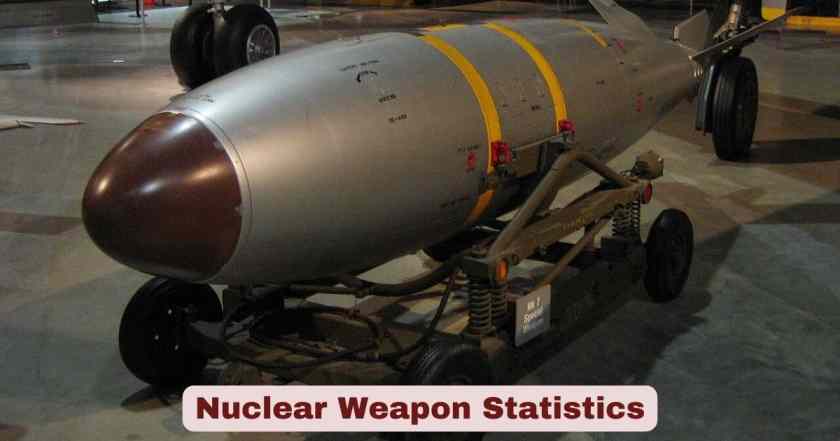
Global Nuclear Weapons in 2026
The world has entered an unprecedented and dangerous era as the last remaining nuclear arms control agreement between the United States and Russia expired on Thursday, February 5, 2026. For the first time in more than five decades, the world’s two largest nuclear superpowers are no longer bound by any treaty limiting their arsenals. According to Fox News reporting on the New START expiration, more than 12,200 nuclear weapons spread across nine nuclear-armed nations now exist without constraints, with the United States and Russia alone accounting for roughly 10,636 of those weapons. The lapse of New START removed limits on how many nuclear weapons Washington and Moscow could deploy on missiles, bombers, and submarines, and ended the requirement that both sides notify one another whenever nuclear weapons were moved. This represents a dramatic reduction from the Cold War peak of 70,300 active weapons in 1986, yet the current trajectory suggests arsenals may begin expanding again after decades of gradual reductions.
The landscape of nuclear weapons in 2026 reflects both the legacy of arms control and its current collapse. Russia and the United States together control approximately 87 percent of the world’s total nuclear arsenal, maintaining their status as the dominant nuclear superpowers without any bilateral limits for the first time since the early 1970s. Meanwhile, China is rapidly expanding its nuclear capabilities at a pace of approximately 100 new warheads per year since 2023, with projections suggesting it could possess 1,000 deliverable warheads by 2030. Other nuclear-armed states including France, the United Kingdom, India, Pakistan, Israel, and North Korea continue modernizing their arsenals with increasingly sophisticated delivery systems and command-and-control architectures. President Trump has stated he wants nuclear experts to work on a “new, improved and modernized Treaty” while arguing that China should be included in any new agreement, pointing to Beijing’s growing nuclear arsenal as the world’s third largest after the US and Russia. The absence of meaningful arms control frameworks, coupled with growing geopolitical tensions and emerging technologies like artificial intelligence and hypersonic weapons, makes 2026 a defining year for nuclear proliferation and global security.
Interesting Global Nuclear Weapon Facts 2026
| Fact Category | Key Data Point | Details |
|---|---|---|
| Total Global Warheads | 12,200+ warheads | Total nuclear weapons inventory worldwide as reported by Fox News following New START expiration |
| US-Russia Combined Arsenal | 10,636 warheads | Approximately 10,636 weapons held by United States and Russia alone |
| Military Stockpile | 9,614 warheads | Warheads assigned to operational military forces for missiles, aircraft, ships, and submarines |
| Cold War Peak | 70,300 warheads (1986) | Highest number of nuclear weapons ever existed globally |
| US-Russia Dominance | 87-90% | Combined percentage of world’s nuclear weapons held by Russia and United States |
| New START Expiration | Thursday, February 5, 2026 | Last bilateral US-Russian nuclear arms control treaty expired, removing all arsenal limits |
| Deployed Strategic Warheads | 3,904 warheads | Active nuclear warheads ready for immediate use as of 2025 |
| China’s Rapid Growth | 600+ warheads | China’s current arsenal with projection of 1,000 by 2030; growing by 100 per year since 2023 |
| Nuclear-Armed Nations | 9 countries | Total number of countries possessing nuclear weapons |
| Hiroshima Bomb Yield | 15 kilotons | Explosive force of Little Boy, the first nuclear weapon used in warfare |
| Modern Warhead Yield | Up to 300 kilotons | Some tactical nuclear weapons have yields 20 times greater than Hiroshima bomb |
| US European Deployment | 100 warheads | Number of B61 nuclear bombs deployed at 6 bases in 5 European countries |
| Russian Tactical Warheads | 1,912 warheads | Estimated number of Russia’s non-strategic nuclear weapons |
| North Korea Estimate | 50 assembled warheads | Current estimate of North Korea’s operational nuclear arsenal |
| Israel’s Undeclared Arsenal | 90 warheads | Estimated number of Israeli nuclear weapons (officially unconfirmed) |
| NPT Member States | 191 countries | Nations that have joined the Nuclear Non-Proliferation Treaty |
| Years Without Limits | First time in 50+ years | First time since early 1970s that US and Russia have no binding nuclear limits |
Data sources: Fox News Politics (February 2026), Federation of American Scientists, International Campaign to Abolish Nuclear Weapons (ICAN), Arms Control Association, Global Security Review, NBC News, 2025-2026
Analysis of Nuclear Weapon Facts 2026
The data reveals a sobering reality that Fox News reported following the New START expiration: more than 12,200 nuclear weapons spread across nine nuclear-armed nations now exist without any constraints for the first time in over 50 years. The United States and Russia alone account for roughly 10,636 of those weapons—representing approximately 87 percent of the global arsenal—and the lapse of the treaty removed limits on how many nuclear weapons Washington and Moscow could deploy on missiles, bombers, and submarines. It also ended the critical requirement that both sides notify one another whenever nuclear weapons were moved, eliminating transparency that had existed since the 1970s. The 9,614 warheads in military stockpiles indicate that roughly 78 percent of all nuclear weapons are actively assigned to operational forces, with 3,904 in deployed status ready for immediate use, representing an immediate threat capability that could devastate civilization within hours.
The expiration of New START on Thursday, February 5, 2026, represents what United Nations Secretary-General António Guterres called a “grave moment” for international peace and security. Without treaty constraints, both Russia and the United States could expand their arsenals significantly, potentially triggering responses from other nuclear-armed states. President Donald Trump characterized the treaty as a “badly negotiated deal” and stated that rather than extend it, “we should have our Nuclear Experts work on a new, improved and modernized Treaty.” Trump has previously argued that China should be included in any new agreement with Russia, pointing to Beijing’s growing nuclear arsenal as the world’s third largest. China’s arsenal currently stands at 600 warheads but is growing faster than any other country’s, by about 100 new warheads per year since 2023, with the Pentagon’s 2025 annual report finding that Beijing was on track to have more than 1,000 warheads by 2030 as part of what it called China’s “massive nuclear expansion.” The deployment of 100 US nuclear warheads across five European countries and Russia’s placement of tactical nuclear weapons in Belarus demonstrate how nuclear weapons continue to play central roles in regional security strategies and alliance commitments, even as the framework controlling the world’s largest arsenals has completely collapsed.
Nuclear Weapons by Country 2026
| Country | Total Inventory | Deployed Strategic | Deployed Non-Strategic | Reserve/Non-Deployed | Retired Awaiting Dismantlement | Year of First Test |
|---|---|---|---|---|---|---|
| Russia | 5,580 | 1,710 | Included in total | 2,670 | 1,200 | 1949 |
| United States | 5,044 | 1,670 | 100 (Europe) | 1,938 | 1,336 | 1945 |
| China | 600 | 310 | N/A | 290 | N/A | 1964 |
| France | 290 | 280 | N/A | 10 | N/A | 1960 |
| United Kingdom | 225 | 120 | N/A | 105 | N/A | 1952 |
| India | 180 | N/A | N/A | 180 | N/A | 1974 |
| Pakistan | 170 | N/A | N/A | 170 | N/A | 1998 |
| Israel | 90 | N/A | N/A | 90 | N/A | ~1967 (estimated) |
| North Korea | 50 | N/A | N/A | 50 | N/A | 2006 |
| TOTAL | 12,321 | ~3,904 | Variable | ~5,503 | ~2,536 | — |
Data sources: Federation of American Scientists Status of World Nuclear Forces 2026, Arms Control Association, SIPRI Yearbook 2025, ICAN Nuclear Arsenal Data 2025-2026
Country-Wise Nuclear Arsenal Analysis 2026
The distribution of nuclear weapons across nine countries in 2026 reveals stark disparities in arsenal sizes and strategic capabilities. Russia maintains the largest nuclear arsenal with 5,580 total warheads, though this includes 1,200 retired weapons awaiting dismantlement. Of Russia’s operational stockpile, approximately 1,710 warheads are deployed on strategic delivery systems including intercontinental ballistic missiles (ICBMs), submarine-launched ballistic missiles (SLBMs), and heavy bombers. Russia also possesses an estimated 1,912 tactical nuclear warheads, some of which have been deployed to Belarus, marking the first placement of Russian nuclear weapons outside Russia since the collapse of the Soviet Union. The United States follows closely with 5,044 total warheads, maintaining 1,670 deployed strategic warheads in compliance with New START limits until the treaty’s expiration. Additionally, 100 US B61 nuclear gravity bombs are forward-deployed at NATO bases in Belgium, Germany, Italy, the Netherlands, and Turkey, representing America’s extended deterrence commitments to European allies.
China’s nuclear modernization represents the most significant shift in the global nuclear balance. With approximately 600 warheads as of 2026 and on track to reach 1,000 by 2030, China is rapidly expanding its nuclear capabilities through construction of new ICBM silos, expansion of its ballistic missile submarine fleet, and development of advanced delivery systems. France maintains a streamlined arsenal of 290 warheads with 280 operationally deployed on submarine-launched ballistic missiles and air-launched cruise missiles. The United Kingdom possesses 225 warheads with 120 operationally available, all sea-based and carried by US-purchased Trident missiles. Both India and Pakistan continue expanding their arsenals, with 180 and 170 warheads respectively, driven by regional security dynamics and ongoing tensions. Israel maintains an undeclared but widely acknowledged arsenal of approximately 90 warheads, adhering to its policy of nuclear ambiguity. North Korea has assembled an estimated 50 warheads with sufficient fissile material for potentially 90 weapons, alongside an active ICBM development program including the Hwasong-20 capable of reaching the continental United States.
Nuclear Warhead Deployment Status 2026
| Deployment Category | Number of Warheads | Percentage of Total | Primary Countries |
|---|---|---|---|
| Deployed Strategic Warheads | ~3,090 | 25.1% | Russia (1,710), United States (1,670), China (310), France (280), UK (120) |
| Deployed Non-Strategic (Tactical) | ~814 | 6.6% | Russia (~1,912 total tactical), US (100 in Europe) |
| Reserve/Non-Deployed | ~5,503 | 44.7% | Russia (2,670), US (1,938), China (290), others |
| Retired Awaiting Dismantlement | ~2,536 | 20.6% | Russia (1,200), US (1,336) |
| Military Stockpile (Total Usable) | ~9,614 | 78.0% | All nuclear-armed states |
| Total Global Inventory | 12,321 | 100% | All nine nuclear-armed nations |
Data sources: Federation of American Scientists 2026, Arms Control Association, ICAN 2025, Defense Department Assessments 2024-2025
Deployment Status Breakdown 2026
The deployment status of nuclear warheads in 2026 provides crucial insights into the immediate readiness and strategic posture of nuclear-armed states. Deployed strategic warheads, numbering approximately 3,090, represent weapons mounted on intercontinental ballistic missiles or stationed at heavy bomber bases ready for immediate use. These weapons form the backbone of nuclear deterrence, with the United States and Russia each maintaining approximately 1,670-1,710 deployed strategic warheads in accordance with New START limits, though this treaty expires on February 5, 2026. China has deployed 310 strategic warheads on 206 strategic launchers, while France maintains 280 deployed warheads across submarine-launched ballistic missiles and air-launched cruise missiles, and the United Kingdom keeps 120 warheads operationally available on its Trident submarine fleet.
Non-strategic or tactical nuclear warheads constitute a significant portion of operational arsenals, particularly for Russia, which maintains approximately 1,912 tactical warheads designed for shorter-range delivery systems. The United States deploys 100 B61 tactical nuclear bombs at six bases across five European NATO countries, providing extended deterrence guarantees. These tactical weapons, despite being labeled “low-yield,” can have explosive yields up to 300 kilotons—20 times greater than the bomb dropped on Hiroshima. The reserve/non-deployed category includes approximately 5,503 warheads kept in storage facilities but not mounted on delivery systems; these could potentially be made operational within weeks or months if needed. The 2,536 retired warheads awaiting dismantlement represent weapons removed from military service but still physically intact, primarily held by Russia (1,200) and the United States (1,336). The military stockpile of 9,614 usable warheads—representing 78 percent of total inventory—is notably increasing after decades of decline, signaling a concerning reversal in disarmament trends as all nuclear powers pursue modernization programs with some actively expanding their arsenals.
Nuclear Weapons Treaty Status 2026
| Treaty/Agreement | Year Established | Current Status (2026) | Key Provisions | Signatory States |
|---|---|---|---|---|
| Nuclear Non-Proliferation Treaty (NPT) | 1968 | Active | Recognizes 5 nuclear weapon states; prohibits spread to others; promotes disarmament | 191 states |
| New Strategic Arms Reduction Treaty (New START) | 2010 | Expired Thursday, Feb 5, 2026 | Limited US and Russia to 1,550 deployed strategic warheads each; mutual notifications of movements | US and Russia |
| Comprehensive Nuclear Test Ban Treaty (CTBT) | 1996 | Not in force | Bans all nuclear explosions; needs 8 more ratifications including US | 187 signatories |
| Treaty on Prohibition of Nuclear Weapons (TPNW) | 2017 | Active since 2021 | Comprehensive ban on nuclear weapons | 70 states (no nuclear powers) |
| Intermediate-Range Nuclear Forces Treaty (INF) | 1987 | Terminated 2019 | Banned ground-launched missiles 500-5,500 km range | Defunct |
Data sources: Arms Control Association, United Nations Office for Disarmament Affairs, Federation of American Scientists, Global Security Review 2025-2026
Treaty Framework Analysis 2026
The international nuclear arms control architecture in 2026 stands at its weakest point in over half a century, with the expiration of New START on Thursday, February 5, 2026, marking the complete collapse of bilateral US-Russian nuclear limitations. As Fox News reported, for the first time in decades, the world’s two largest nuclear superpowers are no longer bound by any treaty limiting their arsenals, with the lapse removing limits on how many nuclear weapons Washington and Moscow could deploy on missiles, bombers, and submarines. The scale of what’s now unconstrained is vast—more than 12,200 nuclear weapons spread across nine nuclear-armed nations, with the United States and Russia alone accounting for roughly 10,636 of those weapons. The Nuclear Non-Proliferation Treaty (NPT), established in 1968 with 191 member states, remains the cornerstone of global nonproliferation efforts, designating the United States, Russia, China, France, and the United Kingdom as recognized nuclear weapon states while prohibiting other nations from acquiring such weapons. However, the NPT’s effectiveness is increasingly questioned as India, Pakistan, and Israel have developed arsenals outside the treaty framework, and North Korea withdrew in 2003 before conducting its first test in 2006. The NPT Review Conference scheduled for April 2026 in New York faces unprecedented challenges amid eroding compliance, lack of disarmament progress by nuclear weapon states, and growing proliferation risks from countries like Iran, South Korea, and Saudi Arabia contemplating nuclear hedging or weaponization.
The expiration of New START eliminates the last remaining constraints on US and Russian strategic arsenals, which previously capped each side at 1,550 deployed strategic warheads and 700 deployed delivery systems, along with the requirement that both sides notify one another whenever nuclear weapons were moved. Russia suspended participation in treaty inspections and data sharing in February 2023 citing the Ukraine conflict, though both nations committed to voluntarily adhering to limits until the treaty’s natural expiration on Thursday. Without New START’s verification regime, transparency into nuclear arsenals has effectively ended, with the United States declining to declassify stockpile data since 2020 and the United Kingdom no longer disclosing operational figures since 2021. President Trump stated on Truth Social that rather than extend New START—which he called “a badly negotiated deal by the United States that, aside from everything else, is being grossly violated”—”we should have our Nuclear Experts work on a new, improved and modernized Treaty that can last long into the future.” He has previously argued that China should be included in any new agreement with Russia, pointing to Beijing’s growing nuclear arsenal as the world’s third largest after the US and Russia. However, in response, Beijing has said it is “neither fair nor reasonable” to ask the country to join nuclear disarmament negotiations when its nuclear arsenal of 600 warheads is dwarfed by the US and Russia’s combined 10,636 weapons. The Comprehensive Nuclear Test Ban Treaty (CTBT), signed by 187 nations but requiring ratification by 44 specific states to enter force, remains unimplemented as eight countries including the United States, China, India, Pakistan, Israel, Iran, Egypt, and North Korea have not ratified it. The Treaty on the Prohibition of Nuclear Weapons (TPNW) entered force in 2021 with 70 states parties, but none of the nine nuclear-armed states have signed it, and 32 NATO allies and partners explicitly endorse nuclear weapons use through nuclear sharing arrangements or extended deterrence commitments, fundamentally limiting the treaty’s practical impact on global arsenals.
Nuclear Modernization Programs 2026
| Country | Modernization Budget | Key Programs | Completion Timeline |
|---|---|---|---|
| United States | $1.5-1.7 trillion (30 years) | LGM-35A Sentinel ICBM, Columbia-class SSBN, B-21 Raider bomber, W80-4 warhead | 2030-2040s |
| Russia | Classified | RS-28 Sarmat ICBM, Avangard hypersonic, Borei-class SSBN, Burevestnik cruise missile | 2025-2035 |
| China | Significant increase | DF-41 ICBM, 300+ new silos, Jin/Type 094 SSBN expansion, H-20 bomber | 2026-2030 |
| United Kingdom | £31 billion | Dreadnought-class SSBN replacement, warhead cap increase to 260 | 2030s |
| France | €37 billion | Third-generation SSBN, ASN4G cruise missile, warhead life extension | 2035 |
| India | Undisclosed | Agni-VI ICBM, Arihant-class SSBN expansion, MIRV development | Ongoing |
| Pakistan | Undisclosed | Ababeel MIRV missile, Babur cruise missile, tactical nuclear weapons | Ongoing |
| Israel | Classified | Dolphin-class submarine upgrades, Jericho III ICBM | Classified |
| North Korea | Limited resources | Hwasong-18/20 ICBMs, tactical nuclear weapons, solid-fuel missiles | 2025-2026 |
Data sources: Congressional Budget Office, Stockholm International Peace Research Institute (SIPRI), Defense Department Reports, Ministry of Defense Publications 2024-2025
Modernization Programs Overview 2026
Nuclear modernization programs across all nine nuclear-armed states represent the most comprehensive upgrade of nuclear arsenals since the Cold War, with combined spending projected to exceed $2 trillion over the next 30 years. The United States is undertaking the most expensive modernization effort, with the Congressional Budget Office estimating costs between $1.5 trillion and $1.7 trillion through 2046 to replace or upgrade all three legs of its nuclear triad. Key programs include the LGM-35A Sentinel intercontinental ballistic missile replacing the aging Minuteman III fleet of 400 ICBMs, the Columbia-class ballistic missile submarines replacing Ohio-class boats beginning in the early 2030s, and the B-21 Raider stealth bomber designed to eventually replace both B-52 and B-2 aircraft. Additionally, warhead life extension programs including the W80-4 for air-launched cruise missiles and infrastructure upgrades at weapons production facilities are underway to ensure stockpile reliability through 2070.
Russia continues comprehensive modernization despite economic pressures from sanctions, deploying the RS-28 Sarmat (Satan II) heavy ICBM capable of carrying 10-15 warheads with an 11,000+ mile range, and the Avangard hypersonic glide vehicle that can maneuver at speeds exceeding Mach 20. The Borei-class ballistic missile submarine program is expanding Russia’s sea-based deterrent with RSM-56 Bulava SLBMs, while the nuclear-powered Burevestnik cruise missile and Poseidon nuclear-powered torpedo represent novel delivery systems designed to evade missile defenses. China’s rapid buildup includes construction of over 300 new ICBM silos discovered through satellite imagery in 2021, deployment of DF-41 solid-fuel ICBMs with 12,000 km range and MIRV capability, expansion of its Jin-class (Type 094) ballistic missile submarine fleet, and development of the H-20 stealth bomber for air-delivered nuclear weapons. The United Kingdom reversed its previous commitment to cap warheads at 180, announcing a new ceiling of 260 warheads—a 44 percent increase—while developing Dreadnought-class submarines to replace the Vanguard fleet. France is proceeding with third-generation ballistic missile submarines and the ASN4G supersonic cruise missile, while India develops the Agni-VI ICBM and expands its Arihant-class nuclear submarine program. Pakistan focuses on tactical nuclear weapons and Ababeel multiple independently targetable reentry vehicle (MIRV) systems, Israel upgrades its Dolphin-class submarines with nuclear-capable cruise missiles, and North Korea tests solid-fuel Hwasong-18 and liquid-fuel Hwasong-20 ICBMs capable of reaching the continental United States while constructing new missile production facilities scheduled for completion in 2026.
Nuclear Proliferation Risks 2026
| Country/Region | Proliferation Risk Level | Current Nuclear Status | Key Concerns |
|---|---|---|---|
| Iran | Very High | 60% enriched uranium stockpile | Could exit NPT; sufficient material for multiple weapons; IAEA investigations ongoing |
| South Korea | High | Advanced nuclear energy program | Political debate on weaponization; ballistic missile capability; US support for enrichment |
| Saudi Arabia | High | Seeking enrichment capabilities | Threatened to match Iranian arsenal; US potentially supporting fuel cycle development |
| Ukraine | Medium | Former nuclear state | Gave up 1,900+ warheads in 1994; Russian invasion raises questions about nuclear guarantees |
| Taiwan | Medium | Advanced technology | China tensions; historical weapons program dismantled under US pressure |
| Japan | Medium | Significant plutonium stockpile | 47 tons of separated plutonium; advanced technology; China/North Korea threats |
| Belarus | Low-Medium | Hosting Russian weapons | Russian tactical warheads deployed since 2023; sovereignty questions |
| Turkey | Low-Medium | Hosts US weapons | 50 B61 bombs at Incirlik; Erdogan nuclear weapon statements |
Data sources: International Atomic Energy Agency (IAEA), Carnegie Endowment for International Peace, Institute for Science and International Security (ISIS), Global Security Review 2026
Proliferation Risk Assessment 2026
The risk of nuclear proliferation in 2026 has reached levels not seen since the Cold War, driven by the erosion of arms control frameworks, weakening of the NPT regime, and deteriorating security environments across multiple regions. Iran represents the most immediate proliferation concern, having accumulated sufficient 60 percent enriched uranium that, if further enriched to weapons-grade 90 percent, could produce material for multiple nuclear weapons within weeks. The International Atomic Energy Agency (IAEA) continues investigating evidence that Iran conducted weapons-related activities involving uranium that were not declared under safeguards agreements. Following an April 2024 attack on Israel, Iranian officials suggested the country might reconsider its nuclear doctrine if security conditions worsen or nuclear facilities are attacked. The IAEA Board of Governors is expected to report Iran to the UN Security Council at some point in 2026, though divisions among the five permanent members over how to respond may limit the effectiveness of any international response.
South Korea and Saudi Arabia present concerning proliferation scenarios due to active US support for their acquisition of sensitive nuclear fuel cycle technologies. South Korea is pursuing pyroprocessing technology for spent fuel recycling, which could provide a pathway to producing weapons-grade plutonium, while also seeking enrichment capabilities to ensure fuel supply independence. Although South Korean President Lee Jae-myung opposes nuclear weapons, some political opponents advocate for weaponization, and Seoul possesses advanced ballistic missiles capable of delivering nuclear warheads, meaning acquisition of fissile material production capabilities would enable a rapid “dash to the bomb” if political decisions change. Saudi Arabia has explicitly threatened to build nuclear weapons to match any Iranian nuclear deterrent and is negotiating with the United States for support in developing uranium enrichment capabilities, ostensibly for civil nuclear power. However, Riyadh’s past statements and regional security dynamics raise serious questions about its long-term intentions. The weakening unity among nuclear weapon states—particularly deteriorating US-Russia relations and China’s growing assertiveness—undermines the collective response mechanisms that previously deterred proliferation, potentially encouraging threshold states to pursue nuclear capabilities while minimizing anticipated repercussions. Japan maintains a stockpile of 47 tons of separated plutonium, enough for thousands of weapons, alongside world-class missile and space launch technology, though domestic political opposition to nuclear weapons and security guarantees from the United States have historically prevented weaponization despite threats from China and North Korea.
Global Nuclear Spending 2026
| Country | Annual Nuclear Weapons Spending | Percentage of Defense Budget | Key Expenditure Areas |
|---|---|---|---|
| United States | $51.5 billion | 7.2% | ICBM modernization, submarine construction, bomber development, warhead programs |
| Russia | $8-12 billion (estimated) | 12-15% | Strategic forces modernization, hypersonic weapons, submarine programs |
| China | $11.7 billion (estimated) | 5.1% | ICBM silo construction, SSBN expansion, warhead production increase |
| United Kingdom | $7.3 billion | 9.8% | Dreadnought submarine program, warhead stockpile increase |
| France | $5.9 billion | 11.2% | SSBN replacement, ASN4G missile, warhead maintenance |
| India | $2.6 billion (estimated) | 3.4% | ICBM development, SSBN program, tactical weapons |
| Pakistan | $1.1 billion (estimated) | 10.2% | Tactical nuclear weapons, delivery system expansion |
| Israel | Classified | Classified | Submarine upgrades, missile systems, warhead maintenance |
| North Korea | $600-900 million (estimated) | 15-18% | ICBM testing, tactical weapons, fissile material production |
| Global Total | $91.2+ billion annually | Variable | All modernization, maintenance, and operational costs |
Data sources: ICAN Nuclear Weapons Spending Reports, Congressional Budget Office, SIPRI Military Expenditure Database, National Defense Budgets 2025-2026
Nuclear Spending Analysis 2026
Global spending on nuclear weapons in 2026 exceeds $91 billion annually, with projections indicating sustained increases over the next decade as all nine nuclear-armed states pursue comprehensive modernization programs. The United States leads with $51.5 billion in annual nuclear weapons expenditure, representing approximately 7.2 percent of its total defense budget. This figure encompasses operations and maintenance of existing forces, development of replacement systems across all three legs of the nuclear triad, warhead life extension programs, and nuclear weapons infrastructure sustainment and modernization. The Department of Energy’s National Nuclear Security Administration receives substantial funding for warhead design, production, and stockpile stewardship, while the Department of Defense funds delivery systems including the Sentinel ICBM program (estimated at $141 billion over its lifecycle), Columbia-class submarine construction ($267 billion for 12 boats), and B-21 bomber development.
Russia allocates an estimated $8-12 billion annually to nuclear forces, though exact figures remain classified and are complicated by exchange rate fluctuations and economic sanctions. This spending represents 12-15 percent of Russia’s defense budget, reflecting the strategic priority Moscow places on maintaining nuclear parity with the United States. Russia’s investments focus on next-generation strategic systems including the Sarmat ICBM, Avangard hypersonic glide vehicles, Borei-class submarines, modernization of tactical nuclear forces, and exotic delivery systems like the Burevestnik cruise missile and Poseidon torpedo. China’s nuclear weapons spending has increased dramatically alongside its arsenal expansion, with estimates suggesting $11.7 billion annually representing approximately 5.1 percent of defense spending. This funds the construction of over 300 new ICBM silos, expansion of ballistic missile submarine capabilities, increased warhead production, and development of the H-20 strategic bomber. United Kingdom and France dedicate significant portions of their defense budgets—9.8 percent and 11.2 percent respectively—to nuclear forces, primarily for submarine replacement programs that constitute the backbone of their sea-based deterrents. India and Pakistan invest heavily in nuclear weapons relative to their economic capabilities, with Pakistan dedicating an estimated 10.2 percent of its defense budget to nuclear forces despite limited overall resources. North Korea allocates 15-18 percent of its defense spending to nuclear weapons and ballistic missile programs, an extraordinary proportion that reflects the regime’s prioritization of nuclear capability over conventional forces and economic development.
Nuclear Weapon Testing History 2026
| Country | Total Tests Conducted | First Test Date | Last Test Date | Largest Test Yield |
|---|---|---|---|---|
| United States | 1,054 tests | July 16, 1945 | September 23, 1992 | 15 megatons (Castle Bravo, 1954) |
| Russia/Soviet Union | 715 tests | August 29, 1949 | October 24, 1990 | 50 megatons (Tsar Bomba, 1961) |
| France | 210 tests | February 13, 1960 | January 27, 1996 | 2.6 megatons (Canopus, 1968) |
| United Kingdom | 45 tests | October 3, 1952 | November 26, 1991 | 3 megatons (Grapple Y, 1958) |
| China | 45 tests | October 16, 1964 | July 29, 1996 | 4 megatons (Test No. 6, 1967) |
| India | 6 tests | May 18, 1974 | May 13, 1998 | 45 kilotons (Shakti I, 1998) |
| Pakistan | 6 tests | May 28, 1998 | May 30, 1998 | 40 kilotons (Chagai-I, 1998) |
| North Korea | 6 tests | October 9, 2006 | September 3, 2017 | 250 kilotons (2017 test) |
| Israel | Possibly 1 test | September 22, 1979 (disputed) | September 22, 1979 (disputed) | 2-3 kilotons (Vela Incident) |
| Total Global | ~2,087 tests | 1945-2017 | Active moratorium since 1998 | 50 megatons |
Data sources: Comprehensive Nuclear-Test-Ban Treaty Organization (CTBTO), Federation of American Scientists, Arms Control Association, Nuclear Weapons Archive
Nuclear Testing Historical Analysis 2026
The history of nuclear weapon testing from 1945 to 2017 encompasses approximately 2,087 nuclear explosions conducted by nine countries, with the United States and the Soviet Union/Russia accounting for 1,769 tests—approximately 85 percent of all nuclear tests ever conducted. The United States conducted 1,054 tests between its first Trinity test on July 16, 1945, and its final test on September 23, 1992, at the Nevada Test Site before declaring a testing moratorium that continues in 2026. Notable US tests include Castle Bravo in 1954, which at 15 megatons was the largest US test ever conducted and caused significant radioactive contamination of inhabited atolls in the Marshall Islands, leading to ongoing health and environmental consequences. The Soviet Union conducted 715 tests including the Tsar Bomba on October 30, 1961—at 50 megatons, the largest nuclear weapon ever detonated, with an explosion visible from 1,000 kilometers away and a mushroom cloud reaching 64 kilometers in height.
France conducted 210 nuclear tests, primarily in Algeria and French Polynesia, continuing until January 27, 1996, just months before signing the Comprehensive Nuclear-Test-Ban Treaty. The United Kingdom performed 45 tests, many conducted jointly with the United States in Nevada, while China completed 45 tests at the Lop Nur test site, ending in July 1996. India and Pakistan each conducted 6 tests, with both countries testing weapons in May 1998 in a tit-for-tat demonstration of nuclear capabilities following India’s Pokhran-II tests. North Korea has conducted 6 confirmed nuclear tests between October 2006 and September 2017, with the final test estimated at 250 kilotons—approximately 16 times the yield of the Hiroshima bomb—demonstrating substantial progress in warhead design and miniaturization capabilities. Israel has never officially confirmed testing a nuclear weapon, though the Vela Incident of September 22, 1979, detected by a US satellite, is widely believed by intelligence agencies to have been a joint Israeli-South African nuclear test, though this remains officially unconfirmed. Since September 2017, a de facto global testing moratorium has held, with no country conducting acknowledged tests despite North Korea’s continued threats and Russia’s recent deratification of the CTBT, though both claim they will only test if the United States does so first.
Nuclear Warhead Delivery Systems 2026
| Delivery System Type | Countries Operating | Key Platforms | Number of Systems |
|---|---|---|---|
| Land-Based ICBMs | US, Russia, China, North Korea, India | Minuteman III, RS-28 Sarmat, DF-41, Hwasong-18, Agni-V | ~1,075 missiles |
| Submarine-Launched Ballistic Missiles (SLBMs) | US, Russia, UK, France, China, India | Trident II D5, RSM-56 Bulava, JL-3, M51 | ~240 submarines, ~960 missiles |
| Strategic Bombers | US, Russia, China | B-52, B-2, B-21, Tu-95, Tu-160, H-6N, H-20 | ~175 bombers |
| Tactical Aircraft | US, Russia, France, Israel, India, Pakistan | F-15E, F-16, Su-34, Rafale, F-16I, Mirage 2000N | ~500+ aircraft |
| Cruise Missiles | US, Russia, France, India, Pakistan | AGM-86, Kh-102, SCALP-EG, Nirbhay, Babur | ~2,000 missiles |
| Short-Range Ballistic Missiles | Russia, Pakistan, India, North Korea | Iskander-M, Nasr, Prithvi, KN-23 | ~400 missiles |
| Hypersonic Glide Vehicles | Russia, China | Avangard, DF-ZF | Limited deployment |
Data sources: Federation of American Scientists, The Military Balance 2025 (IISS), Jane’s Strategic Weapon Systems, Defense Intelligence Agency Assessments 2025-2026
Delivery Systems Capability Analysis 2026
Nuclear delivery systems in 2026 represent the most sophisticated and diverse array of platforms ever developed, spanning land, sea, and air domains with increasing integration of advanced technologies including hypersonic speeds, stealth characteristics, and precision guidance. The traditional nuclear triad—consisting of land-based intercontinental ballistic missiles (ICBMs), submarine-launched ballistic missiles (SLBMs), and strategic bombers—remains the foundation of US, Russian, and increasingly Chinese nuclear forces. The United States operates 400 Minuteman III ICBMs deployed across Montana, Wyoming, North Dakota, Colorado, and Nebraska, each capable of delivering warheads to targets anywhere in the world within approximately 30 minutes. These aging missiles, first deployed in 1970, are being replaced by the LGM-35A Sentinel beginning in the 2030s. The US submarine fleet includes 14 Ohio-class ballistic missile submarines, each carrying 20 Trident II D5 missiles with up to 8 warheads per missile, providing a highly survivable second-strike capability as submarines remain on continuous patrol in undisclosed ocean locations.
Russia maintains the world’s most diverse nuclear delivery arsenal, including 318 ICBMs of various types including the new RS-28 Sarmat heavy missile capable of carrying 10-15 warheads, 11 ballistic missile submarines carrying 176 SLBMs, and strategic bombers including the supersonic Tu-160 Blackjack. Russia is also pioneering exotic delivery systems including the Avangard hypersonic glide vehicle that maneuvers at speeds exceeding Mach 20 making interception virtually impossible with current missile defense systems, the Burevestnik nuclear-powered cruise missile with theoretically unlimited range, and the Poseidon nuclear-powered torpedo designed to create radioactive tsunamis against coastal targets. China is rapidly building a complete triad, having constructed over 300 new ICBM silos for DF-41 and other missiles, expanding its Jin-class ballistic missile submarine fleet from 6 to potentially 12 boats, and developing the H-20 stealth bomber expected to enter service in the late 2020s. France and the United Kingdom maintain exclusively sea-based deterrents, operating 4 Triomphant-class and 4 Vanguard-class ballistic missile submarines respectively, ensuring continuous at-sea deterrence with at least one boat always on patrol. India and Pakistan field growing arsenals of short and medium-range ballistic missiles including India’s Agni-V ICBM with 5,000+ km range capable of reaching all of China, while Pakistan focuses on tactical nuclear weapons delivered by Nasr short-range missiles and Babur cruise missiles. North Korea demonstrated ICBM capability with tests of the Hwasong-15, Hwasong-17, and solid-fuel Hwasong-18, all assessed capable of reaching the continental United States, though questions remain about reentry vehicle survivability and warhead miniaturization reliability.
Nuclear Command and Control 2026
| Country | Command Authority | Launch Authorization Process | Response Time | Communication Systems |
|---|---|---|---|---|
| United States | President (sole authority) | Presidential authorization only; no requirement for additional approval | ~5-15 minutes | National Military Command Center, E-4B airborne command post, TACAMO aircraft |
| Russia | President with “Cheget” nuclear briefcase | President, Defense Minister, Chief of General Staff (all three required) | ~10-15 minutes | “Perimeter” (Dead Hand) automated system, secure communication networks |
| United Kingdom | Prime Minister | Letters of last resort (sealed orders for submarine commanders) | ~15 minutes | Very Low Frequency communications to submarines |
| France | President (sole authority) | Presidential authorization; communication to submarine and air forces | ~15 minutes | Dedicated military satellites, VLF for submarines |
| China | Central Military Commission | Collective decision-making within CMC leadership | Estimated 10-20 min | Underground command centers, satellite networks |
| India | Prime Minister via Nuclear Command Authority | Political Council approves use; military executes | Variable | Strategic Forces Command headquarters |
| Pakistan | National Command Authority chaired by PM | Multi-tier authorization with civilian and military input | Variable | Strategic Plans Division control |
| Israel | Prime Minister and Defense Minister | Dual authorization required (unofficial policy) | Classified | Classified systems |
| North Korea | Supreme Leader (Kim Jong Un) | Absolute authority with no institutional checks | Unknown | Limited redundancy, primarily ground-based |
Data sources: Congressional Research Service, Nuclear Threat Initiative, Federation of American Scientists, Command and Control Studies, Defense Intelligence Assessments 2025
Command and Control System Evaluation 2026
Nuclear command and control systems in 2026 represent the most critical infrastructure in preventing accidental or unauthorized nuclear weapon use while ensuring reliable response capabilities in crisis situations. The United States maintains a highly centralized system where the President holds sole authority to order nuclear weapon use, with no legal requirement for consultation with or approval from any other official including the Secretary of Defense or military commanders. Upon presidential decision, authentication codes from the “nuclear football” (officially the Presidential Emergency Satchel) carried by a military aide are transmitted through the National Military Command Center to combatant commanders who execute the strike order, with the entire process designed to be completed within 5-15 minutes from decision to launch. This rapid timeline is necessitated by the vulnerability of land-based ICBMs to enemy attack, creating pressure for “launch on warning” postures where approximately 400 Minuteman III missiles can be launched within 2-3 minutes of receiving authenticated orders.
Russia operates a more distributed system requiring consensus among three officials—the President, Defense Minister, and Chief of General Staff—each equipped with a “Cheget” briefcase similar to the US nuclear football. Additionally, Russia maintains the infamous “Perimeter” system (known in the West as “Dead Hand”), an automated retaliation system designed to launch nuclear missiles even if leadership is killed in a decapitation strike. The system, confirmed to remain operational as of 2026, uses seismic, light, and overpressure sensors to detect nuclear explosions on Russian territory and can autonomously execute launch orders if communications with leadership are severed. United Kingdom submarine commanders carry “Letters of Last Resort”—handwritten instructions from the Prime Minister kept in a safe aboard each ballistic missile submarine—that provide guidance on what actions to take if the UK is destroyed in a nuclear attack and no civilian government survives to issue orders. These letters are destroyed unopened when a new Prime Minister takes office and are replaced with fresh instructions reflecting that leader’s judgment. China operates through the Central Military Commission with collective decision-making, though the 2016 reforms enhanced centralized control under President Xi Jinping. France grants sole authority to the President, who can order nuclear strikes through dedicated military satellites and very low frequency (VLF) communications to submarines operating under the sea. India and Pakistan maintain civilian control through political councils (Nuclear Command Authority and National Command Authority respectively) that approve use while military organizations (Strategic Forces Command and Strategic Plans Division) execute orders. Israel’s unofficial policy reportedly requires agreement between the Prime Minister and Defense Minister for nuclear weapon use. North Korea concentrates absolute authority in the Supreme Leader with no institutional checks, relying on a command system with limited redundancy and survivability compared to major nuclear powers.
Disclaimer: This research report is compiled from publicly available sources. While reasonable efforts have been made to ensure accuracy, no representation or warranty, express or implied, is given as to the completeness or reliability of the information. We accept no liability for any errors, omissions, losses, or damages of any kind arising from the use of this report.