
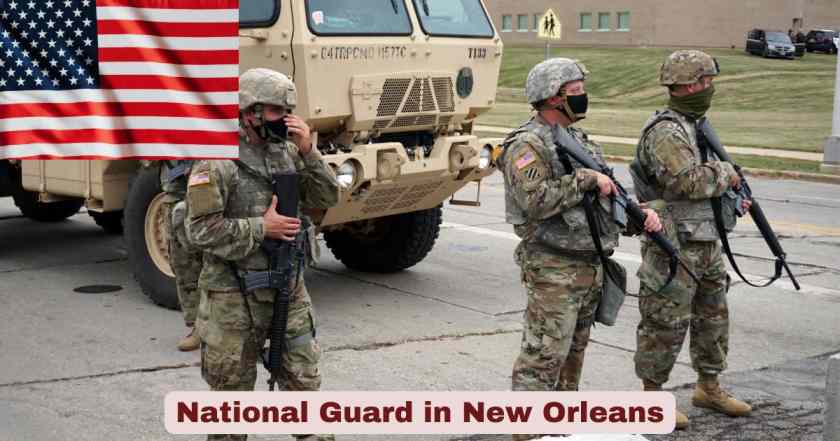
National Guard in New Orleans 2025
The presence of the National Guard in New Orleans 2025 represents a significant public safety initiative that has captured national attention throughout the year. Following the tragic Bourbon Street terror attack that claimed 14 lives on January 1, 2025, the city has witnessed multiple National Guard deployments aimed at enhancing security during major events and supporting local law enforcement efforts. These mobilizations have sparked widespread debate about the role of military personnel in urban policing, the effectiveness of such deployments in crime reduction, and the balance between public safety and community concerns.
Throughout 2025, New Orleans has experienced unprecedented changes in its security landscape. The Louisiana National Guard has been deployed multiple times to the city, with the most significant activation involving 350 troops authorized by President Donald Trump in December 2025. These deployments occurred against a backdrop of historically low crime rates, with the city on track to record its lowest number of homicides since the early 1970s. The New Orleans Police Department, operating with approximately 900 commissioned officers—well below the optimal level of 1,500—has welcomed the additional support while maintaining command and control over local operations. The National Guard’s presence has become a visible fixture during high-profile events, including the Sugar Bowl, Mardi Gras celebrations, and New Year’s festivities.
Interesting Facts About National Guard Deployments in New Orleans 2025
| Fact Category | Details | Impact |
|---|---|---|
| Deployment Response Time | Louisiana National Guard Military Police were on-site within 6 hours after January 1 terror attack | Demonstrated rapid emergency response capability |
| Total Law Enforcement Presence | More than 800 local, state, and federal law enforcement officials deployed for New Year’s 2025-2026 celebrations | Created comprehensive security network |
| Federal Funding Status | National Guard troops operate under Title 32 status, meaning federally funded but under state command | Zero cost to New Orleans city budget |
| Washington D.C. Connection | Louisiana National Guard troops previously deployed to Washington D.C. returned to support New Orleans operations | Demonstrates multi-state deployment capability |
| Geographic Coverage | 142 Louisiana National Guard members specifically assigned to assist with road closures in French Quarter | Focused on high-traffic tourist areas |
| Historical Context | National Guard presence in New Orleans is “not unusual” according to NOPD spokesperson Reese Harper | Multiple prior deployments for major events |
| Louisiana National Guard Total Strength | Approximately 11,500 soldiers serving in Louisiana Army National Guard | Organized into 74 units across 44 parishes |
| Crime Decline During Deployment | Violent crimes including homicides, carjackings, shootings and armed robberies were cut nearly in half citywide during early 2025 National Guard presence | Significant correlation with deployment periods |
Data sources: U.S. Department of Defense, Louisiana National Guard Public Affairs Office, New Orleans Police Department, Military.com, CBS News
The National Guard in New Orleans 2025 has operated under unique circumstances that distinguish this deployment from typical military assistance to civilian authorities. The Title 32 status activation means that while the federal government funds the operation, Governor Jeff Landry maintains command and control, with Louisiana National Guard Adjutant General Maj. Gen. Thomas Friloux directing operations. This arrangement has proven politically significant, as it allows state leadership to determine deployment strategies while leveraging federal resources. The 350-troop deployment announced in December 2025 represents the largest sustained National Guard presence in the city since the immediate aftermath of Hurricane Katrina, though the mission focus differs dramatically—concentrating on crime deterrence and event security rather than disaster response.
The Louisiana National Guard’s rapid response capability demonstrated on January 1, 2025, when Military Police arrived within 6 hours of the Bourbon Street attack, showcased the organization’s readiness for emergency situations. These troops conducted security support operations from January 1-3, 2025, working alongside Louisiana State Police in the French Quarter. This initial deployment of 100 National Guard members set the precedent for subsequent mobilizations throughout the year, including support for Super Bowl LIX in February and Mardi Gras celebrations. The Guard’s visibility during these events has become a defining characteristic of New Orleans’ security posture in 2025, with troops providing a uniformed presence designed to deter criminal activity and reassure residents and visitors.
National Guard Deployment Statistics in New Orleans 2025
| Deployment Period | Number of Troops | Duration | Primary Mission | Funding Mechanism |
|---|---|---|---|---|
| January 1-3, 2025 | 100 troops | 3 days | Emergency response to Bourbon Street terror attack | Federal Title 32 activation |
| January-February 2025 | Undisclosed (extended presence) | Through Mardi Gras | Super Bowl LIX and Mardi Gras security support | Federal Title 32 activation |
| December 2025-February 2026 | 350 troops | Through February 28, 2026 | New Year’s, Sugar Bowl, and Mardi Gras security; crime reduction support | Federal Title 32 activation, $0 cost to city |
| September 2025 Request | 1,000 troops (requested) | Proposed through September 30, 2026 | Long-term crime reduction and law enforcement support | Proposed federal funding |
| Washington D.C. Deployment | Louisiana contingent (returning late December) | Multiple months in 2025 | Federal law enforcement support in nation’s capital | Federal activation |
Data sources: Pentagon spokesperson statements, Louisiana National Guard official releases, Military.com, Fox News, The Hill
The deployment statistics for the National Guard in New Orleans 2025 reveal a graduated approach to military assistance for law enforcement. The initial 100-troop deployment in early January served as an immediate crisis response, providing visible security presence in the French Quarter while law enforcement agencies investigated the terror attack and searched for potential additional threats. This deployment demonstrated the Guard’s capability to mobilize quickly and operate effectively in an urban environment alongside multiple law enforcement agencies. The three-day activation period allowed for seamless transition of security responsibilities back to local and state police as the immediate crisis subsided.
The December 2025 announcement of a 350-troop deployment represents a substantial escalation in National Guard involvement in New Orleans public safety operations. Pentagon spokesman Sean Parnell confirmed that these troops would support federal law enforcement partners, including the Department of Justice and Department of Homeland Security, while enforcing federal law and countering violent crime. The deployment duration extending through February 28, 2026, encompasses multiple high-profile events including New Year’s celebrations, the Sugar Bowl college football game, and the entire Mardi Gras season. This extended timeline reflects lessons learned from the January 2025 terror attack and represents the Trump administration’s approach to deploying National Guard forces in major American cities facing public safety challenges.
Crime Statistics in New Orleans 2025
| Crime Category | 2025 Statistics (Year-to-Date) | Comparison to 2024 | Comparison to 2023 | Percentage Change |
|---|---|---|---|---|
| Homicides | 97 homicides (as of November 1, including 14 from Jan. 1 attack) | 124 homicides (2024) | 193 homicides (2023) | Down 35% from 2023 |
| Non-Fatal Shootings | Significant decline | Down from 2024 baseline | Sharp reduction | Down 44% from peak |
| Carjackings | Substantial decrease | 33% reduction year-over-year | 66% reduction from 2024 | Down 33-37% in 2025 |
| Armed Robbery | Notable decline | 22-24% fewer incidents | Continued downward trend | Down 22-24% year-over-year |
| Aggravated Assault | Decreased incidents | 9% fewer cases | Ongoing reduction | Down 9% from 2024 |
| Property Crimes Overall | Substantial decreases across categories | Continued decline | Multi-year reduction | Down 20% overall violent crime |
| Auto Theft | Major reduction | 34-48.6% decrease | Significant improvement | Down 34-48.6% |
| Burglary | Decreased significantly | 18% reduction | Ongoing decline | Down 18% |
Data sources: New Orleans Police Department preliminary statistics, Metropolitan Crime Commission data, Louisiana Illuminator, City Council crime dashboard
The crime statistics for New Orleans in 2025 present a remarkably positive picture that has surprised many analysts and policymakers. The city recorded 97 homicides as of November 1, 2025, putting it on pace for the lowest annual murder total since the early 1970s—a dramatic achievement for a city that held the unfortunate distinction of “murder capital” as recently as 2022. This represents a 35% decrease from the 193 homicides recorded in 2023 and a 22% reduction from 2024’s total of 124. When excluding the 14 victims of the January 1 terror attack, the homicide decline becomes even more striking, approaching a 60% reduction in typical street crime-related killings. Crime analyst Jeff Asher noted that New Orleans’ improvement has exceeded national trends, suggesting that local interventions and targeted strategies are driving significant positive change.
The reduction in non-fatal shootings by 44% represents perhaps the most significant indicator of improved public safety outcomes, as these incidents often predict future homicides and indicate overall community violence levels. The carjacking statistics show a dramatic 33-37% decrease in 2025, with some periods showing reductions exceeding 66% compared to 2024 levels. This crime category had become particularly traumatic for New Orleans residents, and the steep decline has contributed to improved public perception of safety. Armed robberies decreased by 22-24%, while aggravated assaults fell by 9%. Property crimes followed similar downward trajectories, with auto theft down 34-48.6%, burglary down 18%, vehicle burglaries down 22%, and theft down 14%. These comprehensive reductions across multiple crime categories suggest systemic improvements in public safety rather than isolated successes in individual areas.
New Orleans Police Department Staffing Crisis in 2025
| Staffing Metric | 2025 Figure | Optimal/Historical Level | Deficit | Financial Impact |
|---|---|---|---|---|
| Current Commissioned Officers | Approximately 900 officers | Optimal: 1,500 officers | 600 officers short | Operating at 60% of optimal strength |
| NOPD Staffing Level | 896 officers (as of early 2025) | Historical pre-2020: 1,200+ officers | 300+ officers below 2020 | 27% staffing loss between 2019-2023 |
| Police Academy Recruits | 52 recruits in pipeline (early 2025) | Target: 35 graduates per class, 5 classes annually | Insufficient graduation rates | Multiple academy dropout issues |
| Annual Applications | 1,575 applications (2024) | Historical: 7,440 applications (2017) | 79% decline in applications | Reflects national recruiting crisis |
| Officers Hired (2024) | 35 new recruits | Need: 175+ annually to reach 1,200 by 2030 | 80% below target | Unsustainable replacement rate |
| State Fine for Staffing Loss | $214,113 per month (as of July 2024) | None (if staffing maintained) | Estimated $2 million in back fines owed | Requires 1,100 employees to eliminate |
| Response Time Improvement | 53 minutes (September 2024) | Industry standard: <10 minutes priority calls | Still concerning but improved | Down from crisis-level 180 minutes (April 2023) |
Data sources: Louisiana Legislative Auditor’s Office, New Orleans City Council dashboard, NOPD Human Resources data, Civil Service records, Louisiana Municipal Police Employees’ Retirement System
The New Orleans Police Department staffing crisis in 2025 represents one of the most significant public safety challenges facing the city and provides crucial context for the National Guard deployment decisions. Operating with approximately 900 commissioned officers, the NOPD functions at just 60% of its optimal strength of 1,500 officers. This dramatic shortage has triggered financial penalties under Louisiana law through the Municipal Police Employees’ Retirement System (MPERS). When a police department loses more than 50 officers in consecutive years, the municipality must pay fines to cover its share of unfunded pension liabilities. Starting July 1, 2023, New Orleans began paying $50,314 monthly, escalating to $214,113 per month by July 2024. The city now owes close to $2 million in back fines and will continue monthly payments unless staffing levels increase to an estimated 1,100 employees in the retirement system.
The Louisiana Legislative Auditor’s report released in late 2024 documented that between 2019 and 2023, NOPD lost nearly 27% of its policing staff. The department’s recruitment challenges mirror those at urban police forces across the United States following the 2020 social unrest and national conversations about policing. In 2024, despite receiving 1,575 applications, NOPD hired only 35 recruits—a hiring conversion rate of approximately 2.2%. This contrasts sharply with 2017, when the department received 7,440 applications after eliminating its college education requirement. Current hiring numbers prove insufficient to replace retiring officers, much less grow the force. The 52 recruits in the training pipeline as of early 2025 represent minimal progress, particularly as the department has experienced significant dropout rates from academy classes throughout the year. NOPD leadership, including Superintendent Anne Kirkpatrick, had set ambitious goals of adding 200+ officers, but actual results have shown the force essentially flatlined with minimal net change.
Louisiana National Guard Organization and Capabilities in 2025
| Component | Personnel Strength | Primary Units | Key Capabilities | Recent Deployments |
|---|---|---|---|---|
| Louisiana Army National Guard | Approximately 11,500 soldiers | 74 units in 44 parishes (56 armory locations) | Infantry, engineering, military police, aviation, support | Iraq, Syria, Washington D.C., New Orleans |
| Louisiana Air National Guard | Approximately 1,500 airmen | 159th Fighter Wing, medical units, support squadrons | Air defense, fighter operations, medical support, logistics | Various federal and state missions |
| 256th Infantry Brigade Combat Team | Multiple battalions | Headquartered in Louisiana | Combat operations, peacekeeping, disaster response | Iraq deployment 2004-2005; returned September 2005 |
| 225th Engineer Brigade | Largest engineer formation in National Guard | Four Combat Heavy Engineer Battalions | Construction, demolition, infrastructure, disaster response | Post-Katrina reconstruction, overseas deployments |
| 773rd Military Police Battalion | Multiple companies | Historic lineage to WWII | Law enforcement support, detention operations, civil disturbance response | Abu Ghraib scandal involvement; various domestic law enforcement missions |
| 1-244th Assault Helicopter Battalion | Aviation unit | AH-64 Apache helicopters | Attack aviation, reconnaissance, force protection | Overseas combat deployments, border security missions |
| 2-151st Regional Training Institute | Training command | Multiple training locations | Recruit training, leadership development, technical certification | Graduated thousands of soldiers; supports multi-state training |
| 61st Troop Command | Administrative headquarters | Statewide coordination | Command and control, personnel management, operational planning | Coordinates diverse unit missions across Louisiana |
Data sources: Louisiana National Guard official website, U.S. Army Center of Military History, National Guard Bureau statistics
The Louisiana National Guard organization and capabilities in 2025 represent a substantial military force with diverse mission sets ranging from combat deployments to domestic disaster response. The Louisiana Army National Guard, comprising approximately 11,500 soldiers organized into 74 units spread across 44 parishes and operating from 56 armory locations, maintains one of the largest and most capable state National Guard forces in the United States. This extensive geographic distribution enables rapid response to emergencies throughout Louisiana while maintaining close community ties that facilitate domestic operations. The force structure includes combat units like the 256th Infantry Brigade Combat Team, specialized engineering capabilities through the 225th Engineer Brigade, and law enforcement support from military police battalions—all of which contribute to the Guard’s ability to support civil authorities during crises ranging from natural disasters to civil unrest.
The Louisiana National Guard’s recent operational experience includes multiple overseas combat deployments to Iraq and Syria, participation in border security missions, and domestic support operations ranging from Hurricane Katrina recovery to the Washington D.C. deployment that preceded the New Orleans 2025 missions. The 773rd Military Police Battalion, despite its controversial involvement in the Abu Ghraib detention facility scandal during the Iraq War, has been rebuilt and trained specifically for domestic law enforcement support missions under strict legal and ethical guidelines. The Guard’s aviation assets, including the 1-244th Assault Helicopter Battalion equipped with AH-64 Apache attack helicopters, provide reconnaissance and deterrence capabilities though they have not been deployed for New Orleans operations. The 2-151st Regional Training Institute ensures that Louisiana National Guard soldiers maintain high readiness standards through rigorous training programs that prepare them for both combat missions and the more delicate domestic operations that require cultural sensitivity and constitutional awareness when operating alongside civilian law enforcement.
Federal and State Law Enforcement Support in New Orleans 2025
| Support Initiative | Personnel/Resources | Implementation Date | Jurisdiction | Primary Focus |
|---|---|---|---|---|
| Troop NOLA (Louisiana State Police) | 40 Louisiana State Police troopers (permanently assigned) | Established early 2024 | French Quarter and downtown | Crime reduction, patrol support |
| Troop NOLA Current Status | Operating at 50% staffing | Ongoing through 2025 | French Quarter focus | Solving approximately 10% of crimes in area |
| Federal Law Enforcement Partnership | Multi-agency task force | Active throughout 2025 | Citywide | Gun violence reduction, major crimes |
| FBI Clean House Initiative | 18 federal and local agencies | Completed month-long operation | Targeted neighborhoods | 155 arrests, significant firearm confiscations |
| Gun Confiscations (Federal Partnership) | 85 firearms seized | Year-to-date through mid-2025 | Citywide | Violent crime prevention |
| Narcotics Seizures | Thousands of pills and other drugs | Ongoing 2025 operations | Various locations | Drug trafficking reduction |
| Cash Seizures | $129,000 in cash confiscated | Various investigations 2025 | Multiple operations | Criminal enterprise disruption |
| Immigration Enforcement | Several hundred arrests (December operations) | December 3, 2025 through 2026 | Statewide including New Orleans | Goal: 5,000 arrests over months-long operation |
| Total Law Enforcement (New Year’s 2025-26) | 800+ officers from local, state, federal agencies | December 30, 2025 deployment | French Quarter and event locations | Comprehensive security for major events |
Data sources: Louisiana Governor’s Office, Louisiana State Police, FBI statements, Department of Homeland Security, NOPD partnership reports, New Orleans Office of Homeland Security and Emergency Preparedness
The federal and state law enforcement support in New Orleans 2025 demonstrates a multi-layered approach to addressing public safety challenges that extend beyond local police capabilities. Governor Jeff Landry established Troop NOLA as a permanent Louisiana State Police presence in New Orleans in early 2024, deploying 40 state troopers to patrol the French Quarter and assist local law enforcement. This initiative predated the National Guard deployments and established a precedent for state-level intervention in New Orleans policing. According to Metropolitan Crime Commission president Rafael Goyeneche, Troop NOLA has been responsible for solving approximately 10% of crimes committed in the French Quarter, though the unit operates at only 50% of its intended staffing level. The permanent state police presence has been credited with contributing to crime reductions, particularly in the tourist-heavy areas of downtown New Orleans.
Federal law enforcement partnerships have played an increasingly prominent role in New Orleans’ public safety strategy in 2025. The FBI-led Clean House initiative exemplifies this collaborative approach, bringing together 18 federal and local agencies for a month-long surveillance and enforcement operation that resulted in 155 arrests and significant firearm confiscations. NOPD Chief Anne Kirkpatrick has pointed to federal partnerships as a key factor driving crime reduction, with coordinated operations resulting in the seizure of 85 firearms, thousands of narcotics pills, and $129,000 in cash across various investigations. These partnerships between NOPD, Department of Justice, Department of Homeland Security, and other federal agencies have enhanced investigative capabilities and resources beyond what local police could accomplish independently. The comprehensive security plan for New Year’s celebrations 2025-2026 mobilized more than 800 local, state, and federal law enforcement officials to close Bourbon Street to vehicular traffic, conduct bag searches, patrol the area, and redirect traffic—demonstrating the scale of coordinated law enforcement response during high-profile events.
Political Context and Controversy Surrounding National Guard in New Orleans 2025
| Political Figure/Entity | Position | Key Statement/Action | Rationale |
|---|---|---|---|
| Governor Jeff Landry (R) | Strongly supports National Guard deployment | Requested 1,000 troops in September 2025; praised Trump and Defense Secretary Hegseth | Cited “elevated violent crime rates” and “critical personnel shortages within local law enforcement” |
| President Donald Trump | Authorized multiple National Guard deployments | Approved 350 troops for New Orleans December 2025; floated larger deployments | Stated could “fix that up in a week and a half,” called New Orleans “in really bad shape” |
| Mayor LaToya Cantrell | Cautiously supportive of specific deployments | Welcomed additional resources for major events | Under federal indictment; focused on event security rather than general crime fighting |
| Mayor-elect Helena Moreno | Strong opposition to crime-fighting deployment | Called it “attack on certain cities,” opposed federal takeover | Cited “unprecedented reduction in crime and violence,” called deployment “scare tactics” |
| Rep. Troy Carter (D-Louisiana) | Opposed to National Guard deployment | Called Pentagon proposal “deeply troubling,” said deployment “unwarranted” | Argued city has seen “dramatic decrease in violent crime rates” |
| Rep. Julia Letlow (R-Louisiana) | Supportive of enhanced security measures | Advocated for federal support | Supported comprehensive approach to public safety |
| NOPD Superintendent Anne Kirkpatrick | Welcomed partnership but maintained command | “Values this ongoing partnership” with National Guard | Focused on maintaining NOPD authority while accepting support |
| Metropolitan Crime Commission (Rafael Goyeneche) | Supports deployment based on data | “This shouldn’t be a political decision. This is a public safety decision” | Cited continued per capita crime rate concerns despite improvements |
| New Orleans Police Foundation | Supports National Guard presence | Compared to successful Troop NOLA deployment | Believes presence will deter crime and provide force multiplier |
Data sources: Louisiana Illuminator, Fox News, CBS News, Axios New Orleans, official government statements
The political context surrounding the National Guard in New Orleans 2025 has been characterized by sharp partisan divides and competing narratives about public safety, federal authority, and the appropriate role of military forces in American cities. Governor Jeff Landry, a Republican and close ally of President Trump, formally requested federal support in September 2025 for a yearlong activation of up to 1,000 Louisiana National Guard members. In his letter to Defense Secretary Pete Hegseth, Landry cited a “convergence of elevated violent crime rates in Shreveport, Baton Rouge, and New Orleans coupled with critical personnel shortages within local law enforcement.” However, critics immediately questioned the timing and necessity of such deployments, noting that New Orleans crime statistics in 2025 showed dramatic improvements rather than the crisis conditions suggested by deployment advocates.
The controversy intensified when President Trump publicly discussed deploying National Guard forces to New Orleans during media appearances, describing the city as being “in really bad shape” and claiming he could “fix that up in a week and a half.” These statements provoked strong reactions from local Democratic leaders who viewed the deployment rhetoric as politically motivated rather than driven by genuine public safety concerns. Mayor-elect Helena Moreno issued particularly strong opposition, stating in September 2025: “We have had an unprecedented reduction in crime and violence in New Orleans. This is an attack on certain cities. There are many cities with mayors aligned with this president whose crime issues are severe, but they’re not targeted. That clearly shows this is about scare tactics and politicizing public safety.” Representative Troy Carter called the Pentagon’s draft deployment proposal “deeply troubling,” emphasizing that “no formal request has been made by Louisiana’s leadership, and New Orleans should not be used as a testing ground for speculative, politically motivated plans.”
Impact of National Guard Presence on Crime Reduction in New Orleans 2025
| Time Period | National Guard Status | Crime Metrics | Notable Changes | Correlation Analysis |
|---|---|---|---|---|
| January 1-3, 2025 | 100 troops deployed (post-terror attack) | Immediate security stabilization | Crisis response; prevented additional attacks; secured French Quarter | Direct emergency response impact |
| January-February 2025 | Extended National Guard presence (Super Bowl/Mardi Gras) | Violent crimes cut nearly in half citywide per MCC data | Homicides, carjackings, shootings, armed robberies all showed dramatic reductions | Strong correlation during deployment period |
| March-November 2025 | No National Guard deployment | Continued crime decline with some fluctuations | Overall violent crime remained 20% below 2024, murders on track for lowest since 1970s | Crime reduction sustained without National Guard |
| December 2025-February 2026 | 350 troops deployed | Security enhanced for major events; crime deterrence focus | Deployment began December 30, 2025; long-term impact data pending | Visibility and deterrence strategy |
| Overall 2025 Trend | Multiple short-term deployments | 35% reduction in homicides, 44% reduction in non-fatal shootings, 33-37% reduction in carjackings | Most dramatic crime reductions in modern New Orleans history | Multiple factors including Guard, federal partnerships, improved NOPD tactics |
Data sources: Metropolitan Crime Commission crime data analysis, NOPD preliminary statistics, Louisiana Radio Network, Fox 8 Live reporting
The impact of National Guard presence on crime reduction in New Orleans 2025 remains a subject of significant debate among policymakers, law enforcement professionals, and community advocates. Metropolitan Crime Commission data shows that during the January-February 2025 period when National Guard troops were deployed following the Bourbon Street terror attack, violent crimes including homicides, carjackings, shootings, and armed robberies were cut nearly in half citywide. This dramatic reduction occurred during a period of heightened security consciousness and increased law enforcement visibility across the city. However, determining whether the National Guard presence directly caused these improvements or whether they resulted from other factors—including enhanced NOPD deployment strategies, federal law enforcement partnerships, and the natural aftermath of a high-profile terror attack that increased community vigilance—proves challenging.
Critically, crime reductions continued throughout 2025 even during extended periods without National Guard deployment. From March through November 2025, when no National Guard troops were actively deployed in New Orleans, the city maintained its downward crime trajectory. Murders remained on track for the lowest annual total since the early 1970s, with 97 homicides recorded through November 1—representing a 35% decrease from 2023 levels. Crime analyst Jeff Asher noted that the sustained, long-term trend starting in late 2023 suggests deeper systemic improvements rather than short-term effects of any single intervention. NOPD Superintendent Anne Kirkpatrick attributed ongoing crime reductions to “smart deployment and community collaboration,” crediting data-driven policing strategies and enhanced federal partnerships rather than National Guard presence specifically. Community advocates like Ernest Johnson, founder of Ubuntu Village, cautioned that while recent improvements are encouraging, they have occurred “with the city under a massive law enforcement watch” that may not be sustainable long-term without addressing root causes of violence and building permanent police capacity.
New Orleans Major Event Security in 2025
| Major Event | Date | Security Personnel | National Guard Involvement | Security Measures |
|---|---|---|---|---|
| New Year’s Day 2025 | January 1, 2025 | Standard event security | 100 National Guard troops deployed within 6 hours after attack | Emergency response; French Quarter lockdown; explosive device search |
| Super Bowl LIX | February 2025 | Enhanced federal and local presence | National Guard deployment extended through event | Perimeter security; credentialing; screening operations; traffic control |
| Mardi Gras 2025 | February-March 2025 | Comprehensive multi-agency deployment | National Guard maintained presence through Carnival season | Parade route security; crowd control; French Quarter visibility |
| New Year’s Eve/Day 2025-2026 | December 31, 2025 – January 1, 2026 | 800+ local, state, and federal officers | 350 National Guard troops authorized through February 2026 | Bourbon Street closure to vehicles; 142 Guard members for road closures; bag searches; enhanced surveillance |
| Sugar Bowl | January 1, 2026 | Federal designation sought for highest security level (SEAR-1) | 350 National Guard troops participating | Comprehensive screening; intelligence gathering; tactical support requested |
| Mardi Gras 2026 | February-March 2026 | Planning for sustained security presence | 350 National Guard troops deployment extends through event | Continued enhanced security protocols from New Year’s deployment |
Data sources: New Orleans Office of Homeland Security and Emergency Preparedness, Louisiana National Guard official statements, city government press conferences, CBS News
The major event security approach in New Orleans 2025 underwent fundamental transformation following the January 1 terror attack that killed 14 people during New Year’s celebrations. Prior to this tragedy, New Orleans relied primarily on local police supplemented by state troopers and limited federal support during high-profile events. The Bourbon Street attack—in which Shamsud-Din Jabbar, a U.S. Army veteran, drove around a police blockade and deliberately rammed into crowds celebrating New Year’s Day—exposed critical vulnerabilities in the city’s event security infrastructure. Law enforcement discovered multiple explosive devices placed in coolers around the French Quarter, though none detonated. This near-miss catastrophe prompted immediate security reassessment and established new protocols for subsequent major events throughout 2025.
The National Guard deployment that began within 6 hours of the January 1 attack established a new security paradigm for New Orleans major events in 2025. The 100 troops initially deployed worked alongside Louisiana State Police conducting security support operations from January 1-3, providing immediate visible deterrence and additional manpower for securing the expansive French Quarter area. This deployment was extended to provide security for Super Bowl LIX in February and Mardi Gras celebrations in February-March 2025. For the New Year’s 2025-2026 celebrations, city officials planned the most comprehensive security operation in New Orleans history, mobilizing more than 800 local, state, and federal law enforcement officials alongside 350 National Guard troops. The deployment includes 142 National Guard members specifically assigned to assist NOPD with road closures in and around the French Quarter, with the entire force operating through February 28, 2026, to cover the Sugar Bowl and Mardi Gras season. Mayor-elect Helena Moreno requested the Trump administration grant SEAR-1 status—the highest federal security designation—for New Year’s Eve and the Sugar Bowl, which would unlock additional federal tactical support, intelligence gathering, and cyber risk assessment resources beyond the National Guard deployment.
Community Response and Public Opinion on National Guard in New Orleans 2025
| Stakeholder Group | Primary Sentiment | Key Concerns/Support | Representative Voices |
|---|---|---|---|
| Local Democratic Leadership | Mixed to opposed for crime-fighting; supportive for event security | Concerned about militarization; federal overreach; political motivations versus genuine security needs | Mayor-elect Helena Moreno opposed long-term deployment but welcomes event security; Rep. Troy Carter opposed deployment |
| Local Republican Leadership | Strongly supportive | Views deployment as necessary supplement to understaffed NOPD; believes military presence deters crime | Gov. Jeff Landry enthusiastically requested and praised deployments |
| New Orleans Police Department | Supportive with caveats | Welcomes additional resources; insists on maintaining command and control; values partnership | Superintendent Kirkpatrick and spokesperson Reese Harper emphasized NOPD authority |
| Business Community/Tourism Sector | Largely supportive | Prioritizes visitor safety and business confidence; concerned about perception issues | Tourism officials support enhanced security for major events |
| Law Enforcement Advocacy Groups | Supportive | Views Guard as force multiplier addressing staffing shortages | Metropolitan Crime Commission, Police Foundation support deployment |
| Civil Rights Advocates | Concerned to opposed | Worried about militarization of policing; potential civil liberties issues; disproportionate impact on communities of color | Some community organizers question necessity given crime reductions |
| French Quarter Residents/Workers | Mixed reactions | Some feel safer with visible presence; others uncomfortable with military atmosphere | Quotes indicate divided community sentiment |
| General New Orleans Residents | Varied by neighborhood and political affiliation | Crime-affected areas may welcome help; others question whether deployment addresses root causes | Diana Riley (New Orleans East): Would feel like “Third World country” with military on streets |
Data sources: Media interviews, official statements, community forum reports, survey data from news organizations
The community response to National Guard in New Orleans 2025 reflects deep divisions about the appropriate role of military forces in American cities and competing understandings of what constitutes effective public safety. For some residents and visitors, the presence of National Guard troops in camouflage uniforms provides reassurance and visible evidence that authorities are taking security seriously following the January 1 terror attack. The French Quarter and other tourist-heavy areas have seen consistent National Guard presence during major events throughout 2025, with troops conducting vehicle screening, manning checkpoints, and providing high-visibility patrols. Business owners in these areas generally support the enhanced security, viewing it as essential for maintaining visitor confidence and protecting the city’s vital tourism economy, which generates billions in annual revenue and supports tens of thousands of jobs.
However, significant opposition exists among residents who question both the necessity and appropriateness of military deployment for routine law enforcement functions. Diana Riley, a New Orleans East resident, articulated concerns shared by many when she stated that having people in military uniforms walking the streets “would make people feel like we’re in a Third World country where we have to shelter in place.” This sentiment reflects broader anxieties about the militarization of American policing and the normalization of military presence in civilian spaces. Critics point to the dramatic crime reductions achieved in 2025—with murders down 35%, carjackings down 33-37%, and overall violent crime down 20%—and question why such deployments are necessary when local law enforcement strategies are clearly working. Mayor-elect Helena Moreno’s strong opposition to National Guard deployment for general crime-fighting, contrasted with her support for event-specific security, captures the nuanced position many New Orleans leaders have adopted: accepting federal military support when clearly justified by specific threats while resisting what they view as politically motivated permanent military presence in the city.
Economic and Financial Implications of National Guard Deployment in New Orleans 2025
| Financial Factor | Cost/Value | Who Pays | Economic Impact | Duration |
|---|---|---|---|---|
| Federal Title 32 Activation Cost | Estimated $15-25 million for 350 troops through February 2026 | Federal government (100%) | Zero direct cost to New Orleans city budget | December 30, 2025 – February 28, 2026 |
| NOPD Staffing Fine | $214,113 per month (as of July 2024) | City of New Orleans | Total estimated $2 million+ in back fines; ongoing monthly penalties | Continues until staffing reaches 1,100 employees |
| NOPD Budget | Approximately $250 million annually | City general fund, federal grants | Largest single budget item for city operations | Annual allocation |
| NOPD Overtime Costs | $40+ million annually (recent years) | City of New Orleans | Strains budget; indicates inadequate staffing | Ongoing operational expense |
| Tourism Revenue Impact | $11+ billion annually (pre-pandemic baseline) | Tourism spending in New Orleans | National Guard presence affects visitor perception positively or negatively | Year-round with concentration during major events |
| Cost Savings from Federal Support | Estimated $15-25 million in avoided local costs | Federal taxpayers instead of city | Allows reallocation of city resources to other priorities | Duration of federal activation |
| National Guard Member Pay | Federal military pay scales | U.S. Department of Defense | Economic benefit to Guard members and families | Monthly during activation |
| Louisiana Economic Output | Potential protection of tourism sector worth billions | Statewide benefit from secure environment | Difficult to quantify but substantial | Ongoing confidence effects |
Data sources: U.S. Department of Defense budget estimates, New Orleans city financial reports, Louisiana Tourism Bureau data, Metropolitan Crime Commission analysis
The economic and financial implications of National Guard deployment in New Orleans 2025 present a complex mix of costs, savings, and indirect effects that extend well beyond simple budget line items. The most immediate and significant financial benefit to New Orleans is that the Title 32 activation status means the federal government bears the entire cost of the National Guard deployment—estimated at $15-25 million for the 350-troop deployment extending through February 28, 2026. This represents substantial savings for a city already struggling with budget constraints, as New Orleans pays zero dollars directly for the National Guard presence. In contrast, the city spends approximately $250 million annually on NOPD operations while simultaneously paying $214,113 per month in state fines for inadequate staffing levels—penalties that have accumulated to approximately $2 million in back fines since July 2023.
The economic justification for National Guard deployment extends beyond direct security costs to encompass the protection of New Orleans’ vital tourism economy, which generates more than $11 billion annually in visitor spending and supports a substantial portion of the city’s employment base. The January 1, 2025, terror attack that killed 14 people had the potential to devastate this economic engine by creating perceptions of New Orleans as an unsafe destination. The visible National Guard presence during major events like Super Bowl LIX, Mardi Gras, and New Year’s celebrations serves both as actual security enhancement and as symbolic reassurance to potential visitors that authorities are taking safety seriously. However, critics argue that excessive militarization could have the opposite effect, making the city appear dangerous or unwelcoming—a perception that could deter visitors and damage the hospitality sector. The NOPD overtime costs exceeding $40 million annually demonstrate the unsustainable financial burden of maintaining public safety with insufficient staffing, suggesting that National Guard supplementation may provide short-term fiscal relief even as it fails to address the underlying recruitment and retention crisis that drives these excessive overtime expenses.
Legal Framework and Command Structure for National Guard in New Orleans 2025
| Legal Aspect | Details | Significance | Authority |
|---|---|---|---|
| Title 32 Activation | Federal funding with state command and control | Governor maintains authority; National Guard not subject to Posse Comitatus restrictions | U.S. Code Title 32, Section 502(f) |
| State Command Authority | Governor Jeff Landry exercises command through Adjutant General | Louisiana National Guard operates under state law enforcement support framework | Louisiana state law and constitution |
| Adjutant General Leadership | Maj. Gen. Thomas Friloux directs Louisiana National Guard operations | Senior military officer coordinates all Guard activities statewide | Governor’s appointment |
| NOPD Operational Control | New Orleans Police Department maintains law enforcement authority | National Guard provides support but cannot make arrests or conduct independent law enforcement | Louisiana law and NOPD procedures |
| Federal Partnership Framework | Guard works alongside Department of Justice and Department of Homeland Security | Coordinates multi-agency approach to public safety | Federal-state cooperation agreements |
| Posse Comitatus Act Compliance | Title 32 status exempts Guard from federal military restrictions on domestic law enforcement | Allows law enforcement support that would be prohibited for active-duty federal troops | 18 U.S.C. § 1385 |
| Use of Force Protocols | National Guard members carry weapons and follow military rules of engagement adapted for domestic operations | Trained in appropriate force continuum for civilian environments | Louisiana National Guard policies |
| Duration Authority | Governor requests; President approves; deployment extends through specified date | Current authorization runs December 30, 2025 – February 28, 2026 | Presidential approval of gubernatorial request |
Data sources: U.S. Code Title 32, Louisiana National Guard official statements, Pentagon spokesperson statements, Louisiana state law
The legal framework and command structure for National Guard in New Orleans 2025 operates within a carefully defined constitutional and statutory structure that balances federal resources with state sovereignty and civilian control of law enforcement. The Title 32 activation status represents a critical legal distinction that allows the Louisiana National Guard to provide law enforcement support while remaining under state command and avoiding the restrictions of the Posse Comitatus Act, which generally prohibits federal military forces from conducting domestic law enforcement operations. Under this framework, Governor Jeff Landry exercises command authority over deployed National Guard troops through Adjutant General Maj. Gen. Thomas Friloux, ensuring that state leadership maintains control over how military forces are employed within Louisiana while the federal government funds the operation through Department of Defense appropriations.
The operational control structure clearly establishes that the New Orleans Police Department retains primary law enforcement authority, with National Guard troops providing support rather than independent policing capabilities. NOPD Superintendent Anne Kirkpatrick and spokesperson Reese Harper have consistently emphasized that National Guard members operate under NOPD direction, focusing on tasks like traffic control, perimeter security, checkpoint operations, and high-visibility deterrent patrols. National Guard troops cannot make arrests, conduct criminal investigations, or perform traditional law enforcement functions without specific legal authority and NOPD oversight. This command relationship addresses constitutional concerns about military involvement in civilian affairs while leveraging National Guard capabilities to supplement understaffed local police. The 142 National Guard members specifically assigned to assist with road closures in and around the French Quarter exemplify this support model—they perform security functions that free NOPD officers for more complex law enforcement duties while operating under clear civilian law enforcement command and control.
Comparison with Other Cities Receiving National Guard Support in 2025
| City | State | Deployment Size | Primary Mission | Duration | Political Context |
|---|---|---|---|---|---|
| New Orleans, Louisiana | Louisiana | 350 troops (December 2025-February 2026); 100 troops (January 2025) | Event security, crime reduction support | December 30, 2025 – February 28, 2026 | Republican governor requested; Democratic mayor cautiously supportive |
| Washington, D.C. | District of Columbia | Louisiana Guard contingent among others; hundreds deployed | Federal law enforcement support, presidential security | Extended deployment through 2025 | Federal jurisdiction; national security focus |
| Memphis, Tennessee | Tennessee | National Guard deployment authorized | Crime reduction, law enforcement support | 2025 (specific dates vary) | Republican governor supportive; part of multi-city strategy |
| Chicago, Illinois | Illinois | Proposed but not implemented | Crime reduction (proposed) | Not activated | Democratic governor opposed federal military deployment |
| New York City, New York | New York | Subway security deployment (separate state initiative) | Transit system security | Ongoing state-level mission | State governor initiative, not federal |
Data sources: CBS News, Military.com, Department of Defense statements, state government press releases
The comparison with other cities receiving National Guard support in 2025 reveals that New Orleans is part of a broader Trump administration strategy to deploy National Guard forces in major urban areas, though each deployment reflects unique local circumstances and political dynamics. Washington, D.C. received substantial National Guard support throughout 2025, including Louisiana Guard troops who were deployed to the nation’s capital before returning to support New Orleans operations in December. The Washington deployment focused primarily on federal law enforcement support and security around government facilities, operating under different legal authorities given the District’s unique federal jurisdiction status. Memphis, Tennessee, also received National Guard deployment authorization in 2025 as part of Governor Bill Lee’s public safety strategy, though the specific deployment parameters differed from New Orleans in scale and mission focus.
The political patterns surrounding National Guard deployments in 2025 demonstrate clear partisan divisions, with Republican governors in Louisiana, Tennessee, and other states requesting and receiving federal support while Democratic governors in states like Illinois opposed similar deployments. Chicago Mayor Brandon Johnson and Illinois Governor J.B. Pritzker rejected Trump administration overtures about deploying National Guard troops to address crime in Chicago, viewing such proposals as federal overreach and politically motivated interventions rather than genuine public safety measures. The contrast between New Orleans—where deployment proceeded despite Democratic mayor’s initial opposition—and Chicago—where Democratic state leadership successfully blocked deployment—illustrates the importance of state-level authority in National Guard activation decisions. New York’s separate deployment of National Guard to subway systems represents a state-initiated mission distinct from the federal-state partnership model seen in New Orleans, demonstrating that governors can activate their National Guard forces independently for public safety missions without federal involvement or funding.
Historical Context of National Guard in New Orleans
| Historical Event | Year | National Guard Role | Scale | Outcome |
|---|---|---|---|---|
| Hurricane Katrina | 2005 | Massive disaster response, law enforcement support, search and rescue | 50,000+ troops at peak from multiple states | Controversial deployment; some excesses; essential disaster response |
| 256th Infantry Brigade Iraq Deployment | 2004-2005 | Combat operations overseas | Entire brigade combat team | Brigade returned September 2005, shortly after Katrina |
| Super Bowl Security (Various Years) | Multiple years including 2013, 2025 | Event security, perimeter control, screening support | Hundreds of troops | Standard operating procedure for major events |
| Mardi Gras Security (Recent Years) | Annual tradition | Enhanced security presence during Carnival season | Varies by year, typically 100-200 troops | Routine support for major festival |
| Post-Katrina Recovery | 2005-2006 | Infrastructure repair, security patrols, humanitarian assistance | Thousands of troops over extended period | Essential to city recovery but raised civil liberties concerns |
| Civil Rights Era Disturbances | 1960s | Federal troops and National Guard (federalized) | Varied by incident | Enforced desegregation orders; controversial history |
| French Quarter Patrols (2024-2025) | 2024-2025 | Support for NOPD in tourist areas | 100+ troops during major events | Part of Governor Landry’s security enhancement strategy |
Data sources: Louisiana National Guard historical archives, Hurricane Katrina after-action reports, U.S. Army Center of Military History, news archives
The historical context of National Guard in New Orleans extends back through decades of deployments ranging from natural disaster response to civil rights enforcement, creating a complex legacy that informs current debates about military involvement in civilian affairs. The most significant and traumatic National Guard deployment in New Orleans history occurred following Hurricane Katrina in 2005, when more than 50,000 National Guard troops from Louisiana and other states deployed to conduct search and rescue operations, maintain order, distribute humanitarian supplies, and support rebuilding efforts. The Katrina deployment proved essential to disaster response but also generated significant controversy, including incidents of excessive force, improper detentions, and constitutional concerns about extended military presence in civilian spaces. The 256th Infantry Brigade Combat Team returned from Iraq deployment in September 2005, immediately transitioning to Katrina recovery operations—a jarring shift from overseas combat to domestic disaster relief that highlighted the National Guard’s dual federal-state mission.
More recent National Guard deployments in New Orleans have focused primarily on event security rather than disaster response or general law enforcement, establishing a pattern that the 2025 deployments largely follow. The Louisiana National Guard routinely provides security support for the Super Bowl when hosted in New Orleans, with deployments in 2013 and again in 2025 for Super Bowl LIX. Annual Mardi Gras celebrations frequently include National Guard troops conducting crowd control, securing parade routes, and providing high-visibility deterrent presence in the French Quarter and along parade routes. NOPD spokesperson Reese Harper emphasized this historical pattern when discussing the 2025 deployment, stating “It’s no different than what we’ve seen in the past” and characterizing National Guard support as “just another tool in the toolbox and another layer of security.” This framing attempts to normalize military presence in New Orleans as routine rather than exceptional, though critics argue that the scale and duration of 2025 deployments—particularly the 350-troop authorization extending through late February 2026—exceed historical precedents for peacetime, non-disaster security operations.
Immigration Enforcement Operations in New Orleans 2025
| Operation Aspect | Details | Timeline | Scale | Relationship to National Guard |
|---|---|---|---|---|
| Federal Immigration Arrests | ICE operations targeting undocumented immigrants | December 3, 2025 through 2026 | Several hundred arrests (at least) in early weeks | Separate from National Guard mission |
| Statewide Operation Scope | Louisiana-wide immigration enforcement | Ongoing through 2026 | Goal: 5,000 arrests over months-long operation | Parallel federal law enforcement initiative |
| National Guard Role | Explicitly NOT involved in immigration enforcement | December 2025-February 2026 | Zero immigration enforcement activities | Clear separation of missions |
| NOPD Spokesperson Statement | “The National Guard will not be engaging in immigration enforcement” | December 2025 statement | Definitive clarification | Reese Harper emphasized visibility and safety focus |
| Federal Agency Coordination | Multiple DHS and DOJ agencies operating simultaneously | Throughout December 2025 | Complex multi-agency environment | National Guard coordinates with but distinct from immigration operations |
| Community Concerns | Immigrant communities anxious about conflating military and immigration presence | Ongoing | Affects community trust and cooperation | NOPD emphasizes clear distinction |
Data sources: CBS News, Department of Homeland Security statements, NOPD official communications, Louisiana state government reports
The immigration enforcement operations in New Orleans 2025 represent a separate but simultaneous federal law enforcement initiative that has created some confusion and concern about the National Guard’s role and mission in the city. Since early December 2025, federal immigration agents from Immigration and Customs Enforcement (ICE) have been conducting an aggressive enforcement campaign across Louisiana, including New Orleans, that has resulted in the arrest of at least several hundred people with a stated goal of 5,000 arrests over a months-long operation extending into 2026. These immigration enforcement activities began on December 3, 2025, several weeks before the National Guard deployment commenced on December 30, and operate under entirely separate legal authorities and command structures from the National Guard’s law enforcement support mission.
NOPD spokesperson Reese Harper explicitly addressed community concerns about potential National Guard involvement in immigration enforcement, stating definitively: “The National Guard will not be engaging in immigration enforcement. This is for visibility and just really to keep our citizens safe. It’s just another tool in the toolbox and another layer of security.” This clear statement aims to reassure immigrant communities that the visible National Guard presence in military uniforms does not represent an expansion of immigration enforcement activities. The distinction is both legally and operationally significant: National Guard troops under Title 32 activation operate to support state law enforcement priorities as defined by Governor Landry and executed by NOPD, while immigration enforcement remains exclusively within federal Department of Homeland Security jurisdiction. However, the simultaneous presence of 350 National Guard troops and aggressive federal immigration operations has created an environment where some New Orleans residents—particularly in immigrant communities—may perceive an overall militarization of law enforcement that affects their willingness to interact with any uniformed personnel or report crimes to police.
Future Outlook for National Guard Presence in New Orleans Beyond 2025
| Future Scenario | Likelihood | Key Factors | Potential Timeline |
|---|---|---|---|
| Extension Beyond February 2026 | Moderate to High | Success of current deployment; political will; crime trends; major event schedule | Possible extension through 2026 festival season |
| Permanent National Guard Presence | Low to Moderate | Would require sustained federal funding; political alignment; legal framework development | Not likely without major changes in federal policy |
| Scaled-Back Event-Specific Deployments | High | Return to historical pattern of major event support only | Post-Mardi Gras 2026 likely scenario |
| Complete Withdrawal | Low in near term | Political momentum favors continued presence; NOPD staffing crisis unresolved | Unlikely before mid-2026 at earliest |
| Integration with NOPD Recruitment | Moderate | National Guard service could pipeline to NOPD careers; requires program development | Potential 2026-2027 implementation |
| Expansion to Other Louisiana Cities | Moderate | Landry requested support for Baton Rouge and Shreveport; depends on New Orleans outcomes | Could occur in 2026 if New Orleans deployment deemed successful |
| Federal Legislation Authorizing Ongoing Support | Low | Would face significant Democratic opposition; constitutional concerns | Unlikely in divided Congress |
Data sources: Political analysis, Louisiana state government planning documents, expert commentary, historical deployment patterns
The future outlook for National Guard presence in New Orleans beyond 2025 remains uncertain and highly dependent on political, operational, and budgetary factors that will evolve throughout 2026. The current 350-troop deployment authorized through February 28, 2026 provides a defined endpoint, but Governor Jeff Landry’s original September 2025 request for 1,000 troops through September 30, 2026 suggests state leadership envisions a longer-term National Guard role in Louisiana law enforcement. If the December 2025-February 2026 deployment is perceived as successful—measured by safe execution of major events, continued crime reduction, and positive community response—pressure will likely build for extension beyond the current authorization. Major events scheduled throughout 2026, including Jazz Fest, French Quarter Festival, and other high-profile gatherings, could provide justification for continued or renewed National Guard support.
However, several factors argue against permanent or indefinite National Guard deployment in New Orleans. The dramatic crime reductions achieved in 2025—including 35% fewer homicides, 44% fewer non-fatal shootings, and 33-37% fewer carjackings—occurred largely during periods without National Guard presence, suggesting that improved NOPD strategies, federal law enforcement partnerships, and community-based interventions deserve primary credit rather than military deployment. The NOPD staffing crisis, with the department operating at approximately 900 officers versus an optimal 1,500, represents the core structural problem that National Guard deployment cannot solve. Sustainable public safety requires successful police recruitment, retention, and training programs rather than ongoing military supplementation. Mayor-elect Helena Moreno’s strong opposition to long-term National Guard deployment for general crime-fighting, combined with broader Democratic concerns about militarization of American cities, suggests that political support for extended deployment may erode as the immediate memory of the January 1, 2025 terror attack fades and as New Orleans transitions to new city leadership better positioned to resist federal interventions perceived as politically motivated rather than operationally necessary.
Disclaimer: This research report is compiled from publicly available sources. While reasonable efforts have been made to ensure accuracy, no representation or warranty, express or implied, is given as to the completeness or reliability of the information. We accept no liability for any errors, omissions, losses, or damages of any kind arising from the use of this report.