
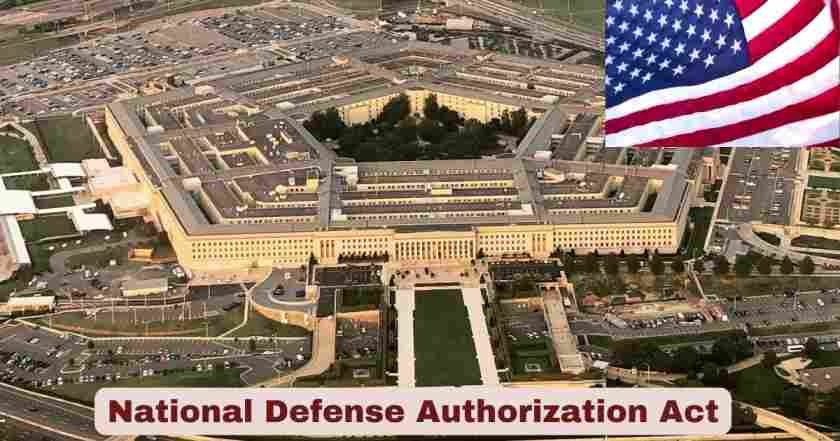
National Defense Authorization Act in America 2026
The National Defense Authorization Act for Fiscal Year 2025 represents the 64th consecutive year that Congress has successfully enacted defense authorization legislation, maintaining an unbroken record that spans more than six decades of American military planning and budgetary oversight. President Biden signed the legislation into law on December 23, 2024, authorizing a total of $895.2 billion in funding for national defense priorities. This legislation serves as the foundational framework for Department of Defense operations, military personnel policies, weapons procurement, technological advancement, and strategic deterrence capabilities that shaped American military readiness throughout fiscal year 2025.
The Act addressed critical national security challenges facing the United States, including strategic competition with China and Russia, advancement of disruptive technologies such as hypersonic weapons and artificial intelligence, modernization of naval vessels and combat aircraft, and comprehensive improvements to servicemember quality of life. The bipartisan nature of this legislation reflected congressional commitment to ensuring that American armed forces maintain the training, equipment, and resources necessary to execute their missions effectively. The NDAA 2025 allocated $849.9 billion specifically for Department of Defense operations and $33.3 billion for Department of Energy national security programs, demonstrating the substantial investment required to maintain American military superiority in an increasingly complex global security environment. Following this landmark legislation, Congress has now passed the NDAA for Fiscal Year 2026 in December 2025, marking the 65th consecutive year of defense authorization and authorizing $900 billion in defense spending.
Interesting Stats & Facts About NDAA 2025 in America
| Fact Category | Verified Data |
|---|---|
| Consecutive Years of Passage | 64th consecutive year Congress enacted NDAA legislation |
| Presidential Signature Date | December 23, 2024 – signed into law by President Biden |
| House Vote Results | Passed 281-140 on December 11, 2024 |
| Senate Vote Results | Passed 85-14 on December 18, 2024 |
| Total Authorized Funding | $895.2 billion for national defense |
| Servicemember Pay Raise | 4.5 percent across-the-board military pay increase |
| Junior Enlisted Additional Raise | 10 percent extra for grades E-1 through E-4 |
| Total Junior Enlisted Increase | 14.5 percent combined pay raise for junior personnel |
| DOD Civilian Pay Raise | 2 percent increase for civilian employees |
| Pacific Deterrence Initiative | $15.5 billion authorized with additional $1 billion |
| Transfer Authority | Up to $6 billion in general transfer authority |
| Active Duty End Strength Army | 442,300 authorized personnel |
| Active Duty End Strength Navy | 332,300 authorized personnel |
| Active Duty End Strength Marines | 172,300 authorized personnel |
| Active Duty End Strength Air Force | 320,000 authorized personnel |
| Active Duty End Strength Space Force | 9,800 authorized personnel |
| Virginia-Class Submarine Funding | Additional $357 million for second ship set |
| Arleigh Burke Destroyer Funding | Additional $700 million for construction |
| Basic Needs Allowance Expansion | Extended to households earning up to 200 percent of federal poverty guidelines |
| Barracks Improvement Funding | Authorized increased funding to repair enlisted barracks |
| Nuclear-Armed Sea-Launched Cruise Missile | $252 million authorized for development |
| NDAA 2026 Follow-up | $900 billion authorized for FY2026 (65th consecutive year) |
| NDAA 2026 Senate Vote | Passed 77-20 on December 17, 2025 |
| NDAA 2026 House Vote | Passed 312-112 on December 10, 2025 |
| NDAA 2026 Pay Raise | 3.8 percent for all servicemembers in FY2026 |
Data Source: U.S. Senate Armed Services Committee FY25 NDAA Conference Executive Summary, Congress.gov, December 2024
Legislative Timeline and Voting Statistics for NDAA in the US 2025
The National Defense Authorization Act 2025 followed a comprehensive legislative process that demonstrated both bipartisan cooperation and the critical importance of defense authorization in congressional priorities. The journey from initial budget submission to presidential signature involved multiple committee markups, floor debates, and extensive negotiation between House and Senate conferees to reach the final $895.2 billion authorization level.
The House passed its version with a vote of 217-199 on June 14, 2024, while the Senate Armed Services Committee approved its version in a 22-3 vote on June 14, 2024. The final conference agreement saw overwhelming bipartisan support, with the House passing the bill 281-140 on December 11 and the Senate approving it 85-14 on December 18. This strong majority in both chambers reflects the legislation’s essential role in maintaining national security infrastructure and supporting military readiness. The legislative vehicle ultimately used was H.R. 5009, officially titled the “Servicemember Quality of Life Improvement and National Defense Authorization Act for Fiscal Year 2025.”
The bill’s formal designation as Public Law 118-159 occurred when President Biden signed it on December 23, 2024. The timeline demonstrates the extensive deliberation process, with House Armed Services Committee markup beginning in May 2024, Senate committee consideration in June 2024, and final conference negotiations concluding in December 2024. The 64th consecutive passage of an NDAA underscores the legislation’s status as “must-pass” legislation that transcends partisan divisions to address fundamental national security requirements. Senator Roger Wicker of Mississippi, chairman of the Senate Armed Services Committee, praised the bipartisan tradition, stating this represents the 64th year in a row Congress has come together across the aisle to strengthen national defense.
| Legislative Milestone | Date | Vote/Action |
|---|---|---|
| President’s Budget Submission | March 11, 2024 | Budget request submitted to Congress |
| House Committee Markup | May 22, 2024 | HASC approved 57-1 |
| House Passage (Initial) | June 14, 2024 | Passed 217-199 |
| Senate Committee Approval | June 14, 2024 | SASC approved 22-3 |
| Conference Report Release | December 7, 2024 | Final negotiated text announced |
| House Passage (Final) | December 11, 2024 | Passed 281-140 |
| Senate Passage (Final) | December 18, 2024 | Passed 85-14 |
| Presidential Signature | December 23, 2024 | Signed into law as P.L. 118-159 |
Data Source: Congress.gov FY2025 NDAA Status of Legislative Activity, December 2024
The voting patterns reveal significant bipartisan consensus on the final version, with the House seeing 141 more affirmative votes in the final passage compared to the initial June vote, and the Senate achieving an 85-14 supermajority. These numbers demonstrate that despite initial disagreements and controversial provisions, lawmakers from both parties recognized the necessity of passing comprehensive defense authorization before the end of the calendar year. The successful passage maintained the unbroken streak of NDAA legislation that has continued since 1961, with no fiscal year passing without defense authorization.
Total Defense Funding Breakdown for NDAA in America 2025
The National Defense Authorization Act 2025 authorizes a comprehensive funding structure totaling $895.2 billion for national defense activities, representing a $9 billion or 1 percent increase over fiscal year 2024 levels. This substantial investment reflects strategic priorities focused on great power competition, technological modernization, and quality of life improvements for servicemembers across all branches of the armed forces.
The largest allocation within the NDAA framework directs $849.9 billion to the Department of Defense for military operations, personnel, procurement, research and development, and operational maintenance. An additional $33.3 billion supports Department of Energy national security programs, primarily focused on nuclear weapons stockpile stewardship, naval reactor programs, and defense environmental cleanup activities. The remaining $0.5 billion covers other defense-related activities, while $11.5 billion in defense-related spending falls outside NDAA jurisdictional authority, bringing the national defense topline to the full $895.2 billion authorization level.
The legislation also provides up to $6 billion in general transfer authority, allowing the Secretary of Defense flexibility to reallocate resources to address unforeseen higher-priority needs through normal reprogramming procedures. This transfer authority represents a critical management tool that enables responsive adaptation to evolving threats and operational requirements throughout the fiscal year. The funding structure maintains alignment with the Fiscal Responsibility Act spending caps while prioritizing readiness, modernization, and personnel support across all defense programs. The Pacific Deterrence Initiative receives $15.5 billion, including an additional $1 billion above the budget request to address unfunded requirements in the Indo-Pacific region.
| Funding Category | Authorized Amount |
|---|---|
| Department of Defense | $849.9 billion |
| Department of Energy National Security Programs | $33.3 billion |
| Other Defense-Related Activities | $0.5 billion |
| NDAA Topline (Within Jurisdiction) | $883.7 billion |
| Defense Activities Outside NDAA Jurisdiction | $11.5 billion |
| National Defense Topline Total | $895.2 billion |
| General Transfer Authority | Up to $6 billion |
| Pacific Deterrence Initiative | $15.5 billion (includes $1B additional) |
| European Deterrence Initiative | Fully authorized per budget request |
| National Nuclear Security Administration | $24.9 billion |
| DOE Defense Environmental Cleanup | $7.0 billion |
| DOE Other Defense Activities | $1.1 billion |
| DOE Nuclear Energy Activities | $150 million |
| Cooperative Threat Reduction Program | $350.1 million |
| Defense Nuclear Facilities Safety Board | $47.2 million |
Data Source: U.S. Senate Armed Services Committee FY25 NDAA Conference Executive Summary, December 2024
This funding architecture represents strategic investment across multiple domains of military capability. The Department of Energy’s $24.9 billion allocation for the National Nuclear Security Administration ensures continued modernization of America’s nuclear deterrent, while $7 billion addresses legacy defense environmental cleanup obligations at former weapons production sites. The European Deterrence Initiative receives full funding per the budget request to support NATO allies and counter Russian aggression in Eastern Europe. The $350.1 million for the Cooperative Threat Reduction program continues efforts to secure and eliminate weapons of mass destruction in former Soviet states and other partner nations.
Military Personnel Pay and Compensation in the US 2025
The NDAA 2025 implements historic pay increases designed to improve servicemember financial security and retention across all military branches. The legislation authorizes a 4.5 percent across-the-board pay raise for all military members, representing the largest general military pay increase in recent years and addressing concerns about compensation keeping pace with civilian sector wage growth and inflation pressures affecting military families.
Recognizing the particular financial challenges facing junior enlisted personnel, Congress authorized an additional 10 percent targeted pay raise for servicemembers in grades E-1 through E-4, resulting in a combined 14.5 percent total pay increase for this cohort. This unprecedented junior enlisted pay boost addresses concerns about military families relying on food assistance programs and aims to improve recruitment and retention among entry-level personnel who form the foundation of military readiness. The legislation also provides a 2 percent pay raise for Department of Defense civilian employees, ensuring that the civilian workforce supporting military operations receives appropriate compensation adjustments.
Beyond basic pay increases, the NDAA 2025 expands the Basic Needs Allowance eligibility to military households earning up to 200 percent of federal poverty guidelines, significantly increasing the number of families who can access this financial assistance. The Act authorizes servicemembers below grade E-6 without dependents assigned to sea duty to receive Basic Allowance for Housing, addressing inequities in housing compensation. Additionally, the legislation provides free high-speed internet access and wireless network connections to servicemembers residing in unaccompanied housing within the United States, recognizing connectivity as an essential quality of life element for modern military personnel. The Act also authorizes an increase of $70 million in Impact Aid, including $50 million for supplemental Impact Aid and $20 million for Impact Aid for military children with severe disabilities.
| Compensation Category | Authorized Increase/Amount |
|---|---|
| General Military Pay Raise | 4.5 percent for all servicemembers |
| Junior Enlisted Additional Raise | 10 percent for E-1 through E-4 grades |
| Total Junior Enlisted Increase | 14.5 percent combined pay raise |
| DOD Civilian Employee Raise | 2 percent increase |
| Basic Needs Allowance Expansion | Up to 200 percent of federal poverty guidelines |
| Maximum Skill Proficiency Bonus | Increased to $55,000 annually |
| Health Professions Accession Bonus | Increased from $20,000 to $100,000 maximum |
| Impact Aid for Military Children | $70 million increase ($50M supplemental, $20M severe disabilities) |
| Barracks Repair and Improvement | Authorized increased funding across all services |
| Basic Allowance for Housing | Extended to E-6 and below without dependents on sea duty |
| Free Internet Access | Provided to servicemembers in unaccompanied housing |
| Travel Reimbursement for Reserves | Authorized for inactive-duty training and muster duty |
Data Source: U.S. Senate Armed Services Committee FY25 NDAA Conference Executive Summary, December 2024
The NDAA also increases the maximum annual skill proficiency bonus from previous levels to $55,000, providing enhanced incentives for servicemembers who maintain critical language skills, technical certifications, or specialized competencies essential to military operations. The maximum accession bonus for health professions scholarship and financial assistance programs increases dramatically from $20,000 to $100,000, addressing chronic shortages of military physicians, nurses, and other medical professionals. These compensation enhancements represent congressional recognition that competitive pay and benefits are essential to recruiting and retaining the high-quality all-volunteer force that American military superiority requires.
Active Component Military End Strength for US 2025
The National Defense Authorization Act 2025 establishes authorized active-duty end strength levels for each military service, setting personnel targets for September 30, 2025. These end strength authorizations reflect Department of Defense assessments of force structure requirements balanced against budgetary constraints and ongoing recruitment challenges across the services throughout fiscal year 2025.
The Army receives authorization for 442,300 active-duty personnel, representing a decrease from fiscal year 2024 levels as the service continues adjusting to recruitment realities and budgetary pressures. The Navy’s authorized end strength stands at 332,300 personnel, while the Marine Corps maintains 172,300 active-duty members. The Air Force receives authorization for 320,000 active-duty personnel, and the Space Force, as the newest military branch established in 2019, continues its measured growth with 9,800 authorized personnel for fiscal year 2025.
These end strength numbers reflect ongoing tension between desired force levels and achievable recruitment goals. Service officials have cited multiple factors constraining end strength, including low civilian unemployment rates that reduce the pool of potential recruits, budgetary constraints under the Fiscal Responsibility Act spending caps, and the need for stable and predictable funding to support recruitment infrastructure. The Department of Defense decreased its fiscal year 2025 end strength requests from 2024 levels, with officials explaining that legislating unreachable end strength numbers would set the services up for failure by encouraging quantity over quality in recruiting standards. The combined active component end strength across all services totals 1,276,700 personnel authorized for fiscal year 2025.
| Military Service | FY 2025 Authorized End Strength | Personnel Count |
|---|---|---|
| Army | Active Duty | 442,300 |
| Navy | Active Duty | 332,300 |
| Marine Corps | Active Duty | 172,300 |
| Air Force | Active Duty | 320,000 |
| Space Force | Active Duty | 9,800 |
| Total Active Component | All Services Combined | 1,276,700 |
Data Source: Congress.gov FY2025 NDAA Active Component End-Strength, December 2024
The Space Force authorization of 9,800 personnel represents continued institutional development of the service. The NDAA 2025 requires the Air Force to transfer certain space functions of the Air National Guard to the Space Force, though this transfer will not reduce end strength for affected state Air National Guard organizations. The legislation also authorizes increased funding to increase full-time Active, Guard, and Reserve members within the Air National Guard, demonstrating congressional commitment to maintaining robust reserve component capabilities alongside active-duty forces. The Act establishes the position of the Vice Chief of Space Operations, who will serve in the grade of general, providing senior leadership structure for the expanding service.
Reserve Component Military End Strength in America 2025
The NDAA 2025 authorizes reserve component end strength levels that largely align with Department of Defense requests, with one notable exception for the Air National Guard. The reserve component consists of federal reserve forces for all services plus the Army National Guard and Air National Guard, providing critical surge capability, homeland defense capacity, and cost-effective force structure for sustained operations.
The legislation authorizes reserve component end strengths in line with presidential requests for most components. However, Congress authorized 600 more personnel than requested for the Air National Guard, bringing the total authorized end strength to 108,300 personnel. This increase addresses concerns about maintaining Air National Guard capabilities while simultaneously transferring space-related units and personnel to the Space Force. The Senate Armed Services Committee explained this increase as necessary to offset any reductions that may occur as a result of transferring units and personnel from the Air National Guard to the Space Force.
Reserve component forces have experienced declining authorized end strengths since 2009 as U.S. military commitments in Iraq and Afghanistan diminished and services faced growing recruitment challenges. The Senate Armed Services Committee has stated in recent years that it chose to recommend lower end strengths than requested to avoid legislating unreachable end strength numbers that would force services to lower recruiting standards. The NDAA 2025 reserve component authorizations reflect this philosophy while ensuring adequate reserve capacity to support active forces during mobilization and contingency operations. The Army National Guard maintains the largest reserve component with 325,000 authorized personnel, reflecting its dual federal and state mission responsibilities.
| Reserve Component | FY 2025 Authorized End Strength |
|---|---|
| Army National Guard | 325,000 |
| Army Reserve | 185,500 |
| Navy Reserve | 58,000 |
| Marine Corps Reserve | 38,500 |
| Air National Guard | 108,300 (600 above request) |
| Air Force Reserve | 69,200 |
Data Source: Congress.gov FY2025 NDAA Reserve Component End-Strength, December 2024
The Army Reserve authorization of 185,500 provides operational reserve capacity to supplement active Army formations during sustained operations. Naval Reserve forces at 58,000 and Marine Corps Reserve at 38,500 personnel maintain specialized capabilities and individual augmentation capacity for their respective services. The Air Force Reserve authorization of 69,200 complements Air National Guard capabilities in providing aviation and support functions across the total force. The legislation requires reimbursement of expenses for members of the Reserve Component who travel to attend inactive-duty training and muster duty, addressing financial burdens on reservists who must travel significant distances for required training.
Naval Warfare and Shipbuilding Programs in US 2025
The National Defense Authorization Act 2025 makes substantial investments in naval warfare capabilities and shipbuilding programs, recognizing maritime superiority as essential to American strategic interests, particularly in the Indo-Pacific theater where naval power projection remains critical to deterring Chinese aggression. The legislation addresses both immediate procurement needs and long-term industrial base concerns affecting naval shipbuilding capacity.
The Act authorizes an additional $700 million for the Navy to enter into an incrementally funded contract for construction of an Arleigh Burke-class destroyer, maintaining production of these versatile surface combatants that serve as the backbone of the fleet. More significantly, the legislation provides an additional $357 million to purchase a second ship set of material and enter into an incrementally funded contract for construction of a Virginia-class submarine in fiscal year 2025. This second submarine addresses concerns about submarine production rates and the submarine industrial base’s capacity to meet both U.S. Navy requirements and commitments under the AUKUS partnership with Australia and the United Kingdom.
The NDAA also authorizes a multiyear contract for up to 37 CH-53K airframes and engines, providing procurement stability for Marine Corps heavy-lift helicopter modernization. The legislation authorizes $252 million to support continued Navy development of the nuclear-armed sea-launched cruise missile, re-establishing a capability that provides flexible deterrent options across the spectrum of conflict. Additional authorizations include increased funding for the Autonomous Low Profile Vessel program and authority to increase the number of used, foreign-built ships for the Ready Reserve Force from 9 vessels to 10 vessels, enhancing strategic sealift capacity. The Act fully supports Marine Corps Force Design modernization priorities that emphasize distributed maritime operations and long-range precision fires.
| Naval Program | Authorized Funding/Action |
|---|---|
| Arleigh Burke-Class Destroyer | Additional $700 million incremental funding |
| Virginia-Class Submarine | Additional $357 million for second ship set |
| CH-53K Multiyear Contract | Up to 37 airframes and engines |
| Nuclear-Armed Sea-Launched Cruise Missile | $252 million development funding |
| Autonomous Low Profile Vessel | Increased funding authorization |
| Ready Reserve Force Ships | Authority increased from 9 to 10 vessels |
| Large/Extra-Large UUV Demonstration | Competitive demonstration required including non-developmental items |
| Constellation-Class Frigate | Funding fenced pending design completion certification |
| Landing Ship Medium | Lead ship construction prohibited pending design certification |
| E-2D Hawkeye Aircraft | Reduced funding as production line shutdown funding unnecessary |
Data Source: U.S. Senate Armed Services Committee FY25 NDAA Conference Executive Summary, December 2024
The legislation imposes important accountability measures on shipbuilding programs experiencing design and production challenges. Fiscal year 2025 funds for Constellation-class frigate construction are fenced pending Department of Defense certification relating to design completion, addressing concerns about beginning construction before detailed design work is sufficiently mature. Similarly, the Act prohibits lead ship construction for the Landing Ship Medium pending certification of design completion, while authorizing procurement or chartering of a minimally-modified commercial or non-developmental landing ship that meets core Marine Corps sealift and beach landing requirements. The Act extends the termination date for the National Commission on the Future of the Navy, allowing continued strategic assessment of fleet composition and shipbuilding priorities. The legislation requires the full-scale testing of a minimum of two electric propulsion motor technologies for the DDG(X) program, ensuring technological maturity before committing to large-scale production.
Air Power Modernization and Aircraft Programs for America 2025
The National Defense Authorization Act 2025 authorizes significant funding increases for procurement of combat aircraft and munitions while making strategic decisions about aircraft fleet composition and modernization priorities. The legislation balances maintaining current capability with investing in next-generation platforms and supporting the defense industrial base capacity for aviation production and sustainment.
The Act approves Air Force requests to retire 56 A-10 Thunderbolt II close air support aircraft, 65 F-15C/D air superiority fighters, and 11 F-16C/D multirole fighters, allowing the service to divest aging platforms with high maintenance costs. However, Congress disapproved Air Force proposals to retire 26 F-15E Strike Eagles and 32 F-22 Raptor air superiority fighters, preserving critical strike and air dominance capabilities that remain relevant to great power competition scenarios. The legislation requires the Air Force to maintain 16 E-3 Sentry airborne warning and control system aircraft until they can be replaced by E-7 Wedgetail aircraft or until retirement would create no lapse in Air Force command and control capabilities.
The NDAA authorizes increased funding for procurement of enduring combat aircraft, including continued investment in F-35 Joint Strike Fighter production and modernization. The Act requires an analysis of how the air superiority mission will be secured for the Joint Force in the 2030s and 2040s, directing the Air Force and Navy to jointly conduct a study on the future of air dominance. The legislation requires a plan and cost estimate for modernizing all 25 fighter aircraft squadrons in the Air National Guard, ensuring reserve component aviation capabilities remain relevant. The Act authorizes reduced funding for the C-40 aircraft fleet expansion program and the Survivable Airborne Operations Center due to contract delays, while directing the Army to provide options regarding improved safety at National Guard helicopter units.
| Air Power Program | Authorized Action/Funding |
|---|---|
| A-10 Retirements Approved | 56 aircraft authorized for divestment |
| F-15C/D Retirements Approved | 65 aircraft authorized for divestment |
| F-16C/D Retirements Approved | 11 aircraft authorized for divestment |
| F-15E Retirements Disapproved | 26 aircraft preserved in inventory |
| F-22 Retirements Disapproved | 32 aircraft preserved in inventory |
| E-3 Sentry Requirement | 16 aircraft minimum until E-7 replacement |
| Air National Guard Fighters | 25 squadrons requiring modernization plan |
| Combat Aircraft Procurement | Increased funding authorization |
| Munitions Procurement | Increased funding authorization |
| Army ITEP | Increased funding for Improved Turbine Engine Program |
| Infantry Squad Vehicle | Increased funding to accelerate fielding |
| UH-72A Lakota | Increased funding for lifecycle support |
Data Source: U.S. Senate Armed Services Committee FY25 NDAA Conference Executive Summary, December 2024
The Act supports the Army’s priority modernization efforts in future vertical lift, authorizing increased funding for the UH-72A Lakota lifecycle and directing a report on the Army’s strategy for long-term sustainment and modernization of the Lakota fleet. The legislation authorizes increased funding for the Army Improved Turbine Engine Program, which will power the next generation of Army helicopters including the UH-60 Black Hawk and AH-64 Apache. The Act directs a report on the Army’s plan to modernize the Army National Guard aviation fleet, ensuring reserve component rotary-wing capabilities remain viable. The legislation requires an annual report on the Air Force tactical fighter force structure, providing congressional oversight of fighter aircraft inventory decisions and modernization timelines.
Indo-Pacific Strategic Initiatives for US 2025
The National Defense Authorization Act 2025 prioritizes Indo-Pacific security through comprehensive initiatives designed to strengthen alliance networks, bolster U.S. force posture, and deter Chinese aggression in the region. The legislation recognizes the Indo-Pacific theater as the priority theater for American national security interests and allocates substantial resources accordingly.
The Act authorizes $15.5 billion for the Pacific Deterrence Initiative, including an additional $1 billion to address unfunded requirements in the Indo-Pacific region beyond the original budget request. This funding supports enhanced military capabilities, expanded exercises with allies and partners, and improved infrastructure across the theater. The legislation requires a plan for the establishment of joint force headquarters subordinate to U.S. Indo-Pacific Command in Japan, enhancing command and control capabilities and deepening the U.S.-Japan alliance.
The NDAA authorizes a Taiwan Security Cooperation Initiative to enable the provision of defense articles and services to Taiwan, consistent with the Taiwan Relations Act. This initiative provides a framework for supporting Taiwan’s self-defense capabilities in the face of increasing Chinese military pressure. The Act requires a plan for advancing trilateral security cooperation among the United States, Japan, and the Republic of Korea, institutionalizing security coordination among these three critical allies. The legislation adds Japan and the Republic of Korea to the contested logistics demonstration and prototyping program, improving logistical interoperability and resilience. The Act authorizes $49 million additional funding for the INDOPACOM Joint Training Team, expanding capacity to train partner forces throughout the region.
| Indo-Pacific Initiative | Authorized Funding/Action |
|---|---|
| Pacific Deterrence Initiative | $15.5 billion (includes $1B additional) |
| Taiwan Security Cooperation Initiative | Authorized to provide defense articles and services |
| Joint Force HQ in Japan | Plan required for establishment subordinate to INDOPACOM |
| Trilateral Cooperation Plan | U.S.-Japan-ROK security cooperation advancement required |
| INDOPACOM Joint Training Team | Additional $49 million authorized |
| Temporary Military Construction Authority | $30 million per project limit for INDOPACOM Commander |
| Guam Missile Defense Plan | Plan required for radar coverage against simultaneous threats |
| Guam Missile Defense Briefing | Annual briefing required |
| Indo-Pacific Logistics Review | Required review of military logistics network |
| Nuclear Deterrence Education Pilot | Authorized for Australian, Japanese, ROK personnel |
| Military Capabilities Report | Annual report on allies and partners in Indo-Pacific |
Data Source: U.S. Senate Armed Services Committee FY25 NDAA Conference Executive Summary, December 2024
The legislation temporarily grants military construction authority to the INDOPACOM Commander, limited to $30 million per project, providing flexibility to address urgent infrastructure needs without lengthy approval processes. The Act requires a plan for ensuring radar coverage of Guam for defense against simultaneous ballistic missile threats from China and North Korea, recognizing Guam’s vulnerability as a critical forward operating base. The legislation requires an annual briefing on the missile defense of Guam, ensuring congressional oversight of this critical defensive capability. The Act requires a review of the U.S. military logistics network in the Indo-Pacific and a plan for addressing any deficiencies, recognizing that logistics and sustainment capabilities will be decisive in any extended conflict in the theater.
Cybersecurity and Emerging Technologies in America 2025
| Technology Program | Authorized Action/Funding |
|---|---|
| Dedicated Cyber Intelligence Capability | Established to support intelligence on cyber threat actors |
| Joint Force HQ – DODIN Elevation | Elevated to sub-unified command under CYBERCOM |
| Cyber Table Top Exercises | Program established for defense industrial base |
| AI Pilot for Depots/Shipyards | Pilot program required to optimize workflow |
| Quantum Benchmarking Initiative | DARPA required to establish for quantum computing |
| Advanced Computing Infrastructure | Program established for high-performance computing and AI |
| AI Working Group | Established to coordinate AI initiative among allies |
| AI for Biotechnology | Pilot program for national security biotechnology applications |
| Zero Trust Strategy for IoT | Guidance required for Internet of Things hardware |
| Multi-Cloud Cybersecurity Strategy | Required for management of DOD multi-cloud environments |
The National Defense Authorization Act 2025 makes substantial investments in cybersecurity capabilities and emerging technologies that will define future warfare, including artificial intelligence, quantum computing, directed energy, and hypersonic weapons. The legislation recognizes that technological superiority is essential to maintaining American military advantage against peer competitors.
The Act establishes a dedicated DOD cyber intelligence capability to support foundational, scientific, and all-source intelligence on cyber threat actors’ operations and capabilities. The legislation elevates the Joint Force Headquarters – Department of Defense Information Networks to a sub-unified command under U.S. Cyber Command, providing enhanced authorities and resources for defending DOD networks. The NDAA requires DOD to establish a program for cyber table top exercises with the defense industrial base, including a series conducted by DOD and packages that can be provided directly to the defense industrial base for its use, enhancing private sector cybersecurity resilience.
The Act requires a pilot program to assess the use of AI-enabled software to optimize the workflow and operations for DOD depots, shipyards, manufacturing facilities, and contract administration services. This initiative could significantly improve efficiency and reduce costs across DOD’s logistics enterprise. The legislation requires DARPA to establish a Quantum Benchmarking Initiative to rapidly expand and support the development of quantum computing capabilities for DOD, positioning the Department to leverage quantum technologies as they mature. The Act establishes an advanced computing infrastructure program within DOD to expand the infrastructure available for development and deployment of military applications of high-performance computing and AI capabilities.
Disclaimer: This research report is compiled from publicly available sources. While reasonable efforts have been made to ensure accuracy, no representation or warranty, express or implied, is given as to the completeness or reliability of the information. We accept no liability for any errors, omissions, losses, or damages of any kind arising from the use of this report.