
Where is Kharg Island Oil?
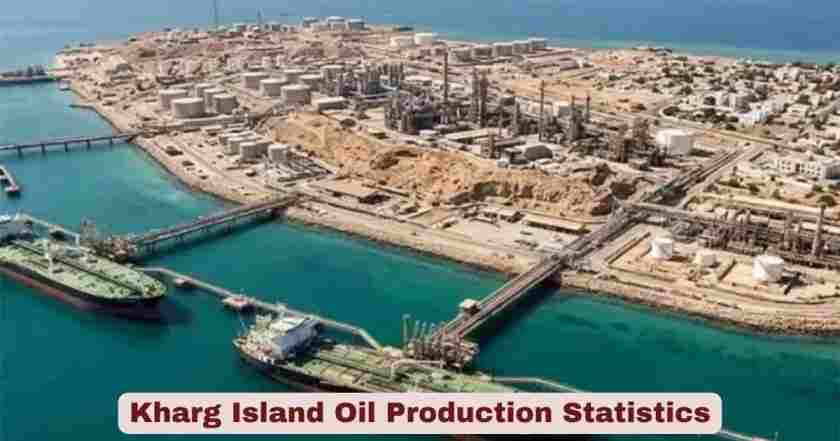
Kharg Island — known to Iranians as the “Forbidden Island” because of the tight IRGC military controls that make it accessible to almost no one outside the oil industry and the security services — is a small coral outcrop in the northern Persian Gulf, approximately 25 kilometres (15 miles) off the coast of Iran and 660 kilometres (410 miles) northwest of the Strait of Hormuz. It is just 8 kilometres long and 4–5 kilometres wide — roughly one-third the size of Manhattan — and yet this tiny island is, arguably, the single most economically consequential piece of real estate in the Middle East. Kharg processes approximately 90–96% of all Iranian crude oil exports, with tanker-tracking firm Kpler documenting in its March 16, 2026 analysis that 553 million barrels (1.52 million barrels per day) of Iran’s roughly 587 million barrels of total crude exports over the preceding 12 months flowed through the island’s terminals. That concentration of export dependency in a single island terminal has no parallel among any other major oil-producing nation on earth — Saudi Arabia, Russia, Kuwait, and the UAE all maintain geographically diversified export infrastructure, but Iran has, for structural and historical reasons, organized almost its entire oil export system around one island built as a terminal in the 1960s under the reign of Mohammad Reza Shah Pahlavi in partnership with the American company Amoco. The island sits close to offshore oil fields — the Faridun, Darius, Cyrus, and Ardašir fields — while most of its export volume arrives through a 159-kilometre pipeline system from the massive onshore fields of Khuzestan province: Ahvaz, Marun, and Gachsaran. That province alone produces approximately 70% of Iran’s oil. Those pipelines connect the wellhead to the jetty, and the jetty connects Iran’s economy to the world. When the island works, Iran has oil revenues. When the island is threatened, Iran faces fiscal crisis.
The story of Kharg Island in 2026 is inseparable from the Iran war (Operation Epic Fury) that began on February 28, 2026, and which has placed the island at the absolute center of the most consequential energy market event since the 1973 OPEC oil embargo. In the weeks before the war started, satellite imagery and tanker tracking data captured Iran’s awareness of what was coming: between February 15 and 20, 2026, Iran surged its loading rate at Kharg to nearly three times its normal pace — approximately 4 million barrels per day versus the typical 1.3–1.6 million bpd — deliberately front-loading oil revenues in advance of anticipated disruption. Storage levels at the island fell from 27 full tanks in mid-January to just 9 full tanks by early March, as Iran drew down its stockpile and rushed oil onto tankers. On March 13, 2026, US forces struck the island in what President Trump described as “one of the most powerful bombing raids in the history of the Middle East” — hitting more than 90 military targets including IRGC naval mine storage and missile installations, while deliberately leaving the oil infrastructure untouched. The oil continued flowing. And as of March 24, 2026 — today — tanker data shows Kharg remains operational, export activity continues, and the entire world is watching to see whether Trump’s warning — that if Iran interferes with Strait of Hormuz shipping, Washington “will immediately reconsider this decision” about sparing the oil facilities — will transform the island from an operational oil terminal into a burning strategic target.
Kharg Island Key Facts in Iran 2026
| Fact Category | Key Fact / Data Point |
|---|---|
| Location | Persian Gulf — 25 km (15 miles) off Iran’s southwestern coast; 660 km (410 miles) northwest of Strait of Hormuz |
| Island Dimensions | Approximately 8 km long × 4–5 km wide — roughly 1/3 the size of Manhattan |
| Total Area | Approximately 20 square kilometres |
| Administrative Province | Bushehr Province, Iran |
| Governing Military Body | Islamic Revolutionary Guard Corps (IRGC) — access restricted; “Forbidden Island” nickname |
| IRGC Unit | 112th Zolfaghar Surface Combat Brigade — operates fast-attack boats from the island |
| Share of Iran’s Crude Oil Exports | 90–96% — approximately 94–96% per Kpler 12-month tanker data (2025) |
| Crude Exports Through Kharg (12 months to March 2026) | ~553 million barrels (1.52 million bpd) — of total 587 Mbbl national exports — Kpler March 16, 2026 |
| Iran Total Crude Exports (12 months to March 2026) | 1.61–1.64 million barrels per day — per Kpler |
| Pre-War Export Rate (Normal) | 1.3–1.6 million bpd — daily loading from Kharg terminals |
| Export Surge (Feb 15–20, 2026) | Loading rate climbed to nearly 4 million bpd — approximately 3× normal pace |
| Loading Capacity (Maximum Designed) | 7 million barrels per day — per Al Jazeera 2026; Britannica |
| Loading Capacity (Theoretical Maximum — IODC data) | 5 million bpd — Iran Open Data Center estimate; more conservative than Britannica |
| Storage Capacity (Total) | 30–34 million barrels — across 55 storage tanks |
| Tanks at Full Before Pre-War Drawdown (Mid-January 2026) | 27 tanks full |
| Tanks at Full by March 7, 2026 (Post-Drawdown) | Only 9 tanks full — Iran had drawn down dramatically |
| Inventory at Start of War (Feb 28, 2026) | ~18 million barrels stored (Kpler via Reuters) — 58% of capacity |
| US Strike Date (Military Targets) | March 13, 2026 — 90+ military installations struck; oil infrastructure deliberately spared |
| Supertankers Accommodated Simultaneously | 8–10 VLCCs simultaneously — deep water allows largest oil tankers |
| Nearby Offshore Oil Fields | Faridun, Darius, Cyrus, Ardašir — subsea pipelines run directly to island |
| Primary Onshore Pipeline Source | 159 km pipeline from Ahvaz/Marun/Gachsaran fields in Khuzestan Province |
| Terminal Inaugurated | November 8, 1960 — first terminal opened under Shah; built with Amoco partnership |
| CIA 1984 Assessment | “The most vital facilities in Iran’s oil system, and their continued operation is essential to Iran’s economic well-being” |
Source: Kpler “Explainer: Why Kharg Island is the Backbone of Iran’s Oil Economy” (March 16, 2026, kpler.com); CNN “What to know about Kharg Island” (March 14, 2026, cnn.com); Euronews “Explainer: Why Kharg Island is vital to Iran and the global economy” (March 16, 2026, euronews.com); Iran Open Data Center “Kharg Island: The Chokepoint Behind 96% of Iran’s Oil Exports” (iranopendata.org); Iran International (March 14, 2026); Arab News “What is Kharg Island” (March 24, 2026, arabnews.com); Britannica Kharg Island (britannica.com)
The 94–96% export concentration at Kharg Island is the number that anchors every strategic, economic, and military analysis of Iran’s oil sector, and it has no parallel in the global oil industry. Of the country’s roughly 587 million barrels of crude exports over the past year, around 553 million barrels passed through Kharg alone — confirming a dependency so extreme that the island has been accurately described as “the financial circulatory system of the Iranian state.” Iran’s only meaningful alternative terminal outside the Strait of Hormuz is Jask, developed partly as a strategic bypass, yet its use has remained limited — Kpler documented just one cargo of roughly 2 million barrels loaded at Jask in early March 2026, its first use since September 2024. The Goreh-Jask pipeline was designed for up to 1 million bpd but is widely estimated to operate at closer to 300,000 bpd effective capacity. This gap between Kharg’s 1.5 million bpd throughput and Jask’s 300,000 bpd effective capacity is an irreplaceable 1.2 million bpd that has no alternative routing — meaning that any sustained disruption to Kharg operations does not merely inconvenience Iran. It removes the fiscal foundation of the Iranian state.
The CIA’s 1984 assessment — that Kharg represents “the most vital facilities in Iran’s oil system” — was written during the Iran-Iraq War when Iraqi forces were repeatedly bombing the island with the explicit strategic objective of crippling Iran’s war-financing capability. The assessment has aged flawlessly. Four decades later, the island’s strategic description has not changed; only the threat has. In 2026, it is the United States and Israel — not Iraq — whose military aircraft are orbiting the island, whose naval forces are positioned in the Persian Gulf, and whose political leadership is explicitly threatening to strike the oil infrastructure that the CIA identified as essential to Iran’s economic survival. Trump’s public warning that the United States “will immediately reconsider” its decision to spare the oil facilities if Iran interferes with Strait of Hormuz shipping is the contemporary version of the same strategic pressure that Iraqi air forces applied with bombs in the 1980s — only with far greater precision, far greater scale, and with a political decision-making process that is visibly playing out in public in real time.
Kharg Island Oil Export Volume Statistics in Iran 2026
| Export Volume Metric | Data / Statistic |
|---|---|
| Iran Total Crude Exports (Full Year 2025) | ~1.68 million bpd — Kpler peak; +9% increase from 2023 to 2025 |
| Iran Total Crude Exports (12 months to March 2026) | ~1.61–1.64 million bpd — Kpler tanker tracking data |
| Kharg Island Exports (12 months to March 2026) | ~1.52 million bpd (553 Mbbl) — Kpler March 16, 2026 |
| Kharg Share of Total Iran Exports | ~94–96% — Kpler, Iran International, Iran Open Data Center all confirm |
| Normal Daily Loading Rate | 1.3–1.6 million bpd — standard operational pace |
| Pre-War Export Surge (Feb 15–20, 2026) | Nearly 4 million bpd — close to 3× normal pace — JP Morgan analysis |
| First Two Weeks of March 2026 | Kharg handled at least 8 crude loadings totalling nearly 14 million barrels — Kpler |
| Specific Loadings Documented (March 11, 2026) | Tankers Serena and Sinopa loaded cargoes on March 11 — two days before US strikes |
| Post-Strike Activity | One VLCC completed 2 million barrel loading shortly after March 13 strikes — Iran International |
| Loading Since War Outbreak | TankerTrackers.com: tankers loading “non-stop since the war broke out“ |
| China — Primary Destination | ~1.252–1.5 million bpd to China — nearly 100% of Iranian exports destined for Chinese refineries |
| Chinese Floating Storage (March 2026) | 200+ million barrels of Iranian crude on tankers near China — up to 5 months’ buffer |
| Iranian Crude as % of China’s Imports | Approximately 15–20% of China’s total crude imports |
| Iran Total Oil Production (2026 — Crude + Condensate) | ~3.3 million bpd crude + 1.3 million bpd condensate — approximately 4.6 million bpd total |
| Iran Share of Global Oil Supply | Approximately 4.5% of global oil — Reuters/CNN March 2026 |
| Jask Terminal (Alternative) — March 2026 Volume | ~2 million barrels — single cargo loaded March 7, 2026; first since September 2024 |
| Jask Effective Export Capacity | Approximately 300,000 bpd — vs. Goreh-Jask pipeline design of 1 million bpd |
| Other Iranian Terminals (Lavan, Sirri) | Only marginal volumes — do not materially substitute for Kharg |
Source: Kpler March 16, 2026 (kpler.com); CNN March 14, 2026 (cnn.com); TankerTrackers.com cited in Iran International March 14, 2026; Iran International March 14, 2026 (iranintl.com); Iran Open Data Center (iranopendata.org); Euronews March 16, 2026; JP Morgan analysis cited in Euronews March 16, 2026 and Reuters March 2026; Wikipedia Kharg Island updated March 23, 2026
The export surge between February 15–20, 2026 — when Iran pushed loading rates to nearly 4 million bpd, nearly triple the normal pace — is the single most revealing data point about Iranian decision-making in the weeks before Operation Epic Fury began. This was not a commercial decision. No oil trader recommends tripling export rates for a five-day window unless the underlying motivation is strategic rather than market-based. Iran was liquidating its stored crude inventory as rapidly as possible before a conflict it knew was coming — converting barrels sitting in tanks at a vulnerable island into barrels floating on tankers heading to China, where they would be beyond reach. The drawdown from 27 full tanks in mid-January to 9 full tanks by early March confirms the same story from the storage angle: Iran was deliberately emptying Kharg’s tanks into the export stream, reducing the inventory that would be lost if the terminal were struck and simultaneously generating the maximum possible foreign currency before the conflict began. The JP Morgan team that documented the pre-war surge called it consistent with Tehran “accelerating exports ahead of potential disruptions” — a diplomatic description of what was, in operational terms, a systematic and intelligent preparation for economic warfare.
The China dimension — with ~200 million barrels of Iranian crude stored on tankers near China representing up to five months of supply at current delivery rates — is the buffer that has allowed China’s refineries to continue processing Iranian oil even as the direct flow through Kharg fluctuates under conflict pressure. China is not merely Iran’s best customer; it is the only significant customer. Western sanctions have made it impossible for Iranian crude to reach European refineries or American markets. The entire Iranian export economy has been channeled almost exclusively to Chinese buyers through a fleet of “shadow tankers” — older vessels with opaque ownership structures operating outside the normal Western maritime insurance and financial system. The 200+ million barrels floating near China is both a commercial buffer — ensuring Chinese refineries do not run short regardless of short-term Kharg disruptions — and a geopolitical instrument — giving China leverage in its own strategic calculations about how aggressively to respond to U.S. pressure on Iran, knowing that its refinery feedstock is secured for months regardless of what happens to the island.
Kharg Island Infrastructure and Capacity Statistics in Iran 2026
| Infrastructure Metric | Data / Specification |
|---|---|
| Terminal Complexes | Four main complexes: Kharg Terminal, Sea Island Terminal, Darius Terminal, KHEMCO Gas Terminal |
| Maximum Designed Loading Capacity | 7 million barrels per day — Al Jazeera 2026; Britannica |
| Effective Loading Capacity | ~5 million bpd — Iran Open Data Center; IODC more conservative estimate |
| Total Storage Tanks | 55 crude storage tanks |
| Total Storage Capacity | 30–34 million barrels |
| Storage Tanks Rehabilitated (May 2025) | Tanks 25 and 26 rehabilitated — each holding 1 million barrels = 2 million barrel capacity addition |
| Storage Level (Mid-January 2026) | 27 tanks full — approximately 60%+ of capacity |
| Storage Level (Inventory, Feb 28, 2026 War Start) | ~18 million barrels stored (Kpler via Reuters) — 58% of capacity |
| Storage Level (9 Full Tanks, March 7, 2026) | Only 9 tanks full after pre-war drawdown |
| Deep-Water Access | Waters around island naturally deep — allows VLCC (Very Large Crude Carrier) supertankers |
| Simultaneous Supertanker Capacity | 8–10 VLCCs simultaneously — Sea Island Terminal and conventional jetties |
| Pipeline from Khuzestan (Ahvaz/Marun/Gachsaran) | 159 km main pipeline, 660–760mm diameter — inaugurated 1960; capacity subsequently expanded |
| Pipeline Capacity (Initial, 1960) | 330,000 bpd |
| Pipeline Capacity (After 1964 Upgrade) | 500,000 bpd — 27-mile submarine loop from Bandar Ganaveh added |
| Pipeline Capacity (After 1965 Upgrade) | Further expanded — 106-mile 42-inch line from Aghajari oil field completed |
| Submarine Loops | Multiple 30-inch and larger diameter submarine pipeline loops from mainland |
| Gas Processing (KHEMCO Terminal) | Kharg Chemical and Energy Company (KHEMCO) — LPG and gas condensate processing |
| Historical Peak — World’s Largest Oil Terminal | By mid-1960s, Kharg was the world’s largest offshore crude oil terminal |
| Fresh Water Supply | One of few Gulf islands with natural freshwater springs — critical for island habitation |
| Manager / Operator | National Iranian Oil Company (NIOC) — took over from Amoco post-1979 revolution |
Source: Wikipedia Kharg Island (updated March 23, 2026); Al Jazeera March 11, 2026; Britannica Kharg Island; Iran Open Data Center; Kpler March 16, 2026; Iran International March 14, 2026; CNN March 14, 2026
The 7 million barrel per day loading capacity — documented by both Al Jazeera’s March 2026 feature and Britannica, and described as a “staggering maximum” by Al Jazeera’s Nour Odeh — represents a terminal that was built for an Iran that was producing and exporting at rates it has not seen since before the 1979 revolution and the subsequent decades of sanctions and conflict. The Islamic Republic’s actual crude exports of 1.3–1.6 million bpd are running at approximately 20–23% of the terminal’s designed capacity — meaning that even at Iran’s maximum achievable export rates under current sanctions, Kharg is operating far below its physical limits. This structural overcapacity is actually a security advantage for Iran: it means that even if some loading berths are damaged or disrupted, remaining capacity can absorb the shortfall as long as storage tanks are intact and pipelines are flowing. The damage calculation for adversaries considering strikes on Kharg is complicated by this redundancy — destroying one berth or damaging one jetty does not remove Iran’s export capability; it requires targeting enough of the terminal infrastructure simultaneously to exceed Iran’s ability to reroute through remaining capacity.
The May 2025 rehabilitation of storage tanks 25 and 26 — adding 2 million barrels of storage capacity in a strategic upgrade completed just months before the conflict began — is a detail that deserves attention for what it reveals about Iran’s pre-war thinking. S&P Global Commodity Insights documented this rehabilitation in real time, and it was clearly part of a deliberate effort to maximize Kharg’s capacity before anticipated conflict. A government that was not anticipating potential disruption does not prioritize tank rehabilitation. A government that knows a conflict is likely and wants to maximize the volume of oil it can surge onto the market before that conflict begins absolutely would. In combination with the February 2026 loading surge, the storage drawdown, and the acceleration of tanker departures, the May 2025 tank rehabilitation tells a coherent story of an Iranian government that spent at least nine months deliberately preparing Kharg’s infrastructure and operational posture for the war it knew was coming — and using every available day to extract maximum oil revenue before the window closed.
Kharg Island Oil Market and Economic Impact Statistics in 2026
| Economic / Market Metric | Data / Statistic |
|---|---|
| Iran Annual Oil Export Revenue (Pre-Conflict Estimate) | $35–60 billion — depending on global crude price level |
| Oil Revenue as % of Iran Government Budget | 25–40% — historically; structurally essential for state spending |
| IRGC Share of Oil/Gas Revenue (Iran 2025 Budget) | 51% of oil and gas export revenues allocated to IRGC — estimated 12 billion euros |
| Brent Crude Surge Since War Began (Feb 28) | +42% — Deutsche Bank / Jim Reid March 2026 |
| WTI Crude Surge Since War Began | +47% — Deutsche Bank / Jim Reid March 2026 |
| Oil Price Level (March 2026) | Above $100/barrel (Brent) — EIA STEO March 10, 2026; multiple sources |
| Estimated Oil Price if Kharg Struck | ~$120/barrel — BCA Research commodities strategist Roukaya Ibrahim |
| Supply Removal if Kharg Oil Infrastructure Struck | 1.5–2.0 million bpd removed from global supply — Kpler / BCA |
| As % of Global Seaborne Crude Trade | ~3–4% of global seaborne crude — BCA Research |
| Strait of Hormuz Daily Oil Flow (2024) | ~20 million bpd — approximately 20% of global oil consumption |
| Strait of Hormuz LNG Flow | ~330 million cubic metres/day — Qatar’s LNG also halted per Iran Open Data Center |
| US Consumer Gasoline Price Impact (March 2026) | Average US gas price rose from $2.94/gallon → $3.59/gallon — The Global Statistics March 2026 |
| Iran GDP Growth Projection (2025 — IMF) | 0.3% — sharply below prior estimates; sanctions and conflict pressure |
| Revenue Disruption if Kharg Fully Disabled | ~$50 billion+ annual shortfall — The Global Statistics March 2026 analysis |
| Major Refinery Clients for Iranian Crude | Teapot refineries and major Chinese state refiners — essentially 100% of export destination |
| Alternative OPEC Spare Capacity Limitation | Most OPEC spare capacity exports through Strait of Hormuz — closed strait limits relief |
| Saudi Arabia Bypass Available | Can redirect crude via East-West pipeline to Red Sea — partial buffer |
| UAE Bypass Available | Can redirect via Abu Dhabi pipeline to Fujairah — partial buffer |
| Iran Retaliation Threat | IRGC threatened to set “the region’s oil and gas infrastructure on fire” if Kharg oil facilities struck |
Source: Euronews March 16, 2026; CNN March 14, 2026; Deutsche Bank Jim Reid cited in Euronews March 16, 2026; EIA STEO March 10, 2026; BCA Research Roukaya Ibrahim cited in Euronews; The Global Statistics “Kharg Island Statistics 2026” (theglobalstatistics.com, 2 weeks ago); Iran Open Data Center; JP Morgan research note cited in Euronews and Reuters March 2026
The $12 billion euro IRGC allocation from oil and gas export revenues in Iran’s 2025 budget — representing 51% of all oil and gas export earnings directed to the Revolutionary Guard — is perhaps the most consequential single budgetary fact for understanding why Kharg Island is not merely an oil facility but a military funding mechanism. The IRGC is not simply Iran’s most powerful military organization. It is also a massive economic conglomerate with business interests spanning construction, telecommunications, shipping, and petrochemicals — and a regional proxy network that funds Hezbollah in Lebanon, Hamas in Gaza, the Houthis in Yemen, and various Shia militias across Iraq and Syria. When Kharg’s oil flows, the IRGC is funded. When Kharg’s oil stops, the IRGC’s operational capacity across the entire region is degraded. This is why Israeli opposition leader Yair Lapid said that destroying the terminal would “cripple Iran’s economy and topple the regime” — because the connection between Kharg’s oil revenues and Iran’s ability to project regional power is not hypothetical. It is documented in the Iranian government’s own budget line items.
The US consumer fuel price move from $2.94/gallon to $3.59/gallon — a 22% increase in gasoline prices even before any direct strike on Kharg’s oil infrastructure — illustrates how sensitively global energy markets have already responded to the mere risk of disruption rather than actual disruption. The 42% surge in Brent crude since the war began on February 28 has transmitted through the global refining and distribution system to American drivers in a matter of weeks, even though Kharg’s oil infrastructure remains technically operational and tankers continue loading. What is driving the price surge is not supply removal — it is the risk premium that oil traders are embedding into forward prices to compensate for the possibility that supply will be removed. If the oil infrastructure at Kharg is actually struck — removing 1.5–2 million bpd from global supply in a world where most OPEC spare capacity exits through the same closed Strait of Hormuz — BCA Research’s Roukaya Ibrahim is explicit: oil moves toward $120/barrel, and the knock-on effects extend across every economic sector that depends on affordable energy.
Kharg Island US Military Strike and Strategic Context Statistics in 2026
| Military / Strategic Metric | Data / Detail |
|---|---|
| US Strike Date | March 13, 2026 — confirmed by Trump social media post and multiple official sources |
| Military Targets Struck | ~90 military installations — IRGC naval mine storage, missile facilities, military infrastructure |
| Oil Infrastructure Status After Strike | Deliberately spared — oil facilities left intact per US strategy |
| Trump’s Description of Strike | “One of the most powerful bombing raids in the history of the Middle East” |
| Trump Warning Post-Strike | If Iran interferes with Strait of Hormuz shipping: “I will immediately reconsider this decision” (to spare oil facilities) |
| IRGC Naval Unit Targeted | 112th Zolfaghar Surface Combat Brigade — fast-attack boats and mine-laying infrastructure |
| Context — Why Strike Now | US response to IRGC blockading Strait of Hormuz — 20% of global oil trade at risk |
| Post-Strike Oil Exports | Tankers continued loading; one VLCC completed 2 million barrel loading post-strike — Iran International |
| Gas Flaring Visibility | Satellite imagery showing “flames” consistent with routine gas flaring — not necessarily damage |
| Iran Exports Post-Strike | Iran continued exporting more than 1.5 million bpd after March 13 strikes |
| US Officials on Seizure of Island | Reports US is “considering using troops to seize the island” — Arab News March 24, 2026 (today) |
| Former Brig-Gen. Kimmitt Statement | Broached the possibility of US force occupying Kharg Island — CNN March 14, 2026 |
| Marine Unit Referenced | ~2,500 Marines (MEU) referenced in CNN report as potentially used for Kharg-related missions |
| MEU Already Deployed | 11th MEU (Boxer ARG) departed San Diego March 18, 2026 — headed to Middle East |
| Rebuild Timeline if Oil Infrastructure Struck | Months, if not more than a year — Kpler senior analyst Muyu Xu to CNN |
| Rebuild Obstacle (Sanctions) | Iran cannot easily secure funds, technology, or expertise under Western sanctions — Muyu Xu |
| Iran Retaliation Threat | IRGC: “Set the region’s oil and gas infrastructure on fire” if Iran energy sites attacked |
| Kharg Resilience — Iran-Iraq War | Iraqi forces bombed repeatedly in 1980s — Iran shifted to Lavan/Sirri Islands temporarily; Kharg rebuilt each time |
| CIA 1984 Assessment | Facilities are “the most vital in Iran’s oil system” — assessment holds in 2026 |
Source: Arab News March 24, 2026 (today); CNN March 14, 2026; Trump social media posts March 13–14, 2026; Iran International March 14, 2026; Wikipedia Kharg Island updated March 23, 2026; Kpler March 16, 2026; Euronews March 16, 2026
The deliberate decision by the United States to strike Kharg’s military installations while sparing its oil infrastructure on March 13, 2026 reveals a precise and calibrated strategic logic that goes well beyond the immediate tactical targets. Destroying IRGC mine storage and missile batteries reduces the IRGC’s ability to prosecute the Strait of Hormuz blockade — the immediate tactical objective. But leaving the oil terminal intact preserves three different kinds of American leverage simultaneously: first, it avoids triggering the global oil price spike that destroying the terminal would cause, which would harm American consumers and allies more immediately than it would harm Iran; second, it preserves the terminal as a bargaining chip that can be threatened credibly because it has been explicitly not targeted; and third, it maintains the possibility of a negotiated resolution in which the terminal’s continued operation is part of whatever deal eventually ends the conflict. Trump’s warning that he will “immediately reconsider” the decision to spare the oil facilities is not merely rhetorical. It is a precisely calibrated threat whose credibility rests on the fact that the US military has already demonstrated both the capability to strike the island and the restraint to spare the oil infrastructure — showing that the choice of what to hit is a deliberate decision, not a technical limitation.
The Kpler analyst’s assessment that it would take Iran “months, if not more than a year, to rebuild” if Kharg’s oil infrastructure were struck — and that sanctions would prevent Iran from securing “enough funds and also technology and expertise” for rapid reconstruction — is the analytical foundation of the leverage that the intact terminal creates. Iran knows this. The IRGC’s threat to “set the region’s oil and gas infrastructure on fire” if Iranian energy sites are attacked is the deterrence response to the same calculation — Iran is warning that retaliation would be regional and massively disruptive, not merely confined to the Strait of Hormuz. Whether that mutual deterrence holds, whether the Strait is reopened, whether a deal is reached, or whether the oil infrastructure at Kharg is ultimately struck — these are the decisions being made in real time in Washington, Tehran, and Tel Aviv as of March 24, 2026, the day this article was last updated. The statistics in this article describe a facility whose future in the coming days and weeks will be determined not by oil market fundamentals, but by the decisions of political and military leaders who understand, in the most direct terms possible, that the island of 20 square kilometres sitting in the Persian Gulf is the financial heart of one of the world’s most geopolitically consequential nations.
Disclaimer: This research report is compiled from publicly available sources. While reasonable efforts have been made to ensure accuracy, no representation or warranty, express or implied, is given as to the completeness or reliability of the information. We accept no liability for any errors, omissions, losses, or damages of any kind arising from the use of this report.