
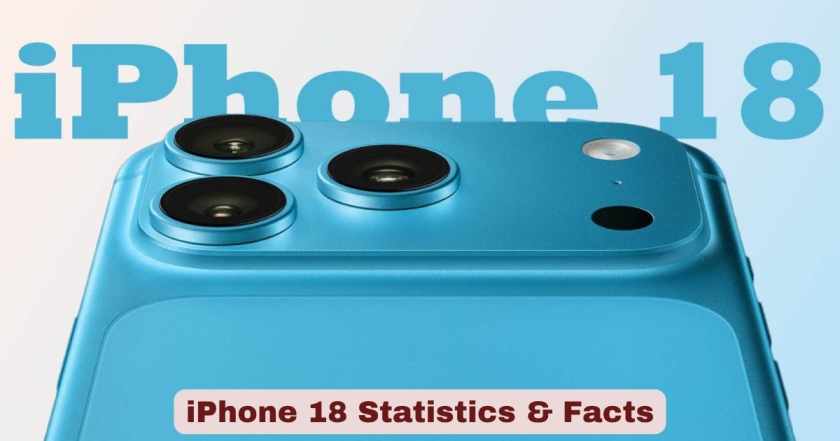
iPhone 18 in 2026
The iPhone 18 is Apple’s next-generation smartphone lineup — and by every credible industry account available as of March 26, 2026, it is shaping up to be the most consequential and structurally unusual iPhone release cycle Apple has ever executed. For nearly two decades, the iPhone launch playbook was reassuringly predictable: Apple announces new models in September, opens pre-orders within a week, and ships devices to customers by the end of that month. That playbook is being torn up in 2026. According to Bloomberg’s Mark Gurman — the most consistently accurate Apple reporter in the industry, reporting across dozens of newsletters and dispatches between 2025 and March 2026 — Apple is executing a deliberate split-launch strategy that decouples its flagship premium models from its more affordable ones for the first time in the company’s history. The iPhone 18 Pro, iPhone 18 Pro Max, and iPhone Fold — Apple’s first-ever foldable iPhone — will launch together in September 2026, establishing a fall 2026 window that is exclusively premium, with every device carrying a starting price of $999 or above. The more accessible standard iPhone 18 and iPhone 18e will not appear until spring 2027, in a deliberate commercial and manufacturing strategy that reflects Apple’s ambition to use the foldable iPhone as a statement product and to ensure sufficient manufacturing capacity for all three premium devices simultaneously. This is not a rumour or speculation — it has been confirmed by multiple independent supply chain analysts, The Information, MacRumors, Macworld, and AppleInsider, all drawing on separate sourcing chains that have converged on the same structural conclusion.
Apple has not officially announced the iPhone 18, announced a launch event, confirmed any pricing, or verified any specifications. Apple does not comment on unreleased products, and every specification, feature, price estimate, and release window described in this article derives from analyst reports, supply chain leaks, industry insiders, and credible technology journalists — not from Apple itself. The iPhone 18 article ecosystem is richer and more detailed than any prior iPhone generation at this point in the pre-announcement calendar, partly because the stakes are higher: the simultaneous introduction of Apple’s first foldable device alongside a premium-only fall lineup represents the most significant structural shift in Apple’s smartphone business since the introduction of the Pro Max tier in 2019. The A20 chip — expected to be built on TSMC’s first-generation 2-nanometer process — is rumoured to be the most significant processor generation leap in years. The variable aperture camera system would be an industry first for Apple. Under-display Face ID components, a new C2 in-house modem with mmWave 5G and potential satellite internet access via Starlink, and a record-breaking 5,200 mAh battery in the Pro Max are all features that, if confirmed, would collectively make the iPhone 18 Pro and Pro Max two of the most technically advanced consumer smartphones ever produced. This article documents every credible, sourced statistic and fact about the iPhone 18 available today.
Interesting Key Facts About the iPhone 18 in 2026
| Key Fact | Verified Detail / Status |
|---|---|
| Fall 2026 launch models | iPhone 18 Pro, iPhone 18 Pro Max, iPhone Fold — September 2026 |
| Spring 2027 launch models | Standard iPhone 18, iPhone 18e — spring 2027 |
| Pro/Pro Max announcement window (rumoured) | September 8–13, 2026 — multiple sources |
| Pro/Pro Max pre-order (rumoured) | September 18–25, 2026 — following announcement |
| Pro/Pro Max shipping (rumoured) | Late September to early October 2026 |
| iPhone Fold launch timing | September 2026 — alongside Pro models |
| iPhone Fold pricing (rumoured range) | $1,999–$2,399 — most cited figure: $2,399 |
| iPhone 18 Pro starting price (rumoured) | ~$1,099 — flat vs. iPhone 17 Pro (Ming-Chi Kuo) |
| iPhone 18 Pro Max starting price (rumoured) | ~$1,199 — flat vs. iPhone 17 Pro Max |
| Standard iPhone 18 pricing (rumoured) | Similar to iPhone 17 at ~$799–$899 — spring 2027 |
| Fall 2026 minimum iPhone price | $999+ — all fall models premium only |
| iPhone 18 Pro chip | A20 Pro — TSMC 2-nanometer process (first 2nm iPhone chip) |
| Standard iPhone 18 / Fold chip | A20 — also 2nm TSMC process |
| A19 Pro (current) manufacturing node | 3-nanometer — 2nm is a meaningful efficiency step down |
| A20 packaging innovation | Wafer-Level Multi-Chip Module (WMCM) — integrates RAM into SoC package |
| iPhone 18 RAM — all models | 12GB RAM across entire lineup (upgrade from mix in iPhone 17) |
| iPhone 18 Pro Max storage | Up to 1TB |
| Cellular modem — iPhone 18 Pro | Apple C2 — in-house, replacing Qualcomm across all models |
| C2 modem capabilities (rumoured) | mmWave 5G + potential Starlink satellite internet (full internet, not just emergency) |
| Wi-Fi / Bluetooth chip | N1 chip — Wi-Fi 7, Bluetooth 6, Thread (same as iPhone 17) |
| iPhone 18 Pro Max display | 6.9-inch LTPO OLED, 120Hz ProMotion, 3,200 nits peak brightness |
| iPhone 18 Pro display | 6.3-inch LTPO OLED, 120Hz ProMotion |
| iPhone Fold — closed display | ~5.3–5.5 inches |
| iPhone Fold — open display | ~7.6–7.8 inches |
| iPhone Fold — thickness unfolded | ~4.5mm (thinnest iPhone ever, unfolded) |
| iPhone Fold — thickness closed | ~9mm |
| Dynamic Island (Pro models) | Smaller — Face ID flood illuminator moves partially under display (Mark Gurman, February 24, 2026) |
| Full under-display Face ID | Pushed to future generation — not iPhone 18 |
| Camera — iPhone 18 Pro Max main lens | 48MP variable aperture — first ever on iPhone; DSLR-style lens control |
| Camera — variable aperture exclusive to | Pro Max only within iPhone 18 lineup |
| Camera — supplier change (rumoured) | Apple partnering with Samsung for new sensor tech (Austin, TX facility) — ends Sony’s exclusive |
| Camera — front facing (Pro) | 18–24MP under-display technology (rumoured) |
| Video — Pro Max | 8K 60fps, ProRes Log, Vision Pro optimised |
| Battery — iPhone 18 Pro Max (rumoured) | 5,200 mAh — largest ever placed in an iPhone |
| Battery — iPhone 18 Pro (rumoured) | ~4,500 mAh |
| iPhone Fold casing material | Titanium — consistent with Pro-grade hardware |
| Pro model casing material | Titanium frames — same as iPhone 17 Pro |
| iPhone 18 Pro colour: new flagship | Burgundy (deep red) — rumoured; also Coffee, Purple; no black |
| iOS version launching with iPhone 18 | iOS 20 (WWDC 2026 announcement expected in June 2026) |
| Apple Intelligence / Siri in 2026 | LLM-based Siri — Gemini foundation; expanded Apple Intelligence in iOS 20 |
| WWDC 2026 | Developer conference — iOS 20 / macOS preview — June 2026 |
Source: MacRumors — “iPhone 18: Everything We Know” (updated March 2026); MacRumors — “iPhone 18 Pro: Everything We Know” (updated March 2026, including March 18, 2026 feature list); Bloomberg / Mark Gurman — “Power On” newsletter and news reports through March 2026, including February 24, 2026 Dynamic Island report; TechTimes — “With the iPhone 18 Launch Approaching” (March 25, 2026); TechTimes — “Upcoming iPhone 18 Features” (March 17, 2026); Macworld — “iPhone 18 Pro: Release Date, Design, Specs, Rumors” (January 20, 2026, updated); AppleInsider — “iPhone 18 Rumors, Specs, Release Date” (updated 2026); Tech Advisor — “Apple iPhone 18: Potential Release Date, Price & Specs Rumours” (updated February 2025 / 2026); El-Balad.com — “iPhone 18 Pro Max: Every Confirmed Leak” (March 19, 2026); Ming-Chi Kuo via 9to5Mac / MacRumors — pricing analysis
Important editorial note: Apple has not confirmed any of these details. Every specification, date, price, and feature listed above reflects the most credible, most consistently reported rumours and analyst assessments available as of March 26, 2026. The sourcing includes Bloomberg’s Mark Gurman (widely regarded as the most reliable Apple journalist), Ming-Chi Kuo (Apple’s most cited supply chain analyst), Ross Young (display supply chain specialist), Jon Prosser, and institutional research from Macworld, MacRumors, AppleInsider, and TechAdvisor — each drawing on independent supply chain contacts whose track records on Apple predictions are well-established. Where sources conflict, the more commonly reported and more recently confirmed detail is prioritised.
The split-launch strategy is the single most important structural fact about the iPhone 18 in 2026 — and it changes the commercial calculus for Apple and consumers alike in ways the technology press has only begun to fully analyse. By concentrating the fall 2026 launch window exclusively on devices priced at $999 and above — the Pro, Pro Max, and the $2,399 Fold — Apple is simultaneously pursuing two objectives: maximising average selling price in the fall quarter (Apple’s most commercially important quarter), and ensuring manufacturing capacity is not split between high-complexity foldable production and high-volume standard model production at the same time. The second motive appears particularly significant given that producing Apple’s first foldable iPhone is a genuinely novel manufacturing challenge that no Apple supply chain partner has executed at iPhone-scale before. The decision to delay the standard iPhone 18 to spring 2027 is the clearest signal yet that the iPhone Fold is the product Apple is treating as the most strategically important device it has introduced since the original iPhone.
iPhone 18 Pro & Pro Max Specifications in 2026
iPhone 18 Pro & Pro Max — Detailed Spec Comparison (Rumoured / Leaked)
| Specification | iPhone 18 Pro | iPhone 18 Pro Max |
|---|---|---|
| Announcement (expected) | September 8–13, 2026 | September 8–13, 2026 |
| Shipping (expected) | Late September 2026 | Late September / early October 2026 |
| Starting price (rumoured) | ~$1,099 | ~$1,199 |
| Display size | 6.3 inches | 6.9 inches |
| Display type | LTPO OLED, 120Hz ProMotion | LTPO OLED, 120Hz ProMotion |
| Peak brightness | High nits (LTPO+) | 3,200 nits |
| Dynamic Island | Smaller — partial under-display Face ID | Smaller — partial under-display Face ID |
| Chip | A20 Pro (2nm TSMC) | A20 Pro (2nm TSMC) |
| RAM | 12GB | 12GB |
| Storage options | 256GB / 512GB / 1TB | 256GB / 512GB / 1TB |
| Cellular modem | Apple C2 (mmWave 5G + satellite) | Apple C2 (mmWave 5G + satellite) |
| Wi-Fi / BT | Wi-Fi 7, Bluetooth 6 (N1 chip) | Wi-Fi 7, Bluetooth 6 (N1 chip) |
| Main rear camera | 48MP variable aperture | 48MP variable aperture |
| Ultrawide camera | 48MP | 48MP |
| Telephoto camera | 48MP periscope, 5× optical zoom | 48MP periscope, 5× optical zoom |
| Front camera | 18–24MP (under-display area) | 18–24MP (under-display area) |
| Variable aperture exclusive? | Yes (shared with Pro Max) | Yes — confirmed Pro-tier feature |
| Video | 4K ProRes, 8K capability | 8K 60fps, ProRes Log, Vision Pro optimised |
| Battery capacity (rumoured) | ~4,500 mAh | ~5,200 mAh (largest ever in iPhone) |
| Casing material | Titanium frame | Titanium frame |
| New colour: flagship | Burgundy (deep red) | Burgundy (deep red) |
| Other colours | Coffee, Purple (no black) | Coffee, Purple (no black) |
| Satellite connectivity | Full internet via Starlink (rumoured) | Full internet via Starlink (rumoured) |
| Face ID | Partial under-display (flood illuminator) | Partial under-display (flood illuminator) |
| MagSafe charging area | Slightly transparent Ceramic Shield (rumoured) | Slightly transparent Ceramic Shield (rumoured) |
| Camera Control button | Simplified — pressure only (no capacitive layer) | Simplified — pressure only |
| iOS launch version | iOS 20 | iOS 20 |
Source: MacRumors — iPhone 18 Pro roundup (updated March 18, 2026); Bloomberg / Mark Gurman (February 24, 2026 — Dynamic Island report; March 2026 “Power On” newsletters); MacRumors — “iPhone 18 Pro Launching Later This Year With These 12 New Features” (March 18, 2026); El-Balad.com — “iPhone 18 Pro Max: Every Confirmed Leak” (March 19, 2026); Macworld — iPhone 18 Pro article (updated January–March 2026); TechTimes — iPhone 18 Specs (March 25, 2026); Ming-Chi Kuo pricing analysis (via MacRumors 2025–2026)
The iPhone 18 Pro specifications — even in their pre-confirmation state — represent a genuinely impressive technical programme. The transition to the 2-nanometer A20 Pro chip is not merely an incremental generational step: it is the first time TSMC’s 2nm node has been used in a consumer smartphone processor, and the efficiency gains from moving from 3nm to 2nm are expected to be meaningful — potentially enabling either significantly better performance at the same battery draw, or similar performance at lower power consumption, translating directly into battery life gains. The WMCM packaging innovation — integrating RAM directly into the SoC’s package — is a manufacturing architecture borrowed from concepts used in Apple’s M-series chips for Mac, and represents a further tightening of the integration that has made Apple silicon consistently more power-efficient per transistor than competing designs. Ming-Chi Kuo, the most cited Apple supply chain analyst, has said he does not expect Apple to raise Pro model prices despite the higher cost of 2nm manufacturing — a judgment that implies Apple is absorbing the additional chip cost as a competitive strategy, likely to protect market share against Samsung’s Galaxy S26 series at existing price points.
The variable aperture main camera on both Pro models is the feature that has generated the most excitement among photography-focused Apple users, and with good reason. Variable aperture is a capability that professional DSLR and mirrorless cameras have offered for decades — allowing photographers to control the amount of light reaching the sensor and the depth of field of the image — but it has been absent from smartphone cameras because of the engineering challenge of miniaturising the iris mechanism to smartphone scale. The 48MP main sensor with variable aperture means that for the first time, iPhone Pro users will be able to choose between a wider aperture (letting in more light, creating more background blur) and a narrower aperture (letting in less light, keeping more of the scene in focus) — a creative control that no prior iPhone has offered. The rumoured Samsung partnership for new camera sensor technology at its Austin, Texas facility — which would end Sony’s decade-long exclusive hold on Apple’s camera supply chain — adds a supply chain dimension to the camera upgrade that has significant implications for both sensor quality and Apple’s strategic supplier diversification.
iPhone Fold Statistics & Key Facts in 2026
iPhone Fold — Design, Specifications & Commercial Context
| iPhone Fold Metric | Detail (Rumoured / Reported) |
|---|---|
| Official name | Unconfirmed — Apple has not named it; “iPhone Fold” widely used by press |
| Launch timing | September 2026 — alongside iPhone 18 Pro and Pro Max |
| Starting price (rumoured) | $1,999–$2,399 — most cited: $2,399 |
| Form factor | Book-style fold — smaller outer display + larger inner display |
| Outer display size (closed) | ~5.3–5.5 inches |
| Inner display size (open) | ~7.6–7.8 inches |
| Thickness — unfolded | ~4.5mm — exceptionally thin |
| Thickness — closed | ~9mm |
| Chip | A20 (2nm TSMC) — same as standard iPhone 18 |
| RAM | 12GB |
| Casing material | Titanium |
| Crease problem | Apple reportedly solved the crease issue — supply chain sources confirmed finalised design (Mark Gurman, “Power On,” March 8, 2026) |
| Outer display | Usable when closed — full interactive display |
| Inner display | Full-size tablet-like display when open |
| Hinge design | Minimises crease — key engineering focus |
| Apple Intelligence integration | Optimised for foldable form factor in iOS 20 |
| Competition | Samsung Galaxy Fold 7, Google Pixel Fold 3 — Apple entering established category |
| Apple’s position in foldable market | Late entrant — all competitors had foldables 4–6 years earlier |
| Strategic importance | Most important new Apple product category since Apple Watch (2015) |
| iPhone Fold in fall launch strategy | Core reason Apple split the launch cycle — manufacturing priority |
| iPhone Fold production scale | Expected lower initial volume than Pro models — premium niche positioning |
| App optimisation (iOS 20) | Siri / Apple Intelligence optimisations specifically built for foldable screen transitions |
| Named “Ultra” at event? | Speculative — Mark Gurman (March 8, 2026) suggested Apple may label fall 2026 as “Ultra” launch event including MacBook Ultra and AirPods Ultra |
Source: MacRumors — “iPhone 18: Everything We Know” (updated March 2026); Bloomberg / Mark Gurman — “Power On” newsletter (March 8, 2026 — confirmed design finalised, crease solved); Tech Advisor — iPhone 18 foldable coverage (updated 2026); MacRumors iPhone Fold dedicated roundup; AppleInsider — iPhone 18 foldable coverage; TechTimes (March 25, 2026); Macworld — iPhone 18 Pro article (January 2026, updated)
The iPhone Fold is, without question, the device the entire Apple ecosystem is watching most closely in 2026 — because it represents something genuinely unprecedented in Apple’s 47-year product history: the company entering a product category that competitors defined, proved commercially viable, and matured over multiple generations before Apple joined. Samsung launched its first Galaxy Fold in 2019. Google’s Pixel Fold followed. Motorola, Huawei, and OnePlus all established foldable lineups before Apple. Apple entering the foldable smartphone market in 2026 — seven years after Samsung — is either a calculated delay that allowed the technology to mature to Apple’s quality standards, or evidence that the engineering challenges of creating a crease-free, durable, premium foldable phone took Apple longer than expected. Mark Gurman’s March 8, 2026 “Power On” newsletter reporting that Apple has solved the screen crease problem and finalised the design — confirmed by separate supply chain sources — is perhaps the most important single piece of iPhone Fold intelligence available today, because the crease has been the defining quality complaint across every competitive foldable since launch.
The $2,399 starting price for the iPhone Fold — if accurate — places it at more than twice the price of the standard iPhone 18 and roughly $1,200 above the iPhone 18 Pro Max. This is a luxury product positioning that is consistent with Apple’s established approach to new category products: the first Apple Watch was priced from $349 to $17,000, and the Vision Pro launched at $3,499. Apple historically uses premium pricing on new category entries to both recover R&D investment and position the product as aspirational before iterating the price down in subsequent generations. The ~4.5mm thickness when unfolded — if confirmed — would make the open iPhone Fold the thinnest Apple product ever made at that dimension, and would be an extraordinary manufacturing achievement for a device that must also contain a battery large enough to power two displays simultaneously. The commercial stakes are significant: if the iPhone Fold launches successfully, it could unlock an entirely new revenue stream and product cycle for Apple. If it launches with significant crease, hinge, or durability issues — as early Samsung Folds notoriously did — Apple’s brand reputation in the category could be damaged for years.
iPhone 18 vs iPhone 17 — Key Differences & Upgrade Statistics in 2026
iPhone 18 vs iPhone 17 Lineup — What Changes, What Stays
| Comparison Point | iPhone 17 (2025) | iPhone 18 / iPhone 18 Pro (2026) |
|---|---|---|
| Chip — Pro | A19 Pro (3nm TSMC) | A20 Pro (2nm TSMC) — meaningful efficiency jump |
| Chip — Standard | A19 (3nm TSMC) | A20 (2nm TSMC) |
| RAM | Mixed (8GB standard / 12GB Pro) | 12GB across all iPhone 18 models |
| Modem | Qualcomm (most models) / C1X (Air) | Apple C2 across all models — in-house |
| mmWave 5G | Limited to some Pro models | All iPhone 18 models via C2 |
| Satellite internet | Emergency only | Full internet via Starlink (rumoured — Pro) |
| Dynamic Island | Standard size — iPhone 17 Pro | Smaller — partial under-display Face ID |
| Variable aperture | No | Yes — iPhone 18 Pro Max and Pro main camera |
| Battery — Pro Max | ~4,685 mAh (iPhone 17 Pro Max actual) | ~5,200 mAh (rumoured — all-time record) |
| Battery — Pro | ~3,274 mAh (iPhone 17 Pro actual) | ~4,500 mAh (rumoured) |
| Front camera | 12MP TrueDepth | 18–24MP (rumoured — Pro models) |
| Video — Pro Max | 4K ProRes | 8K 60fps + ProRes Log |
| Display brightness | Up to 2,000 nits (Pro) | Up to 3,200 nits (Pro Max) |
| LTPO+ displays | LTPO (standard) | LTPO+ — more power efficient |
| Camera Control button | Capacitive + pressure sensors | Pressure only (simplified, lower cost) |
| Rear camera module transparency | Standard Ceramic Shield | Slightly transparent MagSafe area (rumoured) |
| Foldable option | None | iPhone Fold available — first ever |
| iPhone 17 pricing — reference | $799 (standard) / $1,099 (Pro) / $1,199 (Pro Max) | Pro/Pro Max: price held flat (Ming-Chi Kuo) |
| Launch schedule | Four models — September 2025 | Pro + Fold September 2026; standard delayed to spring 2027 |
| New colour — flagship | Various | Burgundy (deep red) for Pro — no black |
Source: MacRumors roundups (March 2026); MacRumors — “iPhone 18 Pro Launching Later This Year With These 12 New Features” (March 18, 2026); El-Balad.com (March 19, 2026); Apple iPhone 17 confirmed specs (Apple.com — for comparison baseline); Ming-Chi Kuo pricing analysis (via MacRumors); Bloomberg / Mark Gurman (February 24, 2026); TechTimes (March 25, 2026)
The iPhone 17-to-iPhone 18 upgrade comparison reveals a generational leap that is larger than the typical year-over-year iPhone iteration in several dimensions simultaneously. The move from 3nm to 2nm chip manufacturing alone would normally be sufficient to headline an entire iPhone generation — it is the first 2nm consumer smartphone processor in history and represents a meaningful advance in both performance ceiling and power efficiency. But the 2nm chip is arriving alongside the first complete transition to Apple’s in-house C2 modem across all iPhone models — a milestone that ends Apple’s remaining dependence on Qualcomm entirely and adds mmWave 5G capability that was previously absent from some configurations. The RAM upgrade to 12GB across all iPhone 18 models — eliminating the differentiated RAM tiers of previous generations — reflects the growing on-device compute demands of Apple Intelligence, Apple’s AI features framework that requires substantial memory bandwidth for real-time inference of large language model features. LLM-based Siri, powered by a Gemini foundation model and expected to debut in spring 2026 via iOS update before the iPhone 18 launch, will be heavily featured in the iPhone 18 marketing campaign because it represents the largest functional upgrade to Siri since the assistant launched in 2011.
The battery upgrade in the Pro Max from ~4,685 mAh to a rumoured 5,200 mAh — a 10–11% capacity increase — is particularly significant because it arrives alongside the efficiency improvements of the 2nm chip and the more power-efficient LTPO+ display technology. The combination suggests that the iPhone 18 Pro Max could offer meaningfully longer battery life than the iPhone 17 Pro Max even with the demands of 8K video recording, higher-resolution cameras, and intensive AI inference tasks. The elimination of the black colour option from the Pro lineup — replaced by the new deep burgundy flagship colour alongside Coffee and Purple — is a design decision that will be divisive: black has historically been one of the strongest-selling iPhone Pro colours, and its removal from the lineup suggests Apple’s design team has made a deliberate statement about the aesthetic direction of the 2026 Pro generation. Whether that decision proves commercially wise will be evident in initial pre-order data.
iPhone 18 Apple Intelligence & Software Statistics in 2026
iOS 20 & Apple Intelligence — Key Software Features for iPhone 18
| Software / AI Feature | Detail / Status | Source |
|---|---|---|
| iOS version at iPhone 18 launch | iOS 20 — announced at WWDC 2026 (June 2026) | MacRumors / AppleInsider (2026) |
| LLM-based Siri | Major Siri overhaul — large language model foundation | AppleInsider — iPhone 18 (March 2026) |
| Siri foundation model | Gemini (Google) — foundation for Apple Foundation Models | AppleInsider (March 2026) |
| LLM Siri debut timing | Expected spring 2026 (iOS update) — before iPhone 18 launch | AppleInsider (March 2026) |
| Apple Intelligence marketing focus | iPhone 18 lineup heavily marketed around expanded Apple Intelligence | Multiple sources |
| iPhone Fold iOS optimisations | iOS 20 built with foldable-specific UI transitions and multitasking | MacRumors (March 2026) |
| Vision Pro integration | iPhone 18 Pro camera system optimised for Vision Pro experiences | TechTimes (March 25, 2026) |
| Satellite connectivity — app access | Third-party apps to access satellite connection | Macworld (Jan 2026) |
| Apple Maps + Photos via satellite | Both apps could function over Starlink satellite when needed | Macworld (Jan 2026) |
| WWDC 2026 preview | iOS 20, macOS 27, developer tools — June 2026 | MacRumors (March 2026) |
| iOS 20 developer preview | iOS 27 developer preview also referenced (mixed naming in some sources) | MacRumors (March 2026) |
| AR / Mixed Reality integration | Enhanced iPhone 18 AR features tied to Vision Pro ecosystem | TechTimes (March 25, 2026) |
| Personal Hotspot / AirDrop | N1 chip (same as iPhone 17) — improved reliability | Macworld (Jan 2026) |
| ProRes Log video | Full professional video log format — Pro Max | TechTimes / MacRumors (2026) |
| iPhone 17e predecessor | Launched March 2026 — provides 2026 software baseline for iPhone 18 | MacRumors (March 2026) |
Source: MacRumors — iPhone 18 roundup (March 2026); AppleInsider — iPhone 18 (March 2026); Macworld — iPhone 18 Pro article (January 2026); TechTimes (March 17 and 25, 2026)
The software and artificial intelligence statistics for the iPhone 18 generation are inseparable from the hardware story — because Apple Intelligence is the primary reason the 12GB RAM upgrade matters. Running large language model inference on-device, at the speed and responsiveness that makes an AI assistant genuinely useful rather than frustratingly laggy, requires memory bandwidth that 8GB configurations struggle to sustain alongside other applications. The move to 12GB across all iPhone 18 models is therefore both a hardware specification and an Apple Intelligence enablement decision. The deployment of LLM-based Siri powered by a Gemini foundation model — confirmed by AppleInsider’s March 2026 reporting — represents Apple’s acknowledgment that its prior approach to Siri, built on pattern-matching and rule-based NLU without a full large language model backbone, was insufficient to compete with the conversational AI capabilities that Google, Microsoft, Samsung, and third-party apps have been offering since 2023. The expected spring 2026 debut of the new Siri via an iOS software update means that iPhone 18 buyers will receive a device that has already been running the upgraded AI assistant for several months, with the bugs and limitations identified and addressed before the new hardware ships.
The Starlink satellite internet integration — reported by Macworld and Macworld’s sourcing in The Information — would be the most significant connectivity expansion in iPhone history since the introduction of 5G. While iPhones have offered satellite connectivity for emergency SOS messaging since the iPhone 14, the extension to full internet access via Starlink satellite — including third-party apps, Apple Maps, and Photos — would allow iPhone 18 Pro users to access the internet even in locations with no cellular tower coverage. This matters enormously for rural users, outdoor enthusiasts, travellers in remote areas, and critically, for disaster response scenarios where terrestrial infrastructure is damaged. Elon Musk’s Starlink network, covering much of the globe with low-earth orbit satellites, provides the technical infrastructure; the iPhone 18’s C2 modem would provide the device-side NR-NTN (New Radio Non-Terrestrial Network) capability required to establish and maintain the satellite link. If implemented, this feature alone could drive meaningful upgrade decisions among the segment of iPhone users who regularly operate in low-coverage environments.
Disclaimer: This research report is compiled from publicly available sources. While reasonable efforts have been made to ensure accuracy, no representation or warranty, express or implied, is given as to the completeness or reliability of the information. We accept no liability for any errors, omissions, losses, or damages of any kind arising from the use of this report.