
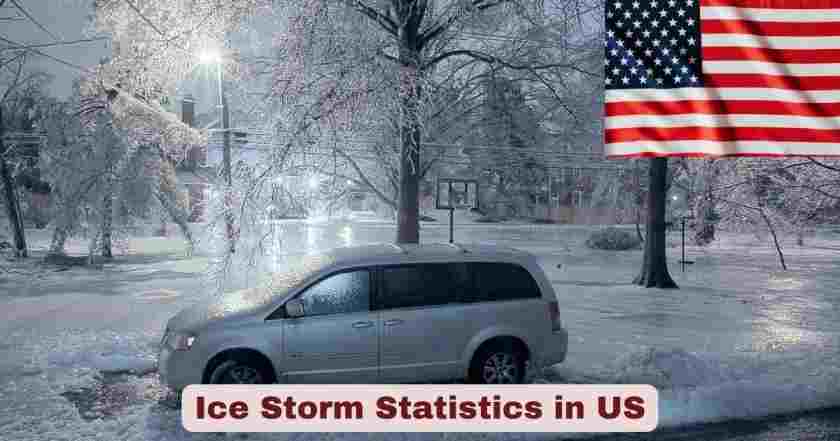
Ice Storm in US 2026
The United States is currently experiencing one of the most widespread and potentially catastrophic winter weather events in recent years, known as Winter Storm Fern. Beginning on January 23, 2026, this massive weather system has emerged as a historic ice storm affecting millions across the nation. The storm’s unprecedented scope extends over 2,000 miles, creating dangerous conditions from the Southwest through the Southeast and into the Northeast regions. What distinguishes this particular ice storm from typical winter weather events is its extraordinary geographic reach, sustained duration, and the dangerous combination of freezing rain, sleet, heavy snow, and extreme Arctic temperatures following in its wake.
The January 2026 ice storm represents a critical moment for infrastructure, emergency management, and public safety systems across more than 40 states. Meteorologists and emergency officials have characterized this event as potentially historic due to the projected ice accumulation levels, which in some areas could reach or exceed one inch—enough to cause catastrophic damage to power lines, trees, and transportation networks. The storm’s slow movement has intensified concerns, as prolonged periods of freezing precipitation allow ice to accumulate over extended timeframes, creating conditions that could leave communities without power and essential services for days. The Arctic air mass accompanying and following the storm ensures that accumulated ice and snow will remain frozen for an extended period, complicating recovery and restoration efforts significantly.
Ice Storm in the US 2026: Interesting Facts and Latest Statistics
| Ice Storm Fact Category | Verified Data |
|---|---|
| Number of States Under Emergency Declarations | 17 states plus Washington D.C. |
| Total Population Under Winter Weather Alerts | Over 205 million people (approximately two-thirds of US population) |
| States with National Guard Activation | 9 states (Georgia: 500 troops, North Carolina: 436 personnel, Arkansas: 168 members, plus Missouri, Kansas, Delaware, New York, and others) |
| Flight Cancellations Through Weekend | Over 8,300 flights canceled (640+ Friday, 3,100+ Saturday, 4,600+ Sunday) |
| Predicted Ice Accumulation (Maximum Areas) | 0.50 to 1.00 inch in Mississippi and western Tennessee; 0.75 inch in Georgia; 0.25 to 0.50 inch across multiple southern states |
| Predicted Snowfall (Maximum Areas) | Up to 2 feet in central Appalachians and Northeast; 12-18 inches from Southern Plains to Northeast; 6-10 inches in Oklahoma City |
| Duke Energy Workers Staged for Response | Over 18,000 workers from 27 states positioned throughout the Carolinas |
| School Districts Announcing Monday Closures | Hundreds of school districts across Texas, North Carolina, South Carolina, Georgia, Virginia, and other affected states |
| Storm Geographic Span | Over 2,000 miles from Arizona/New Mexico border to Maine |
| Major Cities in Storm Path | Dallas, Austin, Oklahoma City, Little Rock, Memphis, Nashville, Atlanta, Charlotte, Raleigh, Washington D.C., Baltimore, Philadelphia, New York City, Boston |
Data sources: ABC News, NBC News, CBS News, Fox Weather, The Washington Post, National Weather Service reports (January 23-24, 2026)
The ice storm statistics presented above reflect the unprecedented scale of Winter Storm Fern as it develops across the United States in 2026. With more than 205 million Americans under some form of winter weather alert, this storm system affects approximately two-thirds of the nation’s population—a staggering figure that underscores the event’s historic nature. The 17 states that have issued emergency declarations include Alabama, Arkansas, Georgia, Kansas, Kentucky, Louisiana, Maryland, Mississippi, Missouri, New Jersey, New York, North Carolina, Pennsylvania, South Carolina, Tennessee, Texas, and Virginia, with Washington D.C. also declaring emergency status. This widespread governmental response demonstrates the severity of anticipated impacts and enables states to mobilize resources, activate National Guard units, and coordinate multi-agency response efforts.
The flight cancellation numbers totaling over 8,300 flights through the weekend period represent massive disruption to air travel nationwide. Dallas-Fort Worth International Airport leads in cancellations, as the region faces some of the most severe ice accumulation forecasts. The predicted ice accumulation of 0.50 to 1.00 inch in parts of Mississippi and western Tennessee is particularly alarming, as even 0.25 inch of ice is sufficient to bring down power lines and tree branches. The deployment of over 18,000 Duke Energy workers from 27 states to the Carolinas alone illustrates the massive logistical effort required to prepare for and respond to anticipated widespread power outages. Similarly, the activation of National Guard units in 9 states, with Georgia mobilizing 500 troops and North Carolina activating 436 personnel along with 170 vehicles, reflects the military-scale response deemed necessary to handle this weather emergency and its anticipated aftermath.
Emergency Declarations and Government Response in the US 2026
| State | Emergency Declaration Date | National Guard Status | Number of Counties/Statewide Coverage |
|---|---|---|---|
| Texas | January 21, 2026 | Not activated (grid monitoring active) | 134 counties covered by disaster declaration |
| Louisiana | January 18, 2026 | Status monitoring | Statewide emergency |
| Arkansas | January 22, 2026 | 168 members activated | Statewide with $250,000 emergency funding |
| Georgia | January 22, 2026 | 500 troops authorized | Statewide emergency through January 29 |
| North Carolina | January 22, 2026 | 436 personnel, 170 vehicles activated | Statewide emergency |
| South Carolina | January 22, 2026 | Monitoring status | Statewide emergency |
| Virginia | January 22, 2026 | Preparation status | Statewide emergency |
| Missouri | January 23, 2026 | National Guard activated | Statewide with Emergency Operations Center activated |
| Kansas | January 23, 2026 | Activated | Statewide disaster emergency |
| Maryland | January 23, 2026 | Preparedness status | State of preparedness |
| New York | January 23, 2026 | Called into service | Statewide emergency |
| New Jersey | January 23, 2026 | Emergency operations | State Emergency Operation Center activated |
| Pennsylvania | January 23, 2026 | Response ready | Statewide emergency |
| Delaware | January 23, 2026 | Activated (effective Jan 25) | Statewide emergency |
| Kentucky | January 23, 2026 | Standby status | Affected regions |
| Tennessee | January 23, 2026 | Response teams ready | Affected regions |
| Alabama | January 23, 2026 | Monitoring | Affected regions |
Data sources: Wikipedia January 2026 United States Winter Storm, state government press releases, NBC News, ABC News (January 22-23, 2026)
The government response to the ice storm in the US 2026 demonstrates unprecedented coordination across federal, state, and local levels. The 17 states plus Washington D.C. that declared states of emergency did so proactively, with Louisiana issuing its declaration as early as January 18, 2026—nearly a week before the storm’s primary impacts began. This early action enabled emergency management agencies to pre-position resources, activate coordination centers, and communicate preparation guidelines to residents well in advance. Texas Governor Greg Abbott’s declaration covering 134 counties illustrates the targeted yet extensive nature of preparations, particularly given the state’s experience with Winter Storm Uri in February 2021, which resulted in 246 deaths and massive infrastructure failures.
The National Guard activation across 9 states represents a significant military mobilization for domestic disaster response. Georgia’s authorization of 500 troops, North Carolina’s deployment of 436 personnel with 170 vehicles, and Arkansas’s activation of 168 members provide critical capabilities including high-mobility vehicles for dangerous terrain navigation, distribution teams for emergency supplies, and maintenance crews to assist transportation departments. Missouri and Kansas both activated their guards along with Emergency Operations Centers, creating comprehensive command-and-control structures. The variety of emergency declaration approaches—from full emergency status to states of preparedness—reflects different anticipated impact levels and existing legal frameworks. Arkansas’s allocation of $250,000 from its Disaster Response and Recovery Fund demonstrates the immediate financial commitments states are making to ensure adequate response capacity for this 2026 ice storm event.
Flight Cancellations and Transportation Disruptions in the US 2026
| Category | Statistics |
|---|---|
| Total Weekend Flight Cancellations | Over 8,300 flights (Friday through Sunday) |
| Friday Cancellations | 640+ flights |
| Saturday Cancellations | 3,100+ flights |
| Sunday Cancellations | 4,600+ flights |
| Airport Most Affected | Dallas-Fort Worth International Airport (leading in cancellations) |
| Airports Without De-icing Equipment | Multiple southern airports including Memphis International, Little Rock (Clinton National), Will Rogers (Oklahoma City) |
| Major Affected Hubs | Dallas-Fort Worth, Houston, Atlanta Hartsfield-Jackson, Charlotte Douglas, Washington Dulles, Newark, LaGuardia, JFK, Boston Logan |
| Vehicle Pile-up (Michigan, Jan 20) | Over 100 vehicles on I-196 near Grand Rapids (no fatalities reported) |
| Road Treatment (North Carolina) | 2.8 million gallons of brine pre-applied to roads |
| NCDOT Workers Deployed | Over 2,000 workers plus contractor fleet |
Data sources: ABC News, FlightAware data via ABC News, NBC News, Al Jazeera, WFAE Charlotte, WRAL Raleigh (January 20-24, 2026)
The transportation disruptions caused by the ice storm in the US 2026 extend far beyond typical winter weather impacts. The over 8,300 flight cancellations through the weekend period represent one of the largest weather-related aviation disruptions in recent years. What makes these cancellations particularly significant is their concentration at southern airports that lack adequate de-icing equipment and infrastructure designed for severe winter weather. Airports like Dallas-Fort Worth, Memphis International, Little Rock’s Clinton National, and Will Rogers in Oklahoma City face operational challenges that northern airports routinely handle, as they encounter these conditions less frequently and thus maintain less specialized equipment. Airlines including Delta, American, United, and Southwest have waived change fees and fare differences, recognizing that the storm’s path makes normal operations impossible across vast portions of their route networks.
The ground transportation situation proved equally challenging even before the main storm arrived. The over 100 vehicle pile-up on Interstate 196 near Grand Rapids, Michigan on January 20, 2026, involving more than 30 semi-trailer trucks, foreshadowed the dangerous road conditions the storm system would create. While Michigan State Police reported numerous injuries but no fatalities from this incident, it demonstrated how rapidly snow and ice can create treacherous driving conditions with limited visibility. North Carolina’s Department of Transportation’s deployment of over 2,000 workers and application of 2.8 million gallons of brine to pre-treat roads represents massive logistical preparations, yet officials acknowledge that once ice begins accumulating, even treated roads become dangerous. The southern states’ particular vulnerability stems from both infrastructure designed for different climate conditions and driver populations with less experience navigating severe winter weather, creating compounding risk factors for accidents and emergencies during this 2026 ice storm.
Power Grid Preparedness and Outage Forecasts in the US 2026
| Utility/Region | Workers Deployed | States Served | Customers | Preparations |
|---|---|---|---|---|
| Duke Energy | 18,000+ workers from 27 states | North Carolina, South Carolina | 4.7 million electric customers in Carolinas (3.8M NC, 860K SC) | Tree trimming, equipment staging, damage modeling systems, in-house meteorology team |
| PJM Interconnected Grid | Emergency protocols active | 13 states + DC | 67 million customers | High stress alerts issued, equipment freeze prevention, generation capacity monitoring |
| ERCOT (Texas) | Grid operators on standby | Texas | Millions statewide | Winterization improvements since 2021, normal grid conditions forecast, local outage preparations |
| Tennessee Valley Authority | Multi-state coordination | 7 states | 10+ million people | Hundreds of millions invested in weatherization since 2022, redundancy systems |
| Newberry Electric Cooperative (SC) | External crew pre-positioning | South Carolina | 14,000 customers | Disaster response planning, equipment preparation |
| Ice Threshold for Power Line Damage | 0.25 inch causes disruptions; 0.50 inch+ brings down lines | – | – | Critical impact threshold |
| Forecast Maximum Ice Accumulation | 0.50 to 1.00 inch in worst-affected areas | Mississippi, Tennessee, Arkansas, portions of Carolinas | – | Catastrophic damage potential |
Data sources: Duke Energy press release, NBC News, ABC News, PJM alerts via WNEP, TVA spokesperson statements (January 22-23, 2026)
The power grid preparedness for the ice storm in the US 2026 represents perhaps the most critical aspect of the emergency response, as prolonged power outages during extreme cold pose life-threatening risks. Duke Energy’s deployment of over 18,000 workers from 27 states to the Carolinas constitutes one of the largest utility mobilizations in the company’s history. These workers include linemen, vegetation management crews, damage assessors, and support personnel, all staged strategically throughout the region based on damage prediction models that utilize in-house meteorological data. Duke Energy’s spokesperson emphasized that while 6 inches of wet, heavy snow can cause tree damage affecting power lines, it takes only 0.25 inch of ice to achieve the same destructive effect—and forecasts call for 0.50 to 1.00 inch in the most severely affected areas.
The PJM Interconnected grid, serving 67 million customers across 13 states plus Washington D.C., issued multiple high-stress alerts warning that electricity demand driven by extreme cold would be historically high. This represents the nation’s largest regional transmission organization facing simultaneous challenges of peak heating demand, potential generation equipment freezing, and transmission line vulnerabilities. In Texas, ERCOT officials and Governor Abbott provided assurances that the grid has “never been stronger” following extensive winterization improvements implemented after the catastrophic February 2021 Winter Storm Uri, which caused 246 deaths and left millions without power for days. However, officials acknowledged that local distribution outages from ice-laden trees and lines remain likely. The Tennessee Valley Authority, having invested hundreds of millions in weatherization since a 2022 winter storm, emphasized its built-in redundancies to reroute power if lines fail. Smaller cooperatives like Newberry Electric in South Carolina, which serves 14,000 customers, are preparing for scenarios where ice-coated trees continue falling long after precipitation ends, creating extended restoration timelines that could leave rural communities isolated without power for multiple days during this 2026 ice storm.
Ice Accumulation Forecasts by Region in the US 2026
| Region | Forecast Ice Accumulation | Forecast Snow/Sleet | Primary Impact Timeline | Specific Threat Level |
|---|---|---|---|---|
| Northeastern Texas (Dallas-Fort Worth area) | 0.25 to 0.50 inch | 1-3 inches snow | Saturday-Sunday (36+ hours of freezing precipitation) | Widespread power outages, impossible travel |
| Northern Mississippi | 0.50 to 1.00 inch | Variable sleet mix | Saturday-Sunday | Catastrophic damage to trees and infrastructure |
| Western Tennessee (Memphis area) | 0.50 to 1.00 inch | Sleet and snow mix | Saturday-Sunday | Prolonged outages, paralyzed transportation |
| Little Rock, Arkansas corridor | 0.25 to 0.75 inch | 3-6 inches snow (northern areas) | Friday night-Sunday | Major infrastructure impacts, long-duration event |
| Northern Georgia (Atlanta suburbs) | 0.50 to 0.75 inch | 1 inch or less snow/sleet | Saturday-Monday | Significant power line and tree damage |
| Central/Western North Carolina (Charlotte area) | 0.40 to 0.75 inch | 1-3 inches snow/sleet | Saturday-Monday | Dangerous travel, extensive outages |
| Western North Carolina mountains | 0.50 to 1.00 inch | 1-6 inches snow/sleet (higher elevations more snow) | Saturday-Monday | Isolated communities, prolonged impacts |
| South Carolina Midlands | 0.25 to 0.50 inch | 1-2 inches sleet | Saturday-Sunday | Hazardous roads, tree damage |
| Oklahoma City area | Glazing | 6-10 inches snow | Friday night-Saturday | Heavy snow primary threat |
| Louisiana (northern regions) | Up to 1 inch | Variable | Saturday-Sunday | Infrastructure stress, extended cold |
Data sources: National Weather Service forecasts, CBS News, TIME Magazine, Weather.com, NBC News, local NWS office forecasts (January 23-24, 2026)
The ice accumulation forecasts for the ice storm in the US 2026 paint a picture of potentially catastrophic conditions across a broad swath of the southeastern United States. The forecast of 0.50 to 1.00 inch of ice accumulation in northern Mississippi, western Tennessee, and portions of western North Carolina represents an extreme threat level that occurs only rarely. To understand the severity, meteorologists emphasize that 0.25 inch of ice accumulation is considered the threshold for significant disruptions, including tree damage and power line failures. At 0.50 inch and above, ice becomes heavy enough to bring down power lines themselves, not just cause damage from falling tree limbs. The forecast of up to one full inch in the worst-affected areas creates conditions where widespread, long-duration power outages become virtually certain, with recovery potentially taking days or even weeks in rural areas.
The Dallas-Fort Worth metropolitan area faces a particularly dangerous scenario with forecasts calling for 36 consecutive hours of freezing precipitation, leading to ice accumulation of 0.25 to 0.50 inch. The Fort Worth National Weather Service office warned that “significant ice accumulation on power lines and tree limbs may cause widespread and long-lasting power outages” with “travel could be impossible.” Charlotte, North Carolina expects 0.40 to 0.75 inch of ice, prompting officials to warn residents to prepare for multiple days without power and to avoid all travel during the peak of the storm. The mountainous areas of western North Carolina face dual threats—significant ice accumulation in lower elevations combined with heavy snow at higher elevations, creating access challenges that will complicate restoration efforts. The slow movement of this storm system means that freezing rain and sleet will persist for extended periods rather than passing quickly, allowing ice to build layer upon layer on surfaces. Combined with the Arctic air mass following the storm, which will keep temperatures well below freezing for days, the accumulated ice will remain frozen and dangerous well into the following week, making this 2026 ice storm one of the most sustained winter weather threats the region has faced in decades.
School Closures and Educational Impacts in the US 2026
| State/Region | School Districts Announcing Monday Closures | Notable Districts/Systems | Decision Timing | Additional Closures |
|---|---|---|---|---|
| Texas (Houston area) | Dozens of major districts | Houston ISD, Conroe ISD, Cy-Fair ISD, Fort Bend ISD, Humble ISD, Katy ISD, Spring Branch ISD, Tomball ISD, Clear Creek ISD | Friday, January 23 | University of Houston, Houston Community College (Saturday-Monday) |
| Texas (Dallas-Fort Worth) | Numerous districts | Keller ISD, Hurst-Euless-Bedford ISD, Grapevine-Colleyville ISD, Southlake Carroll ISD, Melissa ISD | Friday, January 23 | UNT closing Friday 9 PM – Monday 6 AM |
| North Carolina | Statewide impact | Multiple districts across affected regions, NCDOT pre-treating since Wednesday | Friday-Sunday announcements | Duke Energy staging 18,000+ workers |
| South Carolina | Multiple districts on eLearning | Greenville County, Greenwood District, Oconee County, Anderson County (2 days), Pickens County, Union County, Laurens Districts | Friday, January 23 | eLearning days Monday-Tuesday for some |
| Virginia | Historic Triangle area | William & Mary (closed Sat 5 PM-Monday), Virginia Peninsula CC (closed Sat-Sun, remote Monday), Christopher Newport (modified schedule) | Thursday-Friday, Jan 22-23 | Athletic events rescheduled or cancelled |
| Georgia | Multiple districts preparing | Various districts coordinating with 500 National Guard troops deployment | Ongoing monitoring | State of emergency through January 29 |
| Total Students Affected | Millions across affected states | – | – | Both in-person closures and eLearning transitions |
Data sources: Houston Public Media, Dallas News, WYFF4 South Carolina, WYDaily Virginia, Fox 26 Houston, KHOU Houston (January 23, 2026)
The school closures resulting from the ice storm in the US 2026 affect millions of students across multiple states, with districts making proactive decisions to prioritize safety. In the Houston area, major school districts including Houston ISD, with its hundreds of thousands of students, announced Monday closures by Friday afternoon, giving families time to prepare. Houston ISD Superintendent Mike Miles emphasized the forecasted “significant risk of an ice storm beginning late Saturday, possibly through Sunday and into Monday morning” that would create “hazardous travel conditions for our students, staff and families, combined with dangerously low temperatures.” This decision marks a significant shift from Miles’s 2024 stance when he expressed regret over closing schools for a winter storm, demonstrating the exceptional severity of this forecast.
South Carolina school districts implemented widespread eLearning days for Monday, January 26, with some districts like Anderson County extending virtual instruction through Tuesday, January 27. This approach, utilizing the state’s approved eLearning infrastructure, allows instruction to continue while keeping students and staff safe at home. Districts specifically noted that assignments can be completed later if students experience power outages or internet access issues, acknowledging the realistic possibility that many families will lose electricity. The coordination extends to higher education, with the University of Houston closing Sunday and Monday at all campuses, and the University of North Texas closing from Friday evening through Monday morning. William & Mary in Virginia closed from Saturday evening through Monday, while also rescheduling athletic events. The decision-making timeline shows districts announcing closures 2-3 days in advance where possible, providing families with planning time—a luxury not always available with winter weather. However, some districts indicated they would make Tuesday decisions on Monday after assessing actual conditions, recognizing the uncertainty inherent in forecasting the 2026 ice storm’s precise impacts and duration.
Economic and Infrastructure Impact Projections in the US 2026
| Impact Category | Projected Effects | Specific Data |
|---|---|---|
| Potential Power Customers Affected | Millions across multiple states | Duke Energy alone serves 4.7 million in Carolinas; PJM grid serves 67 million across 13 states |
| Duke Energy Worker Mobilization Cost | Multi-million dollar operation | 18,000+ workers from 27 states, including contractors and out-of-state crews |
| Transportation Sector | Billions in potential losses | 8,300+ flight cancellations; highway closures; freight route disruptions |
| Retail and Supply Chain | Severe disruptions | Residents stocking emergency supplies; delivery services impacted; inventory recalibration |
| Energy Market Volatility | Natural gas price fluctuations | Heightened heating demand amid Arctic cold following ice storm |
| Historical Comparison: Winter Storm Uri (2021) | 246 deaths, widespread grid failure, economic losses in billions | Texas-specific but illustrative of ice storm dangers |
| Annual Winter Storm Costs (Historical Average) | $1.2 billion nationally since 1995 | This storm projected to exceed typical single-event costs significantly |
| Infrastructure at Risk | Power transmission lines, water systems, communication towers, transportation networks | Ice accumulation of 0.50-1.00 inch creates catastrophic damage potential |
Data sources: Duke Energy, PJM Interconnected, Texas Tribune (Uri death toll), Federal Highway Administration historical data, Fortune Magazine analysis (January 22-24, 2026)
The economic impact of the ice storm in the US 2026 is projected to reach into the billions of dollars when accounting for all direct and indirect costs. The aviation sector alone faces massive financial losses from the over 8,300 flight cancellations, each representing not only lost revenue but also costs associated with rebooking passengers, providing accommodations, and repositioning aircraft and crews. Major airlines including Delta have issued travel waivers, absorbing change fees and fare differences—a customer service necessity that represents significant financial concessions. Beyond airlines, airports face operational costs from extended staffing, de-icing operations where equipment exists, and managing stranded passengers.
The utility sector is undertaking one of the most expensive mobilizations in recent memory. Duke Energy’s deployment of over 18,000 workers from 27 states involves extraordinary logistics costs including transportation, lodging, meals, equipment movement, and premium labor rates for emergency work. When multiplied across dozens of utilities throughout the affected region, the total pre-positioning and response costs easily reach hundreds of millions of dollars. The potential for widespread, prolonged power outages adds another dimension—when millions lose electricity during extreme cold, the economic impacts cascade through every sector. Businesses close, perishable inventory is lost, manufacturing processes halt, and productivity across entire metropolitan regions ceases. The Texas experience with Winter Storm Uri in 2021, which resulted in 246 deaths and billions in economic losses, provides a sobering reference point, though that event primarily involved generation failures rather than transmission line damage from ice.
The freight and logistics sector faces severe disruptions as ice-covered highways become impassable, particularly in the Ohio Valley and across southern states where winter infrastructure is less developed. The timing of deliveries for everything from groceries to medical supplies becomes uncertain, with warehouses potentially unable to receive or ship goods for days. Retail supply chains are already stressed as residents across affected areas stocked up on emergency supplies in the days before the storm, creating temporary shortages of essentials like batteries, generators, non-perishable food, and heating supplies. The natural gas market is experiencing volatility amid fears of record heating demand, with homes and businesses attempting to maintain warmth during what forecasters predict will be one of the coldest periods of the winter. Historical data showing that winter snowstorms have cost the nation an average of $1.2 billion annually since 1995 suggests this single event could approach or exceed typical annual totals, making the 2026 ice storm one of the costliest winter weather events in United States history when all economic impacts are eventually tallied.
Winter Weather Safety and Historical Context in the US 2026
| Safety Metric | Data |
|---|---|
| Annual US Winter Storm Deaths (Historical Average) | Approximately 1,800-2,000 people die annually from winter weather conditions |
| Vehicle Accidents on Snow/Ice (Annual) | Nearly 500,000 crashes; over 116,000 injuries; approximately 1,800 deaths |
| Percentage of Winter Deaths in Vehicles | Approximately 70% occur in automobiles |
| Frostbite Onset Time at Extreme Cold | 5-10 minutes at temperatures forecasted for affected areas |
| Hypothermia Risk Factors | Prolonged power outages during extreme cold; elderly and young children most vulnerable |
| Carbon Monoxide Poisoning Risk | Increases with portable generator use; contributed to 8% of Winter Storm Uri deaths |
| Recommended Emergency Supply Duration | Minimum 3-7 days of food, water, medications, and heating alternatives |
| Ice Storm Warning Definition | High expectation that ice/freezing rain will be main precipitation type; disruptive and damaging with expected power outages and impossible travel |
| Extreme Cold Warning Wind Chill Thresholds | -40°F to -50°F or lower (forecasted for Upper Midwest; Dallas-Fort Worth wind chill forecast: -10°F) |
Data sources: National Weather Service, Federal Highway Administration, The Zebra winter driving statistics, National Highway Traffic Safety Administration, American Red Cross (compiled January 2026)
The safety implications of the ice storm in the US 2026 extend far beyond the immediate weather hazards. Historical data reveals that approximately 70% of winter storm deaths occur in automobiles, typically from traffic accidents on icy roads. With forecasts calling for ice accumulations that will make travel “impossible” in many affected areas, authorities are urging residents to avoid all non-essential travel. The additional 1,800 annual deaths from winter weather conditions nationwide underscore the serious risks this storm poses across such a vast geographic area. The combination of ice accumulation and the subsequent Arctic air mass creates particularly dangerous conditions—even after precipitation ends, roads and walkways will remain treacherous for days as temperatures stay well below freezing, preventing any melting or improvement in conditions.
Power outages during extreme cold present life-threatening risks, particularly for vulnerable populations including the elderly, young children, and those with medical conditions requiring electricity for equipment or climate control. The experience of Winter Storm Uri in Texas (2021), which resulted in 246 deaths, illustrates how grid failures during extreme cold can quickly become catastrophic. While 8% of those deaths were attributed to carbon monoxide poisoning from portable generators, the majority resulted from hypothermia and exacerbation of pre-existing medical conditions. Officials are warning residents in the path of this 2026 ice storm to prepare for the possibility of multiday power outages by having adequate food, water, and medications on hand, along with safe heating alternatives. The forecast extreme cold, with wind chills reaching -10°F even in areas like Dallas-Fort Worth and approaching -40°F to -50°F in parts of the Upper Midwest, means that frostbite can occur in as little as 5-10 minutes of exposure, making any outdoor activity during peak cold periods extremely hazardous.
Emergency management officials across affected states are emphasizing that this is not a typical winter weather event but rather a potentially historic ice storm that requires serious preparation and respect. The Ice Storm Warnings issued by the National Weather Service specifically indicate a “high expectation that ice/freezing rain will be the main precipitation type and that it will be disruptive and damaging” with “power outages expected and travel will be impossible.” Residents are being urged to complete all preparations immediately, charge electronic devices and backup batteries, fill vehicles with fuel, withdraw cash (as ATMs and card readers require power), and prepare to shelter in place for potentially several days. The slow-moving nature of this storm and the prolonged period of freezing temperatures that will follow make this ice storm in the US 2026 a marathon event rather than a sprint, requiring sustained vigilance, preparation, and caution throughout the affected regions.
Disclaimer: This research report is compiled from publicly available sources. While reasonable efforts have been made to ensure accuracy, no representation or warranty, express or implied, is given as to the completeness or reliability of the information. We accept no liability for any errors, omissions, losses, or damages of any kind arising from the use of this report.