
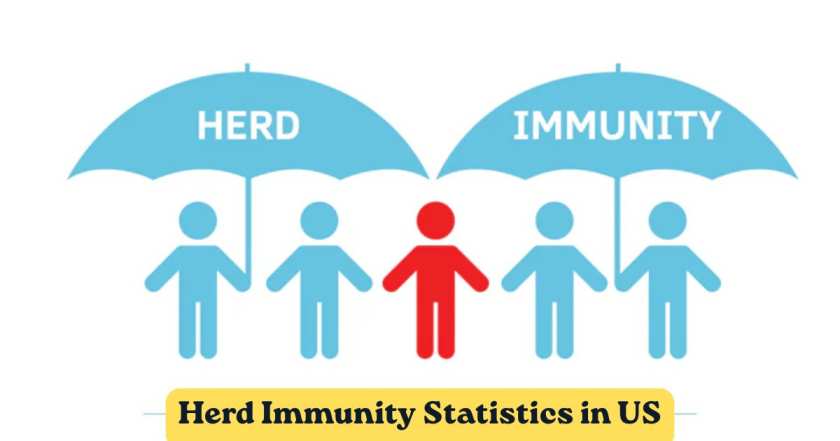
Herd Immunity Definition
Herd immunity — also called community immunity or population immunity — is the point at which enough people in a given population have become immune to an infectious disease that the pathogen can no longer sustain ongoing chains of transmission. When this threshold is crossed, the disease effectively runs out of susceptible hosts: infected individuals encounter immune neighbors more often than susceptible ones, transmission chains break, and even those who cannot be vaccinated — newborns, immunocompromised individuals, people with certain allergies — gain indirect protection from the immune majority around them. The concept is not a modern invention; epidemiologists observed the effect empirically in smallpox and measles populations as far back as the early 20th century before they had the mathematical framework to explain it. Today, the threshold is calculated using the disease’s basic reproduction number (R₀) — the average number of new infections one case generates in a fully susceptible population — through the formula 1 − (1/R₀). A disease with R₀ = 2 requires only 50% immunity; a disease with R₀ = 15 requires 93% immunity before transmission reliably collapses. Herd immunity can be achieved through two pathways: vaccination — the safe, controlled route endorsed by every major public health authority — or natural infection, which achieves immunity at the cost of preventable illness, disability, and death across the population.
In 2026, the herd immunity status of the United States presents a deeply contradictory picture. For diseases like smallpox — eradicated globally in 1980 through one of history’s greatest public health achievements — and polio — eliminated from the U.S. since 1979 — herd immunity via vaccination has delivered complete protection for decades. But for measles, a disease that the U.S. declared eliminated in 2000, the picture has deteriorated significantly and urgently. Vaccination coverage among U.S. kindergartners has decreased from 95.2% during the 2019–2020 school year to just 92.5% in the 2024–2025 school year, leaving approximately 286,000 kindergartners at risk. This decline — the direct consequence of pandemic-era vaccination disruption and growing vaccine hesitancy — has pushed the national rate below the 95% threshold required for measles herd immunity, with consequences now playing out in real time: the U.S. recorded 2,288 confirmed measles cases in 2025 — the most in more than 33 years — and 2026 is already tracking worse, with 1,748 confirmed cases by April 16, 2026. For COVID-19, the question is more complex: the combination of vaccination and widespread natural infection has built broad population immunity, but the virus’s continuous mutation and the fading durability of both vaccine and natural immunity mean that the concept of a fixed, permanently achievable COVID-19 herd immunity threshold no longer applies in the way it does for measles or polio.
Interesting Facts About Herd Immunity 2026 | Key Stats at a Glance
| Fact Category | Key Detail |
|---|---|
| Definition | Point at which enough immune individuals in a population prevent sustained disease transmission |
| Also Called | Community immunity; population immunity |
| Formula for Threshold | 1 − (1/R₀) — where R₀ is the basic reproduction number |
| Measles R₀ | 12–18 — one of the most contagious human pathogens |
| Measles Herd Immunity Threshold | ~93–95% of population must be immune |
| Measles Vaccine Effectiveness (2 doses) | ~97% — two MMR doses required for full protection |
| Measles: US Herd Immunity Status (2026) | BREACHED — national kindergarten MMR rate at 92.5% vs. 95% required |
| Kindergarten MMR Rate (2019–2020) | 95.2% — above threshold |
| Kindergarten MMR Rate (2024–2025) | 92.5% — below threshold |
| Kindergartners Left Unprotected (2024–2025) | ~286,000 children |
| US States Below 95% Measles Threshold (2026) | 39 states |
| Worst State (MMR Rate) | Idaho — 78.5% |
| Best State (MMR Rate) | Connecticut — 98.2% |
| Gap Between Best and Worst State | Nearly 20 percentage points |
| US Measles Cases (2025) | 2,288 — most in over 33 years |
| US Measles Cases (Jan–April 16, 2026) | 1,748 — pace far above 2025 |
| US Measles Outbreaks (Full year 2025) | 48 outbreaks |
| US Measles Outbreaks (Jan–March 2026) | 16 new outbreaks |
| Comparison: 2001–2011 (10-year elimination era) | Only 64 outbreaks in 10 years combined |
| Polio Herd Immunity Threshold | ~80–85% |
| Polio Status in US | Eliminated since 1979 — maintained through vaccination |
| COVID-19 Herd Immunity Threshold (Original strain) | ~60–70% at R₀ of 2–3 |
| COVID-19 Herd Immunity (2026 status) | Not achievable as traditionally defined — virus mutates too fast |
| Smallpox Status | Globally eradicated 1980 — the only human disease eradicated through herd immunity |
Source: CDC — Measles Cases and Outbreaks (cdc.gov, updated May 2026); CDC SchoolVaxView 2024–2025; KFF — “Measles Elimination Status” (April 2026); TheGlobalStatistics.com — MMR Vaccine Statistics US 2026 (citing CDC SchoolVaxView); Johns Hopkins University Hub (June 3, 2025 — JAMA study on MMR declines); Mayo Clinic — Herd Immunity (mayoclinic.org); WHO — Herd Immunity FAQ (who.int); Wikipedia — Herd Immunity (updated January 24, 2026); WebMD — COVID-19 Herd Immunity; Yale Medicine — Herd Immunity
The statistics in the table above reveal the most significant collapse in U.S. vaccine-acquired herd immunity since the eradication era. The drop in kindergarten MMR coverage from 95.2% in 2019–2020 to just 92.5% in 2024–2025 may look small in percentage terms, but in real numbers it translates to an additional 286,000 unprotected kindergartners each year. More alarming is the geographic concentration: with 39 states now falling below the critical 95% herd immunity threshold, pockets of vulnerability are no longer rare outliers but a national pattern. The 48 measles outbreaks in 2025 alone — compared to only 64 across the entire 10-year elimination period from 2001 to 2011 — confirm that the U.S. has already crossed from a theoretical risk of losing measles elimination status into an active outbreak environment that is accelerating into 2026.
Herd Immunity 2026 | Threshold by Disease — Key Statistics
| Disease | R₀ (Basic Reproduction Number) | Herd Immunity Threshold | Vaccine Exists? | US Status 2026 |
|---|---|---|---|---|
| Measles | 12–18 | ~93–95% | Yes (MMR — 97% effective) | Below threshold — 92.5% kindergarten coverage |
| Whooping Cough (Pertussis) | 12–17 | ~92–94% | Yes (DTaP/Tdap) | Partially achieved — waning immunity an ongoing issue |
| Chickenpox (Varicella) | 8–12 | ~85–90% | Yes (Varicella vaccine) | Generally above threshold in vaccinated populations |
| Mumps | 4–7 | ~75–86% | Yes (MMR) | Generally maintained |
| Rubella | 5–7 | ~83–85% | Yes (MMR) | Maintained through MMR program |
| Polio | 5–7 | ~80–85% | Yes (IPV/OPV) | Eliminated in US since 1979 |
| Smallpox | 5–7 | ~80–85% | Yes (no longer administered) | Globally eradicated 1980 |
| Flu (Seasonal Influenza) | 2–3 | ~33–50% | Yes (annual; ~40–60% effective) | Not fully achieved — annual vaccination gap |
| COVID-19 (Original Strain) | 2–3 | ~60–67% | Yes (mRNA, protein subunit) | Broadly immune through vaccines + infection — but not classically achievable due to mutation |
| COVID-19 (Omicron Variants) | 8–15+ | ~88–93% | Yes (updated boosters) | Not achievable — continuous immune evasion |
| Diphtheria | 6–7 | ~85% | Yes (DTaP) | Maintained |
| Hepatitis B | 2–5 | ~50–80% | Yes (HepB series) | High coverage in vaccinated birth cohorts |
| Ebola | 1.5–2.5 | ~33–60% | Yes (limited use) | Not applicable in US (no endemic transmission) |
Source: WHO — “Herd Immunity, Lockdowns and COVID-19” (who.int); PBS/NOVA — “What is Herd Immunity?” (pbs.org); Mayo Clinic (mayoclinic.org); Columbia University Mailman School of Public Health; History of Vaccines / College of Physicians of Philadelphia; Wikipedia — Herd Immunity (January 2026); National Geographic Education — “Herd Immunity: Strength in Numbers”; WebMD — COVID-19 Herd Immunity
The disease-by-disease threshold table illustrates the core scientific principle behind herd immunity: the more contagious a pathogen, the higher the proportion of the population that must be immune before transmission chains reliably collapse. Measles has an R₀ of 12–18 and requires 95% of the population to be vaccinated for herd immunity to work. Polio is less contagious with an R₀ of five to seven, meaning only 80–85% need to be immunized. The formula behind every number in this table is the same — 1 − (1/R₀) — but its outputs span an enormous range. A disease with R₀ = 2 needs only 50% immunity; measles at R₀ = 15 needs 93%; and the most extreme variants of COVID-19’s Omicron lineage, with R₀ estimates exceeding 15, would theoretically require 93%+ immunity to halt transmission — a level the current vaccines, with their limited effectiveness against infection (as opposed to severe disease), cannot achieve and maintain as the virus continues to mutate. This is why public health authorities now speak not of “achieving herd immunity” for COVID-19 but of “optimizing population protection” — a fundamentally different framing that acknowledges the virus has evolved beyond the classical herd immunity model.
Herd Immunity 2026 | US Measles — Current Crisis Statistics
| US Measles / MMR Metric | Data |
|---|---|
| Measles Herd Immunity Threshold | ≥95% population immunity required |
| National Kindergarten MMR Rate (2024–2025) | 92.5% — below 95% threshold |
| National Kindergarten MMR Rate (2019–2020) | 95.2% — above threshold |
| Absolute Decline in Coverage | 2.7 percentage points since pre-pandemic |
| Additional Unprotected Kindergartners | ~286,000 children per year at risk |
| States Below 95% Threshold (2026) | 39 states |
| Lowest State MMR Rate — Idaho | 78.5% — dramatically below threshold |
| Highest State MMR Rate — Connecticut | 98.2% — the only top performer |
| States With Increased Rates (Post-Pandemic) | Only 4 states: California, Connecticut, Maine, New York |
| Counties Showing MMR Declines (JHU Study) | 1,614 out of 2,066 counties studied (78%) |
| Average County-Level Decline | 2.67 percentage points (JHU, JAMA, June 2025) |
| US Measles Cases (2025) | 2,288 — most in 33+ years |
| US Measles Cases (Jan–Apr 16, 2026) | 1,748 — on pace to exceed 2025 total |
| US Measles Outbreaks (2025) | 48 outbreaks in a single year |
| US Measles Outbreaks (Jan–Mar 2026) | 16 new outbreaks |
| Comparison: 2001–2011 (10 years) | 64 total outbreaks in ten years combined |
| Local Transmission Share (2025–2026) | Majority of cases from local transmission — not importation |
| Measles Elimination Declared | 2000 — the US declared measles eliminated |
| Measles Elimination at Risk of Loss | 2026 — KFF and CDC both flag active risk of losing eliminated status |
| Children Susceptible to Measles (PMC Model) | Up to 14.9 million US children susceptible under worst-case vaccine hesitancy projections |
Source: CDC — Measles Cases and Outbreaks (cdc.gov, May 2026); CDC SchoolVaxView 2024–2025 School Year; KFF — “Measles Elimination Status: What It Is and How the U.S. Could Lose It” (April 2026); Johns Hopkins University Hub (June 3, 2025 — citing JAMA study); TheGlobalStatistics.com — MMR Vaccine Statistics US 2026 (citing CDC SchoolVaxView); PMC — “Estimating the number of US children susceptible to measles” (NIH/PMC)
The current measles data for 2026 is not a statistical abstraction — it is a live public health emergency in progress. There were 64 measles outbreaks in total over ten years (2001–2011) during the elimination era, but in 2025 there were 48 outbreaks, and 16 new outbreaks have already been confirmed through March 2026. The shift in the source of those outbreaks is equally alarming: a higher percentage of cases since 2025 have been due to local transmission versus importation, indicating local transmission has become the primary source of reported cases — precisely the pattern that signals measles elimination is failing. When the virus can sustain itself through domestic transmission chains rather than relying on imported cases, the infrastructure of elimination — the network of rapid case identification, contact tracing, and outbreak containment — is under strain it was not designed to handle at this frequency.
The Johns Hopkins University study published in JAMA in June 2025 found that of 2,066 counties studied, 1,614 (78%) reported drops in vaccinations, with the average county-level vaccination rate falling from 93.92% pre-pandemic to 91.26% post-pandemic — an average decline of 2.67%, moving further away from the 95% herd immunity threshold. The geographic unevenness makes the national average deceptive: while Connecticut maintains 98.2%, Idaho sits at 78.5% — a level so far below the threshold that measles outbreaks there are essentially inevitable when the virus is introduced.
Herd Immunity 2026 | COVID-19 — Why Classical Herd Immunity No Longer Applies
| COVID-19 / Herd Immunity Metric | Data |
|---|---|
| Original COVID-19 R₀ (early 2020) | 2.0–3.0 |
| Original Herd Immunity Threshold (R₀ = 2–3) | ~60–67% |
| Delta Variant R₀ (2021) | ~5–6 |
| Omicron R₀ (2022+) | 8–15+ (some estimates higher) |
| Theoretical Threshold for Omicron | ~88–93%+ |
| COVID Vaccines’ Effectiveness vs. Infection | Limited — especially vs. current variants; better vs. hospitalization/death |
| COVID Vaccines’ Effectiveness vs. Severe Disease | Strong (~80–90% for hospitalization) |
| US COVID Vaccination Rate (Full Primary Series, 2025) | ~70% of total population received primary series at some point |
| Durability of COVID Immunity (Vaccine) | Wanes within months — boosters needed for sustained protection |
| Durability of COVID Immunity (Natural Infection) | At least 8 months for some protection; varies by variant |
| US COVID “Hybrid Immunity” Rate (2026) | Majority of US adults have some combination of vaccine + infection immunity |
| Expert Consensus (Journal of Infectious Diseases, 2022) | Living with COVID is best considered not as reaching a numerical threshold but as optimizing population protection |
| Rochester Regional Health Assessment (2026) | US is likely at the 70% threshold considered necessary for original-strain herd immunity — but virus has evolved past this |
| WHO Position | Herd immunity against COVID-19 cannot be achieved through infection; only vaccination-based protection is recommended |
| Public Health Consensus (2026) | COVID-19 is endemic — managed through updated annual vaccines targeting current strains; classical herd immunity is not a practical goal |
Source: WebMD — COVID-19 Herd Immunity (September 2025); Rochester Regional Health — “What Herd Immunity for COVID-19 Means in 2026” (rochesterregional.org); WHO — “Herd Immunity, Lockdowns and COVID-19” (who.int); PATH — “Understanding the Journey to Herd Immunity” (path.org); PMC — “R0 of COVID-19 and its impact on vaccination coverage” (pmc.ncbi.nlm.nih.gov); Yale Medicine — Herd Immunity (yalemedicine.org)
The COVID-19 and herd immunity story is the clearest modern illustration of why the concept cannot be mechanically applied to every pathogen. At the time, many epidemiologists thought that achieving a 70–80% vaccination rate would help achieve COVID herd immunity — a figure that applies to pathogens that don’t mutate rapidly. But COVID-19 mutates like the common cold. As the virus evolved from the original strain (R₀ ≈ 2–3) through Delta (R₀ ≈ 5–6) and into the Omicron family (R₀ ≈ 8–15+), the theoretical herd immunity threshold moved faster than any vaccine campaign could follow — and the vaccines’ effectiveness against infection, rather than severe disease, declined substantially with each new variant. For measles, which doesn’t change much over time, once you get the vaccine or recover, you are not likely to get it again — making the herd immunity calculation stable. COVID-19 does not share this property.
The practical consequence is that COVID-19 is now managed as an endemic respiratory illness — similar to influenza — through annual updated vaccines targeting circulating strains rather than through any attempt to vaccinate the population above a fixed threshold. Because research shows durable immunity can be achieved by both vaccination or prior infection, the United States is likely at the 70% threshold considered necessary for herd immunity three years ago — but the virus has evolved past the point where that threshold delivers the protection it once implied.
Herd Immunity 2026 | The Science — R₀, Thresholds & How It’s Calculated
| Scientific Metric | Data |
|---|---|
| Core Formula | HIT = 1 − (1/R₀) — Herd Immunity Threshold |
| R₀ Definition | Average number of new infections one case generates in a fully susceptible, unvaccinated population |
| R₀ > 1 | Infections will increase over time |
| R₀ < 1 | Infections will decrease and die out |
| HIT for R₀ = 2 | 50% |
| HIT for R₀ = 4 | 75% |
| HIT for R₀ = 5 | 80% |
| HIT for R₀ = 10 | 90% |
| HIT for R₀ = 15 | 93.3% |
| HIT for R₀ = 18 (measles upper) | 94.4% |
| Vaccine Effectiveness Factor | True vaccination coverage needed = HIT ÷ vaccine effectiveness |
| Measles Example | 95% threshold ÷ 97% vaccine efficacy = need to vaccinate ~97.9% of population |
| Natural vs. Vaccine Immunity | Both count toward threshold — but vaccination avoids death/disability cost of natural infection |
| Re (Effective Reproduction Number) | Adjusts R₀ for current immunity levels — the real-time measure of transmission momentum |
| When Re < 1 | Outbreak will die out — community has crossed effective herd immunity in that moment |
| Limitations of HIT Formula | Assumes homogeneous mixing — in reality, clustered unvaccinated communities create local vulnerability even when national average is above threshold |
| Who Is Protected by Herd Immunity | Newborns under vaccine age; immunocompromised individuals; people with vaccine contraindications; those for whom vaccines didn’t generate full immunity |
| Eradication vs. Elimination vs. Control | Eradication = global (smallpox); Elimination = country/region (US measles until 2025–2026 threat); Control = reduced burden but not eliminated |
Source: Wikipedia — Herd Immunity (January 2026, full mathematical section); History of Vaccines — College of Physicians of Philadelphia (historyofvaccines.org); PBS/NOVA — “What is Herd Immunity?”; WHO — Herd Immunity FAQ; PATH — “Understanding the Journey to Herd Immunity”; Columbia University Mailman School of Public Health
The mathematical framework behind herd immunity is deceptively simple but contains several important nuances that become critical in real-world application. To calculate the herd immunity threshold, scientists use the formula 1 – (1/R₀). For measles (R₀ = 15), this means 1 – (1/15) = 1 – 0.067 = 0.933, or about 93% immunity needed. But this calculation assumes a perfectly mixed population where every person is equally likely to encounter every other person — an assumption that is never true. In practice, populations cluster: unvaccinated families live near each other, attend the same schools and religious communities, and travel through the same social networks. If vaccination rates for a highly contagious disease go down in one pocket of the country, the disease can resurface and spread in that area — even if the national average appears adequate. This is why a national MMR rate of 92.5% translates into 39 states below the local 95% threshold: the national number masks local clusters of vulnerability where the virus spreads freely.
Achieving herd immunity with safe and effective vaccines makes diseases rarer and saves lives — but sustaining it requires continuous vigilance. The populations who depend most on herd immunity for their protection are those who cannot protect themselves: newborns under 12 months who are too young for the MMR vaccine, individuals with leukemia or other conditions that prevent vaccination, and those for whom the vaccine generated an inadequate immune response. For these groups, the existence of community immunity is not an abstract public health metric — it is the difference between safety and exposure to a pathogen they have no personal means of resisting.
Herd Immunity 2026 | US Vaccination Rates vs. Thresholds — State of Play
| Vaccine / Disease | Required Coverage for Herd Immunity | Current US Coverage (2025–2026) | Status |
|---|---|---|---|
| MMR (Measles) | ≥95% | 92.5% (kindergartners, CDC SchoolVaxView 2024–25) | ⚠ BELOW THRESHOLD |
| MMR (Mumps) | ~86% | ~92.5% (via MMR program) | Adequate — but mumps immunity wanes faster |
| MMR (Rubella) | ~83–85% | ~92.5% (via MMR program) | Above threshold |
| IPV (Polio) | ~80–85% | >90% (maintained — polio remains eliminated) | Above threshold |
| DTaP (Pertussis / Whooping Cough) | ~92–94% | ~93–94% (national estimate, subject to waning) | Near threshold — waning immunity a persistent gap |
| Varicella (Chickenpox) | ~85–90% | >90% (high 2-dose coverage) | Above threshold |
| COVID-19 (Updated Boosters) | Not classically definable | ~25–30% annually receive updated booster | Significant gap — but severe disease protection broader |
| Influenza (Seasonal) | ~33–50% | ~40–50% (annual variability) | Near threshold — varies by year and strain |
| Hepatitis B | ~50–80% | >85% in vaccinated birth cohorts | Above threshold for modern birth cohorts |
Source: CDC SchoolVaxView 2024–2025 (cdc.gov); CDC — Measles Cases and Outbreaks (cdc.gov, May 2026); CDC Immunization Coverage in the US 2025; KFF — “Measles Elimination Status” (April 2026); WHO and Mayo Clinic threshold references; WebMD COVID-19 Herd Immunity (September 2025)
The comprehensive vaccine coverage vs. threshold table tells three distinct stories about the state of herd immunity in the US in 2026. The first is the measles crisis: with national kindergarten coverage at 92.5% against a required 95%, the U.S. has crossed from threshold compliance into threshold deficiency — and the ongoing outbreak data confirms that this mathematical gap has already become a clinical and epidemiological reality. At local levels, vaccine coverage rates may vary considerably, and pockets of unvaccinated people can exist in states with high vaccination coverage — and when measles gets into communities of unvaccinated people, outbreaks occur.
The second story is one of maintained success: polio, varicella, rubella, and hepatitis B all show coverage at or above their respective thresholds, the legacy of decades of consistent immunization programs that have kept once-devastating diseases at bay. The third story is COVID-19’s structural exception — a virus that has evolved its way out of the classical herd immunity framework and must now be managed through a different paradigm entirely, one focused on reducing severe disease burden rather than blocking transmission at population level. The gap between these three stories — ongoing crisis, maintained success, and paradigm shift — defines the full complexity of herd immunity in the United States in 2026.
Disclaimer: This research report is compiled from publicly available sources. While reasonable efforts have been made to ensure accuracy, no representation or warranty, express or implied, is given as to the completeness or reliability of the information. We accept no liability for any errors, omissions, losses, or damages of any kind arising from the use of this report.