
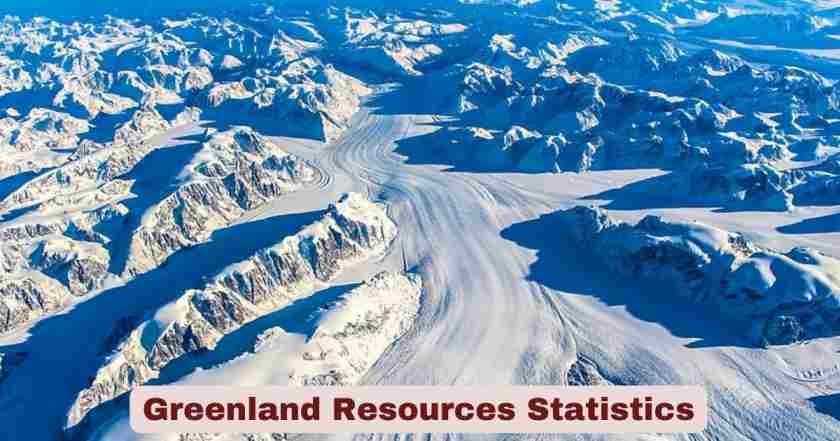
Greenland Resources 2026
Greenland possesses extraordinary natural resource wealth spanning fishing, mining, hydrocarbons, hydropower, and critical minerals that has captured intensified global attention during 2025 and 2026. The autonomous Danish territory’s economic foundation rests on fishing generating 5.3 billion Danish kroner (23% of GDP) in 2023, while emerging mining operations and vast unexplored potential position the island as strategically significant for Western nations seeking alternatives to Chinese-dominated supply chains. The fishing industry remains the economic cornerstone, with shrimp and Greenland halibut accounting for approximately 90% of export revenues, demonstrating both extraordinary dependence on marine resources and vulnerability to climate change and market fluctuations.
The year 2026 represents a watershed moment for Greenland’s resource development trajectory, driven by geopolitical factors including renewed United States interest following President Trump’s declarations that “we need Greenland for national security” and ongoing European Union partnerships to secure critical mineral supply chains. Greenland faces fundamental economic challenges requiring 4.1 billion DKK annual subsidy from Denmark (approximately 20% of 2023 GDP) to fund government operations, spurring political discussions about leveraging natural resources to achieve economic independence. However, formidable obstacles including less than 100 miles of paved roads, extreme Arctic conditions, a workforce of just 56,000 total population, and infrastructure costs estimated in hundreds of billions of dollars create stark tensions between resource potential and practical development realities.
Interesting Facts and Latest Statistics for Greenland Resources in 2026
| Key Facts About Greenland Resources in 2026 | Statistics |
|---|---|
| Fishing Industry Export Value (2023) | 5.3 billion DKK ($780 million) |
| Fishing Industry Percentage of GDP (2023) | 23% of GDP |
| Shrimp and Halibut Percentage of Export Revenue | Approximately 90% |
| Total GDP (2023) | 23 billion DKK ($3.33 billion USD) |
| GDP Per Capita (2023) | $58,499 USD |
| Danish Government Annual Subsidy (2023) | 4.1 billion DKK ($600 million) |
| Danish Subsidy as Percentage of GDP | Approximately 20% |
| Renewable Energy Share of Total Energy | 70% (predominantly hydropower) |
| Hydropower Potential in Tasersiaq Area Alone | 7,000 GWh annually |
| Total West Greenland Hydropower Potential | 20,000 GWh estimated |
| Number of Operating Mines (2025-2026) | 2 active mines (Nalunaq gold, Lumina anorthosite) |
| Miles of Paved Roads | Less than 100 miles |
| Total Population (2024) | 56,000 people |
| Estimated Hydrocarbon Potential (Oil Equivalent) | 28.43 billion barrels |
| Number of Critical Raw Materials (EU-Designated) in Greenland | 25 of 34 CRM types |
Data Source: Statistics Greenland, Visit Greenland Tourism Satellite Account, Geological Survey of Denmark and Greenland (GEUS), Government of Greenland Ministry of Mineral Resources, World Bank, NunaGreen, European Commission, 2023-2026
These statistics reveal the extraordinary contrasts defining Greenland’s resource landscape. The 5.3 billion DKK fishing industry representing 23% of GDP demonstrates marine resources’ absolute dominance of the current economy, while the 2 active mines indicate how little mineral extraction actually occurs despite geological potential. The GDP per capita of $58,499 ranks among the highest globally, yet this figure masks the structural dependency on Denmark’s 4.1 billion DKK annual subsidy providing approximately 20% of GDP, creating political pressure to develop alternative revenue sources.
The 70% renewable energy share primarily from hydropower represents one of Greenland’s infrastructure successes, though current capacity serves only domestic needs totaling approximately 600 GWh annually. The 7,000 GWh potential in the Tasersiaq area alone and 20,000 GWh total West Greenland potential vastly exceed domestic demand, positioning Greenland as a potential major green energy exporter if transmission and industrial demand materialized. The 28.43 billion barrels of estimated hydrocarbon potential remains entirely speculative with zero production, as Greenland banned new offshore oil and gas licensing in 2021 citing climate concerns. The stark infrastructure deficit—less than 100 miles of paved roads serving a territory larger than most countries—illustrates why resource development requires massive upfront investments before economic returns.
Fishing Industry and Marine Resources in Greenland 2023-2026
| Fisheries Metric | Value/Details |
|---|---|
| Total Export Value (2023) | 5.3 billion DKK ($780 million) |
| Percentage of GDP (2023) | 23% of total GDP |
| Percentage of Total Export Revenue | Over 80% of all exports |
| Primary Species (Shrimp) | Cold-water shrimp (Pandalus borealis) |
| Primary Species (Fish) | Greenland halibut (Reinhardtius hippoglossoides) |
| Shrimp and Halibut Combined Export Share | Approximately 90% of fishing revenue |
| Number of Fishing Vessels | Approximately 2,500-3,000 vessels (various sizes) |
| Direct Employment | Thousands of Greenlanders |
| Secondary Species | Atlantic cod, snow crab, redfish, lumpfish roe |
| Climate Change Impact | Species migration northward, changing abundance |
| Total Allowable Catch (TAC) System | Science-based quotas managed by Greenland government |
| Major Export Markets | Denmark, Asia (especially China/Japan), Europe |
Data Source: Statistics Greenland, Government of Greenland Ministry of Fisheries and Hunting, Visit Greenland Economic Data, Royal Greenland, 2023-2026
The fishing industry represents Greenland’s economic foundation and largest export sector, generating 5.3 billion DKK ($780 million) in exports during 2023 and accounting for 23% of GDP. This extraordinary dependence on a single sector creates both economic stability through established operations and vulnerability to climate shifts, stock fluctuations, and international market changes. Cold-water shrimp and Greenland halibut together comprise approximately 90% of fishing export revenues, demonstrating extreme concentration within an already concentrated sector.
Cold-water shrimp (Pandalus borealis) historically dominated exports but has experienced concerning declines in recent years as warming Arctic waters cause stocks to migrate northward seeking colder temperatures. Greenland halibut, a deepwater flatfish, has grown in importance as shrimp catches declined, with fishing operations targeting continental slope waters at depths 400-1,200 meters. The industry provides critical employment across Greenland’s coastal communities, with thousands of Greenlanders working directly in fishing vessel operations, processing facilities operated by companies like Royal Greenland (the state-owned seafood company), and related logistics and support services. Secondary species including Atlantic cod, snow crab, redfish, and lumpfish roe provide diversification opportunities, though none approach shrimp and halibut’s economic significance. Climate change presents both challenges and potential opportunities: warming waters threaten traditional cold-water species while potentially opening new fisheries for species like cod that thrive in slightly warmer conditions, fundamentally reshaping Greenland’s marine economy.
Hydropower Resources and Energy Infrastructure in Greenland 2024-2026
| Hydropower Metric | Capacity/Details |
|---|---|
| Current Total Electricity Generation (2021-2022) | Approximately 600 GWh annually |
| Hydropower Share of Electricity Mix | 83-87% (remainder fossil fuels) |
| Renewable Energy Goal | 90% renewable electricity by 2030 |
| Tasersiaq Area Hydropower Potential | 7,000 GWh annually |
| Total West Greenland Hydropower Potential | 20,000 GWh estimated |
| Buksefjord Plant Current Capacity | 45 MW (255 GWh annually maximum) |
| Buksefjord Expansion Project Capacity Addition | 71 MW (increasing to 116 MW total) |
| Buksefjord Expanded Annual Output | 660 GWh annually (from current 255 GWh) |
| Buksefjord Expansion Completion Target | 2029 |
| Disko Bay New Plant Capacity | 21 MW |
| Disko Bay Plant Annual Output | 100 GWh annually |
| Number of Identified Hydropower Sites | Over 60 documented potential sites |
| Sites Suitable for Industrial Use | 20+ sites (50-500 MW each) |
Data Source: NunaGreen, Nukissiorfiit, Statistics Greenland, Government of Greenland Energy Department, World Energy, EIB Project Documentation, 2024-2026
Greenland’s hydropower resources represent one of its most significant yet underdeveloped assets. Current electricity generation totals approximately 600 GWh annually, with hydropower providing 83-87% while the remainder comes from diesel generators in communities lacking hydroelectric access. The Buksefjord hydroelectric plant near Nuuk, Greenland’s capital, represents the country’s largest existing facility at 45 MW capacity producing up to 255 GWh annually, supplying electricity to Nuuk’s growing population.
The Buksefjord expansion project scheduled for completion in 2029 will add 71 MW capacity, increasing total output to 660 GWh annually—more than doubling current production. This expansion involves constructing a 16-kilometer transfer tunnel connecting Lake Kangerluarsunnguup Tasersua to Lake Isortuarsuup Tasia, dramatically increasing available water flow. A separate 21 MW hydropower plant in Disko Bay will generate 100 GWh annually to replace diesel generators serving towns of Qasigiannguit and Aasiaat, reducing Greenland’s oil consumption by an estimated 20%. Beyond these near-term projects, geological surveys have identified over 60 documented hydropower potential sites, with more than 20 sites rated suitable for large-scale industrial use ranging from 50 MW to 500 MW capacity each. The Tasersiaq area alone holds 7,000 GWh annual potential, while total West Greenland hydropower potential reaches an estimated 20,000 GWh—more than 30 times current domestic consumption. This vast surplus positions Greenland as a potential major green energy exporter for powering energy-intensive industries like aluminum smelting, data centers, hydrogen production, or supporting mining operations, though achieving this vision requires billions in infrastructure investments including transmission systems, industrial facilities, and potentially undersea cables to export markets.
Oil and Gas Resources and Exploration History in Greenland 1970s-2026
| Hydrocarbon Metric | Estimated Resources/Status |
|---|---|
| Estimated Total Hydrocarbon Potential | 28.43 billion barrels oil equivalent |
| USGS Northeast Greenland Estimate (2008) | 31 billion barrels oil equivalent |
| West/East Greenland Basins Estimate (2008) | 17 billion barrels + 138 trillion cubic feet gas |
| Jameson Land Basin Potential | Multi-billion barrel range (ARCO estimates) |
| Current Production Status (2026) | Zero production |
| New Offshore Licensing Status (2021-Present) | Banned by Greenland Parliament |
| Active Exploration Licenses (2026) | 3 onshore licenses (Jameson Land area) |
| March GL/Greenland Energy Company | First US public company for Greenland oil/gas |
| Seismic Data Collected (Historical) | Over 7,000 km 2D seismic (Kanumas project 1990-96) |
| Jameson Land License Area | Over 2 million acres (3 licenses) |
| Expected First Drilling (Jameson Land) | 2026-2027 |
| Comparison: US Proven Crude Oil Reserves | 31 billion barrels (similar to NE Greenland estimate) |
Data Source: US Geological Survey 2008 Circum-Arctic Assessment, GEUS, March GL Company, Energy Transition Minerals, Government of Greenland Mineral Resources Authority, 2024-2026
Greenland’s hydrocarbon potential has attracted cyclical interest since the 1970s oil price spikes, yet zero commercial production has ever occurred despite decades of exploration and billions in investment. The US Geological Survey’s 2008 assessment estimated Northeast Greenland offshore areas could contain up to 31 billion barrels of oil equivalent, roughly equivalent to the United States’ entire proven crude oil reserves, while West and East Greenland basins combined were estimated at 17 billion barrels of oil plus 138 trillion cubic feet of natural gas. The Geological Survey of Denmark and Greenland (GEUS) estimates total hydrocarbon potential at 28.43 billion barrels oil equivalent across all Greenland basins.
In 2021, Greenland’s parliament banned new offshore oil and gas exploration citing climate change concerns, effectively ending four decades of offshore petroleum ambitions and causing international oil majors to abandon Greenland prospects. However, 3 active onshore exploration licenses remain valid for the Jameson Land Basin in East Greenland, where March GL Company (founded March 2025) leads development efforts. In September 2025, March GL merged with Pelican Acquisition Corporation creating Greenland Energy Company, the first US public company dedicated to Greenland oil and gas development. The company reprocessed 1,800 kilometers of 2D seismic data originally collected by ARCO in the 1980s-90s, identifying over 50 potential oil and gas targets with promising geological structures. ARCO invested equivalent to $275 million exploring Jameson Land and built Constable Point Airfield, which remains critical infrastructure. March GL holds rights to up to 70% ownership of three licenses covering over 2 million acres and expects to drill the first exploratory well in 2026-2027, potentially unlocking what company executives describe as “one of the largest undrilled onshore basins of its kind”. Major challenges include extreme Arctic conditions, complete lack of pipeline infrastructure, limited shipping windows, and prohibitively high costs that have deterred major oil companies despite encouraging geological indicators.
Gold and Precious Metals Mining in Greenland 2024-2026
| Gold Mining Metric | Production/Details |
|---|---|
| Active Gold Mines (2026) | 1 mine (Nalunaq) |
| Nalunaq Operator | Amaroq Minerals (Canadian company) |
| Nalunaq First Gold Pour | November 2024 |
| Nalunaq Production Target (End 2025) | 300 tonnes ore/day, 4.5+ kg gold/day |
| Nalunaq Ore Grade | 12-16 grams gold per tonne |
| First 10 Hours Production (Nov 2024) | 1.2 kilograms gold |
| Nalunaq Location | South Greenland (Kujalleq municipality) |
| Nalunaq Mine History | Operated 2004-2013, restarted 2024 |
| Black Angel Project Status | Development stage (Amaroq) |
| Black Angel Target Production Start | 2027-2028 |
| Black Angel Historical Production | 11.2 million tonnes ore @ 12.6% zinc, 4.1% lead, 29 g/t silver |
| Black Angel Recent Sample Grades | 41% zinc, 9.3% lead, 1.2% copper, 596 g/t silver |
| Other Precious Metals | Silver (as byproduct), platinum exploration ongoing |
Data Source: Amaroq Minerals, Geological Survey of Denmark and Greenland, Arctic Review, Statistics Greenland, 2024-2026
Gold mining represents Greenland’s most successful current mineral extraction operation. The Nalunaq gold mine in South Greenland, operated by Canadian company Amaroq Minerals, achieved its first gold pour in November 2024 after restarting operations at a site that previously operated 2004-2013. During its first 10 hours of operation, the processing plant produced 1.2 kilograms of gold, demonstrating successful commissioning of the facility.
By end of 2025, Nalunaq targeted steady production capacity of 300 tonnes ore per day, yielding more than 4.5 kilograms gold daily from ore grading 12-16 grams per tonne—considered high-grade by global standards. Amaroq CEO Eldur Ólafsson stated that “as Nalunaq transitions from being a cost centre to a cash generator, focus turns to resource expansion and mine life extension”, indicating plans for long-term operations. The company projects Nalunaq will become “one of the biggest taxpayers in Greenland” by 2027-2028, potentially generating significant government revenues. Amaroq’s Black Angel project in northwestern Greenland represents another high-grade precious metals opportunity. The mine operated during the 1940s and again from 1973-1990, producing 11.2 million tonnes of ore grading 12.6% zinc, 4.1% lead, and 29 grams per tonne silver—exceptional grades far above global averages. Recent exploration sampling returned extraordinary assays of 41% zinc, 9.3% lead, 1.2% copper, and 596 grams per tonne silver, suggesting significant remaining resources. Existing infrastructure from historical operations could enable production restart by 2027-2028, mining zinc, lead, and silver as primary products. Most prospective gold areas concentrate around Sermiligaarsuk fjord in South Greenland, where geological conditions favor gold mineralization, though only a fraction of potential sites have been systematically explored due to access challenges and limited historical investment.
Base Metals and Industrial Minerals in Greenland 2024-2026
| Mineral/Deposit | Status/Resources |
|---|---|
| Zinc Deposits | Among world’s largest undeveloped resources |
| Citronen Fjord Project | Zinc and lead deposit, North Greenland |
| Copper Exploration | Underexplored, mainly northeast and central-east areas |
| Disko-Nuussuaq Project | Copper, nickel, platinum, cobalt (80 Mile Plc) |
| Disko-Nuussuaq Potential | Targets 5.9 km long, 1.1 km wide (geophysical) |
| Disko-Nuussuaq Sample Grades | Up to 7% nickel, 3% copper, 2 g/t platinum |
| Nickel Exploration | Anglo American 5-year license (granted 2019) |
| Anorthosite Mine (Lumina) | Operating since 2019 (West Greenland) |
| Lumina Production Target (2025) | 200,000 tonnes anorthosite |
| Anorthosite Uses | Titanium dioxide substitute, paint, coatings |
| Iron Ore Potential | Significant deposits identified, undeveloped |
| Tungsten, Palladium, Vanadium | Present in various locations |
| Exploration Coverage | Less than 10% of ice-free area thoroughly explored |
Data Source: Lumina Sustainable Materials, 80 Mile Plc, Anglo American, Geological Survey of Denmark and Greenland, Government of Greenland Mineral Resources Authority, 2024-2026
Greenland holds world-class base metal deposits that remain largely undeveloped due to infrastructure and cost challenges. Zinc deposits rank among the planet’s largest undiscovered resources, particularly the Citronen Fjord project in North Greenland spanning a 2,500-kilometer geologic formation and described as “one of the world’s largest undeveloped zinc resources”. Despite its scale, development faces severe obstacles including extreme Arctic location, months of polar darkness, and complete absence of infrastructure requiring hundreds of millions in upfront investment before first production.
Copper exploration remains underexplored relative to Greenland’s geological potential, with promising areas in northeast and central-east regions receiving minimal systematic investigation. The Disko-Nuussuaq project operated by London-listed 80 Mile Plc has generated excitement due to potential similarities to Russia’s Norilsk—the world’s largest nickel-copper deposit. Boulder samples returned exceptional grades of up to 7% nickel, 3% copper, and 2 grams per tonne platinum, while geophysical surveys identified massive targets measuring 5.9 kilometers long and 1.1 kilometers wide, suggesting world-class deposit potential. Major miner Anglo American secured a 5-year exploration license in western Greenland in 2019, focusing on nickel and other base metals, though drilling progress has been slow due to logistical challenges. The anorthosite mine operated by Lumina Sustainable Materials on Greenland’s west coast represents one of only 2 currently operating mines, producing since 2019 with output growing steadily to a forecasted 200,000 tonnes in 2025. Anorthosite serves as a titanium dioxide substitute used in paints, coatings, and specialized industrial applications, providing an example of niche mineral products that can be economically viable despite Greenland’s challenges. Remarkably, less than 10% of Greenland’s ice-free area (19% of total landmass) has been thoroughly explored for minerals, suggesting vast undiscovered potential remains hidden beneath minimal vegetation cover and increasingly accessible terrain as glaciers retreat.
Graphite Resources and Battery Materials in Greenland 2025-2026
| Graphite Metric | Details |
|---|---|
| Amitsoq Graphite Project | 30-year exploitation license granted December 2025 |
| Amitsoq Operator | GreenRoc Mining Plc (London-listed) |
| Amitsoq Location | Southern Greenland |
| Amitsoq Historical Operations | Last operational in 1922 |
| Amitsoq Ore Processing Volume | 400,000 tonnes ore annually |
| Amitsoq Graphite Concentrate Production | 80,000 tonnes concentrate annually |
| Amitsoq Graphite Type | High-crystallinity flake graphite |
| Graphite Primary Use | Lithium-ion battery anodes |
| Global Graphite Production Control (China) | 79% of global production (2024) |
| Backing/Support | European Raw Materials Alliance |
| Lithium Resources in Greenland | 235,000 tonnes estimated |
| Lithium Percentage of Global Resources | 0.20% of global total |
| Other Battery Materials | Cobalt, nickel (exploration stage) |
Data Source: GreenRoc Mining, CSIS Analysis, European Raw Materials Alliance, Geological Survey of Denmark and Greenland, International Energy Agency, 2025-2026
Graphite represents a critical breakthrough for Greenland’s mining sector development. In December 2025, Greenland granted a 30-year exploitation license to London-listed GreenRoc Mining Plc for the Amitsoq graphite deposit in southern Greenland, marking a significant milestone as one of few active mining licenses issued in recent years. The project received backing from the European Raw Materials Alliance, underscoring European Union strategic interest in diversifying critical mineral supply chains away from Chinese dominance.
The Amitsoq deposit represents one of the world’s highest-grade graphite deposits, previously mined on a small scale until 1922 when operations ceased. Modern assessment indicates the site can process approximately 400,000 tonnes of ore annually, yielding roughly 80,000 tonnes of graphite concentrate—a substantial volume in global graphite markets. Critically, Amitsoq produces high-crystallinity flake graphite, the premium grade required for lithium-ion battery anodes powering electric vehicles, energy storage systems, and consumer electronics. This specification directly addresses European and American demand for domestic battery supply chains. China’s dominance of graphite production at 79% of global output (approximately 27 million short tons in 2024) creates strategic vulnerability, as China has implemented multiple rounds of export controls on graphite and graphite products, disrupting manufacturing supply chains. The Amitsoq project expects to produce approximately 80,000 tonnes annually, representing roughly 0.3% of current global production but providing a Western-controlled source for European manufacturers. Lithium resources in Greenland are estimated at 235,000 tonnes (0.20% of global resources), relatively modest compared to major producers like Australia and Chile, though systematic exploration remains limited. International Energy Agency projections suggest lithium demand could increase eightfold by 2040, driven by electric vehicle adoption and energy storage deployment, potentially making even smaller deposits economically viable. Cobalt and nickel critical for battery cathodes are being explored in multiple locations, particularly the Disko-Nuussuaq copper-nickel-platinum-cobalt project, though these remain early-stage prospects requiring years of development before potential production.
Infrastructure Challenges and Development Costs in Greenland 2024-2026
| Infrastructure Metric | Current Status |
|---|---|
| Total Paved Roads | Less than 100 miles |
| Road Network Between Cities | Zero intercity roads |
| Primary Transportation Mode | Boat and airplane only |
| Railway System | None |
| Major Ports | Limited capacity, ice-constrained seasonally |
| Shipping Season (South Greenland) | Approximately 14 ice-free weeks annually |
| Power Grid Interconnection | Each town has separate diesel/hydro system |
| Smelter Facilities | None |
| Processing Facilities for Minerals | None (must export raw ore) |
| Estimated Infrastructure Investment Needed | “Billions upon billions upon billions of dollars” |
| Arctic Operating Cost Premium | 2-3 times higher than temperate regions |
| Average Mine Development Timeline | 10+ years from discovery to production |
| Workforce Constraints | 56,000 total population limits labor pool |
Data Source: Government of Greenland Infrastructure Department, CSIS Analysis, SNL Metals & Mining, Danish Maritime Authority, Industry Expert Assessments, 2024-2026
Greenland’s infrastructure deficits represent the single largest obstacle to resource development, requiring investments potentially exceeding the value of resources to be extracted. The territory possesses less than 100 miles of paved roads serving a landmass of 972,000 square kilometers (375,000 square miles)—larger than countries including Saudi Arabia, Mexico, and Indonesia. More critically, zero roads connect Greenland’s cities and towns, making intercity travel possible only by boat or airplane, fundamentally constraining economic integration and resource transport.
Shipping access faces severe seasonal constraints, with even South Greenland’s most favorable locations offering only approximately 14 ice-free weeks annually according to Danish Maritime Authority assessments, while northern regions experience far shorter windows or remain inaccessible year-round. This compressed shipping season forces resource projects to stockpile production and ship in brief intense periods, increasing costs and limiting operational flexibility. Greenland possesses zero smelters, refineries, or processing facilities, meaning all mined materials must be exported as raw ore or concentrates to be processed elsewhere, capturing only a fraction of potential value. Each town operates separate power generation systems—primarily diesel generators or small local hydroelectric plants—with no interconnected electrical grid, making it impossible to share power resources or support large industrial operations without building entirely new power infrastructure. Experts estimate developing Greenland’s mineral resources requires “billions upon billions upon billions of dollars” in infrastructure including roads, ports, power plants, processing facilities, worker housing, and support services before generating revenue. Arctic operating costs run 2-3 times higher than comparable operations in temperate regions due to extreme weather, short construction seasons, equipment winterization requirements, higher worker compensation, and supply chain complexity. The average timeline from mineral discovery to production exceeds 10 years globally, with Arctic projects frequently requiring 15-20 years due to environmental reviews, permitting processes, infrastructure construction, and technical challenges. Greenland’s total population of 56,000 people creates severe workforce constraints, as large mining projects typically require hundreds to thousands of workers, necessitating imported labor with associated housing, social infrastructure, and cultural integration challenges.
Economic Impact and Development Prospects for Greenland Resources 2024-2026
| Economic Metric | Value/Details |
|---|---|
| Total GDP (2023) | 23 billion DKK ($3.33 billion USD) |
| GDP Per Capita (2023) | $58,499 USD |
| Government Spending (2023) | 9.6 billion DKK (42% of GDP) |
| Danish Annual Subsidy (2023) | 4.1 billion DKK ($600 million, ~20% of GDP) |
| Fishing Share of GDP | 23% |
| Tourism Share of GDP (2024) | 4.9% (1.245 billion DKK) |
| Mining Share of GDP (2025) | Less than 1% (minimal current production) |
| Total Population (2024) | 56,000 people |
| Employment in Fishing | Thousands directly employed |
| Direct Tourism Jobs (2024) | 1,800 jobs (6.2% of total employment) |
| Potential Mining Jobs (Future) | Thousands if major projects proceed |
| Economic Independence Goal | Reduce/eliminate Danish subsidy dependency |
| US Interest | “We need Greenland for economic security” – Trump |
Data Source: Statistics Greenland, Visit Greenland Tourism Satellite Account, World Bank, Government of Greenland Finance Ministry, President Trump Public Statements, 2023-2026
Greenland’s economy faces fundamental structural challenges that resource development proponents argue could be addressed through mining and energy revenues. Total GDP of 23 billion DKK ($3.33 billion USD) in 2023 supports a population of 56,000 people, yielding an impressive GDP per capita of $58,499—higher than Denmark, United Kingdom, and Japan. However, this figure masks economic realities: government spending reached 9.6 billion DKK (42% of GDP), while the Danish subsidy provided 4.1 billion DKK (approximately 20% of GDP), creating structural dependency on transfers rather than internally generated economic activity.
Fishing dominates at 23% of GDP, tourism contributes 4.9% (1.245 billion DKK), while mining accounts for less than 1% despite geological potential, demonstrating the vast gap between theoretical resource wealth and current economic reality. The 1,800 direct tourism jobs (6.2% of total employment) in 2024 represented substantial growth following new airport openings, while thousands work in fishing operations, but both sectors face climate change uncertainties. Greenland’s political establishment has made economic independence from Denmark a central long-term goal, viewing resource revenues as the potential path forward. President Trump’s declarations that the United States “needs Greenland for economic security” and his administration’s interest in purchasing or otherwise controlling the territory underscores resources’ geopolitical significance beyond Greenland’s immediate economic considerations. However, the decades-long timeline from discovery to production, hundreds of billions in required infrastructure investments, severe workforce constraints in a nation of 56,000 people, and environmental concerns create formidable obstacles between current economic reality and resource development aspirations. Proponents argue patient long-term investment could transform Greenland into a major mining and energy exporter generating revenues exceeding Danish subsidies, while skeptics note that similar Arctic resource projects in Canada, Alaska, and Scandinavia have consistently faced cost overruns, delays, and economic challenges that rendered many projects unviable despite proven geological resources.
Disclaimer: This research report is compiled from publicly available sources. While reasonable efforts have been made to ensure accuracy, no representation or warranty, express or implied, is given as to the completeness or reliability of the information. We accept no liability for any errors, omissions, losses, or damages of any kind arising from the use of this report.