
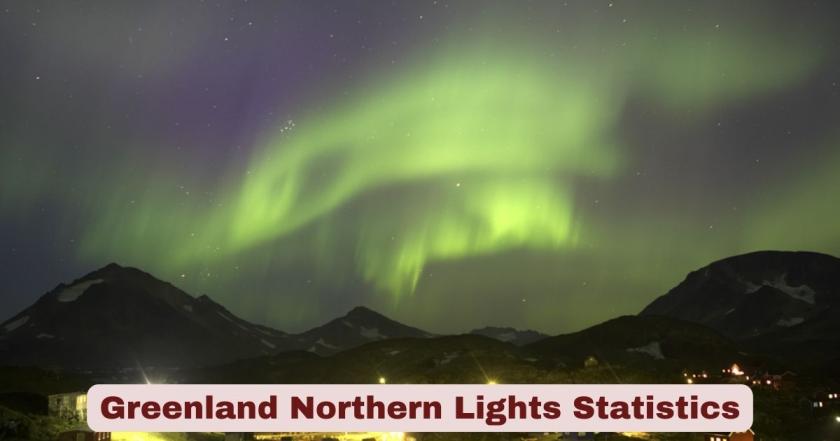
Northern Lights in Greenland 2026
Greenland stands as one of Earth’s premier destinations for witnessing the aurora borealis, offering unparalleled opportunities to experience nature’s most spectacular light show throughout 2026. The world’s largest island occupies a privileged position directly beneath the auroral oval—the geographic ring where northern lights activity reaches maximum intensity—creating optimal conditions for frequent and vibrant displays. With a population of fewer than 60,000 people scattered across a landmass larger than Western Europe, Greenland provides virtually zero light pollution, allowing the night sky to showcase the dancing curtains of green, purple, pink, and blue in their full glory. The combination of Arctic darkness from late August through April, remarkably clear skies in certain regions, and dramatic natural backdrops including icebergs, glaciers, and fjords transforms every aurora sighting into an unforgettable experience that photographers and travelers treasure for a lifetime.
What makes 2026 particularly exceptional for northern lights viewing in Greenland is the continuation of Solar Cycle 25’s maximum phase, which astronomers confirm peaked in October 2024 but continues delivering elevated solar activity well into 2026. This solar maximum produces significantly more frequent and intense auroral displays compared to typical years, with some scientists predicting a rare “double peak” phenomenon that extends the window for spectacular shows throughout the year. The increased sunspot activity, solar flares, and coronal mass ejections characteristic of this peak period translate directly to more energetic particle collisions in Earth’s atmosphere over Greenland’s magnetic latitudes, creating auroras that are brighter, more colorful, and more dynamic than during solar minimum years. Tourism infrastructure in Greenland has expanded dramatically to accommodate the surge in aurora-chasing visitors, with new international airports in Nuuk (opened November 2024), Ilulissat (opening 2026), and Qaqortoq (opening 2026) making access easier than ever. Direct flights from Newark, New Jersey via United Airlines and enhanced connections through Copenhagen via Scandinavian Airlines (SAS) and Icelandair mean that travelers from North America and Europe can reach Greenland’s aurora zones with minimal layovers, maximizing time under the spectacular Arctic skies during this once-in-a-decade optimal viewing period in 2026.
Northern Lights in Greenland 2026: Interesting Facts and Latest Statistics
| Aurora Statistics Category | Verified Data for 2026 |
|---|---|
| Optimal Viewing Season | Late August to early April (darkness required) |
| Peak Viewing Months | September, October, November, December, January, February, March |
| Best Viewing Hours | 11:00 PM to 2:00 AM (aurora activity peaks between midnight hours) |
| Solar Cycle 25 Phase | Continuation of solar maximum (peaked October 2024, elevated through 2026) |
| Solar Maximum Peak Month | October 2024 (smoothed sunspot number: 161) |
| Predicted Solar Activity 2026 | Declining from maximum but remaining elevated; possible double peak extension |
| Clear Night Probability (Kangerlussuaq) | Approximately 300 clear nights per year (82% clear sky probability) |
| Greenland Population | Fewer than 60,000 people across entire territory |
| Geographic Position | Latitude 60°-75°N (directly within auroral oval optimal zone) |
| Light Pollution Level | Minimal to virtually zero in most regions |
| Prime Viewing Locations | Kangerlussuaq, Ilulissat, Sisimiut, Nuuk, Scoresbysund, Tasiilaq, Kulusuk |
| Tourism Revenue 2023 | €250 million (€750 million target by 2035) |
| 2025 Tourism Growth | 14% year-on-year increase in international flight passengers (January 2025) |
| Overnight Stays 2024 | Approximately 355,000 (up 70% from 210,000 in 2014) |
| New Airport Openings | Nuuk International (opened November 2024); Ilulissat and Qaqortoq (planned 2026) |
| Kp-Index Visibility Threshold (Greenland) | Kp 4 or above typically produces overhead displays at Greenland latitudes |
Data sources: Visit Greenland, 50 Degrees North, Space.com, NOAA Space Weather Prediction Center, Statistics Greenland, Euronews, Sherwood News, Wikipedia Solar Cycle 25 (August 2024-January 2026)
The northern lights statistics for Greenland in 2026 reveal exceptional conditions converging to create what aurora experts characterize as a once-in-a-decade optimal viewing opportunity. The most significant factor is the Solar Cycle 25 maximum phase, which officially peaked in October 2024 with a smoothed sunspot number of 161—significantly exceeding the initial prediction of 115 made by the Solar Cycle 25 Prediction Panel in 2019. While solar activity will gradually decline through 2026 as part of the natural 11-year cycle, experts confirm that elevated sunspot counts, solar flares, and coronal mass ejections will continue throughout the year, maintaining aurora frequency and intensity well above baseline levels. Some solar physicists are predicting a rare “double peak” phenomenon where the sun’s northern and southern hemispheres reach maximum activity at slightly different times, potentially extending the enhanced viewing window through 2026 and even into early 2027. This means travelers visiting Greenland during the 2026 viewing season (late August through April) will benefit from solar conditions that produce more frequent geomagnetic storms and consequently more spectacular aurora displays.
Kangerlussuaq emerges as the statistical champion for northern lights viewing in Greenland, with its inland location and unique microclimate producing approximately 300 clear nights per year—translating to an 82% probability of cloud-free skies on any given night. This extraordinary clear-sky frequency results from the town’s sheltered position leeward of mountains and ice, creating stable atmospheric conditions that coastal locations cannot match. The 14% year-on-year increase in international flight passengers to Greenland recorded in January 2025 reflects surging global interest in experiencing the aurora borealis during this solar maximum period, with the new Nuuk International Airport (opened November 2024) and planned Ilulissat and Qaqortoq international airports (both scheduled for 2026) dramatically improving accessibility. United Airlines’ new direct seasonal route from Newark to Nuuk (operating June 14-September 25, 2025, and likely continuing in 2026) and SAS’s resumed Copenhagen-Nuuk service represent the first direct transatlantic connections to Greenland’s capital in decades, reducing travel time and complexity for aurora chasers. The Greenland government’s ambitious goal of increasing tourism revenue from €250 million (2023) to 40% of export value by 2035 has spurred massive infrastructure investment specifically targeting winter visitors seeking northern lights experiences, with hundreds of guided tour operators now offering specialized aurora-viewing excursions across all major settlements in the US 2026 travel market.
Solar Activity and Aurora Forecast 2026
| Solar Activity Metric | 2026 Statistics and Forecasts |
|---|---|
| Solar Cycle | Solar Cycle 25 (began December 2019; expected to end approximately 2030) |
| Solar Maximum Timing | October 2024 (official peak month) |
| Smoothed Sunspot Number (Peak) | 161 sunspots (exceeded predictions by 40%) |
| 2026 Solar Activity Phase | Declining from maximum but remaining substantially elevated above cycle average |
| Sunspot-Free Days 2024 | 0 days (indicating strong continuous solar activity) |
| Sunspot-Free Days 2025 | 0 days through end of year |
| Strongest Solar Flare 2025 | X5.16 flare on November 11, 2025 (6th largest in Solar Cycle 25) |
| Major Geomagnetic Storms 2024 | Multiple G4 (severe) level storms; historic G5 (extreme) storm in May 2024 |
| Solar Cycle 25 vs. Cycle 24 Comparison | 31% more sunspots per day (as of December 2025) at equivalent cycle stage |
| Predicted Solar Cycle 26 Start | January 2029 to December 2032 range |
| Double Peak Prediction | Possible extension of high activity into 2026 due to hemispheric asymmetry |
| Aurora Visibility Latitude Extension | Strong storms enabling aurora visibility as far south as Texas in 2024 |
| Kp-Index Range January 2026 | Kp 2-5 fluctuating (Kp 4-5 produces strong displays in Greenland) |
| NOAA Prediction Error Bars | Peak could occur November 2024-March 2026 (2026 still within maximum window) |
Data sources: Space.com, NOAA Space Weather Prediction Center, Wikipedia Solar Cycle 25, Auroraborealispage.net, Lights over Lapland, Science Times (December 2024-January 2026)
The solar activity driving northern lights in Greenland during 2026 represents the continuation of an unexpectedly robust Solar Cycle 25 that has consistently exceeded scientific predictions since its inception. When the Solar Cycle 25 Prediction Panel released their forecast in December 2019, they anticipated a relatively weak cycle similar to the preceding Solar Cycle 24, with a maximum smoothed sunspot number of 115 occurring in July 2025. However, observations from 2020 through 2024 significantly exceeded these conservative estimates, with the actual peak reaching 161 sunspots in October 2024—approximately 40% higher than predicted. This stronger-than-anticipated solar maximum has produced remarkable space weather events throughout 2024 and 2025, including the strongest geomagnetic storm in 20 years in May 2024 that generated auroras visible as far south as San Antonio, Texas, and New Mexico—latitudes that rarely experience aurora displays even during solar maximum periods.
The implications for 2026 aurora viewing are profoundly positive despite the gradual decline from the October 2024 peak. Solar cycles do not feature sharp drop-offs but rather extended plateaus, and many cycles exhibit “double peaks” where the sun’s northern and southern magnetic hemispheres reach maximum activity at slightly offset timings. Multiple solar physicists have suggested that Solar Cycle 25 may demonstrate this double-peak characteristic, potentially maintaining elevated sunspot numbers and flare activity well into 2026 and possibly early 2027. The complete absence of sunspot-free days throughout 2024 and 2025—compared to 208 sunspot-free days in 2020 during solar minimum—illustrates the sustained intensity of current solar conditions. The November 11, 2025 X5.16-class solar flare, which ranked as the 6th largest flare of the entire Solar Cycle 25 and triggered a rare G4 (severe) geomagnetic storm watch from NOAA, demonstrates that even as 2025 progressed toward 2026, the sun continued producing major eruptive events capable of driving spectacular auroral displays. For aurora enthusiasts planning Greenland trips in 2026, this means that while the absolute frequency of geomagnetic storms may decrease slightly compared to the 2024-2025 peak period, the baseline solar activity will remain dramatically higher than during solar minimum years, translating to more frequent, brighter, and more dynamic northern lights displays throughout the late August to April viewing season across all Greenland latitudes in the US 2026 timeframe.
Premier Viewing Locations 2026
| Location | Population | Clear Nights/Year | Accessibility | Unique Features |
|---|---|---|---|---|
| Kangerlussuaq | ~500 residents | ~300 clear nights (82%) | International airport; direct flights from Copenhagen | Inland location with dry microclimate; Greenland Ice Sheet access; active aurora research station |
| Ilulissat | ~4,700 residents | Good (coastal variability) | International airport opening 2026; current domestic connections | UNESCO World Heritage Icefjord; iceberg backdrops for aurora photography |
| Nuuk | ~19,000 residents (capital) | Good (increased light pollution) | New international airport (opened November 2024); United Airlines Newark direct route | Urban aurora viewing; cultural attractions; modern amenities |
| Sisimiut | ~5,500 residents (2nd largest) | Very good | Domestic airport connections | Open-air snowmobile bus tours; minimal light pollution outside town |
| Scoresbysund (Ittoqqortoormiit) | ~350 residents | Excellent | Remote; expedition cruise access or chartered flights | World’s largest fjord system; extreme remoteness; pristine dark skies |
| Tasiilaq | ~2,000 residents | Excellent | Small airport; East Greenland gateway | Dramatic mountain landscapes; traditional Inuit settlements; spring aurora viewing |
| Kulusuk | ~250 residents | Excellent | Small airport; East Greenland access point | Quintessential remote Greenland experience; dog sledding aurora tours |
| Maniitsoq | ~2,500 residents | Very good | Coastal access | Spectacular aurora displays on clear nights; less tourist infrastructure |
| Qaqortoq | ~3,000 residents | Good | International airport planned 2026; current ferry connections | South Greenland location; late summer aurora start; milder temperatures |
Data sources: Visit Greenland, Destination Arctic Circle, Greenland Travel, Guide to Greenland, Secret Atlas, Raw Arctic, Natural World Safaris, Bradt Guides (2019-2025)
The premier viewing locations across Greenland in 2026 offer diverse experiences ranging from accessible towns with modern amenities to remote wilderness settlements where human presence barely registers against the vast Arctic landscape. Kangerlussuaq holds undisputed status as Greenland’s aurora capital, with its approximate 300 clear nights per year creating an 82% probability of cloud-free skies on any given visit—statistics that exceed virtually every other northern lights destination worldwide. This exceptional clear-sky frequency results from the town’s unique inland position approximately 25 kilometers from the coast, sheltered by mountains and positioned leeward of the Greenland Ice Sheet, which creates stable atmospheric conditions. The settlement hosts an active aurora research station that has studied the ionosphere and northern lights for over 30 years, providing scientific validation of the location’s premium viewing conditions. Tours from Kangerlussuaq include driving excursions to the Russell Glacier on the ice sheet edge, where aurora displays against the backdrop of the massive ice cap create photographic opportunities unavailable anywhere else on Earth.
Ilulissat, located on Greenland’s west coast beside the UNESCO World Heritage-listed Ilulissat Icefjord, combines aurora viewing with spectacular iceberg scenery. The opening of Ilulissat’s new international airport in 2026 with runways capable of accommodating long-haul aircraft will transform accessibility, allowing direct flights from European and potentially North American cities. Visitors can combine dog sledding tours with northern lights viewing expeditions, gliding across snow-covered terrain toward the icefjord where massive icebergs calved from the Jakobshavn Glacier create otherworldly foreground elements for aurora photography. The capital Nuuk, while offering more light pollution than smaller settlements, provides the unique opportunity to experience northern lights from an Arctic city center, with the new international airport (opened November 2024) and United Airlines’ Newark direct route making it the most accessible Greenland destination for North American travelers. Despite a population of 19,000, Nuuk remains small enough that escaping light pollution requires only brief drives to surrounding areas.
For those seeking extreme remoteness, Scoresbysund (Ittoqqortoormiit) in East Greenland offers unparalleled dark-sky conditions within the world’s largest fjord system. With only 350 residents and virtually zero infrastructure beyond basic settlements, Scoresbysund represents the pinnacle of pristine aurora viewing, though accessibility requires expedition cruise bookings or chartered flights. Tasiilaq and Kulusuk in East Greenland provide dramatic mountain landscapes with jagged peaks and deep fjords creating stunning backdrops, with March-April offering an optimal balance of still-dark nights with lengthening days that allow outdoor activities before evening aurora sessions. The Qaqortoq international airport, planned for opening in 2026, will make South Greenland significantly more accessible, offering travelers the advantage of earlier darkness return in late August and September combined with milder temperatures compared to northern regions, though aurora frequency and intensity decrease slightly at more southern latitudes in the US 2026 viewing landscape.
Viewing Season Timeline 2026
| Month | Darkness Hours | Aurora Activity | Weather Conditions | Advantages | Disadvantages |
|---|---|---|---|---|---|
| Late August | Twilight ending; darkness returning | Increasing as darkness returns | Mild temperatures (-5°C to +5°C) | Earliest aurora season start; comfortable temperatures; hiking still possible | Limited darkness hours; aurora season just beginning |
| September | Rapidly lengthening nights | Good (equinox effect) | Cool (0°C to -10°C) | Statistically high aurora activity; balanced day/night; autumn colors | Variable weather; some areas still accessible before heavy snow |
| October | Long dark nights developing | Excellent | Cold (-5°C to -15°C) | Prime aurora month; darkness increasing; pre-winter rates | Colder temperatures beginning; some tours ending |
| November | Very long nights | Excellent | Very cold (-10°C to -25°C) | Darkest skies; maximum night viewing hours | Short daylight (blue twilight only); limited daytime activities |
| December | Longest nights (polar night in far north) | Excellent | Extremely cold (-15°C to -30°C) | Maximum darkness duration; frequent displays | Minimal daylight; extreme cold; highest heating costs |
| January | Very long nights | Excellent (solar maximum continuing) | Extremely cold (-20°C to -35°C) | Continued solar maximum benefits; pristine winter landscapes | Coldest month; very short days; challenging conditions |
| February | Nights still long | Excellent | Very cold (-15°C to -30°C) | Balanced darkness/daylight improving; dog sledding peak | Still very cold; winter conditions fully established |
| March | Daylight increasing noticeably | Very good (equinox effect) | Cold (-10°C to -20°C) | Better day/night balance; equinox aurora boost; spring activities possible | Aurora season winding down; increasing daylight competition |
| Early April | Rapid daylight increase | Good (season ending) | Cool (-5°C to -10°C) | Milder temperatures; spring approaches; final aurora opportunities | Limited darkness hours; aurora season concluding |
Data sources: Visit Greenland, 50 Degrees North, Discover the World, Aurora Hunter, Bradt Guides, Natural World Safaris (2024-2025)
The viewing season timeline for northern lights in Greenland during 2026 demonstrates how darkness hours, solar activity, weather conditions, and practical travel considerations shift throughout the aurora-accessible months from late August through early April. The season commences in late August as the midnight sun finally dips below the horizon after the extended Arctic summer, with South Greenland locations like Qaqortoq experiencing darkness return earlier than northern regions. These initial weeks offer comfortable temperatures ranging from -5°C to +5°C, making outdoor aurora viewing pleasant without extreme cold gear, though darkness hours remain limited and aurora displays may be brief. September and March hold special significance as equinox months, when statistical analysis shows heightened aurora activity due to the geometry of Earth’s magnetic field relative to solar wind during these periods, creating ideal conditions for geomagnetic storms that drive spectacular displays.
November, December, and January represent the darkest sky period, with November and December offering almost continuous darkness in northern Greenland locations and extremely long nights throughout the territory. These months provide maximum viewing windows—often 18-20 hours of darkness per day in central Greenland—meaning aurora displays can potentially dance across the sky from late afternoon through morning. However, this darkness comes with trade-offs: daytime hours shrink to brief periods of blue twilight, temperatures plummet to -20°C to -35°C range, and outdoor activities become limited. Many aurora photographers and serious enthusiasts specifically target these months despite the challenging conditions because the extended darkness allows multiple viewing sessions per night and the extreme cold often correlates with crystal-clear atmospheric conditions that enhance aurora visibility and color saturation.
February and March offer what many guides characterize as the optimal balance months, combining still-long nights dark enough for excellent aurora viewing with noticeably increasing daylight that enables daytime activities including dog sledding, snowmobiling, ice fishing, and glacier hiking. Temperatures moderate slightly from January’s extremes while remaining cold enough to maintain pristine winter landscapes and frozen fjords. The lengthening days also improve practical logistics—travelers can experience Greenland’s dramatic scenery, wildlife, and cultural sites during daylight hours, then transition to aurora viewing as darkness falls, creating comprehensive Arctic experiences rather than darkness-only trips. By early April, the viewing season concludes as rapidly increasing daylight reduces nightly darkness to just a few hours, though occasional auroras can still appear during brief dark windows, particularly during strong geomagnetic storms. Tour operators in Greenland universally recommend planning multi-night stays—ideally 4-7 nights—to maximize aurora sighting probability, as even locations with 82% clear sky probability like Kangerlussuaq can experience cloudy periods, and solar activity fluctuates on daily and hourly timescales throughout the 2026 season.
Tourism Infrastructure Development 2026
| Infrastructure Category | 2026 Status and Statistics |
|---|---|
| Nuuk International Airport | Opened November 2024; 2,200-meter runway; capable of Boeing 737/Airbus A330 operations |
| United Airlines Route | Newark-Nuuk direct seasonal service (June 14-September 25, initially 2025, likely continuing 2026) |
| SAS Copenhagen Route | Resumed June 2025; year-round service to Nuuk with larger aircraft capability |
| Icelandair Connections | Keflavik-Nuuk route operational; connecting European/North American networks |
| Air Greenland Domestic | Copenhagen, Aalborg, Billund connections added summer 2025; extensive domestic network |
| Ilulissat International Airport | Planned opening 2026; long runway for international operations |
| Qaqortoq International Airport | Planned opening 2026; South Greenland access improvement |
| Hotel Capacity Challenges | Nuuk’s 156-room Hotel Hans Egede using conference rooms for overflow (8+ instances summer 2025) |
| Tourism Employment | Growing sector; government target 40% export value by 2035 requires tripling 2023 revenue |
| Guided Tour Operators | Hundreds of operators offering northern lights tours across all major settlements |
| New Tourism Legislation | Greenland Parliament Act on Tourism (effective January 1, 2025); licensing requirements for all commercial operations |
| Accommodation Types | Hotels, guesthouses, Aurora-specific lodges (Aurora Lodge, Glacier Lodge Eqi, Igloo Lodge), tentsile camping, ice sheet overnight options |
| Tour Price Range | Northern lights tours: $100-300 for evening excursions; multi-day packages: $10,000-12,000+ |
Data sources: Euronews, Sherwood News, Skift, Grokipedia Tourism in Greenland, TourRadar, Baltic Travel Company, Guide to Greenland (January 2025-January 2026)
The tourism infrastructure supporting northern lights tourism in Greenland during 2026 has undergone transformative expansion, fundamentally improving accessibility while simultaneously creating capacity challenges as visitor numbers surge beyond available resources. The Nuuk International Airport, which opened in November 2024 with a 2,200-meter runway capable of accommodating wide-body aircraft, represents the single most significant infrastructure development in Greenland’s tourism history. Prior to this opening, international travelers to Nuuk faced mandatory connections through Kangerlussuaq, requiring domestic Air Greenland flights on smaller aircraft—a time-consuming and expensive routing that deterred many potential visitors. The new airport enables direct long-haul service, exemplified by United Airlines’ groundbreaking Newark-Nuuk seasonal route (initially June 14-September 25, 2025) marking the first direct US-Greenland connection. While this route operates during summer months when northern lights are invisible, its existence validates the commercial viability of transatlantic Greenland routes, and aurora-season extensions or winter-specific services remain possibilities as demand grows.
Scandinavian Airlines (SAS) resumed Copenhagen-Nuuk service in June 2025 using larger aircraft than historical operations, noting “special humility and pride” in reconnecting to Greenland given Denmark’s colonial history and SAS’s Scandinavian roots. Icelandair operates Keflavik-Nuuk connections, positioning Iceland as a convenient stopover hub for travelers combining aurora viewing in both destinations. The planned 2026 openings of international airports in Ilulissat and Qaqortoq will decentralize Greenland tourism, allowing direct access to the iconic Icefjord region and South Greenland respectively without Nuuk connections. However, infrastructure development has not kept pace with visitor growth—Statistics Greenland reports a 14% year-on-year increase in international flight passengers in January 2025, and overnight stays reached approximately 355,000 in 2024 compared to 210,000 in 2014, representing 70% growth over the decade.
This rapid expansion has created acute accommodation shortages during peak periods. Nuuk’s primary hotel, the 156-room Hotel Hans Egede, resorted to converting conference rooms and utilizing overflow spaces at least 8 times during summer 2025 to accommodate stranded passengers when weather closures and flight delays overwhelmed capacity. Young Greenlanders report searching for housing for nearly 3 years as peak-season tourism demand competes with local needs amid a building boom that fails to meet overall requirements. The Greenland Parliament Act on Tourism Activities, which entered force January 1, 2025, mandates licensing for all commercial tourism operations and establishes environmental zoning (green, yellow, red zones based on sensitivity), aiming to ensure safety standards and environmental protection while prioritizing local economic benefits through ownership requirements. Hundreds of tour operators now offer specialized northern lights experiences ranging from $100-300 evening excursions with hot drinks and cultural storytelling to comprehensive multi-day expedition packages costing $10,000-12,000+ that combine dog sledding, ice sheet exploration, iceberg cruising, and nightly aurora hunting across multiple regions, creating a mature tourism product ecosystem that positions Greenland competitively against established aurora destinations like Norway, Iceland, and Finland in the US 2026 market.
Aurora Photography and Cultural Significance 2026
| Photography Aspect | Specifications and Recommendations |
|---|---|
| Essential Equipment | Tripod (stable on ice/snow), wide-angle lens (14-24mm ideal), camera with manual controls, remote shutter/timer |
| Recommended Settings | ISO 640-1600, aperture f/2.8-f/4 (wide open), shutter speed 5-30 seconds (adjust for aurora intensity) |
| Focus Technique | Manual focus on distant light or bright star using Live View; infinity focus verification |
| White Balance | 3500K-4000K or Auto (RAW capture allows post-processing adjustment) |
| Battery Management | Extreme cold drains batteries rapidly; carry multiple spares in inner jacket pockets for warmth |
| Composition Elements | Include Greenlandic foregrounds: icebergs, glaciers, mountains, traditional buildings, dog sleds, people for scale |
| Red Headlamp | Essential for night vision preservation and camera adjustments without disturbing viewing |
| Clothing Layers | Thermal base layer, insulating mid-layer, windproof outer shell, liner gloves under mittens for dial access |
| Greenlandic Name | “Arsarnerit” (“the ones who play with a ball”) |
| Traditional Inuit Belief (North) | Spirits of the dead playing football with walrus skull; alternative: walruses playing with human skull |
| Alternative Interpretation | Spirits of children who died young dancing in heaven |
| Whistling Taboo | Belief that whistling at northern lights attracts spirits who may take your head to use as football; ancestors trying to contact living |
| Positive Folklore | Children conceived under northern lights will be exceptionally intelligent |
| Research Station | “Kellyville” American scientific station near Kangerlussuaq; decades of ionosphere and aurora research |
Data sources: Visit Greenland, Greenland by Topas, Raw Arctic, Secret Atlas, Greenland Travel, Bradt Guides (2019-2025)
Aurora photography in Greenland during 2026 requires specific technical preparation to capture the extraordinary displays against the territory’s dramatic Arctic landscapes. The fundamental equipment setup includes a sturdy tripod capable of stability on ice and snow, a wide-angle lens in the 14-24mm range to capture expansive sky coverage and foreground elements, and a camera body with full manual controls allowing long exposures. Recommended starting settings include ISO 640-1600 (higher ISO increases sensor sensitivity but introduces noise), aperture set wide open at f/2.8 or f/4 (maximum light gathering), and shutter speeds of 5-30 seconds depending on aurora intensity and movement—brighter, faster-moving displays require shorter exposures to prevent motion blur. Manual focus is essential since autofocus fails in darkness; photographers should use Live View to focus on distant lights or bright stars, then verify infinity focus. White balance around 3500-4000K produces natural-looking green auroras, though shooting in RAW format allows complete post-processing adjustment.
The extreme Arctic cold presents unique challenges, with batteries draining rapidly at temperatures of -20°C to -35°C. Experienced photographers carry multiple spare batteries in inner jacket pockets where body heat maintains charge, rotating batteries throughout the night. Thin liner gloves worn under heavier mittens allow dial adjustments and button presses without exposing skin to frostbite-inducing cold. The most compelling aurora photographs incorporate distinctly Greenlandic foreground elements—massive icebergs frozen in fjords, calving glaciers, jagged mountain peaks, traditional colorful houses, dog sled teams, and human figures for scale—transforming generic aurora shots into uniquely Arctic images. Guides in locations like Kangerlussuaq position groups at the Russell Glacier on the ice sheet edge, creating compositions impossible anywhere else on Earth.
The cultural significance of northern lights in Greenlandic Inuit tradition adds profound depth to the visual spectacle. The Greenlandic name “Arsarnerit”, meaning “the ones who play with a ball,” reflects the ancient belief that the dancing lights represent spirits of the deceased engaging in cosmic football games using a walrus skull—or in alternative interpretations, walruses playing with a human skull. Another widespread belief holds that the auroras are spirits of children who died young, now dancing eternally in the heavens. These interpretations imbued the phenomenon with both wonder and caution; traditional teachings warn against whistling at the northern lights, as this might attract the spirits’ attention, potentially resulting in them descending to take the whistler’s head to use as their ball. Despite the ominous folklore, positive associations also exist, including the belief that children conceived beneath the aurora’s glow will possess exceptional intelligence. The American scientific research station “Kellyville” near Kangerlussuaq has studied the ionosphere and northern lights for decades, creating a unique intersection of traditional cultural knowledge and cutting-edge scientific research that tour guides weave into aurora viewing experiences, enriching visitors’ understanding of both the physical mechanisms producing the displays and the deep cultural meanings these ethereal lights have held for Greenlandic peoples across countless generations in the US 2026 aurora tourism experience.
Economic Impact and Future Outlook 2026
| Economic Metric | Data for 2024-2026 |
|---|---|
| 2023 Tourism Revenue | €250 million (450 million DKK / $67 million USD) |
| 2024 Tourism GDP Contribution | 1.245 billion DKK (4.9% of Greenland’s GDP) |
| Tourism Employment 2024 | 1,800 direct jobs (over 6% of all jobs in Greenland) |
| 2035 Tourism Target | 40% of Greenland’s export value (requires tripling 2023 revenue) |
| Current Export Dependency | 90% from fishing industry (5.3 billion DKK in 2023) |
| Tourism Growth 2015-2019 | 77,000 to 105,000 visitors annually (36% increase) |
| Overnight Stays 2024 | Approximately 355,000 (up 70% from 210,000 in 2014) |
| 2025 Tourism Growth | 14% year-on-year increase in international flight passengers (January 2025) |
| Cruise Passenger Record | Highest number on record in 2023 (sector contributing to overall growth) |
| Land-Based Tourist Growth 2023 | 9% increase compared to previous year |
| GDP Per Capita | $58,499 (2023, among world’s highest) |
| Danish Government Subsidy | 4.1 billion DKK annually (approximately 20% of GDP) |
| Total Greenland GDP 2023 | 23 billion DKK ($3.33 billion USD) |
| Population | Approximately 56,000-60,000 residents |
| Tourism Infrastructure Investment | New international airports in Nuuk (2024), Ilulissat and Qaqortoq (2026); enhanced flight connections |
| Trump Administration Attention Impact | Surge in bookings reported by tour operators following renewed global attention early 2025 |
Data sources: Visit Greenland Tourism Satellite Account, Statistics Greenland, The World Data, Wikipedia Tourism in Greenland, Euronews, Travel and Tour World (2023-2026)
The economic impact of northern lights tourism and overall visitor activity in Greenland during 2026 represents a critical component of the territory’s strategy to diversify beyond overwhelming dependence on the fishing industry. The first official Tourism Satellite Account published by Visit Greenland in 2024 provides comprehensive economic validation, confirming that tourism directly contributed 1.245 billion Danish kroner to Greenland’s economy and supported 1,800 direct jobs—representing 4.9% of GDP and over 6% of all employment in the territory. This marks tourism as a significant economic sector despite still trailing far behind fishing, which generates 5.3 billion DKK (approximately 23% of GDP) annually. The government’s ambitious target to grow tourism to 40% of export value by 2035 requires tripling the 2023 revenue of €250 million within approximately a decade, necessitating sustained annual growth rates that the new airport infrastructure aims to enable.
The trajectory from 77,000 annual visitors in 2015 to 105,000 in 2019 demonstrated 36% growth over just four years before COVID-19 pandemic restrictions devastated the sector in 2020-2021, with tourism described as the “biggest economic victim of the coronavirus” in Greenland’s economy. However, recovery has been robust, with overnight stays reaching approximately 355,000 in 2024—representing 70% growth from the 210,000 recorded in 2014, indicating that the visitor base has expanded substantially over the past decade. The 14% year-on-year increase in international flight passengers recorded in January 2025 suggests momentum continues building, particularly as the new Nuuk International Airport and upcoming Ilulissat and Qaqortoq airports remove historical accessibility barriers that limited growth. The cruise passenger sector achieved record numbers in 2023, though these visitors contribute less per capita than land-based tourists since ships provide accommodation and meals, reducing local spending.
The heightened global attention resulting from President Donald Trump’s renewed interest in Greenland during his second term beginning 2025 has created unexpected marketing benefits. Tour operators including Ivik Knudsen-Ostermann of Greenland Cruises reported significant rises in bookings following Trump’s statements and his son Donald Trump Jr.’s visit to the newly opened Nuuk airport, with the geopolitical controversy inadvertently raising awareness of Greenland’s tourism offerings among international audiences who might never have considered visiting. While government officials emphasize tourism remains “safe, open, and vital for local economic growth,” the controversy highlights Greenland’s precarious economic position—with a GDP per capita of $58,499 masking the reality that the Danish government subsidy of 4.1 billion DKK provides approximately 20% of total GDP, creating structural dependency that independence advocates argue could only be overcome through dramatically expanded tourism and resource extraction revenues.
The northern lights specifically represent a high-value tourism product commanding premium pricing, with multi-day aurora-focused expedition packages costing $10,000-12,000+ attracting affluent travelers who contribute significantly more economic impact than budget visitors. The continuation of Solar Cycle 25’s maximum phase through 2026 provides optimal timing for Greenland to capitalize on enhanced aurora activity, potentially establishing the destination as the premier northern lights viewing location globally based on superior clear-sky statistics, minimal light pollution, and dramatic Arctic landscapes unavailable in competing destinations. The Greenland Parliament Act on Tourism Activities (effective January 1, 2025) establishes regulatory frameworks requiring operator licensing and environmental zoning, ensuring quality standards while prioritizing local economic benefits through ownership requirements—balancing growth ambitions against sustainability and community needs in the US 2026 tourism landscape.
Scientific Research and Aurora Forecasting 2026
| Research Category | Details and Capabilities |
|---|---|
| Kellyville Research Station | American-operated facility near Kangerlussuaq conducting ionosphere and aurora research for over 30 years |
| Real-Time Aurora Forecasting | NOAA Space Weather Prediction Center provides 3-day aurora forecasts, 27-day space weather outlook |
| Kp-Index Monitoring | 0-9 scale measuring geomagnetic activity; Kp 4+ produces overhead displays in Greenland |
| Aurora Oval Position | Greenland’s 60°-75°N latitude places territory within optimal auroral zone regardless of solar activity |
| Solar Wind Monitoring | DSCOVR satellite at L1 Lagrange point provides 30-60 minute advance warning of solar wind arrivals |
| SWPC Alert Systems | Free email/SMS alerts for geomagnetic storms, solar flares, radiation storms |
| Mobile Apps | My Aurora Forecast, Aurora Alerts, Space Weather Live provide real-time notifications |
| University Research | Multiple institutions studying aurora physics, magnetic reconnection, ionospheric disturbances |
| Citizen Science | Aurorasaurus project crowdsources aurora sightings for validation of forecasting models |
| Local Forecast Services | Tour operators in Kangerlussuaq and other locations provide nightly aurora probability assessments |
| Weather Integration | Clear-sky forecasting combined with geomagnetic activity predictions optimizes viewing success |
| Historical Data Analysis | Decades of observations from Greenland stations inform statistical likelihood models |
| Photography Science | Research into optimal camera settings and techniques specific to Arctic aurora conditions |
Data sources: NOAA Space Weather Prediction Center, Visit Greenland, Lights over Lapland, Space.com, Aurora research literature (2024-2026)
The scientific research supporting aurora forecasting in Greenland during 2026 combines space-based monitoring, ground-based observation networks, and sophisticated modeling to provide visitors with increasingly accurate predictions of when and where northern lights will appear. The Kellyville research station near Kangerlussuaq, operated by American scientists for over 30 years, studies ionospheric physics and aurora generation mechanisms, contributing to the fundamental understanding of how solar particles interact with Earth’s magnetic field and atmosphere to produce the spectacular displays. This long-term research presence validates Kangerlussuaq’s status as a premier viewing location while also providing scientific infrastructure that tour operators leverage for educated aurora hunting.
The NOAA Space Weather Prediction Center serves as the primary forecasting authority, issuing 3-day aurora forecasts based on solar observations and anticipated solar wind arrivals, plus 27-day space weather outlooks based on solar rotation patterns. The Kp-index, measured on a 0-9 scale, quantifies geomagnetic disturbance levels, with Kp 4-5 typically producing overhead aurora displays at Greenland latitudes, while Kp 6-9 (severe to extreme geomagnetic storms) can drive auroras to lower latitudes and create extraordinarily intense shows even in Arctic regions. The Deep Space Climate Observatory (DSCOVR) satellite positioned at the L1 Lagrange point approximately 1.5 million kilometers sunward from Earth continuously monitors solar wind speed, density, and magnetic field orientation, providing 30-60 minute advance warning when conditions favorable for aurora generation approach Earth—enough time for tour operators to mobilize groups to optimal viewing locations.
Modern technology has democratized aurora forecasting through mobile applications including My Aurora Forecast, Aurora Alerts, and Space Weather Live, which push notifications to users’ smartphones when geomagnetic activity increases, enabling self-guided visitors to maximize viewing opportunities without guided tour packages. These apps combine Kp-index forecasts with local weather conditions and cloud cover predictions, providing comprehensive assessments of viewing probability. The Aurorasaurus citizen science project crowdsources aurora sightings from observers worldwide, creating real-time validation of forecasting models and helping scientists understand prediction accuracy. Tour operators throughout Greenland integrate this scientific forecasting with intimate local knowledge of microclimate patterns, identifying specific locations that remain clear even when surrounding areas experience cloud cover. The convergence of decades of research, space-based monitoring, sophisticated modeling, and crowd-sourced validation creates an ecosystem where visitors planning 2026 northern lights trips to Greenland can make informed decisions about timing, location, and expectations, dramatically improving the probability of successful aurora experiences compared to travelers of previous generations who relied solely on luck and local folklore in the US 2026 scientific landscape.
Environmental Sustainability and Conservation 2026
| Sustainability Category | Statistics and Initiatives |
|---|---|
| Renewable Energy Share | 70% of Greenland’s electricity from hydropower (among world’s highest) |
| Tourism Legislation | Greenland Parliament Act on Tourism (effective January 1, 2025) establishing licensing and environmental zoning |
| Environmental Zones | Green, yellow, red zones based on ecological sensitivity and carrying capacity |
| Oil/Gas Exploration Ban | 2021 announcement ending all new oil and gas exploration licensing citing climate change |
| Carbon Footprint Concern | Long-haul flights to Greenland represent significant emissions; no carbon offset requirements currently |
| Leave No Trace Principles | Mandatory education for tour operators; waste removal requirements in sensitive areas |
| Wildlife Protection | Strict regulations on approaching marine mammals, nesting birds, terrestrial wildlife |
| Cultural Heritage Protection | Norse ruins, Inuit archaeological sites protected; guided access only at sensitive locations |
| Community Engagement | Local ownership requirements in tourism legislation; revenue sharing models developing |
| Overtourism Prevention | Visitor caps under consideration for fragile ecosystems; Ilulissat Icefjord management planning |
| Climate Change Impacts | Ice sheet retreat creating new landscapes; infrastructure adaptation ongoing |
| Sustainable Tour Certification | Programs recognizing operators meeting environmental and social responsibility standards |
Data sources: Government of Greenland, Visit Greenland, Greenland Parliament tourism legislation, Wikipedia Economy of Greenland, environmental reports (2021-2026)
The environmental sustainability considerations surrounding northern lights tourism in Greenland during 2026 reflect the territory’s commitment to balancing economic development with preservation of the pristine Arctic environment that attracts visitors. The Greenland Parliament Act on Tourism Activities, which entered force on January 1, 2025, establishes comprehensive regulatory frameworks including mandatory licensing for all commercial tourism operations, environmental impact assessments for new developments, and a three-tier zoning system (green, yellow, red) categorizing areas based on ecological sensitivity and appropriate visitor activity levels. Red zones include the most fragile ecosystems and culturally sensitive sites where tourism may be restricted or prohibited, yellow zones allow managed tourism with permit requirements, and green zones accommodate general visitor access with standard environmental guidelines. This legislative framework represents Greenland’s determination to avoid the overtourism mistakes that have degraded other popular destinations worldwide.
The territory’s 70% renewable energy share, among the world’s highest proportions, primarily derives from hydropower installations including the Buksefjord dam serving Nuuk and facilities at Qorlortorsuaq and Sisimiut, demonstrating environmental leadership that resonates with eco-conscious travelers. However, the irony remains that reaching Greenland requires long-haul flights from North America or Europe representing substantial carbon emissions—a tension that tour operators acknowledge while emphasizing the transformative educational value of witnessing Arctic landscapes and climate change impacts firsthand. The government’s 2021 decision to end all new oil and gas exploration licensing, citing that “the price of oil extraction is too high” given climate change consequences already transforming the island, sacrificed potential billions in revenue to maintain climate leadership credibility, though this decision remains politically contested.
Wildlife protection regulations strictly control visitor interactions with marine mammals including whales, seals, and walruses, plus terrestrial species and nesting seabirds, with tour operators required to maintain minimum approach distances and avoid disturbance of natural behaviors. Cultural heritage sites including Norse ruins from the Viking settlement period (985-1450 AD) and Inuit archaeological locations are protected, with many accessible only through licensed guided tours ensuring interpretation accuracy and preventing artifact removal. The tourism legislation’s local ownership requirements and emphasis on community engagement aim to ensure economic benefits flow to Greenlandic people rather than external corporations, with developing revenue-sharing models between tour operators and communities hosting visitor activities. As visitor numbers surge toward the 2035 target of tourism reaching 40% of export value, managing environmental and social impacts becomes increasingly critical—making the 2026 period a crucial testing ground for whether Greenland can achieve the “sustainable tourism” model government officials consistently emphasize, or whether economic pressures will compromise conservation principles in the US 2026 sustainability landscape.
Disclaimer: This research report is compiled from publicly available sources. While reasonable efforts have been made to ensure accuracy, no representation or warranty, express or implied, is given as to the completeness or reliability of the information. We accept no liability for any errors, omissions, losses, or damages of any kind arising from the use of this report.