
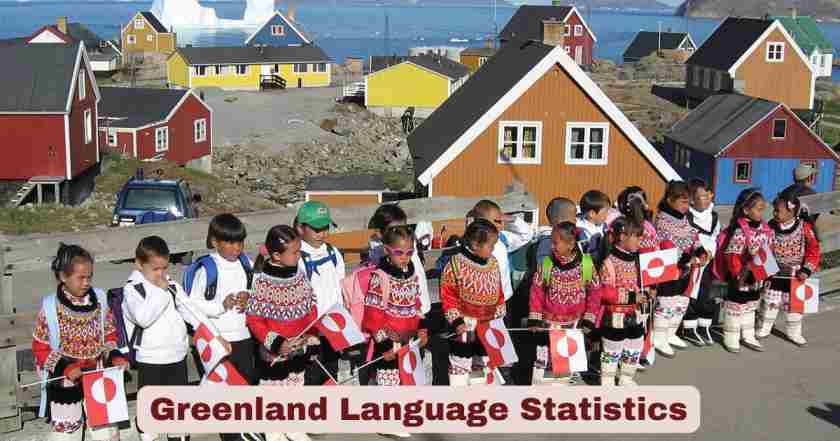
Greenland Language 2026
Greenlandic language stands as a remarkable example of indigenous linguistic survival and revitalization in a globalized world. The Eskimo-Aleut language spoken by approximately 50,000 to 57,000 native speakers achieved official language status when Greenland passed the Act on Greenland Self-Government on June 12, 2009, making Greenlandic the sole official language and ending centuries of Danish linguistic dominance. Known to its speakers as Kalaallisut, Greenlandic belongs to the Inuit language family and shares significant mutual intelligibility with Inuktitut spoken in Canada and Inupiaq spoken in Alaska, reflecting the circumpolar Inuit cultural continuum stretching across the Arctic.
The year 2026 finds Greenland navigating complex linguistic tensions between cultural preservation and practical governance challenges. While 85-90% of the population speaks Greenlandic as their first language, creating one of the world’s most successful indigenous language preservation stories, a stark demographic reality complicates policy implementation: 70% of the population speaks only Greenlandic, while political and administrative elites predominantly speak Danish. This linguistic divide raises fundamental democratic questions about whether a self-governing territory can effectively function when its governance language differs from the mother tongue of the majority. The 2009 language law aimed to reverse colonial linguistic policies, yet Danish remains entrenched in higher education, technical fields, and specialized administration where Greenlandic-speaking professionals remain scarce.
Interesting Facts and Latest Statistics for Greenland Language in 2026
| Key Facts About Greenland Language in 2026 | Statistics |
|---|---|
| Total Greenlandic Speakers | 50,000-57,000 native speakers |
| Percentage of Population Speaking Greenlandic | 85-90% |
| West Greenlandic Speakers | 44,000 speakers |
| East Greenlandic Speakers | 3,000 speakers |
| North Greenlandic Speakers | 800 speakers |
| Official Language Status | Sole official language since June 12, 2009 |
| Danish as First Language | 12% of population |
| Population Speaking Only Greenlandic | 70% monolingual |
| Danish Fluency Among Greenlanders | 6,000 non-native speakers fluent |
| Literacy Rate (2015) | 100% for adults aged 15+ |
| Language Family | Eskimo-Aleut (Inuit branch) |
| Alphabet Length | 18 basic characters (Latin script) |
| Year Orthography Reformed | 1973 |
| UNESCO Endangerment Status | Vulnerable |
Data Source: Wikipedia Demographics of Greenland, Ethnologue, UNESCO Atlas of World’s Languages, Statistics Greenland, Government of Greenland Language Policy, 2024-2026
These statistics reveal both the extraordinary success and ongoing challenges of Greenlandic language preservation. The 50,000-57,000 native speakers represent approximately 85-90% of Greenland’s 56,000-57,000 total population, making it one of the world’s most successfully preserved indigenous languages relative to population size. The 2009 official language designation marked a historic reversal of colonial policies that had suppressed Greenlandic in favor of Danish throughout much of the 20th century.
However, the 70% monolingual Greenlandic-speaking population creates governance challenges in a modern administrative state requiring technical expertise often taught only in Danish. The dialect distribution shows West Greenlandic with 44,000 speakers dominating demographically and serving as the standardized prestige dialect, while East Greenlandic with 3,000 speakers and North Greenlandic with just 800 speakers face greater endangerment pressures. The 100% literacy rate reported in 2015 places Greenland among just four territories worldwide claiming universal literacy—though this figure likely reflects the 1973 orthographic reform that dramatically simplified written Greenlandic, making it among the easiest writing systems to learn globally. Despite impressive statistics, UNESCO classifies Greenlandic as vulnerable, recognizing that small speaker populations, geographic isolation, and economic pressures toward Danish fluency create long-term sustainability concerns.
Greenlandic Dialects and Geographic Distribution in 2026
| Dialect | Speakers | Geographic Region | Status |
|---|---|---|---|
| Kalaallisut (West Greenlandic) | 44,000 | Western coast from Nuuk to Upernavik | Standard/official dialect |
| Tunumiit Oraasiat (East) | 3,000 | Tasiilaq and Ittoqqortoormiit | Endangered regional dialect |
| Inuktun (North/Polar) | 800 | Qaanaaq (Thule) region | Severely endangered |
| Mutual Intelligibility with Inuktitut | Moderate to high | Canada-Greenland | Can communicate with effort |
Data Source: Wikipedia Languages of Greenland, Ethnologue, Linguistic Research Documentation, Government of Greenland Ministry of Culture, 2024-2026
Greenlandic divides into three main dialects reflecting Greenland’s vast geography and isolated coastal settlement patterns. Kalaallisut (West Greenlandic) with 44,000 speakers represents the overwhelming majority and serves as the standardized prestige dialect used in education, media, government, and inter-regional communication. The western and southwestern coasts including major population centers like Nuuk with 19,000+ residents, Sisimiut, Ilulissat, and Qaqortoq concentrate over 90% of Greenland’s population, explaining Kalaallisut’s dominance.
Tunumiit Oraasiat (East Greenlandic) with approximately 3,000 speakers concentrates in the remote east coast communities of Tasiilaq (formerly Angmagssalik) and Ittoqqortoormiit (Scoresbysund)—among Greenland’s most isolated settlements accessible only by helicopter or boat due to ice conditions and lack of airports capable of handling regular service. The Tunumiit dialect differs sufficiently from Kalaallisut that speakers require adjustment periods to understand each other, though mutual intelligibility exists with effort. Inuktun (North/Polar Greenlandic) spoken by approximately 800 people in the Qaanaaq (Thule) region near Greenland’s northernmost settlements represents the most endangered dialect. Inuktun exhibits closer linguistic relationships to Canadian Inuktitut than to West Greenlandic, reflecting historical migration patterns and the Thule people’s arrival in northwestern Greenland from Canada around the 13th century. Kalaallisut and Canadian Inuktitut share moderate to high mutual intelligibility, with linguistic researchers documenting successful cross-border communication where speakers use their respective dialects and understand each other with effort.
Official Language Policy and 2009 Self-Government Act in Greenland
| Language Policy Element | Details |
|---|---|
| Official Language Designation | Greenlandic became sole official language June 12, 2009 |
| Previous Official Languages | Danish and Greenlandic co-official until 2009 |
| Legal Framework | Act No. 473 on Greenland Self-Government |
| Danish Status After 2009 | No longer official but remains widely used |
| Compulsory School Languages | Greenlandic primary, Danish and English mandatory |
| Primary Education Language | Greenlandic since 1979 Home Rule |
| Higher Education Language | Predominantly Danish |
| Technical Fields Language | Danish dominant |
| Public Administration Language | Officially Greenlandic, practically bilingual |
| Proposed Policy | Mandatory Greenlandic proficiency for public employees |
| Democratic Language Gap | 70% speak only Greenlandic, elites predominantly Danish |
Data Source: Act on Greenland Self-Government 2009, Government of Greenland Language Committee, UN Western Europe Reports, Danish Parliament Rules, 2009-2026
The Act No. 473 adopted June 12, 2009 establishing Greenlandic as the sole official language represented a watershed moment in Greenland’s linguistic decolonization process. This legislation reversed centuries of Danish linguistic dominance, fulfilling long-standing demands from Greenlandic cultural activists who viewed language policy as fundamental to genuine self-determination. The law states: “Greenlandic is the official language in Greenland,” ending the previous co-official status Danish held since Greenland became an autonomous territory within the Danish realm.
However, practical implementation faces substantial obstacles. While primary education operates in Greenlandic since the 1979 Home Rule agreement, higher education and technical training remain predominantly Danish-language due to limited instructional materials in Greenlandic and scarcity of Greenlandic-speaking professors in specialized fields like engineering, medicine, law, and advanced sciences. This creates a linguistic bottleneck where ambitious Greenlanders must achieve Danish fluency to access advanced education and professional careers, perpetuating Danish’s practical dominance despite losing official status. Public administration officially operates in Greenlandic, yet the reality involves extensive bilingualism as many administrative documents, technical reports, and specialized communications default to Danish where Greenlandic terminology doesn’t exist or remains non-standardized. Prime Minister Kim Kielsen’s proposal to mandate Greenlandic proficiency for public employees generated controversy, with proponents arguing it reinforces cultural sovereignty while opponents warn it risks deterring foreign professionals Greenland needs and could exclude educated Greenlanders who studied abroad.
Danish Language in Greenland and Bilingualism Patterns in 2024-2026
| Danish Language Metric | Statistics/Details |
|---|---|
| Danish as First Language | 12% of population |
| Ethnic Danes | 7% of population (approximately 4,000 people) |
| Bilingual Greenlanders | Substantial percentage, especially in towns |
| Danish Fluency Among Non-Native Speakers | 6,000 Greenlanders fluent |
| Danish Proficiency Correlation | Higher socioeconomic status and political power |
| Primary Danish-Speaking Locations | Nuuk, Ilulissat, Sisimiut |
| Danish in Education | Mandatory from first grade through secondary |
| Foreign Languages Studied | German and French also taught |
| Historical Peak Danish Influence | 1950s-1970s Danization policies |
| 1970s Danish Proficiency | Over 80% of Greenlanders proficient |
| Current Trend | Declining Danish fluency among youth |
Data Source: Wikipedia Demographics of Greenland, Danish People in Greenland Data, UN Western Europe Linguistic Reports, Statistics Greenland, 2024-2026
Danish speakers constitute approximately 12% of Greenland’s population, with the 7% ethnic Danes (roughly 4,000 people) forming the core monolingual Danish group plus bilingual Greenlanders of mixed or indigenous ancestry who use Danish as a first or primary language. Ethnic Danes concentrate overwhelmingly in Nuuk, Greenland’s capital, which experienced substantial Danish immigration during the 1990s attracted by high wages and employment opportunities in government administration, education, healthcare, and technical industries.
Approximately 6,000 Greenlanders who don’t speak Greenlandic natively are fluent in Danish, reflecting historical colonial policies and contemporary economic realities. Danish fluency correlates strongly with higher socioeconomic status and political power—a pattern that perpetuates Danish’s de facto dominance despite losing official status. Professionals in administration, law, medicine, engineering, and academic positions disproportionately operate in Danish, both because their training occurred in Danish and because specialized terminology often lacks standardized Greenlandic equivalents. This creates a linguistic class division where monolingual Greenlandic speakers occupy predominantly working-class positions in fishing, trades, and service sectors, while the educated elite function bilingually with Danish as their professional language. Compulsory Danish education begins in first grade and continues through secondary schooling, ensuring all Greenlandic children receive substantial Danish instruction regardless of home language. Historical Danization policies from the 1950s-1970s aggressively promoted Danish, with 1970s surveys showing over 80% Danish proficiency among Greenlanders. Contemporary trends show declining Danish fluency among youth, particularly in smaller settlements, as the 1979 Home Rule agreement and 2009 official language law successfully re-centered Greenlandic in primary education and daily life.
English Language and Multilingualism Trends in Greenland 2024-2026
| English Language Metric | Status/Details |
|---|---|
| English in Education | Mandatory study in compulsory schools |
| English Proficiency (Youth, Urban) | Near-universal among younger cohorts |
| English Proficiency (Overall) | Widespread, especially larger towns |
| Trilingual Education | Children learn Greenlandic, Danish, English |
| English in Higher Education | Increasing use, especially master’s programs |
| English in Tourism Sector | Essential professional skill |
| English Media Consumption | Internet, streaming services, social media |
| Other Foreign Languages | German, French commonly studied |
| English as Lingua Franca | Emerging role in international business |
| University Instruction | Master’s courses increasingly English-taught |
Data Source: Babbel Magazine Language Analysis, Education System Reports, Visit Greenland, Nordic Language Trends, 2024-2026
English occupies an increasingly important position in Greenland’s linguistic landscape, particularly among younger generations and urban populations. English is mandatory in compulsory schools alongside Danish, creating a trilingual educational framework where children learn Greenlandic as their first language, Danish as a regional language, and English as an international language. This multilingual approach mirrors patterns throughout Nordic countries where English proficiency reaches exceptionally high levels despite not being an official language.
English proficiency among younger urban cohorts approaches near-universal levels, especially in Nuuk, Ilulissat, and Sisimiut. This reflects multiple factors: English-language media consumption through internet streaming services, social media platforms predominantly operating in English, popular music and entertainment, and increased international tourism creating economic incentives for English skills. The tourism sector, which generated DKK 2 billion annually (4.9% of GDP) in 2024, demands English-speaking workers as international visitors from North America, Europe, and Asia rarely speak Danish or Greenlandic. Higher education increasingly uses English, particularly at the master’s level following Nordic patterns where universities teach advanced programs in English to attract international students and faculty. Schools commonly offer German and French as additional foreign languages, though uptake and proficiency remain lower than English. English functions as an emerging lingua franca for international business, scientific research, and technical fields, creating a complex trilingual environment among educated Greenlanders who might use Greenlandic at home, Danish in professional settings, and English for international communication.
Literacy Rates and Educational Attainment in Greenland 2015-2026
| Literacy and Education Metric | Rate/Status |
|---|---|
| Overall Literacy Rate (Adults 15+) | 100% (2015 UNESCO data) |
| Male Literacy Rate (Adults 15+) | 100% (2015) |
| Female Literacy Rate (Adults 15+) | 100% (2015) |
| Youth Literacy Rate (15-24) | 100% (2015) |
| Gender Parity Index | 1.000 (perfect parity, 2015) |
| Global Ranking | One of 4 territories with 100% literacy |
| Literacy Language | Greenlandic (since 1973 reform) |
| Pre-1973 Literacy Challenges | Complex orthography limited literacy |
| Post-1973 Literacy Boom | Dramatic increase following simplification |
| Doctoral Degree Holders | 0.084-0.105% (2012-2015) |
| Primary Education Language | Greenlandic dominant |
Data Source: World Bank Education Statistics, UNESCO Institute for Statistics, CEIC Education Data, World Population Review, 2015-2026
Greenland reports a 100% adult literacy rate for adults aged 15 and above according to 2015 UNESCO data, placing it among just four territories globally claiming universal literacy alongside Andorra, Ukraine, and Uzbekistan. The perfect gender parity with 100% literacy for both males and females reflects Greenland’s comprehensive public education system and relatively homogeneous population. The youth literacy rate of 100% demonstrates successful intergenerational transmission of reading and writing skills.
This exceptional literacy achievement directly connects to the 1973 orthographic reform that revolutionized written Greenlandic. Prior to 1973, Greenlandic used the Kleinschmidt orthography developed by missionary linguist Samuel Kleinschmidt in 1851. While groundbreaking for its time as the first systematic writing system for Greenlandic, by the mid-20th century Kleinschmidt’s orthography had diverged substantially from spoken language due to natural sound changes over 120 years. The complex, outdated spelling system created barriers to literacy acquisition, requiring extensive study to master reading and writing. The 1973 reform introduced a phonemic orthography where spelling closely matches pronunciation, making written Greenlandic among the easiest writing systems to learn globally. The 18-character Latin-script alphabet uses simple, consistent spelling rules, enabling children to achieve literacy rapidly. The reform produced an immediate literacy boom, with Greenlandic literacy rates climbing dramatically throughout the 1970s-1980s. The extremely low doctoral degree attainment (0.084-0.105% of population 25+) reflects Greenland’s small population size and lack of domestic PhD programs, requiring Greenlanders to pursue doctorates abroad—typically in Denmark.
Historical Greenlandic Language Development 1700s-2026
| Historical Period | Language Policy/Development |
|---|---|
| Pre-1700 | Unwritten oral language |
| 1750 | First Greenlandic-Danish dictionary (Paul Egede) |
| 1760 | First Greenlandic grammar published |
| 1851 | Kleinschmidt orthography established |
| Early 1900s | Greenlandic flourished in literature, education |
| 1953 | Greenland became Danish county |
| 1950s-1970s | Danization policies: Danish prioritized |
| 1970s | Student protests fearing language extinction |
| May 1, 1979 | Home Rule: Greenlandic restored in education |
| 1973 | Orthographic reform: simplified writing system |
| June 12, 2009 | Greenlandic became sole official language |
| 2023-2024 | Parliamentary language controversies |
Data Source: Wikipedia Greenlandic Language, Historical Linguistics Research, Greenland Self-Government Documentation, Danish Colonial Archives, 2024-2026
Greenlandic remained an unwritten oral language until Danish/Norwegian missionaries arrived in the early 1700s. The missionary Paul Egede created the first Greenlandic-Danish dictionary in 1750 followed by the first grammar in 1760, marking Greenlandic’s entrance into written form. These early works relied heavily on indigenous translators including Arnarsaq and Maalia, two women who exerted major influence on how Christian concepts were translated into Greenlandic.
The missionary linguist Samuel Kleinschmidt developed the first systematic orthography in 1851, enabling standardized written communication and Bible translation. During the early 1900s, Greenlandic flourished in literature, poetry, and the educational system, with growing cultural pride and literary production. However, the 1953 Danish Constitution amendment that formally ended colonization paradoxically initiated Greenland’s most intensive linguistic assimilation period. As Greenland became a Danish county rather than a colony, Copenhagen implemented aggressive Danization policies during the 1950s-1970s prioritizing Danish in primary schools, childcare, hospitals, and public administration. Many children from the 1950s-1960s did not learn Greenlandic, creating a generational linguistic rupture. By the 1970s, students began protesting, fearing their mother language would disappear entirely within generations. The 1979 Home Rule Act represented a turning point, re-introducing Greenlandic as the primary language in education and beginning the long process of linguistic revitalization. The 2009 Self-Government Act crowned this process by making Greenlandic the sole official language, though practical bilingualism persists.
Greenlandic Language Structure and Linguistic Characteristics in 2026
| Linguistic Feature | Description |
|---|---|
| Language Family | Eskimo-Aleut > Inuit > Greenlandic |
| Linguistic Type | Polysynthetic |
| Longest Documented Word | Over 200 letters |
| Grammatical Structure | Incorporation of multiple morphemes |
| Word Order (Transitive) | Subject-Object-Verb (SOV) |
| Noun Cases | Eight cases |
| Verb Moods | Eight moods |
| Person Category | Four-person system (includes fourth-person) |
| Tense Marking | No grammatical tense (context-based) |
| Evidentiality Markers | sima (indirective), nikuu (witnessed) |
| Alphabet | 18 basic Latin characters |
| Phonological Features | Uvular fricatives, glottal stops, vowel length |
Data Source: Wikipedia Greenlandic Language, Linguistic Typology Research, Eskimo-Aleut Language Family Studies, 2024-2026
Greenlandic exhibits remarkable linguistic complexity characteristic of polysynthetic languages. In polysynthetic systems, single words incorporate multiple morphemes (meaningful units) that would require entire sentences in languages like English. A famous example shows Greenlandic words exceeding 200 letters, packing an entire narrative into one phonological unit. For instance, a word might simultaneously express “I will try to go hunting for caribou tomorrow if the weather is good” as a single morphological construction.
The language’s Subject-Object-Verb (SOV) word order differs from English’s Subject-Verb-Object pattern. A simple transitive sentence like “The hunter caught the seal” would structure as “The hunter the seal caught” in Greenlandic. Nouns inflect for eight cases (including nominative, accusative, genitive, dative, instrumental, and others) marking grammatical relationships, while verbs inflect for eight moods expressing speaker’s attitude toward the action. The fourth-person category represents an especially sophisticated feature enabling switch-reference—marking when subordinate clauses have different subjects from main clauses, a grammatical distinction absent in most European languages. Greenlandic lacks grammatical tense, instead expressing time through context, temporal particles, and aspectual suffixes marking whether actions are completed, ongoing, or habitual. Evidentiality marking through suffixes like sima (indicating indirective evidence) and nikuu (indicating witnessed evidence) grammaticalizes the source of information, forcing speakers to specify whether they personally witnessed events or learned them indirectly.
Greenlandic in Media and Broadcasting in 2024-2026
| Media Category | Greenlandic Language Use |
|---|---|
| Primary National Broadcaster | KNR (Kalaallit Nunaata Radioa) |
| KNR Programming Languages | Primarily Greenlandic, some Danish |
| KNR Radio | News, documentaries, entertainment in Greenlandic |
| KNR Television | National news, local programming in Greenlandic |
| Print Media (Newspapers) | Several publications solely in Greenlandic |
| Bilingual Publications | Sermitsiaq (Greenlandic-Danish) |
| Online Media | Growing Greenlandic-language internet presence |
| Social Media | Mixed Greenlandic-Danish-English use |
| Government Websites | Officially bilingual (Greenlandic-Danish) |
| Film/Television Production | Limited Greenlandic-language content |
| Youth Media Consumption | Increasingly English-language streaming/social media |
Data Source: Government Media Reports, KNR Broadcasting Data, Greenlandic Language Use Surveys, Digital Media Consumption Patterns, 2024-2026
Greenlandic enjoys strong representation in traditional media, primarily through the national public broadcaster KNR (Kalaallit Nunaata Radioa), which offers extensive programming in Greenlandic including news broadcasts, documentaries, entertainment shows, and cultural programming. KNR provides both radio and television services, serving as the primary source of Greenlandic-language audio-visual media. Programming typically uses West Greenlandic (Kalaallisut), making it accessible to the vast majority of speakers while occasionally featuring content in East Greenlandic dialects.
Print media includes several newspapers and magazines published solely in Greenlandic, covering local news, current events, cultural issues, and community affairs. These publications serve as valuable information sources for monolingual Greenlandic speakers and reinforce the language’s legitimacy in formal written discourse. Sermitsiaq, one of Greenland’s major newspapers, publishes in both Greenlandic and Danish, reflecting the population’s bilingual reality. Government websites officially operate bilingually in Greenlandic and Danish, with varying quality of translation—some pages offer full parallel content while others default to Danish for technical or specialized information. The digital media environment presents challenges to Greenlandic preservation. Youth increasingly consume English-language content through international streaming services like Netflix, YouTube, and social media platforms where Greenlandic-language content remains scarce. Film and television production in Greenlandic remains extremely limited due to small market size and high production costs.
Loan Words and Language Modernization in Greenlandic 2024-2026
| Modernization Strategy | Approach/Examples |
|---|---|
| Primary Strategy | Construct new words from Greenlandic roots |
| Technology Terms | Coined from native roots |
| Computer | qarasaasiaq (lit. “artificial brain”) |
| Telephone | oqarasuaat (lit. “instrument for speaking”) |
| Television | tassiliiffik (lit. “place to watch”) |
| Airplane | timmisartoq (lit. “that which flies”) |
| Neologism Creation Body | Oqaasiliortut (official terminology commission) |
| Danish Loan Words | Significant borrowing in technical/administrative fields |
| English Loan Words | Increasing in technology and youth slang |
| Youth Language Mixing | Code-switching Greenlandic-Danish-English |
| Academic/Scientific Terms | Often borrowed from Danish or international forms |
Data Source: Greenlandic Language Commission, Linguistic Research on Arctic Languages, Oqaasiliortut Terminology Database, 2024-2026
Greenlandic language policy strongly favors creating new words from native roots rather than borrowing directly from European languages, reflecting a conscious effort to maintain linguistic purity and cultural identity. The official terminology commission Oqaasiliortut works systematically to coin Greenlandic neologisms for modern concepts, particularly in technology, science, and administrative fields. This approach produces transparent, descriptive compounds like qarasaasiaq (“artificial brain”) for computer, oqarasuaat (“instrument for speaking”) for telephone, tassiliiffik (“place to watch”) for television, and timmisartoq (“that which flies”) for airplane.
However, Danish loan words remain significant, especially in technical, administrative, and legal vocabulary where specialized concepts were historically introduced through Danish colonial administration. Words related to government bureaucracy, legal proceedings, medical terminology, and advanced sciences often retain Danish forms, particularly among educated speakers who learned these concepts through Danish-language instruction. English loan words are increasing, especially among younger speakers exposed to global English-language media and technology. Youth slang incorporates English terms for internet culture, social media, gaming, and popular culture concepts. This creates generational language variation where older speakers use more purely Greenlandic vocabulary while youth engage in extensive code-switching between Greenlandic, Danish, and English depending on context and topic. The tension between linguistic purism and practical communication needs represents an ongoing challenge for language planners seeking to preserve Greenlandic while ensuring it can express modern concepts efficiently.
Disclaimer: This research report is compiled from publicly available sources. While reasonable efforts have been made to ensure accuracy, no representation or warranty, express or implied, is given as to the completeness or reliability of the information. We accept no liability for any errors, omissions, losses, or damages of any kind arising from the use of this report.