
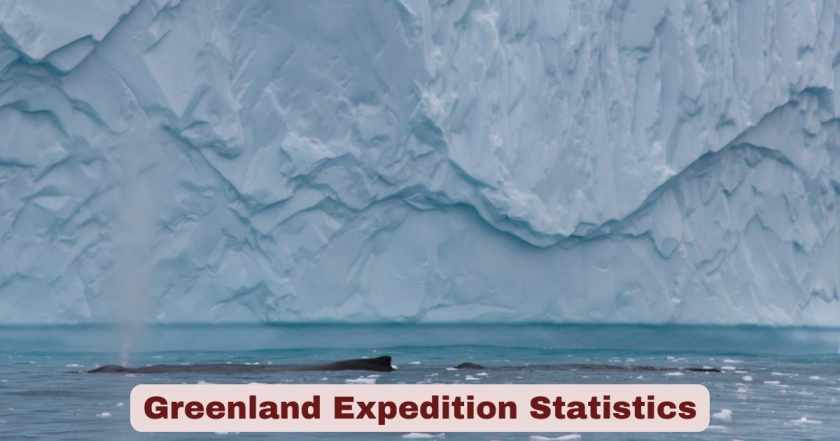
Greenland Expedition Statistics 2026
The greenland expedition statistics 2026 reveal an Arctic destination experiencing unprecedented growth in adventure tourism and polar exploration following major infrastructure developments that have transformed accessibility to the world’s largest island. Greenland, with its massive 2,166,090 square kilometers of territory dominated by the world’s second-largest ice sheet, has emerged as one of the most sought-after expedition destinations for intrepid travelers seeking authentic Arctic wilderness experiences, spectacular natural phenomena including the Northern Lights and Midnight Sun, encounters with unique wildlife including polar bears and musk oxen, and immersion in traditional Inuit culture. The dramatic surge in visitor numbers follows the November 28, 2024 opening of Nuuk International Airport featuring a new 2,200-meter runway capable of accommodating wide-body jets, eliminating the previous requirement for connections through Kangerlussuaq and slashing travel times from Europe and North America.
Tourism to greenland expedition statistics 2026 destinations increased significantly between 2015 and 2019, with annual visitor numbers climbing from 77,000 to 105,000, before pandemic-related restrictions temporarily halted growth in 2020-2021. Recovery accelerated dramatically through 2024-2025, with Greenland attracting approximately 120,000 to 140,000 international visitors annually as of 2026 according to recent projections. This growth reflects multiple converging factors including the new airport infrastructure enabling direct transatlantic flights from Copenhagen, Newark, and other major hubs; increased global awareness driven by geopolitical attention related to rare earth minerals and strategic Arctic importance; expanding cruise ship operations offering expedition voyages through the Arctic; and growing consumer interest in sustainable, authentic, off-the-beaten-path travel experiences. The tourism industry has become Greenland’s fastest-growing economic sector, generating approximately 450 million kroner ($67 million) in revenue as of 2019, with projections for substantial growth as infrastructure improvements and international flight connections expand through 2026-2027.
Interesting Facts and Latest Statistics on Greenland Expedition Statistics 2026
| Category | Data Facts | Year |
|---|---|---|
| Total International Visitors Annually | 120,000 to 140,000 visitors | 2026 estimate |
| Pre-Pandemic Visitor Growth | 77,000 to 105,000 (36% increase) | 2015-2019 |
| Tourism Revenue 2019 | 450 million kroner ($67 million USD) | 2019 |
| Nuuk Airport Opening Date | November 28, 2024 | 2024 |
| Nuuk Airport Runway Length | 2,200 meters (7,218 feet) | 2024-2026 |
| Nuuk Airport Passenger Capacity | 400 passengers per hour | 2025-2026 |
| First Full Year Passenger Projection | Over 100,000 total passengers | 2025 |
| International Flight Increase January 2025 | 14% year-on-year passenger increase | January 2025 |
| Cruise Ship Arrivals Annually | Significant growth ongoing tracking | 2025-2026 |
| Ilulissat Airport Opening | Late 2026 planned | 2026 |
| Qaqortoq Airport Opening | Late 2026 planned | 2026 |
| United Airlines Newark Service | June 14, 2025 launch twice weekly seasonal | 2025-2026 |
| SAS Copenhagen Service | June 2025 launch three weekly flights | 2025 |
| Total Greenland Population | 56,000 to 56,583 residents | 2022-2026 |
| Greenland Total Area | 2,166,090 square kilometers | 2026 |
Data sources: Statistics Greenland, Visit Greenland, Wikipedia, Invezz (March 2025), Euronews (February 2025), Travel and Tour World (January 2025), The World Data (2026)
The greenland expedition statistics 2026 demonstrate explosive growth in Arctic tourism following transformative infrastructure investments. The 120,000 to 140,000 annual international visitors expected in 2026 represents more than a 35% increase from the pre-pandemic peak of 105,000 visitors in 2019, and nearly double the 77,000 visitors recorded in 2015. This extraordinary growth trajectory positions Greenland as one of the fastest-growing expedition tourism destinations globally despite its remote location, extreme climate, limited accommodation infrastructure, and small permanent population of only 56,000 to 56,583 residents. The 14% year-on-year increase in international flight passengers recorded in January 2025 immediately following the November 2024 airport opening demonstrates surging demand that industry analysts expect will accelerate through the peak summer 2026 season.
The November 28, 2024 opening of Nuuk International Airport represents the single most significant tourism infrastructure development in Greenland’s history. The 2,200-meter runway enables Air Greenland’s Airbus A330-800neo wide-body jets to operate direct transatlantic services from Copenhagen, with the airline shifting its hub operations from Kangerlussuaq to the capital city. The airport’s 400 passengers per hour capacity and modern terminal facilities can accommodate the projected over 100,000 total passengers during the first full operational year in 2025, doubling pre-expansion passenger volumes. New international airline services launched in 2025 include United Airlines twice-weekly seasonal flights from Newark beginning June 14 and operating through September 25, plus SAS three-weekly flights from Copenhagen marking the carrier’s return to Greenland after a 16-year absence since last serving Kangerlussuaq in 2009. Additional airports scheduled for late 2026 completion in Ilulissat (the leading tourist destination famous for the UNESCO-listed Icefjord) and Qaqortoq in South Greenland will further enhance accessibility and distribute tourism across multiple regions.
Visitor Demographics and Source Markets for Greenland Expeditions in the US 2026
| Source Country | Visitor Numbers | Market Share |
|---|---|---|
| Denmark | Approximately 14,000 plus visitors | Largest international market |
| Domestic Greenland | Approximately 53,000 travelers | Highest total volume |
| United States | Rapidly growing market | Emerging significant source |
| Germany | Major European source market | Top European contributor |
| France | Significant European market | Growing expedition segment |
| United Kingdom | Important expedition market | Luxury adventure travelers |
| Iceland | Regional transit visitor hub | Short-haul connections |
| Canada | Arctic regional connections | Nearby market potential |
| Scandinavia Overall | Combined Nordic countries | Traditional strong markets |
| China | Pre-pandemic growth emerging | Long-haul potential |
| Other European Union | Various EU nations | Diverse expedition seekers |
| Australia New Zealand | Long-haul expedition travelers | Premium adventure segment |
Data sources: Statistics Greenland, Statista, Visit Greenland Visitor Survey, Tourism satellite accounts
The visitor demographics for greenland expeditions in the us 2026 reflect diverse international source markets with Denmark historically dominating international arrivals. In 2020 data (the most recent granular breakdown available), approximately 14,000 Danish travelers visited Greenland, representing the largest single international source market owing to Denmark’s political relationship with Greenland (Greenland is an autonomous territory within the Kingdom of Denmark), direct flight connections, and cultural familiarity. Domestic Greenlandic travelers accounted for approximately 53,000 journeys in 2020, representing the highest total volume though primarily comprising internal business travel, family visits, and regional connections rather than traditional tourism.
United States travelers represent one of the fastest-growing source markets following the launch of United Airlines direct Newark-Nuuk service in June 2025, which eliminates previous requirements for European connections and reduces total journey time from major US East Coast cities by 6-10 hours. The twice-weekly seasonal service operates Boeing 757 or 767 aircraft with approximately 200 seats, potentially delivering 8,000-10,000 American visitors during the June-September 2025 and 2026 peak seasons alone. German travelers constitute another major European source market, attracted by Greenland’s dramatic Arctic landscapes, outdoor adventure activities including hiking, kayaking, and dog sledding, and opportunities to witness climate change impacts firsthand on the rapidly melting ice sheet.
British expedition travelers favor luxury small-ship cruises operated by Silversea, Seabourn, and Quark Expeditions, often combining Greenland with Iceland, Svalbard, and Norwegian fjords on 10-30 day polar voyages priced from $10,000 to $50,000 per person. French tourists show strong interest in cultural immersion experiences with Inuit communities, photography expeditions capturing dramatic icescapes, and multi-sport adventures combining hiking, climbing, and sea kayaking. Scandinavian countries including Norway, Sweden, and Finland provide traditional strong markets with short flight times from Oslo, Stockholm, and Helsinki, while Iceland serves as a regional transit hub with Icelandair operating connections from Reykjavik to Nuuk, Ilulissat, and other Greenlandic destinations.
Major Greenland Expedition Destinations and Activities in the US 2026
| Destination Hub | Primary Attractions | Visitor Activities |
|---|---|---|
| Ilulissat Disko Bay | UNESCO Icefjord towering icebergs | Boat tours hiking dog sledding |
| Nuuk Capital Region | Modern city culture museums | Urban tourism cultural experiences |
| Kangerlussuaq | Ice sheet access inland climate | Ice cap treks wildlife viewing |
| Tasiilaq East Greenland | Remote wilderness isolation | Mountaineering kayaking cultural visits |
| Qaqortoq South Greenland | Norse ruins milder climate | Historical sites sheep farms |
| Scoresby Sund | Largest fjord system icebergs | Expedition cruises photography |
| Northeast Greenland National Park | Pristine wilderness musk oxen | Advanced expeditions polar bears |
| Uummannaq | Traditional hunting culture | Dog sledding cultural immersion |
| Disko Island | Midnight Sun hot springs | Hiking camping whale watching |
| Sermeq Kujalleq Glacier | Jakobshavn fastest-moving glacier | Helicopter tours boat excursions |
Data sources: Visit Greenland, Statistics Greenland tourism profiles, expedition cruise operators, Arctic tour companies
The major greenland expedition destinations in the us 2026 are distributed across five official tourism regions established in 2002 to develop and market distinct experiences. Ilulissat in Destination North Greenland centered on Disko Bay represents the single most visited location, attracting an estimated 40-50% of all international tourists. The UNESCO World Heritage Ilulissat Icefjord produces massive icebergs calved from the Sermeq Kujalleq (Jakobshavn) Glacier, one of the fastest-moving glaciers globally with speeds reaching 15 kilometers annually. Visitors take boat tours navigating among house-sized ice formations, hike along marked trails offering panoramic fjord views, experience traditional dog sled expeditions (winter), and witness the spectacular calving process when enormous ice chunks break from the glacier face with thunderous crashes.
Nuuk in Destination Capital Region serves as Greenland’s political, economic, and cultural center, hosting approximately 18,000 residents (nearly one-third of Greenland’s total population) and offering the most developed tourism infrastructure including international hotels, restaurants serving Greenlandic cuisine featuring seal, whale, musk ox, and Arctic char, the Greenland National Museum displaying 4,500-year-old Inuit artifacts and mummified bodies, and Nuuk Art Museum featuring contemporary Greenlandic artists. The capital provides modern amenities contrasting with Greenland’s vast wilderness, plus access to nearby hiking trails, whale watching excursions spotting humpbacks and fins, and the colonial harbor area showcasing traditional wooden houses painted in bright reds, blues, and yellows.
Kangerlussuaq in Destination Arctic Circle historically served as the primary international gateway due to its long runway built during World War II when the US military constructed what was then Bluie West Eight airbase. Located 25 kilometers from the ice sheet edge, Kangerlussuaq offers the most accessible ice cap access for travelers attempting Greenland Ice Sheet crossings (typically 560 kilometers from west to east coast), polar desert landscapes supporting musk oxen and Arctic foxes, and stable weather with over 300 sunny days annually. Tasiilaq in Destination East Greenland represents the most remote and culturally traditional region, accessible only by helicopter or boat with no road connections, featuring dramatic mountain peaks exceeding 2,000 meters, traditional Inuit communities maintaining hunting and fishing lifestyles, and opportunities for advanced mountaineering, kayaking among icebergs in Sermilik Fjord, and cultural immersion including drum dancing performances and traditional food preparation.
Qaqortoq in Destination South Greenland benefits from subarctic climate warmer than the rest of Greenland, enabling agriculture including sheep farming at approximately 45-50 farms maintaining combined flocks, growing potatoes and vegetables, and Norse ruins from Erik the Red’s settlement at Hvalsey Church and Brattahlíð showcasing Viking heritage from 1000 years ago.
Expedition Cruise Tourism Growth in Greenland in the US 2026
| Cruise Category | Operators Details | Capacity Trends |
|---|---|---|
| Luxury Expedition Cruises | Silversea Seabourn Ponant | 100-250 passengers premium amenities |
| Small Ship Expeditions | Quark Aurora Lindblad HX | 80-200 passengers adventure focus |
| Medium Expedition Vessels | Poseidon Hurtigruten | 150-350 passengers educational programs |
| Cruise Season | May to September primary | June-August peak demand |
| Popular Itineraries | West Greenland circumnavigation | 7-21 day voyages |
| Scoresby Sund Routes | East Greenland exploration | Remote wilderness access |
| Iceland Greenland Combos | Reykjavik departure roundtrip | Multi-destination expeditions |
| Northwest Passage Crossings | Greenland to Canadian Arctic | 20-30 day ultimate expeditions |
| Svalbard Greenland Routes | High Arctic combinations | Polar bear polar regions |
| Turnaround Port Capability | Nuuk cruise ship turnarounds | 2025 new operational capacity |
Data sources: Expedition cruise operators, AAA cruise forecast 2026, HX Expeditions announcements, cruise industry publications
The expedition cruise tourism growth in greenland in the us 2026 represents one of the most significant drivers of overall visitor increases, with small to medium-sized expedition vessels offering the primary means of accessing Greenland’s spectacular fjords, glaciers, remote settlements, and wildlife viewing locations inaccessible by road. The cruise season extends from May through September with peak demand during June, July, and August when temperatures range from 5-15°C (41-59°F), sea ice has largely cleared from navigation routes, and the Midnight Sun provides 24-hour daylight for extended shore excursions and wildlife photography. An estimated 100-150 expedition cruise ships visit Greenland annually, with some vessels making multiple voyages throughout the season.
Luxury expedition cruise operators including Silversea, Seabourn, and Ponant deploy purpose-built ice-strengthened vessels accommodating 100-250 passengers in all-suite accommodations with fine dining, full-service spas, enrichment programs featuring Arctic historians and naturalists, and Zodiac excursions for wildlife viewing and shore landings. Silversea’s Silver Endeavour, Seabourn Venture, and Ponant’s Le Commandant Charcot (the world’s first luxury icebreaker cruise ship powered by liquefied natural gas) command premium prices ranging $15,000 to $50,000 per person for 10-21 day Greenland voyages combining luxury amenities with genuine polar exploration.
Small ship adventure operators including Quark Expeditions (the polar expedition specialist since 1991), Aurora Expeditions (offering active expedition activities), and Lindblad Expeditions National Geographic partnerships deploy ice-strengthened vessels carrying 80-200 passengers focused on immersive exploration rather than onboard amenities. These operators emphasize shore landings, hiking expeditions, kayaking programs allowing guests to paddle among icebergs, optional camping experiences on ice sheets, whale watching from Zodiacs, visits to traditional Inuit communities, and educational lectures from expedition teams including marine biologists, glaciologists, and cultural anthropologists. Pricing typically ranges $8,000 to $25,000 per person depending on cabin category and itinerary length.
HX (formerly Hurtigruten Expeditions) operates five expedition vessels including MS Fridtjof Nansen and MS Roald Amundsen featuring hybrid diesel-electric propulsion reducing emissions, and launched four new Greenland itineraries for 2025 including “Grand Greenland” voyages departing from and concluding in Nuuk following the November 2024 airport opening. The Nuuk turnaround capability eliminates previous requirements for passengers to fly into Kangerlussuaq, shortening total journey times and enabling more time exploring Greenland rather than repositioning. HX partnered with Air Greenland for direct Copenhagen-Nuuk fly-cruise packages including pre and post-cruise programs with waterfront lodge stays in Ilimanaq and fishing tours in Nuuk.
Popular expedition cruise itineraries include West Greenland coastline voyages from Kangerlussuaq or Nuuk visiting Ilulissat Icefjord, Disko Island, Uummannaq, and smaller settlements; East Greenland explorations focusing on Scoresby Sund (the world’s largest fjord system), Tasiilaq, and Northeast Greenland National Park wilderness; Iceland-Greenland combinations departing Reykjavik for 10-14 day expeditions; and ultimate Northwest Passage crossings spanning 20-30 days from Greenland through Canadian Arctic archipelago to Alaska or vice versa, following routes attempted by legendary explorers and now accessible during brief late-summer ice-free windows.
Airport Infrastructure Development and Flight Connectivity in the US 2026
| Airport Project | Specifications Status | Impact |
|---|---|---|
| Nuuk International Airport | 2,200-meter runway opened November 28, 2024 | Operational wide-body capable |
| Nuuk Passenger Terminal | Four gates modern facilities | 400 passengers hourly capacity |
| Ilulissat Airport Expansion | International capability planned | Late 2026 opening scheduled |
| Qaqortoq Airport Construction | New international airport | Late 2026 opening scheduled |
| Air Greenland A330 Service | Copenhagen-Nuuk daily flights | 5-6 weekly year-round |
| United Airlines Newark Route | June 14-September 25, 2025 launch | Twice weekly seasonal |
| SAS Copenhagen Service | June 2025 summer launch | Three weekly flights |
| Air Greenland Billund Route | 2025 new service | Summer seasonal Boeing 737 |
| Air Greenland Aalborg Route | 2025 new service | Summer seasonal connections |
| Icelandair Nuuk Service | Boeing 737 MAX 8 upgrades | Increased capacity 2025 |
| Previous Kangerlussuaq Hub | Transitioned to Nuuk November 2024 | Reduced operations domestic focus |
Data sources: Nuuk Airport Wikipedia, Smart Aviation, One Mile at a Time, Airways Magazine, Air Greenland official announcements
The airport infrastructure development for greenland expeditions in the us 2026 represents revolutionary changes transforming accessibility and eliminating major barriers that previously constrained tourism growth. The Nuuk International Airport opening on November 28, 2024 culminated a multi-year construction project extending the runway from 950 meters to 2,200 meters and building a new four-gate terminal with capacity for 400 passengers per hour. The previous short runway restricted operations to small De Havilland Dash 8 turboprops carrying only 37 passengers, forcing international travelers to fly into Kangerlussuaq 300 kilometers north and then connect on smaller aircraft for the final leg to Nuuk, adding 4-6 hours to total journey time and significantly increasing costs and complexity.
Air Greenland’s Airbus A330-800neo “Tuukkaq” now operates 5-6 weekly year-round flights between Copenhagen and Nuuk with approximately 300 seats, providing substantially more capacity than the previous Kangerlussuaq operation. The airline celebrated the inaugural transatlantic landing with ceremonial events in both cities featuring speeches from Greenland’s Premier, Denmark’s Foreign Minister, and Air Greenland executives emphasizing the historic significance of direct jet service to the capital. The A330’s advanced fuel efficiency and extended range enable nonstop operations year-round despite challenging Arctic weather conditions including occasional fog, high winds, and winter snowfall.
United Airlines’ Newark-Nuuk route launching June 14, 2025 marks the first-ever direct service from North America to Greenland, operating twice weekly on Saturdays and Wednesdays using Boeing 757 or 767 aircraft through September 25. The approximately 4.5-hour flight covers 1,900 miles across the Labrador Sea, eliminating previous requirements for American travelers to connect through Reykjavik or Copenhagen. United announced the route’s return for summer 2026 following strong 2025 booking demand, with potential for expanded frequency if yields meet projections. Pricing ranges $800-$1,500 roundtrip economy class depending on booking timing, representing competitive fares given the route’s uniqueness and limited competition.
SAS (Scandinavian Airlines) resumed Greenland service in June 2025 after a 16-year absence since last serving Kangerlussuaq in 2009, operating three weekly flights from Copenhagen to Nuuk using Airbus A320neo aircraft with 180 seats. SAS cited “Danish roots and historic links to Greenland” in announcing the service, expressing pride in “resuming this role” and hoping to “support development and increase growth and employment in Greenlandic society.” Air Greenland added new Boeing 737 leased aircraft enabling service to Billund and Aalborg in Denmark for summer 2025, diversifying European access points, while Icelandair upgraded Nuuk service from Dash 8 turboprops to Boeing 737 MAX 8 jets increasing capacity and reducing flight times from Reykjavik.
Ilulissat Airport expansion scheduled for late 2026 completion will construct a 2,200-meter runway matching Nuuk’s capabilities, enabling direct international jet service to Greenland’s premier tourist destination and eliminating current requirements for domestic connections. Qaqortoq Airport in South Greenland also targets late 2026 opening with international jet capability, potentially enabling direct European charter flights during summer peak season. These three new/expanded airports collectively represent over $1 billion in infrastructure investment funded through Danish government subsidies and Greenlandic self-government budgets.
Wildlife Viewing and Natural Phenomena for Expeditions in the US 2026
| Wildlife Species | Viewing Locations | Best Seasons |
|---|---|---|
| Polar Bears | Northeast Greenland National Park East coast | Summer autumn ice edge |
| Musk Oxen | Kangerlussuaq Northeast Greenland | Year-round 40% world population |
| Humpback Whales | Disko Bay Nuuk offshore | June-September peak feeding |
| Fin Whales | Offshore waters West Coast | Mid-summer to autumn |
| Minke Whales | Coastal waters widespread | June-August summer season |
| Narwhals | Disko Bay Qaanaaq winter | Winter spring Arctic regions |
| Bowhead Whales | Northern regions Disko | Winter rare sightings |
| Ringed Seals | Coastal areas icebergs | Year-round most common |
| Harp Seals | Offshore pack ice | Winter-spring pupping season |
| Arctic Foxes | Tundra regions widespread | Year-round adapt coloration |
| Reindeer Caribou | Kangerlussuaq Tasiilaq | Summer grazing migrations |
| Arctic Hares | Northeast Greenland tundra | Year-round white coat |
| Walrus | Northeast coast fjords | Summer hauled out |
| Northern Lights Aurora | September-March dark skies | Winter optimal viewing |
| Midnight Sun | Late April-August northern regions | Summer continuous daylight |
Data sources: Visit Greenland wildlife guides, expedition cruise operators, Arctic wildlife references, Aurora Expeditions Poseidon Expeditions
The wildlife viewing opportunities for greenland expeditions in the us 2026 rank among the most spectacular globally, with Greenland’s vast uninhabited wilderness supporting healthy populations of iconic Arctic species. Polar bears represent the ultimate Arctic wildlife encounter, with an estimated 2,500 individuals inhabiting Greenland primarily along the northeast coast and within Northeast Greenland National Park. Expedition cruises to remote East Greenland during July-September offer the highest probability of sightings as bears hunt seals along ice edges, though encounters remain unpredictable and require ice-strengthened vessels capable of navigating pack ice. Ethical wildlife viewing protocols mandate maintaining safe distances, using Zodiacs for observation rather than land approaches, and prioritizing bear welfare over photographic opportunities.
Musk oxen thrive in Greenland’s high Arctic environment with an estimated 40% of the world’s total population of approximately 90,000 animals residing in Northeast Greenland National Park and the Kangerlussuaq region. These prehistoric-looking animals with massive curved horns and thick shaggy coats weighing up to 400 kilograms gather in defensive circles when threatened, creating dramatic photographic opportunities against backdrops of glaciers and tundra. The Kangerlussuaq area offers the most accessible viewing, with guided hiking expeditions frequently encountering herds grazing on sparse Arctic vegetation.
Whale watching peaks during June-September when 15 species migrate to Greenlandic waters to feed in nutrient-rich Arctic seas. Humpback whales perform spectacular breaching displays, lunging feeding behaviors, and complex songs audible through ship hulls, with Disko Bay and waters off Nuuk providing prime viewing locations. Fin whales, the second-largest whale species reaching 25 meters length, cruise near expedition vessels, while smaller minke whales approach boats with curiosity. Winter visitors to Disko Bay and Qaanaaq may spot rare narwhals (the “unicorn of the sea” with spiral tusks) and bowhead whales hunting in leads through sea ice.
Seals including ringed, harp, hooded, and bearded species haul out on icebergs and shorelines throughout Greenland’s coastline, providing important prey for polar bears and opportunities for close observation from Zodiacs. Arctic foxes in summer brown coats and winter pure white pelage hunt lemmings across the tundra, while reindeer/caribou migrate across the Kangerlussuaq region in herds numbering thousands. Arctic hares weighing up to 7 kilograms and standing 60 centimeters tall maintain white coats year-round, bounding across snowfields in surreal leaps.
The Northern Lights (Aurora Borealis) illuminate Greenland’s winter skies from September through March, with optimal viewing during the dark polar night from November-February when skies remain dark 20+ hours daily. The aurora appears in green, red, yellow, and white curtains dancing across the firmament, caused by solar particles colliding with Earth’s magnetic field at high latitudes. The Midnight Sun phenomenon during late April through August provides 24-hour daylight above the Arctic Circle, with Ilulissat experiencing continuous sun from late May through July enabling extended hiking, photography, and wildlife viewing activities.
Sustainable Tourism Development and Environmental Challenges in the US 2026
| Sustainability Initiative | Implementation | Goals |
|---|---|---|
| Growing Tourism Right Strategy | Government policy framework | Sustainable long-term development |
| Community Engagement Priority | Local involvement consultation | Resident benefits participation |
| Environmental Protection | Fragile ecosystem preservation | Minimize tourism impacts |
| Visitor Number Management | Capacity limits site protection | Avoid overtourism |
| Accommodation Capacity Constraints | Limited hotel infrastructure | Control growth rates |
| Carbon Footprint Concerns | Aviation cruise emissions | Offset programs consideration |
| Ice Sheet Melting Acceleration | 129 gigatons annual loss 2024-25 | Climate change witness education |
| Cultural Heritage Preservation | Inuit traditions authenticity | Cultural tourism ethical practices |
| Wildlife Disturbance Minimization | Viewing protocols regulations | Species protection habituation prevention |
| Waste Management Challenges | Limited recycling infrastructure | Reduce cruise ship visitor impacts |
| Revenue Distribution | Economic benefits local communities | Employment income generation |
| Cruise Ship Environmental Standards | Fuel emissions regulations | Industry compliance requirements |
Data sources: Visit Greenland sustainability policies, Statistics Greenland, NASA ice loss measurements, environmental research publications
The sustainable tourism development for greenland expeditions in the us 2026 emphasizes “growing tourism right” through deliberate policies prioritizing environmental protection, community benefits, and cultural preservation over maximum visitor numbers and short-term revenue. Greenland’s government and tourism authorities explicitly reject mass tourism models that have damaged destinations worldwide, instead aiming to “build more sustainable tourism for the long run” that maintains the pristine wilderness character and authentic cultural experiences attracting visitors while ensuring local communities benefit economically and socially.
Limited accommodation capacity naturally constrains visitor growth, with Nuuk offering approximately 1,000 hotel rooms and other settlements providing only dozens to hundreds of beds, forcing tourism officials to balance increased accessibility through new airports against infrastructure that could support overtourism. Ilulissat, receiving the highest tourist concentrations, faces particular pressures during July-August peak season when hotel availability becomes scarce and day-trippers from cruise ships overwhelm restaurants, shops, and popular hiking trails. Authorities are developing visitor management plans including timed entry systems for sensitive sites, trail reservation requirements during peak periods, and limits on simultaneous cruise ship visits to smaller settlements.
Environmental challenges intensify as tourism grows, particularly regarding carbon emissions from international flights and cruise ships operating on heavy fuel oil. A roundtrip transatlantic flight from North America generates approximately 1-2 tons of CO2 per passenger, while expedition cruises over 10-14 days produce substantial emissions despite newer vessels incorporating hybrid propulsion and emission reduction technologies. Tour operators increasingly offer carbon offset programs allowing guests to compensate emissions through verified environmental projects, though the effectiveness and ethics of offset schemes remain debated within the sustainable travel community.
The Greenland Ice Sheet’s accelerating melting creates both a tourism attraction (witnessing climate change impacts firsthand) and an environmental catastrophe with global consequences. The 2024-2025 mass balance showed 129 gigatons of net ice loss, below the 2003-2024 average annual loss of 219 gigatons but continuing decades of negative mass balance. Satellite imagery documenting that approximately 28,707 square kilometers of ice and glacier coverage melted between the 1980s and 2010s provides dramatic visual evidence of climate disruption, with expedition guides using these changes to educate visitors about climate science, Arctic amplification effects, and the urgent need for greenhouse gas emission reductions.
Cultural heritage preservation requires balancing tourism revenue for remote Inuit communities with maintaining traditional lifestyles and preventing commodification of sacred cultural practices. Visit Greenland emphasizes ethical cultural tourism featuring authentic interactions with local communities, opportunities to observe traditional practices including drum dancing and kayaking demonstrations, and purchasing genuine Inuit handicrafts directly from artisans rather than imported souvenirs. However, concerns persist about whether tourism can remain sustainable as visitor numbers double or triple, potentially overwhelming communities of only 50-500 residents unaccustomed to constant tourist presence.
Adventure Activities and Expedition Experiences in the US 2026
| Activity Type | Locations Offered | Difficulty Levels |
|---|---|---|
| Ice Sheet Crossings | Kangerlussuaq to Tasiilaq 560 kilometers | Extreme advanced expeditioners |
| Dog Sledding Expeditions | Ilulissat Uummannaq Tasiilaq | Beginner to advanced |
| Sea Kayaking | Fjords bays iceberg areas | Intermediate to advanced |
| Glacier Hiking | Multiple glaciers guided tours | Moderate fitness required |
| Mountaineering Climbing | East Greenland peaks 2000+ meters | Advanced technical skills |
| Wildlife Photography | Expedition cruises tundra regions | All levels guided |
| Ice Cap Treks | Multi-day polar expeditions | Advanced cold weather experience |
| Backcountry Hiking | Arctic tundra wilderness trails | Moderate to strenuous |
| Camping on Ice | Glacier camping expedition add-ons | Moderate adventure seekers |
| Heli-Skiing | Remote peaks helicopter access | Advanced expert skiers |
| Northern Lights Photography | Winter dark sky locations | All levels best September-March |
| Midnight Sun Experiences | Summer hiking photography | All levels June-July peak |
| Traditional Hunting Fishing | Cultural immersion programs | Guided cultural experiences |
| Fjord Cruising | Zodiac boat tours iceberg viewing | All levels accessible |
Data sources: Adventure tour operator websites, Visit Greenland activity guides, expedition cruise itineraries, outdoor recreation companies
The adventure activities for greenland expeditions in the us 2026 cater to every experience level from casual sightseers to extreme polar explorers attempting feats matching historic Arctic expeditions. Ice sheet crossings represent the ultimate Greenland adventure challenge, with classic routes traversing approximately 560 kilometers from the west coast near Kangerlussuaq to the east coast at Tasiilaq over 3-5 weeks hauling pulks (sleds) loaded with 50-80 kilograms of food, fuel, shelter, and safety equipment across crevassed ice terrain at elevations exceeding 2,500 meters. These expeditions require advanced wilderness skills including navigation in whiteout conditions, crevasse rescue techniques, cold weather survival training, and exceptional physical fitness, with guided commercial expeditions costing $15,000-$30,000 per person and independent attempts requiring extensive permit applications.
Dog sledding provides accessible adventure tourism experiences ranging from 2-hour introductory excursions departing Ilulissat or Uummannaq where tourists ride in sleds pulled by teams of 10-15 Greenland Dogs racing across frozen fjords and sea ice, to multi-day expeditions camping in heated tents while covering 50-100 kilometers daily through pristine Arctic wilderness. Greenland maintains an estimated 15,000-18,000 sledge dogs (significantly outnumbering the human population in northern communities), with these animals representing essential transportation across roadless terrain and holding deep cultural significance in Inuit tradition. Winter dog sledding expeditions from February-April offer spectacular experiences under Northern Lights and across solid sea ice, while summer months see dogs resting and unable to pull sleds without snow cover.
Sea kayaking among icebergs offers surreal paddling experiences navigating through Disko Bay’s iceberg fields, Sermilik Fjord’s towering ice formations, and protected bays hosting seals and whales. Multi-day kayaking expeditions camp on remote shorelines, paddle 15-25 kilometers daily through ever-changing ice-choked waters, and require intermediate paddling skills including wet exits, self-rescue techniques, and cold water safety knowledge. The Greenland kayak (qajaq) originated in these waters over 4,000 years ago, with modern expedition kayakers honoring this heritage while using contemporary equipment including dry suits, GPS navigation, and satellite emergency beacons.
Mountaineering in East Greenland attracts technical climbers attempting virgin peaks and challenging routes on mountains exceeding 2,000-3,000 meters. The Stauning Alps, Schweizerland region, and peaks surrounding Tasiilaq offer granite walls, ice couloirs, and mixed climbing comparable to the European Alps or Patagonia but with minimal crowds and true wilderness isolation. Expeditions typically span 2-4 weeks combining helicopter or boat access, base camp establishment, acclimatization climbs, summit attempts, and challenging descents, requiring advanced mountaineering skills and costing $10,000-$25,000 per person for guided commercial expeditions.
Heli-skiing operations offer ultimate powder skiing experiences accessing remote peaks via helicopter, with small groups making 8-12 runs daily descending 800-1,200 vertical meters through untracked Arctic snow. The brief spring season from March-May provides optimal snow conditions and extended daylight, with packages costing $8,000-$15,000 per person for week-long expeditions including helicopter hours, mountain guides, lodging, and meals. Winter Northern Lights photography workshops combine professional instruction with ideal dark-sky conditions, while Midnight Sun summer hiking enables extended treks covering 30+ kilometers in single “days” under 24-hour daylight illuminating dramatic Arctic landscapes.
Economic Impact and Tourism Revenue Generation in the US 2026
| Economic Indicator | Value Details | Impact |
|---|---|---|
| Tourism Revenue 2019 | 450 million kroner ($67 million USD) | 9% growth from 2018 |
| Tourism Percentage of GDP | Estimated 5-8% of total economy | Growing economic sector |
| Tourism Employment | Thousands of seasonal permanent jobs | Significant rural employment |
| Hotel Accommodation Revenue | Major contribution to service sector | Seasonal peak June-August |
| Restaurant Food Service Revenue | Local cuisine international dining | Tourist spending concentration |
| Tour Operator Revenue | Adventure expeditions cultural tours | Greenlandic-owned businesses |
| Air Greenland Revenue | Tourism flights significant percentage | National carrier dependency |
| Cruise Line Shore Excursion Sales | Millions annually local tour providers | Commission-based revenue |
| Handicraft Souvenir Sales | Traditional Inuit art tupilak carvings | Artisan income generation |
| Hotel Room Capacity | Approximately 2,000 rooms nationwide | Infrastructure constraint |
| Average Daily Tourist Spending | Estimated $200-$400 per person | High cost destination |
| Expedition Cruise Economic Impact | Substantial port service provisioning | Limited per-passenger spending ashore |
Data sources: Statistics Greenland tourism satellite accounts, Visit Greenland economic analyses, Statista, industry estimates
The economic impact of greenland expeditions in the us 2026 positions tourism as one of the fastest-growing sectors in Greenland’s economy, which traditionally depends on fishing (approximately 90% of exports), government subsidies from Denmark (approximately 500 million euros annually or about 20% of Greenland’s GDP), and emerging rare earth mineral extraction. Tourism generated 450 million kroner ($67 million USD) in revenue during 2019, representing approximately 9% growth from 2018 and contributing an estimated 5-8% of Greenland’s GDP. Projections for 2026 suggest tourism revenue could reach 600-750 million kroner ($89-$112 million) assuming continued growth following the November 2024 airport openings and increased cruise ship arrivals.
Employment impacts extend across multiple sectors with tourism creating thousands of seasonal and permanent jobs in hotels, restaurants, tour operators, transportation services, handicraft production, and support services. In small communities like Ilulissat (population approximately 4,700), tourism employment during June-August peak season may involve 500-800 residents representing 10-15% of the total population working as guides, hotel staff, restaurant servers, dog sled drivers, boat captains, and shop operators. This seasonal employment provides critical income supplementing subsistence hunting and fishing activities, though the short 3-4 month peak season creates challenges for year-round financial stability.
Hotel and accommodation revenue concentrates heavily during the June-August summer season when occupancy rates approach 90-100% in major destinations like Nuuk, Ilulissat, Kangerlussuaq, and Tasiilaq, with premium properties charging $250-$500 per night for standard rooms and boutique lodges commanding $400-$800 nightly rates. The approximately 2,000 hotel rooms across all of Greenland represent a significant infrastructure constraint limiting visitor growth, with major hotel development planned in Nuuk and Ilulissat to add 300-500 rooms by 2027-2028. Restaurant and food service revenue benefits from tourists seeking traditional Greenlandic cuisine including seal soup, whale sashimi, musk ox steaks, Arctic char, and local berries, with meals typically costing $30-$80 per person in tourist-oriented establishments.
Tour operator revenue supports locally-owned Greenlandic adventure companies offering dog sledding expeditions, boat tours to glaciers and icebergs, cultural village visits, hiking guided treks, helicopter sightseeing, and customized multi-day adventures. These businesses generate millions in annual revenue while keeping economic benefits within Greenlandic communities rather than flowing to foreign-owned multinational corporations. Handicraft sales provide important income for Inuit artisans creating traditional tupilak spirit carvings from walrus ivory, narwhal tusk, bone, and wood; jewelry featuring Greenlandic stones; embroidered sealskin garments; and contemporary art reflecting Greenlandic culture and Arctic themes, with pieces selling from $50 for small carvings to $5,000+ for museum-quality art.
Expedition cruise economic impact presents mixed results, as while cruise ships bring thousands of visitors to remote communities, per-passenger spending ashore tends to be lower than independent travelers who book hotels and restaurants for multiple nights. A typical cruise passenger might spend $50-$150 during a 4-8 hour port call on shore excursions, meals, and souvenirs, compared to independent travelers spending $300-$600 daily on accommodation, meals, tours, and activities over multi-day visits. However, cruise ship port fees, pilotage charges, waste disposal services, provisioning, and shore excursion commissions still generate substantial revenue for communities and tour operators.
Climate Change Impacts and Scientific Research in the US 2026
| Climate Impact Category | Measurement Data | Significance |
|---|---|---|
| Ice Sheet Annual Mass Loss | 129 gigatons net loss 2024-25 | Below average but continued decline |
| Long-Term Average Loss | 219 gigatons annually 2003-2024 | Sustained negative mass balance |
| Total Ice Melt 1980s-2010s | 28,707 square kilometers lost | Dramatic visible changes |
| Sea Level Rise Contribution | Greenland responsible for 25% global rise | Major contributor to coastal flooding |
| Temperature Increase Rate | 2-3 times faster than global average | Arctic amplification effect |
| Glacier Retreat Observations | Jakobshavn Sermeq Kujalleq dramatic retreat | Calving front changes measured |
| Permafrost Thawing | Accelerating active layer deepening | Infrastructure impacts |
| Sea Ice Extent Reduction | Earlier melting later freezing | Marine ecosystem changes |
| Tourism Climate Paradox | Visitors contributing to impacts witnessed | Ethical concerns aviation emissions |
| Research Station Network | Multiple international scientific facilities | Year-round climate monitoring |
| Ice Core Drilling Projects | Paleoclimate records 100,000+ years | Understanding past climate cycles |
| NASA Monitoring Programs | Operation IceBridge satellite observations | Advanced measurement technology |
Data sources: NASA Goddard Space Flight Center, NOAA Arctic Report Card, DMI Greenland ice sheet mass balance, climate research publications
The climate change impacts on greenland expeditions in the us 2026 create a paradoxical situation where tourism growth is partially driven by travelers wanting to witness dramatic environmental changes before the ice disappears, yet their travel contributes to the very emissions accelerating melting. The Greenland Ice Sheet lost a net 129 gigatons of ice during the 2024-2025 mass balance year (September to September), representing a reduction from the 2003-2024 average annual loss of 219 gigatons but still continuing the decades-long trend of negative mass balance where snowfall accumulation fails to offset summer melting. If the entire Greenland Ice Sheet melted completely, global sea levels would rise approximately 7.4 meters (24 feet), inundating coastal cities worldwide and displacing hundreds of millions of people.
Satellite measurements documented that approximately 28,707 square kilometers of ice and glacier coverage melted between the 1980s and 2010s, an area larger than Belgium. The Jakobshavn Glacier (Sermeq Kujalleq) draining into Ilulissat Icefjord has retreated several kilometers over recent decades, with its calving front position changing dramatically from year to year. During the record melt summer of 2012, scientists measured surface melting across 97% of the ice sheet’s surface area, an unprecedented event raising alarm about tipping points beyond which melting becomes irreversible even if greenhouse gas emissions stabilize.
Arctic amplification causes Greenland and Arctic regions to warm 2-3 times faster than the global average, with temperature increases of 2-3°C already observed in many regions compared to pre-industrial baselines. These warming trends cause earlier spring ice breakup enabling longer shipping and cruise seasons, later autumn freeze-up extending the tourist season potentially into October, retreating glaciers creating new icebergs in Disko Bay and other fjords, thawing permafrost destabilizing building foundations and infrastructure, and shifting wildlife distributions as species follow changing food sources and ice coverage.
Scientific research stations operated by Denmark, United States, United Kingdom, France, Germany, and other nations dot the ice sheet and coastal areas, conducting critical climate monitoring through ice core drilling projects extracting paleoclimate records spanning 100,000+ years, automated weather stations measuring temperature, precipitation, and wind patterns, GPS networks tracking ice sheet movement and elevation changes, and oceanographic sensors monitoring warming Atlantic waters undermining glaciers from below. NASA’s Operation IceBridge flies aircraft equipped with advanced radar and laser altimeters measuring ice thickness and bottom topography, while satellites including ICESat-2 and GRACE monitor mass balance changes with unprecedented precision.
The tourism climate paradox creates ethical dilemmas for environmentally-conscious travelers who want to experience Arctic wilderness and witness climate change impacts firsthand but recognize that their flights and cruises generate substantial carbon emissions exacerbating the problems they’re observing. Some expedition cruise operators and tour companies implement carbon offset programs, invest in renewable energy and emission reduction technologies, and contribute portions of revenue to climate research and conservation programs, though the overall industry environmental footprint remains substantial. Educational programming during expeditions aims to convert Arctic tourism experiences into climate advocacy and behavior changes reducing participants’ long-term carbon footprints, though whether this actually occurs remains difficult to measure.
Safety Considerations and Expedition Preparation in the US 2026
| Safety Category | Requirements Risks | Precautions |
|---|---|---|
| Extreme Weather Conditions | Rapid changes hypothermia frostbite | Proper clothing layering systems |
| Polar Bear Encounters | Dangerous wildlife remote areas | Armed guides deterrent equipment |
| Ice Hazards | Crevasses unstable ice calving | Roped travel glacier experience |
| Remote Evacuation Challenges | Limited medical facilities helicopter only | Medical screening emergency insurance |
| Navigation Difficulties | Whiteout conditions magnetic compass errors | GPS backup communication devices |
| Physical Fitness Requirements | Strenuous hiking cold exposure | Pre-trip training medical clearance |
| Travel Insurance | Comprehensive coverage evacuation | Specialized expedition insurance required |
| Communication Limitations | No cell coverage remote regions | Satellite phones emergency beacons |
| Medical Facilities | Limited hospitals remote clinics | Comprehensive first aid expedition medics |
| Equipment Requirements | Specialized polar gear | Professional outfitters rental options |
| Permits and Regulations | Protected areas National Park rules | Advance research applications |
| Water Safety | Cold water immersion kayaking risks | Dry suits PFDs rescue training |
Data sources: Visit Greenland safety information, expedition operator safety protocols, Arctic safety guidelines, polar expedition guides
The safety considerations for greenland expeditions in the us 2026 require thorough preparation, appropriate equipment, realistic assessment of physical abilities and experience levels, and comprehensive insurance coverage given the extreme environment and remote locations far from medical facilities. Extreme weather conditions can develop rapidly with summer temperatures ranging from -5°C to +15°C (23°F to 59°F), sudden storms bringing high winds and reduced visibility, and the constant risk of hypothermia even during summer months when wet conditions and wind chill can drop effective temperatures below freezing. Proper clothing systems based on layering principles using synthetic or wool base layers, insulating mid-layers, and waterproof breathable outer shells remain essential even for short day trips.
Polar bear encounters pose genuine dangers in Northeast Greenland National Park and East Greenland regions where bears hunt seals along ice edges. Expedition guides in these areas carry rifles and signal flares for deterrence and defense, with protocols requiring constant vigilance, maintaining group cohesion, and avoiding surprise encounters through careful route planning and using spotting scopes to survey terrain ahead. Greenland averages fewer than one polar bear attack annually (most years see zero attacks), but the potential for fatal encounters requires treating all bears as dangerous and maintaining minimum approach distances of 300+ meters.
Ice hazards including crevasses hidden under snow bridges, unstable ice prone to collapse, and glacier calving events that generate massive waves and ice projectiles create significant dangers for expeditions accessing the ice sheet or approaching glacier fronts. Ice sheet crossings require roped travel techniques where team members connect with climbing ropes so that if one person falls into a crevasse, others can arrest the fall and perform rescue procedures. Calving events at glaciers like Jakobshavn occur without warning, sending house-sized ice chunks crashing into fjords and generating waves capable of capsizing boats 500+ meters away, requiring boat captains to maintain safe standoff distances and constant readiness for emergency evasion.
Medical evacuation from remote locations requires helicopter rescue coordinated through Greenland’s Joint Arctic Command, with potential costs exceeding $50,000-$100,000 for serious injuries or illnesses requiring air ambulance transport to Nuuk Hospital or medical evacuation to Denmark. Comprehensive travel insurance specifically covering polar expeditions and helicopter evacuation is essential, as standard travel insurance policies often exclude adventure activities and Arctic regions. Many expedition cruise operators require medical forms certifying fitness for polar travel including cardiovascular health adequate for cold environments and physical exertion, as medical facilities outside Nuuk consist only of small clinics with basic capabilities unable to handle emergencies like heart attacks, strokes, or major trauma.
Communication limitations in remote regions without cell coverage require satellite phones, Personal Locator Beacons (PLBs), or satellite messaging devices like Garmin InReach for emergency communication. Even in populated areas like Nuuk and Ilulissat, cell coverage may be intermittent, and wilderness regions have zero terrestrial network infrastructure, making satellite communication devices mandatory safety equipment for any expedition venturing beyond immediate town vicinity.
Disclaimer: This research report is compiled from publicly available sources. While reasonable efforts have been made to ensure accuracy, no representation or warranty, express or implied, is given as to the completeness or reliability of the information. We accept no liability for any errors, omissions, losses, or damages of any kind arising from the use of this report.