
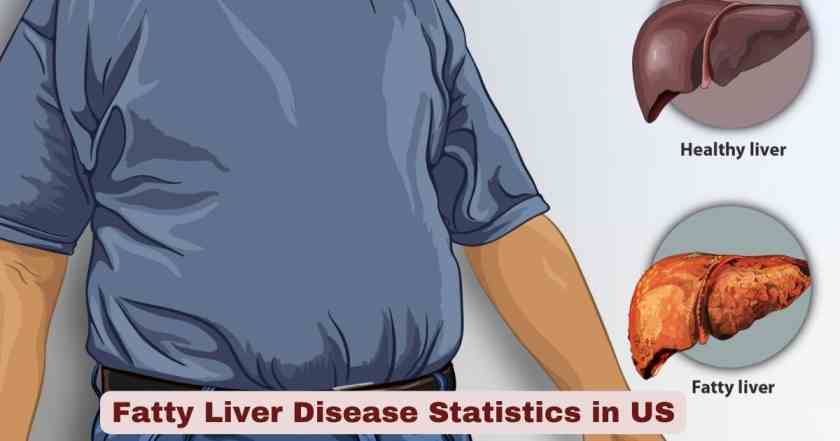
What is Fatty Liver Disease?
Fatty liver disease, now termed Metabolic Dysfunction-Associated Steatotic Liver Disease (MASLD), represents one of the fastest-growing health crises in the United States. Once uncommon, it has become the most prevalent chronic liver disease, affecting approximately 100 million adults. The disease occurs when excess fat accumulates in liver cells, progressing to inflammation, fibrosis, cirrhosis, liver cancer, and liver failure.
The 2023 transition from Non-Alcoholic Fatty Liver Disease (NAFLD) to MASLD reflects improved understanding of metabolic underpinnings. By 2050, an estimated 122 million adults (41% of the population) will have this condition. The burden extends to 5-10% of children—comparable to pediatric asthma. Cardiovascular disease remains the leading cause of death, though liver-related mortality climbs toward 95,300 annual deaths by 2050.
Latest Fatty Liver Disease Facts and Statistics in the US 2026
| Key Fatty Liver Disease Facts | 2024-2026 Data |
|---|---|
| Adults with MASLD (Current) | 100 million (25-38% of adults) |
| Projected Adults with MASLD (2050) | 122 million (41.4% of adults) |
| Children with MASLD | 5-10% of all children |
| Adults with Type 2 Diabetes Having MASLD | ≥70% |
| MASLD Progressing to MASH | 50% among diabetes patients |
| Advanced Fibrosis in Diabetes Patients | 20% (1 in 5) |
| MASLD Mortality Rate (2023) | 1.27 deaths per 100,000 population |
| Projected Mortality Rate (2040) | 2.24 deaths per 100,000 population |
| Annual New Liver Cancer Cases (2020-2025) | 11,483 cases |
| Projected Liver Cancer Cases (2046-2050) | 22,440 cases annually |
| Leading Cause of Death in MASLD Patients | Cardiovascular disease |
Data source: JAMA Network Open 2025; American Diabetes Association 2025; Clinical and Molecular Hepatology 2025; Hepatology 2025
The statistics reveal an epidemic that touches multiple generations and demographics. The current estimate of 100 million adults with MASLD translates to roughly 1 in 4 Americans carrying excess liver fat with associated metabolic dysfunction. Among individuals with type 2 diabetes, the prevalence skyrockets to ≥70%, with approximately half progressing to the more serious form metabolic dysfunction-associated steatohepatitis (MASH), characterized by liver inflammation and cell damage. The 20% rate of advanced fibrosis among diabetes patients highlights the urgent need for screening in this high-risk population.
Mortality data underscores the severity of the crisis. The MASLD-related death rate has increased dramatically from 0.25 per 100,000 in 2006 to 1.27 per 100,000 in 2023—a more than 5-fold increase in under two decades. Projections suggest this rate will nearly double again by 2040, reaching 2.24 per 100,000. The anticipated increase in liver cancer cases from 11,483 annually (2020-2025) to 22,440 annually (2046-2050) represents a near-doubling that will strain healthcare systems. While cardiovascular disease causes most deaths in MASLD patients, liver-specific mortality is rising sharply, with estimates projecting 95,300 liver-related deaths in 2050 compared to 30,500 in 2020.
MASLD Prevalence in the US 2026
| Prevalence Metrics | 2023-2026 Data |
|---|---|
| Current MASLD Prevalence | 25.6-38% of adults |
| Steatotic Liver Disease (SLD) Prevalence | 28.7-34.2% |
| MASH Prevalence | 5.8-7.9% of adults |
| MASLD in Overweight/Obese Individuals | 70-80% |
| Fibrosis Prevalence | 11.3% overall |
| Advanced Fibrosis (F3-F4) | 2-5% of MASLD patients |
| Geographic Prevalence Leader | South and Midwest states |
| Prevalence Doubling Timeline | Increased 50% in past 30 years |
Data source: Hepatology November 2025; NHANES 2017-2023 data; Diabetes Spectrum 2024
MASLD prevalence varies depending on detection methods and population studied, with estimates ranging from 25.6% using stringent criteria to 38% in broader assessments. The NHANES 2017-2023 data using liver elastography found 28.7% of adults have steatotic liver disease, with 25.6% specifically meeting MASLD criteria. Notably, prevalence decreased slightly from 26.8% to 23.6% between survey cycles, though fibrosis prevalence increased from 10.4% to 12.7%—suggesting that while fewer new cases may be developing, existing cases are progressing to more severe disease stages.
The prevalence escalates dramatically in certain populations. Among individuals who are overweight or obese, 70-80% have some degree of hepatic steatosis. The MASH prevalence of 5.8% currently is projected to rise to 7.9% by 2050, affecting 23.2 million Americans. Fibrosis affects 11.3% overall, with advanced fibrosis present in 2-5% of those with MASLD. Geographic analyses reveal highest prevalence in South and Midwest states, correlating with regional obesity and diabetes rates. The 50% increase over three decades represents one of the steepest rises for any chronic disease in modern American medical history.
MASLD Demographics and Risk Factors in the US 2026
| Demographic Groups | Prevalence and Risk Data |
|---|---|
| Hispanic/Latino Population | Highest prevalence among ethnic groups |
| Non-Hispanic Asian Population | Second highest, higher than White population |
| Non-Hispanic White Population | Moderate prevalence |
| Non-Hispanic Black Population | Lowest prevalence among major groups |
| Male vs Female | Higher in males overall |
| Female Mortality | Higher in US women across all ages |
| Age 65+ Years | Highest mortality risk |
| Obesity (BMI ≥30) | Primary risk factor |
| Type 2 Diabetes | ≥70% have MASLD |
| Metabolic Syndrome | Strong association |
Data source: JAMA Network Open 2025; American Diabetes Association 2025; Hepatology 2025
Demographic disparities in fatty liver disease reveal striking patterns across racial and ethnic groups. Hispanic and Latino populations bear the highest disease burden, with prevalence rates significantly elevated compared to other groups—up to 4 times higher than non-Hispanic populations in some studies. Non-Hispanic Asian individuals also show elevated rates despite often having lower body mass indices, suggesting genetic susceptibility. Non-Hispanic White populations have moderate prevalence, while Non-Hispanic Black individuals paradoxically show the lowest prevalence despite higher rates of obesity, a phenomenon that remains under investigation.
Gender patterns differ by outcome: overall MASLD prevalence is higher in males, particularly before menopause in women. However, the United States exhibits an exceptional pattern where females demonstrate significantly higher mortality across all age groups—a unique finding not seen in other countries. Age is a critical factor, with the 65+ age group showing the steepest mortality increases and projected death rates of 7.12 per 100,000 by 2040. Obesity remains the strongest modifiable risk factor, with 38% of children with obesity developing MASLD. Type 2 diabetes shows extraordinary association, with ≥70% prevalence in this population and 50% progressing to MASH. Metabolic syndrome components—including hypertension, elevated triglycerides, low HDL cholesterol, and insulin resistance—all independently increase risk.
Pediatric Fatty Liver Disease in the US 2026
| Pediatric MASLD Statistics | Current Data |
|---|---|
| Children Affected | 5-10% of all US children |
| Prevalence in Children with Obesity | 38-50% |
| Diagnosis Rate Increase (2017-2021) | Doubled in children under 17 |
| Hospitalization Increase (1998-2020) | 7% annual increase (IRR: 1.07) |
| In-Hospital Mortality Rate | 1.4% |
| Age of Diagnosis | As young as 2 years old |
| Male to Female Ratio | More common in boys |
| Liver Transplants (Ages 11-17, decade change) | 25% increase |
| Liver Transplants (Ages 18-34, decade change) | Doubled (>100% increase) |
| Progression to MASH (5 years) | 9.3% in children vs 3.6% in adults |
Data source: Clinical Liver Disease 2023; Children Journal 2025; Washington Post Analysis 2023; Pediatric Obesity 2024
Pediatric fatty liver disease has emerged as an unexpected and alarming public health crisis. Affecting 5-10% of all American children, MASLD now ranks as common as pediatric asthma. Among children with obesity, the prevalence soars to 38-50%, with some children developing the disease as young as 2 years old. Insurance claims data analysis revealed that diagnosis rates more than doubled for children under 17 between 2017 and 2021—the steepest increase across any age demographic.
Hospitalization trends reflect disease severity, with a 7% annual increase from 1998 to 2020. Among 68,869 pediatric hospitalizations involving NAFLD/MASLD during this period, 970 children (1.4%) died during hospitalization. Liver transplants have surged, with a 25% increase among adolescents 11-17 years old over the past decade, and transplants for young adults 18-34 more than doubling in the same period. Perhaps most concerning, 9.3% of children with MASH progress to advanced disease within 5 years—nearly 3 times faster than the 3.6% rate in adults, suggesting more aggressive disease in younger patients. Hispanic children face disproportionate burden, with food insecurity at age 4 raising odds of developing MASLD by age 12 nearly 4-fold.
MASLD Mortality and Liver-Related Outcomes in the US 2026
| Mortality and Outcomes | 2023-2026 Data |
|---|---|
| MASLD Deaths (1999-2020 total) | 71,623 deaths |
| MASLD Mortality Rate (2023) | 1.27 per 100,000 |
| Projected Mortality Rate (2040) | 2.24 per 100,000 |
| Deaths Age 65+ (2024) | 3.69 per 100,000 |
| Projected Deaths Age 65+ (2040) | 7.12 per 100,000 |
| Liver-Related Deaths (2020) | 30,500 (1.0% of all adult deaths) |
| Projected Liver Deaths (2050) | 95,300 (2.4% of all adult deaths) |
| All-Cause Mortality Increase with MASLD | 13-23% higher risk |
| MetALD Mortality Risk | 68% higher than no liver disease |
| Cancer-Related Mortality (MetALD) | 140% higher risk |
Data source: JAMA Network Open June 2025; American Journal of Gastroenterology 2024; Alimentary Pharmacology & Therapeutics 2024
Mortality from MASLD has increased dramatically, with 71,623 deaths attributed to the disease between 1999 and 2020. The age-standardized mortality rate climbed from 0.25 per 100,000 in 2006 to 1.27 per 100,000 in 2023. Annual percentage changes accelerated from +9.27% (2006-2018) to +22.66% (2018-2021), before slight deceleration to -1.23% (2021-2023). Projections estimate the rate will reach 2.24 per 100,000 by 2040—nearly double the 2023 rate.
Age-specific mortality reveals stark disparities. Those 65 years and older face the highest risk at 3.69 per 100,000 in 2024, projected to reach 7.12 per 100,000 by 2040—a 15.34% average annual increase. Even younger adults ages 25-44 showed +2.65% annual increases. Liver-related mortality is projected to more than triple from 30,500 deaths (1.0% of all adult deaths) in 2020 to 95,300 deaths (2.4% of all adult deaths) by 2050. Long-term follow-up studies show MASLD increases all-cause mortality risk by 13-23%, with metabolic dysfunction and alcohol-related liver disease (MetALD) showing 68% higher all-cause mortality risk and 140% higher cancer-related mortality compared to those without liver disease.
Projected Burden of MASLD Through 2050 in the US 2026
| Future Projections | 2050 Estimates |
|---|---|
| Adults with MASLD | 122 million (41.4% prevalence) |
| Adults with MASH | 23.2 million (7.9% prevalence) |
| MASH with Significant Fibrosis (≥F2) | 11.7 million cases |
| Decompensated Cirrhosis Cases | Triple current numbers |
| Annual Liver Cancer Cases | 22,440 (vs 11,483 in 2020-2025) |
| Annual Liver Transplants | 6,720 (vs 1,717 in 2020-2025) |
| Cumulative HCC Cases (30 years) | 527,900 new cases |
| Cumulative Liver Transplants (30 years) | 132,600 transplants |
| Disability-Adjusted Life Years (DALYs) | >275,000 annually |
| Global MASLD Prevalence (2040) | 55% of adults |
Data source: JAMA Network Open January 2025; Clinical and Molecular Hepatology 2025; Hepatology Forum 2026
Projections for MASLD burden through 2050 paint an alarming picture of escalating disease impact. The prevalence is expected to rise from 33.7% (86.3 million) in 2020 to 41.4% (121.9 million) by 2050—representing 41% of American adults. The more severe MASH will increase from 14.9 million (5.8%) to 23.2 million (7.9%). Cases of MASH with clinically significant fibrosis are projected to rise from 6.7 million to 11.7 million.
Liver complications will surge dramatically. Decompensated cirrhosis cases are expected to more than triple. Annual liver cancer incidence will nearly double from 11,483 cases (2020-2025 average) to 22,440 cases (2046-2050 average), totaling 527,900 new cancers over 30 years. Liver transplants will quadruple from 1,717 to 6,720 annually, accumulating 132,600 transplants by 2050. Disability-Adjusted Life Years (DALYs) will rise from ~215,000 in 2022 to >275,000 in 2050. Globally, MASLD adult prevalence is projected to exceed 55% by 2040, affecting 1.8 billion people worldwide. These projections assume no major interventions; the 2024 FDA approval of resmetirom and pipeline therapies may alter trajectories.
Type 2 Diabetes and MASLD Connection in the US 2026
| Diabetes-MASLD Statistics | Data |
|---|---|
| Type 2 Diabetes Patients with MASLD | ≥70% |
| Progression to MASH | ~50% of diabetes patients with MASLD |
| Advanced Fibrosis | ~20% (1 in 5) diabetes patients |
| MASLD Patients Developing Diabetes | Increased risk |
| Prediabetes with MASLD | Significant association |
| Insulin Resistance | >80% of pediatric MASLD |
| HbA1c Impact | Associated with MASLD severity |
| Diabetes as Risk Factor for Cirrhosis | Identified independent risk |
| Diabetes Impact on HCC Risk | Elevated significantly |
Data source: American Diabetes Association Consensus Report June 2025; Diabetes Care 2025
The relationship between type 2 diabetes and MASLD is bidirectional and profound. Among individuals with type 2 diabetes, a staggering ≥70% have MASLD, making it nearly universal in this population. Approximately 50% of these patients progress to MASH, the inflammatory form associated with disease progression. Advanced liver fibrosis affects ~20% (1 in 5) of diabetes patients with MASLD, placing them at high risk for cirrhosis and liver cancer.
The reverse relationship also holds: MASLD significantly increases risk of developing de novo type 2 diabetes. Even prediabetes shows strong association with liver disease. More than 80% of children with MASLD exhibit insulin resistance, highlighting the metabolic dysfunction at disease core. HbA1c levels correlate with MASLD severity, with poorer glycemic control associated with more advanced liver disease. Diabetes independently increases risk of progression to cirrhosis and elevates hepatocellular carcinoma (HCC) risk significantly. The American Diabetes Association’s 2025 consensus report emphasizes that liver health must be integrated into routine diabetes care, recommending screening all diabetes patients for MASLD.
Geographic and Socioeconomic Patterns in the US 2026
| Geographic/SES Factors | Patterns |
|---|---|
| Highest Prevalence Regions | South and Midwest states |
| Rural vs Metropolitan | Higher mortality in nonmetropolitan areas |
| State-Level DALY Projections | Wide variation by 2050 |
| Food Insecurity Impact (Children) | 4x increased risk |
| Low Socioeconomic Status | Higher pediatric hospitalization |
| Education Level | Inversely associated with fibrosis |
| Healthcare Access Disparities | Underdiagnosis in underserved areas |
| Insurance Status | Affects screening and treatment |
Data source: Hepatology Forum 2026; JAMA Network Open 2025; Pediatric Obesity 2024; Children Journal 2025
Geographic patterns show MASLD burden is not distributed evenly. South and Midwest states report highest prevalence, correlating with regional obesity, diabetes, and dietary patterns. Nonmetropolitan (rural) populations face higher mortality rates despite potentially lower prevalence, suggesting disparities in diagnosis and treatment access. State-level projections for DALYs by 2050 show wide variation, with states having high obesity and metabolic disease prevalence facing most acute per-capita challenges.
Socioeconomic factors play crucial roles. Food insecurity at age 4 raises odds of developing MASLD by age 12 nearly 4-fold in children. Low SES correlates with higher pediatric hospitalization rates for MASLD. Lower education levels associate inversely with fibrosis development, potentially reflecting health literacy and lifestyle factors. Healthcare access disparities lead to underdiagnosis and delayed treatment in underserved communities. Insurance status significantly affects screening rates and access to new therapies like resmetirom. Addressing these disparities requires targeted public health interventions, including expanded screening in community health centers, nutrition assistance programs, and removal of treatment barriers in Medicaid programs.
MASLD Progression and Complications in the US 2026
| Progression and Complications | Statistics |
|---|---|
| Simple Steatosis to Cirrhosis (15-20 years) | 1-2% in adults |
| MASH to Advanced Fibrosis (5 years) | 9.3% in children, 3.6% in adults |
| Fibrosis Progression | 11.3% overall have fibrosis |
| Advanced Fibrosis (F3-F4) | 2-5% of MASLD patients |
| Cirrhosis Cases Projected | More than triple by 2050 |
| Hepatocellular Carcinoma Risk | 17-fold increase |
| Cardiovascular Disease | Leading cause of death |
| Chronic Kidney Disease | Increased risk |
| Extrahepatic Cancers | Associated increased risk |
| Health-Related Quality of Life | Significantly decreased |
Data source: Clinical and Molecular Hepatology 2025; Hepatology 2025; Frontiers in Pediatrics 2025
MASLD progression varies considerably between individuals. Among those with simple steatosis, only 1-2% develop cirrhosis over 15-20 years in adults. However, the transition to MASH dramatically alters prognosis. In children with MASH, 9.3% progress to advanced disease within 5 years—nearly 3 times the 3.6% adult rate. Overall, 11.3% of the population has some degree of fibrosis, with 2-5% of MASLD patients having advanced fibrosis (F3-F4).
Complications extend beyond the liver. Hepatocellular carcinoma risk increases 17-fold in MASLD patients, with 527,900 new cases projected over 30 years. Paradoxically, cardiovascular disease remains the leading cause of death, accounting for more deaths than liver disease. MASLD associates with increased risk of de novo type 2 diabetes, chronic kidney disease, sarcopenia, and extrahepatic cancers. Patients report significantly decreased health-related quality of life, decreased work productivity, chronic fatigue, and substantial healthcare resource utilization. The economic burden is estimated at billions annually, with costs projected to escalate as prevalence increases and patients progress to advanced disease requiring expensive interventions.
MASLD Screening and Diagnosis in the US 2026
| Screening Recommendations | Guidelines |
|---|---|
| Universal Adult Screening | Not currently recommended |
| Diabetes/Prediabetes Screening | Recommended by ADA |
| Children with Obesity Screening Age | 9-11 years |
| Primary Screening Test | ALT (alanine aminotransferase) |
| Imaging Modality (Gold Standard) | MRI-PDFF (proton density fat fraction) |
| Non-Invasive Fibrosis Assessment | Vibration-controlled elastography |
| FIB-4 Score | Common fibrosis prediction tool |
| Liver Biopsy | Diagnostic gold standard |
| Awareness Among Patients | Low – most asymptomatic |
| Diagnosis Rate | Underdiagnosed – many unaware |
Data source: American Diabetes Association 2025; NASPGHAN/ESPGHAN Guidelines; Hepatology 2025
Screening for MASLD lacks universal recommendations for general adults, though American Diabetes Association guidelines now recommend screening all patients with type 2 diabetes or prediabetes. For children, the North American Society for Pediatric Gastroenterology, Hepatology and Nutrition recommends screening children with obesity between ages 9-11 years, and earlier if risk factors are present. The primary screening test is serum ALT (alanine aminotransferase), though normal ALT does not exclude disease.
Imaging has advanced significantly. MRI-PDFF is the gold standard non-invasive method for quantifying hepatic steatosis. Vibration-controlled transient elastography (FibroScan) with controlled attenuation parameter (CAP) can assess both steatosis and fibrosis simultaneously. Elastography techniques including acoustic radiation force impulse (ARFI) and magnetic resonance elastography (MRE) evaluate liver stiffness as a fibrosis surrogate. The FIB-4 score using age, ALT, AST, and platelet count is widely used for fibrosis prediction. Liver biopsy remains diagnostic gold standard for definitive MASH diagnosis and staging, though its invasive nature limits use. Major challenges include low patient awareness and underdiagnosis, with most affected individuals asymptomatic until advanced disease develops.
Treatment and Management of MASLD in the US 2026
| Treatment Options | Effectiveness |
|---|---|
| Weight Loss (5-10%) | Improves steatosis |
| Weight Loss (≥10%) | 90% NASH resolution in adults |
| Dietary Interventions | Mediterranean diet recommended |
| Physical Activity | ≥150 minutes/week moderate intensity |
| Resmetirom (Rezdiffra) | First FDA-approved MASH drug (March 2024) |
| Semaglutide | FDA-approved for MASH with fibrosis (August 2025) |
| GLP-1 Receptor Agonists | Promising results in trials |
| Bariatric Surgery | Reduces NASH features in severe obesity |
| Liver Transplantation | Top indication for women and HCC patients |
| Lifestyle Modification | Cornerstone of management |
Data source: American Diabetes Association 2025; AJMC 2024-2025; Clinical and Molecular Hepatology 2025
Treatment for MASLD centers on lifestyle modification, with weight loss being most effective. 5-10% weight reduction improves steatosis, while ≥10% weight loss achieves 90% NASH resolution in adults and reverses fibrosis in many. Dietary interventions emphasizing Mediterranean diet patterns show benefits. Physical activity recommendations call for ≥150 minutes weekly of moderate-intensity exercise, with resistance training offering additional metabolic benefits.
The therapeutic landscape transformed with FDA approval of resmetirom (Rezdiffra) in March 2024—the first liver-directed therapy for MASH with moderate-to-advanced fibrosis (F2-F3). Semaglutide received approval for MASH with fibrosis in August 2025, leveraging its dual benefits for weight loss and metabolic improvement. Other GLP-1 receptor agonists and diabetes medications show promise. Bariatric surgery reduces NASH features in patients with severe obesity, with substantial liver benefit. Liver transplantation has become the top indication for women and patients with hepatocellular carcinoma, with projected demand for 6,720 transplants annually by 2046-2050. No medication is approved specifically for children; pediatric treatment relies entirely on lifestyle modification. Emerging therapies in clinical development offer hope for expanded treatment options across disease stages.
Public Health Implications and Prevention in the US 2026
| Prevention Strategies | Recommendations |
|---|---|
| Primary Prevention | Obesity prevention in children and adults |
| Dietary Guidelines | Limit sugar-sweetened beverages and ultra-processed foods |
| Physical Activity Promotion | School-based and community programs |
| Early Screening Programs | High-risk populations identification |
| Integration with Diabetes Care | Routine liver assessment |
| Food Security Initiatives | Address childhood food insecurity |
| Health Education | Increase MASLD awareness |
| Policy Interventions | Sugar taxes, nutrition labeling |
| Healthcare System Preparedness | Expand liver care capacity |
| Research Investment | Novel therapeutics and biomarkers |
Data source: Global Liver Institute 2025; American Diabetes Association 2025; Multiple public health sources
Public health strategies address MASLD at multiple levels. Primary prevention combats childhood and adult obesity through comprehensive interventions. Dietary recommendations emphasize limiting sugar-sweetened beverages and ultra-processed foods. Physical activity promotion through school programs and community initiatives increases population activity.
Early screening targeting those with diabetes, obesity, metabolic syndrome enables intervention. Integration of liver health into diabetes care was formalized in 2025 ADA guidelines. Food security initiatives are critical given 4-fold increased risk with childhood food insecurity. Health education must increase awareness that MASLD is prevalent and modifiable. Policy interventions—sugar taxes, nutrition labeling, marketing restrictions—show promise. Healthcare system preparedness requires expanding capacity for projected 95,300+ annual deaths and 6,720 annual transplants by mid-century.
Disclaimer: This research report is compiled from publicly available sources. While reasonable efforts have been made to ensure accuracy, no representation or warranty, express or implied, is given as to the completeness or reliability of the information. We accept no liability for any errors, omissions, losses, or damages of any kind arising from the use of this report.