
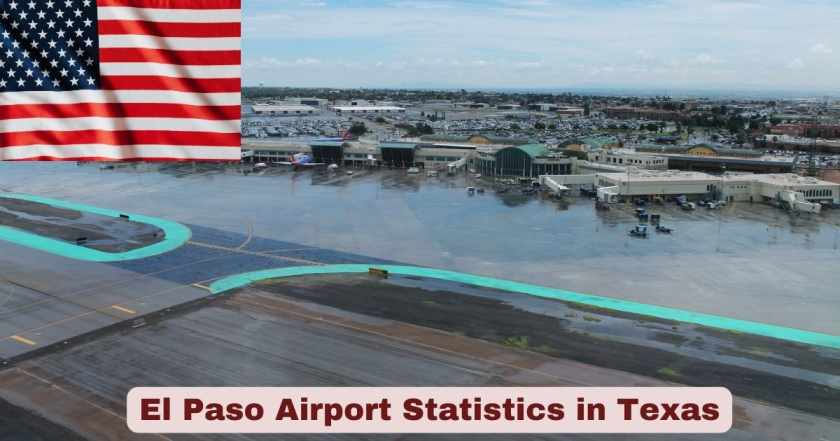
El Paso Airport in Texas 2026
El Paso International Airport (IATA: ELP, ICAO: KELP) stands as the busiest commercial aviation gateway serving West Texas, Southern New Mexico, and North Central Mexico. Located approximately 4 miles northeast of downtown El Paso in El Paso County, Texas, this vital transportation hub has established itself as serving the sixth-largest city in Texas and one of the 25 largest in the United States. The airport’s strategic positioning near the U.S.-Mexico border, about 12 miles from Ciudad Juárez, Mexico, makes it an essential facilitator of cross-border commerce and international connectivity in the Borderplex region. The facility’s critical importance to regional connectivity became dramatically evident on February 11, 2026, when the Federal Aviation Administration imposed a temporary 6-hour airspace closure that grounded all commercial flights, initially announced as a 10-day shutdown before being swiftly reversed, highlighting both the airport’s vulnerability to security incidents and its indispensable role in supporting nearly 700,000 residents and surrounding communities.
The airport’s significance extends far beyond its geographic location. Operating from a comprehensive facility that covers 6,670 acres of land, El Paso International Airport serves as an economic engine for the entire region, handling millions of passengers annually and facilitating critical cargo operations that support local and regional industries. With modern infrastructure that includes three runways, 15 gates spread across two concourses, and six major airlines providing direct connectivity to 16 destinations across the United States, the airport has consistently demonstrated its capacity to meet the evolving needs of both leisure and business travelers while maintaining its role as a crucial element of the region’s economic development strategy. The unprecedented February 2026 airspace restriction, attributed to Mexican cartel drone incursions and military counter-drone operations from adjacent Biggs Army Airfield, exposed the complex security environment surrounding this border-region airport and prompted immediate calls for improved coordination between federal authorities and local officials. Despite the disruption, which stranded hundreds of passengers and threatened an estimated $40-50 million in economic losses had it persisted for the planned duration, the airport’s operations returned to normal within hours, demonstrating the facility’s resilience and the swift resolution capabilities of coordinated federal and local response efforts in addressing security challenges while minimizing impacts on the traveling public and regional economy.
Interesting Facts About El Paso Airport in Texas 2026
| Fact Category | Details |
|---|---|
| Official Name | El Paso International Airport |
| IATA/ICAO Code | ELP / KELP |
| Location | 4 miles northeast of downtown El Paso, Texas |
| Airport Size | 6,670 acres (2,699 hectares) |
| Elevation | 3,958 feet above mean sea level |
| City Population Served | Nearly 700,000 residents |
| Regional Service Area | West Texas, Southern New Mexico, Northern Mexico |
| Distance from Border | Approximately 12 miles from Ciudad Juárez, Mexico |
| Airport Classification | Class C Airspace |
| Adjacent Military Facility | Biggs Army Airfield (Fort Bliss) |
| Historical Establishment | Originally built as Standard Airport in 1929 |
| Current Ownership | City of El Paso |
| Economic Region | Borderplex region (tri-state area) |
| Alternative Names | Gateway to West Texas, Southern New Mexico and Northern Mexico |
Data Source: Federal Aviation Administration, El Paso International Airport Official Records, Wikipedia (February 2026)
El Paso International Airport has evolved significantly from its humble origins as Standard Airport, established in 1929 for transcontinental air mail service. The facility’s transformation over nearly a century reflects the region’s growth and the increasing importance of air connectivity in facilitating economic development. The airport’s designation as Class C airspace indicates its moderate level of air traffic complexity, requiring specific communication and equipment protocols for all aircraft operating within its boundaries. The proximity to Biggs Army Airfield on Fort Bliss creates a unique operational environment where civilian and military aviation activities coexist, necessitating careful coordination and security measures.
The strategic importance of El Paso Airport became dramatically evident in February 2026 when the Federal Aviation Administration temporarily restricted the airspace for security reasons, demonstrating the facility’s significance to both national security infrastructure and regional economic stability. The airport’s location in the Borderplex region positions it at the intersection of three states and two countries, making it a critical node in international trade, tourism, and cross-border family connections. This geographic advantage has attracted substantial investment in airport infrastructure, including a $130 million five-year capital improvement plan approved by the El Paso City Council in 2022, ensuring the facility remains competitive and capable of accommodating future growth in passenger and cargo operations.
Passenger Traffic Statistics El Paso Airport in Texas 2026
| Metric | 2024 Annual Data | 2025 (Jan-Nov) | Growth Trend |
|---|---|---|---|
| Total Passengers | 4,038,530 passengers | 3,490,000 passengers | Consistent growth pattern |
| Monthly Average (2024) | 336,544 passengers | N/A | Steady monthly distribution |
| Daily Passenger Volume | Approximately 11,065 passengers | Approximately 10,636 passengers | Stable daily operations |
| Peak Travel Periods | Holiday seasons, summer months | Similar patterns observed | Traditional travel peaks maintained |
| Pre-Pandemic Comparison | Exceeded 2019 levels | Continued recovery trajectory | Strong post-pandemic rebound |
Data Source: El Paso International Airport Operating Reports, CNN, NBC News, Multiple Aviation Industry Sources (January-February 2026)
The passenger statistics for El Paso International Airport in 2024 and 2025 reveal a robust recovery and growth trajectory following the global pandemic disruptions. The airport processed an impressive 4,038,530 passengers throughout 2024, representing a significant milestone in the facility’s operational history. This figure translates to an average of more than 336,000 passengers monthly, demonstrating consistent utilization of the airport’s services across all seasons. The 2025 data, covering the first eleven months of the year, shows 3,490,000 passengers passed through the facility, maintaining strong performance levels and suggesting that annual totals would likely approach or exceed the previous year’s achievements.
These passenger volume figures underscore El Paso Airport’s vital role as the primary aviation gateway for a metropolitan area of nearly 700,000 residents and the broader tri-state Borderplex region. The daily passenger flow of approximately 10,000 to 11,000 travelers requires sophisticated operational coordination, security screening capabilities, and customer service infrastructure. Airport officials have noted that these traffic levels exceed pre-pandemic benchmarks, indicating that the facility has not only recovered from COVID-19 impacts but has captured additional market share through enhanced service offerings and improved connectivity to major U.S. hub airports. This growth pattern has justified significant capital investments in terminal improvements, including $44 million allocated for enhanced lighting, ceilings, parking facilities, and modernized security checkpoints to accommodate increasing passenger volumes while maintaining efficient processing times and positive customer experiences.
Aircraft Operations El Paso Airport in Texas 2026
| Operation Category | 2024 Data | Operational Details |
|---|---|---|
| Total Aircraft Operations | 97,737 operations | Combined takeoffs and landings |
| Average Daily Operations | Approximately 268 operations | Includes all aircraft categories |
| Commercial Flights (Feb 2026) | 1,314 scheduled departures | Monthly scheduled operations |
| Daily Commercial Flights | Approximately 40 departures | Average weekday operations |
| Aircraft Categories | Commercial, cargo, general aviation | Diverse operational mix |
| Runway Utilization | Three active runways | Multiple configuration options |
| Operating Hours | 24-hour operations | Continuous air traffic control |
Data Source: Wikipedia, Aviation Data Firm Cirium, El Paso International Airport Records (February 2026)
El Paso International Airport recorded 97,737 aircraft operations during 2024, encompassing the full spectrum of aviation activities including commercial airline flights, cargo operations, general aviation, and military aircraft movements. This volume translates to approximately 268 aircraft operations daily, demonstrating the facility’s capacity to manage substantial traffic while maintaining safety standards and operational efficiency. The February 2026 data reveals that the airport had 1,314 departures scheduled for that month alone, with approximately 40 departures planned for individual operating days, highlighting the consistent service frequency that supports both business and leisure travel demands.
The three-runway configuration at El Paso Airport provides operational flexibility essential for managing diverse aircraft types and weather conditions. The primary runway 4/22 measures 12,020 feet in length and 150 feet in width, capable of accommodating large commercial aircraft and military transport planes. Secondary runway 8R/26L extends 9,025 feet by 150 feet, while the shorter runway 8L/26R measures 5,499 feet by 75 feet, primarily serving smaller aircraft and general aviation operations. The airport’s continuous 24-hour operation schedule, supported by air traffic control services, enables late-night cargo flights and accommodates schedule irregularities without imposing curfew restrictions that might limit airline operational flexibility. The $130 million five-year airfield pavement improvement program, with a specific $25 million allocation for Runway 8 remediation scheduled for fiscal years 2024 to 2026, ensures that infrastructure quality keeps pace with operational demands and extends the useful life of critical runway surfaces for more than a decade.
Airlines and Destinations El Paso Airport in Texas 2026
| Airline | Alliance/Category | Gate Assignments | Primary Destinations |
|---|---|---|---|
| American Airlines | Oneworld | Gates A1-A4 (Concourse A) | Dallas-Fort Worth, Chicago, Phoenix |
| Southwest Airlines | Independent | Gates B3, B5-B7 (Concourse B) | Dallas, Houston, Denver, Las Vegas, Phoenix |
| United Airlines | Star Alliance | Gates B8-B9 (Concourse B) | Houston, Chicago, Denver |
| Delta Air Lines | SkyTeam | Gate B1 (Concourse B) | Atlanta |
| Frontier Airlines | Ultra Low-Cost Carrier | Gate B11 (Concourse B) | Denver, Las Vegas, Dallas-Fort Worth |
| Alaska Airlines | Oneworld | Gate B10 (Concourse B) | Seattle/Tacoma |
| Total Direct Destinations | N/A | 15 gates (2 concourses) | 16 U.S. cities |
Data Source: Flight Connections, Direct Flights, El Paso International Airport Official Information (February 2026)
Six major airlines currently provide scheduled passenger service at El Paso International Airport, offering direct connectivity to 16 destinations across the United States. Southwest Airlines operates as the dominant carrier at the facility, utilizing multiple gates in Concourse B and providing the most extensive route network with connections to major Southwest markets including Dallas, Houston, Denver, Las Vegas, and Phoenix. American Airlines maintains an exclusive presence in Concourse A with gates A1 through A4, focusing primarily on connecting passengers to its major hub at Dallas-Fort Worth International Airport while also serving Chicago and Phoenix markets. United Airlines concentrates operations at gates B8 and B9, emphasizing connectivity to its hubs in Houston and Denver, while Delta Air Lines utilizes a single gate to provide access to its Atlanta hub.
The route structure reflects El Paso Airport’s strategic role in connecting the Borderplex region to major U.S. metropolitan areas and airline hub airports. The Phoenix route, served by multiple carriers, represents the shortest major market connection and provides critical access to west coast destinations through connecting flights. Dallas-Fort Worth and Denver emerge as the most frequently served destinations based on February 2026 scheduling data, with 367 combined monthly departures accounting for approximately 28% of all flights from the airport. The presence of ultra-low-cost carrier Frontier Airlines and Alaska Airlines’ service to Seattle/Tacoma adds competitive pricing options and Pacific Northwest connectivity. The longest nonstop flight from El Paso extends 1,513 miles to Orlando, operated by Southwest Airlines with a flight duration of approximately 3 hours and 50 minutes. This comprehensive network of nonstop services eliminates the need for connections to reach major markets while positioning the airport as an efficient alternative to driving 4-5 hours to alternative airports in Albuquerque or Tucson for travelers in southern New Mexico and southeastern Arizona.
Terminal Infrastructure El Paso Airport in Texas 2026
| Infrastructure Component | Specifications | Operational Details |
|---|---|---|
| Terminal Layout | Pier-satellite design | Central entrance with east-west concourses |
| Total Gates | 15 gates | Distributed across 2 concourses |
| Concourse A (West) | Gates A1-A4 | Exclusively American Airlines |
| Concourse B (East) | Gates B1-B11 | All other airlines |
| Terminal Levels | 2 levels | Upper level (gates), Lower level (services) |
| Security Checkpoints | Centrally located | Single checkpoint serving both concourses |
| Food Court Location | Between gates B6-B11 | Multiple dining options available |
| Baggage Claim | Lower level | Adjacent to main entrance |
| Rental Car Center | Lower level | Short covered walkway from terminal |
Data Source: El Paso International Airport, Airport Guide, Wikipedia (February 2026)
The terminal building at El Paso International Airport features a thoughtfully designed pier-satellite layout that maximizes passenger convenience while optimizing operational efficiency. The facility’s two-level configuration separates arriving and departing passenger flows, with all 15 gates located on the upper level and essential ground services including ticketing counters, baggage claim areas, and rental car facilities positioned on the lower level. This vertical separation reduces congestion and creates intuitive wayfinding for passengers navigating the terminal. The central entrance leads to a security checkpoint that serves both concourses, after which passengers can access either Concourse A (gates A1-A4) extending westward or Concourse B (gates B1-B11) extending eastward from the main terminal building.
Concourse A operates as an exclusive facility for American Airlines and its regional partner American Eagle, providing dedicated gate space that facilitates efficient turnaround operations for the carrier’s hub-feeding flights to Dallas-Fort Worth. The larger Concourse B accommodates all remaining carriers and houses the airport’s food court between gates B6 and B11, offering travelers diverse dining options including Carlos and Mickey’s Mexican Express, Slice, Tia’s, Schlotzsky’s, Cinnabon, and Starbucks. The terminal’s compact design enables passengers to walk from the most distant gate to baggage claim in less than 10 minutes, significantly reducing connection times and improving the overall passenger experience. Recent terminal improvements, funded through the airport’s $44 million terminal enhancement program, have modernized lighting systems, replaced aging ceiling infrastructure, and upgraded security screening equipment. The Rental Car Center location directly across from the terminal, accessible via a short covered walkway on the lower level, provides immediate ground transportation options upon arrival, with all major national rental companies maintaining on-site operations.
Runway Infrastructure El Paso Airport in Texas 2026
| Runway | Length × Width | Surface Type | Primary Use |
|---|---|---|---|
| Runway 4/22 | 12,020 ft × 150 ft (3,664 m × 46 m) | Asphalt | Primary commercial operations |
| Runway 8R/26L | 9,025 ft × 150 ft (2,751 m × 46 m) | Asphalt | Secondary commercial operations |
| Runway 8L/26R | 5,499 ft × 75 ft (1,676 m × 23 m) | Concrete | General aviation, smaller aircraft |
| Total Runway Infrastructure | 26,544 linear feet | Mixed surfaces | Complete operational capability |
| Runway Improvement Budget | $130 million | 5-year program | Scheduled through 2027 |
| Priority Project | $25 million | Runway 8 remediation | Three-phase implementation |
Data Source: Wikipedia, El Paso International Airport, FAA Airport Information (February 2026)
El Paso International Airport’s three-runway system provides exceptional operational flexibility and redundancy essential for maintaining reliable service in varying weather conditions and accommodating simultaneous arrival and departure operations. Runway 4/22, the airport’s longest and primary operational runway at 12,020 feet, possesses sufficient length to handle the largest commercial aircraft operating in domestic U.S. markets, including narrow-body jets from the Boeing 737 and Airbus A320 families that constitute the majority of flights at the facility. This runway’s 150-foot width provides additional safety margins and accommodates aircraft with wider wheelbases, while the asphalt surface delivers excellent all-weather performance characteristics.
The secondary Runway 8R/26L extends 9,025 feet and serves as the primary arrival runway during typical operational configurations, while Runway 8L/26R, at 5,499 feet, primarily accommodates general aviation traffic, flight training operations, and smaller regional aircraft. The airport’s elevation of 3,958 feet above mean sea level requires careful performance calculations for aircraft operations, as the reduced air density at this altitude affects takeoff and landing distances compared to sea-level airports. The comprehensive $130 million five-year capital improvement program focuses intensively on runway pavement rehabilitation, with airport officials projecting that completion of these projects will ensure excellent airfield conditions for more than 10 years beyond program completion. The $25 million Runway 8 remediation project, spanning fiscal years 2024 through 2026, addresses a critical five-node intersection that experiences high operational stress from frequent aircraft movements, implementing advanced pavement materials and construction techniques designed to extend surface life while minimizing operational disruptions during construction phases.
Economic Impact El Paso Airport in Texas 2026
| Economic Indicator | Value/Impact | Regional Significance |
|---|---|---|
| Regional Population Served | 680,000 residents | Metro El Paso area |
| Extended Service Area | Southern New Mexico communities | Las Cruces, Alamogordo regions |
| Capital Improvement Investment | $130 million | Five-year airfield program |
| Terminal Enhancement Budget | $44 million | Infrastructure modernization |
| Advanced Manufacturing Campus | $31 million (Phase 1) | Three buildings opening 2025 |
| Innovation Factory Expansion | 50,000 sq ft | Business incubator facility |
| Additional Manufacturing Space | 200,000 sq ft | Two additional Phase 1 buildings |
| Estimated Daily Economic Impact | $40-50 million | Projected 10-day closure impact |
| Employment Sectors | Hospitality, retail, cargo, aviation services | Diverse job categories |
Data Source: El Paso Inc., 2nd Life Media Alamogordo, NBC News, El Paso Airport Reports (February 2026)
El Paso International Airport functions as a significant economic engine driving regional prosperity across the Borderplex tri-state area. The facility’s operations directly and indirectly support employment across multiple sectors including aviation services, hospitality, ground transportation, retail operations, and cargo logistics. The airport serves as the primary commercial aviation gateway for a metropolitan population of approximately 680,000 residents in El Paso proper, while extending critical connectivity to communities throughout southern New Mexico, including Las Cruces in Doña Ana County and Alamogordo in Otero County, where residents regularly utilize ELP as their nearest major airport facility. The economic significance became starkly evident during the brief February 2026 airspace closure when El Paso City Councilmember Chris Canales estimated potential economic losses of $40-50 million or more from the planned 10-day shutdown.
The airport’s role transcends passenger transportation, positioning itself as a cornerstone of regional economic development strategy. The Advanced Manufacturing Campus initiative, supported by a $25 million grant from President Biden’s Build Back Better Regional Challenge, represents transformative investment in high-value industry sectors. The first phase encompasses three buildings totaling $31 million in construction value, with a 50,000 square-foot facility expanding the existing Innovation Factory that currently incubates six businesses focused on advanced manufacturing, defense, and aerospace technologies. Two additional 100,000 square-foot buildings provide expansion capacity for established companies seeking to grow operations in the region. A fourth building will leverage a $15 million grant from the National Science Foundation awarded to the Paso del Norte Defense and Aerospace Innovation Engine, with potential for up to $160 million in additional funding over 10 years. These strategic investments leverage the airport’s Foreign Trade Zone designation and proximity to the U.S.-Mexico border, creating competitive advantages for manufacturers engaged in international trade while generating high-quality employment opportunities that strengthen the region’s economic foundation and reduce dependence on traditional border-related commerce.
Airspace and Security Classifications El Paso Airport in Texas 2026
| Classification Category | Designation | Operational Requirements |
|---|---|---|
| Airspace Classification | Class C Airspace | Two-way radio communication required |
| Altitude Restrictions | Surface to 17,999 feet MSL | Defined vertical boundaries |
| Mode C Transponder | Required below 18,000 feet | Aircraft identification and altitude reporting |
| Adjacent ADIZ | Contiguous U.S. Air Defense Identification Zone | Enhanced security protocols |
| Military Coordination | Biggs Army Airfield proximity | Civil-military airspace coordination |
| Security Designation | National Defense Airspace capability | Enhanced federal oversight |
| Border Proximity | 12 miles from international border | Additional security considerations |
Data Source: Federal Aviation Administration, El Paso Herald Post, Wikipedia (February 2026)
El Paso International Airport operates within Class C airspace, a designation applied to airports with moderate levels of commercial air traffic that require specific communication and equipment capabilities from all aircraft operating within the defined airspace boundaries. All aircraft entering ELP’s Class C airspace must establish and maintain two-way radio communication with air traffic control and must be equipped with a Mode C transponder that automatically transmits the aircraft’s identification and altitude information to controllers. These requirements apply from the surface up to 17,999 feet mean sea level, creating a protected cylinder of airspace where controllers maintain positive separation between aircraft and provide traffic advisories to pilots. At 18,000 feet and above, the airspace transitions to Class A, where different regulations govern operations.
The airport’s unique security profile stems from multiple factors including its proximity to Biggs Army Airfield on Fort Bliss, location just 12 miles from the international border with Mexico, and adjacency to the Contiguous U.S. Air Defense Identification Zone. These characteristics necessitate continuous coordination between civilian air traffic controllers, military aviation operations, and federal security agencies. The February 2026 temporary airspace closure, though quickly rescinded, highlighted the complex security environment surrounding ELP, with administration officials citing concerns about Mexican cartel drones breaching U.S. airspace and military counter-drone operations conducted from Biggs Army Airfield. The incident resulted in classification of the restricted zone as “National Defense Airspace,” with warnings that violations could result in aircraft interception and that deadly force might be employed against aircraft posing imminent security threats. While such dramatic security measures remain exceptional, they underscore the ongoing challenge of balancing robust civilian aviation operations with legitimate national security considerations in this strategically sensitive border region. The airport’s security infrastructure includes comprehensive screening protocols managed by the Transportation Security Administration, with recent $44 million terminal improvements including modernized checkpoint equipment designed to enhance both security effectiveness and passenger processing efficiency.
Historical Context El Paso Airport in Texas 2026
| Historical Milestone | Year | Significance |
|---|---|---|
| Standard Airport Establishment | 1929 | Original airport built for transcontinental airmail |
| American Airlines Acquisition | 1936 | Airport “swap” created modern facility |
| World War II Operations | 1942-1944 | Army Air Forces training base |
| First Municipal Airport | 1928 | Original location, inspired by Charles Lindbergh visit |
| Terminal Expansion | 1971 | Tripled terminal size |
| Jet Service Introduction | Early 1960s | Boeing 707 and 727 operations began |
| Modern Terminal Construction | 1997 | Replaced aging facility |
| Capital Improvement Plan | 2022 | $130 million five-year program approved |
| Post-Pandemic Recovery | 2024 | Exceeded pre-pandemic passenger levels |
Data Source: Wikipedia, El Paso International Airport Historical Records (February 2026)
El Paso International Airport traces its origins to 1929 when Standard Airlines constructed Standard Airport to support transcontinental air mail service, representing one of the earliest commercial aviation facilities in the Southwest United States. The development occurred during aviation’s pioneering era when air mail contracts provided essential revenue for establishing route networks and infrastructure that would later support passenger services. In 1936, a significant transaction between American Airlines and the City of El Paso resulted in the carrier “swapping” airports with municipal authorities, creating the foundation for today’s El Paso International Airport. This arrangement proved mutually beneficial, providing American Airlines with improved facilities while giving the city ownership of aviation infrastructure that would become increasingly valuable.
During World War II, the facility operated as El Paso Army Airfield, training bomber crews for eventual deployment to European and Pacific theaters. The 385th Bombardment Group trained there from December 1942 through February 1943 before serving with the 8th Air Force in England flying B-17 Flying Fortress missions. The 491st Bombardment Group followed from November 1943 through January 1944, also deploying to England with B-24 Liberator aircraft. The 497th Bombardment Group briefly trained at the facility with B-29 Superfortress aircraft before Pacific deployment. These military operations expanded the airport’s infrastructure and established its capability to handle large aircraft operations. The post-war era saw steady growth in commercial service, with 1971 bringing a major terminal expansion that tripled facility size. Jet service began in the early 1960s with Boeing 707 and 727 aircraft, eventually progressing to widebody Douglas DC-10 operations on Dallas routes by 1972. The current terminal structure dates to 1997 construction, with continuous improvements maintaining modern standards. The facility’s 2024 achievement of surpassing pre-pandemic passenger volumes demonstrates successful adaptation to evolving market conditions and validates ongoing infrastructure investments designed to position El Paso Airport for continued growth serving the dynamic Borderplex region well into the future.
February 2026 Airport Closure El Paso Airport in Texas 2026
| Closure Details | Specific Information | Impact Assessment |
|---|---|---|
| Initial Closure Announced | February 10, 2026 at 11:30 PM MST | Unprecedented 10-day shutdown |
| Restriction Lifted | February 11, 2026 at approximately 7:00 AM MST | After approximately 6 hours |
| Official Reason Cited | Special security reasons | Mexican cartel drones breached U.S. airspace |
| Affected Area | 10 nautical mile radius | Ground to 17,999 feet MSL |
| All Operations Grounded | Commercial, cargo, general aviation | Even medical evacuation flights restricted |
| Notice Given | 30 minutes to 1 hour | Air traffic controllers caught off guard |
| Classification | National Defense Airspace | Deadly force authorization mentioned |
| Affected Destinations | El Paso, Texas and Santa Teresa, New Mexico | Two separate NOTAMs issued |
| Economic Impact Estimate | $40-50 million or more | Projected for full 10-day closure |
| Response | Flights resumed normal operations | No commercial aviation threat confirmed |
Data Source: FAA, CNN, NBC News, Fox Business, CBS News, The Hill, El Paso Matters, KVIA, Multiple News Sources (February 11, 2026)
The February 11, 2026 temporary closure of El Paso International Airport represents the most significant aviation security incident at the facility since the September 11, 2001 terrorist attacks. The Federal Aviation Administration issued a Notice to Airmen (NOTAM) on February 10 at 11:30 PM MST that immediately grounded all flights to and from the airport for a planned 10-day period extending through February 20 at 11:30 PM MST. The closure, classified under “special security reasons,” prohibited all aircraft operations within a 10-nautical-mile radius from ground level up to 17,999 feet mean sea level, effectively creating a complete aviation exclusion zone over the nation’s 23rd largest city. The FAA designated the restricted area as “National Defense Airspace,” with warnings that pilots violating the restriction could face interception and detention by law enforcement, civil penalties including license revocation, criminal charges, and potentially deadly force if an aircraft posed an imminent security threat.
The closure caught virtually everyone by surprise, including air traffic controllers who received only 30 minutes to one hour advance notice, airport management who had no prior communication from federal authorities, local elected officials including Representative Veronica Escobar and City Councilmember Chris Canales who learned about the restriction through public channels, and airlines that scrambled to cancel flights and rebook passengers on alternative routes. A LiveATC.net recording captured the moment when an El Paso air traffic controller informed a Southwest Airlines flight crew about the impending closure, stating “Just be advised I guess there’s a TFR going into effect…for the next 10 days we’re stopped. All ground stop.” The flight crew’s stunned response of “Wow…so the airport is totally closed?” reflected the unprecedented nature of the situation. However, approximately six hours later at around 7:00 AM MST on February 11, the FAA abruptly reversed its decision, announcing on social media that “The temporary closure of airspace over El Paso has been lifted. There is no threat to commercial aviation. All flights will resume as normal.” Trump administration officials subsequently explained that Mexican cartel drones had breached U.S. airspace, prompting the Department of Defense to take action to disable these unmanned aircraft systems. Sources indicated the closure stemmed from military counter-drone operations and laser countermeasure system testing conducted from Biggs Army Airfield on Fort Bliss, with concerns that these operations occurred in airspace immediately adjacent to civilian flight paths serving the airport.
Impact of February 2026 Halt El Paso Airport in Texas 2026
| Impact Category | Affected Groups | Consequences |
|---|---|---|
| Stranded Passengers | Travelers at airport and en route | Immediate cancellations, rebooking challenges |
| Alternative Airport Options | Albuquerque (270 miles/4 hours), Tucson (310 miles/5 hours) | Significant driving distances required |
| Medical Flights | Emergency medical evacuations | Diverted to other facilities |
| Cargo Operations | Air freight and logistics | Supply chain disruptions |
| Southern New Mexico Impact | Las Cruces, Alamogordo residents | Primary airport access eliminated |
| Business Travel | Corporate meetings, conferences | Canceled or rescheduled commitments |
| Tourism and Hospitality | Hotels, rental cars, restaurants | Immediate revenue losses |
| Cross-Border Commerce | U.S.-Mexico trade activities | Borderplex economic disruption |
| Communication Issues | Local officials, airport management | Zero advance notification provided |
| Projected Economic Loss | Regional economy | $40-50 million for 10-day period |
Data Source: CNN, NBC News, CBS News, El Paso Matters, 2nd Life Media Alamogordo, The Hill, Representatives’ Statements (February 11, 2026)
The six-hour closure of El Paso International Airport on February 11, 2026 created immediate chaos and demonstrated the critical role aviation plays in regional connectivity. Although the restriction lasted only a fraction of the planned 10-day period, the sudden grounding of all flights left hundreds of passengers stranded at the airport with no immediate transportation alternatives. Travelers who arrived for early morning departures found themselves confronted by police presence, news cameras, and complete uncertainty about their travel plans. One traveler named Alex Torres, planning to fly to New York with American Airlines, told media outlets she received no notification about the closure until arriving at the airport. Another traveler named Samuel, conducting a book tour with a client, similarly discovered the situation only upon seeing “all the cops here and the news cameras” at the terminal. For stranded passengers, the nearest alternative airports lay hours away by automobile—Albuquerque International Sunport approximately 270 miles or four hours north via Interstate 25, and Tucson International Airport roughly 310 miles or five hours west via Interstate 10.
The economic implications extended far beyond inconvenienced travelers. El Paso Mayor Renard Johnson held a press briefing Wednesday morning describing the airport as being “in chaos” following the sudden closure, criticizing federal authorities for failing to coordinate with city officials, airport management, hospitals, and community leadership. The mayor revealed that emergency medical flights had been grounded and diverted, with one plane carrying critical surgical equipment from Dallas failing to reach El Paso as scheduled. City Councilmember Chris Canales estimated the economic impact of a full 10-day closure could reach $40-50 million or more, accounting for direct losses to the airport, airlines, hospitality industry, rental car companies, restaurants, and the broader ripple effects throughout the regional economy. The Borderplex region, encompassing El Paso, Las Cruces in New Mexico, and Ciudad Juárez in Mexico, functions as an integrated bi-national economic hub where aviation connectivity supports cross-border business relationships, family connections, and international trade flows. Communities in southern New Mexico particularly felt the impact, as residents of Las Cruces (Doña Ana County) and Alamogordo (Otero County) regularly utilize ELP as their nearest commercial airport facility. The closure threatened to strand students from New Mexico State University, military personnel and families associated with Holloman Air Force Base and Fort Bliss, business travelers, and tourists visiting White Sands National Park. The incident highlighted the region’s complete dependence on a single airport facility and the vulnerability of economic activities to aviation disruptions, reinforcing the importance of robust communication protocols between federal security agencies and local authorities to prevent similar situations in the future.
Official Responses to February 2026 Closure El Paso Airport in Texas 2026
| Official/Organization | Position/Role | Statement/Action |
|---|---|---|
| Rep. Veronica Escobar | U.S. Representative (D-TX-16) | Called decision “unprecedented,” criticized lack of notice |
| Mayor Renard Johnson | El Paso Mayor | “This should have never happened,” demanded accountability |
| City Councilmember Chris Canales | El Paso City Council | Estimated $40-50 million economic impact |
| Rep. Gabe Vasquez | U.S. Representative (D-NM-02) | “Deep economic impact to Borderplex region” |
| Transportation Secretary Sean Duffy | Federal Cabinet Official | “FAA and DOD acted swiftly” to address cartel drones |
| FAA Official Statement | Federal Aviation Administration | “No threat to commercial aviation” after lifting |
| Trump Administration Official | Anonymous Briefing | Mexican cartel drones breached airspace |
| Department of Defense | Federal Military | Disabled cartel drones, laser countermeasures tested |
| Airport Management | El Paso International Airport | Reached out to FAA for guidance, notified airlines |
| Local Business Leaders | Regional Economy Representatives | Expressed concerns about economic disruption |
Data Source: CNN, NBC News, CBS News, Fox Business, The Hill, El Paso Matters, Military Times, Official Statements (February 11, 2026)
Representative Veronica Escobar, who represents El Paso in the U.S. House of Representatives, issued a strongly worded statement calling the FAA’s decision to shut down the airport for 10 days “unprecedented” and noting it “resulted in significant concern in the community.” She emphasized that “there was no advance notice provided to my office, the City of El Paso, or anyone involved in airport operations,” highlighting the complete breakdown in communication between federal and local authorities. After the FAA lifted the restriction, Escobar clarified that “there is no threat to El Paso or the surrounding areas” and committed to continuing pressing “for answers and accountability for the chaos this has caused.” Her concerns about the drone explanation emerged when she told media outlets it was her understanding the decision was not due to Mexican drones, which she characterized as “not unusual” for the El Paso area, suggesting the justification provided by the Trump administration might not align with local security assessments.
Recent Developments El Paso Airport in Texas 2026
| Development Category | Status | Timeline/Details |
|---|---|---|
| Airspace Operations | Fully restored February 11, 2026 | Normal flight operations resumed |
| Security Protocols | Under review | Enhanced coordination procedures |
| Passenger Volume 2025 | 3.49 million (Jan-Nov) | Strong performance trajectory |
| Innovation Factory Expansion | Under construction | $31 million Phase 1, opening 2025 |
| Runway 8 Remediation | In progress | $25 million, three-phase project |
| Terminal Modernization | Ongoing | $44 million improvements |
| Advanced Manufacturing Focus | Active development | Defense, aerospace, manufacturing sectors |
| Communication Improvements | Recommended | Federal-local coordination protocols |
Data Source: Multiple news sources including CNN, NBC News, El Paso Matters, El Paso Herald Post (February 2026)
Following the resolution of the February 11 airspace closure, El Paso International Airport operations returned to normal with all commercial airlines resuming scheduled service. The FAA’s announcement that “there is no threat to commercial aviation” provided immediate reassurance to travelers and the regional business community, though significant questions remained about the decision-making process that led to the initial 10-day closure announcement. The incident prompted immediate calls for improved communication protocols between federal security agencies, military installations, and civilian airport authorities to prevent similar disruptions in the future. Local officials emphasized that while national security concerns must be addressed appropriately, major metropolitan areas require advance coordination to manage the economic and social impacts of aviation restrictions affecting hundreds of thousands of residents and critical services including emergency medical transportation.
Beyond the immediate closure incident, the airport continues executing its strategic development plans without interruption. The Innovation Factory expansion, representing $31 million in Phase 1 construction value, progresses toward its 2025 opening date, delivering 50,000 square feet of expanded business incubator space and two additional 100,000 square-foot manufacturing buildings supporting advanced manufacturing, defense, and aerospace companies. The $25 million Runway 8 remediation project advances through its three-phase implementation schedule spanning fiscal years 2024 through 2026, addressing critical pavement rehabilitation at a high-stress intersection experiencing frequent aircraft movements. The broader $130 million five-year capital improvement program continues on schedule, with airport officials maintaining their projection that completion will ensure excellent airfield conditions for more than 10 years beyond program completion. Terminal modernization work funded through the $44 million enhancement program proceeds with upgrades to lighting systems, ceiling infrastructure, parking facilities, and security screening equipment designed to accommodate growing passenger volumes while improving processing efficiency and customer experience. The February 2026 incident, while disruptive in the short term, has not altered the airport’s fundamental growth trajectory or its essential role as the primary aviation gateway for the Borderplex tri-state region, with passenger volumes expected to continue their upward trend as the facility benefits from ongoing infrastructure investments and enhanced service offerings from major airlines serving the market.
Public Transportation and Access El Paso Airport in Texas 2026
| Transportation Mode | Provider/Location | Service Details |
|---|---|---|
| Public Bus Service | Sun Metro Routes 33, 208 | Direct terminal connections |
| Taxi Service | Lower level, Doors 3-4 | Immediate terminal access |
| Ride-Hailing (Uber/Lyft) | Lower level, Doors 3-4 | Designated pickup zones |
| Rental Car Center | Lower level, covered walkway | All major national brands |
| Hotel Shuttles | Center median, lower level | Complimentary service available |
| Distance to Downtown | Approximately 4 miles | 15-20 minute drive |
| Primary Access Road | Convair Road | Four-lane split configuration |
| Parking Options | Short-term, long-term, economy, premium reserved | Multiple lot configurations |
| Cell Phone Waiting Lot | Free parking | Passenger pickup facility |
Data Source: El Paso International Airport, Sun Metro, Multiple Transportation Sources (February 2026)
El Paso International Airport provides comprehensive ground transportation options serving diverse traveler needs and preferences. The airport access infrastructure centers on Convair Road, which features a four-lane split configuration with the left two lanes reserved exclusively for commercial vehicles including taxis, shuttles, and ride-hailing services, while the right two lanes facilitate private vehicle pickup and drop-off operations. A central waiting area between the split roadways allows passengers to await commercial vehicle arrivals in a designated, organized environment. The facility’s location approximately 4 miles northeast of downtown El Paso enables quick access to the city center, with typical travel times ranging from 15 to 20 minutes under normal traffic conditions.
Public transportation connectivity comes through Sun Metro bus routes 33 and 208, which provide regular service between the airport and the downtown transit center where passengers can transfer to other routes serving the broader metropolitan area. For travelers requiring downtown or Eastside destinations, connections to routes 50 or 59 provide access to Amtrak rail service and the El Paso Streetcar system. The Rental Car Center occupies a strategic location on the terminal’s lower level, accessible via a short covered walkway that protects travelers from weather while transporting luggage to vehicles. All major national rental companies maintain operations at the facility, providing competitive pricing and vehicle selection. Parking infrastructure includes multiple lot configurations catering to different needs, from premium reserved spaces offering guaranteed availability to economy lots providing cost-effective long-term options. The free Cell Phone Waiting Lot enables pickup drivers to wait for arriving passengers without circulating through terminal areas or paying parking fees, reducing congestion around passenger pickup zones. Hotel shuttle services coordinate pickups from the lower level center median, with many area properties offering complimentary transportation to guests as a standard amenity, simplifying ground transportation logistics for visitors and reducing reliance on rental vehicles for travelers whose destinations lie within shuttle service areas.
Future Growth Projections El Paso Airport in Texas 2026
| Growth Area | Investment/Projection | Expected Impact |
|---|---|---|
| Capital Improvement Program | $130 million through 2027 | Enhanced airfield infrastructure |
| Runway Infrastructure | 10+ years excellent condition | Extended maintenance intervals |
| Terminal Capacity | $44 million modernization | Improved passenger experience |
| Advanced Manufacturing Campus | $31 million initial phase | Economic diversification |
| NSF Grant Potential | Up to $160 million over 10 years | Innovation ecosystem development |
| Passenger Growth Trajectory | Exceeded pre-pandemic levels | Continued upward trend projected |
| Regional Population Growth | Expanding service area | Increased demand foundation |
| Cross-Border Commerce | Enhanced trade facilities | Economic integration opportunities |
Data Source: El Paso Inc., Airport Operating Reports, Economic Development Sources (February 2026)
El Paso International Airport has positioned itself for sustained growth through strategic infrastructure investments and economic development initiatives that extend far beyond traditional aviation operations. The $130 million five-year capital improvement program, approved by the El Paso City Council in 2022, represents the most comprehensive airfield modernization effort in the facility’s history. This investment prioritizes runway pavement rehabilitation, with airport officials projecting that completion will ensure excellent operational conditions for more than 10 years beyond program completion without requiring major maintenance interventions. The parallel $44 million terminal enhancement program addresses passenger-facing infrastructure including lighting systems, ceiling replacements, parking facility improvements, and security checkpoint modernization, ensuring the facility maintains contemporary standards as passenger volumes continue growing.
The Advanced Manufacturing Campus initiative represents a transformative economic development strategy that leverages the airport’s strategic assets including Foreign Trade Zone designation, border proximity, and established logistics infrastructure. The initial $31 million phase delivers 250,000 square feet of manufacturing and innovation space designed specifically for advanced manufacturing, defense, and aerospace sector companies. The Innovation Factory expansion creates a structured business incubator environment supporting startup companies and technology transfer from research institutions. The $15 million National Science Foundation grant to the Paso del Norte Defense and Aerospace Innovation Engine, with potential for up to $160 million over 10 years, establishes a sustainable funding mechanism for ongoing innovation ecosystem development. These investments position the airport not merely as a transportation facility but as a comprehensive economic development platform generating high-value employment, attracting technology companies, and creating synergies between manufacturing operations, logistics capabilities, and aviation connectivity. The facility’s achievement of surpassing pre-pandemic passenger levels in 2024 while simultaneously advancing these major development initiatives demonstrates institutional capacity to manage multiple strategic priorities effectively. Regional population growth in the Borderp lex area, increasing cross-border commerce facilitated by modernized ports of entry, and expanding direct flight connectivity to major U.S. markets create favorable conditions for continued airport growth serving as the essential aviation gateway for this dynamic, binational region that continues evolving as one of North America’s most important border crossings and economic integration zones.
Cargo and Logistics Operations El Paso Airport in Texas 2026
| Logistics Category | Capability/Feature | Strategic Advantage |
|---|---|---|
| Cargo Facilities | Largest near-border location | Strategic trade position |
| Foreign Trade Zone | FTZ designation active | Customs and duty advantages |
| Proximity to Border | 12 miles from Ciudad Juárez | Rapid cross-border shipment |
| Runway Capacity | 12,020-foot primary runway | Accommodates large cargo aircraft |
| 24-Hour Operations | No curfew restrictions | Flexible cargo scheduling |
| Biggs AAF Proximity | Adjacent military airfield | Defense contractor access |
| Advanced Manufacturing Campus | Dedicated manufacturing space | Integrated production and shipping |
| Regional Distribution | Tri-state service area | Multi-market accessibility |
Data Source: El Paso International Airport, Business Development Documents, Multiple Sources (February 2026)
While El Paso International Airport primarily serves passenger traffic, the facility maintains significant cargo and logistics capabilities that support regional economic activities and international trade. The airport’s Foreign Trade Zone designation provides substantial advantages for companies engaged in import-export operations, allowing goods to enter the zone without immediate payment of customs duties and enabling manufacturing operations that combine domestic and international components with favorable duty treatment on exported finished products. The facility’s location just 12 miles from the Ciudad Juárez border crossing creates unique opportunities for companies requiring rapid movement of goods between U.S. and Mexican operations, with air cargo supplementing ground transportation for time-sensitive or high-value shipments.
The airport’s cargo infrastructure benefits from the same runway and operational capabilities that support passenger service, with the primary 12,020-foot runway accommodating large cargo aircraft including freighter versions of narrow-body jets commonly used for domestic cargo operations. The facility’s 24-hour operational capability without curfew restrictions enables cargo operators to schedule flights during nighttime hours when passenger traffic is minimal, maximizing airfield utilization and reducing operational costs through off-peak pricing. The proximity to Biggs Army Airfield creates additional opportunities for defense contractors and aerospace companies requiring rapid shipment of components, with the Advanced Manufacturing Campus specifically targeting sectors including defense and aerospace manufacturing where integrated production and logistics capabilities deliver competitive advantages. The February 2026 temporary airspace closure highlighted cargo operations’ vulnerability to security disruptions, with concerns about delayed air freight affecting regional industries and potentially shifting demand to ground transport with associated cost increases. The development of the manufacturing campus with 250,000 square feet of Phase 1 space creates opportunities for companies to co-locate production and distribution operations adjacent to airfield facilities, reducing handling steps and transit times while maintaining access to both air cargo and trucking infrastructure serving the broader Borderplex region and extending throughout North America via the Interstate highway system and rail connections converging in El Paso.
Competitive Airport Landscape El Paso Airport in Texas 2026
| Alternative Airport | Distance from El Paso | Comparative Features |
|---|---|---|
| Albuquerque International Sunport (ABQ) | Approximately 270 miles (4-hour drive) | Larger airport, more destinations |
| Tucson International Airport (TUS) | Approximately 310 miles (5-hour drive) | Arizona connections, similar size |
| Ciudad Juárez International (CJS) | Across international border | Mexican market focus, border crossing required |
| Biggs Army Airfield (BIF) | Adjacent to ELP | Military operations only |
| El Paso County Airport | Fabens area, southeast of city | General aviation, no commercial service |
| Las Cruces, NM | 45 miles north | No commercial airport, uses ELP |
| Alamogordo, NM | 90 miles north | No commercial airport, uses ELP |
Data Source: Multiple Aviation Sources, Geographic Data (February 2026)
El Paso International Airport maintains a dominant position as the only commercial aviation facility serving the immediate Borderplex region, with the nearest alternative U.S. airports located 4-5 hours away by automobile. Albuquerque International Sunport, situated approximately 270 miles north via Interstate 25, represents the closest major U.S. airport offering comparable or superior destination options and potentially competitive fares on certain routes. However, the four-hour driving time creates significant inconvenience for El Paso residents and imposes costs including fuel, vehicle wear, and potential overnight parking fees that often exceed any airfare savings. Tucson International Airport, located approximately 310 miles west via Interstate 10, serves as another alternative primarily for travelers in far western portions of ELP’s service area, but the five-hour drive similarly discourages utilization except in cases of substantial price differences or unavailable direct flights from El Paso.
Ciudad Juárez International Airport occupies a unique position across the international border in Mexico, serving primarily Mexican domestic markets and leisure routes to Mexican resort destinations. While geographically close to El Paso, utilizing CJS requires U.S. citizens to cross the international border with associated wait times, documentation requirements, and the complexity of re-entering the United States upon return, making it impractical for most U.S.-origin trips despite potentially attractive fares to Mexican destinations. The practical absence of nearby alternatives reinforces ELP’s market position and supports sustainable passenger volumes even during periods of higher-than-average fares, as travelers face substantial inconvenience when seeking alternatives. Communities throughout southern New Mexico, including Las Cruces (approximately 45 miles north) and Alamogordo (approximately 90 miles north), rely almost exclusively on El Paso Airport for commercial air service, as these cities lack their own commercial airports and face even longer drives to reach Albuquerque. This extended service area encompassing southeastern New Mexico adds substantially to ELP’s natural market catchment and supports route development by demonstrating sufficient demand to airlines considering new service. The February 2026 temporary closure dramatically illustrated this dependence, as affected travelers faced driving to Albuquerque or Tucson as their only viable alternatives for maintaining travel plans, with resulting disruptions to business operations, family events, and vacation plans throughout the tri-state region served by the airport.
Airline Market Share El Paso Airport in Texas 2026
| Carrier | Weekly Departures (Feb 2026) | Estimated Market Share | Focus Markets |
|---|---|---|---|
| Southwest Airlines | 176+ Phoenix flights monthly | Approximately 45-50% | West/Southwest hub connections |
| American Airlines | 173+ Dallas-Fort Worth monthly | Approximately 25-30% | DFW hub connectivity |
| United Airlines | Focus on Houston, Denver | Approximately 10-15% | Star Alliance connections |
| Frontier Airlines | Ultra-low-cost service | Approximately 5-10% | Leisure markets |
| Delta Air Lines | Atlanta service | Approximately 5-10% | SkyTeam connections |
| Alaska Airlines | Seattle/Tacoma route | Less than 5% | Pacific Northwest connectivity |
Data Source: Flight scheduling data, Cirium aviation analytics, Multiple sources (February 2026)
Southwest Airlines dominates operations at El Paso International Airport, operating from multiple gates in Concourse B and providing the most extensive route network serving the facility. February 2026 scheduling data reveals 176 flights monthly to Phoenix Sky Harbor International Airport alone, making it the single most-served route from ELP. When combined with Southwest’s service to Dallas Love Field, Houston Hobby, Denver, Las Vegas, and other destinations, the carrier likely accounts for 45-50% of total departures from the airport. This market position reflects Southwest’s historic strength in Southwest markets and its focus-city strategy emphasizing medium-sized airports where it can achieve meaningful market share and operational efficiency.
American Airlines represents the second-largest operator with exclusive use of Concourse A and intensive service to its Dallas-Fort Worth hub, recording 173 flights monthly to DFW in February 2026. Combined with American’s service to Chicago and Phoenix, the carrier likely captures 25-30% of airport operations, positioning itself as the premium carrier for business travelers requiring access to American’s extensive domestic and international network via connections at major hubs. United Airlines focuses operations on connecting passengers to its Houston and Denver hubs, likely accounting for 10-15% of market share. The ultra-low-cost carrier Frontier Airlines targets price-sensitive leisure travelers with service to Denver, Las Vegas, and Dallas-Fort Worth, probably representing 5-10% of operations. Delta Air Lines and Alaska Airlines serve niche roles with single-route operations to Atlanta and Seattle/Tacoma respectively, each likely accounting for less than 5-10% of total departures. This competitive landscape creates beneficial options for travelers, with legacy carriers providing hub connectivity and comprehensive frequent flyer benefits, while low-cost operators ensure competitive base fares and stimulate overall market demand. The diversity of carriers and alliance memberships enables travelers to earn and redeem miles across multiple programs while maintaining reasonable pricing through competitive pressure that prevents any single carrier from exercising excessive pricing power in the market.
Disclaimer: This research report is compiled from publicly available sources. While reasonable efforts have been made to ensure accuracy, no representation or warranty, express or implied, is given as to the completeness or reliability of the information. We accept no liability for any errors, omissions, losses, or damages of any kind arising from the use of this report.