
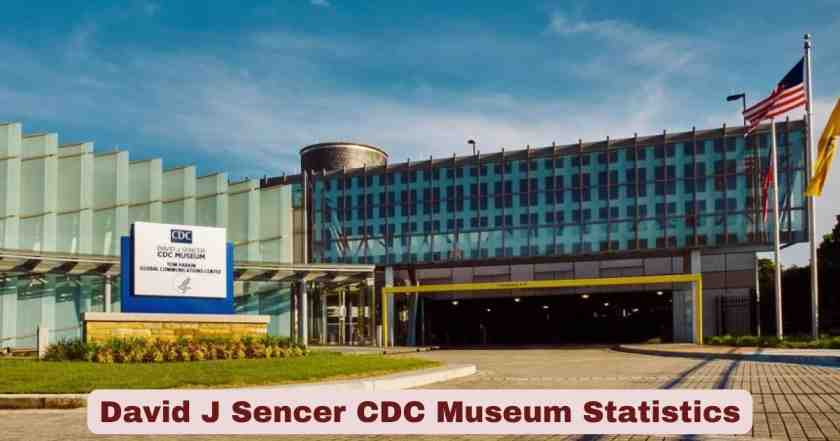
David J Sencer CDC Museum in America 2026
Tucked inside the sprawling CDC headquarters at 1600 Clifton Road NE, Atlanta, Georgia 30329, the David J. Sencer CDC Museum stands as one of the most distinctive and quietly powerful public institutions in the entire United States. It is, quite literally, the only part of the Centers for Disease Control and Prevention open to the general public — a distinction that makes it far more than a typical science or history museum. For anyone curious about how America fights disease, tracks outbreaks, and builds public health infrastructure, this museum offers a window into a world that most people never get to see. In 2026, the museum continues operating as a Smithsonian Institution Affiliate, bringing together award-winning exhibitions, hands-on educational programming, and an irreplaceable historical archive that stretches back more than a century of public health history across the United States and beyond.
What sets the David J. Sencer CDC Museum apart in 2026 is not just what it displays, but what it preserves and teaches. Originally opened in 1996 under the name Global Health Odyssey Museum to coincide with both CDC’s 50th anniversary and the Centennial Olympic Games held in Atlanta, the museum has grown into a serious institution that attracts more than 100,000 visitors each year and runs nationally recognized STEM educational programs for high school students across the country. Renamed in 2011 in honor of David J. Sencer — the longest-serving director in CDC’s history — the museum today holds a collection of more than 20,000 items and serves as CDC’s official gateway to the American public. Whether you are a student, a teacher, a researcher, or simply someone who wants to understand how public health shapes daily life, the David J. Sencer CDC Museum in 2026 delivers an experience that is simultaneously historical, scientific, and deeply relevant.
Interesting Facts About the David J Sencer CDC Museum in the US 2026
| Fact Category | Key Fact |
|---|---|
| Original Name (1996) | Global Health Odyssey Museum |
| Year Founded | 1996 |
| Year Renamed | 2011 |
| Named After | David J. Sencer, longest-serving CDC Director |
| Location | 1600 Clifton Road NE, Atlanta, Georgia 30329 |
| Phone Number | 404-639-0830 |
| Museum Type | Smithsonian Institution Affiliate |
| Only Public Access Point | Only part of CDC open to the general public |
| Admission Cost | Free (always) |
| Parking Cost | Free |
| Annual Visitors | More than 100,000 visitors per year |
| Collection Size | More than 20,000 items in the historical collection |
| Collection Established | 1995 |
| Artifacts in Museum | More than 16,000 artifacts preserved |
| Walk-in Policy (2026) | Walk-in visits no longer permitted; advance reservations required |
| Reservation Lead Time | At least 1 week in advance |
| Founded to Coincide With | CDC’s 50th anniversary and the 1996 Centennial Olympic Games |
| Disease Detective Camp Inception | 2005 |
| Students Attended DDC Since 2005 | Over 1,950 rising high school students |
| Online Summer Course Students | 900+ additional students participated |
| Online Summer Course Spots (per year) | 75 spots available |
| DDC Sessions Per Summer | 2 sessions offered |
| DDC Slots Per Session | 27 slots per session |
| DDC Applications Received | Between 650–750 applications per program cycle |
| Global Symphony Exhibit Length | Spans 100 feet in length |
| Artifact Timeline Range | Covers public health history from 1907 to 2014 (in Collection of Curiosities) |
| Collaboration Partners | Georgia State University, Emory University, Smithsonian Institution |
| Email Contact for Tours | museumtours@cdc.gov |
Source: Centers for Disease Control and Prevention — cdc.gov/museum
The table above captures the breadth of what makes the David J. Sencer CDC Museum a uniquely compelling institution in America in 2026. A few facts here are worth pausing on. The museum was founded in 1996 — the same year Atlanta hosted the Olympics — as part of CDC’s own golden anniversary celebrations, which tells you something about how seriously CDC has always taken public outreach and education. The fact that the collection was established in 1995, even before the museum officially opened to visitors, also signals the depth of institutional commitment to preservation that has guided this museum’s development from day one.
Equally remarkable is the Disease Detective Camp story embedded in these numbers. Since 2005, more than 1,950 rising high school juniors and seniors from across the United States and internationally have passed through CDC headquarters to experience a week-long immersion in epidemiology, disease surveillance, global health, and public health law. Add to that the 900+ additional students who completed the Online Summer Course version of the program, and you are looking at a cumulative educational footprint that is genuinely substantial for a museum that most Americans have never heard of. With 650–750 applications received per cycle for just 54 available seats across two sessions, this is among the most competitive free high school programs in the country.
Latest Stats: David J Sencer CDC Museum in the US 2026
Museum Visitor Access and Operations Statistics in the US 2026
| Operational Metric | Data Point |
|---|---|
| Annual Visitor Count | More than 100,000 visitors per year |
| Operating Days | Monday through Friday |
| Operating Hours (Mon–Fri) | 9:00 AM – 4:00 PM |
| Weekend Operations | Closed Saturdays and Sundays |
| Federal Holiday Operations | Closed on all federal holidays |
| Walk-in Visits | Not permitted as of 2026 |
| Advance Reservation Requirement | Minimum 1 week in advance |
| Reservation Platform | Online via cdc.gov/museum |
| Admission Fee | $0 — Always Free |
| Parking Fee | $0 — Always Free |
| ID Requirement (Adults 18+) | Government-issued REAL ID required |
| Non-US Citizen Requirement | Valid Passport required |
| Prohibited Items | All weapons prohibited |
| Vehicle Inspections | All vehicles and bags/containers inspected |
| Tour Email Contact | museumtours@cdc.gov |
| Main Phone | 404-639-0830 |
Source: Centers for Disease Control and Prevention — cdc.gov/museum/about.htm
The visitor access data for the David J. Sencer CDC Museum in 2026 tells a story of an institution that takes public safety and visitor management very seriously, particularly in light of its location inside active CDC federal headquarters. The more than 100,000 annual visitors figure is remarkable when you consider that every single one of those visitors must now book a timed-entry reservation at least one week in advance, present valid government-issued identification, and pass through vehicle and bag inspection. Walk-in visits, which were permitted in earlier years, are no longer allowed under the protocols in effect as of 2026 — a change that reflects both security considerations at a major federal campus and the museum’s commitment to managing visitor flow in a way that preserves a quality experience.
The zero-cost model — free admission, free parking — is one of the most visitor-friendly policies of any federally affiliated institution in the country. Combined with weekday-only hours of 9:00 AM to 4:00 PM, the museum is clearly positioned as a destination for school groups, intentional visitors, and researchers rather than a casual drop-in attraction. The requirement for a government-issued REAL ID for adults and a valid passport for non-US citizens reflects federal campus security standards that apply to all visitors, making the David J. Sencer CDC Museum one of the more security-conscious public museums in the US today.
Museum Historical Collection and Archive Statistics in the US 2026
| Collection Metric | Data Point |
|---|---|
| Total Items in Collection | More than 20,000 items |
| Collection Established | 1995 |
| Artifacts Preserved | More than 16,000 artifacts |
| Collection Materials | 3D objects, equipment, photographs, papers, films, documents, audio recordings, oral histories, ephemera |
| Artifact Timeline (Collection of Curiosities) | 1907 San Francisco Bubonic Plague to 2014 Ebola Outbreak |
| Collection of Curiosities Exhibition Run | July 14, 2025 through January 9, 2026 |
| Smithsonian Affiliation | Official Smithsonian Institution Affiliate |
| Digital Archive Collaboration | Georgia State University, Emory University, CDC Museum |
| Global Health Chronicles | Launched in collaboration with Emory University Libraries, Global Health Institute, and Rollins School of Public Health |
| Online Exhibition Access | Available via cdcmuseum.org |
| CDC History Timeline | 1946 to Present |
| Notable Artifacts on Display | Iron lung, ped-o-jet, QUAC sticks, early quarantine sign, wooden intelligence test |
| Global Symphony Exhibit | 100-foot multimedia installation |
| Collisions Art Installation Year | Created in 2016 by artist Amie Esslinger |
Source: Centers for Disease Control and Prevention — cdc.gov/museum/history.htm
The historical collection housed inside the David J. Sencer CDC Museum is a genuinely extraordinary archive of American and global public health. With more than 20,000 items in total and more than 16,000 artifacts actively preserved, cataloged, and stored, this is not a symbolic collection — it is a working archive that researchers, scholars, students, and educators regularly access for a concrete understanding of how public health has evolved in the United States since 1946. The breadth of material is striking: the collection encompasses three-dimensional objects, equipment, photographs, papers, films, documents, audio recordings, oral histories, and ephemera — essentially every medium through which public health history can be recorded and transmitted.
The Collection of Curiosities exhibition that ran from July 14, 2025 through January 9, 2026, offered a compelling window into just how rich this archive is. Artifacts spanning over a century — from the 1907 San Francisco bubonic plague epidemic all the way through the 2014 Ebola outbreak — were displayed alongside some genuinely unexpected loans from local institutions, including two Muppet characters from the Center for Puppetry Arts: Fozzie Amoeba and Kermit the Protozoa. The Global Symphony permanent installation, stretching 100 feet in length, remains one of the most visually impressive multimedia exhibits in any public health museum in the United States today. These statistics together paint a picture of a collection that is both serious in its scope and genuinely engaging in its presentation.
Educational Programs and STEM Outreach Statistics in the US 2026
| Education Program Metric | Data Point |
|---|---|
| Program Name | CDC Museum Public Health Academy (CDCM PHA) |
| Program Type | STEM-based, in-person and online |
| Disease Detective Camp Location | CDC Headquarters, Atlanta, Georgia |
| Disease Detective Camp Inception Year | 2005 |
| Total Students Attended DDC Since 2005 | Over 1,950 students |
| Online Summer Course Students (Cumulative) | 900+ additional students |
| DDC Sessions Per Summer | 2 sessions |
| DDC Slots Per Session | 27 students per session |
| Total Annual DDC Capacity | 54 students per year |
| Applications Received Per Cycle | 650–750 applications |
| Student Eligibility | Rising high school juniors and seniors |
| Minimum Age Requirement | 16 years old by first day of camp |
| Camp Duration | 5 days (Monday–Friday) |
| Camp Hours | 8:45 AM – 4:00 PM daily |
| Online Summer Course Spots | 75 spots available per cycle |
| 2026 Camp Dates (Disease Detective Camp) | June 23–27 and July 21–25 |
| Application Information Release (2026) | Available from March 13, 2026 |
| Online Course Participation Hours | 1:00 PM – 3:30 PM ET Mon–Fri, plus 2–3 hours independent work daily |
| Program Cost | Free (tuition-free for all participants) |
| CDC Volunteer Presenters at DDC | More than 100 CDC volunteers per camp session |
| STEM Lessons | Available for inquiry-based, hands-on team or independent work |
| Teen Newsletter | Monthly publication covering different public health topics |
Source: Centers for Disease Control and Prevention — cdc.gov/museum/education
The CDC Museum Public Health Academy is, by any reasonable measure, one of the most substantive free STEM educational programs available to American high school students today. The raw numbers tell the story clearly: since 2005, more than 1,950 rising high school students have attended the in-person Disease Detective Camp at CDC headquarters in Atlanta, while an additional 900+ students have participated through the Online Summer Course track. For a program that accepts just 54 students per year across two in-person sessions of 27 slots each, the competition is intense — 650 to 750 applications flood in each cycle for those spots, making acceptance rates comparable to selective university programs.
What makes these 2026 education statistics so meaningful is the depth of what students actually experience during their time in the program. Across five days running from 8:45 AM to 4:00 PM, campers work directly with more than 100 CDC volunteers drawn from across the agency, immersing themselves in topics ranging from epidemiology, disease surveillance, and global health to environmental health, public health law, and scientific communication. The 2026 Disease Detective Camp sessions are scheduled for June 23–27 and July 21–25, with application information released March 13, 2026. The online course tracks a similar calendar, running 1:00 PM to 3:30 PM ET daily with an additional 2–3 hours of independent work — making it a genuinely demanding academic commitment for students nationwide. Both programs are entirely free, which aligns perfectly with the museum’s broader zero-cost access philosophy.
David J. Sencer Biography and Museum Naming Statistics in the US 2026
| Biographical/Naming Metric | Data Point |
|---|---|
| Museum Original Name | Global Health Odyssey Museum |
| Year Museum Founded | 1996 |
| Reason for 1996 Founding | CDC’s 50th Anniversary + 1996 Centennial Olympic Games |
| Year Museum Renamed | 2011 |
| Person Honored | David J. Sencer |
| Reason for Renaming | Sencer was the longest-serving director of CDC |
| CDC Founded | 1946 |
| CDC Original Name | Communicable Disease Center |
| CDC Name Changes Since Founding | 5 name changes from Communicable Disease Center to current CDC |
| First Land Purchase for CDC HQ | 1947, paid $10 to Emory University for 15 acres on Clifton Road |
| Current CDC HQ Address | 1600 Clifton Road NE, Atlanta, Georgia |
| Museum Mission Focus | Prevention-based public health, heritage, accomplishments |
| Museum Founding Parent Agency | US Department of Health and Human Services / CDC |
| Public Accessibility | Only public-access point on entire CDC campus |
| Smithsonian Affiliation Type | Smithsonian Institution Affiliate (not a direct Smithsonian museum) |
Source: Centers for Disease Control and Prevention — cdc.gov/museum/about.htm; Wikipedia — David J. Sencer CDC Museum
The naming history of the David J. Sencer CDC Museum is itself a condensed lesson in American public health governance. When the museum was founded in 1996, CDC was already a 50-year-old institution whose roots traced back to a 1947 land purchase — CDC paid just $10 to Emory University for 15 acres on Clifton Road in Atlanta, the very ground where the agency’s world headquarters sits today. The museum was born as the Global Health Odyssey Museum, timed deliberately to the convergence of CDC’s golden anniversary and Atlanta’s role as host city for the 1996 Centennial Olympic Games, a moment that put public health infrastructure on the international stage in an unusually visible way.
The 2011 renaming to honor David J. Sencer carried deep institutional significance. Sencer served as CDC director for more than a decade, longer than anyone else in the agency’s history, and his tenure spanned some of the most consequential moments in 20th century public health — including the 1976 swine flu vaccination program and major advances in smallpox eradication. The decision to name the museum after him was an acknowledgment that the history being preserved in those halls was, in many ways, the history he helped make. In 2026, that naming remains a powerful statement about how CDC chooses to honor its own legacy and communicate its institutional identity to the more than 100,000 visitors who walk through its doors every year.
Museum Exhibition Program Statistics in the US 2026
| Exhibition Metric | Data Point |
|---|---|
| Exhibition Types | Permanent, Changing (Temporary), Traveling, Online |
| Permanent Exhibitions | Roots of CDC, Global Symphony, Story of CDC |
| Notable Permanent Artifact — Iron Lung | On permanent display |
| Global Symphony Length | 100 feet multimedia installation |
| Roots of CDC Coverage | CDC origins through 1976 |
| Changing Exhibitions | Regularly updated; new exhibits ongoing |
| Collection of Curiosities Run | July 14, 2025 – January 9, 2026 |
| Collection of Curiosities Artifact Count | Glimpse of more than 16,000 preserved artifacts |
| VFC Online Exhibition | Vaccines for Children: Celebrating 30 Years |
| COVID-19 Timeline | Available as online exhibition |
| HIV Exhibition | HIV: 40 Years of Progress (online) |
| Ebola Exhibition | Available at cdcmuseum.org |
| Influenza Exhibition | Influenza: Complex Virus/Complex History |
| Collisions Art Installation | 5 feet in diameter; created 2016 |
| Guided Tours Available | Yes — docent-led tours |
| Self-Guided Visits | Yes — self-guided options available |
| Friday Tour | Dedicated Friday Tour program |
| In-depth Wednesday Exhibition Tours | Available for changing exhibitions |
| Theater and Classroom | On-site theater and classroom space |
| Tour Booking | Via museumtours@cdc.gov |
Source: Centers for Disease Control and Prevention — cdc.gov/museum/exhibitions
The exhibition program at the David J. Sencer CDC Museum in 2026 operates across multiple formats simultaneously, which is one of the things that makes it an unusually versatile public health education institution. On the physical exhibition side, the museum maintains permanent installations including the Roots of CDC — which traces the agency’s origins and expansion through 1976 using documents, photographs, and original objects — and the extraordinary Global Symphony, a 100-foot-long multimedia installation that frames CDC’s work in the context of global public health in a way that is genuinely immersive. The iron lung on permanent display is one of the most viscerally educational artifacts in the entire collection, offering visitors a physical, tangible encounter with the pre-vaccine era that statistics alone cannot replicate.
The changing exhibition program keeps the museum’s content fresh and responsive to current public health events and historical milestones. The Collection of Curiosities, which ran through January 2026, demonstrated how effectively the museum can translate its massive archive of more than 16,000 artifacts into a curated visitor experience. Online exhibitions — including the COVID-19 Timeline, HIV: 40 Years of Progress, and the VFC: Celebrating 30 Years digital exhibit — extend the museum’s reach far beyond its Atlanta campus, giving Americans across the country access to content developed in partnership with Georgia State University, Emory University, and the Smithsonian Institution. The combination of guided tours, self-guided visits, dedicated Friday Tours, and in-depth Wednesday exhibition tours ensures that different types of visitors — from school groups to individual researchers — can engage with the museum’s content in the format that serves them best.
Key Takeaways: David J Sencer CDC Museum Statistics in the US 2026
The data presented throughout this article, all drawn from verified US government and federally affiliated sources, points clearly to a museum that punches well above its weight in terms of public impact, educational reach, and historical preservation. With more than 100,000 annual visitors, a collection exceeding 20,000 items, a STEM educational program that has reached nearly 3,000 students since 2005, and a zero-cost access model that extends to both admission and parking, the David J. Sencer CDC Museum in 2026 represents a remarkable intersection of American public health history and genuine civic accessibility.
The museum’s status as a Smithsonian Institution Affiliate, its location at the heart of CDC’s Atlanta headquarters, and its role as the only public access point on the entire CDC campus give it a significance that goes well beyond what its square footage might suggest. In an era when public trust in health institutions is under constant scrutiny, having a free, open, federally supported museum that invites 100,000+ Americans per year to walk through the evidence of what public health has accomplished — disease eradication, outbreak investigation, vaccination campaigns, health communication — is not a small thing. It is a meaningful institutional commitment to transparency, education, and the long-term health of American civic understanding. The David J. Sencer CDC Museum statistics for 2026 make that case, in numbers, with clarity.
Disclaimer: This research report is compiled from publicly available sources. While reasonable efforts have been made to ensure accuracy, no representation or warranty, express or implied, is given as to the completeness or reliability of the information. We accept no liability for any errors, omissions, losses, or damages of any kind arising from the use of this report.