
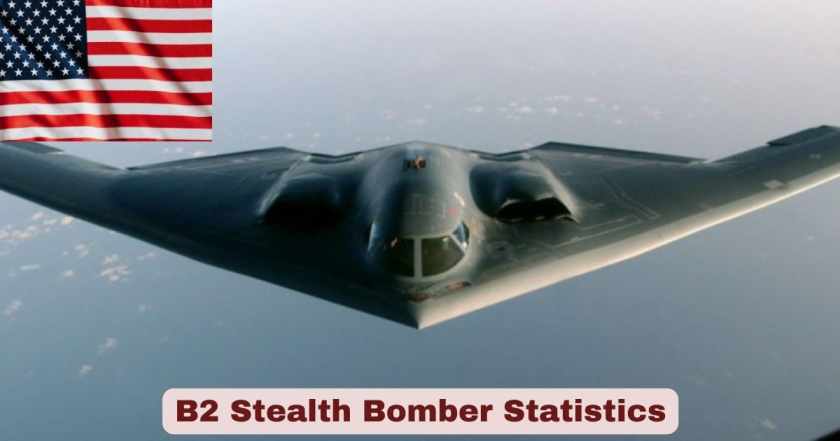
B2 Stealth Bomber in America 2026
The B-2 Spirit stealth bomber is arguably the most consequential military aircraft ever built in the United States. As of 2026, the U.S. Air Force continues to operate 19 active B-2 Spirit bombers, all stationed at the 509th Bomb Wing, Whiteman Air Force Base, Missouri — the only base in the world with the climate-controlled infrastructure required to maintain this aircraft’s extraordinarily sensitive radar-absorbent coating. Built by Northrop Grumman, the B-2 Spirit entered operational service on January 1, 1997, and has since proven itself not merely as a deterrent but as a live combat system that has seen action from Kosovo in 1999 to Iran in both June 2025 and February 2026. The numbers behind this aircraft are staggering in every direction — $2.13 billion average unit cost, a radar cross-section equivalent to a small bird despite a 172-foot wingspan, and the ability to deliver 40,000+ pounds of munitions anywhere on Earth without refueling for up to 6,000 nautical miles. In 2026, the B-2 remains the only aircraft in the world capable of delivering the GBU-57 Massive Ordnance Penetrator in combat — a 30,000-pound bunker-buster bomb first used operationally during Operation Midnight Hammer on June 22, 2025 — and just months later, on February 28, 2026, 4 B-2s flew non-stop from Missouri to obliterate Iran’s hardened ballistic missile facilities as part of Operation Epic Fury, confirmed by U.S. Central Command on March 1, 2026.
What makes the B-2 stealth bomber’s story so riveting in 2026 is the tension between its extraordinary combat record and the reality of an aging, shrinking fleet. The program originally planned for 132 bombers but ended at just 21 units — with one lost in the 2008 Guam crash and another retired in May 2024 after being declared uneconomical to repair following a December 2022 fire landing at Whiteman AFB. That leaves 19 aircraft carrying the full weight of America’s penetrating strike mission until the B-21 Raider arrives in sufficient numbers around 2032. A Northrop Grumman modernization contract worth up to $7 billion through 2029 is underway to keep the fleet lethal, and the aircraft’s back-to-back operational performance against Iran — destroying nuclear facilities at Fordow and Natanz in June 2025, then hammering underground ballistic missile caves in February 2026 — confirms beyond any doubt that the B-2 Spirit remains, for now, utterly irreplaceable.
Interesting Facts About B2 Stealth Bomber 2026
| Fact | Data |
|---|---|
| First Flight | July 17, 1989 |
| Entered Operational Service | January 1, 1997 |
| Aircraft Age in 2026 | 36 years since first flight |
| Total B-2s Produced | 21 (including 1 converted prototype) |
| Active Fleet Size in 2026 | 19 B-2 Spirit bombers |
| Original Planned Fleet | 132 bombers (later reduced to 75, then to 21) |
| Only Base of Operations | Whiteman AFB, Missouri — the only base with required infrastructure |
| Radar Cross-Section (RCS) | ~0.1 m² — equivalent to a small bird on radar |
| Wingspan | 172 feet (52.4 meters) |
| Crew | 2 (pilot and mission commander) |
| Longest Combat Mission | 44 hours non-stop (Afghanistan, 2001) |
| Kosovo War Efficiency | Less than 1% of missions; 33% of targets destroyed in first 8 weeks |
| Operation Midnight Hammer (June 22, 2025) | Largest B-2 strike in U.S. history — 7 B-2s, 14 GBU-57 MOPs dropped |
| Mission Duration — Iran Strike 2025 | ~36–37 hours round trip from Missouri |
| First Combat Use of GBU-57 MOP | June 22, 2025 — Operation Midnight Hammer, Iran |
| Maintenance Hours Per Flight Hour | 50–124 man-hours per flight hour |
| Planned Retirement Year | ~2032, when B-21 Raider replaces it |
| Average Unit Cost (with R&D) | $2.13 billion per aircraft (~$4.27 billion in 2025 dollars) |
| Northrop Grumman Modernization Contract | Up to $7 billion through 2029 |
| Onboard Processor Speed Upgrade | 1,000-fold faster than original computer |
| Monthly Maintenance Cost Per Aircraft | ~$3.4 million per aircraft per month |
| Qualified B-2 Pilots (approx.) | Only several dozen in the entire U.S. Air Force |
Sources: U.S. Air Force Fact Sheet (af.mil), Northrop B-2 Spirit — Wikipedia (updated March 2026), Congressional Research Service Report IN12571 (crsreports.congress.gov, June 2025), Air & Space Forces Magazine (airandspaceforces.com), Fox News Digital — Inside Operation Midnight Hammer (September 2025)
The sheer breadth of facts in the table above tells the B-2 Spirit’s story more clearly than any single headline. The gap between the 21 aircraft built and the 132 originally planned is not just a procurement footnote — it is the core reason why every B-2 is so astronomically expensive to own and operate. The costs of research and development, tooling, and specialized supply chains designed for over 130 aircraft got compressed into just 21 platforms, meaning each bomber absorbed a disproportionate share of fixed program costs. The result: an average unit cost of $2.13 billion, or roughly $4.27 billion in 2025 inflation-adjusted dollars — making the B-2 Spirit the most expensive aircraft ever procured by any nation in history. Meanwhile, the aircraft’s 0.1 m² radar cross-section — the size of a small bird — stands as perhaps the single most astonishing engineering achievement embedded in these numbers, given that the aircraft producing it has a wingspan of 172 feet and weighs over 336,000 pounds at takeoff.
The combat record embedded in this table is equally extraordinary. The fact that 7 B-2s flew over 36 hours round-trip from Missouri to Iran, dropped 14 Massive Ordnance Penetrators on hardened underground nuclear sites, and returned without a single shot being fired at them is the most vivid validation of the B-2’s design philosophy in its entire operational history. Chairman of the Joint Chiefs of Staff Gen. Dan Caine confirmed in his June 22, 2025 Pentagon briefing that Iran’s surface-to-air missile systems did not detect the bombers throughout the entire mission. That single data point — zero Iranian defensive fires against 7 penetrating stealth bombers — is the most powerful real-world argument for stealth bomber investment ever documented. And with only several dozen qualified B-2 pilots in the entire Air Force, the human capital bottleneck is just as striking as the hardware numbers.
B2 Stealth Bomber Technical Specifications 2026
| Specification | Data |
|---|---|
| Primary Function | Multi-role strategic heavy bomber (nuclear & conventional) |
| Prime Contractor | Northrop Grumman Corporation |
| Power Plant | 4× General Electric F118-GE-100 turbofan engines |
| Engine Thrust (Each) | 17,300 lbs thrust |
| Total Thrust | 69,200 lbf (no afterburners — stealth design choice) |
| Wingspan | 172 feet (52.4 meters) |
| Length | 69 feet (21 meters) |
| Height | 17 feet (5.1 meters) |
| Empty Weight | 160,000 lbs (72,575 kg) |
| Maximum Takeoff Weight | 336,500 lbs (152,634 kg) |
| Top Speed | High subsonic — approximately 628 mph (1,010 km/h) |
| Cruise Speed | Approximately 560 mph (900 km/h) |
| Combat Ceiling | 50,000 feet (15,240 meters) |
| Unrefueled Range | 6,000 nautical miles (6,900 miles / 11,100 km) |
| Range with One Aerial Refueling | 10,000+ nautical miles (11,500+ miles) |
| Fuel Capacity | 167,000 lbs of jet fuel |
| Fuel Consumption Rate | Approximately 4.2 gallons per mile |
| Maximum Payload | 40,000+ lbs (official); estimated up to 50,000 lbs |
| Radar Cross-Section (RCS) | ~0.1 m² |
| Radar System | AN/APQ-181 AESA (Active Electronically Scanned Array) |
| Bomb Bays | 2 internal bays — combined capacity of nearly 60,000 lbs |
| Stealth Design | Flying wing — tailless, blended fuselage-wing |
| Stealth Coating | Radar-absorbent material (RAM) — requires climate-controlled storage |
Sources: U.S. Air Force Fact Sheet (af.mil), Air & Space Forces Magazine B-2 Technical Entry (airandspaceforces.com), Northrop B-2 Spirit — Wikipedia (March 2026), Simple Flying — B-2 Technical Analysis and Fuel Consumption Data
The B-2 Spirit’s performance envelope explains why it occupies such an irreplaceable niche in American air power in 2026. A 172-foot wingspan and a maximum takeoff weight of 336,500 lbs make it one of the heaviest aircraft in the Air Force inventory, yet its flying-wing design generates enough aerodynamic efficiency to achieve an unrefueled range of 6,000 nautical miles — from Missouri to the Persian Gulf and back without touching down. The four General Electric F118-GE-100 turbofan engines, each delivering 17,300 lbs of thrust, are deliberately built without afterburners, reducing both infrared signature and fuel consumption simultaneously. Flying at a cruise speed of 560 mph at up to 50,000 feet, the bomber stays above the lethal engagement envelopes of most surface-to-air missile systems while remaining radar-invisible due to its extraordinary 0.1 m² radar cross-section. The AESA radar upgrade — replacing the aircraft’s original radar — now allows the B-2 to supply targeting coordinates directly to weapons in flight, defeating GPS jamming attempts that were not a design consideration when the aircraft was engineered in the 1980s.
The fuel capacity of 167,000 lbs translates into a consumption rate of roughly 4.2 gallons per mile, and a full Iran-strike-type mission burning over 50,000 gallons of JP-8 fuel underscores the logistical magnitude of each long-range sortie. The 2 internal weapons bays carry nearly 60,000 lbs in various configurations — from 80× 500-pound Mk 82 bombs to 16 nuclear B61-12s to the 2 GBU-57 Massive Ordnance Penetrators loaded per aircraft for Operation Midnight Hammer. Each of those MOPs weighed 30,000 pounds individually, meaning each B-2 delivered a combined 60,000 lbs of penetrating warhead over Iran’s underground Fordow and Natanz facilities in June 2025. The two-crew cockpit — with ACES II zero/zero ejection seats — means just 14 pilots flew the 7 aircraft that executed the Iran nuclear strike, an extraordinary concentration of strategic capability in a remarkably small number of human beings and airframes.
B2 Stealth Bomber Cost and Financial Statistics 2026
| Cost Metric | Data |
|---|---|
| Average Unit Cost (including R&D) | $2.13 billion per aircraft |
| Inflation-Adjusted Unit Cost (2025 dollars) | ~$4.27 billion per aircraft |
| Average Build/Production Cost Alone | $737 million per aircraft |
| Total Procurement Cost Per Aircraft | $929 million (~$1.14 billion in 2024 dollars) |
| Operating Cost Per Flight Hour (DoD official) | ~$150,000 per flight hour |
| Operating Cost Per Flight Hour (full range) | $130,000–$200,000 per flight hour |
| Monthly Maintenance Cost Per Aircraft | ~$3.4 million per month |
| Maintenance Hours Per Flight Hour (1997 GAO) | 119 hours per flight hour |
| Maintenance Hours Per Flight Hour (current) | 50–124 man-hours per flight hour |
| Total Program Acquisition Cost | ~$44.75 billion (reported to Congress through FY1997) |
| B-2 vs. B-1B Annual Cost Per Aircraft | B-2 costs 3× more annually than B-1B ($9.6M/yr per B-1B) |
| B-2 vs. B-52H Annual Cost Per Aircraft | B-2 costs 4× more annually than B-52H ($6.8M/yr per B-52H) |
| 2008 Crash Loss Value | $1.4 billion (Spirit of Kansas, Andersen AFB Guam) |
| 2010 Fire Repair Cost | $105 million (Spirit of Washington, Guam) |
| Depot Maintenance Duration | ~470 days per full programmed depot maintenance (PDM) cycle |
| B-21 Raider Target Cost Per Flight Hour | ~$65,000 — less than half the B-2’s rate |
| Northrop Grumman Modernization Contract | Up to $7 billion (2024–2029) |
| B-21 Unit Cost Target | Under $1 billion per aircraft |
Sources: GAO Report NSIAD-97-181 (govinfo.gov), Northrop B-2 Spirit — Wikipedia (March 2026), The National Interest — B-2 Operating Cost Analysis (December 2025), Simple Flying — B-2 Operating Cost and Fuel Data (December 2025–February 2026), Economy Insights — B-2 Price Breakdown (February 2026)
The financial data surrounding the B-2 Spirit reads like a case study in what happens when Cold War urgency collides with post-Cold War budget reality. The $737 million average build cost per aircraft is extraordinary on its own, but the full $2.13 billion average unit cost — which spreads research, development, testing, procurement, spare parts, retrofitting, and software support across just 21 airframes — is what gives the B-2 its reputation as the most expensive aircraft ever procured by any military. In 2025 inflation-adjusted dollars, that figure reaches $4.27 billion per plane. The total program cost of approximately $44.75 billion was reported to Congress through fiscal year 1997, and decades of subsequent sustainment spending have pushed the program’s lifetime cost far beyond that figure. A 1996 GAO disclosure confirmed that B-2 bombers cost over three times as much as the B-1B and over four times as much as the B-52H to operate on a per-aircraft annual basis, a ratio that has never meaningfully improved given the small fleet size and specialized maintenance demands.
The operating cost picture is no less eye-watering heading into 2026. At $150,000 per flight hour as the Department of Defense’s own official estimate — with some analyses placing the real figure closer to $200,000 per hour — the B-2 costs roughly 6 times more per flight hour than a commercial Boeing 747 and more than 2 times more than a B-1B Lancer. The core driver is not fuel: it is the stealth coating. The radar-absorbent material (RAM) that gives the B-2 its 0.1 m² radar cross-section is extraordinarily fragile, absorbs moisture, degrades in heat, and requires hand-applied “touch labor” after nearly every flight to restore imperfections that could compromise survivability. Every hangar housing a B-2 must maintain precise temperature and humidity control, and the $3.4 million monthly maintenance cost per aircraft is a direct consequence. The forthcoming B-21 Raider, targeting a flight hour cost of ~$65,000, applies lessons learned directly from the B-2’s maintenance challenges — and the savings over a 100-aircraft fleet will be transformational for Air Force sustainment budgets.
B2 Stealth Bomber Combat History and Iran Strike Statistics 2026
| Operation / Event | Year | Key B-2 Statistics |
|---|---|---|
| Operation Allied Force (Kosovo) | 1999 | 6 B-2s; less than 1% of NATO sorties; 33% of targets destroyed in first 8 weeks; 11% of total bombs dropped |
| Operation Enduring Freedom (Afghanistan) | 2001 | Longest B-2 combat mission: 44 hours non-stop from Missouri |
| Operation Iraqi Freedom | 2003 | B-2s delivered precision strikes on command-and-control targets from CONUS |
| Operation Odyssey Dawn (Libya) | 2011 | 3 B-2s opened air campaign; struck 45 hardened aircraft shelters in a single night |
| Houthi Underground Bunkers, Yemen | October 16, 2024 | B-2s struck 5 underground weapons storage facilities — widely seen as a direct warning to Iran |
| Operation Midnight Hammer (Iran) | June 22, 2025 | 7 B-2s; 14 GBU-57 MOPs dropped; 125+ total aircraft involved; ~37-hour round trip; LARGEST B-2 strike in U.S. history |
| Total B-2s Departing Whiteman AFB | June 22, 2025 | 13 B-2s total — 6 decoys flew west toward Guam; 7 flew east for the actual strike |
| Fordow Fuel Enrichment Plant Strike | June 22, 2025 | 6 B-2s dropped 12 GBU-57 MOPs; Fordow is 80–90 meters underground inside a mountain |
| Natanz Nuclear Facility Strike | June 22, 2025 | 1 B-2 dropped 2 GBU-57 MOPs |
| Isfahan Nuclear Technology Center | June 22, 2025 | Struck by 24+ Tomahawk cruise missiles launched from an Ohio-class SSGN submarine |
| Total Precision Munitions Used — Iran | June 22, 2025 | ~75 precision-guided weapons total; 14 GBU-57 MOPs (first-ever combat use of MOP) |
| Mission Duration — Iran (round trip) | June 22, 2025 | ~36–37 hours round trip from Whiteman AFB, Missouri |
| Iranian Air Defense Response | June 22, 2025 | Zero shots fired at the B-2 strike package; Iran’s SAMs did not detect the aircraft |
| Time Over Target | June 22, 2025 | 25 minutes — all weapons released and aircraft exited Iranian airspace |
| Inbound Flight Duration to Iran | June 22, 2025 | 18 hours eastward with minimal communications; multiple aerial refuelings |
| Staged From / Staging Ground | June 22, 2025 | RAAF Base Tindal, Northern Territory, Australia used as a staging element |
| Operation Epic Fury — B-2 Mission (Iran) | February 28–March 1, 2026 | 4 B-2s (call signs PETRO 41–44) flew round-trip non-stop from Whiteman AFB; armed with 2,000-lb GBU-31 JDAM guided bombs; struck hardened ballistic missile sites across Iran |
| Total Targets Struck in First 24 hrs — Operation Epic Fury | February 28, 2026 | 1,000+ sites struck across Iran by U.S. and Israeli forces combined; B-2s specifically hit underground ballistic missile caves/facilities |
| Munitions Used — Epic Fury B-2 Mission | February 28, 2026 | Dozens of 2,000-lb guided bombs (GBU-31 JDAMs); no GBU-57 MOPs used — targets were missile sites, not nuclear bunkers requiring MOPs |
| Tanker Support — Epic Fury | February 28, 2026 | At least 13 aerial refueling tankers (KC-46s/KC-135s); KC-46s departed Lajes AFB, Azores; additional refueling over Iraq before Atlantic return leg |
| Round-Trip Route | February 28, 2026 | Whiteman AFB → North Atlantic → Mediterranean → Iran → return; landed at Dyess AFB, Texas on return |
| Targets Hit — Epic Fury B-2 Specific | February 28, 2026 | Hardened ballistic missile facilities and underground missile cave complexes; CENTCOM confirmed “hardened ballistic missile sites” in public statement March 1, 2026 |
| Key Assets in Operation Epic Fury (Overall) | February 28, 2026 | B-2s + F-22, F-16, F-35, A-10, EA-18G, Tomahawk cruise missiles (submarines/destroyers), MQ-9 Reaper drones, HIMARS, USS Abraham Lincoln and USS Gerald R. Ford carrier strike groups |
| Iranian Supreme Leader Killed | February 28, 2026 | Ayatollah Ali Khamenei killed in the U.S.-Israeli joint strikes of Operation Epic Fury |
| U.S. Casualties — Operation Epic Fury | February 28–March 1, 2026 | 3 U.S. service members killed; 5 seriously wounded (CENTCOM confirmed March 1, 2026) |
| UK Basing Restrictions — Epic Fury | February 28, 2026 | UK refused U.S. use of RAF Fairford and Diego Garcia for B-2 strikes — forced Missouri round-trip instead of shorter forward-base route |
| 2nd Time B-2s Struck Iran | February 28, 2026 | This is the second time in less than 9 months B-2s have struck Iran (first: Operation Midnight Hammer, June 22, 2025) |
Sources: U.S. Central Command (CENTCOM) official statement via X/Twitter, March 1, 2026 (centcom.mil); Air & Space Forces Magazine — “3 Americans Killed in Operation Epic Fury” (airandspaceforces.com, March 1, 2026); The Aviationist — “B-2 Spirit Stealth Bombers Take Part in Night Strikes on Iran” (theaviationist.com, March 1, 2026); The War Zone (twz.com) — “B-2 Spirits Strike Iran’s Underground Missile Caves” (March 1, 2026); Fox News — “Tomahawks, B-2 Stealth Bombers Pound 1,000 Iranian Targets in 24-Hour Blitz” (foxnews.com, March 1, 2026); The Hill — “US Military Used B-2 Bombers to Strike Iran Ballistic Missile Facilities” (thehill.com, March 1, 2026); ItaMilRadar — “B-2 Spirits Strike Iran in Long-Range Mission from Whiteman AFB” (itamilradar.com, March 1, 2026); KCTV5 — “What to Know About Whiteman Air Force Base After Iran Strike” (kctv5.com, March 2, 2026); Congressional Research Service — United States Strikes on Iranian Nuclear Sites, Wikipedia (updated March 2, 2026)
The B-2 Spirit’s combat history is a masterclass in precision, stealth, and strategic timing. From its debut over Kosovo in 1999 — where 6 bombers flying less than 1% of total NATO sorties destroyed 33% of selected targets in the first 8 weeks of operations — the aircraft established a pattern of disproportionate battlefield impact that would continue through Afghanistan, Iraq, Libya, and ultimately Iran in 2025. The October 2024 Yemen strikes on 5 underground weapons storage facilities were widely interpreted as a direct warning to Tehran about what was coming, demonstrating that the B-2 could penetrate defended airspace and destroy deeply buried targets at will. That proof-of-concept became history on June 22, 2025, when 7 B-2s executed the most consequential strike mission in the aircraft’s entire operational existence. 13 B-2s departed Whiteman AFB simultaneously — 6 as decoys flying toward Guam to create the impression of a Pacific deployment, and 7 flying silently east across the Atlantic, Mediterranean, and into the Middle East with “minimal communications.”
Operation Midnight Hammer produced statistics that will be studied in military academies for generations. The ~37-hour round trip made it the second-longest B-2 mission ever flown, exceeded only by post-9/11 Afghanistan sorties. The 7 strike aircraft conducted multiple aerial refuelings during an 18-hour inbound leg, each aircraft carrying 2 × GBU-57 MOPs — the 30,000-pound bunker-busters that had never before been dropped in combat. At 6:40 PM Eastern / 2:10 AM Iran time, the first MOP was released over Fordow, which sits 80–90 meters underground inside a mountain. All 14 MOPs hit their intended aim points. Iran’s surface-to-air missiles did not detect the aircraft — Gen. Caine confirmed zero shots were fired at the strike package throughout the entire mission. The B-2 penetrated the airspace of one of the most heavily air-defended nations in the Middle East and returned all 7 aircraft and 14 pilots safely to base. As Chairman Caine stated: “No other military in the world could have done this.”
Then, less than 9 months later, the B-2 Spirit struck Iran again. On the night of February 28–March 1, 2026, 4 B-2A Spirit bombers — identified by open-source trackers under call signs PETRO 41 through PETRO 44 — flew another non-stop round-trip mission from Whiteman AFB, Missouri to Iran as part of Operation Epic Fury, a massive joint U.S.-Israeli air campaign that struck over 1,000 sites across Iran in its first 24 hours. U.S. Central Command confirmed on March 1, 2026: “Last night, U.S. B-2 stealth bombers, armed with 2,000-lb. bombs, struck Iran’s hardened ballistic missile facilities. No nation should ever doubt America’s resolve.” The 4 bombers dropped dozens of 2,000-pound GBU-31 JDAM guided bombs on hardened underground ballistic missile caves and launch facilities, including satellite-confirmed destruction at Tabriz North Missile Base. Unlike the June 2025 mission, no GBU-57 MOPs were used — the targets were missile infrastructure, not the ultra-deep nuclear bunkers requiring penetrating munitions. The return leg saw the 4 B-2s land at Dyess AFB, Texas, supported by at least 13 aerial refueling tankers staged through Lajes AFB in the Azores. The broader Operation Epic Fury also resulted in the killing of Iranian Supreme Leader Ayatollah Ali Khamenei and 3 U.S. service members killed and 5 seriously wounded — the first American combat casualties of the campaign. This was the second time in less than 9 months that B-2 Spirits flew from Missouri to bomb Iran — a testament to how central this aging but irreplaceable fleet has become to U.S. strategic strike operations as of March 2, 2026.
B2 Stealth Bomber Fleet Status and Future Outlook in the US 2026
| Fleet / Program Metric | Data |
|---|---|
| Active Fleet (2026) | 19 operational B-2 Spirit bombers |
| Aircraft Lost (destroyed) | 1 — Spirit of Kansas; crashed Andersen AFB Guam, February 23, 2008; hull loss $1.4 billion |
| Aircraft Retired (damaged) | 1 — In-flight fire December 10, 2022; retired May 2024 |
| Operating Unit (Active Duty) | 509th Bomb Wing, Whiteman AFB, Missouri |
| Operating Unit (ANG) | 131st Bomb Wing, Missouri Air National Guard (associate unit) |
| Home Base | Whiteman AFB, Knob Noster, Missouri — sole B-2 operating base in the world |
| Testing Location | Edwards AFB, California |
| Depot Maintenance Manager | Oklahoma City Air Logistics Center, Tinker AFB, Oklahoma |
| Depot Maintenance Cycle Duration | ~470 days per programmed depot maintenance (PDM) overhaul |
| Current Modernization (2024–2026) | MUOS SATCOM, SATURN UHF/VHF, Link 16 inflight retasking, new cockpit displays, advanced IFF, JASSM-ER integration, LO signature improvements |
| Planned Retirement Date | ~2032 |
| B-21 Raider Planned Fleet Size | At least 100 aircraft (production acceleration announced February 2026) |
| B-21 First Operational Base | Ellsworth AFB, South Dakota |
| B-21 Second Operational Base | Whiteman AFB, Missouri (selected) |
| Whiteman Annual Airfield Operations (current) | 29,771 |
| Whiteman Annual Airfield Operations (post B-21) | Expected to increase to 31,751 |
| B-21 Production Capacity Increase | 25% production capacity increase announced by Secretary of the Air Force, February 2026 |
Sources: Whiteman Air Force Base — Wikipedia (March 2026), Northrop B-2 Spirit — Wikipedia (March 2026), Air & Space Forces Magazine (airandspaceforces.com), Simple Flying — B-2 Fleet and Largest Bomber Base Analysis (February 2026), Defense One — B-2 Retirement Coverage
The B-2 Spirit fleet in 2026 represents one of the most consequential strategic assets in the U.S. defense inventory — and one of the most logistically fragile. All 19 active bombers sit at a single installation, Whiteman AFB, Missouri, because only that base possesses the climate-controlled hangars, specialized ground equipment, nuclear-weapons-handling infrastructure, and uniquely trained maintenance personnel that the B-2 demands. The 509th Bomb Wing — the same unit that dropped atomic bombs on Japan in 1945 — now operates the world’s only operational stealth strategic bomber fleet, supported by the 131st Bomb Wing of the Missouri Air National Guard in an associate role. Every programmed depot maintenance cycle takes approximately 470 days, meaning at any given time, a meaningful portion of the 19-aircraft fleet is unavailable for operational tasking. This maintenance reality makes the B-2’s performance in Operation Midnight Hammer — deploying 7 aircraft simultaneously for the largest strike in the platform’s history — an even more impressive organizational and logistical achievement.
The transition to the B-21 Raider is the defining strategic story of the B-2’s final years, and it is accelerating as of 2026. In February 2026, the Secretary of the Air Force announced a 25% production capacity increase for the B-21, targeting a fleet of at least 100 aircraft — more than 5 times the entire B-2 program’s total production run. Whiteman AFB has been selected as the second B-21 operational base, ensuring continuity of the stealth heavy bomber mission in Missouri while Ellsworth AFB, South Dakota takes on the first operational B-21 wing. The B-21’s sub-$1 billion unit cost and target flight hour cost of ~$65,000 reflect deliberate design decisions made specifically to address the B-2’s maintenance vulnerabilities — particularly the fragile stealth coatings — while improving capability against modern integrated air defense systems. The B-2 will stand down around 2032, but its legacy — especially the real-world proof of stealth bomber effectiveness delivered by Operation Midnight Hammer in 2025 — will shape American air power doctrine for decades.
B2 Stealth Bomber Weapons Capabilities 2026
| Weapon / Configuration | Qty Per Aircraft | Notes |
|---|---|---|
| GBU-57/B Massive Ordnance Penetrator (MOP) | 2 | 30,000 lbs each; B-2 is the only aircraft able to deliver in combat; first combat use June 22, 2025 |
| GBU-31 JDAM (2,000-lb) | 16 | GPS-guided; pre-release coordinate upload defeats jamming |
| GBU-38 JDAM (500-lb) | 80 | High-volume precision strike |
| Mk 82 General-Purpose Bomb (500-lb) | 80 | Unguided, saturation strike configuration |
| Mk 84 General-Purpose Bomb (2,000-lb) | 16 | Large unguided bomb |
| GBU-28 Laser-Guided Penetrator | 8 | Bunker-buster (smaller than MOP) |
| B61-7 Nuclear Gravity Bomb | 16 (rotary launchers) | Strategic nuclear strike |
| B61-11 Nuclear Gravity Bomb (Earth Penetrator) | 8 | Underground nuclear target variant |
| B61-12 Nuclear Guided Gravity Bomb | 16 | Latest modernized guided nuclear bomb |
| B83 Nuclear Gravity Bomb | 16 | Highest-yield U.S. nuclear gravity bomb |
| AGM-154 JSOW (Joint Standoff Weapon) | 16 | Glide munition for standoff strike |
| AGM-158 JASSM | 16 | Long-range stealthy cruise missile |
| AGM-158B JASSM-ER | 16 | Extended-range variant — cleared for B-2 integration late 2024 |
| Mk 62 Sea Mines (500-lb) | 80 | Maritime interdiction configuration |
| CBU-87/89 Cluster Munitions | 34 | Anti-armor/anti-personnel submunitions |
| Maximum Payload (official) | 40,000+ lbs | Physical estimated limit ~50,000 lbs |
| Weapons Loader Certification | 21-day specialized training | Required to become certified on GBU-57 MOP loading |
Sources: U.S. Air Force Fact Sheet (af.mil), Air & Space Forces Magazine B-2 Weapons Data, Whiteman AFB Fact Sheet (whiteman.af.mil), The Aviationist — Operation Midnight Hammer Weapons Report (June 2025), Fox News Digital — Inside Operation Midnight Hammer (September 2025)
The B-2 Spirit’s weapons payload menu in 2026 reveals the full scope of what “multi-role strategic bomber” means in practice. No other aircraft in the world can carry this breadth of conventional and nuclear munitions while remaining undetectable to radar, and the current weapons suite spans everything from 80 × 500-pound Mk 82 general-purpose bombs for saturation strikes to 16 nuclear B61-12 guided bombs for strategic deterrence missions — all delivered from 2 internal weapons bays that together hold nearly 60,000 lbs. The integration of the AGM-158B JASSM-ER, cleared for the B-2 in late 2024, significantly extends the platform’s standoff strike reach, allowing weapons release from well outside even the most advanced air defense engagement zones and layering another dimension of survivability onto an already radar-invisible aircraft. Air & Space Forces Magazine confirmed the JASSM-ER integration following a successful test launch, calling it one of the most significant near-term capability additions to the fleet.
The weapon that defined the B-2’s identity in 2025 and 2026 is unquestionably the GBU-57/B Massive Ordnance Penetrator. At 30,000 pounds per bomb, the MOP is the largest non-nuclear weapon in the U.S. arsenal, and the B-2 is the only aircraft on the planet capable of delivering it operationally — a fact that makes this 19-aircraft fleet literally irreplaceable for any mission requiring the destruction of deeply buried, hardened underground targets. The Fordow Fuel Enrichment Plant, buried 80–90 meters underground inside a mountain, was the specific threat category that the GBU-57 was engineered to defeat. When 6 B-2s each dropped 2 MOPs on Fordow on June 22, 2025, they delivered the first operational proof that decades of weapons development had produced exactly the promised capability. The weapons loaders who prepare these 30,000-pound bombs undergo 21 days of specialized certification training — yet another reflection of how every layer of the B-2 ecosystem, from maintenance technicians to pilot training to ground crew, demands a level of specialization found nowhere else in military aviation.
Disclaimer: This research report is compiled from publicly available sources. While reasonable efforts have been made to ensure accuracy, no representation or warranty, express or implied, is given as to the completeness or reliability of the information. We accept no liability for any errors, omissions, losses, or damages of any kind arising from the use of this report.