
Artemis II in America 2026
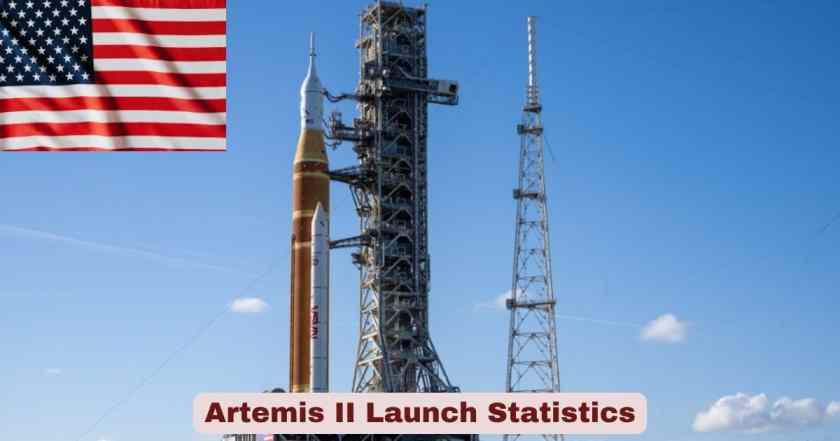
Artemis II is the most consequential human spaceflight mission the United States has attempted in more than 50 years — the first crewed mission of NASA’s Artemis program, the first crewed flight of the Space Launch System (SLS) rocket and Orion spacecraft, and the first time human beings have traveled beyond low Earth orbit since Apollo 17 in December 1972. On Wednesday, April 1, 2026 at 6:24 p.m. EDT — in less than 48 hours from the moment this article was last updated — four astronauts will strap into the Orion capsule atop the world’s most powerful operational rocket at Launch Complex 39B at NASA’s Kennedy Space Center in Florida, and ignite 8.8 million pounds of thrust that will carry them on a ten-day free-return trajectory around the Moon and back to Earth. The countdown clock at Kennedy Space Center began ticking at 4:44 p.m. EDT on March 30 — today — with NASA launch director Charlie Blackwell-Thompson telling reporters that preparations had gone “extremely smooth” with only minor ground equipment issues. Weather forecasters are predicting an 80% chance of acceptable weather for launch. The crew — Commander Reid Wiseman, Pilot Victor Glover, Mission Specialist Christina Koch, all from NASA, and Mission Specialist Jeremy Hansen from the Canadian Space Agency — is in crew quarantine at the Neil A. Armstrong Operations and Checkout Building at Kennedy Space Center, completing final medical checks, following their controlled sleep and nutrition schedule, and receiving regular updates on the rocket’s configuration. “Hey, let’s go to the moon!” exclaimed Commander Wiseman to reporters upon arriving at Kennedy Space Center on Friday, March 27 — a line that captured the mood of an entire nation that has been waiting more than half a century for this moment.
The road to April 1, 2026 was not a straight line. NASA originally targeted September 2024 to begin rocket stacking operations, but investigations into issues with Orion’s life support system and unexpected damage to the heat shield observed after the Artemis I uncrewed reentry in December 2022 forced delays. Stacking finally began at the Vehicle Assembly Building on November 20, 2024, and was completed on October 20, 2025 when the fully integrated Orion, European Service Module, and launch abort system were installed atop the SLS. Rollout to Launch Pad 39B occurred on January 18, 2026. A February 2026 launch was planned but a liquid hydrogen leak during the wet dress rehearsal on February 2 postponed the attempt; a second wet dress rehearsal on February 19 was successful. Then on February 21, a helium flow issue was observed, triggering a full rollback to the Vehicle Assembly Building — a decision that delayed the mission to April. The rollback began on February 25 and the rocket spent weeks inside the VAB for repairs and inspections. Now, with the repairs completed, the rocket back on the pad, the countdown underway, and weather looking favorable, NASA is two days away from sending humans to the Moon for the first time since the presidency of Richard Nixon. The magnitude of that statement — first humans to lunar vicinity in over 50 years — has not yet fully settled into the American public consciousness. It will on Wednesday evening.
Artemis II Key Facts in 2026
| Fact Category | Key Fact / Data Point |
|---|---|
| Mission Name | Artemis II — second mission of NASA’s Artemis lunar exploration program |
| Mission Type | Crewed lunar flyby — free-return trajectory around the Moon |
| Launch Date | Wednesday, April 1, 2026 — No Earlier Than (NET) |
| Launch Time | 6:24 p.m. EDT (22:24 UTC) |
| Launch Window | Two-hour launch window on April 1 |
| Backup Launch Dates | April 2–6, 2026 and April 30, 2026 |
| Countdown Started | 4:44 p.m. EDT, March 30, 2026 (TODAY) — at Kennedy Space Center |
| Weather Forecast | 80% favorable — U.S. Space Force Space Launch Delta 45 weather officers |
| Launch Vehicle | NASA Space Launch System (SLS) Block 1 — most powerful operational rocket in the world |
| SLS Height | 322 feet (98 meters) tall — fully stacked with Orion |
| Spacecraft | NASA Orion Multi-Purpose Crew Vehicle + ESA European Service Module |
| Launch Site | Launch Complex 39B (LC-39B) — Kennedy Space Center, Florida |
| Crew Size | 4 astronauts |
| Mission Duration | Approximately 10 days |
| Agency | NASA (lead) + Canadian Space Agency (CSA) + European Space Agency (ESA) |
| First Crewed SLS/Orion Flight | Yes — first human flight of SLS and Orion spacecraft |
| First Humans Beyond LEO Since | December 1972 — Apollo 17 — over 53 years |
| First Woman Beyond LEO | Christina Koch — historic milestone |
| First Person of Color Beyond LEO | Victor Glover — historic milestone |
| First Non-US Citizen Beyond LEO | Jeremy Hansen (Canada) — historic milestone |
| Splashdown Location | Pacific Ocean — off the coast of San Diego, California |
| Artemis I Mission (Predecessor) | Uncrewed lunar flyby — launched November 16, 2022; Orion splashed down December 11, 2022 |
| NASA Administrator | Jared Isaacman — confirmed mission proceed in January 2026 after heat shield review |
Source: NASA.gov “NASA’s Artemis II Launch Mission Countdown Begins” (March 30, 2026 — 7 hours ago, nasa.gov); Space.com Artemis 2 Live Blog (March 30, 2026 — 6 hours ago); CBS News “NASA to launch Artemis II crew on flight around the moon” (March 30, 2026 — 9 hours ago); The Planetary Society “The Artemis II mission: What to expect” (March 30, 2026 — 11 hours ago); NASA.gov “NASA Sets Coverage for Artemis II Moon Mission” (March 27, 2026, nasa.gov); Kennedy Space Center Visitor Complex Artemis II page (March 30, 2026 — 2 hours ago); Wikipedia Artemis II (updated 1 hour ago); Wikipedia Artemis program (updated 4 hours ago)
The countdown for NASA’s Artemis II launch began at 4:44 p.m. EDT today, March 30, 2026, with launch director Charlie Blackwell-Thompson stating that “it really doesn’t get much better than this” — calling the preparation phase as smooth as any he had overseen. The 80% favorable weather forecast is the kind of number that NASA launch teams are comfortable with — perfect weather is rarely achievable in Florida, and 80% represents a clear go-ahead signal from the meteorological perspective. The two-hour launch window on April 1 gives the team meaningful flexibility: if a technical issue arises in the final hours of countdown that can be resolved within two hours, the launch can still occur on April 1. If not, the backup window opens the following morning and extends through the first week of April, with a final monthly opportunity on April 30 before the next lunar geometry window in May.
The three simultaneous historical firsts that Artemis II will achieve — first woman, first person of color, and first non-U.S. citizen beyond low Earth orbit — represent a deliberate and meaningful expansion of the human spaceflight community beyond the demographic profile that the Apollo program embodied. When Neil Armstrong and Buzz Aldrin walked on the Moon in 1969, the entire astronaut corps was composed of white American military test pilots. The Artemis II crew is different not as a political statement but as an accurate reflection of the talent pool that NASA’s selection processes now draw from — military aviators and scientists of diverse backgrounds who are the best candidates for the mission based on their qualifications, experience, and judgment under pressure. Victor Glover’s Navy test pilot career, Christina Koch’s record-breaking 328-day single-mission stay on the International Space Station, and Jeremy Hansen’s decade of spacewalk training and systems expertise are the credentials that got each of them to the crew manifested position, and those credentials are what will keep them alive as they fly farther from Earth than any human has been in over half a century.
Artemis II Crew Statistics in 2026
| Crew Member | Role | Agency | Key Statistics / Background |
|---|---|---|---|
| Reid Wiseman | Commander | NASA | Born in Baltimore, Maryland; BA in Computer Science, Rensselaer Polytechnic; MS in Systems Engineering, Johns Hopkins; U.S. Navy test pilot; selected as NASA astronaut 2009; ISS Expedition 40/41 crew member (2014); Chief of the Astronaut Office 2020–2023 |
| Victor Glover | Pilot | NASA | Born in Pomona, California; BS in General Engineering, Cal Poly; 3 Master’s degrees (flight test engineering, systems engineering, military operational art and science); Navy test pilot — callsign “Ike” (“I Know Everything”); NASA astronaut since 2013; first African American to live long-term on the ISS (Expedition 64, 2020–2021); first person of color to travel beyond LEO (Artemis II) |
| Christina Koch | Mission Specialist | NASA | Born in Grand Rapids, Michigan; BS in Electrical Engineering and Physics, NC State; MS in Electrical Engineering, NC State; worked at South Pole Station in Antarctica; selected NASA astronaut 2013; record 328 consecutive days on ISS (2019–2020) — longest single spaceflight by a woman; first woman to travel beyond low Earth orbit (Artemis II) |
| Jeremy Hansen | Mission Specialist | CSA (Canada) | Born in London, Ontario, Canada; Bachelor of Science, Royal Military College of Canada; MS in Physics, Royal Military College; Canadian Forces fighter pilot and test pilot; CSA astronaut since 2009; first flight to space on Artemis II; first non-U.S. citizen to travel beyond low Earth orbit |
| Crew Announcement Date | April 3, 2023 | — | Announced by NASA Administrator Bill Nelson at Ellington Field, Houston; crew appeared same evening at NRG Stadium during 2023 March Madness championship game |
| Total Astronaut Experience | 3 veterans + 1 rookie | — | Wiseman (ISS), Glover (ISS), Koch (ISS record), Hansen (first flight) |
Source: NASA.gov Artemis II Crew Bios; CBS News March 30, 2026; The Planetary Society March 30, 2026; Wikipedia Artemis II (1 hour ago)
The crew’s combined résumé represents the pinnacle of human spaceflight preparation. Christina Koch’s 328-day single-mission stay on the International Space Station — the record for the longest single spaceflight by a woman — is more than preparation data; it is empirical evidence that her physiology and psychology can adapt to and recover from exactly the kind of extended spaceflight stress that future Artemis missions to the lunar surface will impose. The 328 days in microgravity produced bone density changes, fluid shifts, cardiovascular adaptations, and psychological challenges that Koch not only survived but documented scientifically, contributing data that NASA researchers are still analyzing as they design the longer-duration Artemis lunar surface missions. Her Artemis II flight of approximately 10 days will be, by comparison, a relatively short mission — but it will expose her and her crewmates to the radiation environment beyond the protection of Earth’s magnetosphere for the first time, a qualitatively different exposure than low Earth orbit provides.
Victor Glover’s “Ike” callsign — a Navy tradition where the acronym “I Know Everything” is bestowed as a form of self-deprecating humor on technically accomplished aviators — captures something genuine about the professional culture that produces astronauts of his caliber. A carrier pilot who became a test pilot, who earned three graduate degrees while flying, who was selected to NASA, who spent 167 days on the ISS becoming the first African American long-term resident, and who will now become the first person of color to travel beyond Earth orbit is not described adequately by any single data point. He is the product of an educational system, a military aviation culture, a NASA selection process, and a personal discipline that produced someone genuinely capable of the most demanding technical and psychological challenges in human spaceflight — and whose presence on this crew makes a historical statement that will be remembered alongside Neil Armstrong’s and Buzz Aldrin’s regardless of how the mission is remembered for its technical achievements.
Artemis II Mission Profile Statistics in 2026
| Mission Phase / Milestone | Timing / Data |
|---|---|
| Launch | April 1, 2026 at 6:24 p.m. EDT — from Launch Complex 39B, KSC, Florida |
| SLS Booster Separation | Approximately T+ 2 minutes 12 seconds after launch |
| Core Stage Separation and ICPS Ignition | Approximately T+ 8 minutes — Orion in orbit |
| Earth Orbit Phase | Two orbits of Earth — approximately 90 minutes per orbit — life support and systems checks |
| Translunar Injection (TLI) Burn | ~24 hours after launch — ICPS burn sends Orion toward Moon; media briefing at 8:30 p.m. April 1 |
| Post-TLI Systems Check (24-Hour Orbit) | One 24-hour high Earth orbit to check all Orion systems before pressing to Moon |
| Wiseman Quote on Day 1 | “It is a crazy first day” — 90 minutes LEO, then 24-hour orbit at 44,000 miles for life support check |
| Systems Checked in 24-Hour Orbit | CO₂ scrubbing; water production; toilet; environmental control; all life support systems |
| Transit to Moon | Several days after TLI burn |
| Closest Lunar Approach | Approximately ~8,000 kilometres (5,000 miles) from lunar surface |
| Distance Record (April 1 Launch) | Will surpass Apollo 13 record of 248,655 miles from Earth — at approximately 1:45 p.m. April 2 |
| Far-Side Crossing | Crew temporarily experiences loss of communications as Orion flies behind Moon’s far side |
| Eclipse During Lunar Flyby | For April 1 launch — Orion flies through eclipse; video may be limited |
| Maximum Distance from Earth | ~4,700 miles (7,600 km) beyond the Moon — approximately 270,000+ miles from Earth total |
| Reentry Speed | Approximately 25,000 mph (40,000 km/h) — faster than any previous crewed spacecraft reentry in decades |
| Splashdown Location | Pacific Ocean, off San Diego, California |
| Mission Duration | Approximately 10 days |
| Recovery Ship | USS San Diego (LPD-22) — designated recovery ship |
| AVATAR Investigation | Organ-on-a-chip science investigation — studies radiation and microgravity effects on human health |
| Orion Rendezvous Test (Day 1 or 2) | Victor Glover (assisted by Wiseman) test-flies Orion’s maneuvering system around the spent SLS upper stage — practices future lander docking techniques |
Source: NASA.gov Coverage Schedule (March 27, 2026); CBS News March 30, 2026; The Planetary Society March 30, 2026; NASA.gov Mission Page (nasa.gov/mission/artemis-ii); Space.com Live Blog March 30, 2026; Wikipedia Artemis II (1 hour ago)
The 24-hour orbital phase at approximately 44,000 miles from Earth — between the initial climb to orbit and the translunar injection burn — is the mission design element that most clearly distinguishes Artemis II from the Apollo lunar mission architecture. Where Apollo missions typically proceeded directly from Earth parking orbit to translunar injection within hours, Artemis II inserts a full 24-hour period in a high Earth orbit specifically to test Orion’s life support systems under operational conditions before committing the crew to the three-day transit toward the Moon. This is the “check everything before the point of no return” approach that Commander Wiseman described to CBS News: carbon dioxide scrubbing, water generation, waste management, and all life-critical systems get a full 24 hours of crewed verification before the ICPS fires the translunar injection burn. If any life support system shows anomalous behavior during that 24-hour verification, the crew can return to Earth quickly — a contingency that becomes vastly more complicated after TLI has been executed and the spacecraft is on a free-return trajectory around the Moon.
The free-return trajectory itself is the architectural safety feature that gives the mission its most fundamental survivability guarantee. A free-return trajectory is one in which the spacecraft’s initial translunar insertion places it on a path that will bring it back to Earth without any additional engine burns, using only lunar gravity to complete the turnaround. This means that even if the Orion’s main engine (the Orion Main Engine, or OME) fails to fire for the return burn, the spacecraft and crew will still return to Earth’s atmosphere — slower, taking longer, but returning. The Apollo 13 mission — which used exactly this technique when its service module was damaged — is the historical proof of concept that free-return trajectories work as designed emergency fallback options. The Artemis II distance record it will set — approximately 4,700 miles beyond the Moon, farther than any previous crewed spacecraft — is enabled by this trajectory design, which pushes the spacecraft further from the Moon than the tightly targeted Apollo landing trajectories did.
Artemis II Space Launch System Statistics in 2026
| SLS / Launch Vehicle Metric | Data / Specification |
|---|---|
| Rocket Designation | NASA Space Launch System (SLS) Block 1 |
| Total Height (Stacked with Orion + LAS) | 322 feet (98 meters) |
| Total Liftoff Weight | 5.75 million pounds (2.61 million kg) |
| Total Liftoff Thrust | ~8.8–9 million pounds of thrust (39 MN) |
| Core Stage Engines | Four RS-25 engines — derived from Space Shuttle Main Engines; each ~418,000 lbf thrust |
| RS-25 Manufacturer | Aerojet Rocketdyne (now L3Harris) |
| Solid Rocket Boosters (SRBs) | Two — 5-segment solid rocket boosters; each provides ~3.6 million lbf thrust |
| SRB Manufacturer | Northrop Grumman |
| SRB Burn Time | Approximately 2 minutes 12 seconds |
| SRB Separation Altitude | Approximately 47 km |
| Upper Stage — ICPS | Interim Cryogenic Propulsion Stage (ICPS) — based on Delta Cryogenic Second Stage |
| ICPS Engine | RL10B-2 (single engine) — provides translunar injection burn |
| ICPS Manufacturer | United Launch Alliance (ULA) |
| Payload to TLI (Trans-Lunar Injection) | ~27 metric tons (59,500 lbs) — Orion with crew |
| Most Powerful Operational Rocket | Yes — most powerful rocket currently in active service, surpassing Falcon Heavy |
| Second Flight of SLS | Yes — SLS flew first on Artemis I (November 16, 2022) |
| Launch Pad | Launch Complex 39B (LC-39B) — used for Apollo 10, several Shuttle missions, and now Artemis |
| Vehicle Assembly Building | SLS assembled in the iconic NASA Vehicle Assembly Building (VAB) at Kennedy Space Center |
| Rollout Date | January 18, 2026 — from VAB to LC-39B |
| Rollback Date (Due to Helium Issue) | February 25, 2026 — rollback to VAB; return to pad for April launch |
Source: NASA.gov SLS Fact Sheet; CBS News March 30, 2026; Wikipedia Space Launch System; Space.com March 30, 2026; Wikipedia Artemis II (updated 1 hour ago)
The 8.8 million pounds of thrust that will lift Artemis II off Launch Complex 39B on Wednesday afternoon is a number whose physical meaning is difficult to internalize from a data sheet. It is roughly equivalent to 31 Boeing 747s all at maximum thrust simultaneously — a force that will accelerate 5.75 million pounds of rocket, spacecraft, fuel, and four human beings from a complete standstill to 17,500 mph (28,163 km/h) — orbital velocity — in approximately 8 minutes. The acceleration during the peak of first-stage flight will subject the crew to approximately 3 Gs — three times the force of gravity, which is uncomfortable but well within the tolerance range of healthy astronauts who have trained for the experience. The 5-segment solid rocket boosters that provide the majority of liftoff thrust are each 177 feet long — longer than the entire first stage of the Saturn V that took Apollo astronauts to the Moon — and burn through their propellant in just 2 minutes and 12 seconds before separating and falling into the Atlantic Ocean.
The “interim” in Interim Cryogenic Propulsion Stage is worth noting because it is not accidental — the ICPS is explicitly a bridge technology. It was chosen for early SLS missions because it is derived from a proven upper stage (ULA’s Delta Cryogenic Second Stage) and could be qualified faster than a purpose-designed upper stage. For Artemis IV and beyond, a new Exploration Upper Stage (EUS) will replace the ICPS, providing significantly more payload capacity to lunar orbit. The transition from ICPS to EUS is what makes Artemis IV — currently planned for 2028 as the first crewed lunar landing attempt — require a different, more capable SLS configuration (the Block 1B) than the Block 1 being used for Artemis I and II. The Block 1 SLS with ICPS is powerful enough to send Orion and a four-person crew on a flyby trajectory; the Block 1B with EUS will be powerful enough to send Orion and a crew to lunar orbit with enough performance margin for the mission architecture that leads to a lunar landing.
Artemis II Historical Context and Program Statistics in 2026
| Historical / Program Metric | Data / Statistic |
|---|---|
| Last Crewed Mission Beyond LEO | Apollo 17 — December 7–19, 1972 — 53+ years ago |
| Last Human on the Moon | Gene Cernan — Apollo 17 Commander — December 14, 1972 |
| Artemis I Launch Date | November 16, 2022 |
| Artemis I Splashdown | December 11, 2022 — Pacific Ocean, west of Baja California — 50 years to the day after Apollo 17 landing |
| Artemis I Distance Traveled | 1.4 million miles (2.3 million km) — record-breaking uncrewed mission |
| Orion I Recovery Ship | USS Portland (LPD-27) — same ship now en route to Middle East with Boxer ARG |
| Artemis II Distance from Earth (Max) | ~270,000+ miles — surpassing Apollo 13 record of 248,655 miles |
| Artemis II Reentry Speed | ~25,000 mph — fastest reentry since Apollo era; exceeds prior crewed records |
| Artemis III — Current Plan (Feb 27, 2026) | Crewed LEO rendezvous and docking test with SpaceX Starship HLS and/or Blue Origin Blue Moon — mid-2027 |
| Artemis IV — First Lunar Landing (Planned) | 2028 — first crewed lunar landing since Apollo 17 |
| Artemis V — Moon Base Construction | ~Late 2028 — begin permanent Moon base operations |
| China Lunar Program Comparison | China plans to land “taikonauts” on the Moon by 2030 — Artemis IV intends to land by 2028 |
| Total Artemis Program Cost (7-Year Plan) | ~$20 billion over 7 years — per Administrator Isaacman’s February 2026 updated plan |
| Heat Shield Controversy | AVCOAT heat shield permeability issue from Artemis I — NASA confirmed proceed; design changes planned for Artemis III |
| Isaacman January 2026 Statement | Supported proceeding with current heat shield after reviewing analysis and meeting with engineers |
| “The goal is not flags and footprints. The goal is to stay.” | Administrator Isaacman — February 2026 news conference |
| Artemis II as Space Race Tool | CBS News: “a major milestone in a new NASA space race with China” |
Source: NASA.gov; CBS News March 30, 2026; Wikipedia Artemis II (updated 1 hour ago); Wikipedia Artemis program (updated 4 hours ago); NASA Administrator Isaacman news conference February 27, 2026
The 53 years that have elapsed since Apollo 17 is the interval that gives Wednesday’s launch its deepest historical resonance. When Gene Cernan climbed the lunar module ladder for the last time on December 14, 1972, and spoke his famous last words — “We leave as we came and, God willing, as we shall return, with peace and hope for all mankind” — he was expressing a commitment that took more than half a century to honor. The intervening decades were marked by ambitious programs that were cancelled (Constellation), revised (Shuttle-derived launch vehicles), redesigned (SLS origins in the 2010 NASA Authorization Act), and delayed repeatedly. Every person alive who watched the Apollo program and then watched it end without a return has spent their life with a kind of unfinished-business feeling about the Moon — a conviction that humanity went to a place of extraordinary wonder and power and then simply stopped going. Artemis II will not land on the Moon. It will fly around it, verify the systems needed to eventually land, and return the crew safely to Earth. But the four people inside that Orion capsule will be closer to the Moon than any human since Apollo 17 — and the world will watch them go there, and for the first time in a very long time, the answer to “are we going back?” will not be “someday” but “yes, we already are.”
The NASA Administrator Isaacman’s statement that “America will never again give up the moon” is the political and institutional commitment that distinguishes the post-2025 Artemis program from its predecessors. Every previous American return-to-Moon program eventually became a casualty of political transition, budget pressure, or changing administrative priorities. The Constellation program — which had the same ultimate objective as Artemis — was cancelled in 2010 after years of funding battles. Artemis has survived the transition from the Biden administration to the Trump administration and has been embraced by NASA Administrator Isaacman with explicit endorsement of its strategic and competitive rationale: China plans to land on the Moon by 2030, and an America that leads space exploration is an America that leads the geopolitical competition for the technological high ground of the 21st century. That framing — the Moon as geopolitical competition, not just scientific exploration — is what is keeping Artemis funded and accelerating into a Wednesday afternoon launch with four astronauts on board, a countdown clock running, and 80% favorable weather.
Disclaimer: This research report is compiled from publicly available sources. While reasonable efforts have been made to ensure accuracy, no representation or warranty, express or implied, is given as to the completeness or reliability of the information. We accept no liability for any errors, omissions, losses, or damages of any kind arising from the use of this report.