
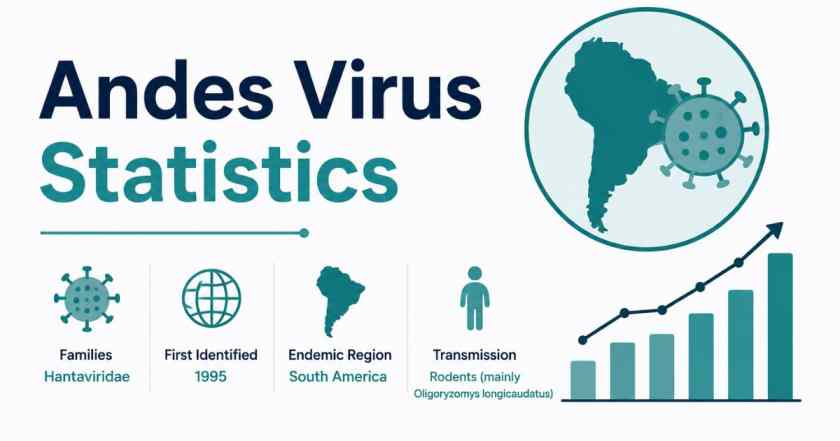
Andes Virus in 2026: The One Hantavirus That Breaks All the Rules
Most infectious diseases follow a predictable chain of transmission. You touch a contaminated surface, you breathe in an aerosol, a vector bites you — and the disease passes from one carrier to the next along a pathway that scientists understand and public health officials can interrupt. The Andes virus does not play by those rules. Of the nearly 40 known strains of hantavirus circulating across every continent except Australia, only one — the Andes strain, found in South America — has been confirmed capable of spreading directly from person to person. Every other hantavirus on Earth is a dead-end infection in humans: a person gets sick from rodent contact, but no matter how sick they become, they cannot pass the virus to the nurse caring for them, the family member sharing their home, or the fellow passenger sitting nearby. The Andes virus can. That single biological exception to the hantavirus rule is what makes the events of April and May 2026 — centered on the Dutch-flagged expedition cruise ship MV Hondius, which departed Ushuaia, Argentina on April 1, 2026 — a moment that has put Andes virus statistics in front of a global audience for the first time in nearly a decade.
What the 2026 data and outbreak statistics reveal is a confluence of escalating factors. Argentina, ranked by the WHO as having the highest incidence of hantavirus in Latin America, reported 101 hantavirus infections between June 2025 and May 2026 — roughly double the caseload of the same period the previous year — with a mortality rate that nearly tripled to about one-third of cases, up from a five-year average of roughly 15 per 100 reported. The MV Hondius outbreak, which the WHO confirmed is caused by the Andes strain specifically, had by May 8, 2026 produced 8 confirmed and suspected cases across at least 8 countries, with 3 deaths and passengers from 23 nationalities now dispersed around the globe under medical surveillance. Climate researchers tracking the outbreak have noted that warming temperatures and extreme weather patterns are expanding the geographic range of the rodent species that carry Andes virus into previously unaffected Argentine regions — rewriting the endemic map that has guided surveillance for thirty years.
Interesting Facts 2026: Andes Virus & the MV Hondius Outbreak at a Glance
ANDES VIRUS — SNAPSHOT
======================================

  Hantavirus strains known globally     ████████████████████████████████████  ~40 strains
  Strains capable of person-to-person   █                                      1 ONLY: Andes virus ★

  CASE FATALITY RATE COMPARISON:
  Andes Virus (HCPS, Americas)          ████████████████████████████████████  25–50% fatality
  Sin Nombre (North America HCPS)       ████████████████████████████████████  ~35% fatality
  Old World hantavirus (HFRS, Asia/EU)  ████                                  <1–15%

  ARGENTINA HANTAVIRUS (June 2025–May 2026):
  Reported cases                        ████████████████████████████████████  101 cases
  Prior year same period                ████████████████████                  ~50 cases (doubled)
  Deaths (full year 2025)               ████████████████████████████████████  28 deaths

  MV HONDIUS OUTBREAK (as of May 8, 2026):
  Confirmed + Suspected cases           ████████████████████████████████████  8 total
  Deaths                                ████████████████████                  3
  Nationalities on ship                 ████████████████████████████████████  23
  Countries now monitoring cases        ████████████████████████████████████  8+
| Fact | Data (May 2026) |
|---|---|
| Virus Name | Andes virus (ANDV) — also written Andes hantavirus |
| Virus Family | Hantaviridae, genus Orthohantavirus |
| First Identified | 1995 — Argentina and Chile |
| Human-to-Human Transmission | Only hantavirus in the world confirmed to spread person-to-person |
| Person-to-Person Share of Cases | 2%–5% of all Andes virus cases (Dr. Pablo Vial, Santiago, Chile) |
| Primary Rodent Host | Long-tailed pygmy rice rat (Oligoryzomys longicaudatus) |
| Secondary Rodent Host | Long-haired grass mouse (Abrothrix longipilis) and other South American species |
| Case Fatality Rate (Andes virus) | ~40% (Wikipedia / UNMC), ranging 25%–50% across clinical data |
| UK Health Security Agency CFR Range | Approximately 35%–50% for Andes virus HCPS |
| Severe form (HCPS) frequency | 60% of infected patients develop severe cardiopulmonary syndrome |
| Mild form frequency | ~40% develop a milder form of infection |
| Disease Caused | Hantavirus Pulmonary Syndrome (HPS) / Hantavirus Cardiopulmonary Syndrome (HCPS) |
| Incubation Period | 1–8 weeks (typically 1–4 weeks; can extend to 8 weeks per health-service-navigator.co.uk) |
| Incubation Period (WHO alert) | Up to 6 weeks (WHO Director-General Tedros, May 2026) |
| Endemic Countries | Argentina (highest incidence in Latin America), Chile (southern regions), Brazil, Uruguay (related strains) |
| Argentina Annual Cases (typical) | 100–200 cases/year (Wikipedia/ANDV) |
| Argentina Cases (June 2025–May 2026) | 101 cases — roughly double the previous year’s same-period count |
| Argentina Deaths (full year 2025) | 28 deaths nationally |
| Argentina 2025–2026 Mortality Rate | ~one-third of cases — up from 5-year average of ~15 per 100 (nearly tripled) |
| WHO 2025: Americas hantavirus cases | 229 cases and 59 deaths across 8 countries in the Americas |
| US Hantavirus (1993–2023 cumulative) | 890 total cases; 35% fatal (CDC monitoring since 1993) |
| Global hantavirus infections per year | 10,000–100,000 (WHO estimate, all strains combined) |
| MV Hondius — Cases (May 8, 2026) | 8 cases (3 confirmed, 5 suspected) linked to the outbreak |
| MV Hondius — Deaths | 3 deaths (1 confirmed hantavirus; 2 under investigation) |
| MV Hondius — Ship Nationalities | 23 nationalities aboard; 17 Americans, bulk crew from Philippines |
| MV Hondius — Departed | Ushuaia, Argentina, April 1, 2026 |
| Epuyén Outbreak 2018–2019 | 34 confirmed cases, 11 deaths — largest person-to-person Andes virus outbreak on record |
| First Documented Person-to-Person | 1996, southern Argentina (reported 1997 in Emerging Infectious Diseases) |
| No specific antiviral treatment | Treatment is supportive care only — no approved antiviral or vaccine |
| Treatment approach | IV fluids, fever management, respiratory support, intensive care for HCPS |
Sources: CDC (cdc.gov/hantavirus, May 7, 2026), WHO (who.int/emergencies/disease-outbreak-news/item/2026-DON599), Wikipedia (Andes virus, MV Hondius hantavirus outbreak), TIME (May 7, 2026), CNN (May 6–7, 2026), NBC News (May 7, 2026), Newsweek (May 8, 2026), UNMC (May 6, 2026), Globe and Mail (May 7, 2026), PMC/NCBI (peer-reviewed) — May 8, 2026
The single most important statistical fact about the Andes virus — the one that separates it from every other hantavirus in the world — is that person-to-person transmission has been documented since 1996. Every other hantavirus circulates in a closed loop between rodents and humans, with human infections representing evolutionary dead ends: the virus cannot find its way from one infected person to the next. Andes virus has broken that biological boundary, and the MV Hondius outbreak of April–May 2026 is the clearest demonstration of that capability playing out at international scale. The WHO’s confirmation that person-to-person transmission may have occurred aboard the vessel — a closed, recirculating environment carrying 147 passengers and crew from 23 nations — explains exactly why the outbreak triggered a multi-country coordinated response within days of the first report reaching Geneva. The 2%–5% person-to-person share quoted by Dr. Pablo Vial in Santiago is reassuringly small in aggregate terms, but in a confined setting with no specific treatment and a case fatality rate of up to 40%, even rare transmission events carry grave consequences.
The Argentina 2025–2026 surge statistics are the equally important domestic context for understanding why this outbreak unfolded as it did. The country that the WHO consistently ranks as having the highest hantavirus incidence in Latin America saw its case count double in a single year, while its mortality rate per reported case nearly tripled. University of Nebraska Medical Center and Argentine public health researchers have pointed directly to climate change as the accelerant: warming temperatures are driving infected rodents into previously unaffected elevation zones and geographic regions, rewriting a 30-year epidemiological map and generating new exposure opportunities in areas where local populations have no prior awareness of the disease risk. The 28 deaths reported nationally in 2025 represent a meaningful departure from baseline, and the ongoing rodent surveillance and contact tracing launched in Ushuaia and Neuquén province in response to the MV Hondius outbreak is the most intensive Argentina has undertaken since the 2018–2019 Epuyén event that killed 11 people.
MV Hondius Outbreak Statistics 2026 | Timeline, Cases & Countries
MV HONDIUS OUTBREAK — Full Timeline (April 1–May 8, 2026)
==========================================================

  Apr 1   Ship departs Ushuaia, Argentina — 147 passengers, 23 nationalities
  Apr 11  First death on board — Dutch male, 70, fell ill with fever, abdominal pain
  Apr 13-15 Ship visits Tristan da Cunha (remote South Atlantic)
  Apr 24  Body and deceased's wife removed/disembarked at Saint Helena
  Apr 26  Wife dies at hospital in Johannesburg, South Africa (confirmed Andes strain)
  Apr 27  British passenger (fever, shortness of breath, pneumonia signs) evacuated
          from Ascension Island → South Africa — confirmed hantavirus; intensive care
  Apr 28  ~30 passengers disembark at Saint Helena — before full outbreak news
  May 2   Third person (German national, pneumonia) dies on board
          → WHO notified by UK IHR Focal Point
  May 2   South Africa lab confirms hantavirus in critically ill British patient
  May 3   Ship anchors off Praia, Cape Verde — denied permission to dock
  May 4   WHO reports: 7 cases (2 confirmed, 5 suspected), 3 deaths, 1 critical
  May 5   Ship departs Cape Verde for Tenerife, Canary Islands
  May 6   Andes strain officially confirmed by South Africa's NICD
          Swiss case confirmed: passenger treated at University Hospital Zurich
          Total: 8 cases — Canary Islands president refuses ship entry
  May 7   WHO: 5 confirmed, 3 suspected; Countries monitoring: 8+ worldwide
  May 8   Ship en route to Spain; investigations ongoing across 8+ countries
| Metric | Data (May 8, 2026) |
|---|---|
| Ship Name | MV Hondius — Dutch-flagged, operated by Oceanwide Expeditions |
| Ship Capacity | 196 passengers + 72 crew total capacity |
| Persons On Board at Departure | 147 passengers and crew of 23 nationalities |
| Departure Port / Date | Ushuaia, Argentina — April 1, 2026 |
| Route | Ushuaia → Antarctica → South Georgia → Nightingale Island → Tristan da Cunha → Saint Helena → Ascension Island → Cape Verde → (planned) Tenerife |
| Total Confirmed + Suspected Cases | 8 (5 confirmed, 3 suspected as of May 7–8) |
| Total Deaths | 3 (1 confirmed hantavirus; 2 under investigation) |
| Death 1 | Dutch male, ~70 years old — died on board April 11; suspected index case |
| Death 2 | Dutch female, 69 years old, wife of Death 1 — died at hospital in Johannesburg, South Africa, April 26; confirmed Andes strain positive |
| Death 3 | German national — presented with pneumonia; died on board May 2 |
| Confirmed UK Case (Critical) | British passenger — evacuated from Ascension Island April 27; intensive care in South Africa; condition improving (May 7) |
| Swiss Case | Male passenger treated at University Hospital Zurich, confirmed Andes strain (reported May 6) |
| Index Case Origin Theory | Dutch couple’s 4-month birdwatching road trip (Nov 27, 2025–April 1, 2026) through Chile, Uruguay, and Argentina; visited sites in Neuquén province and Misiones (both WHO-identified endemic areas); leading theory is exposure at a Ushuaia landfill during birdwatching |
| Ship Departure Countries Denied | Cape Verde (refused docking); Canary Islands/Spain (president Fernando Clavijo refused entry, May 6) — later overruled by Spain’s national government |
| US Passengers Aboard | 17 Americans — states monitoring: Arizona, Georgia, California |
| Passengers Still on Board (May 6) | ~150 people |
| Nationalities of Other Passengers | Australia, Belgium, Canada, France, Greece, Guatemala, India, Ireland, Japan, Montenegro, New Zealand, Poland, Portugal, Russia, Spain, Turkey, Ukraine (plus others) |
| Symptom Status of Remaining Passengers | Asymptomatic as of May 7–8; remaining in cabins under precautionary isolation |
| WHO Global Risk Assessment | LOW — “This is not COVID. This is not influenza. It spreads very, very differently.” — Dr. Maria Van Kerkhove, WHO |
| Argentina National Response | Rodent trapping/testing along index case travel route; contact tracing; biological material shared with Netherlands, South Africa, Spain, UK, Senegal |
Sources: WHO Disease Outbreak News DON599 (who.int, May 4, 2026), Wikipedia MV Hondius hantavirus outbreak (updated May 8, 2026), CNN (May 5–7, 2026), TIME (May 7, 2026), NBC News (May 7, 2026), CBS8 (May 7, 2026) — May 8, 2026
The timeline of the MV Hondius outbreak is a clinical case study in how quickly Andes virus moves through the cardiopulmonary phase once symptoms begin. The index case — a 70-year-old Dutch man — fell suddenly ill with fever, headache, abdominal pain, and diarrhea. These symptoms are indistinguishable from dozens of more common illnesses: gastroenteritis, influenza, food poisoning. He died on board the ship on April 11, just ten days into the voyage, before any medical investigation had identified hantavirus as the cause. His wife — traveling with him, in close daily contact, almost certainly exposed to the same rodent source during the same birdwatching trip in Argentina — disembarked at Saint Helena in late April and died in a hospital in Johannesburg on April 26, confirmed positive for the Andes strain. The German national who died May 2 and the British passenger evacuated to South Africa on April 27 represent the secondary case cluster — people who may have been exposed to the same original animal source, or who had sufficient close contact with the first cases to be exposed through the rare human-to-human pathway that makes Andes virus unique. The 6-day gap between the WHO’s first notification (May 2) and the Andes strain confirmation (May 6) illustrates a recurring challenge in hantavirus outbreak response: initial symptoms are non-specific, early testing can miss the virus, and by the time a definitive diagnosis is made, the incubation window of up to 6 weeks means that dozens of recently exposed people have already scattered across the globe.
The geopolitical dimension of the ship’s response is as remarkable as the virology. The MV Hondius was refused entry by Cape Verde — too small to handle a containment operation of that scale. When it sailed for the Canary Islands, the regional president Fernando Clavijo refused to allow it to dock, citing the islands’ COVID-19-era trauma. The WHO publicly stated that Spain had a “moral and legal obligation” to assist. Spain’s national government ultimately overruled the regional resistance. Meanwhile, the Swiss case, confirmed in Zurich on May 6, demonstrated exactly what public health officials had feared: a passenger had already left the ship, crossed an international border, and tested positive — making contact tracing an exercise that now spans multiple continents. The 17 American passengers being monitored by health authorities in Arizona, Georgia, and California are the US face of the same pattern.
Andes Virus Virology & Biology Statistics 2026 | Genome, Host & Transmission
ANDES VIRUS — BIOLOGY FAST FACTS
==================================

  Genome size:         ████████████████████████████████████████  ~12.1 kilobases (kb)
  Genome segments:     ████████████████████████████████████████  3 negative-sense ssRNA strands
    Small (S) segment: Encodes viral nucleoprotein
    Medium (M) segment: Encodes spike protein (cell entry)
    Large (L) segment: RNA-dependent RNA polymerase

  RODENT HOST RANGE (South America):
  Primary: Long-tailed pygmy rice rat (Oligoryzomys longicaudatus) — Argentina + Chile
  Secondary: Long-haired grass mouse (Abrothrix longipilis)
  Other identified: Multiple Oligoryzomys species across Argentina

  HANTAVIRUS FAMILY — Global strains by disease type:
  New World (HCPS):    Andes virus ★, Sin Nombre, Black Creek Canal, Bayou, New York
  Old World (HFRS):    Hantaan, Dobrava, Seoul, Puumala, Saaremaa

  ★ Andes virus = ONLY New World hantavirus with confirmed person-to-person transmission
| Virology Metric | Data |
|---|---|
| Genome Size | ~12.1 kilobases (kb) |
| Genome Type | 3 negative-sense single-stranded RNA (−ssRNA) segments |
| Small (S) Segment | Encodes the viral nucleoprotein |
| Medium (M) Segment | Encodes the viral spike protein — attaches to cell receptors for host cell entry |
| Large (L) Segment | Encodes the RNA-dependent RNA polymerase |
| First Identified | 1995, Argentina (described after outbreak of fatal HPS cases); Chile same year |
| Human-to-Person Transmission First Documented | 1996, southern Argentina (El Bolsón, Bariloche, Esquel cluster) |
| Primary Rodent Host | Oligoryzomys longicaudatus — long-tailed pygmy rice rat |
| Natural Reservoir Infection | Persistent and asymptomatic in rodents — rodents do not become sick |
| Co-evolution | Hantaviruses believed to have co-evolved with rodent hosts for ~20 million years |
| Rodent-to-Human Route | Inhalation of aerosolized urine, feces, or saliva; less commonly rodent bites; touching contaminated surfaces then eyes/mouth/nose |
| Human-to-Human Route (Andes only) | Respiratory and/or salivary pathways — primarily through close, prolonged contact (household members, intimate partners, caregivers) |
| Total Hantavirus Strains Globally | ~40 known strains |
| Strains Capable of Human-to-Human Transmission | 1 — Andes virus only |
| New World vs. Old World | New World hantaviruses (Americas) → HCPS (lung/heart); Old World (Europe/Asia) → HFRS (kidney/bleeding) |
| HCPS CFR (Americas, Andes virus) | Up to 50% (WHO); ~40% (standard); 35–50% (UK HSA); 30–40% per Dr. Pablo Vial |
| HFRS CFR (Asia/Europe, comparison) | <1%–15% depending on strain (Seoul <1%; Hantaan/Dobrava 5–15%) |
| Rodents in United States | Do NOT carry Andes virus — confirmed by CDC (cdc.gov, May 7, 2026) |
| Climate Change Impact (2026) | Warming temperatures expanding rodent range into previously unaffected Argentine regions |
| Key High-Risk Human Activities | Cleaning enclosed/poorly ventilated spaces, farming, forestry, sleeping in rodent-infested dwellings, birdwatching near rodent habitats, visiting landfills or agricultural areas in endemic zones |
Sources: Wikipedia (Andes virus), CDC (cdc.gov/hantavirus/about/andesvirus.html, May 7 2026), WHO (who.int/news-room/fact-sheets/detail/hantavirus), PMC/NCBI (immunocytochemical ANDV transmission study), PMC (orthohantavirus genome sequencing, Argentina), health-service-navigator.co.uk — May 8, 2026
The biological architecture of Andes virus — its three-segment negative-sense RNA genome encoding a nucleoprotein, a cell-entry spike protein, and an RNA polymerase — is structurally similar to all other hantaviruses in the family. What is not similar is the functional consequence of its spike protein, which interacts with host cell receptors in a way that enables not only rodent-to-human transmission but, under specific conditions of close and prolonged contact, human-to-human transmission via respiratory and salivary pathways. Research published in PMC demonstrated through immunocytochemical analysis that ANDV can be detected in lung and salivary gland tissue in ways that support this respiratory/salivary transmission route — the biological mechanism that explains what the epidemiological data has been showing since the 1996 El Bolsón cluster in Patagonia. The 1996 outbreak infected five physicians who were directly caring for HPS patients — three of them providing hands-on clinical care — and was the first documented evidence that Andes virus does not respect the dead-end-in-humans boundary that every other hantavirus on Earth observes.
The climate change dimension of Andes virus biology has emerged with particular urgency in 2026. The long-tailed pygmy rice rat (Oligoryzomys longicaudatus), Andes virus’s primary reservoir, is endemic to the temperate forests and agricultural zones of Argentina and Chile’s Andean and southern regions. Climate change is shifting the elevation range and geographic boundaries within which this species thrives, pushing infected rodents into higher altitudes and previously cooler zones where they were historically absent. This is the mechanism that Argentine researchers have linked to the observed doubling of case counts between 2025 and 2026 — not a sudden behavioral shift in human activity, but a slow geographic expansion of the virus’s rodent reservoir into new human-contact zones. The Ushuaia case theory — that the Dutch couple contracted Andes virus during a birdwatching trip to a local landfill — is consistent with this pattern: landfills concentrate rodents, reduce human-animal separation distance, and can generate aerosolized viral particles through disturbed excreta.
Andes Virus Symptoms, Progression & Clinical Statistics 2026
ANDES VIRUS — CLINICAL PROGRESSION TIMELINE
=============================================

  PHASE 1: PRODROMAL (Early) — Days 1–5 after symptom onset
  ──────────────────────────────────────────────────────────
  Symptoms: Fever █ Chills █ Muscle aches (back/thighs) █ Headache █ Fatigue
            Nausea █ Vomiting █ Dizziness █ Abdominal pain
  Clinical Challenge: INDISTINGUISHABLE from flu/gastroenteritis at this stage

  PHASE 2: CARDIOPULMONARY (Severe) — Days 5–10 from symptom onset
  ──────────────────────────────────────────────────────────────────
  Symptoms: Rapid-onset coughing █ Shortness of breath █ Lungs filling with fluid
            Low oxygen in blood █ Irregular/elevated heart rate █ Low blood pressure
            Cardiogenic shock █ Respiratory failure █ Pulmonary edema
  Outcome:  60% of patients reach this phase → CFR 30–50%

  PHASE 3: RECOVERY (Survivors only) — weeks to months
  ──────────────────────────────────────────────────────
  Gradual respiratory improvement for those who survive Phase 2
  Fatigue and weakness can persist for months

  DIAGNOSTIC METHODS:
  Serology  → IgM and IgG antibodies (Andes-specific)
  RT-PCR    → Viral RNA detection in blood or tissue
  Clinical  → Exposure history (endemic area travel, rodent contact, ANDV case contact)
| Clinical Metric | Data |
|---|---|
| Incubation Period | 1–8 weeks after exposure (typically 1–4 weeks; can reach 8 weeks) |
| WHO Stated Maximum Incubation (2026 alert) | Up to 6 weeks — basis for ongoing international monitoring |
| Disease Progression Phases | Three phases: Prodromal → Cardiopulmonary → Recovery |
| Prodromal Phase Duration | A few days — fever, muscle pain, headache, nausea, vomiting, chills, dizziness |
| Key Prodromal Symptom | Severe myalgia (muscle aches), especially in the back and thighs |
| Cardiopulmonary Phase Duration | Several days — can deteriorate to shock within hours of onset |
| Cardiopulmonary Mechanism | Virus causes capillary leakage in the lungs → fluid buildup (pulmonary edema) → respiratory failure |
| Secondary Organs Affected | Kidneys in some cases (contributing to multi-organ failure) |
| Patients Developing Severe HCPS | ~60% of all infected patients |
| Patients Developing Mild Form | ~40% of infected patients |
| Overall Case Fatality Rate | 30%–40% per clinical observation (Dr. Pablo Vial, Santiago); up to 50% per WHO/UK HSA |
| “Typical patient” demographic | Young, previously healthy men in their 30s (observed by Dr. Pablo Vial) |
| Diagnostic Test 1 | Serology — IgM and IgG antibodies specific to Andes virus |
| Diagnostic Test 2 | RT-PCR — detecting viral RNA in blood or tissue |
| Diagnostic Test 3 | Clinical history — travel to endemic regions, rodent contact, or contact with confirmed case |
| Treatment | No approved antiviral treatment; no approved vaccine — supportive care only |
| Supportive Care Includes | IV fluids, fever medications, mechanical ventilation, hemodynamic support, ICU care |
| Early Warning Gap | “Cases of the Andes strain may initially go undetected” — early symptoms mimic flu (NBC News, May 2026) |
| HPS vs. HFRS in Americas | Andes virus causes HPS/HCPS (respiratory-dominant); Old World hantaviruses cause HFRS (renal-dominant) |
| Healthcare Worker Risk | Secondary infections among HCWs documented in previous outbreaks — rare but recorded |
Sources: CDC (cdc.gov), WHO (who.int hantavirus fact sheet), NBC News / NBC New York (May 7, 2026), health-service-navigator.co.uk, Wikipedia (Andes virus), PMC (ANDV person-to-person transmission study) — May 8, 2026
The clinical journey of an Andes virus patient is defined by a deceptive early phase that routinely costs critical time. The prodromal symptoms — fever, severe muscle aches, headache, nausea, abdominal pain — are experienced millions of times each week in emergency departments around the world, attributed to influenza, norovirus, food poisoning, or a dozen other self-limiting conditions. Without a travel history to an endemic South American region or a known exposure to a confirmed case, the differential diagnosis for Andes virus almost never gets raised. This is precisely what happened with the MV Hondius’s index case: a 70-year-old Dutch birdwatcher fell ill on an Antarctic expedition cruise, and by the time any clinical alarm was raised, the cardiopulmonary phase had already overwhelmed his respiratory system. The virus causes capillary leakage in the lungs at a rate that turns fluid accumulation from manageable to catastrophic within hours — clinicians who have treated HCPS describe the transition from “sick but stable” to “in shock and on a ventilator” as among the fastest they encounter in all of infectious disease medicine.
The 30%–40% case fatality rate per Dr. Pablo Vial’s clinical experience — consistent with the approximately 40% figure cited in the peer-reviewed literature — means that Andes virus kills roughly one in three people it infects severely, in an era when most respiratory viral illnesses have sub-1% mortality. The absence of any approved antiviral treatment or vaccine after nearly 30 years since the virus was first identified reflects both the rarity of cases (making clinical trials difficult to power) and the biological complexity of hantavirus immunology. Every confirmed Andes virus patient in 2026 receives the same treatment their counterparts received in 1996: supportive care — oxygen, fluids, ventilatory support, vasopressors for shock, and intensive nursing. The British passenger in a South African ICU who was reported as improving by May 7, 2026 survived not because of targeted antiviral therapy but because he received early, aggressive intensive care before respiratory failure became irreversible.
Argentina & Chile Andes Virus Endemic Statistics 2026 | Historical Outbreaks
HISTORICAL ANDES VIRUS OUTBREAKS — Key Events
===============================================

  1995  Argentina ██  First description of ANDV — Patagonia region
  1995  Chile     ██  First HPS cases confirmed same year as Argentina
  1996  Argentina ████████████████████████  First person-to-person transmission documented
        El Bolsón, Bariloche, Esquel — 20 cases including 5 physicians
  1997  Chile     ████████████  HPS cluster with person-to-person transmission
        Case fatality 50% in this outbreak
  2018-19 Argentina ████████████████████████████████████████  LARGEST known P2P outbreak
        Epuyén, Patagonia — 34 confirmed cases, 11 deaths
  2025  Argentina ████████████████████  Mortality rate rises to ~1/3 of cases
        28 national deaths; hantavirus incidence highest in Latin America
  2026  Argentina ████████████████████████████████████████  Cases DOUBLE vs. previous year
        101 cases June 2025–May 2026 (climate change linked)
  2026  MV Hondius ████████████████████████████████████████  International cruise ship outbreak
        8 cases, 3 deaths, 23 nationalities, 8+ countries investigating

ARGENTINA ANNUAL CASES (typical, non-surge years):
  Low end: ██████████████████████  ~100 cases/year
  High end: ████████████████████████████  ~200 cases/year
| Outbreak / Period | Location | Cases | Deaths | Significance |
|---|---|---|---|---|
| 1995 — Discovery | Patagonia, Argentina + Chile | Multiple | Several | First identification of Andes virus; Chile confirms HPS same year |
| 1996–1997 — First P2P | El Bolsón, Bariloche, Esquel, Argentina | 20 | Several | First documented person-to-person transmission; 5 of 20 cases were physicians providing care |
| 1997 — Chile cluster | Southern Chile | Multiple | Several | Case fatality rate reported at 50% in this outbreak |
| Typical annual burden (Argentina) | Nationwide | 100–200/year | ~15–25% of cases | Mandatory notification disease; concentrated in Patagonia, central, northern regions |
| Typical annual burden (Chile) | Southern rural + semi-rural | Small numbers | — | Endemic; rural exposure dominant |
| 2018–2019 — Epuyén | Epuyén, Patagonia, Argentina | 34 confirmed | 11 | Largest documented person-to-person Andes outbreak on record; sparked New England Journal of Medicine report |
| 2025 (full year) | Argentina nationwide | Part of 101-case period | 28 deaths | Mortality rate rising; WHO: highest hantavirus incidence in Latin America |
| June 2025–May 2026 | Argentina | 101 cases | Subset of 28 | Roughly double same-period prior year; climate change linked |
| Americas (full year 2025, WHO data) | 8 countries | 229 cases | 59 deaths | Baseline regional burden prior to MV Hondius event |
| 2026 MV Hondius Outbreak | International (origin: Argentina) | 8 cases (confirmed + suspected) | 3 deaths | First international multi-country Andes outbreak; 23 nationalities; 8+ countries investigating |
| US Historical (1993–2023, CDC) | 30 states | 890 cases total (all hantavirus) | 35% fatality | All US cases are Sin Nombre virus, NOT Andes virus — Andes rodent hosts absent from US |
Sources: Wikipedia (Andes virus, MV Hondius outbreak), TIME (May 7, 2026), UNMC (May 6, 2026), Globe and Mail (May 7, 2026), PMC/NCBI (Epuyén outbreak, NEJM reference), CDC, WHO Americas hantavirus data — May 8, 2026
The Epuyén outbreak of 2018–2019 remains the definitive case study of what Andes virus can do when it finds ideal conditions for person-to-person transmission. A small village in the Patagonian Andes, a single environmental exposure event, and a virus capable of spreading through close contact: 34 confirmed cases and 11 deaths from a community of a few hundred people. The outbreak became the subject of a landmark paper in the New England Journal of Medicine precisely because it demonstrated, for the first time in a single localized event, the full chain of human-to-human transmission that epidemiologists had theorized was possible since 1996 but had never seen play out at this scale. The index case infected their household contacts, who infected healthcare workers, who infected other patients — a transmission chain that had never been documented with this clarity in any prior hantavirus event anywhere in the world. The Epuyén outbreak is the reason WHO officials are monitoring the MV Hondius situation with such care: a ship carrying 147 people from 23 countries is a modern, ocean-going equivalent of a small isolated village — a closed environment where prolonged close contact between a case and susceptible individuals is structurally guaranteed.
The historical data from the Americas region frames the MV Hondius event in its proper statistical context. 229 cases and 59 deaths across 8 countries in 2025 represents the pre-outbreak regional baseline — a steady, manageable disease burden that public health systems in Argentina and Chile have tracked and managed for three decades. What is new in 2026 is not the existence of Andes virus or even its person-to-person capability, but the combination of a doubling domestic case count driven by climate-linked rodent range expansion, and the virus’s first demonstrable emergence in an international travel context that has exposed people from more than twenty countries to potential infection in the span of a single month-long voyage. The Argentine Ministry of Health’s ongoing rodent trapping and testing program along the index couple’s four-month travel route is the most geographically expansive hantavirus environmental investigation the country has conducted — covering terrain from Neuquén province in the Andes to Misiones in the subtropical northeast.
Andes Virus vs. Other Hantaviruses 2026 | Global Comparison Statistics
HANTAVIRUS STRAINS — KEY COMPARISON (2026)
===========================================

  DISEASE TYPE:
  New World strains (Americas):  → HCPS (Hantavirus Cardiopulmonary Syndrome)
  Old World strains (Asia/Europe):→ HFRS (Hemorrhagic Fever with Renal Syndrome)

  CASE FATALITY RATE:
  Andes virus (South America)   ████████████████████████████████████████  25–50% (HCPS)
  Sin Nombre (North America)    █████████████████████████████████████     ~35% (HCPS)
  Hantaan (Asia)                ███████████████████                        5–15% (HFRS)
  Dobrava (Europe)              ███████████████████                        5–15% (HFRS)
  Seoul (global, rats)          ██                                         <1% (HFRS)
  Puumala (Europe)              ██                                         <1% (HFRS)
  Saaremaa (Europe)             ██                                         <1% (HFRS)

  GLOBAL ANNUAL BURDEN (WHO estimate):
  All hantavirus strains         ████████████████████████████████████████  10,000–100,000/year
  Largest burden: East Asia (China, South Korea) — thousands of HFRS cases/year
  Europe: Several thousand HFRS cases/year
  Americas (HCPS): Hundreds/year — but highest CFR
| Metric | Andes Virus | Sin Nombre Virus | Hantaan / Dobrava (Old World) | Puumala / Seoul |
|---|---|---|---|---|
| Geographic Range | South America (Argentina, Chile primary) | North America (SW US primary) | Asia (Hantaan), Europe (Dobrava) | Europe, global (Seoul) |
| Disease Caused | HCPS (lung + heart dominant) | HCPS (lung + heart) | HFRS (kidney + bleeding) | HFRS (mild to moderate) |
| Case Fatality Rate | 25%–50% | ~35% | 5%–15% | <1% |
| Person-to-Person Transmission | YES — unique globally | NO | NO | NO |
| Primary Rodent Host | Long-tailed pygmy rice rat | Deer mouse (Peromyscus maniculatus) | Striped field mouse (Hantaan); Yellow-necked mouse (Dobrava) | Bank vole (Puumala); Brown rat (Seoul) |
| Host in USA | NOT present in US (CDC confirmed) | Present across southwestern and western US | Not in US | Seoul: globally via shipping rats |
| Annual Cases (region) | 100–200/year (Argentina alone); 229 across 8 Americas countries (2025) | US: 890 total, 1993–2023 (avg ~30/year) | Thousands/year in Asia and Europe | Thousands/year in Europe |
| Endemic Zone | Argentine Patagonia, central + northern Argentina; southern Chile | Southwestern US, New Mexico (highest US state) | Fennoscandia, central/eastern Europe; China; Korea | Widespread |
| Vaccine Available | No | No | China: licensed HFRS vaccines for Hantaan | Limited |
| Treatment | Supportive care only | Ribavirin studied (limited evidence); mainly supportive | Ribavirin studied for HFRS; mainly supportive | Mainly supportive |
| WHO Global Risk (2026 MV Hondius context) | Low for pandemic; High for exposed contacts | N/A | N/A | N/A |
Sources: WHO (who.int/news-room/fact-sheets/detail/hantavirus), CDC (cdc.gov/hantavirus), Newsweek (May 8, 2026), Wikipedia (Andes virus), TIME (May 7, 2026), CEPI data cited in Newsweek — May 8, 2026
The comparative fatality rate data underscores exactly why the Andes virus specifically — and not any other hantavirus — warranted the multi-country international response triggered by the MV Hondius outbreak. Puumala virus, which causes thousands of cases annually across Scandinavia and central Europe under the name nephropathia epidemica, has a fatality rate below 1%. Most infected people experience what amounts to a bad flu with some kidney involvement and recover fully within weeks. Seoul virus, carried by brown rats worldwide, is similarly mild. Even Hantaan virus — the original hantavirus, causing severe hemorrhagic fever with renal syndrome across East Asia and responsible for thousands of cases per year in China and South Korea — has a CFR of 5%–15%: serious, but approximately three to ten times lower than Andes virus. Sin Nombre virus — the North American hantavirus that killed more than a dozen people in the 1993 Four Corners outbreak that first brought hantavirus global attention — carries a comparable fatality risk to Andes at ~35%. The crucial difference is that Sin Nombre cannot spread person-to-person. Andes virus combines Sin Nombre-level lethality with the uniquely dangerous property of being transmissible between humans.
The global annual burden of 10,000–100,000 hantavirus infections per year (WHO estimate) is almost entirely composed of Old World strains in Asia and Europe — the vast majority being relatively mild HFRS cases. The hundreds of HCPS cases per year in the Americas are a small fraction of this total but carry a disproportionate share of the mortality because of the high CFR. Argentina’s 101 cases in a single year-long period, against the backdrop of only 229 total Americas cases in all of 2025 according to WHO data, confirms that Argentina is not merely the country with the highest reported incidence — it is the dominant driver of hantavirus mortality in the entire Western Hemisphere, and the expanding rodent range linked to climate change makes the current trajectory a genuine long-term public health concern rather than a transient statistical anomaly.
Disclaimer: This research report is compiled from publicly available sources. While reasonable efforts have been made to ensure accuracy, no representation or warranty, express or implied, is given as to the completeness or reliability of the information. We accept no liability for any errors, omissions, losses, or damages of any kind arising from the use of this report.