
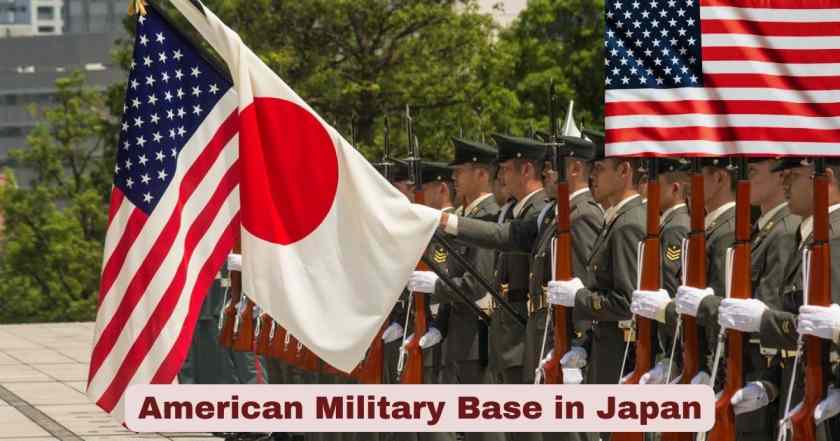
American Military Base in Japan 2026
The american military base in japan 2026 represents one of the most strategically vital overseas military deployments maintained by the United States anywhere in the world. These installations function as the cornerstone of American forward presence throughout the Indo-Pacific theater, enabling rapid response capabilities, regional deterrence operations, and bilateral defense cooperation with Japanese Self-Defense Forces. The network of facilities spans across multiple Japanese prefectures, with the heaviest concentration located on Okinawa Prefecture, which hosts 70% of all exclusive-use American military facilities despite comprising less than 1% of Japan’s total land area. This presence is authorized through the Treaty of Mutual Cooperation and Security between the United States and Japan, originally signed in 1960, which grants American forces the legal framework to maintain military installations on Japanese sovereign territory in exchange for security guarantees.
As of 2026, the US Forces Japan (USFJ) maintains operational control over approximately 14 to 120 facilities depending on classification methodology, with 52,793 active-duty servicemembers stationed across the archipelago according to March 2025 Defense Manpower Data Center statistics. The command headquarters operates from Yokota Air Base, situated approximately 28 miles northwest of Tokyo, coordinating joint operations, humanitarian assistance missions, combat readiness training, and integrated defense planning with Japanese military counterparts. These installations support all branches of American military services including Air Force, Navy, Marine Corps, Army, and Space Force elements, creating what defense analysts characterize as the most comprehensive forward-deployed military presence in the Asia-Pacific region.
Interesting Facts and Latest Statistics on American Military Base in Japan 2026
| Category | Data Facts | Year |
|---|---|---|
| Total US Military Personnel in Japan | 52,793 active-duty servicemembers | March 2025 |
| Number of US Military Facilities | 14 major bases (128 total facilities including smaller sites) | 2024-2025 |
| Total Base Acreage | Approximately 78,000 acres | 2025 |
| Percentage of USFJ Facilities in Okinawa | 70% of all exclusive-use facilities | 2025-2026 |
| Percentage of Okinawa Land Occupied | 8.1% to 25% of Okinawa Prefecture total area | 2025-2026 |
| Number of Major Installations | 15 major operational bases | 2025 |
| Japanese Host Nation Support Annual | Approximately ¥211 billion ($1.72 billion average) | FY 2025-2026 |
| Host Nation Support Agreement Total | ¥1.06 trillion ($8.6 billion) over five years | 2022-2027 |
| Japan Defense Budget FY2026 | ¥9.04 trillion ($57.9 billion) | 2026 |
| USFJ Realignment Budget | $3.67 billion allocated for base realignment | FY 2026 |
| Largest Base Concentration by Prefecture | Kanagawa Prefecture (22 facilities) | 2025-2026 |
| US Marines in Okinawa | Approximately 10,000 to 19,000 Marines | 2025-2026 |
| USFJ Command Transformation | Joint Force Headquarters upgrade initiated | March 2025 |
| Japanese National Employees | 23,178 workers funded by Japanese government | 2022-2027 |
| US Bases in Japan Global Ranking | Highest number of bases globally by country | 2024-2025 |
Data sources: US Forces Japan (USFJ.mil), Defense Manpower Data Center (March 2025), Japan Ministry of Foreign Affairs, Congressional Research Service, USAFacts (March 2025)
The american military base in japan 2026 statistical overview demonstrates an extraordinary commitment to forward defense posture. With 52,793 active-duty personnel as of March 2025, Japan hosts more American troops than any other nation worldwide, exceeding deployments in Germany at 34,547 personnel and South Korea at 22,844 personnel. The infrastructure supporting this presence encompasses 14 to 128 facilities across Japan, with classification differences accounting for whether smaller cooperative security locations and lily pad bases are included in official counts. The 70% concentration of exclusive-use facilities in Okinawa creates ongoing political tensions, as this small southern prefecture shoulders a disproportionate burden despite representing only 0.6% of Japan’s total land mass.
Financial arrangements supporting these operations reflect substantial Japanese investment in the bilateral alliance. The current five-year Special Measures Agreement worth ¥1.06 trillion ($8.6 billion) runs through March 2027, with Japan contributing an average of ¥211 billion annually to cover utilities, salaries for 23,178 Japanese national employees, training relocation costs, and facilities improvement programs. Japan’s FY2026 defense budget of ¥9.04 trillion ($57.9 billion) marks a 3.8% increase from the previous fiscal year and represents the first time defense outlays have exceeded ¥9 trillion. Additionally, $3.67 billion has been allocated specifically for USFJ realignment projects including Mageshima Island facility construction and the controversial Henoko replacement facility for Marine Corps Air Station Futenma. The transformation of USFJ into a Joint Force Headquarters, announced in March 2025, represents the most significant restructuring since the command’s establishment in 1957.
US Military Personnel Distribution Across Japan in the US 2026
| Location Branch | Personnel Count | Primary Function |
|---|---|---|
| Total USFJ Personnel | 52,793 | All branches combined |
| Okinawa Prefecture | 26,000 to 30,000 | Marine Corps operations air power projection |
| III Marine Expeditionary Force | Approximately 19,000 | Ground combat rapid reaction force |
| US Navy Personnel Japan | 7,000 to 11,000 | Seventh Fleet naval operations |
| US Air Force Personnel | 12,000 to 14,000 | Air superiority combat operations |
| US Army Japan | 2,500 to 3,000 | Ground support logistics operations |
| Civilian DOD Employees | 8,000 to 10,000 | Base operations technical support |
| Japanese National Employees | 23,178 | Facilities management support services |
| Yokota Air Base | Over 14,000 military and civilian | USFJ headquarters airlift operations |
| Kadena Air Base | Over 12,000 | Largest Pacific Air Force installation |
| Yokosuka Naval Base | Over 24,000 military and civilian | Seventh Fleet homeport ship maintenance |
Data sources: US Forces Japan, Defense Manpower Data Center (March 2025), USAFacts, Congressional Research Service (September 2025), Japan Ministry of Foreign Affairs
The distribution of US military personnel in japan 2026 reflects strategic prioritization of Indo-Pacific defense requirements. The total force of 52,793 active-duty servicemembers positions Japan as America’s largest overseas troop deployment worldwide. Okinawa Prefecture alone hosts 26,000 to 30,000 personnel, representing approximately half of all American forces stationed in Japan despite the prefecture’s small geographic footprint. The III Marine Expeditionary Force with approximately 19,000 Marines constitutes the primary ground combat element, providing amphibious assault capabilities, crisis response forces, and expeditionary warfare expertise for regional contingencies including Taiwan Strait scenarios and Korean Peninsula operations.
The US Navy deploys 7,000 to 11,000 personnel supporting Seventh Fleet operations, with Yokosuka Naval Base serving over 24,000 military and civilian personnel as the fleet’s forward headquarters and the only permanently forward-deployed aircraft carrier strike group homeport outside the continental United States. The US Air Force maintains 12,000 to 14,000 personnel across multiple installations, with Kadena Air Base hosting over 12,000 individuals and functioning as the hub for F-15C/D Eagles, KC-135 Stratotankers, and E-3 Sentry AWACS aircraft. Yokota Air Base, home to USFJ headquarters and over 14,000 personnel, operates as the primary logistics nerve center for Indo-Asia-Pacific airlift operations through the 374th Airlift Wing. Supporting this military infrastructure are 23,178 Japanese national employees providing essential base operations, facilities management, administrative services, and technical support functions, along with 8,000 to 10,000 civilian Department of Defense employees handling specialized administrative and engineering requirements.
Major American Military Bases and Installations Across Japan in the US 2026
| Base Name | Location | Branch | Primary Mission |
|---|---|---|---|
| Yokota Air Base | Fussa Tokyo | Air Force | USFJ headquarters Fifth Air Force airlift operations |
| Kadena Air Base | Okinawa Prefecture | Air Force | Air superiority combat operations power projection |
| Marine Corps Air Station Iwakuni | Yamaguchi Prefecture | Marine Corps Navy | Carrier Air Wing 5 aviation operations |
| Camp Zama | Kanagawa Prefecture | Army | US Army Japan headquarters I Corps Forward |
| Yokosuka Naval Base | Kanagawa Prefecture | Navy | Seventh Fleet headquarters ship maintenance |
| Marine Corps Air Station Futenma | Ginowan Okinawa | Marine Corps | Aviation operations III MEF support |
| Camp Foster | Okinawa Prefecture | Marine Corps | Logistics administrative headquarters support |
| Camp Schwab | Okinawa Prefecture | Marine Corps | Training amphibious operations |
| Camp Courtney | Uruma Okinawa | Marine Corps | III MEF headquarters element |
| Camp Hansen | Okinawa Prefecture | Marine Corps | Combined arms training facilities |
| Misawa Air Base | Aomori Prefecture | Air Force | Joint operations reconnaissance intelligence |
| Sasebo Naval Base | Nagasaki Prefecture | Navy | Amphibious ready group operations |
| Torii Station | Yomitan Okinawa | Army | US Army Garrison Okinawa Special Forces |
| Camp Kinser | Okinawa Prefecture | Marine Corps | Logistics supply depot operations |
| White Beach Naval Facility | Okinawa Prefecture | Navy | Naval operations ammunition storage |
Data sources: US Forces Japan, MyBaseGuide, MilitaryBases.com, Congressional Research Service, Department of Defense
The major american military bases in japan 2026 constitute a comprehensive network enabling full-spectrum military operations throughout the Indo-Pacific theater. Yokota Air Base serves as the command nerve center, hosting US Forces Japan headquarters, Fifth Air Force, and the 374th Airlift Wing, which provides global mobility through C-130J Super Hercules and C-12 Huron aircraft supporting passenger transport, cargo airlift, aeromedical evacuation, and special operations missions. Located 28 miles northwest of Tokyo, Yokota also houses the Japanese Air Self-Defense Force Air Defense Command headquarters, demonstrating the depth of integrated bilateral defense cooperation and shared situational awareness capabilities.
Kadena Air Base in Okinawa, with a population exceeding 12,000 personnel, operates as the largest Air Force installation in the Pacific region, executing air superiority missions through 18th Wing operations with F-15C/D Eagles, KC-135 Stratotankers, E-3 Sentry AWACS, and HH-60G Pave Hawk helicopters across 32 tenant units. The installation’s 3.7-kilometer runway supports continuous combat air patrol operations essential for regional deterrence and rapid response to contingencies. Marine Corps Air Station Iwakuni, positioned approximately 600 miles southwest of Tokyo, hosts Marine Aircraft Group 12 with F-35B Lightning II stealth fighters, F/A-18 Super Hornets, EA-18G Growlers, KC-130J tankers, and Carrier Air Wing 5 attached to USS George Washington, combining Marine aviation assets with naval aviation capabilities to create a synergistic power projection platform.
Camp Zama in Kanagawa Prefecture functions as US Army Japan headquarters and home to I Corps (Forward), providing command and control for Army operations throughout Japan while also hosting the 500th Military Intelligence Brigade and various support elements. Yokosuka Naval Base, situated 30 miles southwest of Tokyo, represents the largest strategically important US naval installation in the western Pacific, serving as homeport for the USS George Washington nuclear-powered aircraft carrier and supporting Destroyer Squadron 15 with guided-missile destroyers and cruisers equipped with Aegis combat systems.
Okinawa American Military Presence and Facilities in the US 2026
| Facility Name | Type | Function | Personnel |
|---|---|---|---|
| Kadena Air Base | Air Force | Air combat operations logistics | Over 12,000 |
| Marine Corps Air Station Futenma | Marine Corps | Aviation helicopter operations | 4,000 to 5,000 |
| Camp Foster Kadena | Marine Corps | Logistics support services | 8,000 to 10,000 |
| Camp Schwab | Marine Corps | Training amphibious readiness | 2,000 to 3,000 |
| Camp Courtney | Marine Corps | III MEF command element | 3,000 to 4,000 |
| Camp Hansen | Marine Corps | Infantry training live-fire ranges | 5,000 to 6,000 |
| Camp Kinser | Marine Corps | Logistics supply operations | 2,000 to 3,000 |
| White Beach Naval Facility | Navy | Ammunition port operations | 500 to 1,000 |
| Torii Station | Army | Garrison support operations | 2,000 to 2,500 |
| Camp Schwab Training Area | Marine Corps | Combined arms training | Variable |
| Northern Training Area | Marine Corps | Jungle warfare training | Variable |
| Ie Shima Auxiliary Airfield | Air Force | Training parachute operations | Variable |
| Onna Communication Site | Multiple | Communications intelligence | 100 to 200 |
| Camp Shields | Army | Ammunition storage operations | 100 to 200 |
| Total Okinawa Personnel | All branches | Combined operations | 26,000 to 30,000 |
Data sources: US Forces Japan, Department of Defense, Congressional Research Service, Okinawa Prefectural Government
The american military base in japan 2026 concentration in Okinawa remains the most politically sensitive aspect of the bilateral security relationship. Okinawa Prefecture hosts 70% of all exclusive-use American military facilities in Japan while comprising only 0.6% of the nation’s total land area. This disproportionate burden creates ongoing friction between local communities, the Okinawa Prefectural Government, the national Japanese government in Tokyo, and American military planners. The 26,000 to 30,000 American personnel stationed on Okinawa represent approximately half of all US forces in Japan, with III Marine Expeditionary Force forming the core combat element supported by Air Force, Navy, and Army components.
Kadena Air Base functions as Okinawa’s largest military installation and the most critical Air Force base in the western Pacific, with 18th Wing operating continuous air defense missions, close air support for Marines, maritime patrol coordination, and bomber rotations including B-52 Stratofortresses and B-1B Lancers. The base occupies approximately 4,990 acres and maintains the longest runway in the region at 3.7 kilometers. Marine Corps Air Station Futenma, located in densely populated Ginowan City, hosts 4,000 to 5,000 personnel operating MV-22 Ospreys, CH-53E Super Stallions, and AH-1Z Vipers, but faces relocation pressure due to safety concerns and noise pollution affecting 96,000 residents living in proximity to flight operations. The planned replacement facility at Camp Schwab in Henoko remains under construction despite fierce local opposition and environmental concerns regarding Oura Bay dugong habitat destruction.
Camp Foster Kadena serves as the largest Marine Corps installation in Okinawa with 8,000 to 10,000 personnel, providing logistics support, family housing, shopping facilities, medical services, and recreational amenities for Marines and dependents. Camp Schwab, positioned on Okinawa’s northern coast, accommodates 2,000 to 3,000 Marines and functions as a primary training facility for amphibious operations, live-fire exercises, and jungle warfare preparation. Camp Hansen, located in central Okinawa, hosts 5,000 to 6,000 personnel and contains extensive training ranges for infantry weapons qualification, urban warfare simulation, and combined arms maneuvers.
Host Nation Support Financial Arrangements in the US 2026
| Support Category | FY 2026 Amount Yen | FY 2026 Amount USD | Coverage |
|---|---|---|---|
| Labor Costs | ¥120 to ¥130 billion | $800 million to $900 million | 23,178 Japanese employees |
| Utilities Costs | ¥13.3 billion | $89 million | Electricity water gas fuel |
| Training Relocation | ¥11.4 billion | $76 million | Off-island training exercises |
| Training Equipment Materials | ¥8 to ¥10 billion | $53 to $67 million | Equipment procurement |
| Facilities Improvement Program | ¥32.8 billion average | $219 million average | Construction upgrades |
| Total Annual HNS | ¥211 billion | $1.41 to $1.72 billion | Combined support |
| Five Year Total 2022-2027 | ¥1.06 trillion | $8.6 billion | Complete agreement period |
| Japan Defense Budget FY2026 | ¥9.04 trillion | $57.9 billion | Entire defense spending |
| USFJ Realignment Costs | ¥550 billion equivalent | $3.67 billion | Base construction relocation |
| Percentage of Direct Costs Covered | 75% approximately | 75% approximately | US basing expenses |
Data sources: Japan Ministry of Foreign Affairs, Japan Ministry of Defense, Congressional Research Service, Department of Defense Comptroller
The host nation support financial arrangements in the us 2026 demonstrate Japan’s substantial financial commitment to maintaining American military presence. The current Special Measures Agreement (SMA) covering fiscal years 2022 through 2027 commits Japan to ¥1.06 trillion ($8.6 billion) in total host nation support, representing an average annual contribution of ¥211 billion ($1.41 to $1.72 billion) depending on exchange rate fluctuations. This agreement represents approximately 7% more than Japan paid under previous arrangements, though substantially less than the $8 billion annually reportedly requested during the Trump Administration’s initial burden-sharing negotiations.
Labor costs constitute the largest single expenditure category, with Japan funding salaries for 23,178 workers including 19,285 employees engaged in administrative work, headquarters operations, and asset maintenance, plus 3,893 workers at revenue-generating welfare facilities such as commissaries, bowling alleys, golf courses, and recreational centers. These Japanese national employees provide critical continuity and cultural liaison functions that would be impossible for rotating American military personnel to fulfill effectively. Utilities costs for FY2026 total ¥13.3 billion ($89 million), covering 72% of base electricity, water, gas, and fuel expenses after gradual reductions from 76% coverage in earlier agreements.
Training relocation costs of ¥11.4 billion ($76 million) annually support moving noisy or dangerous training exercises away from populated areas, with the FY2026 agreement specifically authorizing Alaska as a permissible training site for aviation training relocation programs. The Facilities Improvement Program (FIP) allocates ¥164.1 billion ($1.09 billion) over the five-year agreement period for construction projects, energy-efficient system installations, infrastructure upgrades, and environmental improvements. Japan’s total defense budget for FY2026 of ¥9.04 trillion ($57.9 billion) represents a 3.8% increase from FY2025 and marks the first time annual defense outlays have exceeded ¥9 trillion, driven by regional security concerns regarding China, North Korea, and Russia.
Strategic Importance and Regional Security Role in the US 2026
| Security Function | Capability | Strategic Impact |
|---|---|---|
| Forward Defense Posture | 52,793 personnel | Rapid response regional deterrence |
| Carrier Strike Group | USS George Washington | Power projection sea control |
| Fighter Aircraft Squadrons | F-15 F-35 F-16 units | Air superiority combat air patrol |
| Marine Expeditionary Force | 19,000 Marines | Amphibious assault crisis response |
| Ballistic Missile Defense | Aegis destroyers cruisers | Missile interception protection |
| Intelligence Surveillance Reconnaissance | Multiple platforms | Strategic warning threat assessment |
| Airlift Logistics Hub | C-130 C-17 operations | Rapid deployment supply chain |
| Submarine Operations | Forward deployed submarines | Anti-submarine warfare deterrence |
| Joint Training Exercises | Bilateral multilateral drills | Interoperability readiness |
| Humanitarian Assistance Disaster Relief | Pre-positioned equipment | Crisis response earthquake tsunami |
Data sources: US Forces Japan, US Indo-Pacific Command, Congressional Research Service, Center for Strategic and International Studies
The strategic importance of american military bases in japan 2026 extends far beyond bilateral defense of the Japanese archipelago to encompass broader Indo-Pacific security architecture. The forward deployment of 52,793 personnel with advanced combat capabilities provides the United States with unmatched ability to project power, deter aggression, reassure allies, and respond to crises anywhere from the Indian Ocean to the western Pacific. The presence of the USS George Washington carrier strike group at Yokosuka creates a persistent naval power projection platform capable of conducting sustained combat operations, enforcing freedom of navigation, and providing visible deterrence against potential adversaries.
Fighter aircraft squadrons stationed at Kadena, Misawa, and Iwakuni provide continuous air defense coverage, combat air patrol rotations, and the ability to establish air superiority over contested areas within hours of alert notification. The III Marine Expeditionary Force based primarily on Okinawa maintains 2,200-Marine Expeditionary Unit (MEU) packages aboard amphibious ready group ships, enabling rapid crisis response including noncombatant evacuation operations, embassy reinforcement, disaster relief, and forcible entry operations. Aegis-equipped destroyers and cruisers homeported at Yokosuka and Sasebo provide layered ballistic missile defense protecting Japan, American forces, and regional allies against North Korean missile threats while also conducting anti-submarine warfare and surface combat operations.
The intelligence, surveillance, and reconnaissance (ISR) capabilities concentrated in Japan include E-3 Sentry AWACS aircraft, EP-3 Aries signals intelligence platforms, P-8 Poseidon maritime patrol aircraft, RC-135 Rivet Joint reconnaissance aircraft, and ground-based signals collection facilities monitoring North Korean communications, Chinese military activities, and regional threat developments. Yokota Air Base’s airlift capabilities through the 374th Airlift Wing provide rapid deployment of troops, equipment, and humanitarian supplies throughout the Indo-Pacific, with C-130J Super Hercules aircraft capable of operating from austere airfields and C-17 Globemaster III strategic airlifters able to transport heavy equipment across intercontinental distances.
Japan Self-Defense Force Integration and Bilateral Cooperation in the US 2026
| Cooperation Area | Activity | Frequency |
|---|---|---|
| Joint Training Exercises | Bilateral multilateral drills | Monthly ongoing |
| Intelligence Sharing | Threat assessment coordination | Real-time continuous |
| Ballistic Missile Defense | Integrated air defense | 24/7 operations |
| Disaster Response | Humanitarian assistance relief | As needed annual drills |
| Maritime Security | Naval patrols exercises | Weekly operations |
| Air Defense | Combat air patrol coordination | Daily operations |
| Cybersecurity Cooperation | Threat information sharing | Continuous monitoring |
| Space Domain Awareness | Satellite tracking coordination | Real-time operations |
| Counterterrorism | Intelligence law enforcement | Ongoing cooperation |
| Command Post Exercises | Crisis response planning | Quarterly semi-annual |
Data sources: US Forces Japan, Japan Ministry of Defense, Japan Joint Staff, Congressional Research Service
The japan self-defense force integration with american military bases in japan 2026 has reached unprecedented levels of cooperation and interoperability following the March 2025 establishment of the Japan Joint Operations Command (JJOC) and concurrent transformation of USFJ into a Joint Force Headquarters. This historic restructuring enables enhanced command and control integration, streamlined decision-making during crises, and more effective coordination of bilateral defense operations. The JJOC Coordination Team (JCT) located at Akasaka Press Center in downtown Tokyo works alongside USFJ counterparts to ensure seamless coordination between American forces and Japanese Self-Defense Forces during contingencies, exercises, and day-to-day operations.
Joint training exercises conducted monthly include bilateral events such as Keen Sword, Orient Shield, Iron Fist, and Noble Fusion, plus multilateral exercises involving Australia, South Korea, Philippines, and other regional partners. These exercises test interoperability of communications systems, practice amphibious assault operations, conduct live-fire training, validate ballistic missile defense procedures, and rehearse humanitarian assistance and disaster relief responses. The 2025 Joint Exercise Rescue (JXR) marked the 25th iteration of annual disaster response drills and the largest-scale joint exercise since JJOC establishment, simulating response to a major Tokyo earthquake with coordination across multiple Japanese prefectures, the National Police Agency, Japan Coast Guard, and 14 disaster-related agencies.
Intelligence sharing between USFJ and Japanese counterparts occurs in real-time through integrated command centers, shared early warning systems, and liaison officers embedded in each other’s headquarters. Ballistic missile defense integration connects Japanese Aegis destroyers, Patriot PAC-3 batteries, and early warning radars with American Aegis ships, Terminal High Altitude Area Defense (THAAD) systems, and satellite-based detection assets to create layered defense against North Korean missile threats. Maritime security cooperation includes joint patrols in the East China Sea, coordinated responses to Chinese coast guard incursions near the Senkaku Islands, anti-piracy operations, and freedom of navigation exercises.
Base Realignment and Future Developments in the US 2026
| Project | Location | Status | Completion Date |
|---|---|---|---|
| Henoko Replacement Facility | Camp Schwab Okinawa | Under construction | 2030s |
| Mageshima Island Facility | Kagoshima Prefecture | Construction initiated | Late 2020s |
| Camp Blaz Okinawa Relocation | Guam | Partially activated | 2020-2030 |
| Marine Corps Relocation | Okinawa to Guam | Ongoing phased | 2020-2030 |
| Futenma Air Station Return | Ginowan Okinawa | Pending Henoko completion | Post-2030 |
| Yokota Airspace Return | Tokyo airspace | Negotiations ongoing | TBD |
| Training Area Consolidation | Northern Okinawa | Partially completed | Ongoing |
| Facilities Modernization | Multiple locations | Continuous upgrades | Ongoing |
| Energy Efficiency Projects | All major bases | FIP funded | 2022-2027 |
| USFJ Headquarters Transformation | Yokota Air Base | Phase one complete | 2025-2028 |
Data sources: Japan Ministry of Defense, US Forces Japan, Okinawa Defense Bureau, Congressional Research Service
The base realignment and future developments in the us 2026 represent billions of dollars in construction projects, infrastructure upgrades, and facility relocations designed to reduce the burden on Okinawa while maintaining and enhancing military readiness. The most contentious project remains the Henoko replacement facility for Marine Corps Air Station Futenma, which has faced fierce opposition from Okinawa Governor Denny Tamaki, environmental activists, and local residents concerned about destruction of Oura Bay’s pristine ecosystem and endangered dugong habitat. Despite ongoing construction since 2018, the project faces engineering challenges including soft seabed requiring extensive foundation work, with completion unlikely before the 2030s and costs potentially exceeding initial estimates.
Mageshima Island facility development in Kagoshima Prefecture aims to create an alternative training site for carrier-based aircraft currently conducting field carrier landing practice (FCLP) from Marine Corps Air Station Iwakuni, reducing noise impacts on surrounding communities. The Japanese government purchased 99% of Mageshima Island for approximately ¥16 billion ($106 million) and allocated $3.67 billion in the FY2026 budget for facility construction including runways, support buildings, and environmental mitigation measures. Camp Blaz on Guam, activated in October 2020, supports the phased relocation of approximately 9,000 Marines and 9,000 dependents from Okinawa, though the timeline has slipped repeatedly due to construction delays, funding shortfalls, and diplomatic complications.
The return of Futenma Air Station to Japanese control remains conditional upon completion of the Henoko replacement facility, creating a political stalemate that has persisted for over 25 years since the initial 1996 agreement to close the base. Yokota airspace return negotiations seek to transfer control of airspace currently managed by American military controllers back to Japanese civilian aviation authorities, potentially improving air traffic efficiency for Haneda and Narita airports. Facilities modernization projects funded through the ¥164.1 billion ($1.09 billion) FIP over 2022-2027 focus on energy-efficient systems, renewable energy installations, infrastructure upgrades, family housing improvements, and environmental remediation of contaminated sites.
Economic Impact and Local Community Relations in the US 2026
| Economic Indicator | Amount Value | Impact |
|---|---|---|
| Direct Employment Japanese Nationals | 23,178 employees | Stable civilian jobs |
| Annual Payroll Japanese Employees | ¥120 to ¥130 billion | $800 to $900 million |
| Base Procurement Local Economy | Billions yen annually | Construction services supplies |
| Tax Revenue Loss Okinawa | Estimated ¥100+ billion | Land use opportunity cost |
| Tourism Impact Okinawa | Mixed positive negative | Base areas vs attractions |
| Property Values Near Bases | Generally lower | Noise pollution concerns |
| Crime Rate Military Personnel | Lower than local average | SOFA jurisdiction issues |
| Environmental Cleanup Costs | Billions yen estimated | PFAS contamination remediation |
| Noise Pollution Damages | Ongoing lawsuits | Compensation payments ordered |
| Local Business Revenue | Significant for some | Off-base spending entertainment |
Data sources: Okinawa Prefectural Government, Japan Ministry of Defense, Congressional Research Service, Academic Studies
The economic impact of american military bases in japan 2026 creates complex benefits and costs for local communities, with particularly acute tensions in Okinawa where the concentration of facilities generates both employment opportunities and significant quality-of-life degradation. Direct employment of 23,178 Japanese nationals across all bases in Japan provides stable, relatively well-paying civilian jobs with competitive salaries funded entirely by the Japanese government under host nation support arrangements. These positions include administrative staff, maintenance workers, teachers in Department of Defense Education Activity schools, translators, security personnel, and specialized technicians earning combined annual payroll of ¥120 to ¥130 billion ($800 to $900 million).
Base procurement of goods and services injects billions of yen annually into local economies through construction contracts, equipment purchases, food supplies, maintenance services, and utilities. Businesses near major installations such as Yokosuka, Yokota, Iwakuni, and Kadena benefit from off-base spending by American servicemembers and families on restaurants, entertainment, shopping, and personal services. However, tax revenue loss in Okinawa is substantial, with the Prefectural Government estimating that base-occupied land could generate over ¥100 billion annually if returned for civilian commercial or residential development, far exceeding current economic benefits from military presence.
Property values near bases typically suffer depreciation due to noise pollution from aircraft operations, with Kadena Air Base facing ongoing lawsuits from over 45,000 plaintiffs seeking compensation for jet noise damages. Japanese courts have repeatedly ordered the government to pay compensation totaling billions of yen, though these rulings cannot compel operational changes due to treaty obligations. Environmental contamination concerns have escalated following discoveries of PFAS (per- and polyfluoroalkyl substances) contamination in water sources near multiple bases, with cleanup costs estimated in billions of yen and uncertainty about responsibility under Status of Forces Agreement provisions.
Security Challenges and Future Outlook in the US 2026
| Challenge | Description | Mitigation Strategy |
|---|---|---|
| China Military Modernization | PLA expansion assertiveness | Enhanced readiness joint capabilities |
| North Korea Missile Threats | ICBM nuclear development | Ballistic missile defense upgrades |
| Taiwan Strait Tensions | Potential conflict scenarios | Forward deployment rapid response |
| Okinawa Political Opposition | Base burden local resistance | Facility consolidation relocation |
| Russia Pacific Fleet Activity | Increased naval air operations | Enhanced ISR patrol coordination |
| Aging Infrastructure | Facilities require modernization | FIP funding infrastructure investment |
| Recruiting Retention Challenges | Personnel shortages | Quality of life improvements |
| Cyber Threats | Network attacks espionage | Cybersecurity cooperation upgrades |
| Space Domain Competition | Anti-satellite capabilities | Space Force integration JAXA cooperation |
| Regional Alliances Expansion | AUKUS Quad partnerships | Multilateral exercises coordination |
Data sources: US Indo-Pacific Command, Congressional Research Service, Center for Strategic and International Studies, Japan Ministry of Defense
The security challenges facing american military bases in japan 2026 reflect an increasingly complex and contested Indo-Pacific strategic environment. China’s military modernization continues at unprecedented pace, with the People’s Liberation Army Navy now operating more ships than the US Navy, deploying aircraft carriers, expanding submarine forces, and developing advanced anti-access/area-denial capabilities specifically designed to complicate American military operations in the western Pacific. The PLA’s growing assertiveness in the South China Sea, aggressive patrol activities near the Senkaku Islands, and massive amphibious warfare capabilities create persistent tension requiring constant vigilance and readiness from USFJ forces.
North Korea’s advancing missile and nuclear programs pose direct threats to Japan, South Korea, and American forces throughout the region, with recent tests demonstrating ICBM ranges capable of reaching the continental United States and increasingly sophisticated solid-fuel missiles that reduce warning times. The integration of American and Japanese ballistic missile defense systems provides layered protection, but the sheer volume of potential North Korean missile salvos could overwhelm defenses during a crisis. Taiwan Strait tensions represent perhaps the most dangerous flashpoint, with Chinese military exercises around Taiwan growing larger and more frequent, raising concerns that Beijing may attempt forcible reunification within the next decade, potentially drawing American forces based in Japan into direct conflict with China.
Okinawa political opposition to continued base presence remains intense despite decades of burden-sharing discussions and facility consolidation efforts. Governor Denny Tamaki and the Prefectural Assembly consistently oppose new construction projects, particularly the Henoko replacement facility, arguing that Okinawa has shouldered disproportionate burdens for too long. This political friction complicates base operations, delays infrastructure projects, and creates uncertainty about long-term American military access. Aging infrastructure across many facilities requires substantial investment, with some buildings dating to the immediate post-World War II period requiring replacement rather than renovation, driving increased Facilities Improvement Program allocations and realignment project costs exceeding original estimates.
Environmental and Safety Considerations in the US 2026
| Environmental Issue | Impact | Remediation Status |
|---|---|---|
| PFAS Water Contamination | Multiple bases affected | Investigation ongoing cleanup disputed |
| Noise Pollution Kadena | 45000+ plaintiffs lawsuits | Court ordered compensation no operational changes |
| Aircraft Accidents | Occasional crashes emergency landings | Enhanced safety protocols training |
| Ammunition Storage Safety | Proximity to residential areas | Improved security storage upgrades |
| Oura Bay Ecosystem | Henoko construction impact | Dugong habitat environmental concerns |
| Fuel Spills | Occasional leaks contamination | Immediate response cleanup protocols |
| Air Quality | Aircraft emissions industrial operations | Monitoring environmental controls |
| Unexploded Ordnance | Historical contamination | Ongoing clearance operations |
| Wildlife Habitat Impact | Base operations training areas | Environmental assessments mitigation |
| Energy Consumption | High base electricity usage | Renewable energy efficiency projects |
Data sources: Okinawa Prefectural Government, Japan Ministry of Environment, US Forces Japan Environmental Office, Academic Research
The environmental and safety considerations surrounding american military bases in japan 2026 have become increasingly prominent concerns for local communities and international environmental organizations. PFAS contamination of water sources near multiple installations including Kadena Air Base, Yokota Air Base, and Marine Corps Air Station Futenma has generated intense public anxiety about cancer risks and long-term health effects. These persistent chemicals, historically used in firefighting foam for aircraft firefighting training, have leached into groundwater and surface water sources, with Japanese authorities detecting levels exceeding safety guidelines. Disputes over remediation responsibility under Status of Forces Agreement provisions have complicated cleanup efforts, with American forces arguing that treaty language limits their liability for contamination.
Noise pollution from Kadena Air Base remains the most litigated environmental issue, with over 45,000 plaintiffs filing successive lawsuits seeking compensation for jet noise damages and operational restrictions. Japanese courts have ordered the government to pay billions of yen in compensation, recognizing that noise levels violate environmental standards and cause measurable health impacts including sleep disruption, cardiovascular stress, and reduced property values. However, courts cannot compel operational changes to flight schedules or training activities because the US-Japan Security Treaty grants American forces operational independence, creating frustration among affected residents who receive monetary compensation but no actual relief from noise.
Aircraft accidents and emergency landings, while statistically rare, generate intense public concern whenever they occur, particularly incidents involving helicopters over populated areas or emergency landings at civilian airports. Enhanced safety protocols, improved maintenance standards, and more stringent training requirements have reduced accident rates, but the inherent risks of high-tempo military aviation operations cannot be entirely eliminated. Oura Bay ecosystem destruction from Henoko replacement facility construction has mobilized environmental activists who argue that filling pristine bay areas destroys critical habitat for endangered Okinawan dugongs and coral reef ecosystems that cannot be replaced or adequately mitigated through compensatory environmental measures.
Allied Coordination and Multilateral Security Cooperation in the US 2026
| Partnership | Scope | Activities |
|---|---|---|
| US-Japan Bilateral | Comprehensive security alliance | Daily coordination joint operations planning |
| AUKUS Security Partnership | Australia UK US trilateral | Technology sharing submarine cooperation |
| Quad Security Dialogue | US Japan India Australia | Maritime security cooperation exercises |
| US-ROK-Japan Trilateral | North Korea deterrence | Intelligence sharing missile defense |
| ASEAN Partnerships | Regional security cooperation | Exercises capacity building humanitarian |
| Philippines Defense Cooperation | Enhanced Defense Cooperation Agreement | Rotational deployments joint training |
| NATO IP4 Partners | Japan South Korea Australia New Zealand | Consultations cooperation initiatives |
| Five Eyes Intelligence | Limited Japanese participation | Selected intelligence sharing |
| Pacific Partnership | Humanitarian disaster relief | Annual multinational mission |
| Rim of the Pacific RIMPAC | Largest maritime exercise | Biennial multinational naval exercise |
Data sources: US Indo-Pacific Command, Japan Ministry of Defense, Department of State, Congressional Research Service
The allied coordination and multilateral security cooperation facilitated by american military bases in japan 2026 extends far beyond bilateral US-Japan defense arrangements to encompass an expanding network of partnerships throughout the Indo-Pacific region. The comprehensive bilateral alliance serves as the foundation, with daily coordination between USFJ and Japanese Self-Defense Forces on operational planning, intelligence sharing, logistics support, and crisis response procedures strengthened through the March 2025 command structure transformation. This deep integration enables seamless coordination during contingencies and establishes protocols for joint operations that would activate automatically during regional conflicts.
AUKUS security partnership announced in September 2021 among Australia, United Kingdom, and United States creates opportunities for enhanced cooperation with Japan on advanced military technologies, artificial intelligence applications, cyber capabilities, and potentially submarine technology transfers. While Japan is not a formal AUKUS member, discussions about “Pillar Two” cooperation on emerging technologies have included Japanese participation, and the submarine construction expertise of Japanese shipyards could complement Australian SSN-AUKUS submarine program requirements. Quad Security Dialogue elevates security cooperation among United States, Japan, India, and Australia beyond consultative frameworks toward practical maritime security cooperation, joint exercises, and coordinated responses to Chinese coercion.
US-ROK-Japan trilateral security cooperation has strengthened dramatically since the August 2023 Camp David summit despite historical tensions between Japan and South Korea over colonial-era grievances. The three nations now conduct regular intelligence sharing on North Korean missile launches, coordinate ballistic missile defense responses, and participate in combined exercises addressing Korean Peninsula contingencies. RIMPAC (Rim of the Pacific) exercises, held biennially and hosted by US Pacific Fleet, bring together over 25 nations including Japan for the world’s largest maritime warfare exercise, testing interoperability, practicing complex battle scenarios, and building personal relationships among military leaders that facilitate cooperation during actual crises.
Technological Modernization and Future Capabilities in the US 2026
| Technology Area | Capability | Implementation Timeline |
|---|---|---|
| F-35 Fighter Integration | Stealth fifth-generation fighters | Deployed operational |
| Aegis Ballistic Missile Defense | Ship-based missile interception | Continuously upgraded |
| MV-22 Osprey Operations | Tiltrotor vertical lift | Operational safety concerns |
| Hypersonic Weapons Defense | Detection tracking interception | Development testing |
| Space Domain Awareness | Satellite tracking monitoring | US Space Forces Japan activated |
| Cyber Warfare Capabilities | Network defense offensive operations | Ongoing enhancement |
| Artificial Intelligence | Decision support targeting | Integration phase |
| Directed Energy Weapons | Laser anti-drone systems | Testing development |
| Autonomous Systems | Unmanned aerial underwater vehicles | Limited deployment |
| Quantum Communications | Secure encrypted networks | Research development |
Data sources: US Forces Japan, Japan Ministry of Defense, Congressional Research Service, Defense News
The technological modernization of american military bases in japan 2026 reflects cutting-edge capabilities essential for maintaining competitive advantage against increasingly sophisticated adversaries. F-35 Lightning II stealth fighters deployed to Marine Corps Air Station Iwakuni provide fifth-generation combat capabilities with advanced sensors, network-centric warfare integration, and reduced radar signatures that enable operations in contested environments. The F-35B variant operated by Marines combines stealth with short takeoff and vertical landing capabilities, allowing operations from amphibious assault ships and austere forward locations, fundamentally transforming power projection flexibility.
Aegis ballistic missile defense systems aboard destroyers and cruisers homeported at Yokosuka and Sasebo undergo continuous software and hardware upgrades to address evolving threats including hypersonic glide vehicles, maneuvering reentry vehicles, and overwhelming missile salvos. Integration with Japanese Aegis destroyers, land-based Patriot PAC-3 batteries, and satellite-based early warning systems creates layered defense architecture protecting Japan and American forces from North Korean and potential Chinese missile attacks. US Space Forces Japan, activated in November 2024 at Yokota Air Base, provides space domain awareness capabilities including satellite tracking, orbital debris monitoring, and coordination with Japanese space surveillance systems.
MV-22 Osprey tiltrotor aircraft stationed at Marine Corps Air Station Futenma provide unprecedented vertical lift and speed combinations enabling rapid insertion of combat forces, long-range personnel recovery, and humanitarian assistance missions. However, several fatal accidents involving Ospreys have generated intense Japanese public concern about safety, resulting in temporary flight suspensions and demands for enhanced maintenance protocols. Cyber warfare capabilities constitute increasingly critical elements of military operations, with USFJ establishing dedicated cyber operations centers, conducting defensive network monitoring, and preparing offensive cyber options to degrade adversary command and control systems during conflicts.
Personnel Quality of Life and Family Support in the US 2026
| Quality of Life Program | Services Provided | Beneficiaries |
|---|---|---|
| On-Base Housing | Family housing unaccompanied quarters | Military families single servicemembers |
| Department of Defense Schools | K-12 education American curriculum | 8000+ dependent children |
| Medical Facilities | Hospitals clinics emergency care | All ID cardholders |
| Commissary Services | Tax-free grocery shopping | Military families retirees |
| Exchange Services | Retail goods tax-free shopping | All authorized patrons |
| Morale Welfare Recreation | Gyms pools bowling theaters | Servicemembers families |
| Family Readiness Programs | Deployment support counseling | Military spouses families |
| Youth Programs | Childcare youth sports activities | Dependent children teens |
| Financial Services | Banking credit unions financial counseling | All servicemembers |
| Legal Assistance | Free legal advice services | Active duty personnel |
Data sources: US Forces Japan, Army Community Service, Navy Fleet and Family Support, Air Force Services
The personnel quality of life and family support programs at american military bases in japan 2026 recognize that servicemember readiness depends fundamentally on family stability and wellbeing. On-base housing provides American-style accommodations for families, though demand frequently exceeds supply at major installations like Yokota, Yokosuka, and Kadena, requiring many families to live in local economy housing where they navigate Japanese rental markets, language barriers, and cultural adjustments. Department of Defense Education Activity (DoDEA) schools operate across Japan providing American curriculum education for over 8,000 dependent children from kindergarten through high school, ensuring educational continuity despite frequent military relocations.
Naval Hospital Yokosuka, US Naval Hospital Okinawa, and military treatment facilities at major bases provide comprehensive medical care including primary care, specialist consultations, emergency services, surgical capabilities, obstetrics, pediatrics, and mental health services for active duty personnel, family members, and eligible beneficiaries. Commissary and Exchange services offer tax-free shopping for groceries, household goods, electronics, and clothing at substantially lower prices than Japanese retail markets, providing significant financial relief for families coping with high Japanese cost of living and currency exchange rate fluctuations.
Morale, Welfare, and Recreation (MWR) programs operate fitness centers, swimming pools, bowling alleys, movie theaters, libraries, craft shops, outdoor recreation equipment rental, organized sports leagues, and special events providing entertainment and stress relief for servicemembers and families. Family Readiness Groups support military spouses during deployments through social networks, information sharing, volunteer opportunities, and emotional support systems that help families cope with separation stress and reunion challenges. Youth programs including Child Development Centers provide childcare for working parents, while youth centers offer after-school programs, summer camps, sports leagues, and teen activities that help dependent children adjust to overseas living and maintain connections with American culture.
Historical Context and Treaty Framework in the US 2026
| Historical Milestone | Date | Significance |
|---|---|---|
| US-Japan Security Treaty | September 1951 | Original security agreement |
| Treaty Revision | January 1960 | Mutual defense obligations established |
| Okinawa Reversion | May 1972 | Return of Okinawa to Japanese sovereignty |
| 1995 Rape Incident | September 1995 | Catalyst for base reduction negotiations |
| SACO Final Report | December 1996 | Special Action Committee on Okinawa recommendations |
| Futenma Return Agreement | December 1996 | Agreement to close and relocate MCAS Futenma |
| Defense Guidelines Revision | September 1997 | Expanded cooperation framework |
| Host Nation Support Agreement | Various renewals | Financial burden-sharing arrangements |
| Defense Guidelines Update | April 2015 | Enhanced cooperation collective self-defense |
| JJOC Establishment | March 2025 | Japan Joint Operations Command activated |
Data sources: Japan Ministry of Foreign Affairs, US State Department, Congressional Research Service, Historical Archives
The historical context and treaty framework governing american military bases in japan 2026 traces back to the post-World War II occupation period and subsequent Cold War security arrangements. The original Treaty of Peace with Japan signed in San Francisco in September 1951 simultaneously granted Japanese independence and authorized continued American military presence through the Security Treaty Between the United States and Japan. This initial agreement essentially perpetuated occupation-era basing arrangements with minimal Japanese input, generating nationalist resentment and political opposition that culminated in massive protests against the revised Treaty of Mutual Cooperation and Security signed in January 1960.
The 1960 treaty revision established mutual defense obligations requiring the United States to defend Japan against armed attack while Japan provided bases and facilities for American forces contributing to peace and security in the Far East. Article V commits the United States to defend Japan, while Article VI grants American forces the right to use facilities in Japan for maintaining international peace and security in the region. The reversion of Okinawa to Japanese sovereignty in May 1972 returned administrative control while maintaining the extensive American military presence under Security Treaty provisions, creating unique political dynamics where Okinawa residents exercise voting rights and local governance while still hosting 70% of exclusive-use American facilities.
The 1995 rape of a 12-year-old Okinawan girl by three US servicemembers triggered massive protests and forced both governments to address Okinawa’s burden through the Special Action Committee on Okinawa (SACO), which produced a December 1996 Final Report recommending return of approximately 21% of facilities including Futenma Air Station contingent upon construction of a replacement facility. The March 2025 establishment of Japan Joint Operations Command and concurrent USFJ transformation into a Joint Force Headquarters represent the most significant command structure changes since the treaty system’s creation, enabling enhanced coordination and preparing for potential activation of collective self-defense provisions.
Disclaimer: This research report is compiled from publicly available sources. While reasonable efforts have been made to ensure accuracy, no representation or warranty, express or implied, is given as to the completeness or reliability of the information. We accept no liability for any errors, omissions, losses, or damages of any kind arising from the use of this report.