
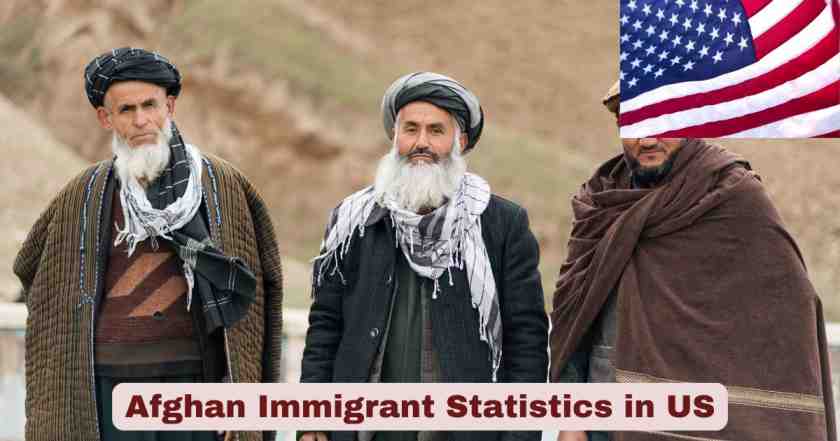
Afghan Immigrants in America 2025
The Afghan immigrant population in the United States has experienced unprecedented growth over the past decade, transforming from a relatively small community of 54,000 individuals in 2010 to approximately 195,000 by 2025, representing nearly a four-fold increase and marking one of the most dramatic demographic shifts in recent American immigration history. This exponential expansion accelerated dramatically following the chaotic US withdrawal from Afghanistan in August 2021, when the Taliban seized control of Kabul and the Biden Administration launched Operation Allies Welcome (OAW)—one of the largest humanitarian evacuations in US history that brought over 76,000 Afghans to America in just weeks. Combined with subsequent arrivals through Operation Enduring Welcome, nearly 200,000 Afghan refugees and immigrants have resettled in the United States since 2021, joining established communities and creating new enclaves across America as they rebuild lives shattered by decades of conflict.
The Afghan presence in America reflects multiple waves of migration spanning over a century, but 79% of all Afghan immigrants have been admitted for humanitarian reasons since 1980—as refugees, asylees, or through the Special Immigrant Visa (SIV) program created in 2006 for interpreters and others who worked alongside US forces. Most Afghans arriving in 2025 hold humanitarian parole status rather than traditional refugee designation, creating unique challenges as this two-year temporary status provides no automatic pathway to permanent residency or citizenship, leaving tens of thousands in legal limbo. The community is concentrated in California (accounting for 39-41% of all Afghan immigrants), Virginia (14-18%), Texas (10%), and New York (6-7%), with metropolitan areas like Washington DC, Sacramento, and San Francisco serving as major settlement hubs. Despite their rapid growth, Afghan immigrants represent only 0.4% of the total 46.2 million foreign-born population in the United States in 2025, yet their experience embodies the complexities of American immigration policy, humanitarian obligations, and the long-term consequences of two decades of military involvement in Afghanistan.
Key Facts About Afghan Immigrants in the US 2025
| Fact Category | Details |
|---|---|
| Total Afghan-Born Population in the US 2025 | 195,000 immigrants (up from 54,000 in 2010) |
| Post-2021 Arrivals Through OAW/OEW | 200,000 Afghans evacuated since August 2021 |
| Percentage of Total US Immigrant Population | 0.4% of 46.2 million foreign-born residents |
| Humanitarian Admissions Rate 1980-2025 | 79% admitted as refugees, asylees, or SIV holders |
| Naturalization Rate in 2025 | 73-81% are US citizens (higher than 52% for all immigrants) |
| Limited English Proficiency Rate | 42-51% report limited English skills |
| Poverty Rate in 2025 | 22-27% live below poverty line (higher than US average) |
| Labor Force Participation in 2025 | 60.1% actively employed or seeking work |
Data compiled from Migration Policy Institute, US Census Bureau American Community Survey, Department of Homeland Security, and verified sources through December 2025
The statistical profile of Afghan immigrants in the United States in 2025 reveals a community defined by humanitarian migration, with 79% having entered through refugee, asylee, or Special Immigrant Visa pathways since 1980, far exceeding the humanitarian share for most other immigrant groups in America. The naturalization rate of 73-81% among Afghan immigrants who have lived in the US for more than five years substantially surpasses the 52% rate for all foreign-born residents and the 61% rate for other immigrants, demonstrating strong commitment to permanent settlement and civic integration despite the challenges many face. This high citizenship rate reflects both the desire of Afghan families to establish permanent roots after fleeing persecution and the availability of expedited naturalization pathways for refugees and SIV holders who qualify after just five years of permanent residency in the United States.
However, economic integration challenges are pronounced, with 22-27% of Afghan immigrant households living below the US poverty line in 2025, significantly higher than the 14% rate for all immigrant households and the 12% rate for US-born families. The median household income for Afghan families ranges from $40,000-$58,000 depending on location and arrival cohort, substantially below the $66,000 median for US-born households and the $64,000 median for all immigrants in America. Language barriers remain pervasive, with 42-51% of Afghans aged 5 and older reporting limited English proficiency in 2025, hindering employment opportunities, educational advancement, and daily navigation of American systems. The labor force participation rate of 60.1% falls below the general population despite high employment rates (around 94% of those in the labor force are working), suggesting that many Afghan immigrants—particularly women—face barriers to entering the workforce at all, whether due to childcare responsibilities, language limitations, credential recognition issues, or cultural factors in the US in 2025.
State Distribution of Afghan Immigrants in the US 2025
| State | Afghan Population in 2025 | Percentage of US Afghan Total |
|---|---|---|
| California | 54,000-76,000 residents | 39-41% of US Afghan population |
| Virginia | 24,000-35,000 residents | 14-18% of US Afghan population |
| Texas | 10,000-20,000 residents | 7-10% of US Afghan population |
| New York | 9,000-14,000 residents | 6-7% of US Afghan population |
| Washington | 8,000-12,000 residents | 5-6% of US Afghan population |
| Maryland | 6,000-8,000 residents | 3-4% of US Afghan population |
| Pennsylvania | 3,273+ OAW arrivals | 2-3% of US Afghan population |
Source: US Census Bureau American Community Survey pooled 2018-22 data, Migration Policy Institute analysis, and state resettlement agency reports through 2025
The geographic distribution of Afghan immigrants across the United States in 2025 demonstrates significant concentration in a handful of states, with the top five states accounting for 80% of the entire Afghan-born population—far more concentrated than the 54% living in top five states for all immigrants in America. California maintains its position as the primary destination, hosting between 54,000-76,000 Afghan residents representing 39-41% of the national Afghan population, with major concentrations in the Sacramento, San Francisco Bay Area, and Los Angeles metropolitan regions. The Golden State’s dominance reflects decades of chain migration where established communities attract subsequent arrivals through family networks, employment opportunities, and cultural familiarity, creating self-sustaining enclaves with Afghan-owned businesses, mosques, cultural organizations, and support services.
Virginia ranks second with 24,000-35,000 Afghan residents (14-18% of the national total), concentrated overwhelmingly in the Washington DC metropolitan area, particularly in Fairfax County which alone hosts over 6,863 Afghans in 2025. The Northern Virginia concentration reflects both the presence of US government agencies and defense contractors that employed many Afghans as translators and support staff who qualified for SIV admission, and the region’s robust job market for skilled immigrants. Texas has emerged as the third-largest state for Afghan resettlement with 10,000-20,000 residents (7-10%), driven largely by Operation Allies Welcome placements in Houston, Dallas, and other cities where resettlement agencies identified available housing and employment opportunities for recent evacuees arriving since 2021. The Lone Star State welcomed approximately 10,000 recent Afghan arrivals through OAW, making it one of the top destinations for 2021-2025 evacuees in the US.
New York hosts 9,000-14,000 Afghan immigrants (6-7%), concentrated in New York City and surrounding suburbs where earlier waves of Afghan professionals and refugees established communities in the 1980s and 1990s. Washington State has received over 8,000-12,000 Afghans (5-6%), with significant populations in Seattle and surrounding King County, which ranks among the top counties nationally for Afghan settlement. According to Washington State’s Department of Social and Health Services, under Operation Allies Welcome, 3,273 refugees arrived in Washington through 2025, with Afghanistan being the top country of origin for newly arrived refugee applicants—2,158 Afghan applicants between October 2024 and June 2025 compared to just 371 from Ukraine, the second-highest source country. Maryland, Pennsylvania, Colorado, Georgia, and Illinois round out the states with significant Afghan populations, each hosting several thousand residents concentrated in specific metropolitan areas in the United States in 2025.
Metropolitan Areas with Largest Afghan Populations in the US 2025
| Metropolitan Area | Afghan Population in 2025 | Key Settlement Areas |
|---|---|---|
| Washington DC-Arlington-Alexandria | 26,000-30,000 residents | Fairfax County VA, Prince William County VA, Alexandria VA |
| Sacramento-Roseville-Arden-Arcade | 16,000-20,000 residents | Sacramento proper, Roseville, Elk Grove |
| San Francisco-Oakland-Hayward | 16,000-18,000 residents | Alameda County, Bay Area suburbs |
| Los Angeles-Long Beach-Anaheim | 12,000-15,000 residents | Los Angeles County, Orange County |
| New York-Newark-Jersey City | 8,000-12,000 residents | Queens, Brooklyn, Northern NJ |
| Houston-The Woodlands-Sugar Land | 10,000+ residents | Greater Houston (post-2021 arrivals) |
Source: US Census Bureau pooled ACS data, Migration Policy Institute metro analysis, and resettlement agency placement records through 2025
The metropolitan concentration of Afghan immigrants in 2025 reveals that nearly half of all Afghans in the United States reside in just five metro areas: Washington DC, Sacramento, San Francisco, Los Angeles, and New York. The Washington DC metropolitan area, encompassing Northern Virginia, Maryland suburbs, and the District itself, hosts 26,000-30,000 Afghan residents, making it the largest single concentration anywhere in America. Within this region, Fairfax County, Virginia alone accounts for 6,863 Afghans, followed by Prince William County (3,919) and Alexandria City (1,832), together representing 27% of Virginia’s entire Afghan population. The DC area’s predominance reflects its role as the hub of US government operations, with thousands of Afghans employed as translators, interpreters, and support personnel for military, diplomatic, and intelligence agencies during the two-decade US presence in Afghanistan, qualifying them for SIV admission when the war ended.
Sacramento, California’s capital region, hosts 16,000-20,000 Afghans making it the second-largest concentration nationally and the largest in California despite being a mid-sized metro area. The Sacramento community includes both earlier refugees from the 1980s Soviet invasion and 1990s civil war, plus substantial numbers of recent OAW arrivals placed by resettlement agencies that identified the region’s moderate housing costs, available entry-level employment, and existing Afghan support infrastructure as favorable for refugee integration. The San Francisco Bay Area (Oakland, Hayward, Fremont, San Jose) hosts 16,000-18,000 Afghans, with Alameda County serving as a major settlement hub where Afghan-owned businesses, mosques, and community organizations provide cultural continuity for immigrants navigating American life. Los Angeles maintains 12,000-15,000 Afghan residents spread across Los Angeles and Orange counties, reflecting Southern California’s traditional role as a major immigrant gateway with diverse employment opportunities and established ethnic enclaves.
New York City and surrounding areas host 8,000-12,000 Afghans, concentrated in Queens neighborhoods like Flushing and Jackson Heights where affordable housing and immigrant-serving businesses create welcoming environments, as well as Brooklyn and Northern New Jersey communities. Houston, which had a relatively small Afghan population before 2021, has emerged as a major destination for recent evacuees, welcoming approximately 10,000 Afghans through Operation Allies Welcome and becoming one of the fastest-growing Afghan communities in the US in 2025. Resettlement agencies placed significant numbers in Houston due to its strong job market, low cost of living compared to coastal cities, and willingness of local sponsors to support Afghan families, though the lack of established Afghan community infrastructure has created challenges for integration in America.
Historical Immigration Waves of Afghans to the US Through 2025
| Immigration Period | Approximate Arrivals | Primary Characteristics |
|---|---|---|
| 1980-1990 (First Wave) | 4,000 to 22,300 | Refugees fleeing Soviet invasion |
| 1991-2000 (Second Wave) | 26,000 additional | Civil war and Taliban rise refugees |
| 2001-2010 (Third Wave) | 6,000 arrivals | Post-9/11 era, early SIV recipients |
| 2010-2019 (Fourth Wave) | 78,000 arrivals | SIV program expansion, increased vetting |
| 2021-2025 (Fifth Wave) | 200,000 arrivals | OAW/OEW evacuation, humanitarian parole |
Source: US Census Bureau historical data, Migration Policy Institute, Department of Homeland Security, and refugee resettlement statistics through 2025
The history of Afghan immigration to the United States can be understood through five distinct waves, each triggered by political upheaval and violence in Afghanistan over the past 45 years. The first wave began after the December 1979 Soviet invasion, when the USSR sent troops to support a communist coup against the Afghan government, sparking a devastating decade-long occupation that killed over one million Afghans and displaced five million more. Between 1980 and 1990, approximately 22,300 Afghan refugees reached the United States, though initially only 4,100 were present in 1980, with numbers growing as the Reagan Administration granted refugee status to those fleeing communist persecution in Afghanistan. These first arrivals were often educated urban professionals—doctors, engineers, teachers, government officials—who had resources to escape and connections to secure US admission, establishing the foundation of Afghan American communities in California, New York, and Washington DC in America.
The second wave from 1991 to 2000 brought an additional 26,000 Afghans, increasing the total US population from 22,300 to 48,475 by 2000, as civil war erupted following the Soviet withdrawal and competing warlords fought for control of Afghanistan. The rise of the Taliban movement in the mid-1990s, which imposed harsh Islamist rule and harbored al-Qaeda, prompted additional refugee flows to the US, though admissions remained relatively modest compared to later periods. The third wave following the September 11, 2001 terrorist attacks and subsequent US-led invasion saw surprisingly limited immigration initially, with only about 6,000 Afghans arriving between 2001-2010, increasing the population from 48,475 to 54,563. This slow growth reflected post-9/11 security concerns and restrictive vetting, even as the US established long-term military presence in Afghanistan employing thousands of Afghan interpreters and support personnel.
The fourth wave from 2010 to 2019 brought 78,000 Afghans to the US, nearly tripling the population from 54,000 to 132,000 as the Special Immigrant Visa (SIV) program created in 2006 began processing significant numbers of applicants. The Afghan Allies Protection Act of 2009, extended in 2014, formalized pathways for Afghans who worked with US forces and faced threats from the Taliban and other insurgent groups, with annual admissions averaging 2,300 permanent resident cards from 2001-2013, then surging to 12,300 annually from 2014-2019 as the program expanded. The fifth and largest wave began with Operation Allies Refuge in July 2021 and Operation Allies Welcome launched August 29, 2021, evacuating over 76,000 Afghans in the chaotic final weeks as the Taliban seized Kabul on August 15, 2021. Combined with Operation Enduring Welcome and continued admissions through 2025, nearly 200,000 Afghans have resettled in the United States since 2021—more than the entire pre-2021 population—fundamentally transforming the demographic profile and creating unprecedented challenges for both the Afghan community and US resettlement infrastructure in America through 2025.
Employment and Economic Profile of Afghan Immigrants in the US 2025
| Economic Indicator | Afghan Immigrants in 2025 | Comparison |
|---|---|---|
| Labor Force Participation Rate | 60.1% | Below 66% for all immigrants |
| Employment Rate (of those in labor force) | 94.0% | Similar to general population |
| Median Personal Income | $40,000-$58,000 | $18,000-$28,000 below US-born |
| Poverty Rate | 22-27% | Nearly double US-born (12%) |
| Household Economic Contribution | $3.5 billion in income | Significant despite challenges |
| Federal Taxes Paid | $983.8 million | Substantial revenue contribution |
| State/Local Taxes Paid | $330.4 million | Supporting public services |
| Spending Power | $2.2 billion | Boosting local economies |
Source: American Community Survey 2019-2025, New American Economy analysis, and economic impact studies
The economic profile of Afghan immigrants in the United States in 2025 reveals a community facing significant employment and income challenges despite generally strong work ethic among those in the labor force. The labor force participation rate of 60.1% means that nearly 40% of working-age Afghans are neither employed nor actively seeking work, substantially below the 66% rate for all immigrants and even further below the US-born rate. This lower participation reflects multiple factors: many Afghan women face cultural barriers or family responsibilities that keep them out of the workforce; recent arrivals lack English proficiency and job market familiarity; and some possess professional credentials from Afghanistan that aren’t recognized in the US, discouraging job searches while they pursue recertification. However, among Afghans who do participate in the labor force, the employment rate of 94.0% demonstrates that most successfully find work, albeit often in positions below their qualifications.
Afghan men show relatively high work rates in 2025, with many employed in manufacturing, construction, transportation (particularly rideshare and trucking), food service, and retail sectors that offer entry-level positions to immigrants with limited English. Afghan women’s labor force participation lags significantly, reflecting both traditional cultural norms in some families and practical barriers like childcare costs that consume large portions of potential earnings. The median personal income range of $40,000-$58,000 for Afghan immigrant households places them significantly below the $66,000 median for US-born families and the $64,000 median for all immigrant households in America, resulting in poverty rates of 22-27%—nearly double the 12% rate for US-born populations. In the Washington DC-Baltimore metro area, Afghan families earn median incomes of $58,000 compared to $78,395 for all foreign-born and $90,556 for native-born residents, demonstrating the persistent income gap even in regions with the largest Afghan populations.
Despite these challenges, Afghan immigrants make substantial economic contributions to the United States in 2025, collectively generating $3.5 billion in household income, paying $983.8 million in federal income taxes, contributing $330.4 million in state and local taxes, and wielding $2.2 billion in spending power that flows through local businesses, housing markets, and consumer sectors. For recent Operation Allies Welcome arrivals, economic integration has proceeded faster than many predicted, with surveys indicating that many refugees found employment within six months of arrival despite language barriers and trauma from evacuation. However, a March 2025 socioeconomic survey of 8,723 Afghan refugee households (representing 19,803 individuals) found that despite improved circumstances, one in five still has income below the US poverty line, and when housing costs are factored, the effective poverty rate jumps to 40%—more than triple the rate of host communities—as refugees spend disproportionate shares of limited income on rent in expensive American urban markets.
Educational Attainment of Afghan Immigrants in the US 2025
| Education Level | Afghan Immigrants (Age 25+) in 2025 | US-Born Population |
|---|---|---|
| Bachelor’s Degree or Higher | 26-34% | 35% |
| High School Diploma or Some College | 49-54% | 56% |
| Less Than High School | 19-23% | 9% |
| Graduate or Professional Degree | 8% | 14% |
Source: US Census Bureau American Community Survey 2016-2025 and Migration Policy Institute educational analysis
The educational profile of Afghan immigrants in the United States in 2025 reveals a bimodal distribution with significant numbers at both high and low education levels, but overall attainment falling below US-born populations and declining over time. Between 26-34% of Afghan adults aged 25 and older hold bachelor’s degrees or higher, substantially below the 35% rate for US-born adults, with Washington DC-Baltimore metro Afghans at the higher end (34%) due to concentration of SIV recipients who worked with US government and required English proficiency and education. However, this represents a notable decline from 30% in 2000, even as educational attainment rose from 27% to 35% for native-born Americans during the same period, suggesting that more recent Afghan arrivals have lower educational credentials than earlier waves who were often urban professionals fleeing the Soviet invasion.
The 19-23% without high school diplomas is more than double the 9% rate for US-born adults, creating significant barriers to economic advancement in the US economy of 2025 that increasingly demands post-secondary credentials for middle-class employment. This lower educational attainment particularly affects Afghan women, who in traditional rural areas of Afghanistan often had limited access to formal schooling, and many arrived in the US with minimal literacy even in their native languages of Dari or Pashto. Among Operation Allies Welcome evacuees arriving since 2021, educational levels vary widely—some are university-educated professionals, engineers, doctors, and teachers who worked with international organizations or Afghan government, while others are less-educated individuals from rural areas whose family connections to US personnel qualified them for evacuation.
Credential recognition poses major challenges for Afghan professionals in 2025, as degrees and licenses from Afghan universities and professional bodies are often not accepted by US employers or licensing boards without additional examinations, coursework, or complete retraining in America. Afghan doctors must pass US Medical Licensing Exams and complete residency training—a process taking years and tens of thousands of dollars—before practicing medicine in the United States. Engineers, teachers, and other professionals similarly face recertification requirements, forcing many to accept lower-skilled work while pursuing credentials. For recent evacuees, obtaining official transcripts and verification documents from Afghanistan has become nearly impossible with the Taliban government, universities destroyed or closed, and records systems disrupted by war, leaving many unable to prove their qualifications to US institutions in 2025.
Operation Allies Welcome Program Statistics Through 2025
| OAW Program Metric | Data Through 2025 |
|---|---|
| Total Evacuees August 2021 | 76,000+ Afghans airlifted |
| Combined OAW/OEW Through 2025 | Nearly 200,000 total arrivals |
| Humanitarian Parole Recipients | 70,000+ granted 2-year temporary status |
| Special Immigrant Visa (SIV) Holders | 68,654 (principals + families) through FY 2025 |
| Refugee Status Admissions FY 2022-2025 | 28,145 admitted through USRAP |
| Military Processing Sites Used | 8 US bases (Fort Lee VA, Fort Dix NJ, others) |
| International Processing Locations | Qatar, UAE, Bahrain, Germany, Italy, Spain |
| Resettlement Agency Partners | 200+ local affiliates nationwide |
Source: Department of Homeland Security, Department of State, Department of Defense, and resettlement agency reports through 2025
Operation Allies Welcome (OAW), launched by President Biden on August 29, 2021, represents one of the largest and fastest humanitarian evacuations in US history, airlifting over 76,000 Afghans from Kabul between mid-August and the final US troop withdrawal on August 31, 2021, as the Taliban rapidly conquered Afghanistan. The evacuation occurred under extraordinarily chaotic conditions, with desperate crowds surrounding Hamid Karzai International Airport, at least 195 people killed at or near the airport (majority from a devastating August 26 suicide bombing by ISIS-K that killed 13 US service members and over 170 Afghans), and haunting images of Afghans clinging to departing aircraft, with six people falling to their deaths after hiding in landing gear. The US military took control of airport security and air traffic operations, expanding forces to nearly 6,000 troops, while establishing a Civil Reserve Air Fleet activation with 18 commercial aircraft from United, American, Delta, Atlas, Omni, and Hawaiian Airlines assisting transport from Middle Eastern staging bases.
Contrary to the program’s name emphasizing “allies,” only approximately 40% of evacuees had direct connections to US government employment qualifying them for Special Immigrant Visas, with the majority granted humanitarian parole—a two-year temporary status that provides work authorization but no path to permanent residency. The distinction between SIV holders and parolees has created significant disparities within the Afghan community in 2025: SIV recipients (68,654 through FY 2025 including family members, equating to roughly 17,000 principal applicants given typical family sizes) have clear pathways to green cards and citizenship, while 70,000+ parolees face uncertain futures. Only 28,145 Afghans were admitted through the traditional US Refugee Admissions Program (USRAP) from FY 2022 through early FY 2025, reflecting the Biden Administration’s decision to use parole rather than refugee status for most evacuees due to time constraints and processing capacity.
The logistical operation involved processing Afghans at multiple international sites—Al Udeid Air Base in Qatar, bases in the United Arab Emirates, Bahrain, Ramstein Air Base in Germany, and facilities in Italy and Spain—where 400 personnel from Customs and Border Protection, Immigration and Customs Enforcement, Secret Service, and other agencies conducted biometric screening, database checks, and interviews before clearing individuals for US travel. Upon arrival in America, evacuees were temporarily housed at eight military bases including Fort Lee Virginia, Fort Dix New Jersey, Fort McCoy Wisconsin, Fort Pickett Virginia, Holloman Air Force Base New Mexico, Fort Bliss Texas, Camp Atterbury Indiana, and Marine Corps Base Quantico Virginia, where they underwent additional processing, medical screening, cultural orientation, and coordination with resettlement agencies before placement in communities. The Department of State worked with over 200 local resettlement affiliate organizations nationwide to assign and transfer Afghans to final destinations, considering factors like US-based family and friends, housing availability, community capacity, and individual case needs in the United States through 2025.
Immigration Status and Legal Pathways for Afghans in the US 2025
| Immigration Category | Afghans in the US 2025 |
|---|---|
| Humanitarian Parole (2-year) | 70,000+ granted through OAW |
| Special Immigrant Visa (SIV) | 68,654 (principals + families) through FY 2025 |
| Refugee Status | 28,145 admitted FY 2022-FY 2025 |
| Temporary Protected Status (TPS) | Available until May 20, 2025 (later revoked) |
| Asylum Applications Filed | 17,588 cases (34,254 applicants) as of June 2023 |
| Asylum Approvals | 97%+ approval rate for decided cases |
| Naturalized US Citizens | 73-81% of those eligible |
Source: US Citizenship and Immigration Services, Department of Homeland Security, Migration Policy Institute, and legal status tracking through 2025
The immigration status composition of Afghans residing in the United States in 2025 is extraordinarily complex, encompassing at least six different legal categories with varying rights, benefits, and pathways to permanent residency. The largest and most precarious group consists of 70,000+ humanitarian parolees who arrived through Operation Allies Welcome with two-year temporary status that expires between 2023-2027 depending on arrival date. Unlike refugees or SIV holders, parolees have no automatic path to green cards and were expected to apply for asylum, adjust to SIV status if eligible, or seek other immigration relief during their two years in America. In June 2023, USCIS established a “re-parole” process allowing eligible Afghans to extend status for two additional years, providing temporary reprieve but perpetuating uncertainty about long-term futures as this merely delays rather than resolves the question of permanent status for tens of thousands of families.
Special Immigrant Visa (SIV) holders represent 68,654 Afghans (principals plus spouses and children) admitted through FY 2025 under a program created in 2006 specifically for Afghan and Iraqi translators, interpreters, and others who worked directly for or on behalf of the US government in Afghanistan. SIV recipients receive immediate lawful permanent resident status (green cards) upon entry with clear pathways to citizenship after five years, making them the most legally secure segment of the Afghan population in the US in 2025. However, SIV admissions are numerically capped with only approximately 10,000-11,000 slots remaining as of January 2025, creating a massive backlog of applications from Afghans still in Afghanistan or third countries desperately seeking admission but facing years-long waits.
Disclaimer: This research report is compiled from publicly available sources. While reasonable efforts have been made to ensure accuracy, no representation or warranty, express or implied, is given as to the completeness or reliability of the information. We accept no liability for any errors, omissions, losses, or damages of any kind arising from the use of this report.