
Introduction to Peptides
If you’ve been scrolling through wellness content lately, you’ve probably noticed one word popping up everywhere — peptides. In skincare serums, muscle-building supplements, diabetes medications, cancer treatments. They’re genuinely everywhere. But what actually are they, and why does the scientific community treat them like a big deal?
The short answer: peptides are small but extraordinarily powerful. They are the molecular messengers your body uses to run almost every biological process you can name. And right now, scientists are learning how to harness that power in ways that could reshape medicine entirely.
This article breaks down the science, the stats, and the fast-moving industry built around these tiny molecules — with every number verified from peer-reviewed literature and leading market research firms.
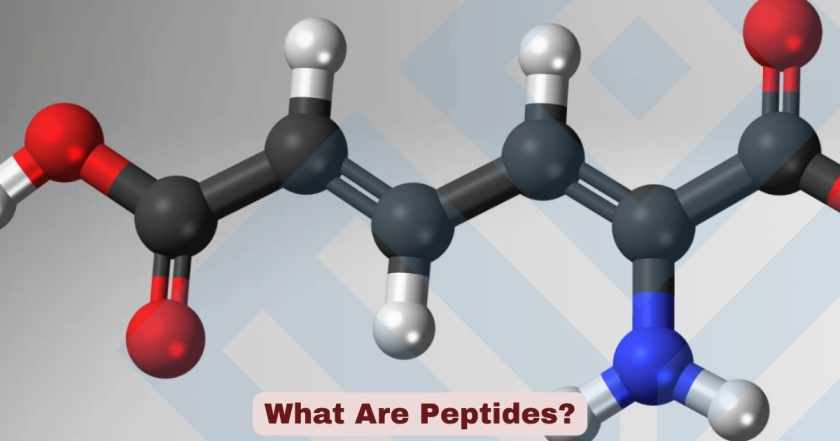
What Are Peptides?
At the most basic level, a peptide is a short chain of amino acids — the same building blocks that make up proteins. When amino acids link together through what’s called a peptide bond (a covalent bond formed through a condensation reaction), the resulting molecule is a peptide.
The number of amino acids in the chain determines what we call it:
- 2–9 amino acids → oligopeptide
- 10–50 amino acids → polypeptide
- 50+ amino acids → protein territory
So if proteins are the full Lego model, peptides are a smaller cluster of bricks — still meaningful, still functional, just more compact.
The boundary between peptides and proteins is deliberately fuzzy in scientific literature. Most researchers use 50 amino acids as the general cutoff, though some place it as high as 100. What matters more than the exact number is function: peptides are typically faster-acting, easier for the body to absorb, and more targeted in their biological effects than full-length proteins.
How Peptides Work in the Body
Your body doesn’t just contain peptides — it is, in a meaningful sense, run by them. Peptides act as hormones, neurotransmitters, immune regulators, growth factors, and antimicrobial agents. They bind to specific receptors on cells and trigger precise biological responses, much like a key fitting into a specific lock.
Insulin, one of the most important molecules in human metabolism, is a peptide. So is oxytocin (the bonding hormone), glucagon (which raises blood sugar), and substance P (which transmits pain signals). Most of the body’s hormonal signaling system relies on peptides of varying lengths.
The body acquires peptides in two main ways: it synthesizes them internally through enzymatic cleavage of larger proteins, or it absorbs them from digested food. Foods like eggs, meat, fish, legumes, and dairy are naturally rich in peptides.
Key Peptide Facts You Should Know
Insulin was the first synthetic peptide ever created. Scientists developed it in 1921, and by 1923 it was already being used to treat people with Type 1 diabetes. It’s a 51-amino-acid peptide hormone consisting of two chains linked by disulfide bridges.
A single pentapeptide can take over 3.2 million different forms. The 20 proteinogenic amino acids used by cells can be arranged in an astronomically large number of sequences — even for a five-amino-acid chain, that number exceeds 3.2 million possible combinations. This diversity is what gives peptides their enormous range of biological functions.
Most peptides found naturally in the human body contain around 20 amino acids, though functional peptides range from just two amino acids up to nearly 100, depending on classification.
Peptide bonds are unusually tough. They resist conditions that would denature most proteins, including elevated temperatures and high concentrations of urea — a property that makes peptides particularly interesting for pharmaceutical formulation.
Over 100 peptide-based drugs are currently FDA-approved in the United States, spanning applications from diabetes and cancer to osteoporosis and cardiovascular disease.
As of May 2025, there were 2,759 active clinical trials registered on ClinicalTrials.gov with peptides listed as the intervention — a figure that reflects the extraordinary depth of ongoing research.
Types of Peptides
Peptides don’t fit neatly into a single category. Scientists group them by origin, function, and structure.
By Origin:
- Ribosomal peptides — synthesized using the body’s standard protein-making machinery (ribosomes), following the DNA blueprint
- Non-ribosomal peptides — assembled by specialized enzyme complexes rather than ribosomes, common in bacteria, fungi, and plants; glutathione is a well-known example
By Function:
- Peptide hormones — include insulin, glucagon, calcitonin, and parathyroid hormone; produced by specialized cells and released into the bloodstream to act on distant target organs
- Neuropeptides — active in neural tissue, involved in pain signaling, mood regulation, and brain function; substance P and enkephalins fall into this category
- Antimicrobial peptides — part of the innate immune system, these attack bacterial membranes and play a central role in the body’s first line of defense
- Signaling peptides — coordinate cell-to-cell communication, regulating immune responses, inflammation, and repair
- Structural peptides — collagen peptides are the most widely recognized; they provide scaffold for skin, bones, cartilage, and connective tissue
By Structure:
- Linear peptides — standard unbranched chains, the most common form
- Cyclic peptides — the chain loops back on itself, creating a ring structure that is often more stable and resistant to degradation; cyclotides are a notable example found in certain plants
The Peptide Therapeutics Market — 2025/2026 Data
The pharmaceutical industry’s embrace of peptide drugs has translated into one of the fastest-growing segments in global healthcare. Here’s where the numbers stand today.
Market Size
The global peptide therapeutics market was valued at approximately USD 46–52 billion in 2024–2025, depending on the research firm and scope of inclusion. Projections for the decade ahead vary, but consensus points toward strong sustained growth:
- Precedence Research placed the 2024 market value at USD 49.13 billion, projecting it will surpass USD 83.75 billion by 2034 at a CAGR of 5.31%
- Global Market Insights estimated USD 46.4 billion in 2024, growing to approximately USD 100 billion by 2034 at a CAGR of 8.1%
- Roots Analysis estimated the 2025 market at USD 84.2 billion, with a forecast of USD 162.4 billion by 2035 at a CAGR of 6.8%
- Mordor Intelligence projects the market will reach USD 70.2 billion by 2031 at a CAGR of 7.16%
The variation in these figures reflects different methodologies and what’s included in scope (therapeutics only vs. APIs, synthesis, delivery). The directional consensus is clear: this is a market growing steadily at high single-digit rates.
Who’s Leading the Market
North America dominates, holding between 38% and 62% of global market share in 2024–2025, depending on the research source. The United States accounts for the vast majority of that regional share, driven by strong R&D infrastructure, favorable regulatory frameworks, and high healthcare spending.
Asia-Pacific is the fastest-growing region, with a projected CAGR exceeding 9–13% through the early 2030s. Rising incomes, expanding healthcare access, and growing manufacturing capacity — particularly in China and India — are the main drivers.
By application, metabolic and endocrine disorders led the market, accounting for roughly 22–24% of revenue in 2024. This is almost entirely attributable to GLP-1 receptor agonists — drugs like semaglutide (Ozempic, Wegovy) and tirzepatide (Mounjaro) — which have become some of the best-selling pharmaceuticals ever made.
By type, branded peptides held approximately 69–70% of market revenue in 2024, compared to generics. The branded segment is projected to exceed USD 67.9 billion by 2034.
The top five players — Novo Nordisk, Eli Lilly, Bristol-Myers Squibb, Ferring Pharmaceuticals, and Merck & Co. — collectively held approximately 60% of the peptide therapeutics market in 2024. Novo Nordisk alone commanded over 17% market share, a direct result of the global semaglutide boom.
Major Recent Deals and Investments
The investment activity in this space has been remarkable:
- Zealand Pharma signed a USD 1.65 billion upfront deal with Roche to co-develop petrelintide, a long-acting amylin analog targeting obesity and metabolic disease. This valued petrelintide at approximately 12 times Zealand’s 2024 revenue.
- CordenPharma announced a EUR 1 billion+ (approximately USD 1.1 billion) strategic investment in April 2025 to expand global peptide production capacity, adding 26,000 square meters of manufacturing space and 30,000 liters of solid-phase peptide synthesis capability.
- Novo Nordisk invested USD 1 billion in Brazil in April 2025 to establish a GLP-1 production network.
- AstraZeneca acquired Amolyt Pharma in July 2024, gaining eneboparatide, a Phase III peptide for hypoparathyroidism.
- Roche collaborated with Zealand Pharma in March 2025 to co-develop petrelintide, strengthening its obesity and metabolic disease portfolio.
FDA Approval Data — Peptide Drugs
The regulatory pipeline tells a compelling story about where peptide medicine is heading.
Approximately 102 therapeutic peptides have received FDA approval across various clinical applications as of 2024, according to a review published in the Journal of Peptide Science. These span cardiovascular disease, diabetes, cancer, antimicrobial, and neurological indications.
Between 2016 and 2024, 34 peptide drugs were FDA-approved — a pace of roughly four approvals per year. Out of 370 total new drugs approved by the FDA between 2016 and 2023, 31 were peptide drugs.
In 2024, the FDA approved 50 novel drugs total, including two new peptides. Peptide and nucleic acid-based drugs now account for approximately 10% of all new FDA approvals in recent years.
In 2025, the FDA approved 46 novel drugs, with one new peptide (elamipretide, branded as Forzinity) — approved for improving muscle strength in patients with Barth syndrome. An antibody-drug conjugate containing a peptide payload (telisotuzumab vedotin-tllv) also received approval for non-small cell lung cancer.
47 peptide candidates were granted Orphan Drug Status by the FDA in 2024, reflecting growing interest in peptides as treatments for rare diseases where conventional small molecules lack precision.
Peptides now represent approximately 18% of global Phase 2/3 drug development pipelines, up significantly from a decade ago.
The Peptide Synthesis Market
Producing peptides at pharmaceutical scale is a specialized and capital-intensive business. The global peptide synthesis market reflects that.
The global peptide synthesis market was valued at approximately USD 667–961 million in 2024, depending on scope. Growth projections are robust:
- Towards Healthcare estimated USD 686.59 million in 2024, growing to USD 2.28 billion by 2034 at a CAGR of 12.74%
- Grand View Research estimated USD 961.5 million in 2024, reaching USD 1.84 billion by 2033 at a CAGR of 7.71%
Solid-phase peptide synthesis (SPPS) remains the dominant manufacturing method, accounting for the majority of commercial peptide production. Innovations like microwave-assisted SPPS are improving reaction speed, purity, and yield.
The therapeutics application accounted for 70.35% of peptide synthesis market revenue in 2024, with diagnostics growing rapidly as a secondary application.
AI and machine learning are transforming the field. Algorithms are now being used to predict optimal peptide sequences, minimize side reactions in synthesis, improve batch consistency, and dramatically shorten drug discovery timelines.
Collagen Peptides — The Consumer Market
Not all peptide activity is happening in hospital formularies. The consumer wellness market around collagen peptides has become a major industry in its own right.
The global collagen peptides market was valued at approximately USD 2.22–2.74 billion in 2024–2025. Growth projections:
- Straits Research placed the 2024 market at USD 2.22 billion, growing to USD 5.79 billion by 2033 at a CAGR of 11.25%
- Mordor Intelligence estimated the 2025 market at USD 2.74 billion, reaching USD 4.32 billion by 2030 at a CAGR of 7.53%
- Research Nester projected growth from over USD 3 billion in 2025 to USD 8.3 billion by 2035 at a CAGR of 12%
Global collagen peptide consumption surpassed 75,000 metric tons in 2024, driven by demand in food, beverages, supplements, and pharmaceuticals.
Bovine collagen is the dominant source, holding 42% of market share in 2024. Marine collagen — extracted from fish skin and scales — is growing fastest, with a projected CAGR of 9.11% through 2030, driven by its lower molecular weight and faster absorption.
The nutraceutical/dietary supplement segment accounts for roughly 40% of total collagen peptide demand, with food and beverages contributing another 32%. Cosmetics and personal care hold around 15–20% of the market.
A 2023 survey found that nearly 45% of consumers aged 35 and above actively consume collagen supplements for anti-aging purposes. Consumer interest is being validated by science: a randomized, double-blind trial published in 2025 found that daily supplementation of 3,000 mg of low-molecular-weight collagen peptides for 180 days produced significant improvement in joint pain and function in patients with knee osteoarthritis.
North America held the largest regional share of the collagen peptides market in 2024. Asia-Pacific is growing fastest, with a projected CAGR of 9.43% through 2030 — driven by cultural emphasis on skin health, K-beauty trends, and expanding marine collagen manufacturing in China.
Peptides in Skincare — What the Science Says
Peptides have become one of the most popular active ingredients in modern skincare, and for good reason — they have a plausible mechanism of action that stands up to scrutiny.
Copper peptide (GHK-Cu) is among the most researched topical peptides. Studies show it can boost collagen and elastin production, act as an antioxidant, and help repair skin damage. Clinical evidence suggests GHK-Cu in facial creams can reduce fine lines, improve skin elasticity, moisture, and thickness.
Signal peptides like Matrixyl (palmitoyl pentapeptide-4) are designed to mimic fragments of collagen, sending the skin a signal to ramp up its own collagen production. Small clinical studies support efficacy for wrinkle reduction.
Carrier peptides deliver trace minerals that support enzymatic activity — copper and manganese are the most common examples.
The caveat worth noting honestly: while topically applied peptides show promise, larger-scale clinical evidence is still catching up to marketing claims. Dermatologists generally consider them safe, potentially effective, and significantly better-tolerated than retinoids for sensitive skin.
GLP-1 Peptides — The Biggest Story in Medicine Right Now
No discussion of peptides in 2026 is complete without addressing GLP-1 receptor agonists. These drugs — semaglutide (Ozempic, Wegovy), tirzepatide (Mounjaro, Zepbound), and their successors — have become arguably the most commercially transformative drug class since statins.
Semaglutide was associated with a 23% reduced risk of major adverse cardiovascular events compared to dulaglutide in a study of nearly 60,000 US Medicare patients aged 66 and older, presented at the 2025 European Association for the Study of Diabetes Annual Meeting. The study also found a 26% lower risk of death and a 25% lower risk of heart attack and stroke.
Tirzepatide reduced HbA1c by up to 2.59% and achieved weight loss in 88% of Phase 3 patients, moving the molecule toward first-line status for Type 2 diabetes.
Novo Nordisk’s REDEFINE 1 results with CagriSema (a combination of cagrilintide and semaglutide) further underscored multi-factor risk reduction in cardiometabolic disease.
The 2025 Peptide Predictor algorithm — a computational biology tool — uncovered BRP, a novel anti-obesity peptide operating through a mechanism entirely outside the incretin axis, demonstrating how AI is opening new discovery frontiers beyond GLP-1.
Quick-Reference Stats Snapshot
| Stat | Figure | Source |
|---|---|---|
| Global peptide therapeutics market (2024) | ~USD 46–52 billion | Multiple research firms |
| Projected market by 2034 | USD 83–100 billion | Precedence, GMI |
| FDA-approved peptide drugs (total, ~2024) | ~102 | Journal of Peptide Science |
| Peptide FDA approvals, 2016–2024 | 34 | PMC / MDPI (2025) |
| Active peptide clinical trials (May 2025) | 2,759 | ClinicalTrials.gov |
| Peptides in Phase 2/3 pipelines (2025) | ~18% of all drugs | Mordor Intelligence |
| Peptide synthesis market (2024) | USD 667–961 million | Multiple sources |
| Collagen peptides market (2025) | USD 2.47–2.74 billion | Straits, Mordor |
| Collagen peptide consumption (2024) | 75,000+ metric tons | Global Growth Insights |
| North America peptide therapeutics share (2025) | ~38–46% | Multiple sources |
| Top 5 players’ combined market share (2024) | ~60% | Global Market Insights |
| Novo Nordisk market share (2024) | >17% | Global Market Insights |
| CordenPharma SPPS expansion investment (2025) | EUR 1 billion+ | IMARC Group |
What’s Next for Peptide Science
The trajectory is genuinely exciting. A few developments worth watching:
Oral peptide delivery is the holy grail the industry has been chasing for decades. Most peptides currently require injection because the digestive system breaks them down before they reach the bloodstream. The oral proteins and peptides market is estimated at USD 9.36 billion in 2025 and projected to reach USD 36.35 billion by 2034 at a CAGR of 16.34% — the fastest growth of any peptide sub-segment — reflecting how much capital is chasing a solution to this problem.
AI-designed peptides are moving from concept to clinical reality. Pepticom raised USD 6.6 million in January 2025 specifically to advance AI-powered peptide drug discovery. The technology is expected to compress discovery timelines from years to months.
Peptide-drug conjugates (PDCs) — combining a peptide’s targeting precision with a small molecule’s potency — represent one of the most active areas of oncology research. They function similarly to antibody-drug conjugates but with the manufacturing simplicity of smaller molecules.
Antimicrobial peptides are drawing renewed attention as antibiotic resistance becomes an increasingly urgent global health problem. Peptides that target bacterial membranes through mechanisms distinct from conventional antibiotics offer genuine hope for novel treatment approaches.
The Bottom Line
Peptides are not a trend. They’re not a marketing category invented by supplement companies. They are fundamental to how biology works — and science’s ability to understand, synthesize, and deploy them is advancing faster than at any point in history.
From insulin in 1923 to semaglutide reshaping cardiovascular medicine in 2025, the peptide story has been building for over a century. What’s different now is the scale: a global market worth tens of billions of dollars, over 100 approved drugs, nearly 2,800 active clinical trials, and AI tools that can design novel molecules in days rather than years.
Whether you’re a clinician, an investor, a skincare consumer, or just someone trying to understand what the word actually means when it appears on a product label — the fundamentals are worth knowing. These tiny chains of amino acids are, in many ways, the molecules that run us.
Disclaimer: This research report is compiled from publicly available sources. While reasonable efforts have been made to ensure accuracy, no representation or warranty, express or implied, is given as to the completeness or reliability of the information. We accept no liability for any errors, omissions, losses, or damages of any kind arising from the use of this report.