
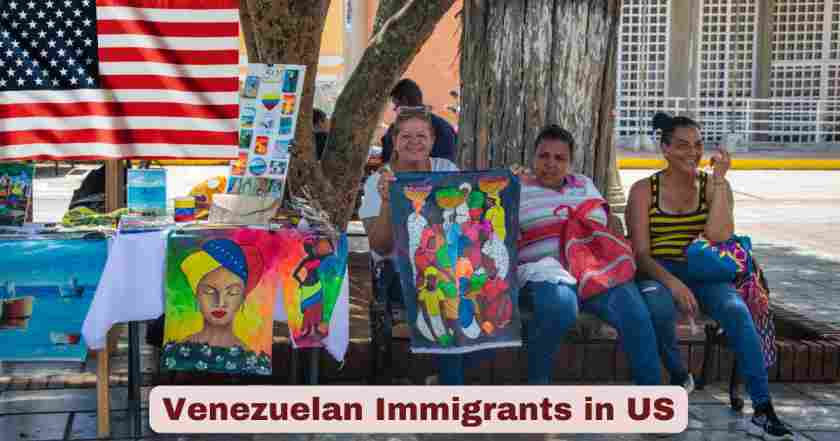
Venezuelan Immigrants in US 2026
The Venezuelan immigrant population in the United States has experienced extraordinary growth over the past decade, transforming from a relatively small community into one of the fastest-expanding immigrant groups in American history. As of January 2026, approximately 1.2 million Venezuelans reside in the United States according to Pew Research Center analysis, representing more than a doubling of the population in just five years from roughly 545,000 in mid-2021. This dramatic expansion reflects the deepening economic and political crisis in Venezuela that has driven 7.9 million Venezuelans worldwide to flee their homeland since 2014, making it the largest displacement crisis in Western Hemisphere history. The United States emerged as a major destination particularly after 2021, when the Biden administration designated Venezuela for Temporary Protected Status (TPS) and later created the Cuban, Haitian, Nicaraguan, and Venezuelan (CHNV) humanitarian parole program, providing legal pathways that facilitated massive migration flows through both the southern border and direct flights.
However, the Venezuelan immigrant experience in the United States entered a period of profound uncertainty in 2025 when the Trump administration implemented sweeping policy changes that stripped legal protections from hundreds of thousands of Venezuelans. On his first day in office in January 2025, President Trump terminated the CHNV parole program for new arrivals and subsequently cancelled the Biden administration’s TPS extensions for Venezuelans, meaning protections for approximately 607,000 TPS holders were set to expire in stages during 2025. Following legal challenges, including a federal court ruling in March 2025 that blocked some deportations and a Supreme Court decision in October 2025, the immigration status of Venezuelan immigrants remains in flux as of January 2026. The January 3, 2026 capture of Venezuelan President Nicolás Maduro by US forces following military intervention has added another layer of complexity, with Venezuelan immigrants simultaneously celebrating Maduro’s removal while facing continued uncertainty about their own legal status and whether political changes in Venezuela will affect American immigration policies toward their community.
Interesting Facts About Venezuelan Immigrants in US Statistics 2026
| Key Fact Category | Statistical Data | Source/Period |
|---|---|---|
| Total Venezuelan Population in US | 1.2 million (includes immigrants and US-born) | Pew Research Center January 2026 |
| Venezuelan Immigrants (Foreign-Born) | 764,000-770,000 | Migration Policy Institute mid-2024 |
| Five-Year Growth Rate | More than doubled since 2021 | Pew Research Center 2026 |
| Population Increase 2000-2021 | Nearly 600% growth | Pew Research Center Historical Data |
| Percentage Increase 2019-2024 | +119% (increase of 639,000 people) | Pew Research Center 2026 |
| TPS Holders (January 2025) | 607,000 Venezuelans | Migration Policy Institute January 2025 |
| CHNV Parole Recipients | 117,000+ (January 2023-December 2024) | Department of Homeland Security |
| Unauthorized Immigrants | More than half currently unauthorized | Pew Research Center August 2025 |
| Previously Had Legal Status | Majority of unauthorized formerly had TPS/CHNV | Pew Analysis 2025 |
| Florida Residents | 474,000 Venezuelans (40%+ of national total) | Pew Research Center 2024 |
| Texas Residents | Nearly 200,000 Venezuelans | Pew Research Center 2024 |
| Georgia Residents | 57,000 Venezuelans | Pew Research Center 2024 |
| New York Residents | 40,000 Venezuelans | Pew Research Center 2024 |
| Illinois Residents | 40,000 Venezuelans | Pew Research Center 2024 |
| Miami Metro Area | 254,000 Venezuelans (8% of metro population) | Pew/Migration Policy 2024 |
| Orlando Metro Area | 127,000 Venezuelans (12% of metro population) | Pew Research 2024 |
| Metropolitan Concentration | 95% live in metro areas | Pew Research 2024 |
| Foreign-Born Percentage | 80% were born elsewhere | Pew Research 2024 |
| Bachelor’s Degree or Higher | 49% of Venezuelan adults | Pew Research 2023 |
| Graduate Degree Holders | 16% of Venezuelans | Pew Research 2023 |
| Comparison: US Population with Bachelor’s | 37% overall | Pew Research 2023 |
| Comparison: Non-Venezuelan Hispanics | 21% with bachelor’s degree | Pew Research 2023 |
| Median Years in US | Less than 5 years (50% of immigrants) | Pew Research 2024 |
| Labor Force Participation | 75% of adults 16+ economically active | Migration Policy March 2025 |
| Workforce Contribution | 77.1% of working-age foreign-born in labor force | Industry Analysis 2025 |
| Uninsured Rate | 18-19% lack health insurance | Migration Policy Institute 2023 |
| Border Encounters FY 2023 | 266,000 Venezuelan encounters | US Customs and Border Protection |
| Border Encounters FY 2024 | 261,000 Venezuelan encounters | US Customs and Border Protection |
| DACA Recipients | 1,610 Venezuelans in program | Department of Homeland Security Sept 2024 |
| Fastest-Growing Hispanic Group | +119% (2019-2024) | Pew Research 2026 |
| Percentage of All US Hispanics | 1.7% of total Hispanic population | Pew Research 2024 |
Data Sources: Pew Research Center January 2026, Migration Policy Institute 2024-2025, US Customs and Border Protection, Department of Homeland Security, CNN January 2026, Congressional Research Service, US Census Bureau American Community Survey
Analysis of Venezuelan Immigrant Statistics and Population Growth in US 2026
The explosive growth of Venezuela’s US population, more than doubling from approximately 545,000 to 1.2 million in just five years between 2021 and 2026, represents one of the fastest immigrant population expansions in modern American history and establishes Venezuelans as the fastest-growing Hispanic group in percentage terms with a 119% increase that far exceeds Ecuadorians (+47%), Colombians (+43%), and Nicaraguans (+41%). This extraordinary demographic surge, adding approximately 639,000 people in just five years, reflects the convergence of push factors including Venezuela’s economic collapse, political persecution, hyperinflation, and humanitarian crisis, with pull factors including new legal pathways created by the Biden administration through TPS designations and the CHNV parole program that facilitated entry for hundreds of thousands who might otherwise have remained in Latin America or attempted dangerous irregular border crossings.
The demographic profile reveals a community overwhelmingly composed of recent arrivals, with 80% of US Venezuelans being foreign-born compared to just 29% among Mexican Americans, the nation’s largest Hispanic group, and half of all Venezuelan immigrants having resided in the United States for less than five years. This recency of arrival fundamentally shapes community characteristics, as Venezuelan immigrants lack the multi-generational established networks, wealth accumulation, homeownership rates, and political influence that longer-settled immigrant populations enjoy, while simultaneously bringing higher educational attainment with 49% holding bachelor’s degrees or higher compared to 37% of the overall US population and just 21% of non-Venezuelan Hispanics. The concentration of 607,000 TPS holders as of January 2025, representing more than half of the foreign-born Venezuelan population, created extraordinary vulnerability when the Trump administration cancelled protections in 2025, instantly converting hundreds of thousands from legally authorized workers into unauthorized immigrants facing potential deportation, though legal challenges and the Supreme Court’s October 2025 ruling provided partial relief while leaving ultimate status unresolved as of January 2026.
Venezuelan Immigrants in US by State Distribution in 2026
| State | Venezuelan Population | Percentage of US Total | Growth Pattern | Major Cities |
|---|---|---|---|---|
| Florida | 474,000 | 40%+ | Dominant destination | Miami, Orlando, Tampa |
| Texas | Nearly 200,000 | ~17% | Second-largest population | Houston, Dallas, Austin |
| Georgia | 57,000 | ~5% | Emerging destination | Atlanta metro |
| New York | 40,000 | ~3% | Traditional immigrant gateway | New York City |
| Illinois | 40,000 | ~3% | Midwest concentration | Chicago metro |
| California | Significant | Estimated 2-3% | West Coast presence | Los Angeles, San Diego |
| North Carolina | Thousands | Smaller percentage | Growing Southern population | Charlotte, Raleigh |
| New Jersey | Thousands | Smaller percentage | Northeast corridor | Northern NJ metro |
| Massachusetts | Thousands | Smaller percentage | New England presence | Boston metro |
| Maryland | Thousands | Smaller percentage | DC metro area | Baltimore, DC suburbs |
Data Sources: Pew Research Center 2024-2026, Migration Policy Institute, US Census Bureau American Community Survey, State-level Migration Data
Florida’s dominance as the destination for 474,000 Venezuelans or more than 40% of the entire US Venezuelan population reflects multiple factors including geographic proximity to Venezuela facilitating both initial migration and ongoing connections to homeland, the presence of Miami as Latin America’s commercial and cultural capital with established Hispanic infrastructure and networks, warm climate similar to Venezuela’s Caribbean regions, robust labor markets in tourism, construction, and services that absorb immigrant workers, and the existence of substantial pre-crisis Venezuelan professional and business communities that created anchors for subsequent migration chains. The Miami metropolitan area alone hosts 254,000 Venezuelans, representing 8% of the metro’s entire population, while Orlando contains 127,000, comprising an extraordinary 12% of that metro’s residents, concentrations that have fundamentally altered these cities’ demographic, economic, and political landscapes as Venezuelan-owned businesses proliferate, Spanish-language media expands Venezuelan content, and local elections increasingly feature Venezuelan-origin candidates and issues.
Texas ranks second with nearly 200,000 Venezuelan residents concentrated primarily in Houston, Dallas, and Austin, benefiting from the state’s robust economic growth, petroleum industry employment opportunities that attract Venezuelan engineers and geologists familiar with oil operations, lower cost of living compared to coastal states, and pro-business environment that facilitates entrepreneurship among educated Venezuelan immigrants establishing restaurants, professional services, and import-export businesses. The geographic distribution pattern shows Venezuelan immigrants following broader trends of new Hispanic settlement spreading beyond traditional gateway states like California and New York into Southern and Sunbelt states experiencing rapid population and economic growth, with Georgia’s 57,000 Venezuelans representing significant presence in Atlanta’s expanding international community. The 95% metropolitan concentration rate, among the highest of any immigrant group, reflects Venezuelan immigrants’ predominantly middle-class and professional backgrounds prior to migration, as these individuals gravitate toward urban centers offering white-collar employment, educational institutions, cultural amenities, and established immigrant services rather than rural areas or smaller towns where agricultural or industrial labor opportunities predominate for other immigrant groups.
Venezuelan Immigrants Education and Socioeconomic Status in US 2026
| Education/Economic Indicator | Venezuelan Immigrants | All US Immigrants | US-Born Population | Non-Venezuelan Hispanics |
|---|---|---|---|---|
| Bachelor’s Degree or Higher | 49% | 37% | 37% | 21% |
| Graduate Degree | 16% | 14% | 14% | 8% |
| High School Completion | High | Varies | 91% | 74% |
| Labor Force Participation | 75% | 67% | 63% | 68% |
| Working-Age in Labor Force | 77.1% | 66-68% | 63% | Varies |
| Median Household Income | Lower than immigrant average | 69,000 (estimate) | 74,580 | Varies |
| Poverty Rate | Higher than average | 13-14% | 11.5% | Varies |
| Health Insurance Coverage | 81-82% insured | 85% | 92% | Varies |
| Uninsured Rate | 18-19% | 15% | 8% | 17% |
| Homeownership Rate | Lower | 52% | 65% | 48% |
| Years in US (Median) | <5 years (50%) | 15+ years | N/A | 20+ years |
| English Proficiency | Lower than average | 53% | 100% | Varies |
| Self-Employment Rate | Growing | 10-12% | 10% | 8-9% |
Data Sources: Pew Research Center 2023-2024, Migration Policy Institute March 2025, US Census Bureau American Community Survey, Economic Policy Institute, Industry Analysis
Venezuelan immigrants present a paradoxical socioeconomic profile where extraordinarily high educational attainment coexists with economic indicators suggesting incomplete integration and downward mobility from pre-migration status. The 49% bachelor’s degree completion rate positions Venezuelans well above not only the 21% rate among non-Venezuelan Hispanics but even exceeds the 37% rate for the overall US population and the 37% average among all immigrants, with the 16% holding graduate degrees further emphasizing the professional and educated character of this migration wave. This educational advantage reflects Venezuela’s historically strong university system that produced engineers, physicians, attorneys, teachers, and business professionals who comprise the core of the exodus, as economic collapse destroyed career opportunities for precisely the educated middle class while poor Venezuelans often lacked resources to undertake international migration.
However, this human capital advantage fails to translate fully into economic prosperity, as Venezuelan immigrants face multiple barriers including recent arrival (half in the US less than five years), limited English proficiency, non-recognition of Venezuelan professional credentials and licenses requiring recertification processes that can take years, immigration status uncertainty preventing access to certain occupations and professional licenses, and discrimination in labor markets where Hispanic surnames and accents trigger bias regardless of qualifications. The 75% labor force participation rate demonstrates strong work ethic and economic necessity among Venezuelan immigrants, substantially exceeding the 63% rate among US-born workers, yet many work in positions substantially below their educational qualifications, with engineers driving rideshare vehicles, physicians working as medical assistants or technicians, and attorneys employed in retail or administrative roles while navigating credential recognition. The 18-19% uninsured rate, more than double the 8% among US-born residents, reflects both the precarious employment in jobs lacking health benefits and the exclusion of many from Medicaid and Affordable Care Act subsidies due to immigration status, creating health access vulnerabilities particularly acute for a population including families with children and individuals managing chronic conditions.
Venezuelan Border Encounters and Immigration Pathways in US 2026
| Immigration Metric | Statistical Value | Time Period | Policy Context |
|---|---|---|---|
| CBP Encounters FY 2021 | 49,000 | October 2020 – September 2021 | Pre-surge baseline |
| CBP Encounters FY 2022 | 188,000 | October 2021 – September 2022 | Initial surge begins |
| CBP Encounters FY 2023 | 266,000 | October 2022 – September 2023 | Peak encounter year |
| CBP Encounters FY 2024 | 261,000 | October 2023 – September 2024 | Sustained high levels |
| Total Border Encounters | ~764,000 | FY 2021-2024 cumulative | Four-year total |
| TPS First Designation | March 2021 | Eligible if arrived by March 8, 2021 | Biden administration |
| TPS Second Designation | September 2023 | Eligible if arrived by July 31, 2023 | Expansion of coverage |
| Total TPS Holders | 607,000 | As of January 2025 | Largest TPS population |
| TPS Expiration (First Group) | April 2, 2025 | 2023 designation holders | Trump cancellation |
| TPS Expiration (Second Group) | September 10, 2025 | 2021 designation holders | Trump cancellation |
| CHNV Parole Program Start | October 2022 | Initial Venezuelan-only program | Legal pathway creation |
| CHNV Program Expansion | January 2023 | Added Cuba, Haiti, Nicaragua | Regional expansion |
| Total CHNV Parolees | 117,000+ | January 2023 – December 2024 | Before program termination |
| CHNV Termination | January 20, 2025 | Trump’s first day in office | No new arrivals accepted |
| DACA Recipients | 1,610 | As of September 2024 | Small Venezuelan presence |
| Asylum Applications | High volume | Ongoing | Long processing backlogs |
Data Sources: US Customs and Border Protection, Department of Homeland Security, Congressional Research Service, Migration Policy Institute January 2025, AS/COA Policy Tracking, CNN 2026
The border encounter statistics reveal the magnitude of Venezuelan migration pressure at the US-Mexico border, with encounters surging from just 49,000 in fiscal year 2021 to 188,000 in FY 2022 and peaking at 266,000 in FY 2023 before moderating slightly to 261,000 in FY 2024, producing a cumulative total of approximately 764,000 Venezuelan encounters across four fiscal years. This sustained flow, making Venezuelans consistently among the top nationalities encountered at the southern border alongside Mexicans, Guatemalans, and Hondurans, reflects the deepening crisis in Venezuela combined with well-established migration routes through Colombia, Panama’s Darien Gap, Central America, and Mexico that have become increasingly organized with smuggling networks, migrant shelters, and information-sharing among compatriots facilitating the journey despite dangers including robbery, assault, extortion, and natural hazards during the multi-month trek.
The Biden administration’s policy response attempted to balance humanitarian concerns with border management through creation of legal pathways including the TPS designation in March 2021 that protected Venezuelans already in the United States from deportation and granted work authorization, subsequently expanded in September 2023 to cover later arrivals through July 31, 2023, ultimately protecting 607,000 Venezuelans as of January 2025 – the largest TPS population from any country in program history. The CHNV humanitarian parole program launched in October 2022 specifically for Venezuelans and expanded in January 2023 to include Cubans, Haitians, and Nicaraguans, created an alternative pathway allowing applicants to fly directly to the United States with US-based financial sponsors, bypassing dangerous overland routes while theoretically reducing irregular border crossings, with 117,000+ Venezuelans utilizing this option before the Trump administration terminated the program on January 20, 2025. The Trump administration’s policy reversals, terminating CHNV for new arrivals and cancelling TPS protections with expiration dates of April 2, 2025 for the 2023 designation and September 10, 2025 for the 2021 designation, instantly stripped legal protections from the 607,000 TPS holders, though subsequent legal challenges including a federal court’s March 2025 ruling blocking some deportations and the Supreme Court’s October 2025 decision provided partial relief while leaving the ultimate resolution uncertain as of January 2026.
Venezuelan Immigrants Employment and Economic Contribution in US 2026
| Employment Indicator | Venezuelan Data | Comparison Group | Significance |
|---|---|---|---|
| Labor Force Participation Rate | 75% | US-born: 63%, All immigrants: 67% | Substantially higher |
| Working-Age in Labor Force | 77.1% | National average: 63% | Strong workforce attachment |
| Unemployment Rate | Varies by status | National: 3.5-4% | Higher for recent arrivals |
| Professional/Managerial | Significant share | Varies | Many overqualified for jobs |
| Service Sector | Large share | Varies | Restaurants, hospitality, retail |
| Healthcare Workers | Notable presence | Varies | Doctors, nurses, technicians |
| Construction | Growing sector | Varies | Particularly in Florida, Texas |
| Transportation/Delivery | Common | Varies | Rideshare, delivery services |
| Self-Employment | Increasing | Immigrants: 10-12% | Entrepreneurship growing |
| Median Income | Lower than credentials suggest | Varies | Credential recognition issues |
| Tax Contributions | Billions annually | N/A | Federal, state, local taxes |
| Economic Output | Substantial | N/A | Consumer spending, business creation |
| Remittances to Venezuela | Hundreds of millions | N/A | Critical for families in Venezuela |
Data Sources: Migration Policy Institute March 2025, Bureau of Labor Statistics, Economic Policy Institute, Industry Analysis, Academic Research on Venezuelan Employment
Venezuelan immigrants demonstrate remarkably high labor force engagement with 75% of adults aged 16 and older economically active and 77.1% of working-age foreign-born Venezuelans participating in the labor force, rates that substantially exceed both the 63% participation among US-born workers and the 67% average among all immigrants, reflecting the economic necessity facing recent arrivals lacking wealth or family support networks combined with the professional work ethic characteristic of educated middle-class migrants. This robust workforce participation translates into significant economic contributions through billions of dollars in federal, state, and local tax revenues including income taxes, payroll taxes funding Social Security and Medicare, sales taxes, property taxes (directly for homeowners and indirectly through rent), and business taxes, with even unauthorized immigrants contributing substantially through automatic payroll deductions and consumption taxes.
However, the occupational distribution reveals substantial underemployment and downward occupational mobility compared to pre-migration professional status, as Venezuelan engineers, physicians, attorneys, professors, and business executives often work in positions requiring far less education than they possess due to non-recognition of Venezuelan credentials, professional licensing barriers requiring expensive and time-consuming US recertification, limited English proficiency in specialized professional vocabularies, and immigration status restrictions preventing access to certain occupations and government-funded retraining programs. The service sector employs large numbers in restaurants (both Venezuelan-owned establishments serving arepas, cachapas, and other traditional cuisine, and mainstream American restaurants), hospitality (hotels, tourism, cleaning services), retail (especially in Hispanic-majority neighborhoods), healthcare support (medical assistants, home health aides, patient care technicians), construction (particularly in Florida and Texas housing booms), and transportation (rideshare driving, delivery services), with many working multiple jobs to achieve middle-class incomes despite professional qualifications. The growing self-employment rate reflects Venezuelan entrepreneurship creating thousands of small businesses including ethnic restaurants, professional services targeting the Venezuelan community, import-export operations connecting US and Latin American markets, and various service businesses, contributing to local economic vitality while providing culturally-specific goods and services to expanding Venezuelan neighborhoods.
Venezuelan Immigrant Legal Status and Policy Uncertainty in US 2026
| Legal Status Category | Estimated Population | Current Situation | Future Outlook |
|---|---|---|---|
| TPS Holders (2021 Designation) | ~300,000–350,000 | Protection expired Sept 10, 2025 | Legal challenges ongoing |
| TPS Holders (2023 Designation) | ~250,000–300,000 | Protection expired April 2, 2025 | Court rulings provide partial relief |
| Total TPS (All Designations) | 607,000 | Protections cancelled | Supreme Court ruling October 2025 |
| CHNV Parole Recipients | 117,000+ | Program terminated Jan 20, 2025 | At risk of deportation |
| Asylum Applicants | Tens of thousands | Applications pending | Years-long backlogs |
| Asylum Granted | Smaller number | Permanent legal status | Pathway to citizenship |
| Legal Permanent Residents | Thousands | Green card holders | Secure status |
| US Citizens (Naturalized) | Tens of thousands | Full citizenship | Secure status |
| Unauthorized | More than half of total | Vulnerable to deportation | Highest risk group |
| Previously Had Status | Majority of unauthorized | Former TPS/CHNV holders | Status stripped in 2025 |
| DACA Recipients | 1,610 | Protection continues | Small Venezuelan presence |
| Pending Status Adjustments | Unknown thousands | Various applications | Processing delayed |
Data Sources: Migration Policy Institute January 2025, Department of Homeland Security, Pew Research Center August 2025, CNN January 2026, AS/COA Policy Tracking, Legal Analysis
The legal status landscape for Venezuelan immigrants represents extraordinary complexity and uncertainty, with more than half of the 1.2 million Venezuelan population currently lacking authorized immigration status according to Pew Research Center analysis from August 2025, including a majority who previously held legal protections through TPS or CHNV parole that were subsequently stripped by Trump administration policy reversals, instantly converting hundreds of thousands from legally authorized workers into unauthorized immigrants vulnerable to deportation. The 607,000 TPS holders as of January 2025 faced expiration of protections in two waves – the 2023 designation holders on April 2, 2025 and the 2021 designation holders on September 10, 2025 – following Trump’s cancellation of Biden’s last-minute extensions, though legal challenges including a federal court’s March 2025 ruling and the Supreme Court’s October 2025 decision have provided partial and temporary relief while leaving ultimate status determination unresolved.
The CHNV parole program termination on Trump’s first day in office not only prevented new arrivals but also placed the 117,000+ Venezuelans who had entered under the program at risk of deportation, with a Department of Homeland Security notice in March 2025 stating that parolees who had not secured alternative legal status would be targeted for expedited removal procedures, though the notice’s mere 30-day advance warning and the complexity of obtaining alternative status meant most parolees faced impossible timelines. The January 3, 2026 capture of Venezuelan President Nicolás Maduro following US military intervention has introduced additional uncertainty, as some Venezuelan immigrants hope that Maduro’s removal might trigger reconsideration of immigration policies based on premises that Venezuela remains too dangerous for returns, while others fear the Trump administration might argue that political change eliminates grounds for continued protection, with the immigration policy implications of Venezuela’s rapidly evolving political situation remaining unclear as multiple stakeholders including Congress, immigration courts, and advocacy organizations debate appropriate responses to the unprecedented circumstances.
Venezuelan Immigrants in US Metropolitan Areas and Communities in 2026
| Metropolitan Area | Venezuelan Population | % of Metro Population | Growth Pattern | Community Characteristics |
|---|---|---|---|---|
| Miami Metro Area | 254,000 | 8% | Largest concentration | Doral (“Doralzuela”), Weston, Kendall |
| Orlando Metro Area | 127,000 | 12% | High concentration | Theme parks employment, services |
| Houston Metro | Estimated 60,000-80,000 | <2% | Major Texas hub | Oil industry connections |
| Tampa-St. Petersburg | Estimated 40,000-50,000 | 1-2% | Growing Florida community | Service sector, healthcare |
| Atlanta Metro | Estimated 40,000-50,000 | <1% | Southeastern hub | Professional services |
| Dallas-Fort Worth | Estimated 30,000-40,000 | <1% | Growing presence | Business, construction |
| New York City Metro | 40,000 | <1% | Traditional gateway | Professional, service sectors |
| Chicago Metro | 40,000 | <1% | Midwest concentration | Diverse employment |
| Los Angeles Metro | Estimated 20,000-30,000 | <1% | West Coast presence | Entertainment, services |
| Washington DC Metro | Estimated 15,000-25,000 | <1% | Political advocacy hub | Professional, government-adjacent |
Data Sources: Pew Research Center 2024, Migration Policy Institute, Local Metropolitan Statistical Analysis, Venezuelan Community Organizations, Media Reports
Miami’s Venezuelan community of 254,000 people representing 8% of the metropolitan area’s total population has transformed specific municipalities into predominantly Venezuelan neighborhoods, most notably Doral (nicknamed “Doralzuela” – a portmanteau of Doral and Venezuela) where Venezuelan-owned businesses line commercial corridors, Spanish with Venezuelan accents dominates public spaces, and Venezuelan cultural institutions including schools, churches, and social clubs create a transplanted homeland atmosphere. The community extends across affluent suburbs including Weston, Kendall, and Coral Gables where professional-class Venezuelan families purchase homes, establish medical practices, law offices, and engineering consultancies, and enroll children in private schools, as well as working-class neighborhoods where recent arrivals cluster in apartment complexes while working service sector jobs and rebuilding lives from scratch.
Orlando’s 127,000 Venezuelans comprising an extraordinary 12% of the metropolitan population – the highest concentration ratio of any major US city – reflects the region’s massive hospitality and theme park industry that employs thousands of Venezuelan workers in hotels, restaurants, attractions, retail, and support services, often starting with entry-level positions despite professional credentials and gradually advancing or transitioning into Venezuelan-owned businesses serving both the general market and the expanding Venezuelan community. The geographic concentration pattern shows Venezuelans overwhelmingly settling in Sunbelt metropolitan areas with robust economic growth, established Hispanic populations providing cultural familiarity and Spanish-language infrastructure, and warm climates resembling Venezuela’s tropical environment, while traditional immigrant gateways like New York and Chicago receive comparatively modest Venezuelan populations of 40,000 each, and California attracts limited numbers despite being the nation’s largest immigrant destination, as Venezuelan immigrants specifically target Florida’s unique combination of proximity to Venezuela, economic opportunity, and critical mass of compatriots facilitating social networks and employment connections.
Venezuelan Immigrant Integration Challenges and Community Strengths in US 2026
| Integration Dimension | Challenges | Strengths/Assets | Long-term Outlook |
|---|---|---|---|
| Legal Status | 607,000 lost TPS, CHNV terminated | Legal advocacy, court challenges | Uncertain pending policy changes |
| Economic Mobility | Credential non-recognition, underemployment | High education levels, entrepreneurship | Strong potential with time |
| Language Barriers | Limited English proficiency | Spanish literacy, bilingual education | Improves across generations |
| Healthcare Access | 18-19% uninsured | Professional healthcare workers | Expanding community clinics |
| Housing | Lower homeownership, rental challenges | Dual-income households | Improving with stability |
| Education | Children’s adjustment, credential transfers | Emphasis on education, 49% college degrees | Second generation advantages |
| Social Networks | Recent arrival, dispersed families | Strong community organizations | Building rapidly |
| Civic Participation | Low citizenship rates, recent arrival | Political awareness, advocacy | Growing political influence |
| Cultural Preservation | Assimilation pressures | Venezuelan restaurants, media, festivals | Maintaining identity |
| Mental Health | Trauma, separation, uncertainty | Resilience, family bonds | Improving with stability |
| Discrimination | Xenophobia, labor market bias | Educational credentials, professionalism | Declining with integration |
| Family Separation | 7.9 million worldwide diaspora | Technology connection, remittances | Ongoing challenge |
Data Sources: Migration Policy Institute, Academic Research on Venezuelan Integration, Community Organization Reports, Health and Social Services Data, Economic Analysis
Venezuelan immigrants face multidimensional integration challenges that compound to create barriers exceeding what individual obstacles would suggest, as the combination of uncertain legal status affecting more than half the population, recent arrival with half in the US less than five years, credential non-recognition preventing professional employment despite high education, language barriers in specialized professional contexts, and family separation with loved ones scattered across dozens of countries creates cumulative disadvantages that slow economic mobility and social integration despite strong human capital.
Disclaimer: This research report is compiled from publicly available sources. While reasonable efforts have been made to ensure accuracy, no representation or warranty, express or implied, is given as to the completeness or reliability of the information. We accept no liability for any errors, omissions, losses, or damages of any kind arising from the use of this report.