
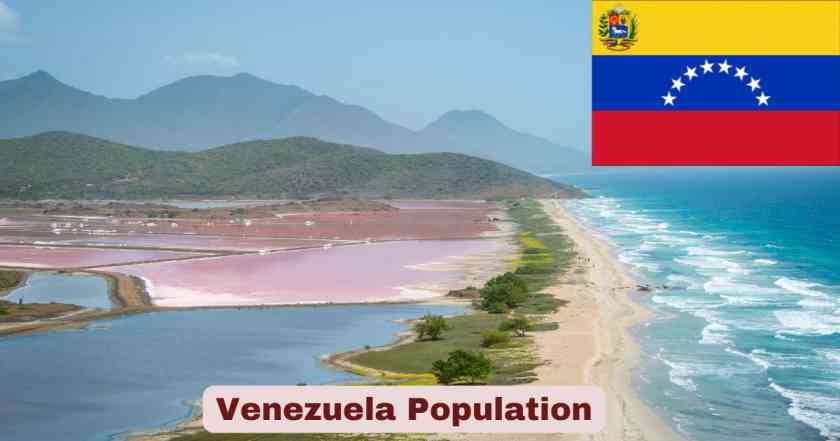
Venezuela Population 2026
The Venezuela population in 2026 represents one of the most dramatic demographic transformations in modern Latin American history, characterized by massive emigration outflows that have fundamentally reshaped the nation’s size, structure, and social composition. As of January 2026, multiple international demographic monitoring organizations report Venezuela’s resident population at between 28.5 million and 31 million people, reflecting significant discrepancies in estimation methodologies stemming from the absence of recent official census data and the unprecedented scale of emigration that has seen approximately 7.9 million Venezuelans flee the country since 2014. This exodus, representing nearly 23% of the pre-crisis population, constitutes the largest displacement crisis in Latin American history and ranks as the second-largest refugee situation globally after Syria, fundamentally altering Venezuela’s demographic profile across all age cohorts and socioeconomic categories.
The complexity of accurately measuring Venezuela’s current population arises from multiple compounding factors that have disrupted traditional demographic data collection and analysis processes. Venezuela’s National Statistics Institute ceased providing comprehensive vital statistics to the United Nations Statistics Division in 2019, forcing international demographic agencies including the UN Population Division, World Bank, and independent monitoring organizations to rely on estimation models, satellite data analysis, household surveys, and destination country immigration records to construct population figures. The World Bank reports 28.4 million people as of 2024, while Worldometer estimates 28.57 million for early 2026 based on UN data elaboration, Countrymeters projects 30.97 million, and Trading Economics indicates approximately 34.1 million when including diaspora populations, illustrating how different accounting methodologies for emigrant populations, irregular migration flows, and demographic modeling assumptions produce substantially divergent population assessments for the same country during the same period.
Interesting Facts About Venezuela Population in 2026
| Key Population Fact Category | Statistical Data | Source/Period |
|---|---|---|
| Current Total Population | 28,573,313 | Worldometer (January 3, 2026) |
| Alternative Population Estimate | 30,969,231 | Countrymeters (January 7, 2026) |
| World Bank 2024 Estimate | 28,405,543 | World Bank Official Data 2024 |
| Trading Economics Estimate | 34.1 million (with broader inclusion) | Trading Economics 2024 |
| Global Population Ranking | 53rd largest country worldwide | UN Population Division 2025 |
| World Population Share | 0.35% of total global population | Worldometer 2026 |
| Total Emigrants Since 2014 | 7.9 million Venezuelans fled abroad | UNHCR December 2025 |
| Percentage Who Have Fled | 23% of pre-crisis population emigrated | USA for UNHCR 2025 |
| Daily Emigration Rate | 2,000 people leave Venezuela every day | UNHCR/R4V Platform 2025 |
| Emigrants in Latin America | 6.9 million Venezuelans in region | UNHCR December 2025 |
| Colombian Venezuelan Population | 2.8 million reside in Colombia | World Vision May 2025 |
| Population Density | 32 people per km² (84 per sq mile) | Worldometer 2026 |
| Urban Population Percentage | 88.2% live in urban areas | World Bank 2024 |
| Rural Population Percentage | 11.8% live in rural areas | World Bank 2024 |
| Median Age | 30.7 years | UN Population Division 2025 |
| Life Expectancy at Birth | 72.1 years (both sexes) | World Bank 2023 |
| Male Life Expectancy | 68.7 years | World Bank 2023 |
| Female Life Expectancy | 75.8 years | World Bank 2023 |
| Birth Rate | 16.7 births per 1,000 people | Worldometer 2026 |
| Death Rate | 7.3 deaths per 1,000 people | Worldometer 2026 |
| Fertility Rate | 2.21 children per woman | World Bank 2023 |
| Population Growth Rate | -1.25% (negative growth) | Worldometer 2026 |
| Annual Population Change | -364,891 people per year | Worldometer 2026 Projection |
| Daily Population Change | -1,000 people per day (net decline) | Worldometer 2026 |
| Births Per Day | +1,305 births daily | Worldometer 2026 |
| Deaths Per Day | -570 deaths daily | Worldometer 2026 |
| Net Migration Per Day | -1,739 emigrants daily | Worldometer 2026 |
Data Sources: Worldometer UN Data Elaboration 2026, Countrymeters 2026, World Bank World Development Indicators 2024, UN Population Division World Population Prospects 2024 Revision, UNHCR Refugee Statistics December 2025, Trading Economics Database 2024
Analysis of Venezuela Population Statistics and Key Facts in 2026
The striking variance in Venezuela population estimates across international monitoring organizations reflects both the methodological complexity of measuring populations experiencing mass emigration and the fundamental challenge of obtaining reliable data from a nation that has ceased publishing comprehensive demographic statistics since 2019. The Worldometer figure of 28.57 million people as of January 3, 2026, represents the most conservative estimate and aligns closely with World Bank data reporting 28.4 million for 2024, suggesting approximately 150,000 to 200,000 additional people over the year-long interval. However, the substantially higher Countrymeters estimate of 30.97 million reflects alternative modeling assumptions about emigrant return rates, undocumented populations, and natural increase calculations that produce a differential of more than 2.4 million people or roughly 8% higher than Worldometer’s assessment for the identical date of January 7, 2026.
The demographic statistics reveal a nation experiencing negative population growth of -1.25% annually, an extraordinarily rare phenomenon typically associated only with war-torn countries or societies experiencing catastrophic disasters, with Venezuela’s annual population decline of 364,891 people representing the net effect of natural increase from births exceeding deaths being completely overwhelmed by massive emigration outflows. The daily demographic dynamics paint this picture starkly, with 1,305 births and 570 deaths generating a natural daily increase of 735 people that is completely offset and reversed by 1,739 emigrants departing daily, producing a net daily population decline of approximately 1,000 people. This emigration-driven population loss, sustained across multiple years since the crisis intensified in 2015, has removed approximately 7.9 million Venezuelans from the country according to UNHCR December 2025 statistics, representing nearly one-quarter of the nation’s pre-crisis population and fundamentally reshaping Venezuela’s age structure, skill composition, and long-term demographic trajectory.
Venezuela Population by Major Cities and Urban Areas in 2026
| City/Urban Area | Estimated Population | Region/State | Population Change Status |
|---|---|---|---|
| Caracas Metropolitan Area | 2,900,000 – 3,200,000 | Capital District/Miranda/Vargas | Declining due to emigration |
| Maracaibo | 1,600,000 – 1,900,000 | Zulia State | Second largest city |
| Valencia | 1,400,000 – 1,600,000 | Carabobo State | Industrial center |
| Barquisimeto | 1,000,000 – 1,200,000 | Lara State | Fourth largest city |
| Maracay | 900,000 – 1,100,000 | Aragua State | Central urban area |
| Ciudad Guayana | 700,000 – 900,000 | Bolívar State | Industrial/mining center |
| Barcelona-Puerto La Cruz | 600,000 – 800,000 | Anzoátegui State | Coastal urban cluster |
| Maturín | 400,000 – 500,000 | Monagas State | Eastern oil region |
| Ciudad Bolívar | 350,000 – 450,000 | Bolívar State | Orinoco River city |
| San Cristóbal | 300,000 – 400,000 | Táchira State | Andean border city |
| Total Urban Population | ~25.1 million | Nationwide | 88.2% of total population |
| Total Rural Population | ~3.4 million | Nationwide | 11.8% of total population |
Data Sources: UN Population Division 2024, World Bank Urban Population Data 2024, City Population Database, Venezuelan Geographic Institute Estimates
Venezuela maintains one of Latin America’s highest urbanization rates at 88.2%, with the overwhelming majority of the population concentrated in cities along the northern coastal corridor and the Andean highlands, while vast interior regions including the Orinoco Basin and Amazonas State remain sparsely populated. The Caracas Metropolitan Area, encompassing the Capital District and portions of Miranda and Vargas states, serves as the dominant population center with an estimated 2.9 to 3.2 million residents, though this figure has declined substantially from peak levels exceeding 4 million inhabitants during the 2000s as economic crisis and insecurity have driven middle-class and professional emigration alongside internal migration to provincial cities perceived as safer and more economically viable.
Maracaibo in Zulia State, historically Venezuela’s second city and the center of the nation’s petroleum industry, houses between 1.6 and 1.9 million people but has experienced particularly severe population decline as the collapse of oil production eliminated employment across the entire regional economy while chronic infrastructure failures including electricity blackouts lasting days or weeks made daily life increasingly untenable for residents. The broader urban hierarchy shows Valencia with 1.4 to 1.6 million as an industrial and commercial center in the central-north corridor, Barquisimeto with 1.0 to 1.2 million serving the agricultural western interior, and Maracay with 900,000 to 1.1 million as a military and manufacturing hub. The significant population ranges rather than precise figures reflect the absence of recent census data and the difficulty of tracking rapid emigration-driven population changes across multiple municipalities that comprise these metropolitan areas.
Venezuela Population Age Distribution and Structure in 2026
| Age Group | Population Count | Percentage of Total | Gender Breakdown |
|---|---|---|---|
| 0-14 years (Children) | 7,800,000 – 8,400,000 | 27-29% | Slightly more males |
| 15-24 years (Youth) | 4,600,000 – 5,000,000 | 16-17% | Balanced gender ratio |
| 25-54 years (Prime Working Age) | 11,500,000 – 12,500,000 | 40-43% | Slightly more females |
| 55-64 years (Mature Adults) | 2,500,000 – 2,800,000 | 8-10% | Slightly more females |
| 65+ years (Elderly) | 2,200,000 – 2,500,000 | 7-9% | More females (higher life expectancy) |
| Under 25 years (Combined Youth) | 12,400,000 – 13,400,000 | 42.4% | Youth majority |
| Working Age 15-64 years | 18,600,000 – 20,300,000 | 68.4% | Productive population |
| Median Age (National) | 29.4 – 30.7 years | N/A | Relatively young population |
| Dependency Ratio (Total) | 46-48 dependents per 100 | N/A | Moderate dependency |
| Child Dependency Ratio | 38-40 per 100 working age | N/A | Children per workers |
| Elderly Dependency Ratio | 10-12 per 100 working age | N/A | Elderly per workers |
| Sex Ratio (Males per 100 Females) | 98.2 males per 100 females | N/A | Slightly more females |
Data Sources: UN Population Division World Population Prospects 2024 Revision, Population Pyramids 2025 Data, Worldometer Demographics 2025, Countrymeters Age Distribution 2026
Venezuela’s age distribution reveals a demographic structure transitioning from the traditional Latin American pattern of high youth dependency toward a more mature profile, though emigration has significantly distorted this evolution by disproportionately removing prime working-age adults from the population pyramid. The under-15 age cohort comprising approximately 27-29% of the population or 7.8 to 8.4 million children represents a substantially smaller proportion than historical norms, when youth populations regularly exceeded 35-40% of total inhabitants during the 1970s and 1980s, reflecting both declining fertility rates from 6+ children per woman in earlier generations to the current 2.21 children per woman and reduced birth rates as economic crisis has caused couples to delay or limit childbearing.
The prime working-age population between 25-54 years constituting 40-43% of inhabitants or 11.5 to 12.5 million people theoretically provides Venezuela with a substantial productive workforce, yet this demographic dividend has been severely compromised by emigration patterns that have disproportionately affected precisely this age cohort, as working-age adults with marketable skills, education credentials, and family responsibilities have demonstrated the highest propensity to emigrate in search of economic opportunities abroad. The median age of 29.4 to 30.7 years positions Venezuela as a relatively young society compared to developed nations where median ages typically exceed 40 years, yet significantly older than Sub-Saharan African countries with median ages below 20 years, placing the nation in a demographic sweet spot where the working-age population outnumbers dependents, though emigration prevents full realization of this advantage. The dependency ratio of 46-48 dependents per 100 working-age individuals, calculated by combining both child and elderly dependents against the 15-64 productive population, indicates a moderate burden on workers to support non-productive population segments through family transfers, taxation, and social programs.
Venezuela Migration Crisis and Emigration Statistics 2014-2026
| Migration Metric | Statistical Value | Time Period | Additional Context |
|---|---|---|---|
| Total Venezuelan Emigrants | 7.9 million people | 2014 – December 2025 | Second-largest refugee crisis globally |
| Percentage of Population That Fled | 23% of pre-crisis population | Since 2014 crisis | Nearly one-quarter emigrated |
| Daily Emigration Rate | 2,000 people per day | Current ongoing rate | Approximately 60,000 monthly |
| Emigrants in Latin America/Caribbean | 6.9 million Venezuelans | December 2025 | 87% remain in region |
| Venezuelans in Colombia | 2.8 million people | May 2025 | Largest destination country |
| Venezuelans in Peru | 1.5 million people | 2025 estimate | Second-largest destination |
| Venezuelans in Ecuador | 474,000 people | 2025 estimate | Andean corridor destination |
| Venezuelans in Chile | 445,000 people | 2025 estimate | Southern cone destination |
| Venezuelans in Brazil | 500,000+ people | 2025 estimate | Northern border region |
| Venezuelans in United States | 545,000+ people | 2024 estimate | North American diaspora |
| Venezuelans in Spain | 400,000+ people | 2024 estimate | European destination |
| Venezuelans in Argentina | 220,000+ people | 2025 estimate | Southern destination |
| Venezuelans in Panama | 130,000+ people | 2025 estimate | Central American hub |
| Irregular Migration Status | Millions lack legal status | Ongoing | Documentation challenges |
| Refugee/Asylum Applicants | 1.6 million pending claims | December 2025 | R4V Platform data |
| Percentage Seeking Return | Fewer than 10% | Survey data | Most intend to stay abroad |
Data Sources: UNHCR Refugee Statistics December 2025, R4V Platform (Refugee and Migrant Response Plan), IOM Migration Data, National Immigration Statistics from Host Countries, World Vision Reports 2025, USA for UNHCR Data
The Venezuelan migration crisis documented at 7.9 million emigrants since 2014 represents the largest population displacement in Western Hemisphere history and constitutes the second-largest refugee situation globally, surpassed only by Syria’s 6.8 million registered refugees plus an additional 6.9 million internally displaced persons, though Venezuela’s crisis has generated fewer internally displaced while producing substantially larger absolute numbers of international emigrants relative to remaining population. The exodus, accelerating dramatically after 2015 when political repression intensified and hyperinflation destroyed purchasing power, has removed approximately 23% of Venezuela’s pre-crisis population, a proportion comparable only to Lebanon during its civil war, Liberia during its conflicts, and Syria after 2011, fundamentally altering the nation’s demographic composition while creating humanitarian challenges across receiving countries throughout Latin America and beyond.
Colombia has absorbed the largest Venezuelan emigrant population at 2.8 million people as of May 2025, with most entering through the porous 2,219-kilometer shared border that facilitates irregular crossings even as official ports of entry impose restrictions, placing extraordinary pressure on Colombian border cities including Cúcuta, Maicao, and Arauca where Venezuelan populations sometimes exceed local Colombian residents. Peru ranks as the second-largest destination with approximately 1.5 million Venezuelans, though this population has faced increasing hostility as economic competition and xenophobic sentiment have fueled discriminatory policies including documentation requirements that effectively exclude many Venezuelans from formal employment and social services. The daily emigration rate of 2,000 people reported by UNHCR and the R4V regional response platform, equivalent to approximately 60,000 Venezuelans leaving monthly or 730,000 annually, indicates that despite a decade of sustained outmigration, the crisis continues unabated as deteriorating economic conditions, political persecution, and lack of basic services drive continuing departures across all social classes and geographic regions.
Venezuela Birth Rate, Death Rate, and Natural Increase in 2026
| Vital Statistics Indicator | Rate/Value | Daily Count | Annual Projection |
|---|---|---|---|
| Crude Birth Rate | 16.7 births per 1,000 people | +1,305 births per day | 476,325 annual births |
| Crude Death Rate | 7.3 deaths per 1,000 people | -570 deaths per day | 208,050 annual deaths |
| Natural Increase Rate | 9.4 per 1,000 (births minus deaths) | +735 net daily | 268,275 natural increase |
| Total Fertility Rate | 2.21 children per woman | N/A | Below replacement (2.1) |
| Net Migration Rate | -47.5 per 1,000 (heavy emigration) | -1,739 emigrants daily | -633,735 net emigration |
| Population Growth Rate | -1.25% (overall decline) | -1,000 net daily change | -365,460 annual decline |
| Infant Mortality Rate | 18-22 deaths per 1,000 live births | Estimated | Higher than regional average |
| Maternal Mortality Ratio | 125 deaths per 100,000 live births | Estimated 2023 | Increased from previous decades |
| Life Expectancy at Birth (Both Sexes) | 72.1 years | N/A | World Bank 2023 |
| Life Expectancy Males | 68.7 years | N/A | World Bank 2023 |
| Life Expectancy Females | 75.8 years | N/A | 7.1 year gender gap |
| Replacement Fertility Level | 2.1 children per woman | N/A | Venezuela slightly above |
Data Sources: Worldometer Vital Statistics 2026, UN Population Division 2024 Revision, World Bank World Development Indicators 2023-2024, WHO Health Statistics, Countrymeters Projections 2026
Venezuela’s vital statistics reveal a paradoxical demographic situation where natural population increase from births exceeding deaths remains positive at 9.4 per 1,000 people annually, generating approximately 735 additional Venezuelans daily through the biological reproduction process, yet this natural growth is overwhelmed more than twice over by emigration outflows of 1,739 people per day, producing an overall negative population growth rate of -1.25% that translates to approximately 365,000 fewer residents annually. The crude birth rate of 16.7 births per 1,000 inhabitants, equivalent to 1,305 babies born daily or roughly 476,000 annual births, represents a substantial decline from historical Venezuelan fertility patterns when birth rates regularly exceeded 35-40 per 1,000 during the 1960s-1970s demographic transition period, reflecting both voluntary fertility reduction as couples achieve smaller desired family sizes and crisis-induced birth postponement as economic instability discourages childbearing.
The total fertility rate of 2.21 children per woman, while marginally above the replacement level of 2.1 theoretically necessary to maintain population stability without immigration, has proven insufficient to offset emigration-driven losses because replacement-level fertility only maintains population when combined with low mortality and minimal net migration, conditions Venezuela categorically fails to meet. The crude death rate of 7.3 deaths per 1,000 people, generating 570 daily deaths or approximately 208,000 annual deaths, remains relatively low by developing country standards and reflects Venezuela’s still-young age structure where only 7-9% of the population exceeds age 65, though mortality rates have reportedly increased during the crisis years as healthcare system collapse has elevated deaths from preventable and treatable conditions including infectious diseases, maternal complications, and chronic illnesses lacking medication availability. The life expectancy of 72.1 years reported by World Bank for 2023 represents a decline from peak Venezuelan life expectancy exceeding 75 years during the early 2000s petroleum boom, with the 7.1-year gender gap between male (68.7 years) and female (75.8 years) life expectancy consistent with biological patterns where women globally outlive men by 4-8 years on average.
Venezuela Population Compared to Latin American Countries in 2026
| Country | Population (Millions) | Population Density (per km²) | Urban Population % | Median Age (Years) | Regional Rank |
|---|---|---|---|---|---|
| Brazil | 216.0 | 25 | 87.6% | 33.2 | 1st in region |
| Mexico | 128.5 | 66 | 81.0% | 29.2 | 2nd in region |
| Colombia | 51.9 | 46 | 81.7% | 31.7 | 3rd in region |
| Argentina | 46.2 | 17 | 92.2% | 32.4 | 4th in region |
| Peru | 34.4 | 27 | 78.9% | 29.5 | 5th in region |
| Venezuela | 28.6-31.0 | 32 | 88.2% | 29.4-30.7 | 6th in region |
| Chile | 19.6 | 26 | 87.8% | 35.9 | 7th in region |
| Ecuador | 18.2 | 73 | 64.2% | 28.8 | 8th in region |
| Bolivia | 12.4 | 11 | 70.4% | 25.5 | 9th in region |
| Paraguay | 6.9 | 17 | 62.7% | 26.5 | 10th in region |
| Uruguay | 3.4 | 20 | 95.7% | 35.9 | 11th in region |
Data Sources: UN Population Division World Population Prospects 2024, World Bank Population Data 2024, Worldometer 2026 Estimates, National Statistical Institutes
Venezuela’s regional demographic position has shifted dramatically over recent decades as the emigration crisis has arrested population growth that historically outpaced regional averages, dropping the nation from what was once Latin America’s fifth-largest population during the early 2000s to current sixth place behind Peru, with the possibility of falling to seventh behind Chile if current negative growth trends continue while Chile maintains positive population momentum. The population range of 28.6 to 31.0 million reflects measurement uncertainties but positions Venezuela firmly in the upper-middle tier of Latin American nations by population size, substantially larger than Southern Cone countries including Chile, Uruguay, and Paraguay, comparable to Peru, yet dwarfed by regional giants Brazil with 216 million and Mexico with 128.5 million inhabitants.
Venezuela’s urbanization rate of 88.2% ranks among Latin America’s highest alongside Argentina at 92.2% and Uruguay at 95.7%, reflecting the continent-wide rural-to-urban migration trend that has transformed predominantly agrarian societies into highly urbanized populations concentrated in megacities and secondary urban centers, though Venezuela’s urbanization differs from neighbors in having occurred more rapidly during the petroleum boom decades when oil revenues financed urban infrastructure and created employment opportunities that attracted massive internal migration from countryside to cities. The median age of 29.4 to 30.7 years positions Venezuela near the regional middle ground, younger than aging societies like Chile and Uruguay both at 35.9 years where low fertility has produced population structures skewed toward middle-aged and elderly cohorts, yet older than high-fertility Bolivia at 25.5 years where large youth populations continue to swell overall numbers despite increasing emigration to Argentina, Brazil, and Spain.
Venezuela Ethnic Composition and Demographic Diversity in 2026
| Ethnic/Racial Group | Estimated Percentage | Approximate Population | Geographic Concentration |
|---|---|---|---|
| Mestizo (Mixed Ancestry) | 50-52% | 14.3-15.7 million | Throughout country, highest in Llanos |
| White/European Descent | 42-43% | 12.0-13.0 million | Andean region, Coastal Range, urban centers |
| Afro-Venezuelan | 3.5-4.0% | 1.0-1.2 million | Coastal regions, Barlovento, Lake Maracaibo |
| Indigenous/Amerindian | 2.0-2.5% | 570,000-750,000 | Amazonas, Delta Amacuro, Zulia (Guajira) |
| Asian/Middle Eastern Descent | 1.0-1.5% | 285,000-465,000 | Urban commercial centers |
| Other/Mixed Categories | 0.5-1.0% | 140,000-310,000 | Various urban areas |
| Genetic Ancestry (Autosomal DNA) | European 60.6%, Amerindian 23%, African 16.3% | Population-wide average | University of Brasília 2008 Study |
| Spanish-Speaking | 97%+ | ~27.7 million | National language, universal |
| Indigenous Language Speakers | ~2% | ~570,000 | Southern states, Guajira Peninsula |
| Portuguese Speakers | <1% | <285,000 | Brazilian border communities |
Data Sources: Venezuela National Statistics Institute Historical Data, Demographics of Venezuela Research, University of Brasília Genetic Study 2008, Statistical Institute Estimates, Academic Demographic Research
Venezuela’s ethnic composition reflects centuries of population mixing among indigenous Americans, European colonizers and immigrants, and enslaved Africans brought during the colonial era, producing one of Latin America’s most thoroughly mixed populations where rigid racial categories have limited social salience compared to more stratified societies like Brazil or historical patterns in the United States. The mestizo population comprising approximately 50-52% or 14.3 to 15.7 million people represents individuals of mixed indigenous and European ancestry, though this category encompasses extraordinary genetic diversity given that “mestizo” effectively serves as a residual classification for anyone who doesn’t clearly fit European, African, or indigenous categories, with the actual genetic admixture ranging from predominantly European with minor indigenous components to predominantly indigenous with limited European ancestry.
The white/European descent population at 42-43% or 12.0 to 13.0 million Venezuelans reflects the nation’s substantial reception of European immigrants during multiple waves spanning the 19th and 20th centuries, including Spanish immigrants fleeing civil war during the 1930s-1940s, Italian immigrants seeking economic opportunities during post-World War II reconstruction, Portuguese immigrants from the 1960s-1970s, and smaller contingents from Germany, France, and Eastern Europe attracted by petroleum industry employment. Geographic concentration patterns show Europeans and their descendants dominating the Andean states of Mérida, Táchira, and Trujillo where cool highland climates attracted agricultural settlers, the Coastal Mountain Range surrounding Caracas where European immigrants formed commercial and professional classes, and major urban centers where European surnames remain prevalent among business, political, and cultural elites. The Afro-Venezuelan population estimated at 3.5-4.0% or 1.0 to 1.2 million people represents a significantly smaller proportion than other circum-Caribbean and Atlantic coastal nations including Colombia, Brazil, and Cuba where African slavery played more central economic roles, with Venezuelan Afro-descendants concentrated primarily in Caribbean coastal regions including Barlovento Miranda, the Lake Maracaibo basin in Zulia, and specific coastal towns where historical plantation agriculture employed enslaved labor.
Venezuela Population Density and Geographic Distribution in 2026
| Geographic Region | Approximate Population | Land Area (km²) | Population Density (per km²) | Percentage of National Territory |
|---|---|---|---|---|
| Northern Coastal/Mountain Belt | ~21-23 million | ~150,000 | 140-150 | 17% of territory, 75% of population |
| Andean Region (Western Mountains) | ~3-4 million | ~35,000 | 85-115 | High elevation settlements |
| Llanos (Central Plains) | ~2-3 million | ~240,000 | 8-13 | Extensive cattle ranching |
| Orinoco River Basin (Guayana) | ~1.5-2 million | ~430,000 | 3-5 | Sparse settlement, resource extraction |
| Amazonas State (Southern Rainforest) | ~180,000-200,000 | ~180,000 | ~1 | Lowest density, indigenous territories |
| National Average Density | 28.6-31.0 million | 916,445 km² | 31-34 per km² | Total national territory |
| Comparison: Brazil | 216 million | 8,515,767 km² | 25 | Regional neighbor |
| Comparison: Colombia | 51.9 million | 1,141,748 km² | 46 | Regional neighbor |
| Caracas Metro Density | 2.9-3.2 million | ~4,000 km² | 725-800 | Capital region concentration |
Data Sources: Venezuela National Geographic Institute, UN Population Division Subnational Data 2024, Academic Geographic Studies, Regional Statistical Estimates
Venezuela’s population distribution varies sharply by geographic region, reflecting differences in climate, terrain, and economic activity. The Northern Coastal and Mountain Belt is the most densely populated area, with an estimated 21–23 million people living on approximately 150,000 km², resulting in a high population density of 140–150 people per km². Although this region represents only about 17% of Venezuela’s total land area, it accommodates nearly 75% of the national population, driven by major urban and economic centers. The Andean region in the western mountains supports a population of around 3–4 million across 35,000 km², with densities ranging from 85 to 115 people per km², shaped by compact, high-elevation settlements.
Large interior and southern regions remain sparsely populated. The Llanos (central plains) are home to roughly 2–3 million people spread over about 240,000 km², resulting in low densities of just 8–13 people per km², largely due to extensive cattle ranching and agricultural land use. The Orinoco River Basin (Guayana region) has an estimated 1.5–2 million residents across approximately 430,000 km², with densities of only 3–5 people per km², reflecting sparse settlement patterns linked to mining and resource extraction. Amazonas state is the least populated region, with only 180,000–200,000 people living across 180,000 km², giving a density of around 1 person per km², dominated by rainforest and indigenous territories. Nationally, Venezuela’s population of 28.6–31.0 million across 916,445 km² results in an average density of 31–34 people per km². By comparison, Brazil has a density of about 25 people per km² (216 million people over 8.5 million km²), while Colombia is denser at roughly 46 people per km² (51.9 million people over 1.14 million km²). The Caracas metropolitan area stands out as an extreme concentration, with 2.9–3.2 million residents within roughly 4,000 km², producing very high densities of 725–800 people per km².
Disclaimer: This research report is compiled from publicly available sources. While reasonable efforts have been made to ensure accuracy, no representation or warranty, express or implied, is given as to the completeness or reliability of the information. We accept no liability for any errors, omissions, losses, or damages of any kind arising from the use of this report.