
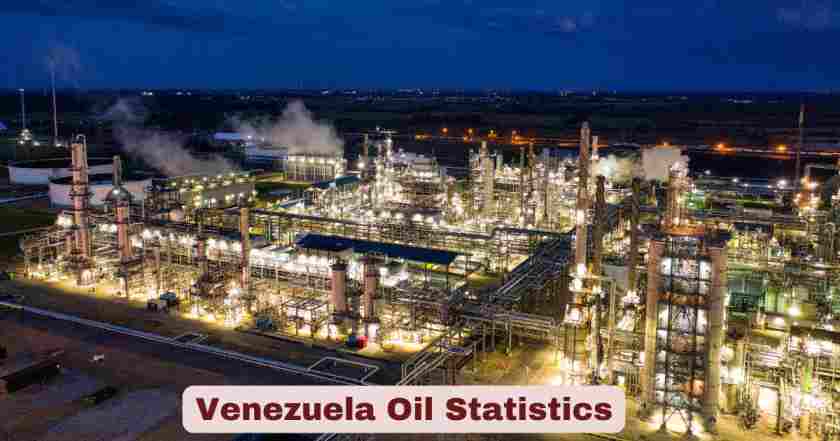
Venezuela Oil 2026
The Venezuela oil industry stands at a critical juncture as the nation possesses the world’s largest proven crude oil reserves while simultaneously facing unprecedented production challenges. With an estimated 303 billion barrels of proven oil reserves, representing approximately 17% of global reserves, Venezuela’s petroleum sector remains one of the most strategically significant energy assets worldwide. The country’s oil wealth is predominantly concentrated in the Orinoco Belt, a vast geological formation spanning approximately 55,000 square kilometers in central Venezuela, where deposits consist primarily of extra-heavy crude oil that requires specialized extraction and refining processes.
Despite holding this massive reserve base, Venezuela’s actual oil production has experienced a dramatic decline over the past two decades, falling from peak levels of 3.5 million barrels per day in the 1970s to current output levels hovering around 900,000 to 1.1 million barrels per day as of late 2025 and early 2026. This stark contrast between potential and actual production reflects the cumulative impact of chronic underinvestment, infrastructure deterioration, technical challenges, international sanctions, and political instability that have systematically eroded the operational capacity of Petróleos de Venezuela (PDVSA), the state-owned oil company. The recent political developments in early January 2026, including US military intervention and the capture of President Nicolás Maduro, have introduced additional uncertainty into Venezuela’s petroleum future while simultaneously opening possibilities for industry transformation through increased foreign investment and operational restructuring.
Interesting Facts About Venezuela Oil in 2026
| Key Fact Category | Statistical Data | Source/Period |
|---|---|---|
| World Reserve Ranking | Holds 303 billion barrels, world’s largest proven reserves | OPEC Annual Statistical Bulletin 2025 |
| Global Reserve Share | Accounts for approximately 17-18% of total global oil reserves | Energy Institute 2025 |
| Recent Monthly Production | 1,142,000 barrels per day (November 2025) | Trading Economics/OPEC Data |
| December 2025 Production | 963,000 barrels per day (preliminary estimate) | Venezuela Ministry of Hydrocarbons |
| Production Decline | Output dropped from 3.5 million bpd (1970s) to current ~1 million bpd | Multiple Sources |
| 2025 Average Production | Approximately 1.1 million barrels per day | OPEC/IEA/Multiple Analysts |
| Global Production Share | Less than 1% of total world crude oil production | IEA/OPEC 2025 |
| Orinoco Belt Size | Covers 55,000 square kilometers with heavy crude deposits | Venezuela Ministry Data |
| Export Revenue 2024 | $17.52 billion in oil sales abroad | PDVSA Official Reports |
| Export Revenue 2023 | $4.05 billion in crude oil exports | Observatory of Economic Complexity |
| Main Export Destination | China receives approximately 80% of all oil exports | PDVSA Shipping Data |
| November 2025 China Exports | 746,000 barrels per day shipped to Chinese ports | PDVSA November 2025 Data |
| US Import Volumes | Approximately 150,000 barrels per day under Chevron license | US EIA 2025 |
| Cuba Supply | 20,000-25,000 barrels per day under government arrangements | Industry Estimates 2025 |
| OPEC Membership | Founding member since 1960 alongside Iran, Iraq, Kuwait, Saudi Arabia | OPEC Historical Data |
| Global Production Ranking 2024 | Ranked 21st in world oil production despite largest reserves | Visual Capitalist/Energy Institute |
| Infrastructure Investment Need | Requires $58 billion to return to peak production capacity | PDVSA Estimates |
| Peak Historical Production | 3.7 million barrels per day achieved in 1970 | Historical OPEC Data |
Data Sources: OPEC Annual Statistical Bulletin 2025, US Energy Information Administration, Trading Economics, PDVSA Official Reports, International Energy Agency, Observatory of Economic Complexity, Energy Institute Statistical Review
Analysis of Venezuela Oil Statistics and Key Facts in 2026
The comprehensive statistical data reveals a petroleum paradox where Venezuela simultaneously holds unmatched reserve wealth while experiencing severely constrained production capabilities. The 303 billion barrel reserve figure, verified by OPEC’s 2025 Annual Statistical Bulletin and corroborated by multiple international agencies including the US Energy Information Administration and the Energy Institute, positions Venezuela as the undisputed global leader in proven crude oil reserves. This massive reserve base surpasses even Saudi Arabia’s 267 billion barrels and represents nearly one-fifth of all known recoverable petroleum resources worldwide. However, the critical distinction lies in the composition of these reserves, as approximately two-thirds consist of extra-heavy crude from the Orinoco Belt, characterized by high sulfur content, increased viscosity, and extraction complexity that demands specialized processing infrastructure and dilution with lighter hydrocarbons before transportation becomes feasible.
The production statistics paint a starkly different picture from the reserve data, highlighting the severe operational constraints facing Venezuela’s petroleum sector. Recent monthly production figures show considerable volatility, with November 2025 production reaching 1,142,000 barrels per day according to Trading Economics data, representing a marginal increase from October’s 1,132,000 bpd. However, this uptick proved temporary, as preliminary December 2025 estimates from Venezuela’s Ministry of Hydrocarbons indicate production declined to 963,000 barrels per day, reflecting ongoing technical failures in automated systems and uncertainty stemming from geopolitical tensions. The 2025 annual average of approximately 1.1 million barrels per day represents less than one-third of Venezuela’s production during its peak performance era, when the nation consistently pumped 3 million to 3.5 million barrels daily throughout the late 1990s and early 2000s. This dramatic production collapse, accelerating sharply after 2015 when output fell below 2.4 million bpd, stems from the compounding effects of nationalization policies initiated under President Hugo Chávez, chronic capital underinvestment, workforce exodus of technical expertise, equipment deterioration, and comprehensive US sanctions implemented from 2019 onward that severed Venezuela’s access to international petroleum markets and financial systems.
Venezuela Oil Reserves and Global Ranking in 2026
| Country | Proven Oil Reserves (Billion Barrels) | % of Global Total | Reserves Rank |
|---|---|---|---|
| Venezuela | 303.00 | 17.2% | 1st |
| Saudi Arabia | 267.00 | 15.2% | 2nd |
| Iran | 209.00 | 11.9% | 3rd |
| Canada | 163.00 | 9.3% | 4th |
| Iraq | 145.00 | 8.2% | 5th |
| United States | 74.00 | 4.2% | 9th |
| Global Total | 1,760.00 | 100% | – |
Data Source: OPEC Annual Statistical Bulletin 2025, Energy Institute Statistical Review 2025
Venezuela’s commanding position atop global oil reserve rankings represents both an enormous economic asset and a source of profound geopolitical significance. The 303 billion barrel reserve base documented in OPEC’s 2025 Annual Statistical Bulletin establishes Venezuela’s undisputed leadership in proven petroleum resources, maintaining a substantial 36 billion barrel advantage over second-ranked Saudi Arabia. This reserve dominance translates to Venezuela controlling approximately 17.2% of all economically recoverable crude oil worldwide, a concentration that theoretically provides the nation with extraordinary leverage in international energy markets and positions it as a critical long-term supplier for global petroleum demand. The reserve calculation methodology employed by OPEC, while based on self-reported national data, represents crude oil volumes that geological surveys and production testing have confirmed as technically and economically feasible to extract under current technological conditions and prevailing price environments.
However, the practical significance of Venezuela’s reserve wealth faces substantial challenges related to resource quality, extraction complexity, and infrastructure requirements. The vast majority of Venezuelan reserves, estimated at over 200 billion barrels, consist of extra-heavy crude oil concentrated within the Orinoco Belt geological formation. This extra-heavy crude, characterized by API gravity measurements below 10 degrees and sulfur content frequently exceeding 3%, requires extensive processing including heating, dilution with lighter hydrocarbons called naphtha or condensate, and specialized upgrading facilities to convert the viscous bitumen into transportable synthetic crude oil suitable for conventional refining operations. The $100 per barrel threshold cited by energy analysts represents the approximate crude oil price level necessary to make large portions of Venezuela’s heaviest reserves economically viable for commercial development, meaning that at current price levels around $60 per barrel, significant portions of the declared reserve base remain stranded assets lacking commercial viability. The stark contrast between Venezuela’s reserve wealth and its actual production performance, currently ranking only 21st globally in daily output despite holding the world’s largest reserves, underscores how technical complexity, capital requirements, and political factors can fundamentally disconnect resource endowment from productive capacity.
Venezuela Oil Production Statistics by Month in 2025-2026
| Month/Year | Production Volume (Barrels Per Day) | Change from Previous Month | Data Source |
|---|---|---|---|
| September 2025 | 963,000 | – | CEIC Data/OPEC |
| October 2025 | 956,000 | -7,000 (-0.7%) | CEIC Data/OPEC |
| October 2025 | 1,132,000 | – | Trading Economics (Alternative) |
| November 2025 | 1,142,000 | +10,000 (+0.9%) | Trading Economics |
| November 2025 | 934,000 | – | OPEC Secondary Sources |
| November 2025 | 860,000 | -150,000 | International Energy Agency |
| December 2025 | 963,000 (Preliminary) | -179,000 (-15.7%) | Venezuela Ministry of Hydrocarbons |
| 2025 Annual Average | ~1,100,000 | – | Multiple Sources Composite |
| 2024 Annual Average | ~850,000 | – | US EIA Historical |
| Peak Production (1970) | 3,700,000 | – | Historical OPEC Data |
Data Sources: OPEC Monthly Oil Market Reports, Trading Economics, CEIC Database, International Energy Agency, Venezuela Ministry of Hydrocarbons, US Energy Information Administration
The monthly production data for Venezuela’s oil sector reveals significant volatility and persistent measurement discrepancies across different international monitoring organizations, reflecting the opacity and complexity of tracking petroleum output in a nation experiencing political turmoil and limited transparent reporting mechanisms. The November 2025 production figures demonstrate this data variability challenge, with Trading Economics reporting 1,142,000 barrels per day based on certain methodologies, while OPEC secondary sources cite a substantially lower 934,000 bpd, and the International Energy Agency estimates an even more conservative 860,000 bpd for the same month. These divergent assessments, spanning a range of approximately 280,000 barrels per day or roughly 30% variance, stem from differences in measurement methodologies, reliance on varying primary data sources, inclusion or exclusion of condensate production from joint venture operations, and the challenges of verifying official PDVSA reports against independent satellite monitoring and shipping data.
The preliminary December 2025 production estimate of 963,000 barrels per day reported by Venezuela’s Ministry of Hydrocarbons, while representing official government data, indicates a significant 15.7% month-over-month decline from November’s higher Trading Economics figure, attributed by ministry officials to ongoing failures in automated production systems and operational uncertainty stemming from US military presence in the Caribbean region. This production decline pattern, concentrated particularly in the critical Orinoco Belt region where output reportedly fell from 630,000 bpd in November to 540,000 bpd in December, reflects the systemic infrastructure vulnerabilities plaguing Venezuela’s petroleum operations. The 2025 annual average production of approximately 1.1 million barrels per day, synthesized from multiple international sources including OPEC, IEA, and independent analysts, represents only 29.7% of Venezuela’s peak production capacity achieved in 1970 when the nation pumped 3.7 million barrels daily. This seven-decade production decline, accelerating dramatically after 2015, illustrates how years of underinvestment, equipment deterioration, workforce attrition, and sanctions enforcement have systematically dismantled what was once Latin America’s most robust petroleum production infrastructure.
Venezuela Oil Exports and Export Destinations in 2025-2026
| Export Destination | Volume (Barrels Per Day) | Percentage of Total | Revenue/Value | Period |
|---|---|---|---|---|
| China | 746,000 | ~80% | Majority of export revenue | November 2025 |
| United States (Chevron License) | 150,000 | ~15-18% | Under special authorization | 2025 Average |
| Cuba | 20,000-25,000 | ~2-3% | Concessional terms | 2025 Estimate |
| Spain | Variable | <2% | Spot transactions | Intermittent 2025 |
| India | Variable | <2% | Spot transactions | Intermittent 2025 |
| Brazil | Variable | <1% | Complex trading structures | Intermittent 2025 |
| Malaysia (Transshipment) | 4.2 million barrels | (Likely to China) | December volumes | December 2025 |
| Total Export Volume 2024 | 805,500 (Average Daily) | 100% | $17.52 billion annual | PDVSA 2024 Report |
| Total Export Volume 2023 | ~650,000 (Estimated Daily) | 100% | $4.05 billion annual | OEC 2023 Data |
| December 2025 Exports | 17.6 million barrels (Total Month) | – | Declining trend | December 2025 |
| November 2025 Exports | 27.2 million barrels (Total Month) | – | Higher baseline | November 2025 |
Data Sources: PDVSA Shipping Data, US Energy Information Administration, Observatory of Economic Complexity, S&P Global Commodities at Sea, Industry Estimates 2025
Venezuela’s export destination profile has undergone a fundamental geopolitical realignment over the past decade, with China emerging as the overwhelmingly dominant purchaser of Venezuelan crude oil, receiving approximately 80% of total export volumes and specifically importing 746,000 barrels per day according to November 2025 PDVSA shipping data. This profound commercial reorientation toward Asian markets represents a dramatic strategic shift from Venezuela’s historical export patterns, when the United States served as the primary destination for Venezuelan petroleum, importing as much as 1.3 million barrels daily in the early 2000s before comprehensive US sanctions implemented from 2019 onward effectively severed direct crude trade between the two nations. The China-Venezuela petroleum relationship, sustained through complex financing arrangements including oil-for-loan repayment structures and facilitated by shadow fleet tanker operations designed to circumvent Western sanctions, has provided Venezuela with a critical economic lifeline while simultaneously deepening Beijing’s strategic foothold in Latin America’s energy sector and ensuring Chinese refineries maintain access to heavy-sour crude grades suited to their processing configurations.
The export revenue figures reveal stark disparities depending on reporting methodology and period assessed, with PDVSA’s official 2024 report claiming $17.52 billion in oil sales abroad reflecting an average export volume of approximately 805,500 barrels per day, while the Observatory of Economic Complexity documents substantially lower 2023 crude oil export revenue of just $4.05 billion. This significant discrepancy, representing more than a 300% difference in reported values, likely stems from variations in what transactions are included in each assessment, with PDVSA’s figures potentially encompassing refined products and broader petroleum sales while OEC data may focus more narrowly on crude oil exports specifically, as well as differences in price realizations given that Venezuelan crude typically sells at substantial discounts to benchmark prices due to its heavy-sour quality characteristics and sanctions-related marketing constraints. The monthly export volume data for late 2025 shows concerning deterioration, with December 2025 total exports of 17.6 million barrels representing a 35% decline from November’s 27.2 million barrels, driven primarily by sharply reduced shipments to China which fell from 8.9 million barrels in November to just 2 million barrels in December, though some of this apparent decrease may reflect rerouting through Malaysian transshipment points which received 4.2 million barrels in December that were likely ultimately destined for Chinese refineries.
Venezuela Oil Infrastructure and Investment Requirements in 2026
| Infrastructure Component | Current Status/Capacity | Investment Required | Timeframe |
|---|---|---|---|
| Pipeline Network | Not updated in 50 years | Part of $58 billion total | Long-term |
| Orinoco Belt Upgraders | Partially operational | Mid-cycle repairs needed | 2026-2027 |
| Petropiar Upgrader (Chevron) | Requiring repairs | Included in mid-cycle investment | 2026 |
| Petrocedeno Upgrader | Shutdown/Restart Needed | Significant capital for restart | 2026-2027 |
| Maracaibo Basin Wells | Requiring workovers | Well intervention capital | 2026-2027 |
| Western Fields (Zulia/Trujillo) | 280,000 bpd (Dec 2025) | Maintenance investment | Ongoing |
| Monagas State Fields | 120,000 bpd (Dec 2025) | Production optimization | Ongoing |
| Total Infrastructure Rehabilitation | Severely deteriorated | $58 billion (PDVSA estimate) | 10-15 years |
| Return to 3 Million BPD | Currently ~1 million bpd | $180 billion (Rystad Energy) | By 2040 |
| Near-term Investment (2-3 years) | Urgent capacity maintenance | $30-35 billion (Rystad) | 2026-2028 |
| Maintain Current Output | ~1 million bpd baseline | $50 billion (15-year period) | 2026-2040 |
| Reach 2 Million BPD | Double current production | $110 billion (Rystad) | By 2030 |
| Refinery Capacity (PDVSA) | Nominal 1.3 million bpd | Major rehabilitation needed | Multi-year |
| Citgo US Refineries | 800,000+ bpd capacity | Under creditor sale process | 2026 |
| PDVSA Workforce | Significantly depleted | Technical expertise rebuild | 5-10 years |
Data Sources: PDVSA Infrastructure Assessments, Rystad Energy Analysis, S&P Global, Venezuela Ministry of Hydrocarbons, Industry Analysts 2025-2026
Venezuela’s petroleum infrastructure faces catastrophic deterioration requiring unprecedented capital investment to restore even baseline operational functionality, with PDVSA’s own assessment acknowledging that the pipeline network has not received meaningful updates in 50 years and estimating that $58 billion in infrastructure investment would be necessary just to return production capacity to historical peak levels. This infrastructure degradation extends across the entire petroleum value chain, from wellhead production facilities experiencing chronic automated system failures and equipment breakdowns, through gathering and transportation pipeline networks suffering from corrosion and capacity constraints, to upgrading facilities in the Orinoco Belt that require extensive repairs to convert extra-heavy crude into exportable synthetic oil, and ultimately to refineries operating at fractions of their designed throughput due to maintenance backlogs and spare parts shortages.
The investment requirement estimates provided by international energy analysts paint an even more daunting picture of the capital intensity needed for meaningful production recovery. Rystad Energy’s comprehensive assessment projects that returning Venezuela to its early 2000s production levels of approximately 3 million barrels per day would require $180 billion in cumulative investment deployed over the period extending to 2040, with a critical near-term component of $30 to $35 billion needing commitment within the next two to three years to prevent further production decline and begin stabilizing output. Even more sobering, Rystad calculates that $50 billion in investment over the next 15 years would be required merely to maintain Venezuela’s current production baseline around 1 million barrels daily, without achieving any growth, highlighting how ongoing capital expenditure is essential just to offset natural field decline rates and ongoing equipment deterioration. The $110 billion investment estimate to reach 2 million barrels per day by 2030 represents a more modest but still substantial production recovery target that would require attracting major international oil companies back to Venezuela with security guarantees, transparent contract terms, and operational autonomy that have been absent from the country’s petroleum sector for nearly two decades since the nationalization policies initiated under President Chávez fundamentally altered the risk-return profile for foreign investors.
Venezuela Oil Comparison with Major Global Producers in 2025
| Country | Proven Reserves (Billion Barrels) | Daily Production (Million BPD) | Reserves Rank | Production Rank | Reserve-to-Production Ratio (Years) |
|---|---|---|---|---|---|
| Venezuela | 303 | 0.96 (2024 avg) | 1st | 21st | 800+ |
| United States | 74 | 20.0+ | 9th | 1st | 10 |
| Saudi Arabia | 267 | 10-12 | 2nd | 2nd | 60-70 |
| Russia | 107 | 9.4 | 7th | 3rd | 30 |
| Canada | 163 | 5.5 | 4th | 5th | 80 |
| Iran | 209 | 3.2 | 3rd | 7th | 180 |
| Iraq | 145 | 4.3 | 5th | 6th | 90 |
| China | 26 | 4.0 | 13th | 8th | 18 |
Data Sources: OPEC Annual Statistical Bulletin 2025, Energy Institute Statistical Review, US EIA, Multiple Industry Sources
The comparative analysis of Venezuela against major global petroleum producers reveals the stark anomaly of a nation possessing unmatched reserve wealth while generating production output that ranks far below its resource endowment would suggest. Venezuela’s reserve-to-production ratio exceeding 800 years, calculated by dividing its 303 billion barrel reserve base by current daily production of approximately 960,000 barrels, stands as the highest ratio globally by an enormous margin and starkly illustrates how the country’s immense petroleum resources remain largely stranded and commercially unexploited. This ratio contrasts dramatically with efficient producers like the United States, which despite relatively modest reserves of 74 billion barrels maintains the world’s highest production rate exceeding 20 million barrels per day through aggressive development of shale oil resources, resulting in a reserve-to-production ratio of merely 10 years that reflects the American petroleum industry’s short investment cycle model where operators continuously drill new wells to replace depleting production rather than booking long-lived conventional reserves.
Saudi Arabia, holding the world’s second-largest reserve base of 267 billion barrels while producing 10 to 12 million barrels daily, demonstrates the more typical profile of a major petroleum exporter with both substantial reserves and commensurate production capacity, yielding a reserve-to-production ratio of 60 to 70 years that suggests sustainable long-term output potential without resource exhaustion concerns. The kingdom’s production capacity, approximately 10 to 12 times greater than Venezuela’s despite possessing 36 billion fewer barrels of reserves, underscores how operational efficiency, infrastructure quality, investment consistency, and political stability fundamentally determine a nation’s ability to convert underground resources into commercially productive assets. Similarly, Russia’s daily output of 9.4 million barrels from a reserve base substantially smaller than Venezuela’s at 107 billion barrels demonstrates how technical capability and continuous capital deployment enable resource monetization at scales Venezuela has been unable to achieve for nearly two decades, with Russian production rates nearly 10 times higher than Venezuela’s despite possessing less than one-third the proven reserves.
Venezuela Oil Quality and Crude Grades in 2026
| Crude Grade/Characteristic | Specification/Details | API Gravity | Sulfur Content | Processing Requirements |
|---|---|---|---|---|
| Merey Heavy Crude | Primary export grade from Orinoco | 16-18° | 2.3-2.5% | High sulfur removal needed |
| Extra-Heavy Orinoco Crude | Majority of reserves | <10° | >3.0% | Extensive upgrading required |
| Heavy-Sour Classification | Typical Venezuelan export crude | 15-22° | >1.0% | Specialized refinery equipment |
| Dilution Requirement | Naphtha/condensate blending | N/A | N/A | Required for pipeline transport |
| Western Fields Production | Lighter than Orinoco crude | 20-25° | 1.5-2.0% | Less intensive processing |
| Benchmark Comparison – WTI | US light sweet crude | 38-40° | <0.5% | Standard refining |
| Benchmark Comparison – Brent | North Sea crude | 38° | <0.5% | Standard refining |
| Price Discount | Typical Merey discount to Brent | N/A | N/A | $8-15 per barrel below benchmark |
Data Sources: PDVSA Technical Specifications, Industry Trading Data, Petroleum Quality Standards, Market Analysis 2025
Venezuela’s crude oil quality profile, dominated by heavy-sour characteristics with high sulfur content and low API gravity measurements, fundamentally shapes the country’s petroleum economics, export markets, and infrastructure requirements while simultaneously limiting the pool of global refineries capable of processing Venezuelan crude. The primary export grade Merey heavy crude, originating from Orinoco Belt production, typically measures 16 to 18 degrees API gravity with sulfur content ranging from 2.3% to 2.5%, classifying it as heavy-sour crude that commands substantial price discounts relative to light-sweet benchmark oils like West Texas Intermediate or Brent crude. The more extreme extra-heavy Orinoco crude constituting the vast majority of Venezuela’s reserve base measures below 10 degrees API gravity with sulfur content frequently exceeding 3.0%, approaching the consistency of semi-solid bitumen at ambient temperatures and requiring extensive dilution with lighter hydrocarbons simply to achieve sufficient fluidity for pipeline transportation.
This quality challenge creates profound implications for Venezuela’s petroleum commercialization because only specialized refineries equipped with complex coking units, hydrotreating facilities, and sulfur removal systems possess the technical capability to process heavy-sour crude into high-value transportation fuels and petrochemical feedstocks. The US Gulf Coast refinery complex, historically constructed with Venezuelan crude specifications in mind during the era of robust bilateral petroleum trade, represents the globally optimal processing destination for Venezuelan heavy-sour barrels, with many facilities specifically designed around the unique characteristics of Orinoco crude. These US refineries, including the 800,000+ barrels per day capacity across Citgo’s three facilities (Lemont, Lake Charles, and Corpus Christi) that were owned by PDVSA until facing creditor-driven asset sales, achieve higher utilization rates and more favorable economics when running heavy crude compared to light-sweet alternatives. The typical $8 to $15 per barrel price discount that Merey crude trades below Brent benchmark prices reflects both the quality differential requiring more intensive refining and the limited pool of globally competitive buyers, ultimately constraining Venezuela’s petroleum revenue potential even when production volumes remain stable.
Venezuela Oil Historical Production Decline Analysis 2000-2026
| Period/Year | Average Daily Production | Cumulative Decline from Peak | % of Peak Production | Key Events/Factors |
|---|---|---|---|---|
| 1970 (Peak) | 3,700,000 bpd | Baseline | 100% | Peak historical production |
| Late 1990s – Early 2000s | 3,000,000+ bpd | -700,000 | 81% | Pre-nationalization era |
| 2006 | ~2,800,000 bpd | -900,000 | 76% | Chávez nationalization begins |
| 2013 | ~2,500,000 bpd | -1,200,000 | 68% | Maduro assumes presidency |
| 2015 | <2,400,000 bpd | -1,300,000 | 65% | Production fall accelerates |
| 2018 | ~1,400,000 bpd | -2,300,000 | 38% | Pre-US sanctions baseline |
| 2019 | ~900,000 bpd | -2,800,000 | 24% | Comprehensive US sanctions imposed |
| 2020 | ~600,000 bpd | -3,100,000 | 16% | COVID-19 impact, sanctions tightening |
| 2023 | ~850,000 bpd | -2,850,000 | 23% | Modest recovery begins |
| 2024 | ~850,000-900,000 bpd | -2,800,000 | 24% | Continued gradual increase |
| 2025 | ~1,100,000 bpd | -2,600,000 | 30% | Chevron expansion, partial recovery |
| November 2025 | 934,000-1,142,000 bpd | -2,558,000 to -2,766,000 | 25-31% | Significant data variance |
| December 2025 | 963,000 bpd | -2,737,000 | 26% | Production decline from November |
Data Sources: OPEC Historical Statistics, US EIA Historical Database, PDVSA Reports, International Energy Agency, Multiple Industry Analysts
The systematic production collapse documented across more than two decades represents one of the petroleum industry’s most dramatic capacity destruction episodes, with Venezuela losing approximately 2.6 to 2.7 million barrels per day of productive capacity between its peak performance era and current output levels, equivalent to 70% to 75% of its former production base evaporating through operational deterioration, investment withdrawal, workforce exodus, and sanctions impact. The production decline trajectory reveals distinct phases of accelerating decay, beginning with gradual erosion during the mid-2000s nationalization period under President Hugo Chávez when foreign companies faced expropriation of assets and PDVSA transitioned toward serving as a political patronage vehicle rather than a commercially-driven enterprise, resulting in technical workforce departures and maintenance budget diversions that subtly undermined operational fundamentals even before production numbers reflected the underlying deterioration.
The decline accelerated dramatically after 2013 when Nicolás Maduro assumed the presidency amid deepening economic crisis, with production falling from approximately 2.5 million bpd to below 2.4 million bpd by 2015 as infrastructure maintenance backlogs, equipment failures, and spare parts shortages reached critical thresholds that operational teams could no longer compensate for through improvisation and workarounds. The most catastrophic production collapse occurred between 2018 and 2020, when output plummeted from approximately 1.4 million barrels per day to just 600,000 bpd, driven primarily by comprehensive US sanctions implemented in January 2019 that severed Venezuela from international financial systems, blocked petroleum equipment imports, prevented diluent imports essential for processing extra-heavy crude, and threatened secondary sanctions against international companies engaging with PDVSA, effectively isolating Venezuela from global petroleum commerce. The modest production recovery visible from 2023 onward, with output gradually increasing from 850,000 bpd to approximately 1.1 million bpd by 2025, reflects primarily the impact of sanctions relief granted to Chevron allowing the American oil major to resume limited operations through joint ventures with PDVSA.
Disclaimer: This research report is compiled from publicly available sources. While reasonable efforts have been made to ensure accuracy, no representation or warranty, express or implied, is given as to the completeness or reliability of the information. We accept no liability for any errors, omissions, losses, or damages of any kind arising from the use of this report.