
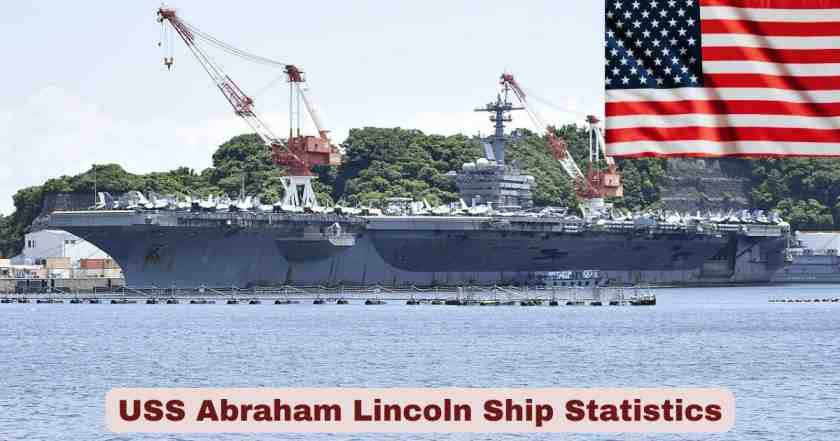
USS Abraham Lincoln in the US 2026
The USS Abraham Lincoln (CVN-72) stands as one of America’s most formidable naval assets, representing the fifth vessel in the legendary Nimitz-class aircraft carrier family that has defined American naval power projection for over four decades. As of 2026, this nuclear-powered supercarrier operates as the flagship of Carrier Strike Group 3 (CSG-3) and hosts Carrier Air Wing Nine (CVW-9), maintaining her homeport at Naval Air Station North Island in San Diego, California, where she proudly serves the United States Pacific Fleet. With a full-load displacement of approximately 100,000 tons, an overall length of 1,092 feet, and the capability to embark up to 90 aircraft of various types, the Abraham Lincoln serves as a mobile airbase capable of projecting American military power to any corner of the globe. The carrier’s two Westinghouse A4W nuclear reactors provide virtually unlimited range and the ability to operate at speeds exceeding 30 knots, enabling rapid deployment to crisis zones.
Throughout 2026, the USS Abraham Lincoln has maintained an intensive operational tempo conducting critical missions across the U.S. 7th Fleet area of operations in the Indo-Pacific region. Following her deployment to the Middle East in August 2024 in response to escalating tensions between Iran and Israel, the carrier returned to Pacific operations in late 2025, departing Naval Station San Diego on November 24, 2025, for her current deployment. As of January 2026, intelligence reports indicate the Abraham Lincoln is operating in the South China Sea, conducting routine operations to deter aggression, strengthen alliances and partnerships, and advance peace through strength. The carrier’s crew of approximately 5,680 personnel—including 3,200 ship’s company and 2,480 aircrew—operates one of the most sophisticated warships ever constructed, featuring advanced radar systems including AN/SPS-48E 3-D and AN/SPS-49(V)5 2-D air search radar, state-of-the-art defensive weapons systems including Phalanx CIWS and Rolling Airframe Missiles, and the capability to launch continuous combat operations 24 hours a day for extended periods.
Interesting Facts About USS Abraham Lincoln in the US 2026
| USS Abraham Lincoln Fact | 2026 Statistics |
|---|---|
| Hull Number | CVN-72 (Fifth Nimitz-class carrier) |
| Commissioned Date | November 11, 1989 (37 years in service as of 2026) |
| Homeport | Naval Air Station North Island, San Diego, California |
| Current Operational Status (January 2026) | Operating in South China Sea with U.S. 7th Fleet |
| Overall Length | 1,092 feet (332.8 meters) |
| Flight Deck Width | 252 feet (76.8 meters) |
| Full-Load Displacement | Approximately 100,000 tons (104,112 long tons) |
| Maximum Speed | 30+ knots (34.5+ miles per hour) |
| Total Crew Capacity | 5,680 personnel (3,200 ship + 2,480 air wing) |
| Aircraft Capacity | 90 aircraft (fixed-wing and helicopters) |
| Nuclear Reactors | 2 x Westinghouse A4W reactors |
| Propulsion Output | 260,000 shaft horsepower |
| Flight Deck Area | Approximately 4.5 acres |
| RCOH Completion | May 12, 2017 (at Newport News Shipbuilding) |
| RCOH Cost | Approximately $4 billion |
| Carrier Strike Group | Carrier Strike Group 3 (CSG-3) flagship |
| Embarked Air Wing | Carrier Air Wing Nine (CVW-9) |
Data Source: U.S. Navy, Commander Naval Air Forces Pacific, Naval Sea Systems Command, USNI News Fleet Tracker – January 2026
The USS Abraham Lincoln carries a distinguished service record spanning 37 years of continuous operations since her commissioning on November 11, 1989—coincidentally the same date as the fall of the Berlin Wall, symbolizing the dawn of a new era in American naval power. Named after America’s 16th President, she is the second U.S. Navy ship to bear Abraham Lincoln’s name, preceded by a Polaris ballistic missile submarine (SSBN-602) that served from 1961 to 1981. The carrier’s construction contract was awarded to Newport News Shipbuilding on December 27, 1982, with her keel laid on November 3, 1984, launch on February 13, 1988, and commissioning ceremonies held nearly two years later. The vessel was christened by JoAnn K. Webb, wife of Secretary of the Navy James Webb, in a ceremony that marked the beginning of one of the most active and combat-proven carriers in the fleet.
The Abraham Lincoln’s operational history encompasses numerous humanitarian missions, combat deployments, and historic firsts that have cemented her reputation as one of the Navy’s most capable warships. She was the first aircraft carrier to integrate female aviators into the crew after Combat Exclusion Laws were lifted on April 28, 1993, marking a watershed moment in Navy history. In January 2022, the carrier made history again by deploying with the first female commanding officer of a nuclear-powered aircraft carrier, Captain Amy Bauernschmidt, demonstrating continued progress in gender integration within the surface warfare community. The ship’s current commanding officer as of 2026 is Captain Daniel Keeler, who leads the vessel through her current Indo-Pacific deployment. The carrier’s unofficial motto—”Shall not perish from the earth“—derives from President Lincoln’s Gettysburg Address, while her crew’s unofficial rallying cry “Get over it!” originated from the controversial 2003 deployment extension during Operation Iraqi Freedom.
USS Abraham Lincoln Physical Specifications in the US 2026
| Specification Category | Measurement | Details |
|---|---|---|
| Overall Length | 1,092 feet (332.8 meters) | Bow to stern measurement |
| Waterline Length | 1,040 feet (317 meters) | Length at water surface |
| Flight Deck Width (Beam) | 252 feet (76.8 meters) | Maximum width across flight deck |
| Hull Beam (Waterline) | 134 feet (40.84 meters) | Width at waterline |
| Draft | 41 feet (12.5 meters) | Depth below waterline when fully loaded |
| Full-Load Displacement | 104,112 long tons (105,783 metric tons) | Total weight when fully loaded |
| Empty Displacement | Approximately 87,000 long tons | Original design displacement |
| Flight Deck Area | Approximately 4.5 acres (18,210 square meters) | Total deck space for aircraft operations |
| Height (Keel to Mast) | Approximately 244 feet (74 meters) | Total vertical clearance |
| Hangar Deck Area | Approximately 25,000 square meters | Enclosed aircraft storage and maintenance |
| Island Structure Height | Approximately 150 feet above flight deck | Command and control tower |
| Anchor Weight | 30 tons each (2 anchors) | Historical anchor from USS Enterprise installed 2014 |
Data Source: U.S. Navy, Naval Sea Systems Command, Newport News Shipbuilding, Naval Vessel Register – January 2026
The USS Abraham Lincoln’s physical dimensions place her among the largest warships ever constructed, with her 1,092-foot overall length making her longer than the Empire State Building is tall and her 4.5-acre flight deck providing more usable space than many small airports. The flight deck’s 252-foot width accommodates simultaneous launch and recovery operations, with the angled flight deck on the port side allowing aircraft to land while others prepare for launch on the bow catapults. The carrier features an island superstructure on the starboard side housing the bridge, flight control tower, and various radar and communications arrays that rise approximately 150 feet above the flight deck, providing commanding views of all aviation operations. Four Mk 7 Mod 3 steam catapults enable the carrier to launch aircraft weighing up to 80,000 pounds at speeds sufficient for safe flight, with catapults capable of accelerating a 70,000-pound aircraft from zero to 165 miles per hour in just two seconds over a 310-foot launch stroke.
The carrier’s hangar deck, located one level below the flight deck, provides approximately 25,000 square meters of enclosed space where aircraft undergo maintenance, repairs, and storage when not operating from the flight deck. Four aircraft elevators—three on the starboard side and one on the port side—move aircraft between the hangar deck and flight deck, with each elevator capable of lifting 130,000 pounds and measuring approximately 52 feet by 62 feet. The 41-foot draft allows the Abraham Lincoln to navigate most major ports worldwide while her nuclear propulsion eliminates the need for underway refueling of the ship itself, though she requires regular alongside replenishment of aviation fuel, ordnance, food, and supplies to sustain extended operations. The carrier’s two 30-ton anchors—one of which was transferred from the retired USS Enterprise (CVN-65) in October 2014—provide mooring capability in harbor, though the massive vessel typically uses tugboat assistance when maneuvering in restricted waters.
USS Abraham Lincoln Propulsion and Performance in the US 2026
| Propulsion Specification | Capability | Performance Details |
|---|---|---|
| Nuclear Reactors | 2 x Westinghouse A4W reactors | Pressurized water reactors |
| Total Shaft Horsepower | 260,000 SHP | Driving 4 bronze propeller shafts |
| Propellers | 4 bronze propellers | Each with 5 blades |
| Maximum Speed | 30+ knots (35+ mph / 56+ km/h) | Official speed classified |
| Operational Range | Virtually unlimited | Limited only by crew endurance and supplies |
| Reactor Refueling Interval | 25 years | Mid-life refueling during RCOH |
| Last Refueling | 2013-2017 | During 4-year RCOH at Newport News |
| Next Refueling Due | 2038-2042 (projected) | Near end of 50-year service life |
| Fuel Load per Reactor | Classified | Highly enriched uranium |
| Operational Tempo | Continuous operations | 24/7 flight ops capability |
| Turning Radius | Classified | Capable of high-speed turns |
| Emergency Power | 4 emergency diesel generators | Each 2,500 kilowatts |
Data Source: U.S. Navy, Naval Sea Systems Command, Newport News Shipbuilding Technical Specifications – January 2026
The USS Abraham Lincoln’s propulsion system represents the pinnacle of naval nuclear engineering, with her two Westinghouse A4W pressurized water reactors generating sufficient steam to produce 260,000 shaft horsepower distributed across four bronze propeller shafts. Each reactor operates independently, heating water to create high-pressure steam that drives steam turbines connected through reduction gears to the propeller shafts, with the system designed to provide redundancy ensuring the carrier can operate on a single reactor if necessary for maintenance or emergencies. The nuclear propulsion system’s greatest advantage lies in its operational flexibility—while conventionally powered carriers must replenish fuel oil every few days, the Abraham Lincoln can operate for 25 years between reactor refuelings, fundamentally transforming naval operations by eliminating the vulnerability of fuel supply lines and enabling extended deployment far from friendly ports.
The carrier’s performance capabilities enable rapid response to global crises, with her maximum speed exceeding 30 knots (approximately 35 miles per hour)—a figure the Navy officially keeps classified but which represents sufficient speed to reach any point in the world’s oceans within days. During her May 2017 sea trials following RCOH completion, the Abraham Lincoln demonstrated her capabilities by conducting high-speed turn drills in the Atlantic Ocean, showcasing the maneuverability of the 100,000-ton warship. The vessel’s four emergency diesel generators, each producing 2,500 kilowatts of electrical power, provide backup electricity for essential systems should the main turbine generators experience problems, while the ship’s extensive electrical distribution system generates sufficient power to illuminate a city of 100,000 people. The carrier’s nuclear propulsion also provides unlimited electrical power for increasingly power-hungry radar systems, defensive weapons, and future directed-energy weapons without compromising propulsion performance.
USS Abraham Lincoln Crew and Organization in the US 2026
| Personnel Category | Number | Roles and Responsibilities |
|---|---|---|
| Total Ship’s Company | Approximately 3,200 personnel | Sailors operating and maintaining the ship |
| Air Wing Personnel | Approximately 2,480 personnel | Pilots, aircrew, aircraft maintainers |
| Total Embarked | 5,680 total personnel | Maximum capacity during deployment |
| Officers (Ship’s Company) | Approximately 160 officers | Department heads, division officers |
| Officers (Air Wing) | Approximately 290 officers | Pilots, naval flight officers, maintenance officers |
| Commanding Officer | Captain Daniel Keeler (2026) | Overall command of ship and strike group |
| Executive Officer | 1 Captain (O-6) | Second-in-command |
| Command Master Chief | 1 Master Chief Petty Officer | Senior enlisted advisor |
| Air Wing Commander | 1 Captain (O-6) | Commands Carrier Air Wing Nine |
| Major Departments | 8-10 major departments | Operations, Engineering, Supply, Medical, etc. |
| Work Shifts | 24-hour watch rotations | Continuous operations around the clock |
| Female Crew Members | Approximately 20-25% of total | Fully integrated throughout ship |
Data Source: U.S. Navy Personnel Command, Commander Naval Air Forces Pacific, USS Abraham Lincoln Public Affairs – January 2026
The USS Abraham Lincoln’s crew represents a diverse cross-section of America, with approximately 5,680 personnel working together as a floating city to operate one of the world’s most complex warships. The ship’s company of approximately 3,200 sailors handles all functions related to operating and maintaining the carrier itself, organized into major departments including Operations, Navigation, Engineering (nuclear and conventional), Supply, Medical, Dental, Administration, Safety, and Security. The Engineering Department, the largest aboard, employs several hundred personnel operating and maintaining the nuclear propulsion plant, steam systems, electrical distribution, fresh water production, sewage treatment, and thousands of other mechanical and electrical systems distributed throughout the vessel’s 4,800 compartments. The Air Wing personnel of approximately 2,480 sailors and officers focus exclusively on aviation operations, including pilots flying the aircraft, naval flight officers operating weapons and sensors, aviation maintenance personnel servicing and repairing aircraft, aviation ordnance personnel handling weapons, and aviation support specialists managing fuel, ground support equipment, and flight deck operations.
Captain Daniel Keeler commands the USS Abraham Lincoln as of 2026, bearing ultimate responsibility for the safety and mission accomplishment of nearly 6,000 personnel and a warship valued at over $5 billion including aircraft and weapons. The Executive Officer serves as second-in-command, managing the day-to-day administration of ship’s company while the Commanding Officer focuses on strategic mission execution and maintaining relationships with fleet commanders. The Carrier Air Wing Commander (CAG), typically a senior Navy or Marine Corps aviator with the rank of Captain, exercises operational control over all embarked aircraft and air wing personnel, though administratively the CAG reports to the ship’s Commanding Officer. The ship operates on 24-hour watch rotations, with personnel standing watches ranging from four to twelve hours depending on their position, ensuring continuous operation of engineering plants, combat systems, navigation, communications, and flight operations regardless of time of day or weather conditions.
USS Abraham Lincoln Aircraft Complement in the US 2026
| Aircraft Type | Squadron | Number | Mission |
|---|---|---|---|
| F/A-18E Super Hornet | VFA-14 “Tophatters” | 10-12 aircraft | Multi-role strike fighter |
| F/A-18E Super Hornet | VFA-151 “Vigilantes” | 10-12 aircraft | Multi-role strike fighter |
| F/A-18F Super Hornet | VFA-41 “Black Aces” | 10-12 aircraft | Multi-role strike fighter |
| F-35C Lightning II | VMFA-314 “Black Knights” (USMC) | 10 aircraft | 5th-generation stealth fighter |
| EA-18G Growler | VAQ-133 “Wizards” | 4-5 aircraft | Electronic warfare |
| E-2D Advanced Hawkeye | VAW-117 “Wallbangers” | 4-5 aircraft | Airborne early warning |
| MH-60R Seahawk | HSC-8 “Eightballers” | 6-8 aircraft | Anti-submarine warfare, search and rescue |
| MH-60S Knight Hawk | HSM Squadron | 4-6 aircraft | Logistics, vertical replenishment |
| CMV-22B Osprey | VRC-30 Det | 2 aircraft | Carrier onboard delivery |
| Total Aircraft Embarked | CVW-9 (8 squadrons) | Approximately 70-75 operational | 90 maximum capacity |
Data Source: Carrier Air Wing Nine, U.S. Navy, Commander Naval Air Forces Pacific, DVIDS – January 2026
Carrier Air Wing Nine (CVW-9), embarked aboard the USS Abraham Lincoln throughout 2026, represents one of the most capable carrier air wings in the U.S. Navy, comprising approximately 70-75 operational aircraft distributed across eight squadrons with tail code “NG” (representing “Nine Golf”). The air wing’s combat power centers on approximately 40-44 strike fighters including three squadrons of F/A-18E/F Super Hornets and one squadron of F-35C Lightning II stealth fighters, providing the carrier strike group with the ability to conduct air superiority, close air support, strike warfare, and reconnaissance missions. The F-35C Lightning II aircraft assigned to Marine Fighter Attack Squadron 314 made history in November 2024 when they conducted the first-ever combat sortie of the carrier-based variant during strikes against Houthi weapons storage facilities in Yemen, demonstrating the cutting-edge capabilities now available to carrier air wings.
The VFA-14 “Tophatters” trace their lineage back to 1919, making them the oldest active aviation squadron in the U.S. Navy, while the VFA-41 “Black Aces” earned fame during the Vietnam War as the Navy’s premier fighter squadron. The EA-18G Growlers of VAQ-133 “Wizards” provide electronic warfare capabilities including radar jamming, communications disruption, and suppression of enemy air defenses, operating the AN/ALQ-99 jamming pods and AGM-88 HARM anti-radiation missiles. The E-2D Advanced Hawkeye aircraft of VAW-117 “Wallbangers” serve as the strike group’s eyes in the sky, using their powerful AN/APY-9 radar to detect and track airborne threats at ranges exceeding 300 nautical miles while coordinating air defense and strike operations. The MH-60R/S Seahawk helicopters provide critical capabilities including anti-submarine warfare using dipping sonar and sonobuoys, search and rescue operations, logistics support through vertical replenishment, and medical evacuation when needed.
USS Abraham Lincoln Defensive Systems in the US 2026
| Weapon System | Specification | Capability |
|---|---|---|
| Phalanx CIWS | 3 x Mk 15 Phalanx | 20mm Gatling gun, 4,500 rounds/minute |
| Rolling Airframe Missile | 2 x Mk 49 RAM launchers | 21-cell launcher, infrared/radar-guided |
| Evolved Sea Sparrow Missile | 2 x Mk 29 ESSM launchers | Medium-range surface-to-air missiles |
| AN/SPS-48E Radar | 3-D air search radar | Long-range air surveillance |
| AN/SPS-49(V)5 Radar | 2-D air search radar | Extended-range early warning |
| AN/SPQ-9B Radar | Target acquisition radar | Anti-ship missile defense |
| AN/SPN-46 Radar | Air traffic control radar | Aircraft marshaling and recovery |
| AN/SPN-43C Radar | Air traffic control radar | Backup aircraft control |
| Mk 91 Fire Control | 4 systems | ESSM guidance |
| AN/SLQ-32(V)4 ECM | Electronic warfare suite | Threat warning and jamming |
| SRBOC Chaff Launchers | 4 x Mk 36 SRBOC | 6-barrel decoy launchers |
Data Source: U.S. Navy, Naval Sea Systems Command, Jane’s Fighting Ships – January 2026
The USS Abraham Lincoln’s defensive systems provide layered protection against airborne threats ranging from anti-ship cruise missiles to enemy aircraft attempting to attack the strike group. The three Phalanx Close-In Weapon Systems (CIWS) serve as the carrier’s last line of defense, using 20mm M61A1 Gatling guns capable of firing 4,500 rounds per minute to destroy incoming missiles that penetrate outer defensive layers. Each Phalanx mount operates autonomously, using its own search and track radars to detect, track, and engage threats at ranges up to 1.5 nautical miles, with the system designed to engage multiple threats in rapid succession. The two Mk 49 Rolling Airframe Missile (RAM) launchers, each containing 21 missiles, provide short-range defense against anti-ship missiles, using a combination of infrared and radar guidance to intercept threats at ranges up to 5 nautical miles before they reach gun range.
The Evolved Sea Sparrow Missile (ESSM) system provides medium-range air defense, engaging threats at distances up to 30 nautical miles using semi-active radar homing guidance provided by the ship’s Mk 91 fire control systems. The carrier’s sophisticated radar suite enables detection and tracking of hundreds of air contacts simultaneously, with the AN/SPS-48E 3-D air search radar providing long-range surveillance out to approximately 250 nautical miles while determining target altitude as well as range and bearing. The AN/SPQ-9B target acquisition radar specifically focuses on detecting sea-skimming anti-ship missiles flying at extremely low altitudes, using pulse-Doppler technology to distinguish small, fast-moving threats from sea clutter. The AN/SLQ-32(V)4 electronic warfare suite provides threat warning by detecting enemy radar emissions and can conduct electronic attack by jamming hostile radars, while the four Mk 36 SRBOC chaff launchers deploy clouds of radar-reflective chaff and infrared flares to decoy incoming missiles away from the carrier.
USS Abraham Lincoln Refueling and Complex Overhaul in the US 2026
| RCOH Category | Specification | Details |
|---|---|---|
| RCOH Start Date | March 2013 | Delayed 6 weeks due to budget sequestration |
| RCOH Completion Date | May 12, 2017 | Sea trials completed May 9-12, 2017 |
| Total RCOH Duration | 4 years (48 months) | Standard Nimitz-class RCOH period |
| Contract Award | $2.6 billion | Cost-plus-incentive-fee contract |
| Final RCOH Cost | Approximately $4 billion | Including planning and growth work |
| Shipyard Location | Newport News Shipbuilding | Huntington Ingalls Industries, Virginia |
| Man-Hours of Work | Over 2.5 million man-hours | Peak workforce of 4,000 shipbuilders |
| Nuclear Reactors Refueled | 2 reactors | Defueled, serviced, and refueled |
| Flight Deck Replaced | Complete flight deck | New steel plating throughout |
| Catapults Overhauled | All 4 steam catapults | 112 tons of trough structure replaced |
| Systems Modernized | Extensive upgrades | Combat systems, aviation support, infrastructure |
| Service Life Extension | 25 additional years | Carrier now operable until approximately 2042-2047 |
Data Source: Newport News Shipbuilding, Huntington Ingalls Industries, U.S. Navy, Naval Sea Systems Command – January 2026
The USS Abraham Lincoln’s Refueling and Complex Overhaul (RCOH) conducted from 2013 to 2017 represented one of the most extensive and costly maintenance periods in naval history, essentially rebuilding the carrier at the halfway point of her 50-year designed service life. The RCOH process, representing approximately 35% of all maintenance and modernization conducted on an aircraft carrier during its entire service life, involves placing the vessel in dry dock and conducting work that touches virtually every system aboard. The two Westinghouse A4W nuclear reactors were defueled by carefully removing the spent uranium fuel assemblies, the reactor cores were inspected and serviced, and new fuel assemblies were loaded to provide approximately 25 years of operation before the carrier reaches the end of her service life. This refueling process alone required months of work by specially trained nuclear technicians working under strict radiological safety protocols.
Beyond reactor refueling, the Abraham Lincoln received extensive repairs and upgrades touching every part of the ship. The entire 4.5-acre flight deck was stripped down to bare steel and rebuilt with new plating, ensuring structural integrity for another 25 years of continuous aircraft operations. All four steam catapults were completely overhauled including replacement of 112 tons of trough structure and reshaping of each individual cylinder, while the four aircraft elevators were rebuilt and modernized. The propulsion plant received major maintenance including updating shafts, refurbishing the four five-bladed bronze propellers weighing several tons each, overhauling rudders, and replacing countless valves, pumps, and piping components throughout the steam and hydraulic systems. Over 600 tanks throughout the ship were inspected, cleaned, and repaired, while thousands of feet of electrical cables were replaced and ventilation systems modernized. Combat systems upgrades included installation of new radar systems, weapons control systems, and combat direction center equipment bringing the carrier to the standard of newer vessels in the class.
USS Abraham Lincoln Operational History in the US 2026
| Deployment/Operation | Timeframe | Significance |
|---|---|---|
| Commissioning | November 11, 1989 | Coincided with fall of Berlin Wall |
| First Deployment | May 1991 | Operation Desert Shield/Desert Storm |
| Mount Pinatubo Relief | June 1991 | Evacuated personnel from Philippines |
| Operation Southern Watch | Multiple deployments 1990s-2003 | Iraq no-fly zone enforcement |
| Operation Iraqi Freedom | 2003 | Opening air strikes, extended deployment |
| “Mission Accomplished” Visit | May 1, 2003 | President Bush landing, controversial banner |
| Tsunami Relief | 2005 | Indian Ocean humanitarian assistance |
| RCOH | March 2013 – May 2017 | 4-year refueling and modernization |
| Homeport Change | January 2020 | Transferred to San Diego from Norfolk |
| First Female CO | January 2022 | Captain Amy Bauernschmidt historic command |
| Middle East Deployment | August 2024 – Late 2025 | Iran-Israel tensions, Houthi strikes |
| First F-35C Combat Sortie | November 2024 | Historic strike on Houthi targets Yemen |
| Current Deployment | November 2025 – Present | Indo-Pacific operations, U.S. 7th Fleet |
Data Source: U.S. Navy, Naval History and Heritage Command, USS Abraham Lincoln Command History, USNI News – January 2026
The USS Abraham Lincoln’s operational history spans 37 years of continuous service across multiple combat operations, humanitarian missions, and routine deployments maintaining American presence worldwide. Her maiden Western Pacific deployment came unexpectedly in May 1991 when the carrier deployed to the Persian Gulf region in response to Operation Desert Shield/Desert Storm, though she diverted to the Philippines to support evacuations following the catastrophic eruption of Mount Pinatubo on Luzon Island in June 1991. This humanitarian mission exemplified the carrier’s dual capability to project combat power and provide disaster relief, with Abraham Lincoln coordinating evacuation of thousands of American military dependents and Filipino civilians from Clark Air Base and Subic Bay Naval Station as volcanic ash and mudflows destroyed major installations.
The carrier’s most controversial moment came on May 1, 2003, when President George W. Bush landed aboard via S-3B Viking jet to deliver his “Mission Accomplished” speech declaring the end of major combat operations in Iraq. The now-infamous banner—reading “Mission Accomplished“—was conceived by the ship’s crew to celebrate completing a deployment extended from January 20 to May 6, 2003, making it the longest deployment by a nuclear-powered aircraft carrier at that time (290 days underway). The deployment extension, announced to the crew on New Year’s morning 2003 by Rear Admiral Kelly with the phrase “We don’t need to be home holding our loved ones, we need to be here holding the line. Get over it!“, became a running joke aboard ship and eventually led to an unofficial deployment patch reading “Westpac 2003 CVN-72 CVW-14 GET OVER IT“. During this deployment supporting Operation Iraqi Freedom, the carrier and embarked air wing flew 16,500 sorties and expended 1.6 million pounds of ordnance during the initial invasion of Iraq.
USS Abraham Lincoln Current Operations in the US 2026
| Operational Metric | 2026 Status | Details |
|---|---|---|
| Current Location (January 2026) | South China Sea | Operating with U.S. 7th Fleet |
| Current Deployment Start | November 24, 2025 | Departed San Diego |
| Carrier Strike Group | CSG-3 | Abraham Lincoln flagship |
| Embarked Air Wing | CVW-9 | Carrier Air Wing Nine (8 squadrons) |
| Strike Group Composition | Multi-ship formation | Destroyers, cruisers, submarine support |
| Mission Focus | Indo-Pacific deterrence | Strengthen alliances, advance peace through strength |
| Recent Operations | Routine patrols | Freedom of navigation, exercises |
| Previous Deployment | August 2024 – Late 2025 | Middle East deployment (Iran-Israel tensions) |
| Combat Operations (2024) | Houthi strikes Yemen | First F-35C combat sortie November 2024 |
| Port Visits (2025-2026) | Various Pacific ports | Diplomatic and logistical stops |
| Live-Fire Exercises | January 2026 | CIWS drills conducted January 8, 2026 |
| Next Scheduled Maintenance | 2027-2028 (estimated) | Planned Incremental Availability |
Data Source: USNI News Fleet Tracker, U.S. Navy 7th Fleet, DVIDS, Commander Naval Air Forces Pacific – January 2026
As of January 2026, the USS Abraham Lincoln is conducting routine operations in the South China Sea as part of the U.S. 7th Fleet’s area of operations, following her departure from Naval Station San Diego on November 24, 2025—less than a year after completing her previous extended Middle East deployment. Recent photos from DVIDS show the carrier’s crew conducting various operations including Close-In Weapon System (CIWS) live-fire exercises on the flight deck on January 8, 2026, demonstrating the vessel’s defensive capabilities during peacetime training. Sailors have been photographed standing watch on the bridge, conducting aircraft maintenance in the hangar bay, and serving meals in the ship’s mess decks, showcasing the routine operations that sustain the 5,680-person crew during extended deployments far from homeport.
The Abraham Lincoln Carrier Strike Group typically operates as a multi-ship formation including guided-missile destroyers and cruisers providing air defense and anti-submarine warfare protection, along with a fast-attack submarine conducting undersea operations and intelligence gathering. As of mid-January 2026, fleet tracking data indicates potential operations related to tensions in the Middle East, with some reports suggesting the carrier may transit from the South China Sea toward the Persian Gulf region in response to protests and massacres in Iran and growing U.S.-Iran tensions. The carrier routinely conducts flight operations around the clock with F/A-18 Super Hornets, F-35C Lightning IIs, EA-18G Growlers, and E-2D Hawkeyes launching and recovering on the 4.5-acre flight deck, while MH-60 helicopters provide search and rescue coverage and conduct anti-submarine patrols around the strike group.
USS Abraham Lincoln Strike Group Composition in the US 2026
| Vessel Type | Example Ships | Role in Strike Group |
|---|---|---|
| Aircraft Carrier | USS Abraham Lincoln (CVN-72) | Strike group flagship, air power projection |
| Guided-Missile Cruiser | Ticonderoga-class | Air defense, strike warfare coordinator |
| Guided-Missile Destroyers | Arleigh Burke-class DDGs | Air defense, anti-submarine warfare, strike |
| Fast Attack Submarine | Virginia or Los Angeles-class | Undersea warfare, intelligence gathering |
| Fleet Replenishment Oiler | Henry J. Kaiser-class (USNS) | Fuel resupply |
| Ammunition Ship | Lewis and Clark-class (USNS) | Ordnance replenishment |
| Dry Cargo Ship | Lewis and Clark-class (USNS) | Food, supplies, spare parts |
| Total Strike Group | 7-10 vessels typically | Varies by mission requirements |
| Strike Group Commander | Rear Admiral (O-7 or O-8) | Overall tactical command |
| Total Strike Group Personnel | 7,500-9,000 personnel | Across all vessels |
Data Source: U.S. Navy, Commander Naval Air Forces Pacific, USNI News Fleet Reports – January 2026
Carrier Strike Group 3 (CSG-3), commanded by a Rear Admiral with the USS Abraham Lincoln as flagship, represents one of the most powerful naval formations in the world, combining the carrier’s air power with the defensive and offensive capabilities of multiple surface combatants and a submarine. The strike group typically includes one or two Ticonderoga-class guided-missile cruisers equipped with the Aegis Combat System providing area air defense using SM-2, SM-3, and SM-6 missiles capable of intercepting aircraft, cruise missiles, and even ballistic missiles. The cruiser also serves as the air warfare coordinator for the strike group, using its powerful SPY-1 radar to detect and track hundreds of air contacts while directing the defensive response. Three to five Arleigh Burke-class guided-missile destroyers provide additional air defense coverage, anti-submarine warfare capabilities using SH-60 helicopters and towed array sonars, and land-attack capability with their Tomahawk cruise missiles.
A fast-attack submarine—typically a Virginia-class or Los Angeles-class nuclear-powered attack submarine—operates independently ahead of the carrier strike group, conducting intelligence gathering operations, tracking potential submarine threats, and providing early warning of surface threats. The submarine can also conduct covert reconnaissance missions and launch Tomahawk cruise missiles against land targets if required. Military Sealift Command vessels including fleet replenishment oilers, ammunition ships, and dry cargo ships conduct underway replenishment operations every few days, transferring thousands of tons of fuel, food, supplies, and ordnance to the strike group’s warships without requiring them to enter port. These replenishment operations, conducted using connected hoses and high-lines while ships steam side-by-side at 12-15 knots, enable the strike group to remain at sea for months without logistical constraints, limited only by crew endurance and equipment maintenance requirements.
USS Abraham Lincoln Service Life and Future in the US 2026
| Service Life Metric | Timeline | Status |
|---|---|---|
| Commission Date | November 11, 1989 | 37 years in service as of 2026 |
| Designed Service Life | 50 years | Standard Nimitz-class design |
| Expected Retirement | 2039-2042 | Approximate end of service life |
| RCOH Completed | May 2017 | Mid-life overhaul extended service |
| Remaining Service | 13-16 years (approximate) | From 2026 |
| Next Major Maintenance | 2027-2028 | Planned Incremental Availability (PIA) |
| Total Deployments | 14+ major deployments | Through 2026 |
| Replacement Carrier | Ford-class carrier | CVN-79/80/81 future replacements |
| Estimated Total Cost | $8-10 billion+ | Including construction, RCOH, operations |
| Decommissioning Plans | Under development | Inactivation and nuclear defueling |
| Historical Preservation | Possible museum ship | Following decommissioning and defueling |
Data Source: U.S. Navy, Naval Sea Systems Command, Congressional Research Service Reports – January 2026
The USS Abraham Lincoln is expected to remain in active service through approximately 2039-2042, completing a 50-year service life that began with her commissioning in 1989. The 2013-2017 RCOH refueled her nuclear reactors and modernized her systems to enable operations for an additional 25 years beyond the mid-life point, meaning the carrier’s reactors contain sufficient fuel to operate until near the end of her designed service life without another refueling. The Navy plans at least one more major maintenance period—a Planned Incremental Availability (PIA)—during the late 2020s that will address normal wear and tear, upgrade aging systems, and ensure the carrier remains combat-capable through the end of her service life. This PIA typically lasts 6-12 months and involves dry-docking the vessel to conduct hull maintenance, propeller refurbishment, and extensive mechanical and electrical system overhauls.
As the Abraham Lincoln approaches retirement in the 2040s, she will be replaced by newer Ford-class aircraft carriers including USS John F. Kennedy (CVN-79), currently under construction, and subsequent vessels CVN-80 and CVN-81 authorized by Congress. The Ford-class carriers feature electromagnetic aircraft launch systems (EMALS) replacing steam catapults, advanced arresting gear, dual-band radar, and more efficient electrical power generation enabling operation of future directed-energy weapons and enhanced aircraft sortie generation rates. Following decommissioning, the Abraham Lincoln will undergo inactivation at Puget Sound Naval Shipyard including removal and disposal of nuclear fuel, decontamination of reactor spaces, and disposal of radioactive components—a process that typically takes 3-5 years. There is potential for the carrier to be preserved as a museum ship, similar to USS Midway (CV-41) in San Diego, though the costs and complexity of maintaining a nuclear-powered vessel as a museum present significant challenges that make this outcome uncertain.
Disclaimer: This research report is compiled from publicly available sources. While reasonable efforts have been made to ensure accuracy, no representation or warranty, express or implied, is given as to the completeness or reliability of the information. We accept no liability for any errors, omissions, losses, or damages of any kind arising from the use of this report.