
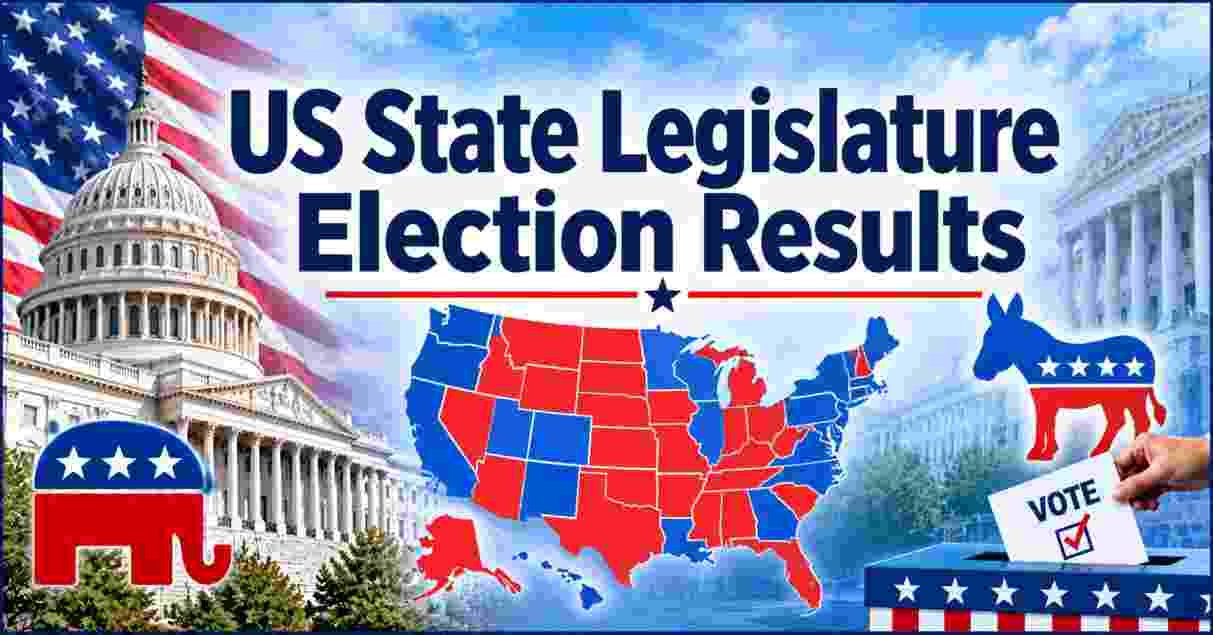
US State Legislature Election Results 2026 show Democrats flipping the North Carolina House, the Wisconsin Senate and the Wisconsin Assembly, and declaring victory in the Pennsylvania Senate, according to unofficial counts as of November 4, 2026. Democrats also ended Republican supermajorities in the North Carolina Senate and in Florida, and they moved toward new Democratic trifectas in Wisconsin and Pennsylvania.
US State Legislature Election Results 2026 – Introduction
The US State Legislature Election Results 2026 added a second layer to the Democratic gains in Washington. Voters in 46 states chose lawmakers for 88 chambers on November 3, 2026. Democrats won the North Carolina House for the first time since 2010 and flipped both Wisconsin chambers. Pennsylvania Democrats say they took the state Senate and secured a trifecta. Republicans entered the night controlling 28 legislatures to 18 for Democrats, so each flip cut into a long Republican edge. Democrats also won control of Congress, according to NBC News projections, which made the state results part of a wider shift.
State legislatures write budgets, draw district maps, set election rules and decide abortion, school and tax policy. That is why these results matter beyond one election night. All counts below are unofficial and still changing. Several chambers, including those in Michigan, Arizona, Minnesota and New Hampshire, had not been reported in the sources reviewed for this report. Figures will be updated as the Associated Press and state election offices finish counting. Readers should treat every seat count as preliminary until officials certify it.
Interesting Facts: US State Legislature Election Results 2026
Chambers flipped by Democrats in 2026 (each █ = 1 chamber)
North Carolina House  |█
Wisconsin Senate      |█
Wisconsin Assembly    |█
Pennsylvania Senate   |█ (declared by Democrats)
| Metric | 2026 Figure |
|---|---|
| Election Day | November 3, 2026 |
| Chambers holding regular elections | 88 in 46 states |
| Legislatures before the vote | 28 Republican, 18 Democratic, 3 divided |
| North Carolina House result | Democrats 70 of 120 seats |
| Wisconsin Senate result | Democrats 18, Republicans 15 |
| Wisconsin Assembly result | Democrats 53, Republicans 46 |
| Pennsylvania Senate result | Democrats declared control; counts continue |
| Democratic special-election seat flips since January 2025 | 12 |
Source: Associated Press (November 4, 2026); Stateline; National Conference of State Legislatures; Ballotpedia; Democratic Legislative Campaign Committee.
Democrats flipped at least 3 chambers and claimed a 4th. The North Carolina House moved from a 71–49 Republican edge to 70 Democratic seats. Wisconsin flipped in both chambers after court-ordered maps replaced the old Republican-drawn districts. Pennsylvania Democrats declared the state Senate won, though several races were still uncalled early Wednesday. Each of these results was unofficial at the time of writing.
The wins followed a run of special-election gains. Democrats flipped 12 legislative seats in special elections since Donald Trump’s second term began, and Republicans flipped none, according to Democratic Legislative Campaign Committee tracking reported by Stateline. That pattern fit the US State Legislature Election Results 2026: Democratic gains came in suburban and swing districts where voters were frustrated with the president and the economy. Rural and exurban districts moved less, which kept some Republican majorities intact.
State Legislative Chambers Contested in 2026: How Many Chambers Were on the Ballot
Chambers by election status (each █ = 2 chambers)
Regular elections in 2026  |████████████████████████████████████████████ 88
No regular election        |██████ 11
| Metric | 2026 Figure |
|---|---|
| Total state legislative chambers | 99 |
| Chambers with regular elections | 88 in 46 states |
| Competitive chambers named by analysts | 13 in 7 states |
| Chambers rated vulnerable (Sabato’s Crystal Ball) | 15 |
| Legislatures before the vote | 28 Republican, 18 Democratic, 3 divided |
| Chambers before the vote | 56 Republican, 39 Democratic |
Source: Ballotpedia; Multistate Associates; Stateline citing the National Conference of State Legislatures; U.S. News & World Report.
The ballot covered nearly the whole country. Of the 99 chambers in the 50 states, 88 held regular elections. The remaining chambers run on different election calendars. Republicans held 56 chambers to 39 for Democrats before the vote, with the Minnesota House tied.
Analysts narrowed the field fast. Multistate named 13 competitive chambers in 7 states: Arizona, Maine, Michigan, Minnesota, New Hampshire, Pennsylvania and Wisconsin. Sabato’s Crystal Ball rated 15 chambers as vulnerable, with Democrats better positioned to gain. The US State Legislature Election Results 2026 hinged on those few states, since a handful of seats decided control in each. A shift of one or two seats could flip a chamber, so small counts carried large stakes.
Democratic and Republican Chamber Gains 2026: Which Party Flipped Legislative Chambers
Chambers flipped, unofficial (each █ = 1 chamber)
Democrats    |████ 4
Republicans  |     0 reported
| Metric | Democrats | Republicans |
|---|---|---|
| Chambers flipped in 2026 (unofficial) | 4 (3 called, 1 declared) | 0 reported |
| Chambers held before the vote | 39 | 56 |
| Special-election seat flips since January 2025 | 12 | 0 |
| Seat flips in 2025 New Jersey and Virginia races | 18 | None reported |
Source: Associated Press; Stateline; Democratic Legislative Campaign Committee; U.S. News & World Report.
Democrats gained in every chamber that changed hands in the sources reviewed. The flips came in North Carolina, Wisconsin and Pennsylvania. Each state used a different path: court-ordered maps in Wisconsin, suburban swings in North Carolina and a narrow Senate target in Pennsylvania. Republicans did not flip a chamber in any report reviewed. That pattern matches the special-election record since January 2025.
The gains built on earlier wins. Democrats flipped 18 seats in New Jersey and Virginia during 2025 and 12 more in special elections. Republicans had controlled a majority of state governments since 2010. Democrats now hold more of the leverage that comes with state power. Final chamber totals for US State Legislature Election Results 2026 will move as Michigan, Arizona, Minnesota and New Hampshire report. Those four states hold some of the closest chambers in the country.
State House Election Results 2026: North Carolina, Wisconsin and Pennsylvania
Democratic seats in the North Carolina House (each █ = 2 seats)
2024 result  |████████████████████████▌ 49
2026 result  |███████████████████████████████████ 70
| Chamber | Before the Vote | 2026 Result | Status |
|---|---|---|---|
| North Carolina House | Republicans 71, Democrats 49 | Democrats 70 of 120 | Unofficial |
| Wisconsin Assembly | Republicans 54, Democrats 45 | Democrats 53, Republicans 46 | Preliminary |
| Pennsylvania House | Democrats 103, Republicans 100 | Democrats say they kept control | Declared |
| Michigan House | Republicans 58, Democrats 52 | Not yet reported | Pending |
| Arizona House | Republicans 33, Democrats 27 | Not yet reported | Pending |
| Minnesota House | Democrats 67, Republicans 66, 1 vacancy | Not yet reported | Pending |
Source: Associated Press via Wisconsin Public Radio; North Carolina State Board of Elections (unofficial); Spotlight PA; 270toWin.
North Carolina delivered the biggest House swing. Democrats won 70 of 120 seats, up from 49 in 2024, and won in suburban districts across the Piedmont Triad, Wake County and Mecklenburg County. Republicans had drawn the districts in 2023 to protect their majority. Speaker Destin Hall congratulated House Democratic leader Robert Reives II on the win. Reives told supporters the House would be under Democratic control in January 2027.
Wisconsin Democrats flipped 8 Assembly seats and held all of their own for a 53–46 majority. Republicans had led 54–45. Pennsylvania Democrats said they held a House that stood at 103–100 before the vote. The Michigan, Arizona and Minnesota House races had not been reported in the sources reviewed, so those rows stay open in this US State Legislature Election Results 2026 report. The Minnesota House had been tied before the vote, which makes it one of the most watched chambers.
State Senate Election Results 2026: North Carolina, Wisconsin and Pennsylvania
Democratic seats in the Wisconsin Senate (each █ = 1 seat)
Before  |███████████████ 15
After   |██████████████████ 18
| Chamber | Before the Vote | 2026 Result | Status |
|---|---|---|---|
| North Carolina Senate | Republicans 30, Democrats 20 | Republican majority cut to 2 seats | Unofficial |
| Wisconsin Senate | Republicans 18, Democrats 15 | Democrats 18, Republicans 15 | Preliminary |
| Pennsylvania Senate | Republicans 27, Democrats 23 | Democrats declared control | Counts continue |
| Michigan Senate | Democrats 20, Republicans 18 | Not yet reported | Pending |
| Arizona Senate | Republicans 17, Democrats 13 | Not yet reported | Pending |
| Minnesota Senate | Democrats 34, Republicans 33 | Not yet reported | Pending |
Source: Associated Press; North Carolina State Board of Elections (unofficial); Spotlight PA; ABC News; 270toWin.
Wisconsin Democrats flipped 3 Senate seats and won 18–15. Party leader Dianne Hesselbein called it the most flippable chamber in the country. In North Carolina, Republicans entered with 30 of 50 seats and left with a two-seat majority. One race had Republican Danny Britt ahead of Democrat Catina Hamm by 268 votes, 50.24% to 49.76%, inside the 1% recount threshold.
Pennsylvania Democrats said they won the Senate for the first time in more than 3 decades. Republicans had led the chamber since 1994 and held it 27–23. Tallies were still moving early Wednesday, and Spotlight PA reported that several races were uncalled. Treat the Pennsylvania Senate line in the US State Legislature Election Results 2026 as a declared win, not a certified one. Official results will confirm the final seat split.
States Changing Legislative Party Control 2026: Where Power Shifted
States where a chamber changed party control (each █ = 1 state)
North Carolina  |█
Wisconsin       |█
Pennsylvania    |█
| State | Chamber(s) Flipped | Prior Control | New Control |
|---|---|---|---|
| North Carolina | House | Republican | Democratic |
| Wisconsin | Senate and Assembly | Republican | Democratic |
| Pennsylvania | Senate | Republican (since 1994) | Democratic (declared) |
| Total | 4 chambers in 3 states |
Source: Associated Press; Spotlight PA; Wisconsin Public Radio; Stateline.
Three states changed legislative control. North Carolina Democrats won a chamber for the first time since 2010. Wisconsin Democrats won both chambers for the first time in 18 years. The change followed new district maps ordered by the Wisconsin Supreme Court. Pennsylvania Democrats said they ended a Republican Senate run that began in 1994. Together, the shifts touch 4 chambers.
Each shift changes who sets the agenda. North Carolina now has a Democratic House and a Republican Senate, so the General Assembly is divided for the first time since 2010. Democrats gain a say over the state budget and can block Republican bills. Republicans can still pass bills through the Senate, but the House can stop them. Wisconsin and Pennsylvania go further, with one party holding the governor and both chambers. The US State Legislature Election Results 2026 will also shape the next round of redistricting.
Legislative Supermajorities 2026: Veto-Proof Control Before and After
Republican Senate seats in North Carolina (each █ = 1 seat)
Veto-proof line (3/5)  |██████████████████████████████ 30
Before the vote        |██████████████████████████████ 30
| State and Chamber | Before the Vote | After the Vote |
|---|---|---|
| North Carolina Senate | Republicans held 30 of 50, exactly 3/5 | Supermajority ended |
| North Carolina House | Republicans held 71 of 120 (72 needed) | Democratic majority |
| Florida Legislature | Republican two-thirds in both chambers (82 House seats, 26 Senate seats as of August) | Supermajority broken |
| Wisconsin Legislature | Neither party near two-thirds | Democrats hold majorities, not two-thirds |
Source: Associated Press; Stateline; Ballotpedia; North Carolina General Assembly.
North Carolina Republicans entered the night with exactly 30 Senate seats, the 3/5 needed to override vetoes from Democratic Gov. Josh Stein. They were one seat short in the House with 71 of 120. Republicans overrode vetoes anyway when at least one Democrat joined them. Unofficial results broke the Senate supermajority and flipped the House, which should end easy overrides.
Florida Republicans held two-thirds of both chambers, enough to override a governor’s veto without Democratic help. Stateline reported that Democrats broke that Republican supermajority, though the sources reviewed did not say which chamber. A veto-proof majority lets one party pass laws over a governor’s objection. Losing it shifts the US State Legislature Election Results 2026 from automatic overrides to real negotiation. Supermajorities also matter for constitutional amendments in some states.
State Government Trifectas 2026: Before and After the Election
Trifecta changes, unofficial (each █ = 1 state)
New Democratic trifectas                |██ 2
Republican trifectas losing governor    |████ 4
Still pending                           |████ 4
| State | Before the Election | After the Election (Unofficial) |
|---|---|---|
| Wisconsin | Divided: Democratic governor, Republican legislature | Democratic trifecta |
| Pennsylvania | Divided: Democratic governor and House, Republican Senate | Democratic trifecta (declared) |
| North Carolina | Divided: Democratic governor, Republican legislature | Still divided; Democrats hold the House |
| Georgia, Iowa, Ohio, Texas | Republican trifectas | Governor flipped to Democrats; trifectas end |
| Michigan, Arizona, Minnesota, New Hampshire | Mixed | Legislative results pending |
Source: Stateline citing Associated Press and Decision Desk HQ; Spotlight PA; Wisconsin Public Radio; Multistate Associates.
A trifecta means one party holds the governor’s office and both legislative chambers. Wisconsin and Pennsylvania Democrats appear to have won new ones. Pennsylvania Gov. Josh Shapiro won re-election and promised to raise the minimum wage, codify reproductive rights and fund mass transit. He won against Republican Stacy Garrity. In Wisconsin, a Democratic governor joined the new legislative majorities.
Republicans lost ground at the top of the ticket. Stateline reported that Democrats flipped governorships in Iowa, Ohio, Georgia and Texas, which ends Republican trifectas in those states if the legislatures stayed Republican. Democrats also held Maine and Wisconsin and won the governorships in Michigan and Arizona. Final totals for the US State Legislature Election Results 2026 depend on pending chambers in Michigan, Arizona, Minnesota and New Hampshire. Trifecta counts nationwide will change once those chambers report.
US State Legislature Election Results 2026: Frequently Asked Questions
Which state legislative chambers did Democrats flip in 2026?
Democrats flipped the North Carolina House, the Wisconsin Senate and the Wisconsin Assembly, according to unofficial counts. Pennsylvania Democrats also declared victory in the state Senate. Counts were still moving as of November 4, 2026.
Did Democrats win the North Carolina House in 2026?
Yes, according to unofficial results. Democrats won 70 of 120 seats, up from 49 in 2024. It is their first chamber win in North Carolina since 2010.
Who controls the Wisconsin legislature after the 2026 election?
Democrats won both chambers, according to preliminary Associated Press results. They hold the Senate 18–15 and the Assembly 53–46. It is their first control of both chambers in 18 years.
Did Democrats flip the Pennsylvania Senate in 2026?
Democrats declared victory and said they won the chamber for the first time in more than 3 decades. Republicans held it 27–23 before the vote, and several races were still uncalled early Wednesday.
Do Republicans still have a veto-proof majority in North Carolina?
No, according to unofficial results. Republicans held 30 of 50 Senate seats, exactly 3/5, before the vote. Democrats ended that supermajority.
What happened to the Florida Republican supermajority?
Stateline reported that Democrats broke the Republican supermajority in Florida. The sources reviewed for this report did not specify the chamber, so check official results for exact seat counts.
How many state legislatures did Republicans control before the 2026 election?
Republicans controlled 28 legislatures, Democrats controlled 18, and 3 states had divided control, according to the National Conference of State Legislatures.
What is a trifecta in state government?
A trifecta is one party controlling the governor’s office and both legislative chambers. Wisconsin and Pennsylvania appear to have new Democratic trifectas.
Which states did not report their legislative results yet?
The sources reviewed did not report final chamber results for Michigan, Arizona, Minnesota and New Hampshire. Those chambers were among the most competitive of the cycle, and the Minnesota House had been tied before the vote.
When are state legislative election results official?
Results are unofficial until county and state officials finish canvassing and certify the totals. Close races, including North Carolina contests within the 1% recount threshold, can take longer. Candidates who trail by 1% or less can request a recount in North Carolina.
Where can I find official state legislative election results?
State election offices publish official totals. The Associated Press and the National Conference of State Legislatures track chamber control nationwide.
How many state legislatures will each party control after the 2026 election?
The final count is not set. If only the reported flips hold, the split would shift from 28 Republican, 18 Democratic and 3 divided to about 26 Republican, 20 Democratic and 3 divided. That tally comes from the changes reported so far and will move when Michigan, Arizona, Minnesota and New Hampshire report.
Why did Democrats gain in state legislative races in 2026?
Reports point to several causes. Voter frustration with President Trump and the economy helped Democrats in suburban districts. Court-ordered maps in Wisconsin created more competitive seats. Strong Democratic turnout also played a role in North Carolina and Pennsylvania.
Which state legislative chambers were the most competitive in 2026?
Analysts named 13 competitive chambers in 7 states: Arizona, Maine, Michigan, Minnesota, New Hampshire, Pennsylvania and Wisconsin. Sabato’s Crystal Ball rated 15 chambers as vulnerable.
Disclaimer: This research report is compiled from publicly available sources. While reasonable efforts have been made to ensure accuracy, no representation or warranty, express or implied, is given as to the completeness or reliability of the information. We accept no liability for any errors, omissions, losses, or damages of any kind arising from the use of this report.