
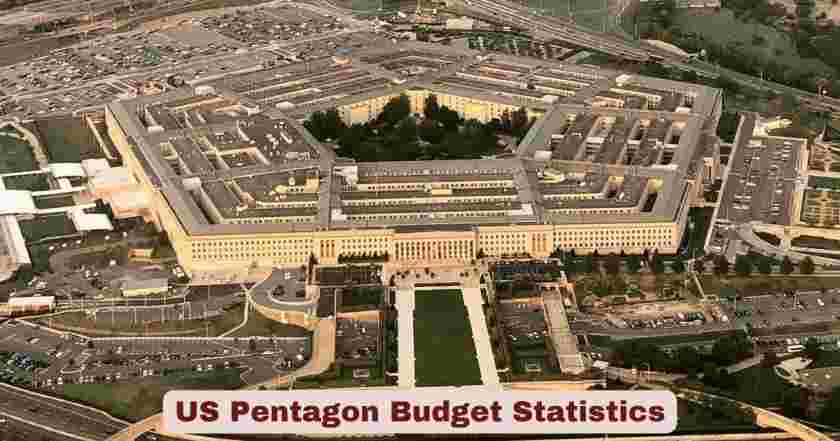
US Pentagon Budget in 2026
The US Pentagon budget for fiscal year 2026 (FY2026) is the largest single defense appropriation in American history, representing a watershed moment in how the United States funds and structures its military power. The final enacted figure for national defense discretionary spending in FY2026 — which runs from October 1, 2025 through September 30, 2026 — stands at approximately $1.01–$1.05 trillion when combining the base appropriations with mandatory reconciliation funding, making this the first US defense budget to formally cross the $1 trillion threshold. The headline FY2026 Department of Defense (DoD) budget request was formally unveiled at $961.6 billion on June 26, 2025, structured as a dual-track funding arrangement: $848.3 billion in discretionary base budget authority and $113.3 billion in mandatory funding from the One Big Beautiful Bill Act (OBBBA) — a budget reconciliation bill signed into law by President Trump on July 4, 2025 that directed $150 billion in total toward national security. By February 2026, the Pentagon reversed course and decided to spend the entire $152.3 billion in reconciliation funds within FY2026 rather than spreading it across multiple years, pushing the total national defense discretionary spending figure — including atomic energy activities through the National Nuclear Security Administration — to $1.05 trillion, representing a 17%+ increase over FY2025 enacted levels. The base congressional appropriations alone, signed into law through the regular defense spending bill, came to $838.7 billion, with the Pentagon’s enacted base budget reaching $858.9 billion once the Military Construction appropriations bill was added.
The FY2026 defense budget is the product of what the Defense Security Monitor described as “one of the most tumultuous budget processes in recent history” — a sequence of events that included a five-month delay in releasing the initial budget request following the administration change, the longest government shutdown in US history (43 days, October–November 2025), a second brief shutdown, an unprecedented use of budget reconciliation to inject massive supplemental defense funding outside the normal appropriations process, and a final enacted figure assembled across multiple spending bills spanning months of negotiation. The strategic priorities driving the FY2026 budget are articulated clearly in senior Pentagon statements: strengthening homeland defense, deterring Chinese aggression in the Indo-Pacific, revitalizing the US defense industrial base, and developing next-generation capabilities in space, artificial intelligence, autonomous systems, nuclear modernization, and missile defense. The most visible of these is Golden Dome — President Trump’s ambitious multi-layered missile defense initiative — which received a $25 billion down payment from reconciliation funds and carries a currently stated total cost estimate of $185 billion through the mid-2030s. With the White House already proposing a $1.5 trillion total defense topline for FY2027, the FY2026 budget is best understood not as a ceiling but as the launching point for an extended era of unprecedented US defense spending.
Interesting US Pentagon Budget Key Facts 2026
| Fact | Detail |
|---|---|
| FY2026 DoD Total Budget Request | $961.6 billion — formally unveiled June 26, 2025 |
| FY2026 Total National Defense Discretionary Spending (enacted) | $1.05 trillion — including base appropriations + full $152.3 billion reconciliation (Arms Control Association, March 2026) |
| FY2026 Base Appropriations Bill | $838.7 billion in discretionary defense funding — signed into law Feb 2026 |
| FY2026 Enacted Pentagon Base Budget | $858.9 billion — including Military Construction bill ($19.7 billion separate) |
| FY2026 Reconciliation Funding (Pentagon) | $152.3 billion — OBBBA signed July 4, 2025; Pentagon decided to spend entire amount in FY2026 (Feb 2026 reversal) |
| FY2025 Enacted Defense Budget (Comparison) | Approximately $893 billion (base appropriations) |
| Year-Over-Year Increase (National Defense Discretionary) | More than 17% — largest single-year percentage increase in decades |
| Historic Milestone | FY2026 is the first US defense budget to cross $1 trillion in national defense spending |
| Initial Budget Request (Before Reconciliation) | $892.6 billion — first Biden-era carry-over request, later superseded |
| NDAA House Armed Services Committee Proposal (June 2025) | $925 billion — including $878.7 billion specifically for DoD |
| Reconciliation Vehicle | One Big Beautiful Bill Act (OBBBA) — signed July 4, 2025 — $150 billion total for national security |
| FY2026 Budget Structure | Described by Pentagon as “one budget, two bills” |
| FY2027 Proposed Defense Topline | $1.5 trillion — $1.15 trillion discretionary + $350 billion mandatory (White House fact sheet, April 2026) |
| Pentagon Personnel (Military) Budget | $184 billion (requested: $183B base + $689M reconciliation) |
| Procurement Budget (Requested Total) | $205 billion — 18% more than FY25 enacted ($153B base + $52B reconciliation) |
| R&D / RDT&E Budget (Requested Total) | $179 billion — ($142B base + $37B reconciliation) — 27% increase from FY25 |
| Operation & Maintenance Budget | $107 billion ($97B base + $9B reconciliation) |
| Military Construction | $19.8 billion ($18.9B base + $842M reconciliation) |
| Army Budget (DoD Request) | $197.4 billion |
| Navy Budget (DoD Request) | $292.2 billion |
| Air Force Budget (DoD Request) | $209.6 billion |
| Space Force Budget (DoD Request) | $39.9 billion — +30% vs. FY25 |
| Defense-Wide Activities | $170.9 billion |
| Autonomy & AI: First Dedicated Budget Line | $13.4 billion — first year DoD has created a separate budget line for autonomy/AI |
| Cybersecurity Budget | $15.1 billion |
| Golden Dome Down Payment | $25 billion — from OBBBA reconciliation; total projected cost $185 billion (updated March 2026) |
| Nuclear Forces Total Request | $62 billion — across R&D and procurement accounts |
| Munitions Procurement (Reconciliation) | ~$25 billion of reconciliation spending directed toward munitions and supply chain |
| Post-9/11 War Costs (2001–FY2022 Total) | ~$8 trillion estimated total US obligations (Costs of War Project, Brown University) |
| Top Defense Contractors (2020–2024) | Lockheed Martin ($313B), General Dynamics ($116B), Boeing ($115B), RTX ($145B), Northrop Grumman ($81B) |
| US vs. China Defense Spending | US spends over twice as much as China even after adjusting for labor costs and purchasing power |
| US Defense Budget vs. Top 10 Combined | US outspends China, India, Russia, UK, Germany, Saudi Arabia, France, Japan, South Korea, and Brazil combined |
Source: Arms Control Association (March 2026); Breaking Defense (June 2025, February 2026); MeriTalk Pentagon Budget Brief (June 2025); Defense Security Monitor (February 2026); AEI Final FY26 Defense Appropriations Analysis (January 2026); US Senate Appropriations Committee (February 2026); White House OBBBA Fact Sheet; Wikipedia — Military Budget of the United States (updated April 2026); National Defense Magazine (January 2026); Forecast International; Costs of War Project, Brown University
The sheer scale of the FY2026 defense budget deserves a moment of proper contextualization. When the United States reaches $1.05 trillion in national defense discretionary spending, it is spending more on its military than any nation in human history in real-dollar terms. For reference, the entire declared defense budget of China — the US’s primary strategic competitor — stands at approximately $250 billion for 2025, meaning the US defense budget is roughly four times larger than China’s official figure. Russia spent an estimated $157 billion on defense in 2025. The combined defense budgets of the next ten largest military spenders — China, India, Russia, the United Kingdom, Germany, Saudi Arabia, France, Japan, South Korea, and Brazil — do not collectively match US defense spending. This is not a new dynamic; the US has been the world’s dominant military spender for decades. But the 17%+ single-year increase represented by the FY2026 budget, combined with the $1.5 trillion proposed for FY2027, signals an acceleration of US defense investment at a pace not seen since the Reagan military buildup of the early 1980s, and one that the White House explicitly described as “approaching the historic increases just prior to World War II.”
The “one budget, two bills” architecture is what makes FY2026 uniquely complex and historically significant. Every prior US defense budget was funded through a single legislative pathway: the annual appropriations process in which Congress passes the defense spending bill and the president signs it. The FY2026 structure layered a massive $152.3 billion in mandatory reconciliation funding on top of the base discretionary appropriations, creating a parallel funding stream that bypassed many of the traditional legislative constraints on defense spending, required only a simple majority in the Senate rather than 60 votes to clear filibusters, and directed money toward specific strategic priorities the administration wanted to fund outside the normal budget competition. The decision in February 2026 to spend the entire $152.3 billion in a single fiscal year — rather than the originally planned $113.3 billion — effectively injected an additional $39 billion of emergency-pace defense spending into FY2026 with very few months remaining in the fiscal year to obligate it, creating genuine execution challenges that senior defense officials and congressional appropriators both acknowledged.
FY2026 Pentagon Budget By Military Service Statistics
| Service / Component | DoD Request Amount | Key Context |
|---|---|---|
| Department of the Army | $197.4 billion | 20% of total DoD FY26 request |
| Department of the Navy (incl. Marines) | $292.2 billion | 30% of total — includes Navy and Marine Corps |
| Navy Procurement (Base + Reconciliation) | ~$62.9 billion base + $32.3 billion reconciliation | Includes $47.3 billion for Navy shipbuilding |
| Navy Shipbuilding (Base) | $20.8 billion | Base budget shipbuilding request |
| Navy Shipbuilding (Reconciliation) | $26.5 billion | 16 of 19 requested ships depend on reconciliation |
| Virginia-class Submarine | 2 boats requested; base: $816 million | Heavily reliant on reconciliation and prior-year funding |
| Columbia-class Submarine | 1 boat — $9.6 billion base + $1.4 billion reconciliation | Total ~$11 billion |
| Guided-Missile Destroyers (DDG-51) | $5.4 billion (reconciliation) for 2 additional destroyers | Congressional add: +$1.8B for DDG-51 production |
| Department of the Air Force (incl. Space Force) | $301.1 billion (Air Force + Space Force combined) | 31% of total request |
| Air Force Budget (Separated) | $209.6 billion | Includes next-gen aircraft, bombers, fighters |
| Space Force Budget | $39.9 billion | +30%+ vs. FY25 — largest single-year Space Force jump |
| Defense-Wide Activities | $170.9 billion | Includes Missile Defense Agency, SOCOM, DARPA, etc. |
| Army RDT&E | $15.4 billion ($14.5B base + $846M reconciliation) | Hypersonics, air/missile defense, prototype development |
| Air Force RDT&E | ~$62.2 billion ($52B base + $10.2B reconciliation) | Up sharply from $46.9B enacted in FY25 |
| Missile Defense Agency (Total FY26) | $13.2 billion — up 27% from FY25 ($10.4B) | Aegis, Ground-Based Midcourse, hypersonic defense |
| Army Procurement | ~$2.8 billion for weapons/tracked vehicles | Down from $3.7B in FY25 — ATI transformation cuts |
| F-47 Sixth-Generation Fighter (Air Force) | $3.4 billion | Air Force’s top-priority next-gen fighter program; most details classified |
| F/A-XX (Navy Sixth-Gen Fighter) | $74 million (design completion); $750M reconciliation pending | Decision on program status still under administration review |
| F-35 Joint Strike Fighter (Total DoD) | 47 aircraft total DoD-wide (cut from prior years) | Air Force cut F-35A buy to 24 jets |
| F-15EX | $3.1 billion reconciliation — including Lots 7 and 8 procurement | Congress added 1 aircraft above request |
| B-21 Raider Stealth Bomber | $10.1 billion — up from $5.3B enacted in FY25 | $4.5B goes to expanding production; 25% production rate increase |
| Sentinel ICBM (LGM-35A) | $4.1 billion (FY26 total: $5.3B enacted after congressional adds) | Behind-schedule; initial operational capability “early 2030s” |
| Army Program Cancellations (FY26) | M10 Booker, Robotic Combat Vehicle, Improved Turbine Engine Program, JLTV procurement cessation, Grey Eagle drone | Part of Army Transformation Initiative (ATI) |
Source: Breaking Defense (June 2025 — Procurement and RDT&E Budget Exclusives); MeriTalk Pentagon Budget Brief (June 2025); Arms Control Association (March 2026); Defense Security Monitor (February 2026); AEI FY26 Defense Appropriations Analysis; Wikipedia — Military Budget of the United States
The service-level breakdown of the FY2026 budget tells the story of an administration making deliberate and sometimes controversial choices about which capabilities to accelerate and which to wind down. The Navy’s $292.2 billion total — the largest single-service allocation — reflects the Trump administration’s genuine and consistent strategic emphasis on maritime power as the decisive military domain in any future conflict with China. The $47.3 billion for Navy shipbuilding alone (combining base and reconciliation) is an extraordinary sum, and the decision to build two Virginia-class submarines and expand DDG-51 destroyer production is a direct response to the Pentagon’s assessment that the US submarine fleet is both the most deterrent-capable and the most undermaintained element of the joint force. The reliance on reconciliation to fund 16 of 19 ships requested created congressional heartburn, but also demonstrated how the dual-track funding architecture allowed the administration to pursue a shipbuilding ambition that would have been difficult to achieve through the base budget alone.
The Air Force’s strategic posture in FY2026 is defined by one programme above all others: the F-47, the sixth-generation stealth fighter that is the Air Force’s most classified and most expensive developmental bet. The $3.4 billion request for F-47 — with details largely classified — represents a deliberate decision, as the senior defense official stated, to have the industrial base “go fast on one program” rather than try to simultaneously develop the Air Force’s F-47 and the Navy’s F/A-XX. The B-21 Raider bomber’s jump from $5.3 billion to $10.1 billion is the clearest single data point in the entire budget illustrating the administration’s commitment to the nuclear triad’s airborne leg. Northrop Grumman’s agreement to increase production capacity by 25% — part of the same announcement — signals that the government and prime contractor are aligned on accelerating this programme on a timeline that would have seemed unrealistic as recently as FY2025.
FY2026 Pentagon Budget Key Programs & Priorities Statistics
| Program / Priority | FY2026 Amount | Key Details |
|---|---|---|
| Golden Dome Missile Defense | $25 billion (down payment, from OBBBA) | Total projected cost: $185 billion (updated March 2026 by Gen. Guetlein) — phased deployment through mid-2030s |
| Golden Dome: Space-Based Sensors | $7.2 billion — “pending approval” by OMB | Held up as of Feb 2026 by OMB-Pentagon disagreement |
| Golden Dome: Space-Based Arms | Uses designs from 1980s “Brilliant Pebbles” SDI program | Space-based projectile interceptor concept |
| Golden Dome: Directed Energy | $452 million — high-energy lasers and high-powered microwave weapons | Supports kinetic anti-missile interceptors |
| Golden Dome: AI Fire Control | $174 million (DARPA) — advanced sensors and AI-powered fire control | |
| Missile Defense: Additional (Reconciliation) | ~$24.4 billion additional missile defense across reconciliation | Ground-based radars, ICBM defense systems, hypersonic counter-systems |
| Hypersonic Defense (Glide Phase Interceptor) | $185 million (appropriations) + $2.2 billion (reconciliation, classified) | |
| Nuclear Forces Total | $62 billion — across R&D and procurement | Includes triad modernization — bombers, subs, ICBMs |
| B-21 Raider Bomber | $10.1 billion ($4.5B to expand production rates) | Up from $5.3B; 25% production rate increase agreed with Northrop |
| Sentinel ICBM (LGM-35A) | $4.1 billion R&D (total enacted: $5.3B after adds) | $2.5B from reconciliation — supply chain investments |
| Columbia-class Submarine | ~$11 billion (base + reconciliation) | Sea-based nuclear deterrent |
| Sea-Launched Cruise Missile (SLCM-N) | $1.9 billion R&D (revived nuclear-capable program) | Drastic increase from $150M in FY25 — first Trump admin revived this in 2018, Biden opposed |
| Air-Launched Rapid Response Weapon (ARRW) | $387 million procurement | Revived after being scrapped due to test failures; zeroed in FY24 |
| Hypersonic Attack Cruise Missile (HACM) | $803 million | Up from $467M in FY25 |
| F-47 (Air Force Sixth-Gen Fighter) | $3.4 billion (largely classified) | “All-in” decision by DoD — Air Force’s priority |
| F/A-XX (Navy Sixth-Gen Fighter) | $74 million design completion + $750M reconciliation | Contract decision pending; held up ~1 year |
| Autonomy & AI (First Dedicated Budget Line) | $13.4 billion total | UAVs ($9.4B), ground vehicles ($210M), maritime systems ($1.7B), underwater ($734M), software/cross-domain |
| Counter-UAS | $3.1 billion | Growing threat from drone warfare |
| Precision Strike Missiles (PrSM) | $364 million for 44 missiles | Army munitions priority |
| Dark Eagle Hypersonic (Army) | $438 million | Army long-range hypersonic weapon |
| GMLRS Rockets | $329 million for 659 rockets | Guided Multiple Launch Rocket System |
| Javelin Anti-Tank Missiles | $329 million for 649 rounds | US anti-armor stockpile replenishment |
| Virginia-class Submarines (Reconciliation) | $4.6 billion (2nd sub in FY26) | Entirely reconciliation-funded |
| Amphibious Warship Contract | ~$1.5 billion (3 LPDs + 1 LHA) | Reconciliation-funded |
| Small Unmanned Surface Vessels (SUSV) | $1.5 billion — production expansion | Part of drone dominance initiative |
| Medium Unmanned Surface Vessels (MUSV) | $2.1 billion — production expansion | Maritime autonomous systems priority |
| Unmanned Underwater Vehicles | $1.3 billion — production expansion | Payload development, integration, fielding |
| Defense Industrial Base (Reconciliation) | $1 billion (Defense Production Act) | Solid rocket motors, advanced manufacturing, energetics |
Source: Breaking Defense (February 2026 — Full Reconciliation Spending Plan Revealed); MeriTalk (June 2025); Arms Control Association (March 2026, July 2025); Foreign Policy (February 2026); Washington Times (April 7, 2026); Federal News Network (March 2026); National Defense Magazine (April 2026)
The FY2026 programme priorities make an unmistakable strategic statement about where the United States believes its military investment will pay off in the next decade. The centrepiece is undoubtedly Golden Dome — but the programme’s challenges are as notable as its ambitions. The $185 billion total cost estimate (updated March 2026 by Gen. Michael Guetlein, the programme director) is already $10 billion higher than President Trump’s initial $175 billion declaration, and independent analyses diverge wildly from government figures: the American Enterprise Institute estimated a robust Golden Dome architecture could cost as much as $3.6 trillion over 20 years when including operations, maintenance, and replenishment costs, while the Congressional Budget Office estimated even a limited space-based interceptor system could cost between $161 billion and $542 billion. The gap between the official estimate and independent analyses reflects genuine uncertainty about what Golden Dome will actually consist of architecturally — details that remain classified — and how the system will perform against the specific threat set it is designed to counter.
The $13.4 billion autonomy and AI budget line — the first time in Pentagon history that autonomy and AI received a dedicated, standalone budget category — is arguably the most strategically significant structural innovation in the FY2026 budget. This is not simply funding scattered across service accounts that happens to touch autonomous systems; it is a deliberate institutional signal that DoD views this capability domain as deserving the same budget visibility as traditional categories like personnel, procurement, and operations and maintenance. The breakdown — $9.4 billion for unmanned aerial vehicles, $1.7 billion for maritime autonomous systems, $734 million for underwater autonomous capabilities, and $210 million for autonomous ground vehicles — reflects a coherent multi-domain autonomous systems strategy rather than individual programme investments. The $15.1 billion cybersecurity allocation adds another layer to the picture of a Pentagon that is genuinely reorienting toward the technology-intensive warfare that Pentagon planners believe will define great-power competition in the 2030s.
US Defense Budget Historical Comparison Statistics 2026
| Fiscal Year | Defense Budget (Approx.) | Key Context |
|---|---|---|
| FY1993 | ~$291 billion | Post-Cold War drawdown beginning |
| FY2001 | ~$316 billion | Pre-9/11 baseline |
| FY2003 | ~$456 billion | Post-9/11 surge; Afghanistan and Iraq wars begin |
| FY2010 | ~$664 billion | Iraq + Afghanistan peak (including war supplementals) |
| FY2015 | ~$598 billion | “Pentagon and related spending” — mid-period |
| FY2017 | ~$696 billion | DoD budget authority |
| FY2019 | ~$693 billion | DoD discretionary appropriations |
| FY2020 | ~$721 billion | DoD budget authority |
| FY2021 | ~$753 billion | Last year of OCO (Overseas Contingency Operations) |
| FY2022 | ~$782 billion | Bipartisan agreement |
| FY2023 | ~$857 billion | NDAA enacted |
| FY2024 | ~$842 billion | (Presidential request level) |
| FY2025 Enacted | ~$893 billion | Appropriations base |
| FY2026 Enacted (Appropriations Base Only) | $858.9 billion | Including MILCON; about $10.6B above request |
| FY2026 Total (Base + Full Reconciliation) | ~$1.01–$1.05 trillion | First $1 trillion+ national defense spending year in US history |
| FY2027 Proposed (White House) | $1.5 trillion | $1.15T discretionary + $350B mandatory — exceeds Reagan buildup |
| Post-9/11 Total War Costs (2001–2022) | ~$8 trillion estimated | Brown University Costs of War Project |
| Top 5 Contractors (2020–2024 Pentagon Contracts) | $771 billion combined — Lockheed ($313B), RTX ($145B), Boeing ($115B), General Dynamics ($116B), Northrop ($81B) | Brown University |
| Top Defense Spenders Globally (2025) | US ($860B), China ($245B), Russia ($157B), UK ($80.5B), Germany ($72.6B), Saudi Arabia ($72.5B), India ($60B) | Forecast International |
| Global Defense Spending Total (2026 Projection) | $2.6+ trillion | National Defense Magazine / Forecast International |
| US Share of Global Defense Spending | ~40% of global total | Historical benchmark; US alone outspends all competitors combined |
| US Defense % of Federal Budget (Historical) | ~14.8% of federal budgeted expenditures (FY2017 benchmark) | Wikipedia — Military Budget |
| DoD Jobs per $1 Million Spent | ~5 jobs per $1 million in military spending | Brown University (vs. 13 jobs per $1M in education) |
Source: Wikipedia — Military Budget of the United States (updated April 2026); Arms Control Association (March 2026); Defense Security Monitor; National Defense Magazine (January 2026); Forecast International; Brown University Costs of War Project; White House FY2027 Budget Rebuilding Our Military Fact Sheet (April 2026)
The historical trajectory of US defense spending is one of the most consequential datasets in American fiscal policy. The arc from roughly $291 billion in FY1993 — the beginning of the post-Cold War “peace dividend” era — to $1.05 trillion in FY2026 represents a 260% increase in nominal terms over 33 years. Even adjusting for inflation, the real growth is enormous. The post-9/11 wars were the single biggest driver of defense spending growth in the 2000s, with the $8 trillion in total estimated war costs between 2001 and 2022 representing a generational fiscal commitment that is still being paid — primarily through interest on debt incurred to fund those conflicts without tax increases, and through ongoing veterans’ care obligations. The Pentagon’s FY2026 budget explicitly includes no equivalent of the Overseas Contingency Operations (OCO) account that was used to fund the post-9/11 wars outside the base budget; the Trump administration’s strategy instead relies on the base budget and reconciliation funding to simultaneously modernise the force and maintain operational readiness.
The global comparison also warrants attention. The $2.6 trillion+ in projected global defense spending for 2026 means the world collectively is spending more on military capability than at any point since World War II, in real terms. US spending of approximately $1 trillion means the United States alone accounts for roughly 40% of all global defense expenditure. The next biggest spender, China at approximately $250 billion declared (with many analysts believing the actual figure is considerably higher), is being countered not just by US spending but by an allied network: Japan ($58B), South Korea, Germany ($72.6B), the United Kingdom ($80.5B), and France ($58.7B) all increased defense budgets significantly in the 2024–2026 period. NATO’s evolving target of 5% of GDP for defence expenditure by 2035 — if achieved — would represent another dramatic uplift in allied combined military spending on top of already elevated levels.
FY2026 Pentagon Budget Process & Legislative Statistics
| Budget Process Milestone | Date / Detail |
|---|---|
| Initial Biden-carry-over Budget Request | $892.6 billion — flat vs. FY2025, first figure circulated |
| Trump Administration Budget Request Unveiled | June 26, 2025 — $961.6 billion (nearly 5 months late due to administration change) |
| One Big Beautiful Bill Act (OBBBA) Signed | July 4, 2025 — $150 billion in total for national security; $152.3 billion final Pentagon share |
| House Armed Services Committee NDAA | June 11, 2025 — advanced $925 billion authorization ($878.7B for DoD) |
| Longest Government Shutdown in US History | 43 days — October–November 2025 — DoD operating under continuing resolution |
| Second Brief Shutdown | January–February 2026 — brief lapse before final appropriations |
| FY2026 Defense Appropriations Bill Enacted | February 2026 — $838.7 billion discretionary; signed after end of second shutdown |
| Congress Approves Defense Bill | February 3, 2026 — Senate Appropriations Committee confirmation |
| Military Construction (MILCON) Bill | Passed November 2025 — $19.7 billion; added to base = $858.9 billion total base |
| Pentagon Reversal on Reconciliation Spending | February 23, 2026 — Pentagon declares it will spend full $152.3B in FY26 (not $113.3B as planned) |
| Total Enacted Budget (Base + Reconciliation) | ~$1.01–$1.05 trillion national defense discretionary spending |
| FY26 Base Budget vs. Request | Congress added ~$10.6 billion above the president’s request in base appropriations |
| Procurement Add Above Request | +$14.4 billion — driven by shipbuilding, aircraft, and missile additions |
| RDT&E Add Above Request | +$3.9 billion |
| Pentagon Personnel Cut | −$1.4 billion below request (undistributed adjustments to be allocated in execution) |
| O&M Cut | −$1.3 billion below request |
| General Provisions / Rescissions | −$8.8 billion (including $5.7B in prior-year rescissions across procurement accounts) |
| Navy Congressional Add (Largest Service Win) | +$9.7 billion — over half of total $18B add above request; $6.3B for shipbuilding |
| Multiyear Procurement Approvals | Only 8 of 13 requested multiyear initiatives approved |
| Acquisition Reform Proposals Rejected | Appropriators rejected budgetary modernizations proposed in November 2025 acquisition transformation strategy |
| FY27 Budget Request Due Date | February 2, 2026 (legally required first Monday in February) — deadline missed without new request |
| Pentagon’s FY2027 Signal | “Stick with $1 trillion for national defense” — senior defense official (June 2025) |
| White House FY2027 Proposal | $1.5 trillion — $1.15T discretionary + $350B mandatory (April 2026 White House fact sheet) |
Source: Arms Control Association (March 2026); Defense Security Monitor (February 2026, February 2026 analysis); AEI Final FY26 Defense Appropriations Analysis (January 2026); US Senate Appropriations Committee (February 2026); Breaking Defense (June 2025, February 2026); White House FY2027 Rebuilding Our Military Fact Sheet (April 2026)
The FY2026 budget process was genuinely without modern precedent in its complexity and disorder. The longest government shutdown in US history — 43 days between October and November 2025 — left the Pentagon operating under a continuing resolution (CR) for nearly half a fiscal quarter, during which it could not start new programmes, award new contracts above certain thresholds, or accelerate spending on time-sensitive initiatives like Golden Dome. The second brief shutdown in early 2026 added further delay before the final appropriations package was enacted. Meanwhile, the reconciliation process — which ran parallel to and often intersected with the appropriations process — created what congressional appropriators themselves described as “reconciliation funding incongruencies” where the administration had reduced base budget requests for programmes like the Virginia-class submarine with the explicit assumption that reconciliation funding would fill the gap, only for appropriators to add the money back into the base budget anyway.
The FY2027 trajectory is already visible and alarming in its scale from a fiscal standpoint. The White House’s April 2026 fact sheet proposing a $1.5 trillion total defense topline for FY2027 — $1.15 trillion in discretionary funding plus $350 billion in mandatory reconciliation — describes the proposal as “approaching the historic increases just prior to World War II.” The document explicitly frames the $1.5 trillion figure as building on “successes seen in FY2026, which included leveraging both discretionary and mandatory appropriations to achieve a historic $1 trillion overall defense topline.” The proposed $350 billion in reconciliation for FY2027 would be more than double the FY2026 reconciliation amount, and the 28% increase in discretionary spending would represent the largest single-year percentage increase in the base defense budget since at least the Korean War. Whether Congress will endorse spending at this level — and whether the defence industrial base can actually absorb and execute funds at this pace — are among the most consequential open questions in US fiscal policy as of April 2026.
Disclaimer: This research report is compiled from publicly available sources. While reasonable efforts have been made to ensure accuracy, no representation or warranty, express or implied, is given as to the completeness or reliability of the information. We accept no liability for any errors, omissions, losses, or damages of any kind arising from the use of this report.