
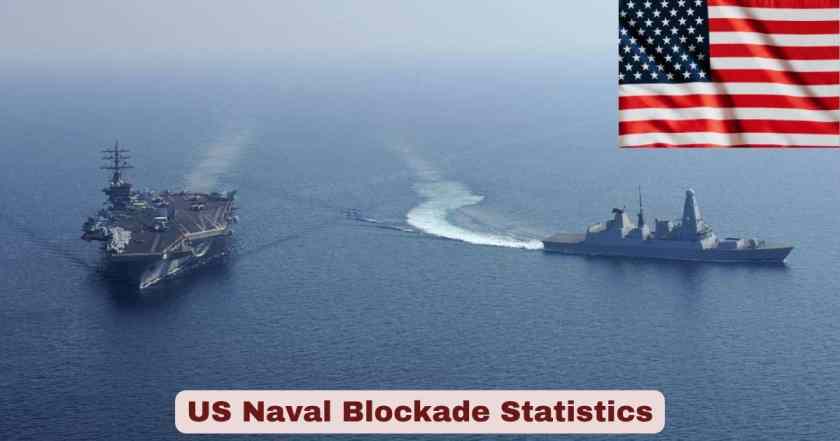
US Naval Blockade 2026
The United States naval blockade of the Strait of Hormuz in 2026 is one of the most consequential military and economic actions the US has undertaken in decades. On April 12, 2026, following the collapse of US–Iran ceasefire talks in Islamabad, Pakistan, President Donald Trump announced via Truth Social that the US Navy would immediately begin “BLOCKADING any and all Ships trying to enter, or leave, the Strait of Hormuz.” The announcement came after Vice President JD Vance declared that negotiations had failed and that Iran had refused to reach an agreement on the key sticking point: its enriched uranium stockpile. Per a statement from US Central Command (CENTCOM), the blockade officially took effect at 10:00 a.m. Eastern Time on Monday, April 13, 2026 — targeting all maritime traffic entering or departing Iranian ports and coastal areas, including all ports on the Arabian Gulf and Gulf of Oman. The action marks the first formal US naval blockade declared against a nation since the Cuban Missile Crisis of 1962, and it directly targets one of the world’s most critical energy chokepoints — a strait through which approximately 20% of global oil and a significant share of liquefied natural gas (LNG) normally flows daily.
The broader context behind this blockade stretches back to February 28, 2026, when the United States and Israel launched joint airstrikes on Iran — codenamed Operation Roaring Lion by Israel — targeting military installations, government sites, and Iranian leadership. Iran responded with missile and drone strikes on US bases across the Middle East and, critically, with the closure of the Strait of Hormuz, which it enforced through naval mines, IRGC maritime patrols, and drone and missile attacks on commercial shipping. That closure has been described by IEA Chief Fatih Birol as “the worst energy shock the world has ever seen — more severe than the oil crises of the 1970s and the Ukraine war combined.” A fragile two-week ceasefire brokered in early April briefly raised hopes that the strait would reopen, but those hopes evaporated when the April 12 Islamabad talks collapsed. Trump’s blockade declaration the same day — with the stated goal of denying Iran the economic benefit of its own oil exports while the rest of the world suffered from its closure — set the stage for what markets, governments, and analysts immediately recognized as a potentially historic escalation of an already catastrophic global energy disruption.
Key Facts & Highlights: US Naval Blockade Statistics in the US 2026
The table below captures the most current and essential verified facts about the US naval blockade of the Strait of Hormuz in 2026, drawn exclusively from US Central Command statements, official White House communications, verified news sources, and government data agencies, current as of April 13, 2026.
| Fact | Detail |
|---|---|
| Blockade Announced By | President Donald Trump via Truth Social, April 12, 2026 |
| Blockade Effective Date/Time | April 13, 2026, 10:00 a.m. Eastern Time |
| Declaring Authority | US Central Command (CENTCOM) official statement, April 12, 2026 |
| Reason for Blockade | Collapse of US–Iran peace talks in Islamabad, Pakistan, April 12, 2026 |
| Scope of Blockade | All vessels entering or departing Iranian ports and coastal areas, including all ports on the Arabian Gulf and Gulf of Oman |
| Non-Iranian Traffic | CENTCOM confirmed: US will NOT impede vessels transiting strait to/from non-Iranian ports |
| Iran’s Toll System Targeted | US Navy instructed to “seek and interdict every vessel” that paid a toll to Iran |
| Mine Clearance Operation | Trump ordered the US Navy to begin “destroying the mines the Iranians laid” in the Strait |
| First US Destroyers Through Strait | USS Frank E. Peterson and USS Michael Murphy transited the Strait of Hormuz on April 11, 2026 — first since war began Feb. 28 |
| Strait Width at Narrowest Point | 34 kilometres (21 miles) — between Iran and Oman |
| Normal Daily Oil Flow | ~20 million barrels per day (b/d) — approximately 20% of global petroleum liquids consumption |
| Normal LNG Flow | Approximately one-fifth of global LNG trade — primarily from Qatar |
| Traffic Reduction Since Feb. 28 | Initial 70% reduction in shipping traffic; on most days since war began, fewer than 10 ships per day passed through |
| Last Week Before Blockade | Only 24 ships passed through the strait during the entire week; only 2 ships on Friday, April 10 |
| Oil Supply Shortfall | Emergency stockpile releases offsetting approximately 4.5 to 5 million barrels per day of disrupted flow |
| Projected Full Shortfall | If normal supply is not restored: gap could widen to 10 to 11 million barrels per day |
| Iranian Iran Toll Charge | Iran imposed tolls of up to $2 million per vessel seeking passage; fees paid in Chinese yuan |
| Tankers Waiting in Persian Gulf | As of April 9: 230 loaded oil tankers waiting inside the Gulf unable to exit |
| Date Iranian Closure Confirmed Officially | March 2, 2026 — IRGC senior official officially confirmed the strait was closed |
| Oil Tanker Struck (First Incident) | March 1, 2026 — MV Skylight struck north of Khasab, Oman; 2 Indian crew killed, 3 injured; 20 crew evacuated |
| US Carriers Deployed (Middle East) | USS Abraham Lincoln (CSG-3) and USS Gerald R. Ford (CSG-12) — both in region; 3rd carrier strike group en route |
| US Destroyers Per Carrier Group | Each carrier strike group includes 3 guided-missile destroyers |
| Total Warships in Middle East (pre-war) | 18 warships as of just before the war, including 2 aircraft carriers (per CSIS) |
| Additional Force Deployed | A Marine Expeditionary Unit (MEU) — typically 3 warships + 2,000+ Marines — deployed; another MEU and 3rd CSG en route |
| Underwater Drones Used | CENTCOM confirmed autonomous underwater drones deployed for mine clearance operations |
| Iranian Mines Destroyed | Trump announced US military destroyed 16 Iranian minelayers on March 10, 2026 |
| US Bases Damaged by Iran (first 2 weeks) | Iran’s strikes caused approximately $800 million in damage to US bases across the region |
| US Personnel in Middle East (pre-war) | Approximately 40,000 to 50,000 US troops across the region |
| Iran’s Parliament Speaker Warning | Posted gas prices near Washington DC: “Enjoy the current pump figures. With the so-called ‘blockade’, Soon you’ll be nostalgic for $4–$5 gas” |
| IRGC Blockade Warning | IRGC stated any military vessels approaching the strait “under any pretext” would be considered a ceasefire violation |
| Iran AIS Radio Confrontation | IRGC: “This is the last warning.” US ship: “Passage in accordance with international law. No challenge is intended.” |
| Last Date Pre-Closure Barrels Fully Exhausted | JPMorgan: approximately April 20, 2026 — point at which last Hormuz tankers (departed Feb. 28) fully exhaust global supply chain |
| Peace Talks Conducted | Islamabad, Pakistan (April 11–12); Muscat, Oman (February 6); Geneva (round 2) |
| UK Role | UK will NOT participate in blockade (UK government confirmed); supports freedom of navigation; to attend coalition meeting of 40+ countries |
| NATO Criticism | Trump: “We’re very disappointed with NATO” — criticized allies for not providing military assistance in policing the strait |
Source: US Central Command (CENTCOM) Official Statement, April 12, 2026; President Trump Truth Social Post, April 12, 2026; Bloomberg — “US to Blockade Ships at Iranian Ports Starting Monday,” April 12, 2026; CNBC — “Trump Says US Will Blockade Strait of Hormuz,” April 12, 2026
These facts capture a situation that, as of the morning of April 13, 2026, is still in its very first hours of formal implementation. The blockade declared effective at 10:00 a.m. ET on April 13 has not yet produced its first confirmed naval enforcement action against a third-party vessel, but the market and geopolitical consequences were immediate and severe. The critical distinction in CENTCOM’s scope declaration — that the US will not impede vessels going to and from non-Iranian ports — transforms this from a full closure of the strait into what is more precisely a targeted economic blockade of Iranian maritime commerce. The practical effect, however, is that any commercial operator considering a transit through the strait must now calculate risk not only from Iranian mines, drones, and IRGC fast boats, but also from potential US naval interdiction if their vessel’s toll payment history comes under scrutiny. That dual-threat environment makes the strait commercially non-viable for most of the global shipping industry, regardless of whether enforcement is technically limited in scope.
The 230 loaded oil tankers sitting idle inside the Persian Gulf as of April 9, unable to exit through the now blockaded strait, represent an immense concentration of trapped energy supply. JPMorgan’s commodities analysts have identified April 20, 2026 as the date by which the last tankers that cleared the strait before the war began on February 28 will have reached their destinations — meaning the global supply chain buffer from pre-war inventories will be fully exhausted within one week of the blockade’s start. The emergency stockpile releases by IEA member nations — which have been offsetting roughly 4.5 to 5 million barrels per day of the disruption — are themselves nearing depletion, raising the IEA Chief’s warning that the April shock to supply could be even worse than March’s. The blockade declaration dropped into this already critically fragile energy environment like a match near combustible fuel.
The Strait of Hormuz: Key Geographic & Energy Statistics 2026
Understanding the US naval blockade requires understanding the geography it is attempting to control. The Strait of Hormuz is not simply a strategic waterway — it is the single most critical energy chokepoint on Earth, and its dimensions, traffic volumes, and pipeline alternatives shape every calculation the US Navy must make in enforcing a blockade.
| Geographic / Energy Metric | Data |
|---|---|
| Location | Between Iran (north) and Oman/UAE (south) |
| Width at Narrowest Point | 34 km (21 miles) |
| Navigable Sea Lanes | Two unidirectional lanes — one inbound, one outbound |
| Normal Daily Oil Flow (2024 avg.) | 20 million barrels per day (b/d) |
| Share of Global Petroleum Liquids Consumption | Approximately 20% |
| Share of Global Seaborne Oil Trade | More than one-quarter |
| LNG Flow Through Strait | Approximately one-fifth of global LNG trade |
| Asian Market Dependence | 84% of crude oil and condensate through the strait destined for Asian markets (2024) |
| China’s Oil Dependence on Strait | China receives approximately one-third of its oil via the Strait of Hormuz |
| China’s Oil Reserve | Approximately ~1 billion barrels — a few months of supply |
| Japan’s Dependence on Strait | Approximately 70% of Japan’s Middle Eastern oil passes through the strait |
| Japan’s Middle East Oil Share | Japanese refiners obtain approximately 95% of crude from Saudi Arabia, Kuwait, UAE, and Qatar |
| Saudi Arabia’s Share of Hormuz Crude Flows | 38% of total Hormuz crude flows — largest single-country share; 5.5 million b/d in 2024 |
| Pipeline Bypass Capacity (Saudi + UAE) | Approximately 2.6 million b/d of pipeline capacity to bypass the strait |
| Strait Depth | Deep enough and wide enough for the world’s largest crude oil tankers (VLCCs) |
| Alternative Route Option | Cape of Good Hope (around Africa) — adds weeks to transit times and significantly increases costs |
| Iraq and Kuwait Oil Production Status | Started curtailing production in early March 2026 as local storage filled with no export route |
| OPEC+ Response | Pledged to increase oil output by 206,000 barrels per day to mitigate shortages |
| Iranian Mines Lost Track Of | Iran reportedly lost track of some mines it planted in the strait — unable to fully open it |
| Commodities Disrupted Beyond Oil | Aluminum, fertilizer, helium supply chains also disrupted |
| Historical Comparison | Described as the largest disruption to world energy supply since the 1970s oil crises |
| Brent Crude Pre-War (Feb. 28, 2026) | Rising above $90 per barrel at onset of crisis |
Source: US Energy Information Administration (EIA) — “Amid Regional Conflict, the Strait of Hormuz Remains Critical Oil Chokepoint”; UNCTAD — “Strait of Hormuz Disruptions: Implications for Global Trade and Development” (UNCTAD/OSG/TT/INF/2026/1, March 2026); Federal Reserve Bank of Dallas — “What the Closure of the Strait of Hormuz Means for the Global Economy,” March 2026; Wikipedia — 2026 Strait of Hormuz Crisis (Updated April 13, 2026)
The Strait of Hormuz has long been considered the world’s single most critical energy chokepoint — and the 2026 crisis has proven exactly why that designation carries such weight. The EIA’s long-standing analysis has always identified the strait as uniquely irreplaceable: unlike other chokepoints that can be circumvented with significant cost and delay, most Persian Gulf oil has virtually no practical alternative export route if the strait is closed. The 2.6 million b/d of Saudi and UAE pipeline bypass capacity sounds meaningful in isolation — but against a daily flow of 20 million barrels, it covers barely 13% of normal throughput. The remaining 87% either stays in the Gulf or does not ship at all. This is why Iraq and Kuwait began shutting in their oil wells as early as March 2026: once local storage fills and there is nowhere for the oil to go, producers have no choice but to stop pumping.
The Asian market exposure makes the blockade’s second-order geopolitical consequences just as significant as its economic ones. With 84% of the strait’s crude flows headed to Asian markets and China receiving a third of its oil through Hormuz, the US naval blockade is — by any practical measure — as much a confrontation with Chinese energy security interests as it is with Iran. China’s ~1 billion barrel reserve buffer gives it some insulation, but analysts have warned that Russian and Chinese vessels may attempt to circumvent the blockade to sustain Iranian oil exports, creating direct risk of confrontation between US naval forces and the ships of major powers. The fertilizer, aluminum, and helium disruptions noted in the damage assessment extend the crisis’s reach into global food security and industrial supply chains, reinforcing why the IEA Chief described this as worse than the 1970s oil crises and the Ukraine war combined.
US Naval Forces Deployed: Blockade Force Statistics 2026
Enforcing a blockade of one of the world’s most strategically contested waterways requires an extraordinary concentration of naval power. The table below details the confirmed US naval assets deployed in support of the Strait of Hormuz blockade, as verified by CENTCOM statements and confirmed reporting.
| Asset / Force | Detail | Status as of April 13, 2026 |
|---|---|---|
| USS Abraham Lincoln (CVN-72) | Nimitz-class aircraft carrier; Carrier Strike Group 3 (CSG-3) | Deployed; arrived CENTCOM area of operations January 26, 2026 |
| USS Gerald R. Ford (CVN-78) | Gerald R. Ford-class carrier; Carrier Strike Group 12 (CSG-12) | Deployed; sailed to Middle East February 13, 2026 |
| Third Aircraft Carrier | USS George H. W. Bush — deployed March 7, 2026 | En route / arrived; third carrier in theater |
| Guided-Missile Destroyers per CSG | Each carrier strike group includes 3 guided-missile destroyers | Multiple destroyers confirmed in Arabian Gulf and Gulf of Oman |
| USS Frank E. Peterson | Arleigh Burke-class guided-missile destroyer | First US destroyer to transit Strait of Hormuz since war began — April 11, 2026 |
| USS Michael Murphy | Arleigh Burke-class guided-missile destroyer | Co-transited Strait of Hormuz with Peterson on April 11, 2026 |
| Marine Expeditionary Unit (MEU) #1 | Typically 3 warships + 2,200+ Marines | Deployed to region as of April 2026 |
| USS Tripoli (LHA-7) | Forward-deployed amphibious assault ship | Conducting operations in CENTCOM AOR; Marines aboard conducted deck shoot on April 2, 2026 |
| MEU #2 + 3rd CSG | Additional Marine Expeditionary Unit and Carrier Strike Group | En route / expected to arrive later in April 2026 |
| Autonomous Underwater Drones | Mine-hunting unmanned underwater vehicles | CENTCOM confirmed in use for mine clearance operations in Strait of Hormuz |
| F-35C Lightning II | Carrier-based stealth fighter from Marine Fighter Attack Squadron 314 | Aboard USS Abraham Lincoln; part of Carrier Air Wing Nine (CVW-9) |
| F/A-18E Super Hornets | Carrier-based multi-role fighter | Aboard both carriers; used in strike missions since Feb. 28 |
| F-22 Raptors | 12 F-22s deployed to Ovda Airbase, Israel — February 24, 2026 | First US offensive weaponry deployed in Israel |
| F-15E Strike Eagles | Approximately 47 F-15Es from 494th Expeditionary Fighter Squadron | Deployed to Muwaffaq Salti Air Base, Jordan — January 18–21, 2026 |
| Tomahawk Land Attack Missiles | Launched from destroyers in support of Operation Epic Fury | USS Thomas Hudner (DDG-116) fired Tomahawks on March 1, 2026 |
| CENTCOM Commander | Admiral Brad Cooper | Led mine-clearance operation statement, April 11, 2026 |
| MEAD-CDOC (Air Defense Center) | Middle East Air Defense-Combined Defense Operations Center | Opened January 12, 2026 at Al Udeid Air Base, Qatar; integrates missile defense across 17 nations |
| US Troops in Middle East (pre-war est.) | Approximately 40,000 to 50,000 | Up from ~34,000 before October 2023 |
| Warships in Middle East (pre-war, per CSIS) | 18 warships — including 2 carriers and their escort groups | Prior to February 28, 2026 |
| UK Mine-Sweeping Role | RFA Lyme Bay being prepared as “mothership” for autonomous mine-hunting drones | UK preparing; UK confirmed will not join blockade itself — freedom of navigation support only |
| India’s Response | Operation Urja Suraksha — 5+ Indian frontline warships (destroyers and frigates) deployed to escort 20+ Indian-flagged cargo ships west of Hormuz as of March 25 | Indian Navy escort operation in Gulf of Oman (not Strait of Hormuz) |
| Pakistan and India | Both sent destroyers to escort tankers in Gulf of Oman (not Strait of Hormuz) | Confirmed as of late March 2026 |
Source: US Central Command (CENTCOM) Official Statements — April 11 and April 12, 2026; The War Zone — “Carrier Tracker as of April 12, 2026”; Washington Times — “Navy, Allies Begin Mine-Clearing Operations in Strait of Hormuz,” April 12, 2026; Fortune — “How a US Naval Blockade of the Strait of Hormuz Could Work,” April 12, 2026; Axios — “US Warships Cross Strait of Hormuz for First Time,” April 11, 2026; Middle East Forum — “America’s Military Buildup Around Iran,” January 2026; Wikipedia — 2026 United States Military Buildup in the Middle East
The naval force assembled for this blockade is, by any measure, one of the most concentrated deployments of US carrier strike power since the 2003 invasion of Iraq, when five carrier battle groups were assembled simultaneously. The presence of three carrier strike groups — USS Abraham Lincoln, USS Gerald R. Ford, and USS George H. W. Bush — in or approaching the CENTCOM area of responsibility gives the US command structure enormous air power and strike capacity, with each carrier’s air wing capable of flying roughly 120 to 150 sorties per day and the strike groups collectively controlling upward of 9 guided-missile destroyers. The April 11 transit of the USS Frank E. Peterson and USS Michael Murphy through the Strait of Hormuz — with their Automatic Identification Systems (AIS) deliberately switched on, which is highly unusual for US warships — was a calculated signal of intent. As Campbell University maritime history professor Salvatore Mercogliano noted, AIS is not turned on by accident on a US Navy ship. It was a deliberate message to Iran, commercial shipping, and global markets that the US Navy intended to establish a presence in the waterway.
The mine clearance mission is arguably the most operationally complex element of the blockade enforcement. Iran planted naval mines throughout the strait during the early days of the war, and the IRGC has reportedly lost track of some of those mines, making it unable to fully open the strait even when it might wish to. The use of autonomous underwater drones alongside conventional mine-sweeping assets represents the cutting edge of naval mine clearance technology, and CENTCOM’s ADMIRAL Brad Cooper specifically cited the establishment of a “new passage” through the strait as the operational goal. The UK’s deployment of RFA Lyme Bay as a mothership for hundreds of undersurface drone mine-hunters adds allied capability to this effort, even as the UK government made clear it would not participate in the blockade itself. The escort capacity of 3 to 4 commercial ships per day that analysts estimated could be protected by 7 to 8 destroyers underscores how inadequate the naval force is for reopening commerce at normal volumes — and why the blockade, rather than convoy escort, has become the operational strategy.
Oil Price & Economic Impact Statistics: US Naval Blockade 2026
No event in recent memory has more immediately and violently moved global energy markets than the combination of Iran’s Strait of Hormuz closure and the US naval blockade declared in April 2026. The table below captures the confirmed market impact data from verified financial and government sources.
| Economic / Market Metric | Data |
|---|---|
| Brent Crude — Post-Blockade Announcement | Jumped more than 7% — surpassed $103 per barrel |
| WTI Crude — Post-Blockade Announcement | Surged approximately 8% — more than $104 per barrel |
| Wholesale Gas Price Spike | Up approximately 6% |
| Heating Oil / Jet Fuel Proxy Spike | Up approximately 10% |
| S&P 500 Futures Drop | Down approximately 1% |
| Nasdaq 100 Futures Drop | Down approximately 1.3% |
| Dow Futures Drop | Down more than 500 points |
| WTI Trading Volume (Hyperliquid) | $1.53 billion on decentralized platform |
| Analyst Oil Price Projection (full blockade) | Could reach $150 per barrel |
| Dallas Fed Oil Price Model (Hormuz closed Q2 2026) | Average WTI price of $98/barrel and global real GDP growth reduced by annualized 2.9 percentage points |
| Brent Crude at Start of Crisis (early March 2026) | Above $90 per barrel |
| Brent Crude Before War (pre-Feb 28) | $69/barrel (June 2025 baseline); rising through early 2026 |
| Global Oil Supply Shortfall (current, from disruption) | 4.5 to 5 million barrels per day — offset by emergency releases |
| Projected Widening of Shortfall (if unresolved) | Could grow to 10 to 11 million barrels per day |
| IEA Description of Disruption | “Worst energy shock the world has ever seen — more severe than the oil crises of the 1970s and the Ukraine war combined” |
| Daniel Yergin (S&P Global) Assessment | “There has never been anything of this scale. Even the oil crises of the 1970s… none of those come close” |
| Shipping Companies That Suspended Strait Transits | Maersk, CMA CGM, Hapag-Lloyd — all suspended |
| Suez Canal Rerouting | Houthi-controlled Yemen resumed Red Sea attacks on Feb. 28; Suez traffic rerouted around Cape of Good Hope — adding weeks to transit |
| Brent Crude Jump (Early March 2026) | Prices jumped 10–13% in early trading |
| $100/Barrel Breach — Post-Blockade | Oil topped $100 per barrel again after blockade announcement |
| Rerouting Cost Impact | Significant increases in freight rates, bunker fuel prices, insurance premiums |
| Asia Pacific Growth Forecast (ADB) | Slowed to 5.1% in 2026 and 2027 due to conflict; inflation forecast at 3.6% |
| ADB Chief Economist | “A prolonged conflict in the Middle East is the single biggest risk to the region’s outlook” |
| Iran Toll Rate per Vessel | Up to $2 million per vessel; paid in Chinese yuan |
| Iran “Toll Booth” Regime | IRGC required documentation, clearance codes, and IRGC-escorted passage through a single controlled corridor |
| OPEC+ Emergency Output Boost | Pledged increase of 206,000 barrels per day |
Source: NBC News — “Oil Prices Surge After Trump Orders Naval Blockade of Hormuz,” April 13, 2026; CoinDesk — “Oil Jumps 7% After Trump Orders Naval Blockade of Hormuz,” April 12, 2026; Federal Reserve Bank of Dallas — “What the Closure of the Strait of Hormuz Means for the Global Economy,” March 2026; UNCTAD — “Strait of Hormuz Disruptions: Implications for Global Trade and Development,” March 10, 2026; CNN Live Updates — “US to Blockade Ships from Iranian Ports,” April 13, 2026; CNBC — “Hormuz Blockade Could Deepen World’s Worst Energy Crisis,” April 13, 2026; Asian Development Bank Growth Forecast — April 2026; Lloyd’s List Intelligence — CBS News Report, April 12, 2026
The market numbers from April 12–13, 2026 are among the sharpest single-day energy price moves recorded in modern financial history. WTI crude surging 8% to over $104 a barrel and Brent crossing $103 within hours of Trump’s Truth Social post illustrates how tightly wound global oil markets had already become before the blockade was declared — and how little buffer remained in investor and trader pricing models for additional supply shocks. The Dow futures tumbling 500+ points and broad equity market declines reflect the recognition that an oil-at-$100-plus environment, sustained over months rather than days, carries serious recession risk for the global economy. The Dallas Fed’s modeling — conducted before the blockade was declared, using only the Hormuz closure — already projected that a single-quarter disruption would reduce global real GDP growth by an annualized 2.9 percentage points. The blockade adds an entirely new dimension of supply constraint and uncertainty to that already alarming baseline.
The $150 per barrel oil price projection cited by the Quincy Institute represents the high end of analyst estimates if the blockade holds and Iranian oil exports are fully cut off. The mechanism is straightforward: Iran has been the only major source of oil still flowing out of the Persian Gulf during the crisis, because the IRGC has allowed its own tankers passage while blocking or tolling everyone else. A US blockade that cuts off those Iranian exports too — as Trump explicitly announced it would — removes the last trickle of supply from the region. With global demand for oil running at approximately 103 to 104 million barrels per day, and the Strait of Hormuz normally contributing 20 million of those barrels, the mathematics of a full, sustained closure have no historical precedent. Even the 1973 Arab oil embargo and the 1979 Iranian Revolution together removed far less from the global supply mix than the 2026 crisis. The Robin Brooks (Brookings Institution) counter-argument — that a blockade might paradoxically lower oil prices by ending the crisis faster by collapsing Iran’s economy — represents the optimistic scenario, but one that depends on Iran’s willingness to capitulate under economic pressure rather than escalate militarily.
Timeline of Key Events: US Naval Blockade & Strait of Hormuz Crisis 2026
Understanding the full scope of the US naval blockade requires placing it in the context of the events that led there. The table below provides a verified, chronological record of the major milestones of the 2026 Strait of Hormuz crisis, from its origins through the blockade declaration.
| Date | Event | Key Data / Detail |
|---|---|---|
| January 2026 | Iranian security forces crack down on protests | Largest protests in Iran since 1979; massive civilian casualties |
| January 12, 2026 | MEAD-CDOC opens at Al Udeid Air Base, Qatar | Integrates missile defense of 17 nations |
| January 23, 2026 | Trump announces US “armada” heading to Middle East | Includes USS Abraham Lincoln and guided-missile destroyers |
| January 26, 2026 | USS Abraham Lincoln arrives in CENTCOM AOR | Carrier Strike Group 3 operational in region |
| February 6, 2026 | First round US–Iran indirect nuclear talks — Muscat, Oman | Talks include CENTCOM Commander Admiral Brad Cooper — first time a senior US military commander attended Iran negotiations |
| February 13, 2026 | Trump orders USS Gerald R. Ford to Middle East | Second carrier strike group deploying; creates uncommon two-carrier theater |
| February 24, 2026 | 12 F-22 Raptors deployed to Ovda Airbase, Israel | First US offensive weaponry deployed in Israel |
| February 28, 2026 | US and Israel launch airstrikes on Iran (Operation Roaring Lion) | Israel struck 500 military targets; used over 1,200 bombs in 24 hours; dozens of US strikes from carriers and regional bases; Strait of Hormuz closed |
| February 28, 2026 | Iran closes Strait of Hormuz | Initial traffic reduction of 70%; at least 17 oil tankers attempted to continue; 3 tankers struck |
| March 1, 2026 | Oil tanker Skylight struck north of Khasab, Oman | 2 Indian crew members killed, 3 injured; 20 crew evacuated |
| March 1, 2026 | USS Thomas Hudner fires Tomahawk missiles (Operation Epic Fury) | Strikes on Iran as part of broader campaign |
| March 2, 2026 | IRGC officially confirms Strait of Hormuz closed | Senior IRGC official publicly confirmed closure; threatened any ship attempting passage |
| March 2, 2026 | No ships appear in the Strait | Zero ship transits on March 1 and March 2; Maersk, CMA CGM, Hapag-Lloyd suspend transits |
| March 7, 2026 | USS George H. W. Bush deployed to Middle East | Third carrier strike group ordered to region |
| March 10, 2026 | US military intelligence reports Iran planting naval mines | Trump demands Iran remove mines immediately; US military destroys 16 Iranian minelayers |
| March 11, 2026 | Large wave of ship attacks | At least 3 vessels sustain damage; 20 Thai crew members rescued by Royal Navy of Oman after vessel catches fire; oil tankers attacked near Port of Basra; at least 1 crew member killed |
| March 19, 2026 | US military launches campaign to reopen the Strait | Operation to clear mines and open passage begins |
| March 25, 2026 | India launches Operation Urja Suraksha | 5+ Indian frontline warships deployed to escort 20+ Indian-flagged cargo ships west of Hormuz |
| Early April 2026 | Two-week ceasefire agreed between US and Iran | April 8 ceasefire includes provision for reopening the Strait |
| April 9, 2026 | Strait still “effectively closed” despite ceasefire | 230 loaded oil tankers waiting inside Gulf; Iran restricting and conditioning traffic; Abu Dhabi National Oil Company CEO confirms strait not open |
| April 11, 2026 | USS Frank E. Peterson and USS Michael Murphy transit Strait | First US warships to cross since war began; CENTCOM confirms mine clearance mission; IRGC declares ceasefire violation; reportedly launches drone at US destroyers |
| April 11, 2026 | Three oil supertankers transit Strait | Biggest day of oil exits through Hormuz since Iran closed it; each VLCC carries approximately 2 million barrels |
| April 11–12, 2026 | Peace talks in Islamabad, Pakistan | US represented by VP JD Vance; Iran represented by FM Abbas Araghchi; Pakistan mediates |
| April 12, 2026 | Peace talks collapse | JD Vance announces failure; nuclear issue (Iran’s enriched uranium stockpile) remains unresolved |
| April 12, 2026 | Trump declares US naval blockade of Strait of Hormuz | Truth Social post; CENTCOM issues formal blockade statement; blockade targeted at Iranian port traffic; begins Monday 10 a.m. ET |
| April 12–13, 2026 | Global markets react | Oil surpasses $100/barrel; WTI up 8% to $104+; Brent up 7% to $103+; Dow futures drop 500+ points |
| April 13, 2026 | Blockade formally takes effect — 10:00 a.m. ET | CENTCOM implementing blockade against vessels entering/departing Iranian ports; situation ongoing as of publication |
Source: Wikipedia — 2026 Iran War (Updated April 13, 2026); Wikipedia — 2026 Strait of Hormuz Crisis (Updated April 13, 2026); Wikipedia — 2026 United States Military Buildup in the Middle East; CNN Live Updates April 13, 2026; CNBC April 12–13, 2026; CBS News April 12, 2026; Axios April 11–12, 2026; Washington Times April 12, 2026; Al Jazeera April 12, 2026; NBC News April 13, 2026
The timeline above illustrates the speed and severity with which the 2026 Iran war and Strait of Hormuz crisis escalated from diplomatic maneuvering into the most significant naval enforcement action in over six decades. What is striking in hindsight is the compression of events: from the February 28 opening strikes to the April 13 formal blockade is just 44 days — during which the world’s most critical energy chokepoint went from fully operational to the epicenter of a global supply crisis, a fragile ceasefire was negotiated and nearly collapsed, the first US warships transited the contested waterway in the war’s history, and the US declared a blockade that markets described as a potential trigger for $150-per-barrel oil. The diplomatic and military timeline ran in parallel tracks, with each side using force posture as a bargaining chip in negotiations that never found a stable foundation.
The April 11 transit of USS Frank E. Peterson and USS Michael Murphy deserves particular attention as the hinge point between the ceasefire period and the blockade declaration. Those two destroyers crossing the strait — deliberately broadcasting their AIS position, in defiance of normal Navy protocol and in response to Iran’s refusal to honor its ceasefire commitment to reopen the waterway — were both a military signal and a negotiating tactic. When the IRGC declared it a ceasefire violation and reportedly launched a drone in the destroyers’ direction, the fragility of the diplomatic framework became undeniable. The failed Islamabad talks the very next day completed the sequence, and Trump’s blockade declaration followed within hours of Vance’s announcement that negotiations had broken down.
International Response & Legal Context: US Naval Blockade in the US 2026
The US naval blockade has drawn immediate and varied responses from allies, rivals, and international institutions. The table below captures the confirmed positions of key nations and organizations as of April 13, 2026.
| Country / Organization | Position / Response | Key Statement / Detail |
|---|---|---|
| United Kingdom | Will NOT participate in blockade | UK government confirmed; UK supports freedom of navigation; UK attending coalition meeting of 40+ countries; Trump falsely claimed UK sending minesweepers |
| UK – Mine-Sweeping | RFA Lyme Bay preparing for mine-hunting mothership role | Autonomous drone capability; preparation confirmed by First Sea Lord, Gen. Sir Gwyn Jenkins |
| NATO | Has not provided military assistance to strait policing | Trump: “We’re very disappointed with NATO, we’re very, very disappointed they didn’t come” — repeated criticism throughout the war |
| China | No official commitment to blockade; major economic stakeholder | Receives ~one-third of oil via Strait; China-flagged VLCCs among few transiting under Iran deals; analysts warn China could aid Iran via cyberattacks; Beijing condemns US actions broadly |
| India | Operation Urja Suraksha — naval escorts in Gulf of Oman (not strait) | 5+ warships deployed; escorts 20+ Indian-flagged ships west of Hormuz; not participating in blockade |
| Pakistan | Sent destroyers to escort tankers in Gulf of Oman | Mediated US–Iran Islamabad talks; issued statement urging ceasefire be upheld |
| Australia | Will NOT send ships to the strait | Government minister confirmed March 16, 2026 |
| Japan | No current plans to send ships | PM Sanae Takaichi ruled out, March 16, 2026; highly dependent on Hormuz for ~70% of Middle Eastern oil |
| Iran | Vowed to retaliate against US military vessels | IRGC: any military vessels approaching strait “under any pretext” = ceasefire violation; “severe response”; enemies will face “deadly vortex” |
| UNCTAD | Issued formal disruption report | Called for de-escalation; highlighted risk to developing nations already facing high debt burdens |
| IEA (Fatih Birol) | Called it the “worst energy shock the world has ever seen” | More severe than 1970s and Ukraine war combined; warned April shock could be worse than March |
| Asian Development Bank (ADB) | Forecast regional growth slowing to 5.1% in 2026–2027 | Inflation forecast at 3.6%; called Middle East conflict “the single biggest risk to the region’s outlook” |
| Barclays / Goldman Sachs | Highlighted risk of sustained high oil prices | Warned markets if disruption extends over a longer period |
| JPMorgan Chase | “Reopening the Strait has become the market’s most time-sensitive priority” | April 20, 2026 identified as date when pre-closure barrels fully exhausted from supply chain |
| Legal Scholars | Blockade legally contentious | “Under international law, specifically the rules governing international straits, the US has no legal authority to close, suspend, or impede transit passage through Hormuz” — cited by CNBC, April 2026 |
| Coalition of 40+ Countries | Meeting to discuss Strait reopening | UK attending; broad international coalition focused on freedom of navigation |
Source: CBS News — “Trump Says US Will Blockade Strait of Hormuz,” April 12, 2026; CNBC — “Hormuz Blockade Could Deepen World’s Worst Energy Crisis,” April 13, 2026; Time — “Trump Says US Will Blockade Strait of Hormuz After Iran Peace Talks Fail,” April 12, 2026; CNN Live Updates — April 13, 2026; Wikipedia — 2026 Strait of Hormuz Crisis; UNCTAD — Strait of Hormuz Disruptions Report, March 10, 2026; Asian Development Bank — April 2026 Growth Forecast; JPMorgan Chase Commodities Analysis — NBC News, April 13, 2026
The international response to the US naval blockade of the Strait of Hormuz reveals a world fractured along the lines of energy dependence, geopolitical alignment, and legal principle. The most telling signal is NATO’s near-total absence from the military response. Despite Trump’s repeated calls for NATO allies to participate in securing or policing the strait, the alliance has not committed forces to the blockade. The UK’s explicit refusal to join — despite being America’s closest security partner — reflects the deep legal and diplomatic concerns about the legitimacy of the action. UK government officials referenced international law governing international straits and framed their position around freedom of navigation, not blockade enforcement. The legal scholars cited by CNBC went further, stating directly that the US has no authority under international law to impede transit passage through Hormuz — a legal position that Iran has also cited in its own rhetoric, creating an unusual moment where both Tehran and London invoke the same legal framework.
China’s position is the most consequential unknown in the entire situation. As the country most economically exposed to a prolonged Hormuz closure — receiving one-third of its oil through the strait — China has every incentive to see the waterway reopened on terms that do not involve a permanent US naval presence controlling access. Chinese-flagged VLCCs were among the few vessels transiting the strait under agreements with Iran before the blockade was declared, meaning Trump’s order to interdict vessels that paid Iranian tolls places Chinese shipping directly in the crosshairs of US naval enforcement. Analysts at Fortune and CNBC have warned that Russia and China could provide Iran with cyberattack capabilities and intelligence support as a counter to the blockade, raising the risk of escalation far beyond the bilateral US–Iran conflict. The April 20 date identified by JPMorgan Chase as the point at which the global supply chain exhausts its pre-closure barrel buffer has the attention of every energy-importing government in the world — and the US naval blockade makes that deadline, not less, but more urgent to resolve.
Disclaimer: This research report is compiled from publicly available sources. While reasonable efforts have been made to ensure accuracy, no representation or warranty, express or implied, is given as to the completeness or reliability of the information. We accept no liability for any errors, omissions, losses, or damages of any kind arising from the use of this report.