
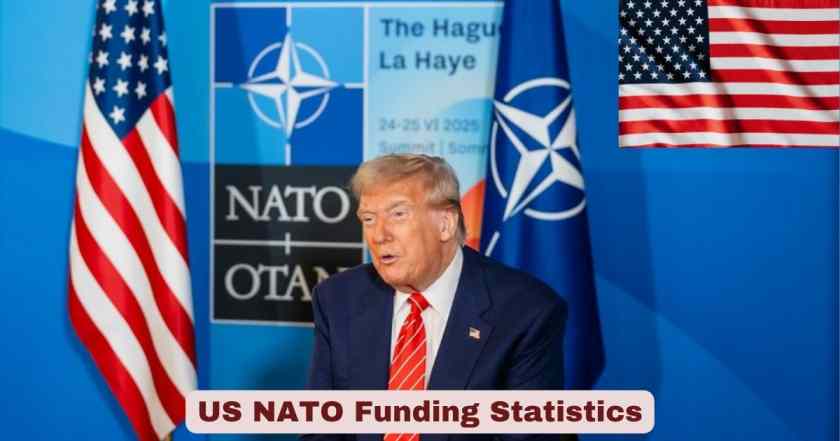
US Funding to NATO 2026
US NATO funding refers to the financial contributions the United States makes to support the North Atlantic Treaty Organization (NATO) — the 32-member military alliance founded in 1949 to provide collective defense among North American and European democracies. Understanding U.S. NATO funding requires distinguishing between two fundamentally different categories of financial commitment that are frequently confused in public debate. The first is the direct contribution to NATO’s common-funded budgets — the actual money the United States pays into NATO’s organizational budgets for headquarters operations, the integrated military command structure, shared infrastructure, and joint capabilities. The second is the overall U.S. national defense budget, which funds U.S. military forces, personnel, bases, equipment, and operations worldwide — including those that benefit NATO allies indirectly through collective deterrence and Article 5 commitments. These two numbers are vastly different in scale, and conflating them has been at the center of many political arguments about whether the United States is paying too much for NATO’s defense. The direct U.S. contribution to NATO’s common budget is approximately 14.9% of NATO’s EUR 5.3 billion collective budget in 2026, while the overall U.S. defense budget — which includes far more than NATO costs — was $980 billion in 2025.
The geopolitical and financial context surrounding U.S. NATO funding in 2026 is more consequential than at almost any point since the Cold War. NATO’s 2025 Hague Summit produced what Secretary-General Mark Rutte called a “transformational leap” — a landmark commitment by all 32 member states (with Spain receiving an exception) to invest 5% of GDP annually in defense and defense-related spending by 2035, structured as 3.5% for core defense and 1.5% for critical infrastructure, cybersecurity, civil preparedness, and defense industrial base investment. This commitment more than doubled the previous 2% of GDP guideline that NATO had struggled to enforce for over a decade. In 2025, for the first time in the history of the modern alliance, all 32 NATO member countries met or exceeded the 2% of GDP defense spending guideline, with European allies and Canada achieving a 20% increase in defense spending in a single year. President Trump, whose pressure on allies to spend more has defined the political dynamics of NATO burden-sharing in his administrations, was credited by Rutte for this outcome. Against this backdrop, the 2026 NATO Summit in Ankara, Turkey — where allies are expected to assess progress on the new 5% pledge — will provide the next major milestone for evaluating whether the burden-sharing landscape has truly and permanently shifted.
Key Interesting Facts About US NATO Funding in 2026
The following verified facts on US NATO funding statistics 2026 are drawn exclusively from NATO official publications, the U.S. Department of Defense, Full Fact, the Atlantic Council, SIPRI, and peer-reviewed defense finance analyses.
| Fact Category | Key Fact |
|---|---|
| US defense spending (2025 estimate) | $980 billion — ~3.22% of US GDP; the largest defense budget of any NATO nation in absolute terms (NATO/Full Fact, 2025) |
| US share of total NATO defense spending (2025) | ~60% of all NATO countries’ combined spending — the US spent more than all other 31 NATO allies combined (NATO Secretary General’s Annual Report 2025) |
| US direct cost share — NATO common budget (2026) | 14.9% — identical to Germany’s share; down from 15.9% through end of 2025 (Full Fact / NATO cost-share data, 2026) |
| NATO total common budget (2026) | EUR 5.3 billion — up from EUR 4.6 billion in 2025 (NATO official, approved December 2025) |
| NATO Military Budget (2026) | EUR 2.42 billion — funds the integrated command structure, NATO Strategic Commands, and Alliance operations (NATO, December 2025) |
| NATO Civil Budget (2026) | EUR 528.2 million — funds NATO Headquarters operations (NATO, December 2025) |
| NATO Security Investment Programme ceiling (2026) | EUR 2.2 billion — funds military construction, command-and-control systems, airfields, and critical infrastructure (NATO, 2026) |
| All 32 NATO allies met 2% GDP guideline (2025) | First time in history — all 32 NATO members met or exceeded the 2% GDP defense guideline in 2025 (NATO / Atlantic Council) |
| European allies + Canada spending increase (2025) | +20% in a single year — from 2024 to 2025 (NATO Secretary General’s Annual Report, released March 2025) |
| European allies + Canada combined spending (2025) | More than USD 574 billion (adjusted to 2021 prices) — up from 1.4% of combined GDP in 2014 to 2.3% in 2025 (NATO official) |
| New NATO spending pledge (Hague Summit 2025) | 5% of GDP by 2035 — at least 3.5% for core defense + up to 1.5% for security-related spending (NATO, June 2025) |
| Norway surpasses US in per-capita defense spending (2026) | For the first time in recorded NATO history, a European ally — Norway — has surpassed the United States in defense spending per capita (Atlantic Council, updated April 9, 2026) |
Source: NATO — Secretary General’s Annual Report for 2025 (released March 26, 2026); NATO — “Funding NATO” topic page (updated April 2026, nato.int); NATO — “Defence Expenditures and NATO’s 5% Commitment” topic page (nato.int, April 2026); NATO — “NATO agrees its 2026 common funded budgets” press release (December 17, 2025); Full Fact — “How much does the US contribute to NATO?” (January 27, 2026); Atlantic Council — NATO Defense Spending Tracker (last updated April 9, 2026)
These key facts expose several important truths about the complex reality of U.S. NATO funding in 2026. The figure that generates the most political heat — the U.S. share of total NATO military spending — is simultaneously accurate and misleading without context. The U.S. accounting for ~60% of all NATO defense spending is a real and large number, but it reflects the full scope of U.S. global military power projection: America’s defense budget funds not just European deterrence but its entire worldwide military apparatus — Pacific Command, Indo-Pacific posture, strategic nuclear deterrent, space and cyber capabilities, and forward deployments on every continent. The 14.9% U.S. share of NATO’s direct common budget in 2026 — equal to Germany’s — is the only genuinely comparable “payment to NATO” figure. The fact that this amounts to roughly $750–800 million against a total U.S. defense budget of nearly $1 trillion tells you almost everything you need to know about the scale distinction between “what the US pays NATO” and “what the US spends on defense.” The historic milestone of Norway surpassing the US in per-capita defense spending in 2026 marks a genuine structural shift in the burden-sharing dynamic that has defined transatlantic politics for decades.
US Defense Spending as NATO Contribution Statistics in 2026
The largest and most discussed dimension of U.S. NATO funding is the overall national defense budget and what share of NATO’s combined military spending it represents. This is the indirect contribution — real and substantial — through American military forces, deterrence capabilities, and collective defense that benefits all allies.
| US Defense Spending Metric | Data Point | Source / Period |
|---|---|---|
| US total defense spending (2025 estimate) | $980 billion | NATO Defence Expenditure Report (2014–2025); Full Fact, January 2026 |
| US defense spending as % of GDP (2025) | ~3.22% of GDP | NATO / Full Fact, January 2026 |
| US share of total NATO defense spending (2025) | ~60% — US spent more than all other NATO allies combined | NATO Secretary General’s Annual Report 2025 (released March 26, 2026) |
| US defense spending (2024) | $935 billion | Gabelli / Taxpayers for Common Sense data |
| US defense spending as % of all NATO spending (2016) | 72% — the US share before Trump’s first term pressure | Full Fact / NATO data (cited January 2026) |
| US defense spending vs. next-highest NATO member (2025) | $980B (US) vs. $90.5B (UK) — US spent more than 10× the second-largest NATO spender | Full Fact, January 2026 |
| Total combined NATO defense spending (2025 estimate) | ~$1.404 trillion (at 2021 prices and exchange rates) — per NATO figures | Full Fact / NATO Secretary General’s Annual Report |
| US defense spending vs. Russia + China combined | US spending of ~$880 billion in 2023 was roughly double what China and Russia spent combined | PIIE analysis (cited February 2025) |
| Trump first-term NATO spending increase | New NATO defense expenditures by allies increased by $130 billion from 2017–2019 — the biggest spike in a generation | ShareAmerica / US State Department, January 2026 |
| Non-US NATO members’ average spending (decade to 2024) | Rose from 1.4% of combined GDP (2014) to 2% (decade average) — a near-doubling | ShareAmerica / State Department |
| US defense spending required to reach 5% GDP | Reaching 5% of GDP would require the US to spend an additional ~$500 billion/year on the military | Taxpayers for Common Sense, February 2025 |
| US spending at 3.22% GDP vs. 3.5% core defense target | The US is above the old 2% benchmark but below the new 3.5% core defense threshold | GlobalSecurity.org / NATO, 2026 |
Source: NATO — Defence Expenditure of NATO Countries (2014–2025) report (released August 27, 2025); NATO Secretary General’s Annual Report for 2025 (released March 26, 2026, FlightGlobal/NATO); Full Fact — “How much does the US contribute to NATO?” (January 27, 2026); PIIE — “Trump’s Five Percent Doctrine and NATO Defense Spending” (February 2025); ShareAmerica (U.S. State Department) — “New defense spending strengthens NATO” (January 9, 2026); Taxpayers for Common Sense — “How Much Does NATO Cost the United States?” (February 2025)
The U.S. defense spending data makes it unambiguously clear why the burden-sharing debate has been such a persistent feature of transatlantic politics. When the United States accounts for 60% of total NATO defense spending while comprising roughly 43% of NATO’s combined GDP, there is a genuine and measurable imbalance — the U.S. is spending a higher proportion of its economy on defense than the alliance average and contributing a disproportionate share of military capability. However, the important context is that a large portion of U.S. defense spending reflects global commitments far beyond Europe: Pacific deterrence, Middle East engagement, strategic nuclear forces, and worldwide power projection capabilities that serve American national interests independent of NATO membership. The narrowing of the U.S. share from 72% of total NATO spending in 2016 to ~60% in 2025 represents a genuine and meaningful shift driven by European increases, not American reduction — European and Canadian allies added hundreds of billions to their defense budgets in the post-Ukraine invasion period. The benchmark of Norway surpassing the US in per-capita defense spending in 2026 is perhaps the sharpest possible indicator that the old narrative of Europeans uniformly free-riding on American security has become outdated.
US Direct Contribution to NATO Common Budgets 2026
The direct U.S. financial contribution to NATO’s collective budgets — as distinct from overall U.S. defense spending — is a far more modest sum that covers NATO’s organizational operations, military command structure, shared infrastructure, and investment programs.
| Direct NATO Budget Metric | Data Point |
|---|---|
| Total NATO common-funded budgets (2026) | EUR 5.3 billion — approved by the North Atlantic Council, July and December 2025 |
| Total NATO common-funded budgets (2025) | EUR 4.6 billion (representing 0.3% of total Allied defence spending) |
| NATO Civil Budget (2026) | EUR 528.2 million — funds NATO Headquarters, International Staff, civilian operations |
| NATO Military Budget (2026) | EUR 2.42 billion — funds integrated command structure, Strategic Commands, NATO operations |
| NATO Security Investment Programme (NSIP) ceiling (2026) | EUR 2.2 billion — funds military construction, command and control systems, infrastructure |
| US cost share of NATO common budget (2026) | 14.9% — same as Germany; reduced from 15.9% through end of 2025 |
| Germany cost share (2026) | 14.9% — same as the United States |
| UK cost share (2026) | 10.3% — slightly reduced from previous level of 11% |
| Estimated annual US payment to NATO common budget | ~$750–$800 million — approximately 14.9% of EUR 5.3 billion total |
| US NSIP budget request (FY2026) | $481.8 million — DoD FY2026 NATO Security Investment Programme budget request |
| US share of NSIP (FY2026) | 15.88% — the U.S. negotiated share for the NSIP (vs. roughly 47% based on GNI formula) |
| US common budget payment as % of total US defense spending | Less than 0.1% of total U.S. military expenditures |
Source: NATO — “NATO agrees its 2026 common funded budgets, strengthening Allied resolve in a new era of collective defence” (press release, December 17, 2025, nato.int); NATO — “Funding NATO” topic page (nato.int, April 2026); NATO — “Allies agree NATO’s 2026-2030 Common Funding Resource Plan” (July 16, 2025); Full Fact — “How much does the US contribute to NATO?” (January 27, 2026); U.S. Department of Defense — Military Construction Program FY2026 Budget: NATO Security Investment Programme (comptroller.defense.gov); Gabelli Funds — “NATO Spending Overview” (January 2026); Taxpayers for Common Sense — “How Much Does NATO Cost the United States?” (February 2025)
The direct U.S. contribution to NATO’s common budget data is where the gap between political narrative and financial reality becomes most stark. The United States pays approximately $750–800 million into NATO’s direct collective budgets — an amount that represents less than 0.1% of the U.S. total defense budget. For context, that is roughly the cost of two or three F-35 fighter jets. The 14.9% U.S. cost share in 2026 — equal to Germany’s share — reflects a deliberate burden-sharing formula based on Gross National Income, and notably represents a reduction from 15.9% that came into effect for 2026 as a result of membership expansion and the renegotiated cost-share formula. The particularly notable figure for the NSIP — where the U.S. pays 15.88% while a strict GNI-based formula would assign roughly 47% — illustrates that the U.S. successfully negotiated a favorable share of infrastructure investment costs in 2019, ensuring NATO’s collective defense capabilities remain funded while limiting direct U.S. fiscal exposure. These direct budget contributions fund mission-critical Alliance capabilities that would be prohibitively expensive for any single nation to provide alone: the NATO integrated command structure, Allied operations and missions, satellite communications, airfield infrastructure, naval basing, and the Airborne Early Warning and Control (NAEW&C) system.
NATO Allies’ Defense Spending Statistics in 2026
Understanding US NATO funding in context requires a detailed picture of what every other NATO ally is contributing — the landscape of burden-sharing across all 32 members that defines the alliance’s collective capability and the political tension over who is paying their fair share.
| Allied Spending Metric | Data Point | Source / Period |
|---|---|---|
| All 32 NATO allies meeting 2% GDP target (2025) | 100% of allies — first time in the modern alliance’s history | NATO Secretary General’s Annual Report 2025 |
| NATO average defense spending as % of GDP (2025) | 2.76% across all 32 member states | Statista / NATO data, August 2025 |
| European allies + Canada combined spending (2025) | More than USD 574 billion (2021 prices) — at 2.3% of combined GDP | NATO official |
| Poland — highest defense spending % GDP (2025 est.) | 4.48% of GDP — the highest of any NATO member | NATO / Statista, 2025 |
| Lithuania — second highest (2025 est.) | 4.0% of GDP | NATO / Statista, 2025 |
| Latvia — third highest (2025 est.) | 3.73% of GDP | NATO / Statista, 2025 |
| UK defense spending (2025) | $90.5 billion — second-largest NATO spender in absolute terms | Full Fact / NATO data, January 2026 |
| Canada defense spending (2025) | $43.9 billion | Visual Capitalist / NATO data |
| Turkey defense spending (2025) | $32.6 billion | Visual Capitalist / NATO data |
| Nations meeting ONLY the 2% floor (five nations, 2025) | Albania, Belgium, Canada, Portugal, Spain — forecast at exactly 2% | NATO Secretary General’s Annual Report 2025; FlightGlobal, March 2026 |
| Norway surpassing US in per-capita spending (2026) | For the first time in recorded NATO history, Norway exceeded the US in defense spending per capita | Atlantic Council (updated April 9, 2026) |
| Number of allies meeting 2% in 2014 | Only 3 allies met the 2% guideline in 2014, compared to all 32 in 2025 | NATO official |
Source: NATO — Defence Expenditure of NATO Countries (2014–2025) report (August 27, 2025); NATO Secretary General’s Annual Report for 2025 (March 26, 2026); Statista — Defense expenditures of NATO member states as a share of GDP in 2025 (August 27, 2025; accessed January 15, 2026); Visual Capitalist — “Charted: The U.S. Dominates NATO Defense Spending” (January 24, 2026); Atlantic Council — NATO Defense Spending Tracker (updated April 9, 2026); FlightGlobal — “NATO spending tops $1.4 trillion, with non-US contributions soaring by 20%” (March 2026)
The allied spending data for NATO in 2025 and 2026 represents the most dramatic shift in the alliance’s burden-sharing landscape since the Cold War — and it is directly traceable to Russia’s full-scale invasion of Ukraine in February 2022, which permanently and viscerally demonstrated to European populations the reality of the security threats that NATO was created to deter. The movement from three allies meeting the 2% guideline in 2014 to all 32 meeting it in 2025 is a 29-country change in a single decade. The 20% single-year increase in European and Canadian defense spending from 2024 to 2025 is the largest single-year jump in alliance history outside of wartime. The Eastern European allies — Poland at 4.48% of GDP, Lithuania at 4.0%, Latvia at 3.73% — are not just meeting targets: they are spending at levels that reflect genuine perceived existential threat from Russia, with Poland in particular building one of the fastest-growing military forces in Europe. The benchmark of Norway surpassing the United States in per-capita defense spending in 2026, as documented by the Atlantic Council’s tracker updated April 9, 2026, marks a symbolic turning point that would have seemed inconceivable during the years when the US was pressing reluctant European allies to simply meet the 2% floor.
NATO’s New 5% Spending Pledge: US Implications in 2026
The 2025 Hague Summit agreement committing NATO members to 5% of GDP in defense and defense-related spending by 2035 is the most consequential NATO funding decision in a generation — with substantial implications for US contributions, allied capability, and the future of the transatlantic burden-sharing debate.
| 5% Pledge Metric | Data Point |
|---|---|
| New NATO spending target agreed | 5% of GDP by 2035 — at least 3.5% on core defense + up to 1.5% on security-related spending |
| Previous NATO target | 2% of GDP — agreed at 2006 NATO Defence Ministers meeting; formalized at 2014 Wales Summit |
| Summit location and date | The Hague, Netherlands, June 24–25, 2025 |
| Spain exemption | Spain received an exemption from the 5% target — the only member to do so — pledging to cap defense at 2.1% GDP |
| Expected additional annual NATO spending when reached (2035) | More than $1 trillion annually in new defense resources |
| Total NATO annual military spending if 5% reached in 2035 | Estimated ~$4.2 trillion — nearly triple current levels |
| Total NATO annual spending at 3.5% core defense in 2035 | ~$2.9 trillion — vs. ~$1.59 trillion in 2025 |
| Additional annual spending required to reach 3.5% (2024 baseline) | ~$1.4 trillion more per year than 2024 levels to reach 3.5% |
| Germany spending to reach 5% in 2035 | Approximately $329 billion/year — vs. ~$95 billion in 2024 |
| France spending to reach 5% in 2035 | Approximately $221 billion/year |
| US current position vs. new targets | US at ~3.22% of GDP — above old 2% benchmark but below the 3.5% core defense component of new target |
| National roadmap submission deadline | Allies required to submit national spending roadmaps by mid-2026 |
Source: NATO — “Defence Expenditures and NATO’s 5% Commitment” topic page (nato.int, updated April 2026); NATO Summit Declaration, The Hague, June 25, 2025; Defense News — “NATO allies agree to boost defense spending to 5% at The Hague summit” (June 25, 2025); Wikipedia — “Agreement on 5% NATO defence spending by 2035” (updated April 2026); SIPRI — “NATO’s new spending target: challenges and risks associated with a political signal” (2025); ShareAmerica / U.S. State Department — “New defense spending strengthens NATO” (January 9, 2026); Heritage Foundation — “The 2025 NATO Summit” (August 2025)
The 5% of GDP NATO spending pledge from the 2025 Hague Summit carries immediate implications for US NATO funding in 2026 that go beyond the distant 2035 deadline. The submission of national roadmaps by mid-2026 is a concrete near-term deliverable that will reveal how credibly each ally — including the United States — plans to reach the new targets. The U.S. position is notable: at 3.22% of GDP in 2025, America already exceeds the old 2% benchmark by a wide margin, but sits below the 3.5% core defense component of the new target. Meeting 5% total (including 1.5% in security-related spending) would require the US to add approximately $500 billion/year to its defense posture — an extraordinary increase for a country already running the world’s largest defense budget. For European allies, the scale of required increases is even more dramatic: Germany would need to spend $329 billion/year by 2035 to reach 5%, compared to roughly $95 billion in 2024. NATO Secretary General Mark Rutte’s assessment that Russia could be ready to attack NATO in the next three to seven years provides the strategic rationale for the urgency, and the upcoming Ankara summit in July 2026 — where progress on The Hague commitment will be reviewed for the first time — will be the first real test of whether The Hague declaration was a genuine policy commitment or a political signal.
US NATO Funding History & Burden-Sharing Statistics in 2026
The history of US NATO funding and burden-sharing provides essential context for understanding the 2026 landscape, showing how the debate over equitable contributions has evolved from NATO’s founding in 1949 through today’s dramatically changed security environment.
| Historical / Burden-Sharing Metric | Data Point |
|---|---|
| NATO founding | April 4, 1949 — 32 current members; originally 12 founding members |
| Original US/France/UK cost share (1952) | Each contributed 22.5% of NATO’s direct budget equally |
| Highest-ever US cost share | 28.45% in 1997 — the peak of U.S. direct budget contribution share |
| US cost share decline (2019 reform) | US share reduced as part of 2019 burden-sharing renegotiation — US pressure for fairer cost-share led to increase for European allies and Canada |
| 2% GDP guideline agreed | 2006 — agreed by NATO Defence Ministers |
| 2014 Wales Summit pledge | Formal commitment to 2% GDP defense spending by 2025 — triggered by Russia’s annexation of Crimea |
| Number meeting 2% in 2014 | 3 allies — United States, United Kingdom, Greece |
| Non-US allies spending increase (decade to 2024) | Rose from 1.4% to 2% of combined GDP — a near-doubling |
| Russia’s invasion of Ukraine (trigger event) | February 24, 2022 — the event that triggered Europe’s fastest-ever defense spending surge |
| Trump 1st-term ally spending increase (2017–2019) | Additional $130 billion in new NATO defense expenditures — the biggest spike in a generation |
| US cost share now equal to Germany’s | Both US and Germany contribute 14.9% of NATO common budget for 2026 |
| Article 5 — only invocation in history | Article 5 was invoked once — after the September 11, 2001 attacks on the United States |
Source: Full Fact — “How much does the US contribute to NATO?” (January 27, 2026); NATO official topic pages; SIPRI — “NATO’s direct funding arrangements: Who decides and who pays?” (2024); ShareAmerica / U.S. State Department — “New defense spending strengthens NATO” (January 9, 2026); NATO — “Defence Expenditures and NATO’s 5% Commitment” topic page; Statista — defense expenditure data and context (August 27, 2025)
The historical trajectory of US NATO burden-sharing statistics tells a story of remarkable transformation. From the equal 22.5% cost shares of 1952 — when the US, France, and UK split NATO’s founding budget three ways — to the peak US share of 28.45% in 1997, and then to today’s 14.9% direct contribution equal to Germany’s, the evolution of the cost-share formula reflects both changing membership (more allies = smaller individual shares) and deliberate American pressure to redistribute financial responsibility. The 2019 renegotiation — a direct product of Trump’s first-term pressure on allies — formally reduced the U.S. share of common budgets and increased European contributions, making the current cost-share structure meaningfully more equitable than what existed for most of the alliance’s modern history. The historical significance of Article 5 being invoked just once in 75 years — and that single invocation being in response to the September 11 attack on the United States itself — is a fact that adds important context to the burden-sharing debate: the collective defense guarantee has ultimately served U.S. security interests in practice, not just European ones. The fundamental shift in European political will following Russia’s 2022 invasion of Ukraine — which moved the alliance from a situation where only three members met the 2% target to every single member meeting it in 2025 — may be the most consequential development in NATO’s post-Cold War history.
US NATO Funding & European Defense Investment Statistics in 2026
The 2026 picture of European defense investment reveals how dramatically the burden-sharing dynamic has shifted in recent years, with direct implications for how the United States views its own NATO financial commitments going forward.
| European Defense Investment Metric | Data Point |
|---|---|
| European allies + Canada combined spending increase (2025) | +20% year-over-year — from 2024 to 2025 |
| European NATO members’ average spending pre-Ukraine invasion | ~1.5% of GDP average — in the decade before Russia’s 2022 invasion |
| European NATO members’ spending in 2025 | ~2.0% of GDP — a near-doubling from pre-invasion levels |
| European NATO core defense spending (2024 estimate) | ~$500 billion — Germany ~$95B (20%), UK ~$85B, France ~$65B |
| European arms imports as share of global total (2025) | 39.9% of global arms imports — the largest regional share worldwide |
| NATO allies’ Ukraine aid pledges (2025) | More than €35 billion ($41 billion) pledged for Ukraine in 2025 — with 2025 total expected to surpass 2024’s €50 billion |
| Germany constitutional debt brake reform (2025) | Germany amended its constitution in 2025 to lift the debt brake — enabling major defense spending increases |
| If all NATO allies reach 3.5% core defense in 2035 | ~$1.4 trillion additional per year over 2024 baseline would be required |
| US share of NATO spending if all hit 5% in 2035 | US share of NATO total would fall from ~60% to roughly 28–30% — transforming burden sharing |
| NATO allies committing to reach 5% by 2029 | Eastern and Northern European allies — Poland, Baltic states, Nordic nations — pledged to reach new target by 2029 or sooner |
| Europe as share of global arms imports (SIPRI 2025) | 39.9% — vs. Saudi Arabia at 9.1% and India at 8.6% |
| European defense equipment spending growth post-Ukraine | Equipment rose from ~20% of NATO Europe total spend to ~30% — faster growth than any other category |
Source: NATO Secretary General’s Annual Report for 2025 (released March 26, 2026); Gabelli Funds — “NATO Spending Overview: A Structural Change to the Defense Industry” (January 2026); SIPRI — “NATO’s new spending target” (2025); SIPRI Arms Transfers Database via Visual Capitalist (March 2026); Defense News — “NATO allies agree to boost defense spending to 5%” (June 25, 2025); Heritage Foundation — “The 2025 NATO Summit” (August 2025); PIIE — “Trump’s Five Percent Doctrine” (February 2025)
The European defense investment statistics for 2026 represent the strongest empirical case yet that the American political argument about NATO burden-sharing has achieved genuine results — and that the landscape facing U.S. policymakers on NATO funding is structurally different from what it was even five years ago. Europe now accounts for 39.9% of all global arms imports, according to the SIPRI Arms Transfers Database updated in March 2026 — a figure that would have seemed implausible during the era of European defense austerity that followed the 2008 financial crisis. The 20% single-year increase in European and Canadian defense spending in 2025 is historically unprecedented in peacetime. Germany’s decision to amend its constitution to remove the debt brake — a legal constraint that had governed German fiscal policy for decades — is perhaps the most striking single indicator of how thoroughly Russia’s aggression has shifted European political calculations about the price of security. If the alliance successfully reaches its 5% pledge over the coming decade, the projection that the U.S. share of NATO’s total defense spending would fall from ~60% to roughly 28–30% would represent a fundamental rebalancing — not through America spending less, but through Europe spending dramatically more.
Disclaimer: This research report is compiled from publicly available sources. While reasonable efforts have been made to ensure accuracy, no representation or warranty, express or implied, is given as to the completeness or reliability of the information. We accept no liability for any errors, omissions, losses, or damages of any kind arising from the use of this report.