
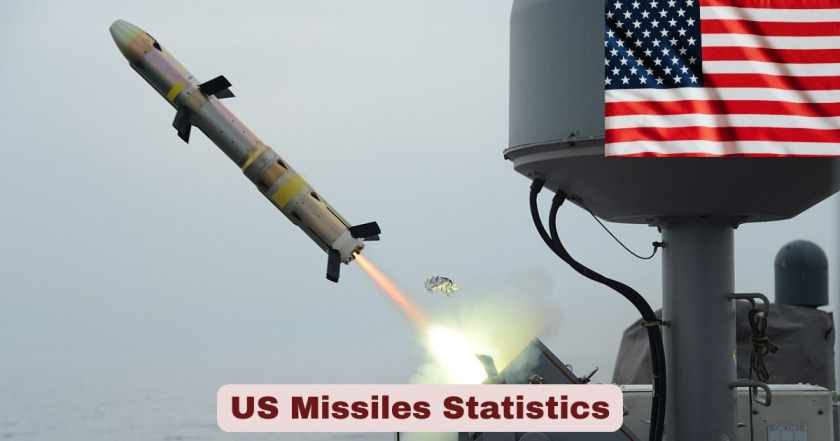
Missiles in US 2026
The United States maintains one of the world’s most advanced and comprehensive missile defense and strike systems as we move through 2026. The American arsenal encompasses everything from intercontinental ballistic missiles (ICBMs) that form the backbone of nuclear deterrence to precision-guided tactical weapons that provide conventional strike capabilities across multiple domains. This year marks a critical inflection point for US missile programs, with production ramping up dramatically across nearly every major system in response to global security challenges and lessons learned from recent conflicts in Ukraine and the Middle East.
The fiscal landscape for missile systems in 2026 reflects unprecedented investment levels. The Missile Defense Agency’s budget request totals $13.2 billion when combining discretionary and supplemental funding, representing a substantial increase aimed at strengthening homeland defense capabilities. Meanwhile, defense contractors are scaling production to historic levels, with companies like Lockheed Martin targeting combined annual output approaching 19,000 missiles and rockets across various platforms. This production surge addresses both the immediate need to replenish stocks depleted by ongoing conflicts and the longer-term imperative to maintain credible deterrence against near-peer adversaries.
Interesting Facts and Latest Statistics for US Missiles in 2026
| Missile Category | Key Statistic | Details | Source |
|---|---|---|---|
| Patriot PAC-3 MSE Production | 2,000 missiles per year | Lockheed Martin pledged to triple production from 600 to 2,000 annually under 7-year DoD agreement | Defense News, Jan 2026 |
| Patriot Procurement Target | 13,773 missiles | US Army quadrupled acquisition goal from 3,376 to meet global demand | Bloomberg, Jul 2025 |
| GMLRS Production | 14,000 rockets annually | Current production rate with plans to increase to 19,002 by 2028 | Militarnyi, Apr 2025 |
| HIMARS Launcher Production | 96 units per year | Doubled from 48 launchers annually to meet international and domestic demand | Breaking Defense, Sep 2025 |
| JASSM/LRASM Production | 720 missiles per year | Expanding toward 1,100 annually with $4.3 billion contract awarded | Air Force Magazine, Sep 2024 |
| Sentinel ICBM Budget | $4.1 billion for FY2026 | Includes R&D funding despite 81% cost overrun to $141 billion total program | Arms Control Assoc., Jul 2025 |
| Minuteman III Inventory | 400 deployed missiles | Current operational ICBM force with 261 non-deployed units | Air Force Magazine, Oct 2025 |
| MDA Total Budget | $13.2 billion | Combines $10.2B discretionary + $3B supplemental for homeland defense | Defense News, Jun 2025 |
| Javelin Production Target | 3,960 missiles annually | Ramping up from 2,400 per year by late 2026 | Lockheed Martin, 2025 |
| Ground-Based Midcourse Defense | $3.2 billion allocation | FY2026 funding for GMD system protecting against ICBMs | Janes, Jun 2025 |
Data sources: US Department of Defense FY2026 Budget Justification Documents, Missile Defense Agency Budget Materials, Defense Industry Reports 2025-2026
The statistics presented reveal a defense industrial base undergoing rapid transformation to address 21st-century threats. The Patriot missile system stands out with the most dramatic production increase, as Lockheed Martin commits to tripling annual output to 2,000 PAC-3 MSE interceptors. This expansion responds directly to combat consumption in Ukraine and the Middle East, where US Patriot batteries successfully intercepted Iranian ballistic missiles in defense of Al Udeid Air Base in Qatar during June 2025. The Army’s acquisition target of 13,773 Patriot missiles represents recognition that modern conflicts can rapidly deplete even substantial stockpiles when facing saturation attacks.
Equally significant are the production numbers for long-range precision strike weapons. The Joint Air-to-Surface Standoff Missile (JASSM) and its naval variant LRASM are seeing sustained investment with $4.3 billion in contracts supporting expansion to over 1,100 missiles annually. These subsonic cruise missiles, with ranges exceeding 500 nautical miles, provide critical stand-off strike capability against adversaries with advanced air defenses. The Guided Multiple Launch Rocket System (GMLRS), which fires from both HIMARS and M270 platforms, maintains production at 14,000 rockets per year with documented plans to reach 19,002 annually by 2028. These systems have proven instrumental in Ukraine’s defense, demonstrating both their combat effectiveness and the consumption rates that drive current production planning.
Missile Defense Budget Allocations in the US in 2026
| Program | FY2026 Budget | Change from FY2025 | Primary Purpose |
|---|---|---|---|
| Missile Defense Agency Total | $13.2 billion | +$2.8 billion | Overall ballistic missile defense coordination |
| Ground-Based Midcourse Defense | $3.2 billion | Sustained funding | Homeland defense against ICBMs from Iran/North Korea |
| Next Generation Interceptor | Included in GMD | Second motor supplier funding | Replace aging Ground-Based Interceptors |
| Aegis Ballistic Missile Defense | $2.1 billion | Increased for homeland underlayer | Ship and shore-based missile defense |
| THAAD System Support | $646.9 million | Combined discretionary + reconciliation | Terminal phase ballistic missile defense |
| Missile Defense Radars | $28.3 million increase | +$9.8 million | Enhanced sensor capabilities |
| Command and Control Systems | $1 billion | New investment | Integrated battle management system |
| Space-Based Sensors | $2.6 billion | +$0.9 billion | Proliferated Warfighter Space Architecture |
Data source: US Department of Defense FY2026 Budget Justification, Missile Defense Agency June 2025
The Missile Defense Agency’s budget request for fiscal year 2026 totals $10.2 billion in discretionary funding plus $3 billion in supplemental reconciliation funding, bringing the complete request to $13.2 billion. This represents a $2.8 billion increase over the FY2025 enacted budget and signals the Trump administration’s commitment to the ambitious Golden Dome homeland missile defense architecture. The supplemental $3 billion forms part of a larger $25 billion Golden Dome initiative aimed at acquiring novel intercept capabilities, including space-based systems, and expanding the integrated air and missile defense architecture protecting the continental United States.
Within this allocation, Ground-Based Midcourse Defense (GMD) receives the largest single program funding at $3.2 billion. This investment supports continued development of the Next Generation Interceptor (NGI), which faces an approximately 18-month delay but remains central to future homeland defense. The FY2026 request includes planning for a third Continental United States interceptor site, likely on the East Coast to complement existing facilities in Alaska and California, and funding for a second motor supplier to reduce program risk. The Aegis Ballistic Missile Defense program sees its combined procurement and research budgets increase to $2.1 billion, supporting both traditional sea-based capabilities and development of a containerized SM-3 interceptor system as part of the expanded homeland defense underlayer concept.
Strategic Nuclear Missile Programs in the US in 2026
| System | Current Status | Inventory | Program Details |
|---|---|---|---|
| Minuteman III (LGM-30G) | Operational since 1970 | 400 deployed, 261 non-deployed | Planned service extension to 2050 |
| Sentinel (LGM-35A) | Development phase | 634 planned procurement | $141 billion total program cost after 81% overrun |
| Sentinel FY2026 Budget | $4.1 billion R&D | +$2.5 billion risk reduction | Includes Minuteman III sustainment hedge |
| ICBM Deployment Locations | 3 active wings | 450 silos total capacity | F.E. Warren AFB (WY), Malmstrom AFB (MT), Minot AFB (ND) |
| Minuteman III Capability | 13,000 km range | Single warhead config | W78 or W87 warheads, 300-475 kiloton yield |
| Sentinel First Flight | Delayed to 2028 | 2-year delay | Ground test milestones continue |
| W87-1 Warhead | Development | FY2031-2032 deployment | $649 million NNSA FY2026 request |
| Mk21A Reentry Vehicle | Testing phase | For Sentinel | Lockheed Martin development |
Data source: Air Force Global Strike Command, Congressional Research Service Report Jan 2026, Department of Defense Budget Documents
The United States’ land-based intercontinental ballistic missile force remains centered on the Minuteman III system, with 400 operationally deployed missiles distributed across three Air Force bases in Wyoming, Montana, and North Dakota. These weapons, which entered service in 1970, now operate more than 40 years beyond their originally planned lifespan. Each missile carries a single nuclear warhead in compliance with the New START Treaty, which expires in February 2026, though the missiles retain the physical capability to be uploaded with multiple independently targetable reentry vehicles (MIRVs) if the strategic environment changes. The Air Force maintains these weapons in hardened underground silos, with two-officer crews performing continuous alert duty in underground launch control centers.
The Sentinel program, designated LGM-35A, represents the planned replacement for the aging Minuteman III fleet but faces significant challenges that dominate strategic discussions in 2026. The Air Force requested $4.1 billion for Sentinel research, development, test, and evaluation in FY2026, with Congress adding $2.5 billion in reconciliation funding for risk reduction activities. This includes $500 million for Minuteman III upgrades as a hedge against further Sentinel delays. The program experienced a critical Nunn-McCurdy breach in January 2024 when costs increased by 81 percent to reach approximately $141 billion over the program’s lifecycle. The Air Force plans to procure 634 Sentinel missiles plus 25 additional units for development and testing, enabling deployment of 400 operational missiles beginning in the early 2030s – approximately three years behind the original 2029 initial operating capability target.
Tactical and Precision Strike Missiles in the US in 2026
| Missile System | Annual Production | Unit Cost | Key Capabilities |
|---|---|---|---|
| JASSM (AGM-158B) | 720 per year (expanding to 1,100) | ~$1.5 million | 500+ nm range, stealth cruise missile |
| LRASM (AGM-158C) | Included in JASSM total | Varies by variant | Anti-ship variant with 200+ nm range |
| GMLRS (M31) | 14,000 annually | ~$500,000 | 70 km range, GPS-guided rocket |
| GMLRS-ER | In production | Higher than standard | 150 km extended range |
| Precision Strike Missile (PrSM) | 400 per year capacity | Not disclosed | 500+ km range, ATACMS replacement |
| Javelin (FGM-148) | 2,400 (ramping to 3,960) | Not disclosed | Man-portable anti-tank guided missile |
| Tomahawk (Block V) | Sustained production | Not publicly disclosed | 1,000+ nm range naval cruise missile |
| AIM-9X Sidewinder | 137 per month (1,644 annually) | Not disclosed | Short-range air-to-air missile |
Data source: Lockheed Martin Production Reports 2025, DoD Procurement Documents, Defense Industry Publications
The Joint Air-to-Surface Standoff Missile (JASSM) program exemplifies American investment in long-range precision strike capabilities for 2026. Lockheed Martin currently produces approximately 720 JASSM and LRASM missiles combined per year from facilities in Alabama and Florida, with contracts in place supporting expansion toward 1,100 annually. The Pentagon awarded over $7.8 billion in multiyear procurement contracts in July 2025 for JASSM and LRASM production, with the Air Force requesting 389 JASSMs and 118 LRASMs in the FY2026 budget. These stealthy subsonic cruise missiles provide critical capability against sophisticated air defense systems, with the JASSM-ER variant achieving ranges exceeding 500 nautical miles and the LRASM offering autonomous target recognition for anti-ship missions in GPS-denied environments.
Ground-launched precision strike systems centered on the High Mobility Artillery Rocket System (HIMARS) and M270 Multiple Launch Rocket System represent another production priority for 2026. Lockheed Martin doubled HIMARS launcher production from 48 to 96 units annually ahead of schedule, backed by $2.8 billion in US Army contracts. The Guided Multiple Launch Rocket System (GMLRS) rockets these launchers fire reached 14,000 units annual production in 2024, with Pentagon documents indicating plans to increase output to 19,002 rockets by 2028. Ukraine’s Armed Forces operate up to 38 HIMARS and 16 M270 launchers, which together can fire a salvo exceeding 420 GMLRS rockets – underscoring why production must significantly exceed even current elevated rates. The Precision Strike Missile (PrSM), which replaces the ATACMS system, entered production with 400 missiles per year capacity under contracts awarded in March 2025, offering ranges exceeding 500 kilometers with future increments planned beyond 700 kilometers.
Air Defense Interceptor Production in the US in 2026
| Interceptor Type | Monthly Production | Annual Rate | Recent Combat Use |
|---|---|---|---|
| PAC-3 MSE | 42 missiles (ramping to 167) | 650 current, 2,000 target | Ukraine air defense, Al Udeid defense |
| PAC-2 GEM-T | Sustained production | Included in 740 total | Ukraine and Middle East operations |
| SM-3 Block IIA | 12 missiles procured FY2026 | Varies annually | Naval ballistic missile defense |
| SM-3 Block IA/IB | Sustainment production | +21 cFTE for recertifications | USCENTCOM operations |
| AIM-120 AMRAAM | Not disclosed monthly | Large $3.5B contract | Air-to-air and NASAMS use |
| Ground-Based Interceptors | 44 in place | Planning third site | Homeland ICBM defense |
| THAAD Interceptors | Sustained production | Supporting battery reset | Theater ballistic missile defense |
Data source: Missile Defense Agency FY2026 Budget Documents, Pentagon Production Reports, Defense News 2025
The Patriot Advanced Capability-3 Missile Segment Enhancement (PAC-3 MSE) represents the most significant air defense production story for 2026. In January this year, Lockheed Martin and the Department of Defense announced a transformative seven-year agreement to increase PAC-3 MSE production from approximately 600 to 2,000 interceptors annually. This more than tripling of output responds to what defense officials describe as soaring global demand following real-world combat operations. Current monthly production stands at 42 missiles, representing a doubling from previous rates, but will accelerate dramatically as new production lines activate. The US Army’s FY2026 budget requests $945.9 million to purchase 224 PAC-3 MSE missiles, split between $549.6 million from the base budget and $396.3 million under Operation Atlantic Resolve for European defense.
The elevated production stems directly from recent combat consumption that highlighted existing stockpile inadequacies. During the June 2025 Iranian ballistic missile attack on Al Udeid Air Base in Qatar, US forces fired approximately 30 Patriot interceptors in what Air Force General Dan Caine characterized as the largest single volley in the system’s history. This single engagement, combined with sustained Ukraine operations and Middle East tensions, reportedly reduced US Patriot inventories to approximately 25 percent of levels required for all theater commitments and projected conflict scenarios. The Pentagon temporarily halted Patriot transfers to Ukraine in early 2025 to assess stockpile adequacy, though shipments subsequently resumed. Each PAC-3 MSE interceptor costs approximately $4 million, making the proposed acquisition of 13,773 missiles – the Army’s updated objective – a $55 billion investment at current prices.
Hypersonic and Advanced Weapons Development in the US in 2026
| Program | Status | Capabilities | Budget |
|---|---|---|---|
| Hypersonic Air-breathing Weapon Concept (HAWC) | Testing phase | Scramjet-powered hypersonic cruise missile | Part of broader R&D |
| Air-Launched Rapid Response Weapon (ARRW) | Program cancelled | Boost-glide hypersonic (program ended 2023) | No FY2026 funding |
| Long-Range Hypersonic Weapon (LRHW) | Army deployment | Ground-launched, Mach 5+, 1,725+ mile range | Classified budget |
| Conventional Prompt Strike (CPS) | Navy development | Submarine-launched hypersonic | Classified budget |
| JASSM-XR | Concept development | Extreme range variant, could test 2026 | Development phase |
| Glide Phase Interceptor | Development | Counter adversary hypersonics | Included in MDA budget |
| Dark Eagle Battery | First operational unit | Army’s LRHW operational name | Deployed 2024-2025 |
Data source: Air Force Research Laboratory, Army Program Executive Office, Congressional testimony 2025
The United States continues developing hypersonic weapons capable of flying at speeds exceeding Mach 5, though programs have experienced mixed success entering 2026. The Army’s Long-Range Hypersonic Weapon (LRHW), operationally designated Dark Eagle, represents the most mature American hypersonic program with the first battery achieving initial operational capability at Joint Base Lewis-McChord in Washington State. This ground-launched system uses a boost-glide design where a rocket boosts the warhead to hypersonic speeds before it glides to its target, potentially reaching ranges exceeding 1,725 miles. The Navy’s Conventional Prompt Strike (CPS) program shares the same common hypersonic glide body but adapts it for submarine launch from Virginia-class attack submarines, with testing ongoing throughout 2025 and into 2026.
Air Force hypersonic programs present a more complicated picture. The Air-Launched Rapid Response Weapon (ARRW) program faced cancellation in 2023 after multiple test failures, though budget documents indicate the service may attempt to revive similar boost-glide capabilities. Meanwhile, the Hypersonic Air-breathing Weapon Concept (HAWC), which uses scramjet propulsion, continues flight testing with Lockheed Martin and Raytheon each developing variants. Looking beyond hypersonics proper, Lockheed Martin disclosed work on JASSM-XR – an extreme range variant of the Joint Air-to-Surface Standoff Missile that could potentially fly in 2026 testing. This weapon would provide step-change improvements beyond the current JASSM-ER’s range exceeding 500 nautical miles, potentially approaching or exceeding 1,000 nautical miles while maintaining stealth characteristics. The development reflects recognition that even subsonic missiles with sufficient range can complicate adversary defenses by forcing defensive coverage across vast areas.
International Missile Defense Cooperation in the US in 2026
| Partner Nation | System | Quantity/Details | Value |
|---|---|---|---|
| Poland | HIMARS (Homar-A) | 486 units with domestic integration | Framework agreement |
| Poland | Patriot | 8 batteries operational/ordered | Multi-year contract |
| Germany | Patriot | Multiple batteries, producing GEM-T in-country | Part of 1,000 missile EU order |
| Romania | HIMARS, Patriot | Multiple systems ordered | Multi-year contracts |
| Japan | JASSM-ER, Aegis Ashore | Up to 50 JASSM-ER approved Aug 2023 | Ongoing procurement |
| Australia | HIMARS, GMLRS | Local production: 4,000 GMLRS/year planned | Major FMS program |
| Finland | JASSM | 140 missiles in 2024 contract | Part of $4.3B deal |
| Netherlands | JASSM, Patriot | Multiple systems | Ongoing procurement |
| Lithuania | HIMARS | 8 systems, over 800 missiles | $495M contract Dec 2022 |
| Latvia | HIMARS | 6 systems, delivery starting 2027 | $220M contract Dec 2023 |
Data source: US State Department Foreign Military Sales notifications, Defense Security Cooperation Agency, international defense reports 2025-2026
International sales and cooperative production arrangements form a critical component of US missile programs in 2026, with Foreign Military Sales (FMS) both generating revenue and complicating production allocation decisions. Poland emerges as perhaps the most significant partner, having signed a framework agreement for 486 HIMARS launchers under the Homar-A program. These units will be assembled domestically on Polish Jelcz truck chassis beginning in 2026, representing substantial technology transfer and industrial cooperation. Poland simultaneously operates eight Patriot batteries with additional systems on order, making it one of the largest Patriot operators outside the United States. The country’s proximity to the Russia-Ukraine conflict and commitment to reaching 5 percent of GDP defense spending drives these acquisitions.
Europe more broadly represents growing demand for American missile systems. Germany, Romania, Spain, and the Netherlands formed a consortium placing orders for 1,000 PAC-2 GEM-T missiles, with production planned at a purpose-built MBDA facility in Schrobenhausen, Germany. This plant, with a footprint of approximately 6,000 square meters and creating over 300 jobs, reached completion in September 2026 per original timelines. The arrangement keeps production under European control while leveraging American technology and design. Lithuania and Latvia both contracted for HIMARS systems with deliveries extending into 2027, while Finland became one of the first nations to acquire JASSM cruise missiles as part of its comprehensive defense modernization. In the Indo-Pacific, Japan received State Department approval for up to 50 JASSM-ER missiles in August 2023, though subsequent budget constraints led to cancellation of planned LRASM acquisitions in favor of indigenous Type 12 anti-ship missile development. Australia pursues the most ambitious cooperative production arrangement, planning to manufacture 4,000 GMLRS rockets annually with Lockheed Martin’s Australian division, pending US government technology transfer approvals.
Production Challenges and Supply Chain Constraints in the US in 2026
| Constraint Type | Specific Issues | Mitigation Efforts | Timeline |
|---|---|---|---|
| Skilled Labor Shortages | Specialized technicians for complex systems | Cross-training programs, workforce expansion | 2-3 years to full capacity |
| Solid Rocket Motor Production | Northrop Grumman capacity limits | $1B investment over 6 years across facilities | Gradual increase through 2028 |
| Explosive Materials | TNT, RDX, HMX production constraints | Restarting dormant production lines | 18-24 months for significant increase |
| Semiconductor Components | Guidance systems requiring advanced chips | Domestic production incentives via CHIPS Act | Multi-year challenge |
| Raw Materials | Strategic minerals for electronics | Supply chain diversification efforts | Ongoing vulnerability |
| Facility Expansion | Physical plant limitations | Major capital investments by primes | 2026-2028 construction |
| Testing Infrastructure | Flight test capacity limits | Prioritization and scheduling coordination | Manageable with planning |
| Quality Control | Maintaining standards during ramp | Enhanced inspection, process automation | Critical ongoing concern |
Data source: Congressional testimony, defense industry statements, Government Accountability Office reports 2025
Despite ambitious production targets for 2026, American defense contractors face substantial supply chain constraints that limit how quickly missile output can scale. Northrop Grumman, which supplies solid rocket motors for multiple systems including GMLRS, has invested $1 billion over six years expanding production capacity across multiple facilities, yet still provides only 5,000 to 6,000 rocket motors annually for GMLRS alone. This bottleneck affects not only HIMARS and M270 ammunition but also the Precision Strike Missile (PrSM) program that uses similar propulsion technology. Lockheed Martin acknowledged that even with current $2.8 billion in HIMARS contracts and international demand, actually delivering 96 launchers annually required extensive supply chain streamlining and advanced automation implementation at its Camden, Arkansas facility.
Skilled labor represents another critical constraint. Building modern missiles requires technicians capable of working with exotic materials, complex electronics, and precision manufacturing processes. Defense contractors report that recruiting and training personnel to the necessary skill level requires 18 to 24 months minimum, meaning workforce expansion announced in 2025 will only reach full productivity in 2027 or beyond. The challenge intensifies because many systems use proprietary technologies and security clearances, limiting the available labor pool. Lockheed Martin, for its commitment to produce 2,000 PAC-3 MSE missiles annually by the early 2030s, acknowledged this will create thousands of additional American jobs but requires coordinated workforce development with government support. Meanwhile, explosive materials production – the actual chemical fillings for warheads – represents yet another chokepoint. The United States and European allies ceased certain explosives production years ago, requiring facilities to restart with all the attendant regulatory approvals, environmental compliance, and technical challenges. France, for instance, stopped gunpowder production in 2007 and only resumed amid the Russia-Ukraine conflict’s urgent demands.
Future Missile Programs and Technology Roadmaps in the US in 2026
| Future System | Expected IOC | Purpose | Development Status |
|---|---|---|---|
| Sentinel (LGM-35A) | Early 2030s (delayed) | Replace Minuteman III ICBM | Engineering development phase |
| Next Generation Interceptor | TBD (18 months delayed) | Replace Ground-Based Interceptor | Lockheed Martin/L3Harris selected |
| PrSM Increment 2 | Late 2020s | Enhanced seeker, 700+ km range | Development underway |
| Collaborative Combat Aircraft | 2030s | AI-enabled loyal wingman, missile carrier | Prototyping phase |
| SM-6 Block IB | Late 2020s | Enhanced anti-air and ballistic missile defense | In development |
| Lower Tier Air and Missile Defense Sensor | 2030 | Mobile radar for IBCS integration | Development underway |
| Indirect Fire Protection Capability | Ongoing deployment | Counter-rocket, artillery, mortar | Incremental fielding |
| Glide Phase Interceptor | TBD | Counter adversary hypersonic weapons | Early development |
Data source: Congressional Budget Office long-term projections, service modernization plans, Missile Defense Agency roadmaps
Looking beyond 2026, the United States faces multi-decade missile modernization requirements demanding sustained funding and technological advancement. The Sentinel ICBM program, despite its troubled cost growth to $141 billion, remains on track for deployment in the early 2030s after restructuring and schedule adjustments. The Air Force plans to field 400 operational Sentinel missiles to replace the Minuteman III force, with the new system designed for 50 years of service through 2075. This longevity requires modular design enabling component upgrades without replacing entire missiles – a lesson from Minuteman III sustainment challenges. The program includes not just 634 missiles for operational and test use but also comprehensive modernization of 450 launch silos and over 600 facilities at the three ICBM bases in Wyoming, Montana, and North Dakota. Some existing silos face replacement due to age and infrastructure inadequacy, adding billions to program costs.
Missile defense modernization centers on the Next Generation Interceptor (NGI), which will defend the homeland against limited ICBM attacks from adversaries like North Korea or Iran. After selecting Lockheed Martin and partner L3Harris Technologies in April 2024 – approximately one year earlier than originally planned to accelerate the program – MDA faces approximately 18 months of delay from initial projections. The FY2026 budget request includes funding for a second solid rocket motor supplier to reduce program risk and industrial base vulnerability. Planning also advances for a third Continental United States interceptor site, likely on the East Coast, to complement the 44 Ground-Based Interceptors currently deployed at Fort Greely, Alaska and Vandenberg Space Force Base, California. The expanded architecture aims to provide layered defense with geographic distribution reducing vulnerability to adversary first strikes. Meanwhile, the Precision Strike Missile program will field Increment 2 in the late 2020s, incorporating an enhanced seeker for maritime and moving target engagement and potentially extending range beyond 700 kilometers. These modernization efforts collectively represent the largest sustained investment in American missile capabilities since the Cold War, reflecting great power competition dynamics defining 2026 security environment.
Disclaimer: This research report is compiled from publicly available sources. While reasonable efforts have been made to ensure accuracy, no representation or warranty, express or implied, is given as to the completeness or reliability of the information. We accept no liability for any errors, omissions, losses, or damages of any kind arising from the use of this report.