
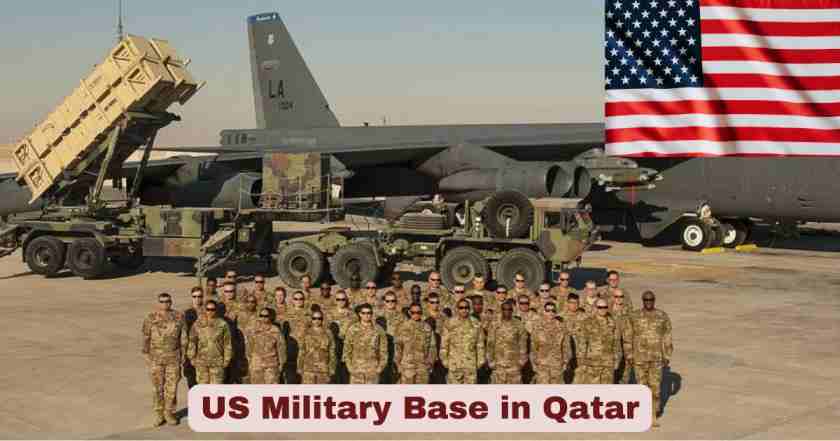
US Military Base in Qatar Region 2026
The United States military presence in Qatar represents one of America’s most strategically vital overseas installations in 2026, centered predominantly at Al Udeid Air Base, the largest US military facility in the entire Middle East. Located approximately 45 minutes southwest of Doha in the desert expanse, this expansive installation serves as the forward headquarters for US Central Command (CENTCOM), coordinating American military operations across 21 nations spanning from Egypt to Kazakhstan. As of January 2026, Al Udeid houses approximately 8,000 to 10,000 US troops, alongside personnel from the Qatar Emiri Air Force, United Kingdom Royal Air Force, and coalition partners from 17 different nations who collaborate through the Combined Air Operations Center (CAOC).
The scale and significance of US military base in Qatar 2026 operations cannot be overstated, with the facility functioning as the nerve center for American airpower projection throughout the Middle East, overseeing combat missions in Iraq, Syria, Afghanistan, and conducting counter-terrorism operations against ISIS and other extremist organizations. Qatar’s strategic positioning directly across the Persian Gulf from Iran—just 320 kilometers (200 miles) at the narrowest point—makes Al Udeid both invaluable for regional deterrence and vulnerable to Iranian ballistic missile threats, as demonstrated by the June 23, 2025 Iranian missile attack that targeted the base with at least six Fateh-313 missiles. Beyond Al Udeid, the US maintains presence at Camp As Sayliyah, a logistics hub hosting Army Central Command forward elements, though specific personnel numbers remain classified. The bilateral defense relationship between Washington and Doha, formalized through a 1992 Defense Cooperation Agreement and dramatically strengthened by President Trump’s September 2025 executive order guaranteeing Qatar’s security, represents an unprecedented level of American commitment to a Middle Eastern nation, with language resembling NATO’s Article 5 mutual defense clause.
Interesting Facts About US Military Bases in Qatar 2026
| Fact Category | Details |
|---|---|
| Largest US Middle East Base | Al Udeid Air Base is the largest US military installation in the Middle East as of 2026 |
| Total Personnel | Between 8,000 to 10,000 US troops stationed at Al Udeid, plus classified numbers at Camp As Sayliyah |
| Coalition Representation | 17 nations contribute personnel to the Combined Air Operations Center at Al Udeid |
| Base Size | Al Udeid covers 24 hectares (59 acres) of desert terrain southwest of Doha |
| Runway Length | 12,303 feet (3,750 meters), the longest runway in the Gulf region |
| Aircraft Capacity | Facility shelters can accommodate nearly 100 aircraft simultaneously |
| Aircraft Operated | Over 90 combat and support aircraft including 8 coalition airframes from US, UK, Singapore, Australia |
| Qatar Investment | Qatar invested over $1 billion to construct Al Udeid during the 1990s, plus $8 billion since 2003 in development |
| US Construction Investment | US Army Corps of Engineers awarded over $100 million in Military Construction Air Force contracts |
| CENTCOM Forward HQ | Al Udeid hosts forward headquarters coordinating operations across 21 nations |
| Iranian Attack June 2025 | Iran fired 6 Fateh-313 missiles at Al Udeid; 4 intercepted, 2 fell short, zero casualties |
| January 2026 Evacuation | Partial personnel evacuation conducted January 14-15, 2026 amid Iran tensions, troops returned January 15 |
| New Defense Cell | MEAD-CDOC air defense coordination cell opened January 12, 2026 to enhance regional missile defense |
| Trump Security Guarantee | September 29, 2025 executive order pledged US will use military force if necessary to defend Qatar |
| Foreign Military Sales | Qatar has over $26 billion in active FMS cases with US, second-largest FMS partner globally |
Data Source: Department of Defense, CENTCOM, CBS News, Al Jazeera, State Department, FDD (January 2026)
The data reveals the extraordinary concentration of American military power at Al Udeid Air Base, which has evolved from a modest desert airstrip in the late 1990s into the nerve center of US Middle East operations. The 8,000 to 10,000 troops stationed there represent a force nearly equivalent to an Army division, though focused on air operations, logistics, intelligence, and command functions rather than ground combat. Qatar’s remarkable $1 billion initial investment to construct the facility during the 1990s, followed by an additional $8 billion since 2003 in continuous upgrades and expansion, demonstrates the emirate’s strategic calculation that hosting America’s largest regional base provides the ultimate security guarantee for a small nation with only 16,500 total military personnel—the second-smallest armed forces in the Middle East.
The presence of 17 coalition nations working together at the Combined Air Operations Center exemplifies the truly multinational character of operations coordinated from Al Udeid, with representatives from the United States, United Kingdom, Australia, Singapore, France, and numerous Arab nations collaborating on daily air operations spanning from the Red Sea to Central Asia. The June 23, 2025 Iranian missile strike targeting Al Udeid marked a watershed moment, representing the first direct attack on the facility since its establishment and highlighting the persistent threat posed by Iran’s growing ballistic missile arsenal capable of reaching Qatar within 10-15 minutes of launch. The successful interception of 4 out of 6 missiles by Patriot air defense systems prevented what could have been catastrophic casualties, though one missile did impact the base, destroying a white radome containing American secure communication equipment according to satellite imagery analysis.
Al Udeid Air Base Personnel and Structure 2026
| Component | Personnel | Primary Function | Key Units |
|---|---|---|---|
| 379th Air Expeditionary Wing | Over 3,000 Airmen | Largest expeditionary wing, generates combat airpower | Multiple squadrons across all mission types |
| CENTCOM Forward Headquarters | Classified | Theater-level command and control | Joint operational planning, regional coordination |
| Combined Air Operations Center (CAOC) | Multi-national staff from 17 nations | Air operations command for entire Middle East | Plans and executes Air Tasking Orders |
| USAF Central Command Forward | Significant component | Air Force component command | Coordinates USAF operations across CENTCOM AOR |
| US Special Operations Command Central Forward | Classified | Special operations coordination | SOF missions across theater |
| Combined Joint Interagency Task Force – Syria | Classified | Syria operations coordination | Counter-ISIS operations management |
| Qatar Emiri Air Force | Approximately 100 personnel | Host nation air force | Base security, sovereignty |
| UK Royal Air Force No. 83 Expeditionary Air Group | Classified | British contribution to coalition | Operation Shader support |
| Coalition Partner Personnel | From 17 nations | Multinational operations support | Various specialties and missions |
| Support and Logistics Personnel | Several thousand | Base operations, maintenance, services | Civil engineering, medical, security forces |
Data Source: USAF, CENTCOM, Air & Space Forces Magazine (2026)
The organizational structure of US military base in Qatar 2026 reflects the complexity of modern expeditionary air operations, with the 379th Air Expeditionary Wing serving as the primary USAF unit responsible for generating and sustaining combat airpower across multiple theaters of operation. This unit employs over 3,000 Airmen and operates the largest and most diverse collection of aircraft in any expeditionary wing globally, coordinating missions ranging from strategic airlift and aerial refueling to intelligence, surveillance, reconnaissance, and aeromedical evacuation. The wing’s impressive World War II heritage, when its predecessor 379th Bombardment Group dropped more bomb tonnage (26,459 tons) than any other Eighth Air Force unit, continues to inspire the modern force executing combat missions across Iraq, Syria, and Afghanistan.
The Combined Air Operations Center represents the true heart of Al Udeid’s strategic value, operating as a theater-level command post where representatives from 17 coalition nations collaborate to plan, coordinate, and execute the daily Air Tasking Order (ATO) directing hundreds of sorties across the CENTCOM area of responsibility. This $60 million facility, made fully operational in February 2003, employs advanced technologies and requires diverse teams to maintain continuous 24/7 operations, integrating strategic decisions from CENTCOM headquarters in Tampa with tactical execution by aircrews flying missions throughout the region. The CAOC coordinates everything from close air support for ground troops and precision strikes against terrorist targets to intelligence collection missions, aerial refueling operations, and humanitarian airlift, making it indispensable to American military strategy in the world’s most volatile region.
Al Udeid Air Base Aircraft and Capabilities 2026
| Aircraft Type | Quantity | Mission | Squadrons/Units |
|---|---|---|---|
| KC-135 Stratotanker | Multiple | Aerial refueling operations | 340th Expeditionary Air Refueling Squadron |
| KC-10 Extender | Multiple | Long-range aerial refueling | Various expeditionary squadrons |
| C-17 Globemaster III | Multiple | Strategic airlift, cargo transport | 746th Expeditionary Airlift Squadron |
| C-130 Hercules (H/J models) | Multiple | Tactical airlift, special ops support | 746th Expeditionary Airlift Squadron, 15th Expeditionary Airlift Squadron |
| C-5 Galaxy | Rotational | Heavy strategic airlift | Various airlift squadrons |
| F-15E Strike Eagle | Multiple | Precision strike, air superiority | Various expeditionary fighter squadrons |
| F-16 Fighting Falcon | Multiple | Multi-role fighter operations | Various expeditionary fighter squadrons |
| F-35A Lightning II | Deployed | Fifth-generation stealth fighter | 421st Expeditionary Fighter Squadron |
| F-22 Raptor | Periodically deployed | Air superiority, stealth operations | Various fighter squadrons (first deployed June 2019) |
| A-10 Thunderbolt II | Rotational | Close air support | Various expeditionary squadrons |
| E-8 JSTARS | Deployed | Battlefield surveillance | 7th Expeditionary Airborne Command and Control Squadron |
| E-3 AWACS | Multiple | Airborne early warning, control | Various airborne control squadrons |
| RC-135 Rivet Joint | Deployed | Signals intelligence, reconnaissance | 763rd Expeditionary Reconnaissance Squadron |
| RQ-4 Global Hawk | Multiple | High-altitude ISR | Various ISR squadrons |
| MQ-9 Reaper | Multiple | Armed ISR, strike missions | Various expeditionary squadrons |
| P-3 Orion (Coalition) | Occasional | Maritime patrol | Coalition partners |
| Various Coalition Aircraft | 8 coalition airframes | Mixed missions | UK, Singapore, Australia contributions |
Data Source: USAF, 379th Air Expeditionary Wing, AFCENT (2026)
The aircraft inventory at Al Udeid Air Base in Qatar 2026 represents a comprehensive air armada capable of executing the full spectrum of air operations from humanitarian airlift to high-intensity combat. The KC-135 Stratotanker and KC-10 Extender aerial refueling aircraft form the backbone of extended-range operations, enabling fighter jets, bombers, and surveillance aircraft to operate continuously over distant battlefields without returning to base. Since Operation Enduring Freedom began in October 2001, Al Udeid-based tankers have transferred hundreds of millions of pounds of fuel to US and coalition aircraft, with the 340th Expeditionary Air Refueling Squadron alone delivering approximately 200 million pounds to over 13,000 aircraft during the early years of Afghanistan operations.
The strategic airlift capability provided by C-17 Globemaster III, C-130 Hercules, and C-5 Galaxy aircraft enables Al Udeid to function as the primary logistics hub for military operations throughout the Middle East, transporting troops, equipment, humanitarian supplies, and medical evacuation patients across vast distances. The 746th and 15th Expeditionary Airlift Squadrons conducted numerous combat airdrop missions delivering life-saving supplies to forward operating bases in Afghanistan and Iraq, while also handling the massive logistical challenge of rotating thousands of troops and millions of pounds of cargo through the theater. Fighter aircraft including F-15E Strike Eagles, F-16 Fighting Falcons, and the advanced F-35A Lightning II provide precision strike capabilities and air superiority, with the deployment of F-22 Raptor stealth fighters beginning in June 2019 demonstrating America’s commitment to maintaining technological dominance in a region where adversaries like Iran continue developing advanced air defenses.
Security Incidents Affecting Al Udeid Air Base 2023-2026
| Date | Incident Type | Attack Details | Casualties/Damage | Response |
|---|---|---|---|---|
| June 23, 2025 | Iranian ballistic missile attack | 6 Fateh-313 missiles launched at 7:39 PM | 0 casualties, 4 intercepted, 2 fell short, 1 radome destroyed | Qatar closed airspace 6 hours, Patriot systems engaged |
| June 19, 2025 (Pre-strike) | Precautionary aircraft dispersal | Most aircraft evacuated from tarmac | No casualties (preventive measure) | Aircraft dispersed to prevent concentrated targets |
| January 14-15, 2026 | Partial personnel evacuation | Troops evacuated amid Iran strike threats | No casualties (preventive withdrawal) | Personnel returned January 15 after threat subsided |
| Early 2026 | Heightened threat posture | Iran threatens retaliation for protest crackdown | Ongoing elevated alert | MEAD-CDOC air defense cell activated |
| 2025 (Various) | Regional tensions monitoring | Continuous threat assessment | No direct attacks | Enhanced force protection measures |
Data Source: CBS News, Wikipedia, Al Jazeera, Breaking Defense, FDD (2025-2026)
The security environment surrounding US military base in Qatar 2026 deteriorated dramatically on June 23, 2025, when Iran launched its first-ever direct attack on Al Udeid Air Base in retaliation for the June 21, 2025 US strikes (Operation Midnight Hammer) on Iranian nuclear facilities. The attack, occurring shortly before 8 PM Arabian Standard Time, involved six Fateh-313 short-range ballistic missiles fired from Iranian territory across the Persian Gulf toward the base housing 10,000 US troops. Qatar’s integrated air defense network, including American Patriot missile batteries, successfully intercepted four missiles while two fell short of their targets, preventing catastrophic casualties. However, one missile did impact the facility, and satellite imagery from Planet Labs revealed the destruction of a white radome containing American secure communication equipment, demonstrating that even partially successful air defense left the base vulnerable to significant operational disruption.
The January 14-15, 2026 partial evacuation represented the second major security incident within seven months, as President Trump weighed potential military strikes against Iran following a brutal crackdown on anti-government protesters. The US military characterized the move as a “precautionary measure” and “posture change” rather than an ordered evacuation, with some personnel advised to leave the base by Wednesday evening, January 14. At least six USAF KC-135 Stratotanker aerial refuelers departed around 10 PM, and most personnel had moved off the base leaving only a “minimum force posture” with a handful of soldiers maintaining essential operations. The threat level was lowered and troops began returning January 15 when officials indicated no imminent plans for attacking Iran, though the incident highlighted Al Udeid’s vulnerability to Iranian retaliation and raised questions about the concentration of American military assets at a single location within easy missile range of a hostile adversary.
Al Udeid Air Base Infrastructure and Facilities 2026
| Facility Type | Specifications | Capacity/Features | Investment |
|---|---|---|---|
| Primary Runway | 12,303 feet (3,750 meters), Longest in Gulf region | Handles all US and coalition aircraft types | Part of $1 billion+ Qatari investment |
| Aircraft Shelters | Nearly 100 hardened shelters | Protection from weather and threats | Continuous upgrades |
| Living Quarters | Housing for 10,000+ personnel | Dormitories, temporary housing, recreation facilities | $117 million FY2010 authorization for new facilities |
| Combined Air Operations Center (CAOC) | Bunker-like structure, $60 million facility | Theater air operations command, multi-national operations | Operational since February 2003 |
| MEAD-CDOC | New air defense coordination cell | Integrated air/missile defense across 17 nations | Opened January 12, 2026 |
| Fuel Storage | Extensive fuel depot | One million gallon-capacity storage tanks (part of upgrade project) | Part of $400 million+ upgrade |
| Maintenance Hangars | Multiple large hangars | Aircraft maintenance, repairs, modifications | Continuous expansion |
| Command Facilities | Multiple command centers | CENTCOM Forward, AFCENT, SOCCENT, CJIATF-Syria | Secure communications, intelligence |
| Recreation Facilities | Swimming pools, gyms, dining facilities | Quality of life for 10,000+ personnel | First pool completed June 2002 |
| Medical Facilities | Hospital-level capability | Aeromedical evacuation staging, trauma care | Advanced medical equipment |
| Ramps and Taxiways | Extensive concrete aprons | Accommodates simultaneous operations of 100+ aircraft | $9.1 million construction project |
| Security Perimeter | Razor wire, multiple checkpoints | Base entrance marked by simple signage | Enhanced post-2025 attack |
Data Source: Global Security, Military Bases, USAF, FY2010 NDAA (2026)
The physical infrastructure of Al Udeid Air Base in Qatar 2026 represents decades of strategic investment by both Qatar and the United States to create the premier air operations facility in the Middle East. The 12,303-foot runway, the longest in the entire Gulf region, enables operations by every type of aircraft in the US inventory, from massive C-5 Galaxy strategic airlifters weighing over 800,000 pounds fully loaded to nimble F-16 fighters and everything in between. This extraordinary runway, constructed to handle simultaneous high-tempo operations, processes hundreds of takeoffs and landings daily during peak operational periods, with aircraft operating around the clock to support ongoing missions in Iraq, Syria, Afghanistan, and across the broader CENTCOM area of responsibility.
Qatar’s National Defense Authorization Act for Fiscal Year 2010 authorized $117 million in spending to construct new recreational facilities, dormitories, and other quality-of-life improvements at Al Udeid, recognizing that maintaining troop morale requires more than just operational facilities when personnel deploy for months at a time to a harsh desert environment where summer temperatures routinely exceed 110 degrees Fahrenheit (43 degrees Celsius). The base now features swimming pools, gymnasiums, dining facilities serving thousands of meals daily, and living quarters that have evolved significantly from the two dozen tents and few warehouses that constituted the entire installation when the 823rd Red Horse Squadron first deployed from Hurlburt Field on October 2, 2001. The transformation from austere forward operating location to a sprawling military city demonstrates the permanence of American commitment to maintaining strategic presence in the Gulf region.
US-Qatar Defense Cooperation and Agreements 2026
| Agreement/Relationship | Date | Key Provisions | Significance |
|---|---|---|---|
| Defense Cooperation Agreement | 1992 (original), amended March 2024 | Base access, joint operations, security cooperation | Foundation of bilateral defense relationship |
| Major Non-NATO Ally Status | 2022 | Enhanced defense trade, security cooperation priority | Elevated Qatar to elite status category |
| Trump Executive Order | September 29, 2025 | Explicit security guarantee, military force authorized | Unprecedented for Arab nation, NATO Article 5-level commitment |
| General Security of Military Information Agreement | 2012 | Classified information sharing | Intelligence cooperation framework |
| Acquisition and Cross-Servicing Agreement | 2013 | Logistics support, mutual supply | Operational flexibility |
| Defense Cooperation Agreement Amendment | March 5, 2024 | Updated terms, expanded cooperation | Modernized relationship |
| Maritime Implementing Agreement | 2020 | Naval cooperation, port access | Fifth Fleet support |
| Communications Interoperability and Security MoA | 2016 | Secure communications integration | Joint operations capability |
| Biometric Data-sharing Memorandum | Committed 2024 | Law enforcement, counterterrorism cooperation | Enhanced security coordination |
| First Bilateral Combined Air Defense Command Post | 2025 | Joint air defense operations | Regional defense integration |
| MEAD-CDOC Establishment | January 12, 2026 | Multinational air defense coordination | 17-nation integrated defense network |
Data Source: State Department, CSIS, Council on Foreign Relations, DoD (2026)
The defense relationship between the United States and Qatar has evolved from minimal cooperation before 1991 into one of America’s most strategically significant partnerships in the Middle East by 2026. The foundational 1992 Defense Cooperation Agreement, signed in the aftermath of the Gulf War, opened a period of close coordination that accelerated dramatically during the 2000s as Al Udeid transformed into CENTCOM’s forward headquarters. The March 5, 2024 amendment to this agreement, announced during the sixth US-Qatar Strategic Dialogue, further deepened cooperation on border security, aviation security, military preparedness, cybersecurity, and counterterrorism, while also establishing frameworks for biometric data-sharing to enhance law enforcement capabilities against transnational threats.
President Trump’s September 29, 2025 executive order titled “Assuring the Security of the State of Qatar” represented a watershed moment, providing Qatar with an explicit security guarantee unprecedented for any Arab nation. The order states that the United States “shall regard any armed attack on the territory, sovereignty or critical infrastructure of the State of Qatar as a threat to the interests of the United States” and commits America to taking “all lawful and appropriate measures—including diplomatic, economic, and, if necessary, military” action to defend Qatar. This language closely resembles NATO’s Article 5 mutual defense clause, though critics note it was issued without Senate approval or public debate, unlike formal treaty alliances with Japan, South Korea, or NATO members. The order came shortly after Israeli strikes on Doha targeting Hamas leaders and appears designed to reassure Gulf partners concerned about the reliability of American security commitments in an increasingly multipolar Middle East.
Al Udeid Air Base Historical Evolution 1996-2026
| Time Period | Major Development | Significance | Personnel Level |
|---|---|---|---|
| 1996 | Al Udeid construction begins, Qatar invests $1 billion | Strategic decision to host US forces | Minimal (construction phase) |
| 2000 | Qatar grants US access without formal agreement | Unofficial US presence begins | Limited |
| December 2002 | Official agreement recognizing US military presence | Formal bilateral recognition | 2,000 troops |
| March 2002 | Vice President Cheney visit declassifies base | Public acknowledgment of facility | Several thousand |
| April 2003 | Combat Air Operations Center moves from Saudi Arabia | Becomes CENTCOM forward HQ | Increasing rapidly |
| 2002-2009 | Major expansion, supports Afghanistan/Iraq wars | Largest expeditionary operations hub | 10,000+ at peak |
| June 2017 | Over 11,000 US and Coalition forces, 100+ aircraft | Height of anti-ISIS coalition operations | 11,000+ |
| 2019 | F-22 Raptor first deployment | Advanced stealth fighter operations | 8,000-10,000 |
| July 2019 | Qatar announces $1.8 billion expansion funding | Major infrastructure modernization | 10,000 |
| 2022 | Qatar designated Major Non-NATO Ally | Elevated bilateral relationship | 8,000-10,000 |
| June 23, 2025 | First Iranian missile attack on base | 6 missiles fired, 4 intercepted | 10,000 |
| September 29, 2025 | Trump executive order guarantees Qatar security | Unprecedented explicit defense commitment | 8,000-10,000 |
| January 12, 2026 | MEAD-CDOC air defense cell opens | Enhanced 17-nation integrated defense | 8,000-10,000 |
Data Source: Global Security, Wikipedia, State Department, CENTCOM (1996-2026)
The three-decade evolution of Al Udeid Air Base in Qatar from 1996 to 2026 illustrates how strategic infrastructure investments can fundamentally reshape regional security architecture. Qatar’s visionary $1 billion investment to construct a world-class air base during the 1990s reflected the philosophy of “build it and they will come”—creating premium facilities for US and coalition forces to obtain the best possible defense for a small nation vulnerable to larger neighbors. This proved prescient when the September 11, 2001 attacks led to Operation Enduring Freedom in Afghanistan, and the US military required forward operating locations closer to Central Asia than existing Saudi Arabian bases could provide. Al Udeid’s 15,000-foot runway (later measured at 12,303 feet), hardened aircraft shelters, and room for expansion made it the ideal replacement.
The April 2003 relocation of the Combat Air Operations Center from Prince Sultan Air Base in Saudi Arabia to Al Udeid marked a strategic pivot, as the facility in Qatar provided a “more congenial location” for long-term US presence without the political sensitivities that complicated operations in Saudi Arabia. This move occurred shortly after the US-led invasion of Iraq began in March 2003, positioning Al Udeid as the command nerve center for simultaneous major combat operations in both Afghanistan and Iraq. The base processed thousands of sorties monthly, with aircraft ranging from B-1 bombers and F-16 fighters to KC-135 tankers and C-130 transports, while also handling the tragic incident on April 4, 2008 when a B-1 bomber experienced hydraulic failure, veered off the runway, caught fire, and had its onboard munitions detonate—an event Al Jazeera broke quickly, suggesting Qatari leadership wanted transparent handling of accidents occurring on their sovereign territory.
Foreign Military Sales and Arms Transfers to Qatar 2026
| System/Platform | Value | Status | Capabilities |
|---|---|---|---|
| Total Active FMS Cases | Over $26 billion | Ongoing | Second-largest FMS partner globally |
| F-15QA Fighter Aircraft | Multi-billion | Delivered/Delivering | Most advanced F-15 variant in production, 36 aircraft |
| AH-64E Apache Helicopters | $2+ billion | Active | Advanced attack helicopter capability |
| Patriot Missile System | Billions | Operational | Long-range air defense, proved effective June 2025 |
| NASAMS (National Advanced Surface to Air Missile System) | Included in IAMDS | Operational | Medium-range air defense |
| AN/FPS-132 Early Warning Radar | Included in IAMDS | Operational | Long-range ballistic missile detection |
| General Atomics Unmanned Aircraft Systems | $2 billion | December 2025 | MQ-9 Reaper-class armed drones |
| Raytheon Counter-Drone Systems | $1 billion | December 2025 | Protection against drone threats |
| C-130J Super Hercules | Multi-hundred million | Delivered | Tactical airlift capability |
| AIM-120 AMRAAM Missiles | Hundreds of millions | Ongoing | Beyond-visual-range air-to-air |
| Integrated Air and Missile Defense System (IAMDS) | Multi-billion | Operational | Layered defense architecture |
| Direct Commercial Sales (DCS) | $2.8 billion since 2016 | Various | Aircraft, special ops training, fire control/night vision |
Data Source: State Department, Defense Security Cooperation Agency, Department of Defense (2026)
Qatar’s position as the second-largest Foreign Military Sales partner globally with over $26 billion in active FMS cases demonstrates the depth of US-Qatar defense cooperation and Qatar’s commitment to acquiring cutting-edge American military technology. The crown jewel of these sales is the F-15QA, the most advanced variant of the venerable F-15 Eagle fighter jet, featuring the latest avionics, radar systems, electronic warfare capabilities, and weapons integration. Qatar ordered 36 F-15QA aircraft, which will give the Qatar Emiri Air Force one of the most capable fighter fleets in the Gulf region, though the small size of Qatar’s armed forces (16,500 total personnel) means the country will rely heavily on contractor support and international partnerships to maintain such sophisticated systems.
The Integrated Air and Missile Defense System, which includes Patriot long-range missiles, NASAMS medium-range missiles, and the AN/FPS-132 Early Warning Radar, proved its worth during the June 23, 2025 Iranian attack when it successfully intercepted four of six incoming ballistic missiles. This success rate of 67% against real-world threats demonstrates both the effectiveness of American technology and the ongoing challenge of achieving perfect defense against saturation attacks where adversaries can fire multiple missiles simultaneously to overwhelm defensive systems. The recent December 2025 additions of a $2 billion General Atomics drone deal and $1 billion Raytheon counter-drone agreement address emerging threats from unmanned aerial systems, which Iran and its proxies have used extensively throughout the region, including Houthi attacks on Saudi Arabian oil facilities and coalition forces in Iraq and Syria.
Combined Air Operations Center Operations 2026
| CAOC Function | Scope | Personnel | Capabilities |
|---|---|---|---|
| Geographic Coverage | 21 nations from Egypt to Kazakhstan | Multi-national staff from 17 countries | Theater-wide air operations coordination |
| Daily Air Tasking Orders | Hundreds of sorties daily | Joint and Coalition teams | Comprehensive mission planning and execution |
| Combat Operations | Iraq, Syria, Afghanistan, regional | 24/7 operations | Strike, ISR, airlift, refueling, CSAR |
| Humanitarian Missions | Middle East, Africa, Central Asia | Airlift coordination teams | Disaster relief, humanitarian aid delivery |
| Close Air Support | Ground forces across theater | Controllers, planners | CAS for coalition ground troops |
| Intelligence Integration | Theater-wide collection, analysis | Intelligence professionals | ISR coordination, targeting support |
| Aeromedical Evacuation | Multi-theater medical airlift | Medical coordinators | Patient movement, MEDEVAC coordination |
| Maritime Operations | Persian Gulf, Red Sea | Air-naval integration | Anti-ship, maritime patrol coordination |
| Counter-terrorism | ISIS, Al-Qaeda affiliates | SOF liaisons | Special operations support |
| Air Refueling | 300+ million pounds fuel annually | Tanker coordinators | Enable extended-range operations |
| Defensive Counter-Air | Regional airspace | Air defenders | Combat air patrol, DCA missions |
| Operational Cost | Estimated $60 million facility (construction) | Ongoing operational expenses | Advanced technology maintenance |
Data Source: AFCENT, CENTCOM, Air & Space Forces Magazine (2026)
The Combined Air Operations Center at Al Udeid Air Base in 2026 functions as the beating heart of American and coalition airpower across the Middle East, coordinating a staggering array of missions through continuous 24/7 operations that never pause regardless of holidays, weather conditions, or regional crises. The daily Air Tasking Order (ATO) produced by the CAOC represents one of the most complex planning documents in modern warfare, specifying precise timing, routes, altitudes, communications frequencies, weapons loadouts, and contingency plans for hundreds of sorties spanning from pre-dawn reconnaissance flights to midnight precision strikes. The multinational character of the CAOC, with representatives from 17 coalition nations including the United States, United Kingdom, Australia, Singapore, France, and various Arab partners, ensures that operations reflect shared strategic objectives while respecting individual nations’ caveats and capabilities.
The scope of operations coordinated from the CAOC is breathtaking, encompassing not just kinetic strikes against terrorist targets but also humanitarian airlift missions delivering relief supplies to disaster zones, aeromedical evacuation flights transporting critically wounded patients across thousands of miles, intelligence collection missions gathering information on adversary capabilities, and maritime patrol operations monitoring vital sea lanes through the Persian Gulf and Red Sea. During peak operational periods supporting simultaneous campaigns in Iraq, Syria, and Afghanistan, CAOC personnel planned and executed upwards of 800 sorties daily, requiring seamless coordination between fighter jets conducting close air support, KC-135 tankers transferring over 300 million pounds of fuel annually to extend aircraft range, surveillance assets tracking enemy movements, and transport aircraft moving troops and supplies throughout the theater. This level of complexity demands highly trained personnel working in specialized teams focused on specific mission sets while maintaining awareness of the broader operational picture.
Camp As Sayliyah Operations and Role 2026
| Aspect | Details | Function | Significance |
|---|---|---|---|
| Location | Southwest of Doha, near Al Udeid | Army logistics and support hub | Complements Al Udeid air operations |
| Primary Tenant | Army Central Command (ARCENT) Forward | Ground component command | Theater army coordination |
| Personnel | Classified | Hundreds to over 1,000 (estimated) | Logistics, planning, coordination |
| Primary Mission | Pre-positioned equipment storage | War reserve materiel | Rapid deployment capability |
| Equipment Stored | Brigade Combat Team-level equipment sets | Tanks, vehicles, artillery, supplies | Enables rapid force deployment |
| Logistics Role | Theater distribution hub | Supply chain management | Supports operations region-wide |
| Command Functions | ARCENT Forward headquarters | Strategic/operational planning | Ground force coordination |
| Coalition Support | Partner nation training, liaison | Multinational ground cooperation | Regional partnership building |
| Historical Role | Key logistics hub 2003-2011 | Iraq War supply operations | Massive equipment throughput |
| Current Status | Lower profile than Al Udeid | Continued strategic value | Less publicized but critical |
Data Source: Global Security, Army Central Command, DoD (2026)
While Al Udeid Air Base receives the majority of public attention regarding US military base in Qatar 2026 operations, Camp As Sayliyah plays an equally critical if less visible role as the primary Army logistics installation in the theater. The facility hosts the forward element of Army Central Command (ARCENT), which coordinates all US Army operations across the 21 nations in CENTCOM’s area of responsibility. This includes providing logistical support, operational planning, and command-and-control capabilities for ground forces operating in Iraq, Syria, Jordan, and other locations throughout the Middle East. The exact number of personnel stationed at Camp As Sayliyah remains classified, but estimates suggest the installation houses hundreds to over 1,000 personnel comprising logistics specialists, planners, communications personnel, and support staff.
The strategic value of Camp As Sayliyah lies primarily in its role as a pre-positioning location for combat equipment that enables rapid deployment of US ground forces without the need to transport heavy equipment across oceans—a process that can take weeks or months. The facility stores sufficient equipment to outfit an entire Brigade Combat Team, including M1 Abrams tanks, Bradley fighting vehicles, artillery systems, trucks, and associated supplies. During crisis scenarios, Army units can fly personnel to Qatar and immediately draw this pre-positioned equipment, achieving combat readiness in days rather than months. This capability proved invaluable during the 2003 Iraq invasion when equipment stored at Camp As Sayliyah supported the initial assault, and it remains a cornerstone of American power projection strategy ensuring the ability to respond rapidly to threats anywhere in the Middle East without maintaining large permanent troop presences that could strain host nation relationships or prove politically contentious.
Economic Impact of US Military Presence in Qatar 2026
| Economic Category | Value/Impact | Beneficiaries | Nature of Impact |
|---|---|---|---|
| Qatar Infrastructure Investment | Over $9 billion (since 1996) | US military operations, Qatar defense | Base construction, upgrades, expansion |
| US Military Construction | $100+ million in contracts | US contractors, Qatari subcontractors | Facilities, dormitories, infrastructure |
| Annual Operating Costs | Estimated $1-2 billion | Local economy, contractors | Personnel, supplies, services, maintenance |
| Foreign Military Sales | $26+ billion active cases | US defense industry, Qatar military | Aircraft, missiles, systems, training |
| Direct Commercial Sales | $2.8 billion since 2016 | US companies, training providers | Aircraft parts, special ops training |
| Local Employment | Thousands of jobs | Qatari citizens, expatriate workers | Construction, services, maintenance, food |
| Fuel Purchases | Hundreds of millions annually | Qatar Petroleum, energy sector | Aviation fuel for hundreds of aircraft |
| Food and Services | Tens of millions annually | Qatari suppliers, regional vendors | Dining, retail, recreation services |
| Construction Projects | Ongoing multi-million | Construction companies | Continuous base improvements |
| Technology Transfer | Advanced systems training | Qatar military, contractors | F-15QA, Patriot, IAMDS operation |
| Indirect Economic Benefits | Billions in total impact | Entire Qatari economy | Security enables investment, development |
Data Source: Department of Defense, State Department, Qatari Government (2026)
The economic relationship surrounding US military base in Qatar 2026 operations flows in both directions, with Qatar making massive investments to attract and sustain American presence while simultaneously benefiting from the economic activity generated by 10,000+ US personnel and extensive military operations. Qatar’s $9+ billion investment in Al Udeid infrastructure since 1996 represents the most significant expenditure by any Middle Eastern nation to host US forces, dwarfing the hundreds of millions Saudi Arabia spent on Prince Sultan Air Base or amounts invested by Kuwait and other partners. This extraordinary commitment reflects Qatar’s strategic calculation that hosting America’s largest regional base provides security guarantees worth far more than the construction costs, effectively purchasing insurance against threats from larger neighbors through infrastructure investment rather than direct payments.
The presence of 8,000 to 10,000 US troops plus coalition personnel generates substantial economic activity through local procurement, employment, and services. American personnel require housing, food, recreation, transportation, and countless other services, creating thousands of jobs for Qatari citizens and expatriate workers who staff base facilities, construct improvements, deliver supplies, and maintain the complex infrastructure required for modern military operations. The 379th Air Expeditionary Wing alone operates with a budget supporting maintenance of nearly 100 aircraft, requiring spare parts, specialized tools, technical expertise, and continuous infrastructure improvements. Fuel purchases for aircraft operations reach into the hundreds of millions of dollars annually, with tankers transferring over 300 million pounds of fuel to coalition aircraft, much of which originates from Qatari or regional suppliers, creating revenue streams throughout the energy sector supply chain.
Qatar Strategic Position and Regional Role 2026
| Geographic Factor | Details | Strategic Implications | Vulnerabilities |
|---|---|---|---|
| Distance from Iran | 320 km (200 miles) across Persian Gulf | Close proximity for deterrence missions | Within easy ballistic missile range |
| Missile Flight Time from Iran | 10-15 minutes | Minimal warning time | Requires sophisticated air defense |
| Peninsula Geography | 160 km long, 80 km wide | Defensible terrain | Limited strategic depth |
| Land Border | 87 km with Saudi Arabia (only land border) | Single neighbor reduces border security needs | Vulnerable to Saudi pressure (2017-2021 blockade) |
| Coastline | 563 km on Persian Gulf | Extensive maritime domain | Requires naval/coast guard capabilities |
| Natural Gas Reserves | World’s third-largest (North Field/South Pars) | Economic power, energy leverage | Infrastructure vulnerable to attack |
| Population | 2.9 million (2021), only 300,000 citizens | Small indigenous population | Dependence on expatriate labor |
| Military Size | 16,500 total personnel | Second-smallest Middle East military | Cannot defend independently |
| Regional Isolation (2017-2021) | Saudi-UAE-Bahrain-Egypt blockade | Survived economic/diplomatic siege | Highlighted need for great power ally |
| US Troop Ratio | 8,000-10,000 US vs 16,500 Qatari military | US force nearly matches entire Qatari military | Profound dependence on American protection |
Data Source: World Bank, CIA World Factbook, Defense Industry (2026)
Qatar’s strategic position in 2026 reflects the paradox of immense wealth and energy resources combined with profound military vulnerability. The country’s location directly across the Persian Gulf from Iran, with 320 kilometers (200 miles) separating Qatari territory from Iranian missile sites, places Al Udeid Air Base within 10-15 minutes flight time of Iranian ballistic missiles—a vulnerability dramatically demonstrated by the June 23, 2025 attack when six Fateh-313 missiles launched from Iran reached Qatari airspace before defensive systems could intercept all of them. This proximity creates a strategic dilemma: Qatar’s location makes it ideal for monitoring and deterring Iranian activities, but simultaneously makes it the most exposed American military installation to Iranian retaliation.
The 2017-2021 Saudi-led blockade, during which Saudi Arabia, UAE, Bahrain, and Egypt severed diplomatic relations and imposed economic sanctions on Qatar over allegations of supporting terrorism and maintaining close ties with Iran, profoundly shaped Qatari security policy. Qatar’s ability to survive this coordinated pressure from much larger neighbors through alternative trade routes (particularly via Turkey and Iran), leveraging its enormous natural gas wealth, and deepening partnership with the United States demonstrated both the country’s resilience and its strategic need for a powerful external guarantor. The fact that US troops at Al Udeid outnumber half of Qatar’s entire military (8,000-10,000 American personnel versus 16,500 total Qatari forces) illustrates the country’s dependence on American military power to compensate for its small indigenous defense capabilities and lack of strategic depth in a region dominated by much larger powers like Saudi Arabia, Iran, and Iraq.
Air Defense Architecture Protecting Qatar 2026
| Defense Layer | System | Range | Capability | Integration |
|---|---|---|---|---|
| Long-Range Layer | Patriot PAC-3/PAC-2 | 160 km | Ballistic missiles, aircraft | IAMDS integrated |
| Medium-Range Layer | NASAMS | 25-40 km | Cruise missiles, aircraft, drones | IAMDS integrated |
| Short-Range Layer | C-RAM systems | 5 km | Rockets, mortars, small drones | Point defense for bases |
| Early Warning | AN/FPS-132 Block 5 Radar | 3,000+ km | Ballistic missile detection, tracking | IAMDS integrated |
| Naval Defense | Aegis-equipped ships (periodic) | 500+ km | Ballistic missiles, aircraft, cruise missiles | Coalition integration |
| Fighter Aircraft | F-15QA, coalition aircraft | Theater-wide | Defensive counter-air, interception | CAOC coordination |
| Electronic Warfare | Various EW systems | Varies | Jamming, disruption | Integrated air defense |
| Coordination Cell | MEAD-CDOC (opened January 12, 2026) | 17-nation coordination | Integrated command and control | Central coordination hub |
| Command and Control | Integrated Air and Missile Defense System | Theater-wide | Sensor fusion, engagement coordination | Links all systems |
Data Source: Missile Defense Agency, Qatar Armed Forces, CENTCOM (2026)
The multi-layered air defense architecture protecting US military base in Qatar 2026 represents one of the most sophisticated integrated defense networks in the Middle East, though the June 2025 Iranian attack demonstrated that even advanced systems cannot guarantee perfect protection against determined adversaries. The Integrated Air and Missile Defense System (IAMDS), which Qatar has invested billions in acquiring through Foreign Military Sales, provides the technological foundation for this defense network. The system integrates the AN/FPS-132 Block 5 Early Warning Radar—capable of detecting ballistic missile launches from over 3,000 kilometers away—with multiple engagement systems including Patriot PAC-3 and PAC-2 missiles for long-range intercepts and NASAMS for medium-range threats.
The establishment of the Middle East Air and Missile Defense Coordination Cell (MEAD-CDOC) on January 12, 2026 at Al Udeid Air Base marked a significant evolution in regional defense cooperation, bringing together representatives from 17 nations to coordinate integrated air and missile defense across the Gulf. This unprecedented multinational effort enables real-time sharing of radar data, threat assessments, and engagement coordination, potentially allowing Patriot batteries in one country to intercept missiles targeting another nation if positioned optimally. However, critics note that even with this sophisticated architecture, the 67% successful intercept rate during the June 2025 attack (4 out of 6 missiles) highlights the challenge of achieving perfect defense against saturation attacks where adversaries can overwhelm defensive systems through sheer numbers. Iran possesses an estimated 3,000+ ballistic missiles of various ranges, meaning that in a full-scale conflict, defensive systems could face far more simultaneous threats than they can effectively engage.
Future of US Military Presence in Qatar 2026-2030
| Trend/Development | Likelihood | Implications | Challenges |
|---|---|---|---|
| Continued Al Udeid Operations | Very High | Long-term CENTCOM forward HQ presence | Vulnerability to Iranian missiles |
| Enhanced Air Defense | High | Additional Patriot, THAAD batteries | Expensive, requires continuous upgrades |
| Expanded MEAD-CDOC | High | Deeper multinational integration | Political sensitivities among partners |
| Increased Qatar Military Capability | High | F-15QA operations, advanced systems | Small force limits scale |
| Force Dispersal Planning | Medium | Reduce concentration at single base | Limited alternative facilities |
| Infrastructure Hardening | Medium-High | Protected shelters, facilities | High cost, perfect protection impossible |
| Iran Tensions | High | Continued threat of attack | Potential escalation risks |
Between 2026 and 2030, the United States is expected to maintain a strong and enduring military presence in Qatar, with Al Udeid Air Base remaining a central pillar of US Central Command (CENTCOM) operations in the Middle East. The likelihood of continued operations at Al Udeid is assessed as very high, reflecting its role as a forward headquarters, logistics hub, and air operations center. To address persistent regional threats, particularly from Iran, the US and Qatar are likely to prioritize enhanced air and missile defense capabilities, including additional Patriot and THAAD systems, despite the high financial and operational costs associated with continuous upgrades. Multinational integration efforts, such as expanded MEAD-CDOC coordination, are also expected to deepen, improving joint command-and-control capabilities while navigating political sensitivities among regional and international partners.
At the same time, evolving threat dynamics are driving adjustments to force posture and infrastructure resilience. Increased investment in Qatar’s own military capabilities, including full operational deployment of F-15QA aircraft and advanced defense systems, is expected to complement US forces, although Qatar’s relatively small force structure limits large-scale independent operations. US planners are also considering force dispersal strategies to reduce over-reliance on a single base, though viable alternative facilities in the region remain limited. Infrastructure hardening measures, such as reinforced shelters and protected command facilities, are likely to continue at Al Udeid, balancing improved survivability against high costs and the reality that no defense can offer absolute protection. Ongoing tensions with Iran will remain a central risk factor, shaping US defense planning and elevating escalation concerns throughout the 2026–2030 period.
Disclaimer: This research report is compiled from publicly available sources. While reasonable efforts have been made to ensure accuracy, no representation or warranty, express or implied, is given as to the completeness or reliability of the information. We accept no liability for any errors, omissions, losses, or damages of any kind arising from the use of this report.