
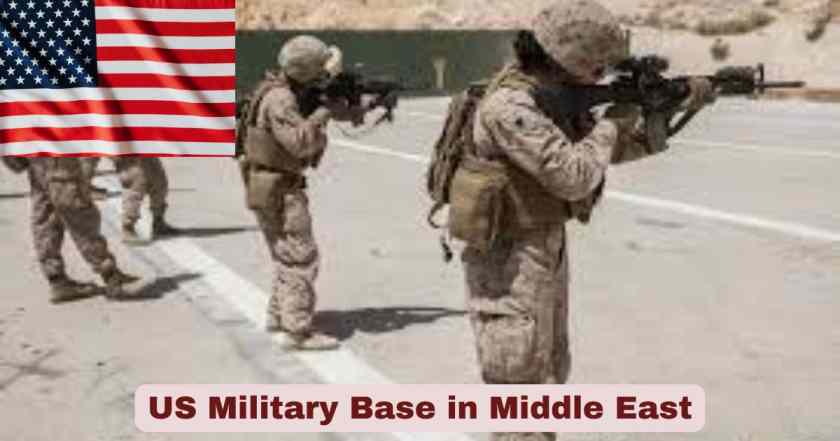
US Military Base in the Middle East Region 2026
The United States military presence in the Middle East has reached unprecedented levels in 2026, with strategic deployments spanning across multiple nations to address evolving regional security challenges. The American defense infrastructure operates through an intricate network of permanent installations, forward operating bases, and naval assets positioned throughout this geopolitically critical region. As of January 2026, the US military maintains approximately 40,000 to 50,000 troops across at least 19 different locations in Middle Eastern countries, marking a significant increase from the 34,000 personnel stationed before the Israel-Hamas conflict erupted in October 2023.
The expansion of US military base in Middle East 2026 reflects Washington’s strategic commitment to deterring threats from Iran and its network of regional affiliates, protecting vital shipping lanes, supporting counterterrorism operations, and defending American interests alongside allied nations. The US Central Command (CENTCOM), headquartered at MacDill Air Force Base in Florida with a forward headquarters at Al Udeid Air Base in Qatar, coordinates all military operations across this vast theater. These installations serve multiple critical functions including air and naval operations, regional logistics, intelligence gathering, force projection, missile defense systems, and rapid response capabilities. The Middle Eastern military infrastructure represents one of America’s most substantial overseas commitments, with eight permanent bases established in countries including Qatar, Bahrain, Kuwait, the United Arab Emirates, Saudi Arabia, Iraq, Jordan, and Egypt.
Interesting Facts About US Military Bases in Middle East 2026
| Fact Category | Details |
|---|---|
| Largest US Base in Middle East | Al Udeid Air Base in Qatar, covering 24 hectares (60 acres) with capacity for almost 100 aircraft including drones |
| Total Personnel Deployment | Between 40,000 to 50,000 US troops stationed across the region as of mid-2025 to early 2026 |
| Number of Base Locations | At least 19 sites across the Middle East, with 8 permanent installations |
| Highest Troop Concentration | Kuwait hosts the largest US force with approximately 13,500 troops |
| Forward CENTCOM Headquarters | Al Udeid Air Base houses 10,000 troops and serves as CENTCOM’s forward command center |
| Naval Headquarters | Bahrain hosts 9,000 US personnel and the US Navy’s Fifth Fleet headquarters |
| Troop Increase Since 2023 | Personnel numbers rose from approximately 34,000 to nearly 50,000 following October 2023 conflicts |
| Countries with Permanent Bases | Iraq, Qatar, Bahrain, Kuwait, UAE, Saudi Arabia, Jordan, and Egypt |
| Annual Overseas Base Cost | Estimated $65 billion per year to build and maintain overseas military bases globally |
| Recent Base Evacuations | Al Udeid Air Base in Qatar experienced partial personnel evacuation warnings in January 2026 amid Iran tensions |
| Iraq Troop Numbers | Approximately 2,500 US troops remain in Iraq, down from peak of 160,000 in 2007 |
| Syria Deployment | Around 900 US troops stationed in Syria for counter-ISIS operations |
| Aircraft Carrier Presence | 3 carrier strike groups deployed to Middle Eastern waters during heightened tensions |
| Base Construction Investment | Muwaffaq Salti Air Base in Jordan received $143 million in US upgrades since 2018 |
| Qatar Base Investment | Qatar invested $1 billion in constructing Al Udeid Air Base infrastructure |
Data Source: Council on Foreign Relations, US Department of Defense, Al Jazeera, Reuters, Newsweek (January 2026)
The data presented reveals several critical insights into the US military base in Middle East 2026 operations. The concentration of 13,500 troops in Kuwait across facilities like Camp Arifjan and Ali Al Salem Air Base demonstrates the country’s role as the primary logistics and airlift hub for American operations throughout the region. Meanwhile, Al Udeid Air Base’s 10,000 personnel capacity and status as the largest US installation in the Middle East underscores Qatar’s strategic importance to CENTCOM operations, particularly as the forward headquarters directing military activities across a vast area stretching from Egypt to Central Asia. The significant personnel surge from 34,000 to 50,000 troops between October 2023 and January 2026 illustrates the dynamic nature of US military deployment strategies in response to escalating regional tensions.
The distribution across 19 sites with 8 permanent installations reflects a carefully calibrated approach to maintaining strategic flexibility while establishing long-term operational capabilities in key allied nations. The presence of 9,000 US personnel in Bahrain, primarily supporting the Fifth Fleet’s naval operations, highlights the critical importance of maritime security in protecting Persian Gulf shipping lanes and maintaining freedom of navigation through strategic waterways like the Strait of Hormuz. The $143 million investment in Jordan’s Muwaffaq Salti Air Base since 2018 demonstrates ongoing modernization efforts to enhance special operations helicopter capabilities and intelligence, surveillance, and reconnaissance (ISR) drone operations across the northern Middle East theater.
US Military Base Personnel Distribution by Country 2026
| Country | Number of Troops | Major Installations | Primary Mission |
|---|---|---|---|
| Kuwait | 13,500 | Camp Arifjan, Ali Al Salem Air Base, Camp Buehring | Logistics hub, airlift operations, deployment staging |
| Qatar | 10,000 | Al Udeid Air Base | CENTCOM forward HQ, air operations command center |
| Bahrain | 9,000 | Naval Support Activity Bahrain, Isa Air Base | Fifth Fleet headquarters, maritime security |
| United Arab Emirates | 5,000 | Al Dhafra Air Base | Air operations, surveillance, fighter jet deployment |
| Jordan | 3,000 | Muwaffaq Salti Air Base | Intelligence operations, drone missions, special ops |
| Saudi Arabia | 2,700 | Prince Sultan Air Base, King Abdulaziz Air Base | Air defense systems, Patriot missile batteries |
| Iraq | 2,500 | Ain Al Asad Air Base, Erbil Air Base | Counter-ISIS operations, Iraqi force training |
| Syria | 900 | Various forward operating bases | Counter-terrorism, ISIS deterrence |
| Turkey | 1,465 | Incirlik Air Base, Kürecik Radar Station | NATO operations, nuclear weapons storage |
| Egypt | Classified | Undisclosed facilities | Strategic cooperation, regional stability |
Data Source: Council on Foreign Relations, Department of Defense, WION News, Al Jazeera (Mid-2025 to January 2026)
The personnel distribution data for US military base in Middle East 2026 reveals Kuwait’s position as the cornerstone of American logistics operations, with 13,500 troops representing the largest single-country deployment in the region. This concentration reflects Kuwait’s geographical positioning near the Iraqi border and its historical role as a staging ground for operations dating back to the 2003 Iraq War. Camp Arifjan serves as the forward headquarters of US Army Central, while Ali Al Salem Air Base, located approximately 40 kilometers (25 miles) from Iraq, functions as “The Rock” due to its isolated yet strategically vital environment for troop rotations and equipment deployment.
Qatar’s Al Udeid Air Base with its 10,000 personnel operates as the nerve center for CENTCOM’s regional operations, coordinating air missions across Iraq, Syria, Afghanistan, and the broader Middle East theater. The base’s two-mile runway accommodates everything from fighter jets and bombers to reconnaissance aircraft and refueling tankers, making it indispensable for maintaining American air superiority throughout the region. Bahrain’s 9,000 troops support the US Navy’s Fifth Fleet, whose area of responsibility encompasses the Persian Gulf, Red Sea, Arabian Sea, and portions of the Indian Ocean, positioning American naval forces to respond rapidly to maritime threats, protect commercial shipping routes, and maintain freedom of navigation in waters critical to global energy supplies.
Key US Military Bases in Middle East by Strategic Function 2026
| Base Name | Location | Size/Capacity | Strategic Role | Recent Developments 2025-2026 |
|---|---|---|---|---|
| Al Udeid Air Base | Qatar | 24 hectares, capacity for 100 aircraft | CENTCOM forward HQ, largest ME base | Targeted by Iran missile strike June 2025, new MEAD-CDOC coordination cell opened |
| Camp Arifjan | Kuwait | Major installation, 13,500 troops | Primary logistics and supply hub | Continuous expansion for regional operations support |
| Naval Support Activity Bahrain | Bahrain | 9,000 personnel | Fifth Fleet HQ, maritime operations | Enhanced air and missile defense capabilities |
| Al Dhafra Air Base | UAE | Hosts F-22 Raptors, surveillance aircraft | Reconnaissance, air superiority | Advanced stealth fighter deployment, AWACS operations |
| Prince Sultan Air Base | Saudi Arabia | 53 F-16 fighters, 22 KC-135 tankers | Air defense, Patriot/THAAD systems | Major surge in June 2025 with increased aircraft presence |
| Ain Al Asad Air Base | Iraq | Large installation in Anbar province | Iraqi force support, NATO missions | Targeted by Iran in 2020, ongoing counter-terrorism ops |
| Erbil Air Base | Iraq (Kurdistan) | Northern Iraq location | Training, intelligence sharing, logistics | Hub for coalition counterterrorism coordination |
| Incirlik Air Base | Turkey | Joint US-Turkey operation | NATO ops, nuclear weapons storage | 1,465 US personnel, anti-ISIS coalition support |
| Muwaffaq Salti Air Base | Jordan | $143 million in upgrades since 2018 | Special ops, ISR drone operations | Enhanced helicopter and drone capabilities |
| Ali Al Salem Air Base | Kuwait | 40 km from Iraq border | Airlift operations, troop staging | Known as “The Rock,” continuous deployment operations |
Data Source: Council on Foreign Relations, Newsweek, World Atlas, Jerusalem Post (June 2025 – January 2026)
The strategic function analysis of US military base in Middle East 2026 installations demonstrates the sophisticated layering of American defensive and offensive capabilities across the region. Al Udeid Air Base stands as the crown jewel of US military infrastructure, serving dual purposes as both CENTCOM’s forward headquarters and the region’s premier air operations center. The June 2025 Iranian missile strike targeting Al Udeid, which involved at least six Fateh-313 missiles with four intercepted and two falling short, highlighted both the vulnerability of concentrated American assets and the effectiveness of integrated air defense systems that forced Qatar to close its airspace for six hours during the incident.
Prince Sultan Air Base in Saudi Arabia experienced a remarkable transformation in mid-2025, with satellite imagery from June 20, 2025 revealing a dramatic surge in military assets including 53 F-16 fighter aircraft, 22 KC-135 tanker aircraft, and several E-3 AWACS (Airborne Warning and Control System) planes crowding the ramp area. This represents a significant reversal from the skeleton crew presence maintained after the 2003 Iraq invasion drawdown, indicating renewed emphasis on Saudi-based air operations amid escalating regional tensions with Iran. The base now hosts critical air defense systems including Patriot missile batteries and Terminal High Altitude Area Defense (THAAD) units designed to intercept incoming ballistic missiles.
US Military Personnel Trend in Middle East 2023-2026
| Time Period | Number of Troops | Percentage Change | Major Events |
|---|---|---|---|
| Before October 2023 | 34,000 | Baseline | Steady state operations |
| End of 2023 | 40,000 | +17.6% | Post Israel-Hamas war escalation |
| Late 2024 | 43,000 – 50,000 | +26.5% to +47% | Dual aircraft carrier deployment ordered |
| Mid-2025 (June) | 40,000 | +17.6% | Post-Iran nuclear facility strikes |
| January 2026 | 40,000 – 50,000 | +17.6% to +47% | Heightened Iran tensions, partial base evacuations |
| Peak Iraq Deployment (2007) | 160,000 (Iraq alone) | Historical comparison | Operation Iraqi Freedom peak |
| Peak Afghanistan (2011) | 100,000 (Afghanistan alone) | Historical comparison | Operation Enduring Freedom peak |
Data Source: Associated Press, Council on Foreign Relations, CNN, Responsible Statecraft (2023-2026)
The troop deployment trend data for US military base in Middle East 2026 reveals significant fluctuations driven by evolving security threats and regional conflicts. The baseline 34,000 troops maintained before October 2023 represented a relatively stable force posture focused on counter-terrorism operations, training partner forces, and deterring Iranian aggression. However, the outbreak of the Israel-Hamas war in October 2023 triggered an immediate 17.6% increase to approximately 40,000 personnel, demonstrating the rapid scalability of American military presence when regional crises emerge.
The deployment surge continued through late 2024, reaching levels between 43,000 to nearly 50,000 troops—a 47% increase from pre-conflict levels—when Defense Secretary Lloyd Austin ordered two aircraft carrier strike groups to remain in the region simultaneously. This represented the highest sustained troop presence since the first Trump administration and marked a strategic recalibration toward deterrence-focused operations. The June 2025 US strike on Iranian nuclear facilities, involving B-2 stealth bombers dropping 14 “bunker buster” bombs on at least two nuclear sites, led to retaliatory Iranian attacks on Al Udeid Air Base in Qatar, underscoring the volatile security environment that necessitates maintaining elevated force levels through January 2026.
Major US Naval Assets in Middle East Waters 2025-2026
| Naval Asset | Type | Deployment Period | Area of Operation | Mission Focus |
|---|---|---|---|---|
| USS Harry S. Truman | Aircraft Carrier Strike Group | Deployed, returned June 2025 after 251 days | Arabian Sea, Red Sea | Counter-Houthi operations, force projection |
| USS Carl Vinson | Aircraft Carrier Strike Group | Arrived March 2025 | Arabian Sea | Regional deterrence, maritime security |
| USS Nimitz | Aircraft Carrier Strike Group | Ordered to deploy June 2025 | Middle East theater | Response to Israel-Iran tensions |
| USS Abraham Lincoln | Aircraft Carrier Strike Group | Considered for deployment | INDOPACOM to Middle East | Potential force augmentation |
| USS Dwight D. Eisenhower | Carrier Strike Group | Operation Prosperity Guardian | Red Sea, Gulf of Aden | Anti-Houthi shipping protection |
| USS Thomas Hudner | Destroyer | Repositioned from Mediterranean | Eastern Mediterranean to Middle East | Rapid response capability |
| Multiple Destroyers | Missile Destroyers | Continuous presence | Persian Gulf, Red Sea | Air defense, missile interception |
| Littoral Combat Ships | LCS vessels | Three ships deployed | Regional waters | Coastal operations, maritime patrol |
Data Source: Council on Foreign Relations, Fox News, US Navy, USNI News (2025-2026)
The naval deployment data for US military base in Middle East 2026 illustrates the maritime dimension of American military strategy, with multiple carrier strike groups providing persistent sea-based power projection capabilities. The USS Harry S. Truman’s 251-day deployment that concluded in June 2025 represents one of the longest continuous carrier presence operations in recent Middle Eastern history, primarily focused on combating Houthi drone and missile attacks against commercial shipping in the Red Sea and Gulf of Aden as part of Operation Prosperity Guardian. The carrier strike group’s extended deployment enabled continuous air operations against Houthi targets while protecting international maritime commerce transiting these critical waterways.
The deployment of three carrier strike groups simultaneously to Middle Eastern waters during periods of heightened tension—including the USS Dwight D. Eisenhower, USS Carl Vinson, and later the USS Nimitz—demonstrates unprecedented naval force concentration designed to deter Iranian aggression while maintaining the capability to conduct large-scale air strikes if necessary. However, the early Trump administration’s decision to return several warships to the United States for domestic border security efforts has reduced this naval presence, with current deployments including six Navy ships comprising three missile destroyers and three Littoral Combat Ships as of January 2026, alongside considerations for redeploying carrier assets back to the region.
US Military Base Capabilities and Infrastructure 2026
| Base Category | Number | Primary Capabilities | Aircraft Types Deployed |
|---|---|---|---|
| Permanent Major Bases | 8 | Command centers, long-term operations, extensive facilities | All types including bombers, fighters, transport |
| Air Force Installations | 12+ | Air superiority, strike operations, airlift | F-22 Raptors, F-16s, F-15E, A-10, B-2 bombers |
| Naval Facilities | 5+ | Maritime security, fleet support, port operations | Carrier-based aircraft, maritime patrol |
| Army Logistics Hubs | 3+ | Supply chains, equipment storage, troop staging | Transport helicopters, support aircraft |
| Forward Operating Bases | Multiple | Rapid response, special operations | ISR drones, special ops helicopters |
| Joint Coalition Facilities | Several | Partner training, multinational operations | Mixed coalition aircraft |
| Air Defense Sites | Multiple | Missile interception, radar coverage | Patriot, THAAD, C-RAM systems |
| Intelligence Centers | Classified | ISR operations, signals intelligence | U-2, Global Hawk drones, AWACS |
Data Source: Department of Defense, Council on Foreign Relations, Al Jazeera (January 2026)
The infrastructure capabilities of US military base in Middle East 2026 reflect decades of strategic investment in creating a comprehensive military ecosystem capable of supporting full-spectrum operations from humanitarian assistance to large-scale combat. The eight permanent major bases serve as the backbone of American presence, each equipped with extensive runway systems, hardened aircraft shelters, ammunition storage facilities, fuel depots, maintenance hangars, and living quarters for thousands of personnel. These installations operate with advanced command-and-control systems linked directly to CENTCOM headquarters in Tampa, Florida, enabling real-time coordination of operations across the entire Middle East theater.
Air Force installations throughout the region deploy cutting-edge fighter aircraft including the F-22 Raptor stealth fighters stationed at Al Dhafra Air Base in the UAE, representing the pinnacle of American air superiority technology. These fifth-generation fighters maintain regional air dominance while F-15E Strike Eagles and F-16 Fighting Falcons conduct precision strike missions and air patrols. The deployment of A-10 Thunderbolt attack aircraft provides close air support capabilities for ground forces, while the strategic positioning of B-2 Spirit stealth bombers—which were reportedly deployed from their home base in Missouri to the joint US-UK base in Diego Garcia in March 2025—places them within striking range of targets throughout Iran and Yemen.
US Military Operations and Missions in Middle East 2026
| Operation/Mission | Countries Involved | Personnel Engaged | Primary Objectives | Duration |
|---|---|---|---|---|
| Counter-ISIS Operations | Iraq, Syria | 3,400 troops (2,500 Iraq, 900 Syria) | Prevent ISIS resurgence, train local forces | Ongoing since 2014 |
| Operation Prosperity Guardian | Red Sea, Gulf of Aden | Naval forces, multiple ships | Protect shipping from Houthi attacks | October 2023 – May 2025 ceasefire |
| Iran Deterrence | Regional wide | 40,000-50,000 total forces | Deter Iranian aggression, protect bases | Continuous, heightened 2025-2026 |
| Air Defense Operations | Qatar, Saudi Arabia, UAE, Bahrain | Multiple batteries | Missile interception, airspace protection | Continuous |
| Partner Nation Training | Multiple countries | Several thousand | Build partner capacity, coalition ops | Ongoing |
| Maritime Security | Persian Gulf, Strait of Hormuz | Fifth Fleet assets | Freedom of navigation, oil route protection | Continuous |
| Intelligence Gathering | Regional wide | Classified | ISR operations, threat monitoring | Continuous |
| Force Protection | All bases | All personnel | Base security, threat response | Continuous |
Data Source: Department of Defense, CENTCOM, Council on Foreign Relations (2026)
The operational scope of US military base in Middle East 2026 extends far beyond simple base maintenance, encompassing a complex array of combat, deterrence, training, and security missions across multiple nations. Counter-ISIS operations remain a cornerstone mission, with 2,500 troops in Iraq and 900 in Syria conducting continuous counterterrorism operations to prevent the resurgence of the Islamic State. These forces operate from bases including Ain Al Asad in Iraq’s Anbar province and various locations in Iraqi Kurdistan, working alongside local security forces to conduct training exercises, battle drills, and intelligence sharing while maintaining secure locations for logistical coordination throughout northern Iraq and eastern Syria.
Operation Prosperity Guardian, the multinational task force launched in response to Houthi attacks on Red Sea shipping lanes, demonstrated the critical role of US naval forces in protecting global commerce. American ships defended against near-daily Houthi drone and missile attacks targeting both US warships and commercial vessels transiting the Bab el-Mandeb strait and southern Red Sea. The operation involved multiple carrier strike groups including the USS Dwight D. Eisenhower, USS Carl Vinson, and USS Harry S. Truman, which conducted defensive counter-air operations while escorting merchant ships through dangerous waters. Although a ceasefire in May 2025 ended Houthi attacks on US ships specifically, experts assess that the threat to non-US commercial vessels remains elevated, necessitating continued naval presence.
US Military Base Attacks and Security Incidents 2023-2026
| Incident Date | Target Base | Attack Type | Casualties | Attacker | Response |
|---|---|---|---|---|---|
| June 23, 2025 | Al Udeid Air Base, Qatar | 6 Fateh-313 missiles | 0 (4 intercepted, 2 fell short) | Iran | Diplomatic condemnation, Qatar reserves right to respond |
| January 2020 | Ain Al Asad Air Base, Iraq | Iranian missile barrage | 0 US deaths (traumatic brain injuries) | Iran (Soleimani retaliation) | Heightened force protection measures |
| October 2023 – Present | Multiple bases Iraq/Syria | Rocket and drone attacks | Minor injuries to nearly 24 troops | Iran-aligned militias | Air defense deployments, counterstrikes |
| 2025 | Al Asad Air Base, Iraq | Drone attacks during Iran tensions | Intercepted by C-RAM | Unknown militants | Enhanced air defense posture |
| Various 2024-2025 | US ships in Red Sea | Near-daily Houthi missiles/drones | 0 US casualties | Yemen Houthi rebels | Naval interceptions, counter-strikes on Yemen |
| Reported June 2025 | Bases in Iraq (claimed by Iran) | Alleged missile strikes | No Iraqi confirmation | Iran (claimed) | No verified response |
Data Source: Council on Foreign Relations, Reuters, World Atlas, Iraqi Foreign Ministry (2020-2026)
The security incident data for US military base in Middle East 2026 reveals an environment of persistent threats requiring constant vigilance and sophisticated defensive systems. The June 23, 2025 Iranian missile attack on Al Udeid Air Base represented the most significant direct assault on American military infrastructure in the region, with Iran firing at least six Fateh-313 ballistic missiles at the installation housing 10,000 US troops and CENTCOM’s forward headquarters. Qatar’s air defense systems successfully intercepted four missiles while two fell short of their targets, preventing what could have been catastrophic casualties. The attack forced Qatar to close its airspace for six hours and prompted the Iraqi foreign ministry to describe the incident as “a dangerous and unprecedented turning point” in regional security dynamics.
Ain Al Asad Air Base in Iraq has endured multiple attacks since the January 2020 Iranian missile barrage that targeted the installation in retaliation for the US assassination of Iranian General Qassem Soleimani. While that massive strike involving dozens of ballistic missiles caused no American deaths, over 100 US service members suffered traumatic brain injuries from the explosions. The base continues facing sporadic rocket and drone attacks from Iran-aligned militia groups, particularly following the October 2023 outbreak of the Israel-Hamas war, necessitating the deployment of advanced Counter-Rocket, Artillery, and Mortar (C-RAM) systems that provide last-second interception of incoming projectiles.
Regional Security Challenges Affecting US Bases 2026
| Security Challenge | Affected Areas | Threat Level | US Response Measures | Impact on Operations |
|---|---|---|---|---|
| Iran Nuclear Program | All regional bases | Critical | Strike operations June 2025, B-2 bomber deployments | Heightened readiness, partial evacuations |
| Houthi Attacks | Red Sea bases, naval assets | High | Naval deployments, Operation Prosperity Guardian | Enhanced maritime patrols, air defense |
| ISIS Resurgence | Iraq, Syria bases | Medium-High | Counter-terrorism operations, partner training | Continuous combat operations |
| Iran-Aligned Militias | Iraq, Syria bases | High | Force protection, air defense systems | Frequent attack responses |
| Iran-Israel Escalation | All bases within missile range | Critical | Enhanced air defense, carrier deployments | Maximum alert status |
| Regional Instability | Multiple countries | Medium | Diplomatic engagement, deterrence posture | Operational flexibility required |
| Ballistic Missile Threats | Qatar, Bahrain, UAE, Saudi Arabia | High | Patriot, THAAD, C-RAM deployments | Continuous defensive readiness |
| Drone Attacks | Iraq, Syria primarily | Medium-High | Counter-UAS systems, electronic warfare | Daily monitoring, interceptions |
Data Source: Council on Foreign Relations, Department of Defense, Regional Security Assessments (January 2026)
The security environment surrounding US military base in Middle East 2026 operations has deteriorated significantly, with Iran’s nuclear program advancement representing the most critical strategic challenge. The June 21, 2025 US strike on Iranian nuclear facilities, involving B-2 stealth bombers dropping 14 “bunker buster” bombs on at least two sites, marked the first direct American attack on Iranian soil and fundamentally altered regional security calculations. Iran’s leadership warned that further US involvement would risk all-out war, while a senior Iranian official pledged that countries providing support for any US strikes on Iran would become “legitimate targets,” placing all host nations of American bases in potential danger.
Houthi attacks from Yemen have created persistent maritime security challenges, with the rebels launching near-daily drone and missile strikes against shipping in the Red Sea and Gulf of Aden. These attacks forced the establishment of Operation Prosperity Guardian, a multinational coalition effort to protect commercial vessels transiting these critical waterways that handle a significant portion of global oil shipments and trade between Asia and Europe. US naval forces have intercepted dozens of Houthi missiles and drones using ship-based air defense systems, while conducting retaliatory strikes against Houthi launch sites, radar installations, and weapons storage facilities throughout Yemen. The May 2025 ceasefire ended direct Houthi attacks on US ships but experts warn the threat to international shipping remains elevated.
US Military Withdrawal and Force Adjustments in Middle East 2025-2026
| Country | Previous Force Level | Current/Planned Level | Timeline | Reason | Remaining Mission |
|---|---|---|---|---|---|
| Iraq | 2,500+ | Under 2,000 | September 2025 – September 2026 | Phased withdrawal agreement | Counter-ISIS support in Kurdistan, training |
| Syria | 2,000 (September 2024) | 900 | October 2024 – 2025 | Trump administration decision | Counter-terrorism, ISIS deterrence |
| Afghanistan | 100,000 (peak 2011) | 0 | August 2021 complete withdrawal | End of Operation Enduring Freedom | None – complete withdrawal |
| Various Naval Assets | Multiple carrier groups | Reduced presence | Early 2025 | Border security redeployment | Rotational naval presence |
| Qatar – Al Udeid | 10,000 | Partial evacuation advised | January 2026 | Iran threat assessment | Continued but reduced operations |
Data Source: Stars and Stripes, Associated Press, Department of Defense, CNN (2024-2026)
The force adjustment data for US military base in Middle East 2026 reveals a complex pattern of strategic recalibration balancing ongoing commitments against evolving priorities. The Iraq withdrawal agreement announced in September 2024 established a two-phase process, with the first phase running through September 2025 ending the coalition mission against ISIS and requiring forces to leave some longstanding bases including those in Baghdad and Ain al-Asad Air Base in western Iraq. The second phase extends through September 2026, during which the US will continue operating from Iraq to support counter-ISIS operations in Syria, with the majority of remaining forces—fewer than 2,000 troops—concentrated in Erbil in the Kurdistan Region while maintaining a bilateral security relationship similar to other countries.
The Syria drawdown from an estimated 2,000 troops in September 2024 to approximately 900 currently reflects the Trump administration’s October decision to reduce American presence despite ongoing ISIS threats. These remaining forces continue training local partners and conducting counter-terrorism operations while facing frequent attacks by militia groups opposed to US presence. A senior US defense official stated that “US troops simply are not necessary to be in federal Iraq to conduct a counter-ISIS mission,” asserting that “Iraq is eminently capable of doing it themselves,” though American forces remain essential for supporting operations against ISIS remnants in Syria where local partner forces require continued training, intelligence sharing, and logistical coordination.
US Military Base Modernization and Upgrades 2024-2026
| Base | Country | Investment Amount | Upgrade Type | Completion Status | Enhanced Capabilities |
|---|---|---|---|---|---|
| Muwaffaq Salti Air Base | Jordan | $143 million | Infrastructure expansion | Ongoing since 2018 | Special ops helicopters, ISR drones, new aprons |
| Prince Sultan Air Base | Saudi Arabia | Undisclosed | Force surge, equipment deployment | 53 F-16s, 22 KC-135 tankers deployed June 2025 | Enhanced air operations, AWACS capability |
| Al Udeid Air Base | Qatar | $1 billion (Qatar investment) | Complete base construction | Operational since 1996, ongoing upgrades | MEAD-CDOC coordination cell opened January 2026 |
| Various CENTCOM Bases | Regional | Part of $65 billion annual global budget | Air defense systems | Continuous | Patriot, THAAD, C-RAM deployments |
| Multiple Naval Facilities | Bahrain, UAE | Classified | Maritime infrastructure | Ongoing | Enhanced fleet support, missile defense |
| Iraq Bases | Iraq | Drawdown/consolidation | Force reduction infrastructure | 2025-2026 | Consolidated operations in Kurdistan |
Data Source: World Atlas, Department of Defense, Council on Foreign Relations (2024-2026)
The modernization investments in US military base in Middle East 2026 infrastructure demonstrate continued commitment to maintaining technological superiority despite force reductions in some countries. The $143 million upgrade to Jordan’s Muwaffaq Salti Air Base since 2018 has transformed the installation located 100 kilometers northeast of Amman into a hub for sophisticated special operations, with new aprons constructed specifically to accommodate special-operations helicopters and intelligence, surveillance, and reconnaissance (ISR) drones. This desert facility now serves as a critical node for northern Middle East operations, providing strategic depth for missions into Syria while maintaining sufficient distance from direct conflict zones.
Al Udeid Air Base’s establishment involved Qatar’s remarkable $1 billion investment in constructing the sprawling installation that now serves as CENTCOM’s forward headquarters. The most recent enhancement came in January 2026 with the opening of the new Middle East Air and Missile Defense Coordination Cell (MEAD-CDOC) at Al Udeid, designed to coordinate air and missile defense operations across the region following the June 2025 Iranian missile attack that highlighted the need for enhanced integrated defense systems. This coordination center represents the first collaborative effort to integrate air defense assets from multiple Gulf nations with US military systems, creating a regional shield against ballistic missile and drone threats.
US Military Base Economic and Strategic Impact 2026
| Economic Factor | Annual Cost/Value | Strategic Value | Regional Impact |
|---|---|---|---|
| Global Overseas Base Costs | $65 billion per year | Force projection capability | Employment, infrastructure development |
| Al Udeid Construction | $1 billion (Qatar investment) | Forward CENTCOM headquarters | Economic boost to Qatar, strategic partnership |
| Jordan Base Upgrades | $143 million since 2018 | Enhanced ISR and special ops | US-Jordan defense cooperation, jobs |
| Personnel Spending | Millions locally per base | Economic stabilization | Local economy support, contractor employment |
| Fuel and Logistics | Billions annually | Regional supply chain security | Local vendor contracts, port operations |
| Base Construction Jobs | Thousands of positions | Infrastructure development | Local employment, skills transfer |
| Host Nation Support | Billions in defense sales | Strategic partnerships | Military capability enhancement |
| Regional Stability | Immeasurable strategic value | Deterrence against aggression | Trade route protection, oil market stability |
Data Source: Council on Foreign Relations, Department of Defense, Economic Analysis Reports (2026)
The economic dimensions of US military base in Middle East 2026 operations extend far beyond military expenditures to encompass substantial regional economic impacts and strategic partnerships. The estimated $65 billion annual cost to build and maintain overseas military bases globally includes significant Middle Eastern investments in infrastructure, personnel support, logistics operations, and continuous modernization efforts. These expenditures generate substantial local economic activity through contractor employment, service provision, construction projects, and indirect spending by military personnel stationed at these installations throughout the region.
Qatar’s $1 billion investment in constructing Al Udeid Air Base represents one of the most significant host-nation contributions to US military infrastructure, demonstrating the strategic value Gulf nations place on American military presence as a security guarantee. This massive construction project created thousands of jobs for Qatari contractors and international engineering firms while establishing a facility that now anchors US military operations across the entire Middle East theater. Similarly, the $143 million in upgrades to Jordan’s Muwaffaq Salti Air Base since 2018 has strengthened the US-Jordanian strategic partnership while providing economic benefits through construction employment, ongoing maintenance contracts, and enhanced military cooperation that includes substantial American defense assistance to Jordanian armed forces.
Allied and Partner Nation Integration with US Bases 2026
| Allied Nation | Cooperation Type | Personnel Integration | Shared Facilities | Joint Operations |
|---|---|---|---|---|
| Kuwait | Host nation partner | Kuwaiti liaison officers | Camp Arifjan, Ali Al Salem | Logistics coordination, training exercises |
| Qatar | Strategic partner | Qatari forces at Al Udeid | Al Udeid Air Base | CENTCOM operations, air defense |
| Bahrain | Major non-NATO ally | Bahraini naval cooperation | NSA Bahrain | Fifth Fleet operations, maritime security |
| UAE | Strategic partner | Emirati military integration | Al Dhafra Air Base | Air operations, intelligence sharing |
| Saudi Arabia | Defense cooperation | Joint air defense | Prince Sultan, King Abdulaziz | Air defense, counter-terrorism |
| Jordan | Major non-NATO ally | Special operations training | Muwaffaq Salti Air Base | Counter-terrorism, border security |
| Iraq | Bilateral partnership | Iraqi force training | Erbil, limited facilities | Counter-ISIS operations |
| Turkey | NATO ally | Joint base operations | Incirlik Air Base | NATO missions, regional operations |
| UK | Coalition partner | Personnel at multiple bases | Various installations | Intelligence, air operations |
| France | Coalition partner | Limited presence | Selected facilities | Counter-terrorism cooperation |
Data Source: Department of Defense, CENTCOM, Council on Foreign Relations (2026)
The integration of allied and partner nations within US military base in Middle East 2026 operations reflects decades of coalition building and strategic partnership development. Kuwait remains one of America’s most reliable partners, hosting 13,500 US troops across multiple installations while maintaining close military cooperation that includes Kuwaiti liaison officers embedded within American command structures at Camp Arifjan and Ali Al Salem Air Base. This partnership extends beyond simple basing rights to encompass joint training exercises, coordinated logistics operations, and shared intelligence that enhances both nations’ security capabilities against regional threats.
Qatar’s strategic partnership centers on Al Udeid Air Base, where Qatari forces work alongside American personnel in coordinating regional air operations and integrated air defense systems. The relationship survived significant regional tensions including the 2017-2021 Saudi-led blockade of Qatar, during which the US maintained its presence at Al Udeid while working diplomatically to resolve the crisis. Similarly, Bahrain’s designation as a Major Non-NATO Ally reflects the depth of US-Bahraini defense cooperation, with the island nation hosting the Fifth Fleet headquarters and thousands of American naval personnel who work in close coordination with Bahraini defense forces to protect Persian Gulf shipping lanes and maintain maritime security throughout the region.
US Military Base Personnel Living Conditions and Facilities 2026
| Base | Housing Type | Recreational Facilities | Medical Support | Quality of Life Rating |
|---|---|---|---|---|
| Al Udeid Air Base | Containerized living units, dormitories | Gyms, pools, sports courts, dining facilities | Full hospital, trauma center | High – “The Deid” nickname, extensive amenities |
| Camp Arifjan | Barracks, trailer units | Multiple gyms, recreation centers, PX | Medical clinic, emergency services | High – large PX, good facilities |
| NSA Bahrain | Apartments, naval housing | Beaches, pools, cultural facilities | Naval hospital | Very high – island location, local culture access |
| Al Dhafra Air Base | Dormitories, living quarters | Gym, limited recreation | Medical clinic | Medium-high – remote location |
| Prince Sultan Air Base | Hardened facilities, living quarters | Basic recreation, dining halls | Medical support unit | Medium – austere environment |
| Incirlik Air Base | Family housing available | Extensive NATO facilities | Full medical center | High – established NATO base |
| Forward Bases Iraq/Syria | Tents, containerized units | Limited facilities | Field medical | Low – combat environment |
Data Source: Military Quality of Life Reports, Service Member Testimonials, Department of Defense (2026)
The living conditions at US military base in Middle East 2026 installations vary dramatically based on location, mission, and level of development, with permanent installations offering substantially better quality of life than forward operating bases in combat zones. Al Udeid Air Base, affectionately nicknamed “The Deid” by deployed personnel, provides containerized living units and dormitory facilities alongside extensive recreational amenities including multiple gymnasiums, swimming pools, sports courts, movie theaters, and well-stocked dining facilities serving thousands of meals daily. The base features a full hospital with trauma center capabilities, ensuring comprehensive medical support for the 10,000 personnel stationed there during their deployment rotations.
Camp Arifjan in Kuwait similarly offers high-quality accommodations with climate-controlled barracks and trailer units equipped with internet connectivity, alongside one of the largest Post Exchange (PX) shopping facilities in the Middle East theater where service members can purchase electronics, clothing, personal items, and other goods. The base features multiple dining facilities serving varied cuisines, extensive recreational programs including organized sports leagues, and regular morale events designed to maintain troop wellbeing during deployments. In stark contrast, forward operating bases in Iraq and Syria where 3,400 troops conduct counter-ISIS operations feature significantly more austere conditions with tent accommodations, containerized living units, limited recreational facilities, and field medical support, reflecting their tactical mission focus over long-term habitability.
U.S Air Defense Systems Deployed in Middle East 2026
| System Type | Locations | Units Deployed | Interception Range | Target Capabilities | Recent Deployments |
|---|---|---|---|---|---|
| Patriot Missile Batteries | Saudi Arabia, Iraq, Jordan, UAE | Multiple batteries | 160 km | Ballistic missiles, aircraft | Continuous presence, surge 2025 |
| THAAD System | UAE, Saudi Arabia | Several batteries | 200 km | Ballistic missiles (terminal phase) | Enhanced 2024-2025 |
| C-RAM (Counter-Rocket, Artillery, Mortar) | Iraq, Syria bases | Multiple units | 5 km | Rockets, mortars, drones | Post-October 2023 deployments |
| Aegis Naval Systems | Destroyers in Gulf | Multiple ships | 500+ km | Ballistic missiles, aircraft, cruise missiles | USS Carney, USS Thomas Hudner |
| Iron Dome (Potential) | Israel (US-funded) | Multiple batteries | 70 km | Rockets, artillery, drones | US military observing effectiveness |
| Counter-UAS Systems | All major bases | Numerous | Several km | Small drones, quadcopters | Rapid deployment 2024-2026 |
Data Source: Department of Defense, Missile Defense Agency, CENTCOM (2026)
The air defense architecture protecting US military base in Middle East 2026 represents a layered system providing overlapping coverage against diverse aerial threats ranging from small commercial drones to sophisticated ballistic missiles. Patriot missile batteries form the backbone of theater ballistic missile defense, deployed at multiple locations including Prince Sultan Air Base in Saudi Arabia where they defend against potential Iranian missile strikes. These systems proved their effectiveness during the June 2025 attack on Al Udeid Air Base when integrated air defenses successfully intercepted four of six incoming Iranian Fateh-313 ballistic missiles, preventing casualties among the 10,000 US personnel stationed at the facility.
Terminal High Altitude Area Defense (THAAD) systems provide an upper-tier layer of ballistic missile defense, positioned in the UAE and Saudi Arabia to intercept incoming missiles during their terminal descent phase at altitudes up to 150 kilometers. These systems complement Patriot batteries by engaging threats at higher altitudes, creating multiple opportunities for successful interception. The Counter-Rocket, Artillery, and Mortar (C-RAM) systems deployed at forward bases in Iraq and Syria provide last-second point defense against indirect fire, using rapid-fire cannons to destroy incoming rockets and mortars seconds before impact. These systems have prevented numerous casualties at installations like Ain Al Asad Air Base, which faces frequent attack attempts by Iran-aligned militia groups operating throughout Iraq.
Comparison: US Military Presence Middle East vs Other Regions 2026
| Region | Number of Bases | Personnel Deployed | Primary Mission | Annual Cost Estimate |
|---|---|---|---|---|
| Middle East (CENTCOM) | 19+ sites, 8 permanent | 40,000-50,000 | Counter-terrorism, Iran deterrence, maritime security | $15-20 billion (estimated) |
| Europe (EUCOM) | Over 100 sites | Over 100,000 | NATO commitments, Russia deterrence | $25-30 billion (estimated) |
| East Asia (INDOPACOM) | Over 100 sites | Over 85,000 | China deterrence, alliance support | $20-25 billion (estimated) |
| Africa (AFRICOM) | 29 sites | 5,000-7,000 | Counter-terrorism, training missions | $3-5 billion (estimated) |
| Latin America (SOUTHCOM) | Several sites | 1,500-2,000 | Counter-narcotics, training | $1-2 billion (estimated) |
Data Source: Department of Defense, Council on Foreign Relations, Congressional Budget Office (2026)
The comparative analysis reveals that US military base in Middle East 2026 deployments represent a mid-tier commitment between the massive European presence focused on NATO alliance defense and the smaller footprints in Africa and Latin America. The 40,000-50,000 troops in the Middle East exceed African deployments tenfold while remaining roughly half the size of European commitments, reflecting the region’s strategic importance for energy security, counter-terrorism, and containing Iranian influence without requiring the permanent defense infrastructure necessitated by territorial defense of NATO allies against Russia.
The 19 sites with 8 permanent bases in the Middle East contrast sharply with over 100 installations in both Europe and East Asia, indicating a more concentrated force structure focused on specific mission sets rather than territorial defense responsibilities. However, the Middle Eastern bases handle some of the most challenging operational environments, facing regular attack threats that European installations have not experienced since World War II. The estimated $15-20 billion annual cost of Middle Eastern operations represents significant investment in a region where American strategic interests center on counter-terrorism, freedom of navigation, and preventing hostile powers from dominating energy-rich territories rather than defending allied territory from conventional military invasion as in Europe and Asia.
Future Projections for US Military Base Presence in Middle East 2026-2027
| Projection Element | Current Status | Expected 2027 Status | Uncertainty Factors |
|---|---|---|---|
| Total Troop Levels | 40,000-50,000 | 35,000-45,000 (potential reduction) | Iran tensions, regional conflicts, policy changes |
| Iraq Presence | 2,500 troops | Under 2,000 (per withdrawal agreement) | ISIS resurgence, Iraqi government stability |
| Syria Deployment | 900 troops | 500-900 (uncertain) | Counter-terrorism needs, administration policy |
| Permanent Bases | 8 major installations | 7-8 (stable or slight reduction) | Host nation agreements, strategic reassessment |
| Naval Presence | Reduced from 2024 peak | Rotational presence maintained | Iran nuclear program, maritime security threats |
| Air Defense Systems | Multiple batteries deployed | Enhanced integration via MEAD-CDOC | Technology advances, threat evolution |
| Partner Training | Ongoing programs | Increased emphasis | Congressional support, budget allocations |
| Force Posture | Deterrence focused | Flexible response model | Geopolitical developments, budget constraints |
Data Source: Defense Planning Documents, Strategic Assessments, Council on Foreign Relations (2026-2027 Projections)
Future projections for US military base in Middle East 2026 suggest a continuation of significant American military presence despite potential modest force reductions in specific countries. The Iraq withdrawal timeline through September 2026 will reduce troop levels to under 2,000 personnel, primarily concentrated in Kurdistan Region facilities supporting ongoing counter-ISIS operations in Syria, though the bilateral security relationship will enable continued cooperation on training, intelligence sharing, and logistics coordination. This drawdown reflects Iraqi government pressure for reduced American visibility while maintaining essential counterterrorism capabilities that both nations recognize as necessary given persistent ISIS threats.
The broader regional presence of 40,000 to 50,000 troops may experience modest reductions toward the 35,000 to 45,000 range by 2027, depending on the evolution of Iran tensions, progress in regional conflict de-escalation, and changing strategic priorities under different US administrations. However, the eight permanent major bases across Qatar, Bahrain, Kuwait, UAE, Saudi Arabia, Jordan, and potentially reduced facilities in Iraq will likely remain operational, providing the infrastructure necessary for rapid force augmentation if regional crises emerge. The January 2026 opening of the Middle East Air and Missile Defense Coordination Cell at Al Udeid signals continued investment in regional defense integration, suggesting American commitment to maintaining robust capabilities even if overall troop numbers decline modestly from current elevated levels.
Disclaimer: This research report is compiled from publicly available sources. While reasonable efforts have been made to ensure accuracy, no representation or warranty, express or implied, is given as to the completeness or reliability of the information. We accept no liability for any errors, omissions, losses, or damages of any kind arising from the use of this report.