
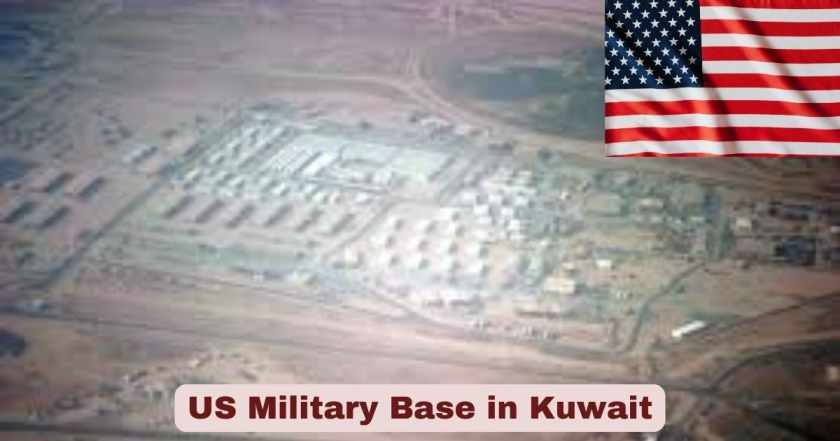
US Military Base in Kuwait Region 2026
The United States military presence in Kuwait represents the largest American troop concentration in the entire Middle East as of 2026, with approximately 13,500 US personnel stationed across multiple strategically vital installations throughout this small yet geopolitically critical nation. This substantial force, nearly matching the troop levels in all of Iraq and Syria combined, operates primarily from three major bases—Camp Arifjan, Ali Al Salem Air Base, and Camp Buehring—which collectively function as the logistical backbone for all US Central Command (CENTCOM) operations spanning from Egypt to Afghanistan. The relationship between Washington and Kuwait City, forged in the crucible of the 1991 Gulf War when a US-led coalition liberated Kuwait from Iraqi occupation, has evolved into one of America’s most stable and strategically valuable partnerships in a volatile region.
Kuwait’s positioning just 40 kilometers (25 miles) from the Iraqi border and 320 kilometers (200 miles) across the Persian Gulf from Iran makes the US military base in Kuwait 2026 installations indispensable for projecting American power, deterring Iranian aggression, supporting ongoing counter-terrorism operations, and maintaining the capacity for rapid military intervention anywhere in the Middle East theater. The Kuwaiti government has invested over $200 million in constructing and maintaining facilities for American forces since the late 1990s, demonstrating its commitment to hosting the US military as the ultimate guarantee of national security for a country with only 25,000 total armed forces personnel—one of the smallest militaries in the region. These installations processed millions of troops and thousands of tons of equipment during the height of the Iraq and Afghanistan wars, and they continue operating at high tempo in 2026, serving as deployment hubs for rotations into Iraq and Syria, pre-positioning sites for Army Prepositioned Stock-5 (APS-5) equipment sets, and airlift centers conducting hundreds of sorties monthly throughout the CENTCOM area of responsibility.
Interesting Facts About US Military Bases in Kuwait 2026
| Fact Category | Details |
|---|---|
| Total US Personnel | Approximately 13,500 troops stationed across Kuwait, the largest US force in Middle East |
| Number of Active Bases | 3 major active installations: Camp Arifjan, Ali Al Salem Air Base, Camp Buehring |
| Camp Arifjan Capacity | Accommodates approximately 10,000 US service members at peak capacity |
| Ali Al Salem Location | Located 40 kilometers (25 miles) from Iraqi border, nicknamed “The Rock” |
| Kuwait Investment | Kuwait invested over $200 million to construct Camp Arifjan in 1999-2002 |
| Pre-positioned Equipment Value | Stores Brigade Combat Team-level equipment sets worth billions in APS-5 warehouses |
| Major Non-NATO Ally | Kuwait designated Major Non-NATO Ally status, hosting German, Japanese, South Korean troops |
| Historical Troop Peak | Over 15,000 US troops stationed in Kuwait during 2012 Iraq War surge operations |
| Multi-Service Presence | Camp Arifjan hosts Army, Air Force, Navy, Marine Corps, and Coast Guard personnel |
| Coalition Partners | UK, Australia, Canada, Romania, and Poland deploy forces to Kuwait bases |
| Camp Arifjan Size | Divided into 7 zones with extensive logistics, aviation, and support facilities |
| Dining Options | Camp Arifjan features 13+ restaurants including Burger King, Pizza Hut, Starbucks, Taco Bell |
| Ali Al Salem Runways | Two 2,989-meter (9,806-foot) runways, expansion completed 2020 for Kuwaiti Eurofighters |
| Patton Army Airfield | Aviation hub at Camp Arifjan providing AVUM, AVIM, depot maintenance for Southwest Asia |
| Annual Cargo Processing | Defense Distribution Depot processes 1.4 million shipments of military equipment yearly |
Data Source: Department of Defense, Global Security, Council on Foreign Relations, Al Jazeera (January 2026)
The data reveals Kuwait’s exceptional role in hosting the largest concentration of US military personnel in the Middle East, with 13,500 troops representing a force larger than American deployments in Qatar (10,000), Bahrain (9,000), or any other single nation in the region. This substantial presence reflects Kuwait’s unparalleled strategic value as the primary logistics hub enabling all CENTCOM operations, with Camp Arifjan functioning as the nerve center for supply distribution, equipment maintenance, troop staging, and command-and-control activities across the entire Southwest Asian theater. The Kuwaiti government’s $200 million investment in constructing state-of-the-art facilities during 1999-2002 demonstrates extraordinary commitment to the bilateral defense relationship, building premium infrastructure to attract and retain American forces as the ultimate security guarantee.
Camp Arifjan’s capacity for 10,000 service members makes it larger than many small US Army posts stateside, yet it operates as a forward deployment installation where personnel serve 9-month rotational deployments rather than permanent assignments. The base’s division into 7 operational zones enables efficient segregation of functions, with distinct areas dedicated to command facilities, logistics warehouses, aviation operations at Patton Army Airfield, living quarters, recreation, and coalition partner facilities. The presence of 13+ dining and retail options including major American fast-food franchises has earned the installation its affectionate nickname “Camp Cupcake,” referencing the relatively comfortable living conditions compared to more austere forward operating bases in Iraq or Afghanistan, though troops still deploy to one of the harshest desert environments on Earth where summer temperatures routinely exceed 124 degrees Fahrenheit (51 degrees Celsius).
US Military Personnel Distribution in Kuwait 2026
| Installation | Personnel | Primary Service | Key Functions |
|---|---|---|---|
| Camp Arifjan | Approximately 10,000 | US Army (primary), all services | Logistics hub, ARCENT Forward HQ, aviation depot, equipment storage |
| Ali Al Salem Air Base | Several thousand | US Air Force (primary), coalition | Airlift operations, troop movements, air surveillance, combat rescue |
| Camp Buehring | 2,000-3,000 (variable) | US Army, Marines | Pre-deployment training, live-fire ranges, combat skills |
| Camp Patriot | Hundreds | US Navy, Army | Port operations, maritime logistics, Kuwait Naval Base coordination |
| Camp Spearhead | Hundreds | US Army, UK forces | Shuaiba Port operations, cargo handling, equipment throughput |
| Coalition Personnel | Several hundred | UK, Australia, Canada, Romania, Poland | Multinational operations support, training, logistics |
| US Coast Guard Detachment | 117 personnel (2010 figure) | US Coast Guard | Port security, maritime law enforcement training |
| Contractor Support | Thousands | Civilian contractors | Maintenance, logistics, dining, construction, services |
Data Source: Department of Defense, Global Security, CENTCOM (2026)
The personnel distribution across US military base in Kuwait 2026 reflects a carefully structured force designed to maximize logistical throughput while maintaining combat training readiness for forces deploying into more dangerous theaters. Camp Arifjan’s 10,000-person capacity represents the anchor of American presence, housing the forward headquarters of Army Central Command (ARCENT), which coordinates all US Army operations across 21 nations in the CENTCOM area of responsibility. The installation serves as home to personnel from all five military services including a unique US Coast Guard detachment of approximately 117 personnel conducting port security operations at Kuwait Naval Base and Shuaiba Port, protecting military shipments and Iraq’s Al-Basra Oil Terminal.
Ali Al Salem Air Base maintains a dynamic population of several thousand personnel comprising primarily Air Force personnel from the 386th Air Expeditionary Wing, which operates airlift, aeromedical evacuation, combat search and rescue, and theater ballistic missile defense missions. The base functions as the primary air passenger terminal for troops rotating into and out of Iraq through “Area 51,” a specialized air terminal that processes thousands of soldiers monthly aboard C-130 Hercules tactical transports flying to four Iraqi airfields—Baghdad International Airport, Balad, Mosul, and Al Asad. The presence of coalition personnel from the UK, Australia, Canada, Romania, and Poland demonstrates the truly multinational character of Kuwait-based operations, with British forces operating Tornado fighter aircraft from Ali Al Salem during the 2000s and various nations contributing logistics specialists, trainers, and support personnel to shared facilities.
Camp Arifjan Infrastructure and Facilities 2026
| Facility Type | Specifications | Capacity/Features | Value/Investment |
|---|---|---|---|
| Total Base Size | 7 operational zones | Comprehensive military city with all support functions | $200 million Kuwait investment (1999-2002) |
| Living Quarters | Pre-fabricated concrete barracks | Houses 10,000+ personnel, transitional housing | Continuous upgrades, $117 million FY2010 authorization |
| Patton Army Airfield | Military helicopter base | AVCRAD depot maintenance for Southwest Asia Theater | Named for General George S. Patton |
| Warehousing Complex | Extensive APS-5 storage | Brigade Combat Team equipment sets, vehicles, munitions | Billions in pre-positioned equipment value |
| Defense Distribution Depot | 100-acre warehouse facility | Processes 1.4 million shipments annually | Critical theater logistics node |
| Dining Facilities | 3 Military DFACs, 13+ restaurants | Burger King, Pizza Hut, KFC, Taco Bell, Starbucks, others | 24-hour dining operations |
| Recreation Centers | 2 community centers | Games rooms, pool tables, foosball, free movies | Morale, welfare, recreation programs |
| Retail Facilities | 2 AAFES Post Exchanges | Full-service shopping, local vendor bazaars Wed/Sun | Debit cards accepted, cash-back service |
| Medical Facilities | Health and dental clinics | Limited on-base, emergency care off-post available | American/British-trained providers |
| Education Center | On-post college courses | Online and classroom instruction | Undergraduate programs available |
| Communications | APO postal services | 70-pound, 108″x108″ package limit, free postage | Full military postal operations |
| Port Access | Adjacent to Shuaiba Port | Military Sea Port of Debarkation/Embarkation (SPOD) | Major equipment throughput capacity |
Data Source: Global Security, MilitaryBases.com, Wikipedia (2026)
The infrastructure at Camp Arifjan in Kuwait 2026 represents a complete military city built from desert sand into a $200 million state-of-the-art installation that replaced the temporary facilities and warehouses of Camp Doha after the 1996 Khobar Towers bombing in Saudi Arabia prompted relocation to a more secure location. The base’s development involved collaboration between US Central Command (USCENTCOM), Army Central Command (ARCENT), US Army Corps of Engineers Transatlantic Programs Center, and Kuwait’s Military Engineering Projects (MEP) office, with construction divided into four major packages covering administrative facilities, quality-of-life amenities, logistics infrastructure, and operational complexes. The transformation from two dozen tents and warehouses when the first personnel deployed in October 2001 to a sprawling installation with permanent barracks, extensive warehousing, and comprehensive support facilities demonstrates the permanence of American commitment to maintaining forward presence in Kuwait.
Patton Army Airfield, named in memory of General George S. Patton, serves as the aviation hub providing Organizational (AVUM), Intermediate (AVIM), and limited depot-level maintenance support through Aviation Classification and Repair Activity Depots (AVCRADs) for virtually all US military helicopter and aviation assets operating throughout the Southwest Asian Theater. This capability proved invaluable during the Iraq and Afghanistan wars when thousands of helicopters required continuous maintenance, parts replacement, and major repairs that would have been impossible to conduct in forward combat zones. The Defense Distribution Depot’s processing of 1.4 million shipments annually illustrates the staggering scale of logistics operations, with the 100-acre warehouse complex functioning as the distribution hub that keeps American forces throughout the Middle East supplied with everything from ammunition and spare parts to food, medical supplies, and personal equipment.
Ali Al Salem Air Base Operations and Capabilities 2026
| Aspect | Specifications | Capabilities | Significance |
|---|---|---|---|
| Location | 40 km (25 miles) from Iraq border | Closest US air base to Iraqi territory | Nicknamed “The Rock” for desert isolation |
| Elevation | 144 meters (472 feet) above sea level | Slightly elevated above desert plains | Tactical topographical advantage |
| Primary Runways | Two 2,989-meter (9,806-foot) runways | Handle all US and coalition aircraft types | Concrete/asphalt surface, heavy use capable |
| Recent Expansion | New runway completed 2020 | Supports 28 Kuwaiti Eurofighter Typhoons | Multi-million dollar Kuwaiti Air Force upgrade |
| Air Traffic Control | Upgraded tower (completed 2025) | State-of-the-art beacons, radios, electrical systems | Enhanced safety, weather capability |
| Host Unit | 386th Air Expeditionary Wing | Theater airlift, combat rescue, air surveillance | Multi-mission expeditionary operations |
| Aircraft Operations | C-130 Hercules tactical airlift | Troop transport, cargo movement, special ops | Rotational Air National Guard squadrons |
| Parking Capacity | “Beef Ramp” (320,000 sq ft) | Accommodates 10 C-130 aircraft simultaneously | Completed March 2004 |
| Area 51 Terminal | Air passenger terminal | Processes thousands deploying to/from Iraq | Operational December 2004 |
| Mission Types | Combat rescue, aeromedical evacuation | HC-130, MH-53 rescue helicopters | Life-saving CSAR operations |
| Air Defense | Patriot missile battery | Theater ballistic missile defense | Protection from Iraqi/Iranian missiles |
| Coalition Presence | British, Kuwaiti forces | RAF operated Tornado GR1/GR4s (1998-2004) | Multinational cooperation |
| Kuwait Air Force | Flight Training School on-base | 17 squadrons including attack, SAR, training | Shared US-Kuwait facility |
Data Source: Global Security, Wikipedia, Military Bases (2026)
Ali Al Salem Air Base occupies a unique position among US military base in Kuwait 2026 installations as the closest American air facility to the Iraqi border, sitting just 40 kilometers (25 miles) from Iraq and earning its nickname “The Rock” due to its isolated location surrounded by flat, barren desert. The base’s proximity to potential combat zones made it the frontline for Operation Southern Watch during the 1990s when coalition forces enforced the no-fly zone over southern Iraq, and it continues serving as a critical launch point for air operations throughout Iraq, Syria, and the broader region. The installation’s two 2,989-meter runways provide redundancy and capacity for high-tempo operations, with the 2020 completion of a new runway and extensive hangar facilities supporting the Kuwait Air Force’s modernization program that replaced F-18C fighters with 28 advanced Eurofighter Typhoon aircraft.
The 386th Air Expeditionary Wing operates a diverse mix of missions from Ali Al Salem, with rotating Air National Guard C-130 Hercules squadrons from states like Montana, Connecticut, Rhode Island, and California providing tactical airlift throughout the theater. These versatile aircraft conduct everything from routine cargo delivery and troop transport to specialized missions including combat airdrops of supplies to besieged outposts, aeromedical evacuation of wounded personnel, and support for special operations forces. The “Area 51” air passenger terminal, named humorously after the classified Nevada facility, processes thousands of soldiers monthly on flights to four Iraqi airfields, operating with a small permanent staff who coordinate the massive throughput of deploying and redeploying forces. The 320,000-square-foot “Beef Ramp” parking area, completed in March 2004 with interlocking 2-inch-thick aluminum planks weighing 140 pounds each, accommodates 10 C-130 aircraft simultaneously, demonstrating the engineering required to support continuous high-tempo operations in the harsh desert environment.
Camp Buehring Training Operations 2026
| Training Function | Capabilities | Facilities | Throughput |
|---|---|---|---|
| Pre-Deployment Training | Combat readiness certification | Live-fire ranges, urban warfare facilities | Thousands annually for Iraq/Afghanistan |
| Primary Trainees | US Army, Marines | Infantry, armor, artillery units | 9-month deployment preparation |
| Udairi Range Complex Access | Extensive training ranges | Tank gunnery, artillery, maneuver areas | Largest training complex in Kuwait |
| Joint Exercise Venue | US-Kuwait bilateral training | Combined arms exercises | Partnership capacity building |
| Force Size | 2,000-3,000 variable | Depends on deployment cycles | Surge capacity for larger forces |
| Location | Northern Kuwait (formerly Camp Udairi) | Near Udairi Range Complex | Optimal training environment |
| Historical Role | Iraq War “spin-up” training | Pre-combat preparations 2003-2011 | Tens of thousands processed |
| Living Conditions | Tents, transitional barracks | Basic accommodations, harsh environment | More austere than Camp Arifjan |
| Equipment Storage | Pre-positioned stocks | Vehicles, weapons, supplies | Rapid force generation capability |
Data Source: Global Security, Department of Defense (2026)
Camp Buehring (formerly known as Camp Udairi) functions as the primary training installation among US military base in Kuwait 2026 facilities, providing the critical “spin-up” training that ensures deploying forces achieve combat readiness before entering Iraq or Afghanistan’s dangerous operational environments. Located in northern Kuwait near the extensive Udairi Range Complex, the base offers access to tank gunnery ranges, artillery impact areas, live-fire infantry ranges, and urban warfare training facilities that enable realistic combat preparation impossible at stateside installations due to range limitations and safety restrictions. During the height of the Iraq War from 2003-2011, Camp Buehring processed tens of thousands of Army and Marine Corps personnel, conducting final combat training, weapons zeroing, convoy operations practice, and tactical drills before units crossed into Iraq.
The training regimen at Camp Buehring typically involves 2-3 weeks of intensive preparation focusing on theater-specific threats including improvised explosive devices (IEDs), vehicle-borne IEDs (VBIEDs), complex ambushes, urban combat, and cultural awareness training tailored to the Middle Eastern operating environment. Units conduct live-fire exercises with all weapons systems from individual rifles and machine guns to crew-served weapons, armored vehicle gunnery, and artillery shoots, ensuring every soldier and Marine achieves weapons qualification and combat proficiency standards. The base also serves as a venue for joint US-Kuwait exercises where American forces train alongside Kuwaiti military units, building partnership capacity, practicing coalition operations, and strengthening the bilateral defense relationship through shared combat experiences and professional military education.
Historical Evolution of US Bases in Kuwait 1991-2026
| Time Period | Major Development | Troop Levels | Key Events |
|---|---|---|---|
| 1991 Gulf War | Operation Desert Storm liberation | 500,000+ at peak | Coalition forces expel Iraq from Kuwait |
| 1991-1999 | Camp Doha established | Thousands | Post-war presence, converted warehouse complex |
| July 1999 | Camp Arifjan construction begins | Increasing gradually | Kuwait invests $200 million in new base |
| 2001-2003 | Afghanistan/Iraq War buildup | Rapid expansion | Kuwait becomes primary logistics hub |
| 2003-2011 | Iraq War peak operations | 15,000+ troops (2012 peak) | Massive equipment/personnel throughput |
| 2006 | Camp Doha closure | Consolidation to Arifjan/Buehring | Permanent facilities replace temporary |
| 2011-2014 | Post-Iraq drawdown | 10,000-13,000 | Reduced but sustained presence |
| 2014-2019 | Counter-ISIS operations | 13,500 | Support for Iraq/Syria operations |
| 2020-2022 | COVID-19 pandemic | 13,500 | Health protocols, mission continuity |
| 2023-2026 | Post-October 2023 escalation | 13,500 | Heightened readiness, Iran threats |
| January 2026 | Heightened alert status | 13,500 | Iran strike threats, voluntary evacuations |
Data Source: Global Security, Department of Defense, Council on Foreign Relations (1991-2026)
The three-and-a-half-decade evolution of US military base in Kuwait from 1991 to 2026 illustrates the transformation from temporary post-liberation presence to permanent strategic partnership. The 1991 Gulf War, when over 500,000 coalition forces assembled in Saudi Arabia and Kuwait to liberate the emirate from Iraqi occupation, established the foundation for long-term American basing rights as Kuwait’s leadership recognized that only continued US military presence could guarantee national security against Saddam Hussein’s Iraq, which maintained a military force twenty times larger than Kuwait’s despite defeat. The initial Camp Doha, a converted industrial warehouse complex, provided temporary facilities through the 1990s, but the 1996 Khobar Towers bombing in Saudi Arabia prompted urgent plans for purpose-built, force-protected installations.
Kuwait’s July 1999 decision to invest over $200 million in constructing Camp Arifjan from scratch represented a watershed moment, signaling permanent commitment to hosting American forces through state-of-the-art infrastructure rather than makeshift facilities. The base became operational in early 2002, just months after the September 11, 2001 attacks, positioning Kuwait as the primary staging ground for the March 2003 invasion of Iraq when the majority of coalition ground forces assembled at Kuwaiti bases before the “shock and awe” campaign began. From 2003-2011, Kuwait’s installations processed the largest sustained military logistics operation since World War II, with millions of troops rotating through and tens of thousands of vehicles, thousands of helicopters and aircraft, and countless tons of supplies flowing north into Iraq through the Khabari Crossing border facility that streamlined convoy operations.
Security Environment and Threats 2026
| Threat Type | Source | Proximity | Risk Level | Mitigation Measures |
|---|---|---|---|---|
| Ballistic Missiles | Iran | 320 km across Persian Gulf | High | Patriot batteries, early warning, shelters |
| Cruise Missiles | Iran, proxies | Regional launch platforms | Medium-High | Air defense systems, AWACS surveillance |
| Drone Attacks | Iran-aligned militias | Iraq border, regional | Medium | Counter-UAS systems, air surveillance |
| Terrorist Attacks | Extremist groups | Potential local cells | Medium | Force protection, intelligence, screening |
| Iraqi Instability | Border spillover | 40 km to Iraq | Medium | Border security cooperation with Kuwait |
| Regional Escalation | Iran-Israel conflict | Theater-wide | High | Heightened readiness, contingency planning |
| Cyber Threats | State actors, hackers | Global reach | Medium-High | Cybersecurity protocols, network defense |
| CBRN Threats | State programs | Regional capabilities | Low-Medium | Detection equipment, protective measures |
Data Source: Department of Defense, Intelligence Assessments (2026)
The security environment surrounding US military base in Kuwait 2026 has grown increasingly complex and dangerous, particularly following the June 2025 US strikes on Iranian nuclear facilities that prompted retaliatory attacks including the June 23, 2025 missile strike on Al Udeid Air Base in Qatar. Kuwait’s proximity to Iran—just 320 kilometers (200 miles) across the Persian Gulf—places all American installations within easy range of Iranian ballistic missiles capable of reaching their targets in 10-15 minutes from launch, providing minimal warning time even with sophisticated early warning radar systems. The January 2026 heightened alert status and voluntary evacuation authorizations for US embassy dependents in Kuwait, Bahrain, and UAE demonstrated the seriousness of potential Iranian retaliation threats as President Trump weighed further military action.
Ali Al Salem Air Base’s location 40 kilometers from the Iraqi border creates vulnerability to attacks from Iran-aligned militia groups operating in Iraq, who have repeatedly targeted US forces with rockets, drones, and mortars at bases like Ain Al Asad and Erbil. While Kuwait itself maintains strong internal security and has experienced minimal terrorism compared to Iraq or Syria, the concentration of 13,500 American troops at a small number of installations creates lucrative targets for adversaries seeking to inflict mass casualties or demonstrate the ability to strike US forces. The presence of Patriot missile batteries at multiple Kuwaiti locations provides layered air defense, while continuous combat air patrols, advanced surveillance systems, hardened shelters, and force protection measures reduce but cannot eliminate the risk of successful attack against installations that Iranian ballistic missiles can reach within minutes of launch.
Kuwait-US Defense Cooperation and Agreements 2026
| Agreement/Status | Date | Key Provisions | Significance |
|---|---|---|---|
| Defense Cooperation Agreement | Post-1991 (formalized 2000s) | Base access, joint training, security cooperation | Foundation of bilateral defense relationship |
| Major Non-NATO Ally Status | Designated | Enhanced FMS, technology transfer, joint exercises | Elite status category, 7 countries in Middle East |
| Basing Access Agreement | Ongoing | 10 bases access including air, land, sea facilities | Most extensive US access in Gulf region |
| FMS Program | Active $7+ billion | F/A-18 aircraft, Patriot missiles, munitions, systems | Massive arms sales to Kuwait |
| Bilateral Training | Continuous | Joint exercises, professional military education | Partnership capacity building |
| Port Access Agreements | Kuwait Naval Base, Shuaiba | SPOD operations, maritime logistics | Critical sea-based logistics |
| Airspace Agreements | Unlimited access | Overflight rights, air operations | Enables regional air campaign |
| Cost-Sharing Arrangements | Kuwait-funded construction | $200+ million in base infrastructure | Host nation financial support |
| Counter-terrorism Cooperation | Intelligence sharing | Joint operations, information exchange | Regional security coordination |
| Humanitarian Assistance | Mutual support | Disaster relief, medical cooperation | Broadened partnership scope |
Data Source: Department of Defense, State Department, Kuwait Ministry of Defense (2026)
The defense relationship between the United States and Kuwait stands as one of America’s most enduring and mutually beneficial partnerships in the Middle East, rooted in the profound gratitude Kuwaitis feel toward the 500,000 coalition forces led by the United States who liberated their nation from Iraqi occupation in 1991. This shared history created a unique dynamic where Kuwait actively seeks robust American military presence as the ultimate security guarantee, going so far as to invest over $200 million in constructing facilities for US forces rather than charging rent or demanding payments as some other host nations do. The Major Non-NATO Ally designation places Kuwait in an elite category alongside only six other Middle Eastern nations—Egypt, Israel, Jordan, Bahrain, Tunisia, and Morocco—providing enhanced access to American military technology, streamlined Foreign Military Sales procedures, and priority status for defense cooperation.
Kuwait’s provision of access to 10 bases as of 2010—including two air bases (Ali Al Salem and Al Mubarak at Kuwait International Airport), five land bases (Camps Arifjan, Buehring, and Virginia, plus Life Support Area facilities and the Khabari border crossing), two port facilities (Kuwait Naval Base and Shuaiba Port), and the Defense Distribution Depot—represents the most extensive US military access arrangement in the Gulf region. This comprehensive access enables the United States to maintain the 13,500-person force that serves as CENTCOM’s primary logistics hub, pre-positioning site, and power projection platform throughout the Middle East. The $7+ billion in active Foreign Military Sales cases demonstrates Kuwait’s commitment to acquiring American weapons systems and maintaining interoperability with US forces, purchasing everything from F/A-18 Super Hornet fighters and Patriot air defense missiles to advanced munitions, communications equipment, and armored vehicles that ensure Kuwaiti forces train on the same systems American troops use.
Economic Impact of US Military Presence in Kuwait 2026
| Economic Category | Value/Impact | Beneficiaries | Duration |
|---|---|---|---|
| Kuwait Construction Investment | $200+ million | US military infrastructure, Kuwaiti contractors | 1999-2002 (initial), ongoing upgrades |
| Annual US Spending | Estimated $500 million – $1 billion | Local economy, contractors, suppliers | Annual recurring |
| Foreign Military Sales | $7+ billion active cases | US defense industry, Kuwait Armed Forces | Multi-year programs |
| Local Employment | Thousands of jobs | Kuwaiti citizens, third-country nationals | Continuous |
| Contractor Personnel | Thousands | US companies, international firms | Service contracts, logistics support |
| Fuel and Supplies | Hundreds of millions annually | Kuwaiti vendors, regional suppliers | Continuous procurement |
| Base Services | Tens of millions annually | Dining, retail, construction, maintenance | Daily operations |
| Port Operations Revenue | Significant | Kuwait Ports Authority, logistics companies | Cargo throughput fees |
| Technology Transfer | Training, expertise | Kuwait Armed Forces, defense industry | FMS programs, joint exercises |
| Indirect Economic Benefits | Billions total impact | Broader Kuwaiti economy | Security enables investment, development |
Data Source: Department of Defense, Kuwait Ministry of Defense, Economic Estimates (2026)
The economic impact of US military base in Kuwait 2026 operations creates substantial financial flows in both directions, with Kuwait making significant upfront infrastructure investments while benefiting from ongoing American military spending that generates employment, contracts, and economic activity. Kuwait’s $200+ million initial investment to construct Camp Arifjan during 1999-2002 represented an extraordinary commitment unmatched by any other Gulf nation except Qatar, building world-class facilities to attract and retain the largest American troop presence in the region. This strategic calculation recognized that the costs of construction pale in comparison to the security value provided by 13,500 US troops whose presence deters aggression from potentially hostile neighbors like Iran and Iraq.
The annual US military spending in Kuwait, estimated at $500 million to $1 billion, generates substantial economic activity through local procurement of goods and services, employment of thousands of Kuwaiti citizens and third-country nationals, and contracts with Kuwaiti companies for everything from construction and facility maintenance to fuel supply and waste management. Camp Arifjan alone employs thousands of civilians in dining facilities, retail operations, base services, and logistics support, with 13+ restaurants and retail establishments generating continuous revenue for franchise operators, food suppliers, and service providers. The Defense Distribution Depot’s processing of 1.4 million shipments annually creates demand for warehouse workers, truck drivers, cargo handlers, port workers, and logistics coordinators throughout Kuwait’s transportation and logistics sectors.
Pre-positioned Equipment and Rapid Deployment Capability 2026
| Equipment Category | Quantities | Storage Location | Deployment Capability |
|---|---|---|---|
| Army Prepositioned Stock-5 (APS-5) | Brigade Combat Team-level equipment sets | Camp Arifjan warehouses | Entire BCT can deploy in days vs months |
| M1 Abrams Tanks | Company/battalion sets | Climate-controlled warehouses | Heavy armor rapid deployment |
| Bradley Fighting Vehicles | Multiple units | Protected storage | Infantry fighting vehicle capability |
| Artillery Systems | M109 Paladin, HIMARS | Munitions-capable facilities | Fire support systems |
| Support Vehicles | Trucks, HMMWVs, trailers | Extensive vehicle parks | Complete mobility capability |
| Communications Equipment | Radios, satellites, networks | Secure storage | Command and control systems |
| Medical Equipment | Field hospitals, ambulances | Climate-controlled facilities | Combat health support |
| Ammunition Stocks | Millions of rounds | Hardened bunkers | Combat load for brigade operations |
| Total Equipment Value | Billions of dollars | Multiple warehouses | Eliminates sea transport delay |
| Deployment Timeline | Days instead of months | Ready for immediate issue | Strategic responsiveness |
| Maintenance Status | Combat-ready condition | Continuous AVUM/AVIM | Fully operational equipment |
Data Source: US Army, Department of Defense, CENTCOM (2026)
The pre-positioned equipment stocks at Camp Arifjan in Kuwait 2026 represent one of the most strategically valuable capabilities in the entire US military arsenal, enabling rapid deployment of combat-ready forces without the months-long sea transport delays that would otherwise make crisis response impossible. The Army Prepositioned Stock-5 (APS-5) program stores enough equipment to outfit an entire Brigade Combat Team—approximately 3,000-5,000 soldiers—with everything needed for sustained combat operations including M1 Abrams main battle tanks, Bradley fighting vehicles, M109 Paladin self-propelled howitzers, High Mobility Artillery Rocket Systems (HIMARS), hundreds of trucks and support vehicles, communications gear, medical equipment, and millions of rounds of ammunition. This equipment sits in climate-controlled warehouses maintained in combat-ready condition through continuous organizational and intermediate-level maintenance performed by contractor personnel and Army depot specialists.
The strategic logic of pre-positioning is simple but powerful: transporting a single Brigade Combat Team’s equipment by sea from the United States to the Middle East requires 30-45 days using fast sealift ships, plus additional time for loading in US ports and unloading at the destination. With pre-positioned stocks in Kuwait, an Army brigade can fly its personnel from the United States to Kuwait in 12-24 hours, draw the stored equipment within 48-72 hours, conduct brief integration training, and deploy into combat within 5-7 days of the alert order. This capability proved its value during the 2003 Iraq invasion when pre-positioned equipment enabled rapid force buildup, and it remains critical in 2026 for responding to potential crises including Iranian aggression, regional instability, or the need to reinforce forces in Iraq, Syria, or Afghanistan on short notice.
Logistics Hub and Distribution Operations 2026
| Logistics Function | Annual Throughput | Scope | Capabilities |
|---|---|---|---|
| Defense Distribution Depot | 1.4 million shipments | Southwest Asia theater | Central supply distribution point |
| Covered Warehouse Space | 100+ acres | Multiple climate zones | Protects equipment from 125°F+ heat |
| Supply Categories | Class I-IX | All military supplies | Food, fuel, ammo, spare parts, medical |
| Port Processing | Thousands of TEUs monthly | Shuaiba Port operations | Container handling, equipment offload |
| Air Cargo Operations | Daily flights | Ali Al Salem, Camp Arifjan | Time-sensitive, high-priority items |
| Convoy Operations | Regular Iraq runs | Khabari Crossing border | Ground transport to Iraq/Afghanistan |
| Fuel Distribution | Millions of gallons monthly | Theater petroleum operations | Aviation, ground vehicle fuel |
| Medical Logistics | Theater-wide distribution | Pharmaceuticals, equipment | Combat casualty care supply chain |
| Equipment Maintenance | AVUM/AVIM/Depot | Patton Army Airfield | Aviation and ground systems |
| Contractor Logistics | Major integration | KBR, DynCorp, others | Augments military capabilities |
Data Source: Defense Logistics Agency, US Army, CENTCOM (2026)
The logistics operations centered at Camp Arifjan in Kuwait 2026 constitute the nervous system of American military power throughout the Middle East, processing the massive flow of supplies, equipment, and materiel that keeps tens of thousands of US troops across multiple countries fed, fueled, armed, and mission-capable. The Defense Distribution Depot’s 1.4 million annual shipments include everything from individual meal packages and bottled water to tank engines, helicopter rotor blades, precision-guided munitions, medical supplies, and thousands of other items in the military’s complex Class I through Class IX supply system. This staggering throughput requires 24/7 operations with sophisticated inventory management systems tracking hundreds of thousands of line items, automated materials handling equipment moving pallets through vast warehouses, and transportation coordinators arranging onward movement via truck convoy, cargo aircraft, or occasional helicopter delivery for the most urgent requirements.
Camp Arifjan’s 100+ acres of covered warehouse space provides essential protection from Kuwait’s brutal summer heat, which regularly exceeds 124 degrees Fahrenheit (51 degrees Celsius) and can damage sensitive electronics, degrade pharmaceuticals, warp plastic components, and create hazardous conditions for personnel handling materials. The climate-controlled facilities maintain equipment in serviceable condition despite the harsh environment, with temperature and humidity controls protecting everything from night vision devices and communications equipment to medical supplies and food stocks. The integration of major defense contractors like KBR (formerly Kellogg Brown & Root) and DynCorp provides thousands of civilian logistics specialists who augment military capabilities, operating forklifts, managing inventory systems, conducting quality control inspections, and coordinating the complex intermodal transportation that moves supplies from Kuwaiti ports and airfields to final destinations across Iraq, Syria, Jordan, and beyond.
Coalition Partner Operations in Kuwait 2026
| Nation | Personnel | Primary Location | Mission |
|---|---|---|---|
| United Kingdom | Several hundred | Ali Al Salem Air Base, Camp Arifjan | Airlift, logistics support, training |
| Australia | Hundreds | Ali Al Salem, various | Air operations, special operations support |
| Canada | Hundreds | Various locations | Training, capacity building, logistics |
| Romania | Company-sized element | Camp Arifjan area | Engineering, security, logistics |
| Poland | Company-sized element | Various locations | Security, logistics, training support |
| Germany | Military personnel | Various | Training, logistics coordination |
| Japan | Engineering personnel | Historical deployments | Reconstruction, humanitarian assistance |
| South Korea | Military engineers | Historical deployments | Reconstruction, medical support |
Data Source: Department of Defense, Coalition Partners, Global Security (2026)
The multinational character of US military base in Kuwait 2026 operations demonstrates the truly coalition nature of American military presence, with personnel from at least six NATO allies and partner nations regularly deploying to Kuwaiti installations to support shared security objectives. The United Kingdom maintains the largest coalition presence, with several hundred British military personnel operating from Ali Al Salem Air Base and Camp Arifjan conducting airlift operations, providing logistics support for UK forces elsewhere in the Middle East, and contributing to joint training exercises with American and Kuwaiti forces. British C-130 Hercules and A400M Atlas transport aircraft regularly operate from Ali Al Salem, while RAF logistics specialists work alongside their American counterparts managing the flow of British equipment and supplies throughout the theater.
Australian forces have maintained continuous presence in Kuwait since the early 2000s, contributing Task Group Taji personnel who conduct training missions for Iraqi security forces while basing out of Kuwait, plus special operations forces who operate from classified locations supporting counter-terrorism missions across the region. The Romanian and Polish contingents, each typically numbering company-sized elements of 100-200 personnel, provide engineering support, security forces, and logistics specialists who augment the international effort. This coalition integration extends beyond military operations to include shared living facilities, combined dining options, joint recreation activities, and multinational command structures that build partnership capacity and strengthen the NATO alliance even in non-Article 5 operations far from the Euro-Atlantic area.
Climate and Environmental Challenges 2026
| Challenge | Impact | Severity | Mitigation Measures |
|---|---|---|---|
| Extreme Heat | Summer temperatures 120-130°F (49-54°C) | Critical | A/C in all facilities, work restrictions, hydration |
| Dust Storms | Visibility reduced to zero | High | Shelter protocols, respiratory protection, facility sealing |
| Sand Infiltration | Equipment damage, maintenance burden | High | Frequent cleaning, protective covers, air filtration |
| Water Scarcity | Limited freshwater availability | Medium | Desalination, conservation, bottled water imports |
| Desert Environment | Harsh conditions year-round | Medium-High | Specialized equipment, climate-adapted procedures |
| Wildlife Hazards | Scorpions, snakes, camel spiders | Low-Medium | Education, protective measures, medical readiness |
| Air Quality | Dust, pollution, burn pits (historical) | Medium | Respiratory monitoring, protective equipment |
| Waste Management | Large volume from 13,500 personnel | Medium | Contracts with Kuwaiti waste services |
Data Source: US Army Environmental Health, OSHA, Military Installations (2026)
The environmental challenges facing US military base in Kuwait 2026 operations create constant difficulties that require continuous adaptation, specialized equipment, and rigorous health protocols to protect the 13,500 American personnel enduring one of Earth’s harshest climates. Summer temperatures in Kuwait rank among the highest on the planet, with readings exceeding 120 degrees Fahrenheit (49 degrees Celsius) for months and occasionally reaching 130°F (54°C) or higher, creating potentially lethal conditions for anyone exposed without proper hydration and cooling. All buildings at Camp Arifjan, Ali Al Salem, and Camp Buehring feature industrial-strength air conditioning systems operating continuously from May through September, consuming enormous amounts of electricity and requiring constant maintenance to prevent failures that could quickly turn living spaces into ovens.
Dust storms, locally called shamals, represent another severe challenge, occasionally reducing visibility to zero and forcing base-wide shelter-in-place orders as walls of sand hundreds of feet high sweep across the desert. These storms infiltrate every facility despite best efforts at sealing, coating equipment with fine dust that accelerates wear on engines, clogs air filters, damages electronics, and requires constant cleaning to maintain operational readiness. Military vehicles and aircraft require frequent maintenance cycles far exceeding normal intervals, with air filters changed daily during dust storm seasons, engines inspected regularly for sand ingestion damage, and all sensitive equipment protected with covers when not in use. The US Army has developed desert-specific maintenance protocols and procurement of specialized desert warfare equipment including sand-resistant air filters, upgraded cooling systems, and protective covers designed specifically for the Middle Eastern environment.
Future Developments and Strategic Outlook 2026-2030
| Trend | Likelihood | Impact | Timeline |
|---|---|---|---|
| Continued Large Presence | Very High | Sustained 13,500+ troops | 2026-2030+ |
| Infrastructure Upgrades | High | Modernized facilities, technology | Ongoing |
| Enhanced Air Defense | High | Additional Patriot, THAAD systems | 2026-2028 |
| Pre-positioned Stock Expansion | Medium | Additional APS-5 equipment sets | 2027-2030 |
| Increased Kuwait Military Cooperation | High | Joint exercises, interoperability | Continuous |
| Renewable Energy Integration | Medium | Solar power, sustainability | 2027-2030 |
| Counter-UAS Enhancements | High | Advanced drone defense systems | 2026-2027 |
| Cyber Defense Upgrades | High | Enhanced network security | Ongoing |
| Iran Tensions Impact | High | Variable force posture adjustments | Ongoing volatility |
| Iraq Withdrawal Effects | Medium-High | Kuwait becomes even more critical | 2026-2027 |
Data Source: Department of Defense Strategic Planning, CENTCOM (2026)
The strategic outlook for US military base in Kuwait 2026-2030 indicates continued robust American presence with the 13,500-troop force level likely sustained or potentially increased if regional threats escalate further. The planned September 2026 completion of US troop withdrawals from federal Iraq under the bilateral agreement with Baghdad will paradoxically make Kuwait even more strategically critical, as it will become the primary location for conducting counter-ISIS operations support to Iraq without maintaining permanent bases on Iraqi soil. This shift will likely result in enhanced intelligence, surveillance, and reconnaissance (ISR) capabilities at Ali Al Salem Air Base, increased special operations forces presence, and expanded contractor-supported logistics operations enabling sustained engagement with Iraqi security forces through advisory relationships managed from Kuwaiti installations.
Infrastructure modernization will continue as facilities built in the early 2000s require upgrades to accommodate new equipment, technologies, and force protection requirements. The Department of Defense has budgeted hundreds of millions for Middle East construction projects including hardened aircraft shelters, upgraded command-and-control facilities, enhanced force protection barriers, and expanded warehouse capacity at Camp Arifjan. Renewable energy integration represents an emerging priority, with feasibility studies examining solar panel installations that could reduce dependence on diesel generators and commercial power grids while demonstrating environmental stewardship. Kuwait’s abundant sunshine—averaging over 300 days annually—makes solar power economically attractive despite high upfront costs, potentially providing resilient energy sources less vulnerable to disruption during crises.
Comparison: Kuwait vs Other Gulf US Military Bases 2026
| Location | Personnel | Primary Missions | Advantages | Vulnerabilities |
|---|---|---|---|---|
| Kuwait | 13,500 | Logistics hub, deployment staging, training | Largest force, extensive facilities, strong host nation support | Iran missile range, Iraq border proximity |
| Qatar (Al Udeid) | 10,000 | CENTCOM forward HQ, air operations center | Command node, longest runway, CAOC | Concentrated target, Iran missile range, single base |
| Bahrain | 9,000 | Fifth Fleet HQ, maritime operations | Naval focus, port facilities, strategic location | Iran missile range, internal political tensions |
| UAE (Al Dhafra) | 5,000 | Air operations, F-22 deployment, ISR | Advanced aircraft, surveillance capabilities | Iran missile range, concentrated assets |
| Iraq | 2,500 | Counter-ISIS, training Iraqi forces | Direct presence in conflict zone | Frequent attacks, withdrawal timeline |
| Saudi Arabia (Prince Sultan) | 2,700 | Air defense, Patriot batteries | Deep territory, advanced systems | Limited permanent presence, political sensitivities |
Data Source: Council on Foreign Relations, Department of Defense (2026)
The comparative analysis reveals Kuwait’s position as the cornerstone of US military infrastructure in the Middle East, hosting the largest American troop concentration and the most extensive logistics capabilities of any location in the region. While Qatar’s Al Udeid serves as the command-and-control nerve center with CENTCOM forward headquarters, Kuwait provides the actual “beans and bullets” that keep forces throughout the theater supplied, equipped, and combat-ready. The 13,500-person force exceeds the combined total of US troops in Iraq and Syria (3,400), demonstrating Kuwait’s outsized role despite its small geographic size and population.
Kuwait’s advantages include unparalleled host nation support, with the Kuwaiti government actively welcoming American military presence and investing hundreds of millions in infrastructure rather than viewing US bases as necessary but unwelcome impositions. The extensive pre-positioned equipment stocks enable rapid force deployment impossible from other locations, while the proximity to Iraq—just 40 kilometers from Ali Al Salem to the border—facilitates airlift operations and ground convoy movements supporting operations throughout Iraq and Syria. However, this same proximity creates vulnerability to spillover from Iraqi instability, while the 320-kilometer distance from Iran places all Kuwaiti installations within 10-15 minutes of Iranian ballistic missiles, requiring sophisticated air defense and creating persistent threats that could escalate dangerously during regional crises.
Disclaimer: This research report is compiled from publicly available sources. While reasonable efforts have been made to ensure accuracy, no representation or warranty, express or implied, is given as to the completeness or reliability of the information. We accept no liability for any errors, omissions, losses, or damages of any kind arising from the use of this report.